
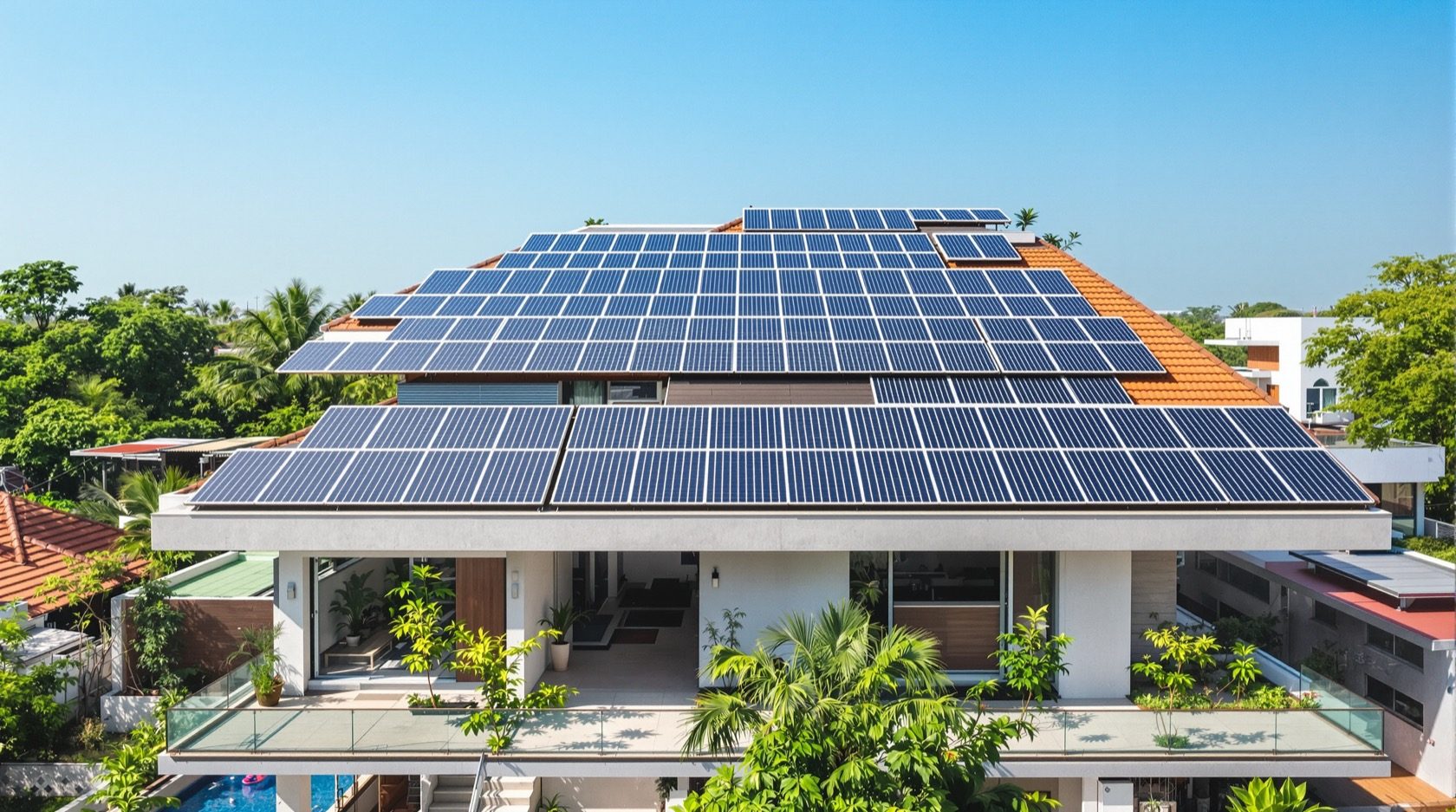
Net-Zero Energy Homes in India: Generating as Much as You Use
A home that makes as much energy as it consumes over a year — what net-zero really means, the three-part recipe (deep efficiency, right-sized solar, and net metering or storage), how realistic it is on an Indian rooftop, and the honest caveats.
A net-zero energy home produces, over a year, as much energy as it consumes — its rooftop solar generation balancing its electricity use across the seasons. It's the logical summit of the sustainable electrical ladder: a deeply efficient home whose small remaining load is covered by on-site clean generation. In sunny India, it's more achievable than many assume — if you get the efficiency right first. This guide explains what net-zero really means, the recipe to reach it, and the honest caveats.
It is the net-zero guide of the sustainability set in the Electrical Knowledge Hub, the goal the efficiency and solar guides build toward.
The safety line. Net-zero is a design and generation goal; the solar, wiring and grid connection are licensed professional work, to standards and your DISCOM's net-metering rules. Efficiency and generation, never at the cost of safety.
What "net-zero" actually means
The key word is net — balanced over a year, not every moment:
- Net-zero energy — annual generation ≈ annual consumption. Over a year, your solar makes about as many units as your home uses.
- It doesn't mean off-grid — most net-zero homes stay grid-connected, exporting surplus by day (via net metering) and importing at night, netting to roughly zero over the year.
- Balanced across seasons — sunny months bank surplus, cloudy/high-use months draw down; the annual balance is what counts.
- Energy-positive homes go further, generating more than they use.
The three-part recipe
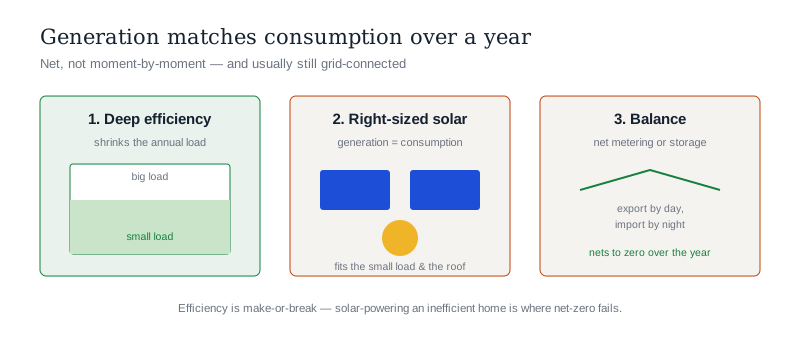
Net-zero is efficiency and generation and balancing — in that order:
1. Deep efficiency first — efficient design and efficient appliances shrink the annual load. This is decisive: a smaller load needs a smaller (affordable, roof-fitting) solar system to match. Trying to solar-power an inefficient home is where net-zero fails.
2. Right-sized rooftop solar — a system sized so its annual generation matches the (now small) annual consumption. Efficiency makes this size realistic for a typical roof.
3. Balancing — net metering or storage — net metering uses the grid as a "battery" (export by day, import by night, net to zero), or battery storage stores your own generation; net metering is usually the practical route to annual net-zero in India.
How realistic is it in India?
Honestly assessed:
- The sun helps — India's strong solar resource makes generation productive, so matching a modest load is feasible on many rooftops.
- Efficiency is the make-or-break — a typical, inefficient home would need an unrealistically large system; a deeply efficient home needs a system that actually fits and pays.
- Roof area is the limit — you need enough unshaded roof for the required panels; a compact flat with little roof and heavy AC use may reach "low-energy" rather than true net-zero.
- Net metering rules matter — the terms your DISCOM offers (net metering vs net billing, caps) shape how cleanly you can net to zero — verify locally.
- The realistic target — many homes can get most of the way (a very low net bill) even if strict annual net-zero is tight; that's still a huge win.
The honest framing: net-zero is genuinely achievable for an efficient Indian home with adequate roof and good net-metering — and even "nearly net-zero" is a worthy, worthwhile goal.
Getting there — the path
1. Design and build efficient (passive design, BEE 5-star, LED, inverter appliances).
2. Measure the resulting annual consumption (monitoring; estimate with the carbon/energy tools).
3. Size solar to match it (solar sizing calculator), within your roof.
4. Connect with net metering (and add storage if you want resilience or your DISCOM's terms favour self-consumption).
5. Electrify and refine — electrify remaining fossil loads and keep trimming waste.
The one-line answer
A net-zero energy home generates, over a year, about as much energy as it consumes — usually staying grid-connected and netting to zero via net metering (export by day, import by night), not going off-grid. The recipe is deep efficiency first (efficient design and appliances shrink the annual load — the make-or-break step, since solar-powering an inefficient home is where net-zero fails), then right-sized rooftop solar to match that small load, then net metering or storage to balance supply and demand across the seasons. In sunny India it's genuinely achievable for an efficient home with enough unshaded roof and good net-metering terms — and even getting most of the way to a near-zero bill is a big, worthwhile win. Build efficient, measure, size solar to match, and connect with net metering, all through licensed professionals.
Where to go next
- The full strategy: Sustainable Home Electrical Guide.
- The efficiency that makes it possible: Energy-Efficient Home Design Guide.
- The generation: Rooftop Solar Guide · Solar Sizing Calculator.
- Electrify the rest: Home Electrification Guide.
References
- Ministry of New and Renewable Energy (MNRE) — rooftop solar / PM Surya Ghar; net metering — your State Electricity Regulatory Commission / DISCOM: https://mnre.gov.in/
- Bureau of Energy Efficiency (BEE) — Eco Niwas Samhita; energy efficiency: https://beeindia.gov.in/
- Central Electricity Authority — grid and net-metering framework: https://cea.nic.in/
Net-zero feasibility depends on your load, roof, location and DISCOM's net-metering terms, which change; verify current rules locally. All solar and electrical work must be done by licensed professionals.
Export this guide
Related Guides — Deep-dive reading
Net-Zero Energy Homes in India
Designing a home where annual energy made matches energy used
Future-Ready HomesRooftop Solar Approvals & Net Metering in India: The Permissions You Actually Need
The approvals side of putting solar on an Indian roof — not how solar works, but the permissions: the DISCOM net-metering application and feasibility, an empanelled installer, the structural load check, the electrical safety inspection, the PM Surya Ghar subsidy, and metering and commissioning. These are DISCOM, state and MNRE rules — not one national IS code — so amounts and caps change; always confirm the current rule locally.
RoofingHybrid Solar System Guide for Indian Homes: Solar Plus Battery Backup (2026)
A design and specification guide to the hybrid solar system -- grid-connected solar with a battery that keeps critical loads running through a cut. How it works, how it differs from pure on-grid and off-grid, the components, sizing the battery, the trade-offs, and when hybrid beats an on-grid system with a separate inverter.
Solar & EnergyRelated Tools — Try Free
Solar Sizing Calculator
Size a rooftop solar system from your monthly electricity use — the kW system, number of panels, roof area and yearly generation.
SolarRainwater Tank Sizer
How big should your rainwater tank be? Computes annual harvest, recommended tank capacity in litres, water-bill savings, and payback — for 10 Indian cities.
RWH CalculatorSolar CCTV Sizing Calculator
Enter cameras, sun-hours and backup days to get the solar panel wattage, battery Ah and an indicative kit cost for an off-grid camera.
Solar Sizing