
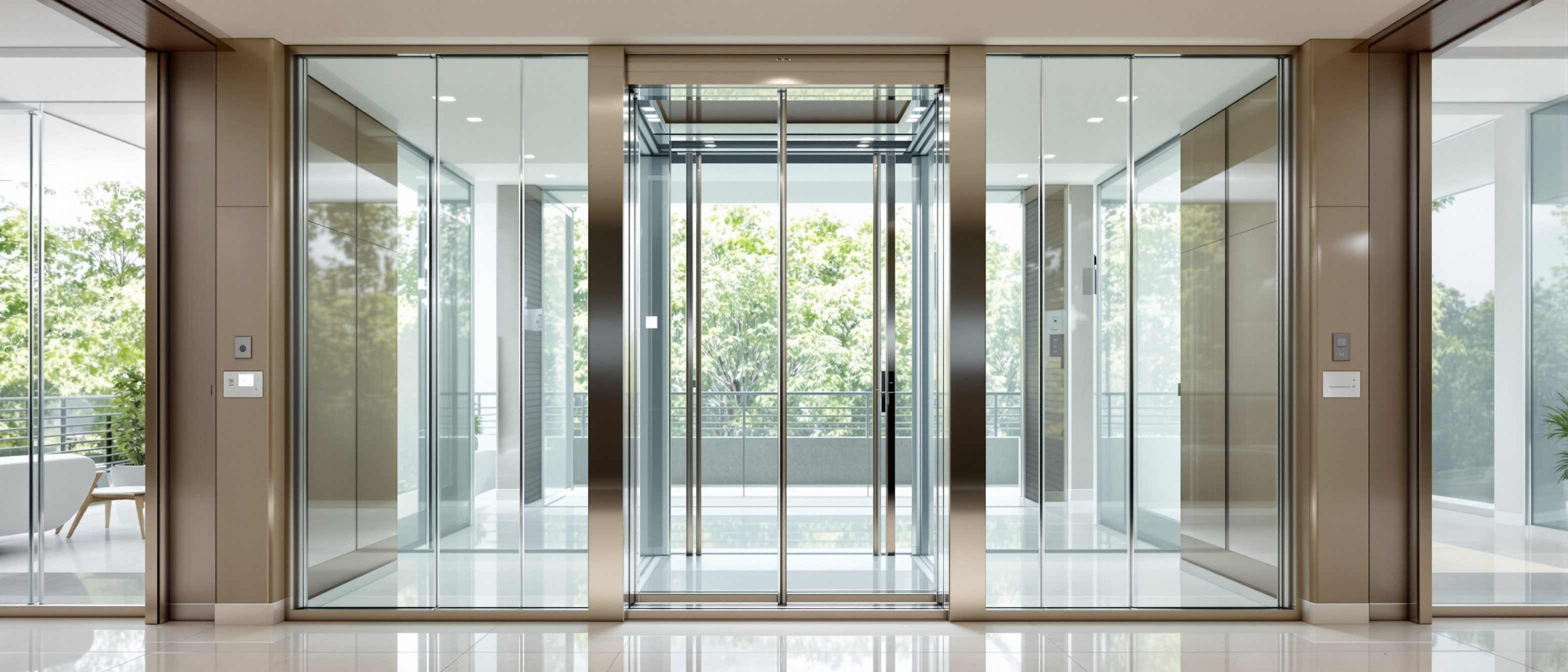
Glass Elevator Technologies (India): Safety Glass, Types and Structural Engineering
How safety glass, glass types, curved cabins and structural-glass framing make a see-through home lift safe and strong
A glass elevator looks like a single sheet of light. The engineering behind it is anything but simple. Every panel you lean against is a structural component holding its own weight, resisting impact, and engineered to fail safely if it ever breaks. This guide is the technology reference: the safety glass itself, the glass types you can specify, the curved and structural glass that makes panoramic and vacuum cabins possible, and how the framing and fixings carry the load.
This is the companion to our look-and-feel guide. If you want help choosing the aesthetic — clear versus tinted, full-glass versus accent panel, how it reads in your stairwell — read Glass Elevator Design (India). Here we stay on the glass technology itself: what the glass is made of, why it is safe, and how it is engineered.
Indicative throughout — glass grades, thicknesses and fixings must be confirmed with your lift vendor and, for any structural-glass shaft, a licensed structural engineer. For prices, see Home Lift Cost in India (2026).
Why ordinary glass is never used
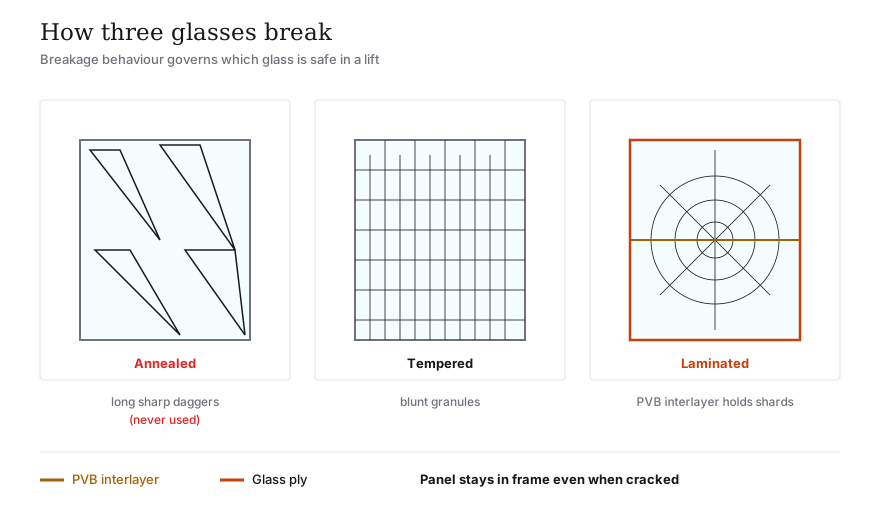
A lift cabin or shaft is an occupied, load-bearing, moving environment. Annealed (ordinary float) glass breaks into long, sharp daggers and has low impact strength — it is never permitted in a passenger lift. Indian and European lift safety standards require safety glass for any glazed cabin wall, door or shaft panel. Safety glass comes in two engineered forms, and good glass lifts usually combine both.
Laminated safety glass — holds the shards
Laminated glass is two (or more) sheets of glass permanently bonded around a tough plastic interlayer, almost always PVB (polyvinyl butyral). The sandwich is fused under heat and pressure so it behaves as one panel.
- On impact it does not let go. If the glass cracks, the PVB interlayer grips the fragments — the panel holds together as a spider-webbed sheet rather than collapsing into the cabin. This "post-breakage retention" is the property that matters for a lift: a person leaning on a cracked wall is still enclosed.
- It is the structural choice. Because a laminated panel keeps integrity after breakage, it is used where the glass is part of the enclosure that holds people in — cabin walls and structural shaft glazing.
- Interlayer count and thickness are engineered, not fixed: bigger panels or higher loads use thicker glass plies and/or a thicker (or multiple) PVB interlayer.
Tempered (toughened) safety glass — breaks safely
Tempered glass is float glass reheated near softening point then rapidly cooled ("quenched"). This locks the surface in compression and the core in tension, making it roughly four to five times stronger than annealed glass of the same thickness.
- It breaks into blunt granules. When it does fail, a tempered panel shatters instantly into a heap of small, dice-like cubes with no sharp edges — far safer than daggers, but it loses all integrity at once (it falls out of the opening).
- It is the strength choice for resisting day-to-day impact and thermal stress, and is often used for door leaves and where impact strength is the priority.
- It must be cut and drilled before tempering — you cannot modify a toughened panel afterwards.
The best of both — laminated-tempered
The premium and most defensible specification for a glass lift is laminated glass made from tempered plies: you get tempered glass's high strength and safe granular break, plus the PVB interlayer's post-breakage retention so the panel stays in the frame even after both plies shatter. This "fail-safe on breakage" behaviour — the panel cannot drop out and cannot expose sharp edges — is exactly what a structural cabin or shaft wall needs.
Glass thickness is engineered, not chosen from a menu
There is no single "lift glass thickness". The right glass is calculated for each panel from its size, the loads it must carry, and the code it is certified to. The variables your vendor's engineer works with:
- Panel area and aspect ratio — a tall, slim panoramic panel deflects differently from a small door vision panel.
- Imposed loads — the horizontal "crowd/lean" load a cabin wall must resist, plus self-weight if the glass is structural.
- Fixing method — fully framed glass can be thinner than the same panel held only at points (point-fixed glass concentrates stress at the bolt).
- Standard / code — the panel is sized to satisfy the deflection and breakage requirements of the lift safety standard it is certified to (IS 17900 aligned to EN 81-20/50 for the safety concept; IS 14665 for the broader installation).
Treat any "glass is X mm thick" figure as indicative until the vendor confirms the engineered build-up (number of plies, interlayer thickness, tempered or not) for your panel sizes.
The glass types you can specify
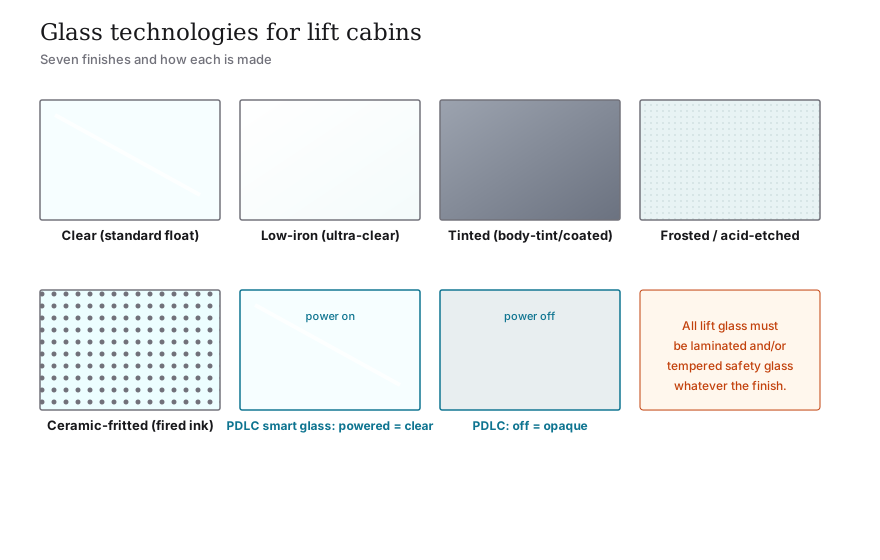
All of the following are made as safety glass (laminated and/or tempered) — the "type" describes the optical or surface treatment layered onto that safety build-up. Use this as the technology line-up; for which one suits your home visually, see the design guide.
| Glass type | How it is made | Key property | Typical use |
|---|---|---|---|
| Clear (standard float) | Ordinary float glass, laminated/tempered as safety glass | Maximum transparency at lowest cost; carries a faint green edge tint | Default panoramic and shaft glazing |
| Low-iron (ultra-clear) | Float glass made with reduced iron content | Removes the green cast — truer colours, "water-white" clarity | Premium panoramic cabins where the view/finish must read true |
| Tinted | Body-tinted (grey, bronze, blue) or coated | Cuts glare and solar gain; adds privacy and a coloured cast | Sun-facing shafts, exterior glass lifts |
| Frosted / acid-etched | Surface acid-etched or sandblasted to diffuse light | Translucent privacy while passing light; hides fingerprints | Privacy panels, partial-height bands, doors |
| Ceramic-fritted | Ceramic ink screen-printed then fired into the surface | Permanent dots/lines/patterns; controls transparency and solar load; very durable | Patterned feature panels, glare/solar control, slip-resistant marking |
| Switchable PDLC (smart privacy) | Liquid-crystal film laminated between glass; switches with electric current | Clear when powered, opaque-frosted when off (or vice-versa) — privacy on demand | High-end cabins wanting "glass that turns frosted at a touch" |
A note on PDLC smart glass: the liquid-crystal layer is laminated inside the glass, so the panel is still a laminated safety panel — the switchable film simply replaces (or adds to) the interlayer. It needs a low-voltage electrical feed and a controller, which adds wiring and a maintenance point, but it gives instant privacy without blinds.
Curved and cylindrical glass — panoramic and vacuum cabins
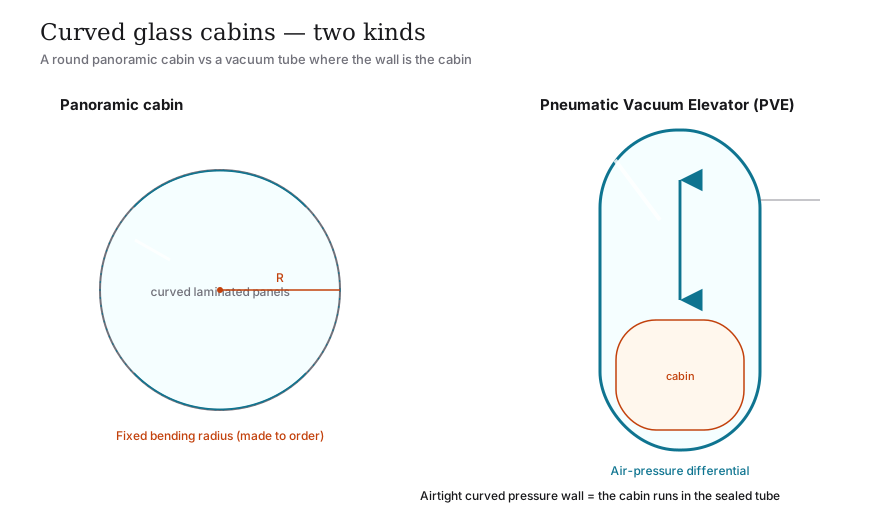
Flat panels enclose a rectangular cabin. The fully round, see-through look — and the cylinder of a Pneumatic Vacuum Elevator (PVE) — needs curved glass.
- How it is made: flat glass is heated until it softens, then bent over a mould to a precise radius and (for safety) tempered and/or laminated in the curved form. The radius is fixed at manufacture, so curved panels are made to order for the exact cabin diameter.
- Panoramic traction/hydraulic cabins use large curved laminated panels in a frame for an uninterrupted wrap-around view.
- PVE cabins are an extreme case: the transparent cylinder is the cabin, and a sealed tube is what the air-pressure system acts on. The curved tube wall is engineered to be airtight and to take the pressure differential, not just to be seen through. (For how the vacuum drive itself works, see How Home Lifts Work.)
- Curved glass is more expensive and less forgiving than flat — it cannot be re-cut on site, and a damaged curved panel is a full made-to-order replacement.
Structural glass engineering — when the glass carries the load
In a feature lift the glass is not just an infill behind a steel cage; it can be part of the load-bearing enclosure. This is where glass leaves decoration and becomes engineering.
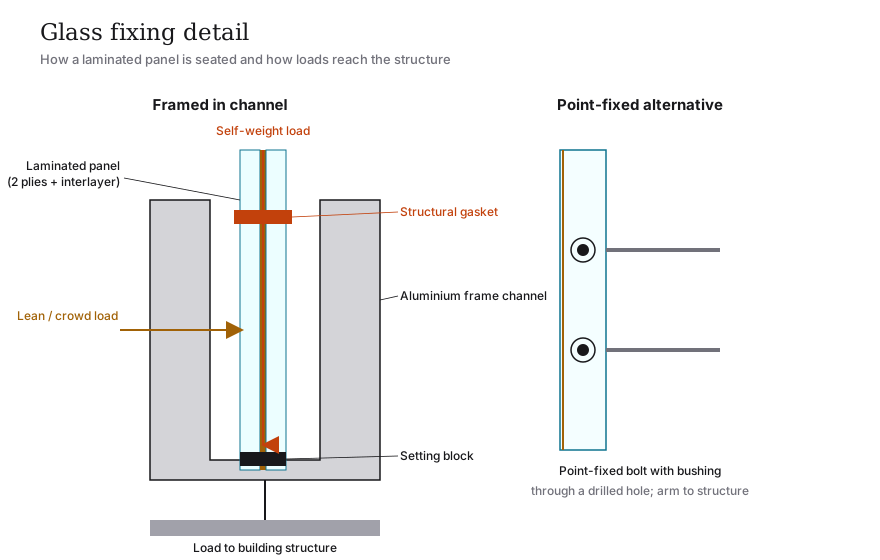
- Glass as enclosure: a structural glass shaft uses laminated/tempered panels on a slim steel or aluminium frame. The frame and its fixings carry the loads — self-weight of the glass, the horizontal lean/crowd load, wind on an exterior lift — and transfer them to the building structure. The glass spans between supports; the framing does the structural work.
- Framed versus point-fixed: framed glazing holds each panel continuously along its edges (lower stress, thinner glass possible). Point-fixed (bolted "spider" fittings) holds the panel at discrete points for a frameless look but concentrates stress at each hole — those panels must be tempered-and-laminated and individually engineered.
- Fail-safe on breakage is mandatory: the system must be designed so that if any single panel breaks, the structure does not collapse and the broken panel does not fall out — the laminated interlayer keeps the cracked sheet hanging in its frame, and the remaining panels and frame carry on. This redundancy is the whole point of using laminated glass structurally.
- Self-supporting structures: where there is no RCC shaft — a retrofit, or a PVE — the lift can use a self-supporting bolted aluminium/steel structure that carries the glass and the guide rails together. For the full menu of shaft options, see Lift Shaft Construction Materials and Home Lift Structural Design.
Glass doors are their own safety case
A full-glass automatic landing or car door is a moving safety-glass panel that must still satisfy the door interlock and light-curtain requirements — the lift cannot move unless every door is closed and locked, glass or not. The door leaves are toughened/laminated safety glass sized for repeated impact and the door operator's forces. For the mechanics and the full menu of door types, see Lift Door Types Explained and the design-side Designer Elevator Doors.
Cleaning and maintenance — the honest reality
Glass is the most demanding finish to keep looking good, and that is part of the technology decision.
- It shows everything. Fingerprints, dust, water spots and shoe scuffs are obvious on a clear panel — a glass cabin needs wiping far more often than steel or laminate. Low-iron glass shows marks even more because it is so clear.
- Surface-treated types help. Frosted/etched and ceramic-fritted surfaces hide fingerprints; some panels carry an easy-clean hydrophobic coating that sheds water and dirt.
- Exterior and shaft glass needs access. Panoramic shaft glazing must be reachable for cleaning, inside and out — designed-in access matters, especially for an external lift.
- PDLC and the interlayer have a service life. Switchable film, gaskets and structural sealants age; edge delamination of a laminated panel (cloudiness creeping in from the edge) is a sign a panel needs attention. Keep this in your AMC scope and confirm glass-replacement terms in the contract.
- Replacement is panel-by-panel and made-to-order, especially for curved or point-fixed glass — there is no "patch", so a cracked panel is a scheduled replacement.
How this fits the rest of the lift
The glass is one component in a system. To specify the whole lift, pair this with the other component references:
- Lift Cabin Materials Guide — steel grades, laminates, stone and how glass compares as a wall finish (and the design-side Cabin Material Selection).
- Lift Flooring Materials — the anti-slip floor inside a glass cabin.
- Elevator Safety Components and Lift Controller Systems — the governor, interlocks and brain that keep the cabin safe regardless of finish.
- Lift Motor Technologies — the drive behind the cabin.
- Residential Elevator Buyer's Guide (pillar) and the Lift Specification Checklist to pull it all together.
References
Standards and sources used in this guide (cited by name; figures indicative — confirm with your vendor and a licensed structural engineer):
- IS 14665 — Electric Traction Lifts (BIS, committee ETD 25; aligned to EN 81), including Part 4 — Components and Part 1 — outline dimensions. Part 1: https://law.resource.org/pub/in/bis/S05/is.14665.1.2000.pdf ; Part 2: https://law.resource.org/pub/in/bis/S05/is.14665.2.1-2.2000.pdf
- IS 15259 — Hydraulic Lifts (companion code, by name).
- IS 17900 (aligned to EN 81-20 / EN 81-50) — current lift safety concept for cabins, doors and glazed components.
- National Building Code of India 2016, Part 8 (Building Services), Section 5 — Installation of Lifts, Escalators and Moving Walks (BIS): https://www.bis.gov.in/standards/technical-department/national-building-code/ ; Guide for Using NBC 2016: https://www.bis.gov.in/wp-content/uploads/2022/08/Booklet-Guide-for-Using-NBC-2016.pdf
- CPWD / MoHUA Harmonised Guidelines and Space Standards for a Barrier-Free Built Environment (accessibility, door clear widths): https://www.cpwd.gov.in/Publication/Harmonisedguidelinesdreleasedon23rdMarch2016.pdf
- Lift safety component references: https://elevatorworld.com/article/elevator-safety-components/
- Lift regulations in India (overview): https://www.99acres.com/articles/know-all-about-the-lift-regulations-in-india.html
Export this guide
Related Guides — Deep-dive reading
Toughened Glass Doors in India: Thickness, IS 2553, Safety & Cost
Why tempered glass is mandatory for large and low door panels, what thickness to specify, and the one rule you cannot break: it can never be cut after toughening.
Home Doors & EntrancesResidential Elevator Buyer's Guide (India 2026): Types, Cost, Sizing, Regulation & How to Choose
Everything an Indian homeowner needs to choose, size, budget, license and maintain a home lift the right way.
Home Lifts & AccessibilityHow Home Lifts Work (India): Hydraulic, Traction, Screw and Vacuum Explained
A plain-language look inside the four drive types that lift a home elevator, plus the core components and safety systems every homeowner should be able to name.
Home Lifts & AccessibilityRelated Tools — Try Free
Home Lift Cost Calculator
All-in home lift cost by floors, type, capacity and city — equipment, civil, GST and AMC, with a drive-type comparison.
Lift CalculatorLift Safety Audit Checklist
Interactive checklist that scores your home lift on safety devices, compliance and upkeep.
ChecklistHome Lift Comparison Tool
Compare hydraulic, traction, pneumatic vacuum and screw lifts side by side for your home.
Lift Comparison