
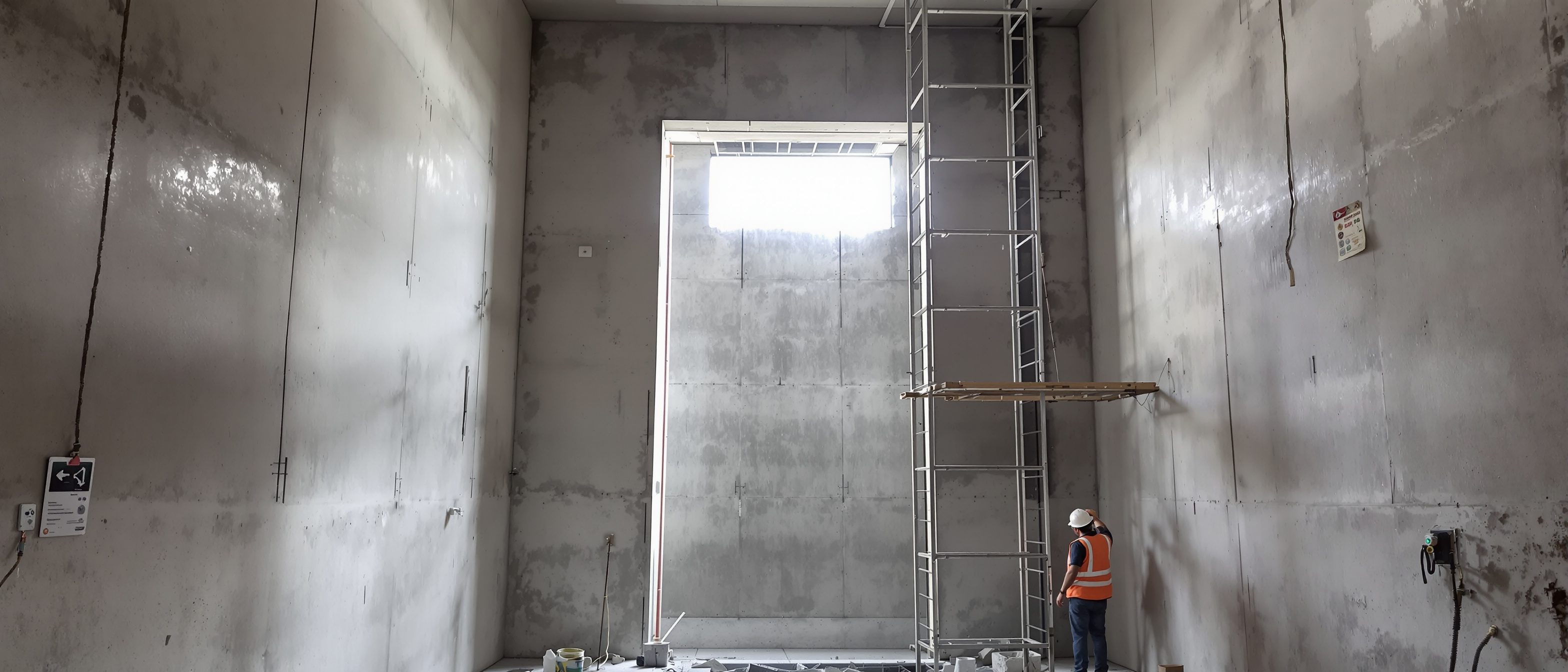
Lift Shaft Construction Materials (India): RCC, Steel and Structural Glass
The structural options for building a home-lift hoistway — RCC core, masonry infill, self-supporting steel/aluminium and structural glass — and which to use when
The lift shaft — properly the hoistway or well — is the vertical chamber the car and counterweight travel inside. It is one of the few parts of a home lift that the building, not the lift vendor, usually supplies. Get the material of the shaft right and the lift runs quiet, stays plumb, resists fire and lasts decades. Get it wrong and you fight rattles, water in the pit and guide-rail brackets that will not anchor.
This is a materials reference: the structural options for building the hoistway — reinforced concrete (RCC), masonry with an RCC frame, self-supporting steel or aluminium structures, and structural glass — and which to use when. It deliberately does not repeat shaft dimensions or structural loads. For those, read the two companion guides:
- For internal clear sizes, pit depth, headroom and door clearances, see the lift shaft design guide for India.
- For the loads the shaft and rail brackets must actually carry, see home lift structural design in India.
Indicative — confirm with your vendor and structural engineer. Wall thicknesses, bracket spacing and fixing methods below are typical for small home lifts. Your lift maker issues a general arrangement (GA) drawing with the exact shaft material, tolerances and embed points the structure must satisfy. Build to that drawing, not to a rule of thumb.
The four ways to build a hoistway
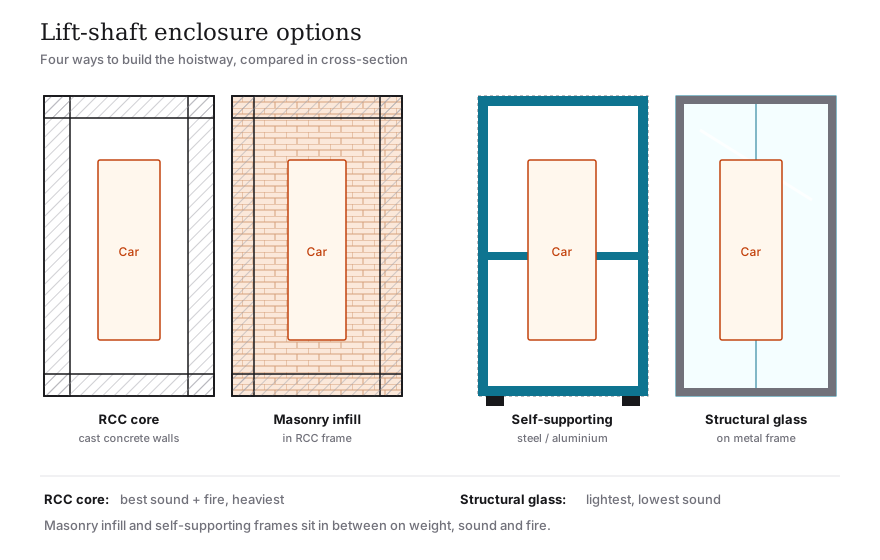
Every home lift sits in one of four structural enclosures. The choice is driven by three things: whether you are building new or retrofitting, whether the lift is solid-walled or panoramic, and how the lift's loads will reach the ground.
| Shaft type | Typical use | Sound | Fire compartmentation | Plumb tolerance | Self-supporting? | Notes |
|---|---|---|---|---|---|---|
| RCC core (150–200 mm walls, unplastered inside) | New build, all lift types, low to high rise | Best — mass deadens motor and guide-rail noise | Inherent — concrete is the fire barrier | Excellent once cast; hard to correct after | No — needs the building frame around/above it | The default. Best structure, acoustics and fire |
| Masonry / brick infill in an RCC frame | Low-rise new build (G+1, G+2) where a full core is not poured | Good if dense block; weaker than RCC | Good with rated blockwork + plastered joints | Needs careful coursing to stay plumb | No — frame carries loads | Verify guide-rail bracket loads land on the frame, not on unreinforced infill |
| Self-supporting steel / bolted aluminium structure | Retrofit into an existing home, or where no RCC well exists | Moderate — frame transmits vibration; needs isolation | Needs added rated cladding | Adjusted with shims and levelling feet during erection | Yes — stands on its own base | Bolts together fast; the structure IS the shaft |
| Structural glass shaft (laminated/tempered on steel or aluminium frame) | Panoramic feature lifts, atriums, scenic cores | Lowest — glass is light and reflective | Special detailing; glass alone is not a fire barrier | Frame set plumb; glass fixed to frame | Yes (the frame is) | The metal frame carries load; glass is the infill |
A fifth case sits outside the table: the pneumatic vacuum elevator (PVE) needs no built shaft at all. Its cylindrical tube is the structure, it is fully self-supporting and it requires no pit and no machine room — which is why it is the easiest retrofit. If a PVE suits your home, the shaft-material question disappears. See the residential elevator buyer's guide for where a PVE fits.
RCC core: the standard
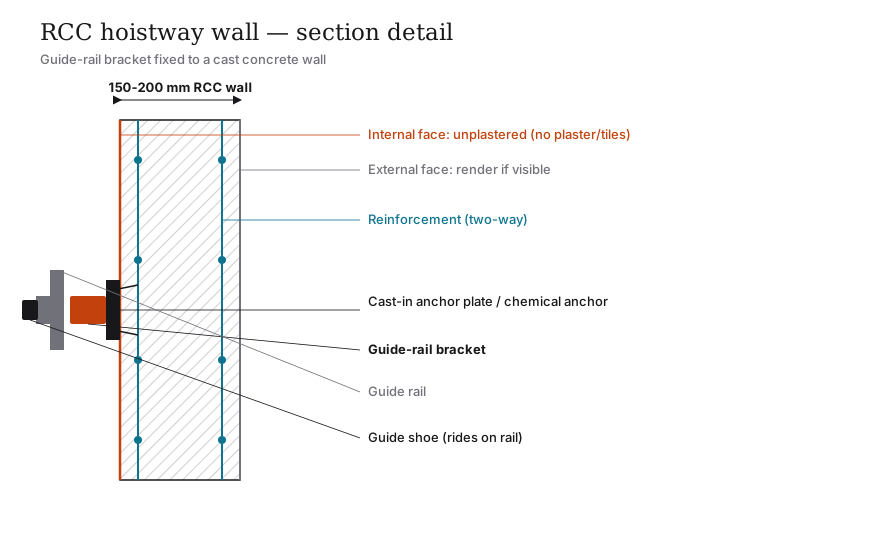
For any new home, a reinforced cement concrete core is the default and the best choice. The four walls of the hoistway are cast in concrete, typically 150–200 mm thick, and tied into the building's frame and floor slabs. It is the right answer for screw, traction (including MRL) and hydraulic lifts, and for any solid-walled cabin.
Why concrete wins on every axis that matters for a lift:
- Structure and load transfer. The walls are part of the building's load path. Guide-rail brackets — which take the horizontal reactions when the safety gear grips the rails — can be cast in with anchor plates or fixed with chemical/expansion anchors straight into solid concrete. There is no weaker infill to worry about.
- Sound. Mass is the single best acoustic insulator. A concrete core deadens the hum of the machine and the running noise of the car far better than any lightweight enclosure — important when the shaft abuts a bedroom wall.
- Fire compartmentation. Concrete is non-combustible and inherently provides the fire-rated enclosure that NBC 2016 Part 8 Section 5 expects of a hoistway. The shaft becomes its own fire compartment with no added lining.
Leave the inside unplastered. The internal faces of an RCC shaft are deliberately left bare concrete — no plaster, no tiles. Plaster cracks, debonds and drops chips onto the car top and into the pit; a smooth fair-faced concrete finish is cleaner, dimensionally stable and gives the rail brackets a sound substrate. Render and finish the outside if it is visible; keep the inside raw.
The two non-negotiables for an RCC shaft are plumb and a waterproof pit. The walls must be cast truly vertical within the lift maker's tolerance over the full travel — out-of-plumb walls foul the car or skew the rails, and concrete is unforgiving to correct after the pour. The bottom is a waterproof RCC box: a tanked pit that keeps groundwater and washdown out, because flooded pits corrode buffers and are a classic excluded item in maintenance contracts. Provide the smoke vent and shaft ventilation the code requires, sized on the design drawings rather than this reference.
Masonry / brick infill with an RCC frame
On a small low-rise home — G+1 or G+2 — a full poured core is sometimes replaced by an RCC frame (columns and beams) with masonry or block infill forming the shaft walls. This is acceptable, but only with a structural engineer's sign-off and one specific check.
The critical issue is load paths for the guide-rail brackets. The horizontal forces from the rails must land on something that can carry them. With infill walls, that means anchoring the brackets to the RCC frame members — the columns and beams — not to unreinforced brickwork or hollow block, which can crack or pull out under the bracket reactions. The frame must therefore be positioned so that bracket fixing points coincide with concrete, at the spacings the lift GA drawing demands.
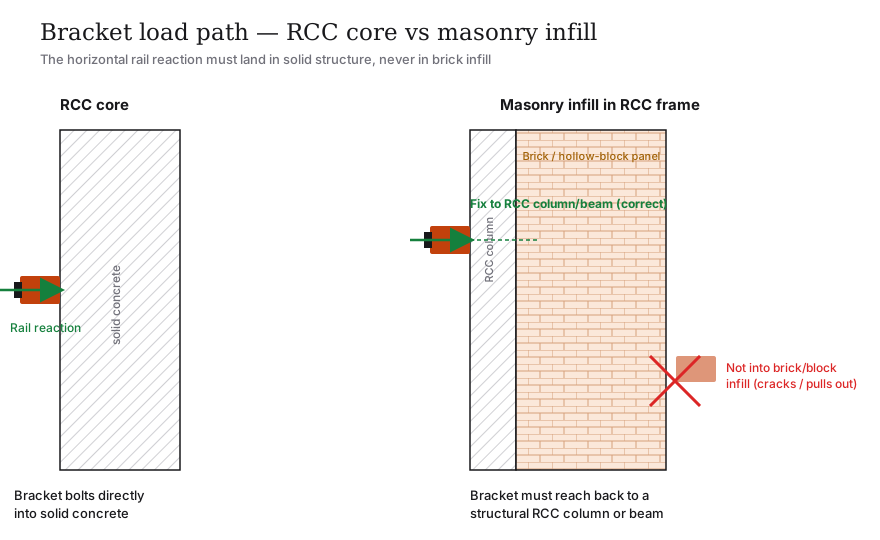
Masonry infill also gives less sound mass than a full RCC core and needs fire-rated blockwork with properly filled joints to match the compartmentation a concrete shaft offers for free. For these reasons, treat infill as a sensible economy on a genuinely low-rise home, and default back to RCC the moment the lift gets taller, heavier or faster. The actual bracket loads to design for are in the home lift structural design guide.
Self-supporting steel and aluminium structures
When there is no RCC shaft and you cannot build one — most commonly when retrofitting a lift into an existing house — the answer is a self-supporting structure: a bolted steel or aluminium frame that stands on its own foundation and is the hoistway. The lift's guide rails, doors and (often) glazing all attach to this frame, so the structure carries every load down to its base rather than into the building.
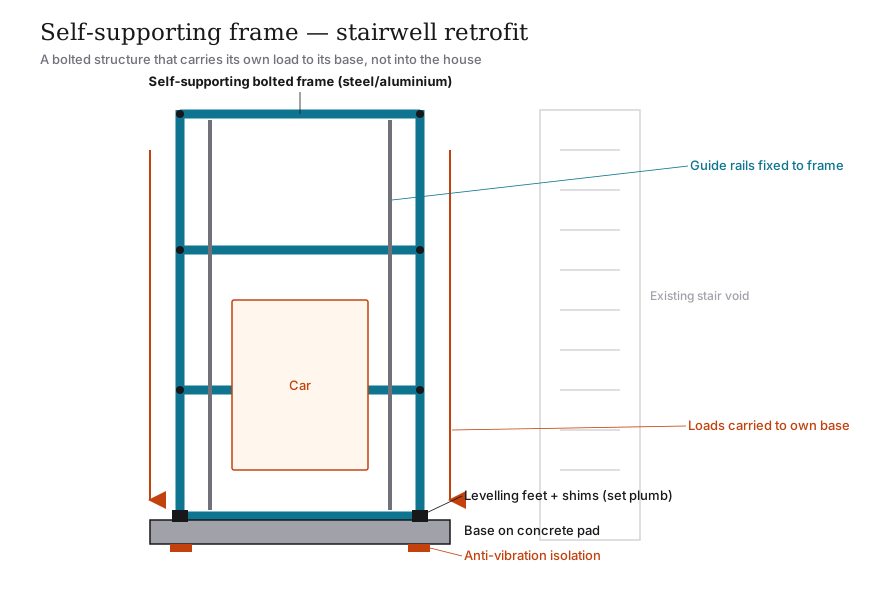
Where it fits:
- Retrofits. The frame is delivered in sections and bolted together inside a stair void, a courtyard or against a façade, with no need to cut a concrete core into a finished home. Levelling feet and shims bring it plumb during erection — a real advantage over RCC, which is fixed once cast.
- Glass lifts. A panoramic cabin needs an open, transparent enclosure; a steel or aluminium frame provides the structure while the infill is glass (next section).
- PVE. Remember the pneumatic vacuum elevator is itself self-supporting and needs no built structure at all — the cleanest retrofit of the lot.
The trade-offs are acoustic and fire-related. A light metal frame transmits vibration, so it needs anti-vibration isolation at the base and at fixings to nearby walls if it is not to telegraph the motor's hum into the house. And the structure does not provide fire compartmentation on its own — where the code requires a rated enclosure, you add fire-rated cladding or glazing to the frame. As always, keep the base bearing on sound ground and the verticals plumb so the rails run true.
Structural glass shafts
A structural glass shaft is what makes a panoramic feature lift possible: laminated and/or tempered safety glass set into a steel or aluminium frame, so the car is visible from the lobby and the view is visible from the car. It is an aesthetic-led choice, but it is governed by structural and safety rules.
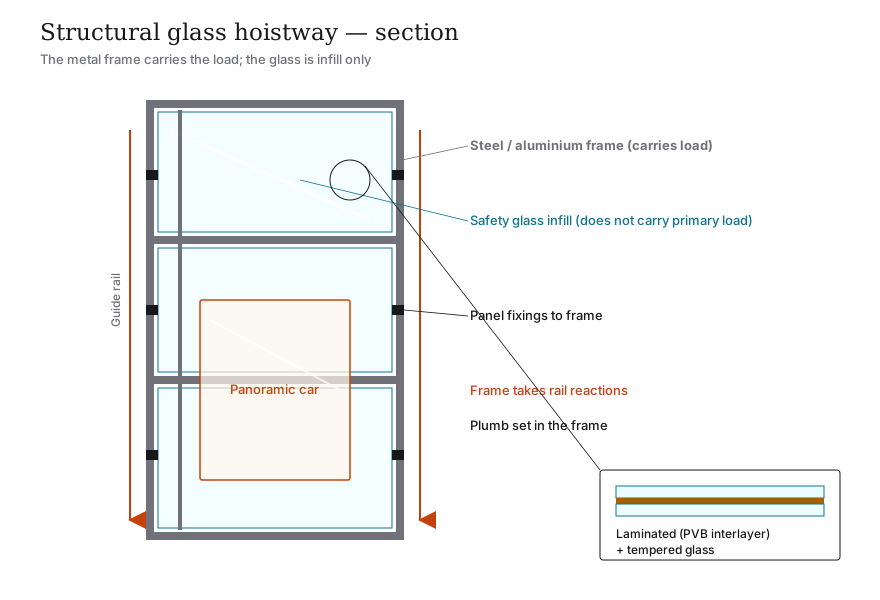
The principle to understand is the frame carries the load; the glass is the infill. The metal skeleton takes the structural forces and the guide-rail reactions; the glass panels are fixed to that frame and engineered — in thickness and lamination — for their own panel size and the relevant code. Only safety glass is used: laminated (a PVB interlayer holds the shards together on breakage) and/or tempered/toughened (which fractures into blunt granules rather than shards). This is the same safety-glass family used for glass cabins; the engineering of panel size, fixings and fail-safe behaviour on breakage is covered in the glass elevator technologies guide, and the design and styling of glass lifts in the glass elevator design guide.
Glass shafts demand the most attention to the same four trade-offs:
- Sound is lowest — glass is light and offers little mass, so isolate the frame and expect the lift to be heard more than in an RCC core.
- Fire compartmentation needs deliberate detailing; ordinary glass is not a fire barrier, so a glass core in a position that must be fire-rated requires fire-rated glazing and framing to a designer's specification.
- Ventilation is easier to provide in an open glass enclosure, but smoke management still follows the code.
- Plumb lives in the frame: set the steelwork true and the glass and rails follow.
Pit and tolerances apply to every shaft
Whatever the wall material, two requirements are universal and worth restating:
1. A waterproof, plumb pit. The pit is a tanked RCC box at the bottom of every shaft type — even a steel or glass structure usually lands in or on a concrete pit. It must keep water out (pit flooding is both a corrosion risk and a common maintenance-contract exclusion) and present a true, level base.
2. Plumb over the full travel. Rails can only run straight if the enclosure is vertical within tolerance. RCC gets this at the pour; metal and glass frames get it through levelling and shimming during erection.
For the dimensions those tolerances are measured against, and for the rail loads the brackets transfer into whichever wall you choose, use the two companion guides linked throughout, and confirm the final specification against your vendor's GA drawing.
Choosing the shaft material
- Building new, solid-walled cabin → RCC core, 150–200 mm, unplastered inside. The default for sound, fire and structure.
- Genuinely low-rise new build, economy sought → RCC frame with masonry infill, with bracket loads landing on the frame and fire-rated blockwork.
- Retrofit, or no RCC well possible → self-supporting steel or aluminium structure (or a PVE, which needs no shaft at all).
- Panoramic feature lift → structural glass on a steel or aluminium frame, all safety glass, fire and acoustics detailed deliberately.
Pin the choice down on the lift specification checklist, and price the civil work — which is usually quoted separately from the lift — with the home lift cost guide for India.
References
Standards and codes that govern lift hoistway construction and components in India:
- IS 14665 — Electric Traction Lifts (BIS, committee ETD 25), especially Part 1 (outline dimensions — car, well/hoistway, pit, headroom) and Part 4 (components — guide rails, shoes, carframe and suspension that the shaft must support).
- IS 14665 Part 2 (BIS): https://law.resource.org/pub/in/bis/S05/is.14665.2.1-2.2000.pdf
- IS 15259 — Hydraulic lifts (companion code for hydraulic installations).
- IS 17900 (aligned to EN 81-20 / EN 81-50) — current lift safety concept for safety components and controllers, relevant where the shaft houses safety gear, buffers and rail-mounted devices.
- NBC 2016, Part 8 (Building Services), Section 5 — Installation of Lifts, Escalators and Moving Walks, including fire compartmentation and ventilation requirements for the hoistway.
- BIS Guide for Using NBC 2016: https://www.bis.gov.in/wp-content/uploads/2022/08/Booklet-Guide-for-Using-NBC-2016.pdf
All structural dimensions, wall thicknesses, bracket spacings and fixings are indicative — confirm against your lift maker's general arrangement drawing, a licensed structural engineer and your local municipal bye-laws.
Export this guide
Related Guides — Deep-dive reading
Lift Shaft Design Guide (India): Hoistway Dimensions, Walls, Ventilation and Tolerances
How to size, build, plumb, ventilate and finish a residential lift hoistway in India — coordinated to the vendor's GA drawing.
Home Lifts & AccessibilityBuilding Codes for Residential Elevators (India): NBC 2016 and Local Bye-Laws
How NBC 2016 Part 8 Section 5 and your municipal building bye-laws decide when a home lift is required, where its shaft goes, and how it must be built and fire-protected.
Home Lifts & AccessibilityArchitect's Residential Elevator Planning Handbook (India): Shaft, Loads, Code & Coordination
The plan-stage reference for carrying a home lift through the drawing board — shaft, structure, pit, code, licensing and accessibility.
Home Lifts & AccessibilityRelated Tools — Try Free
Home Lift Comparison Tool
Compare hydraulic, traction, pneumatic vacuum and screw lifts side by side for your home.
Lift ComparisonLift Safety Audit Checklist
Interactive checklist that scores your home lift on safety devices, compliance and upkeep.
ChecklistLift Shaft Size Calculator
Required hoistway, pit and headroom dimensions for a home lift by capacity and drive type.
Lift Calculator