
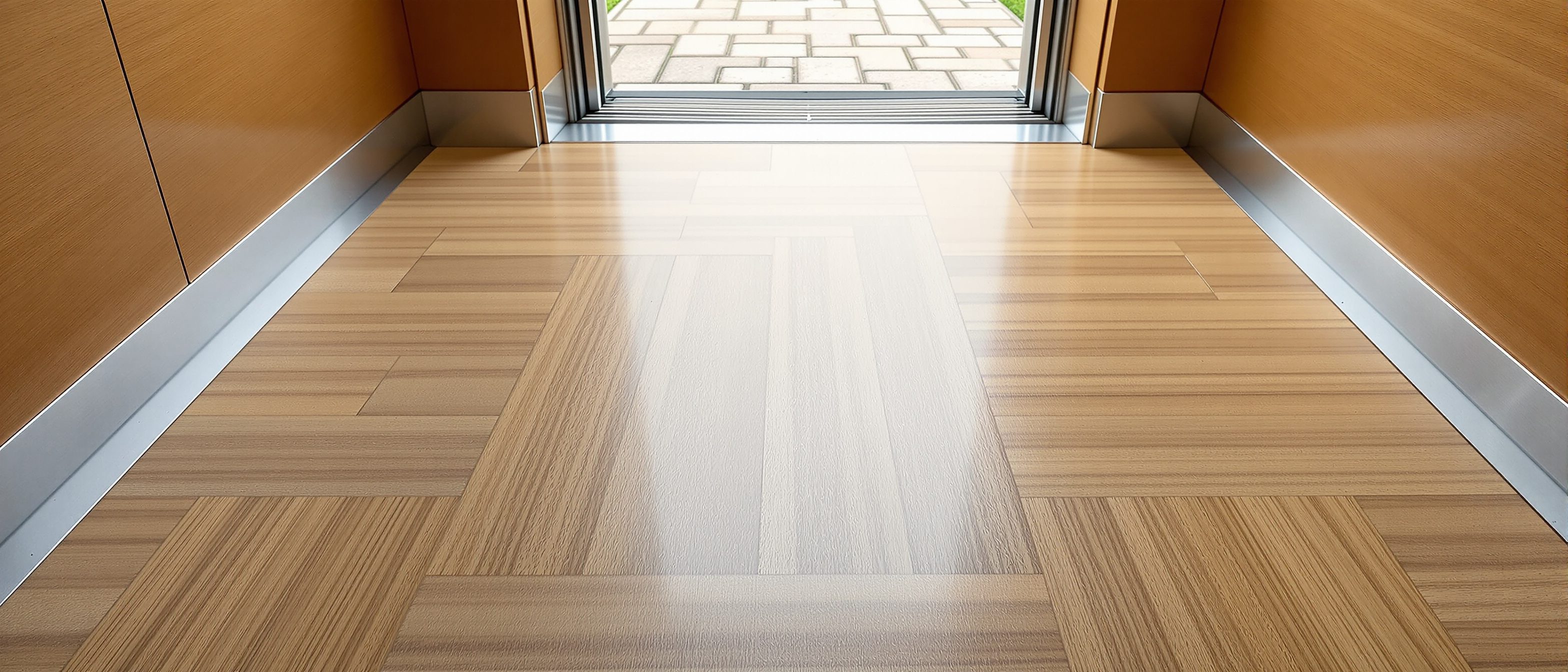
Lift Flooring Materials (India): Anti-Slip, Durable and Accessible
A technical reference on home-lift cabin floor materials — textured vinyl, stone, wood-look, rubber and porcelain — and the safety, weight and accessibility rules that decide which is right.
The floor of a home lift is the one surface every passenger stands on, every day, often carrying shopping, luggage or a walking aid. It is also the surface most likely to cause a fall. A lift floor has to do three jobs at once: stay safely anti-slip when wet, survive years of foot traffic and dragged objects, and meet the landing flush so a wheelchair or a hesitant foot crosses without a lip. This is a technical reference on what lift floors are made of and the rules that decide whether a floor is safe and accessible.
This guide is the flooring counterpart to our cabin-materials reference. For choosing the overall cabin look and finish, read the design-cluster selection guide. For the floor specifically, the priorities here are safety and durability first, appearance second.
Indicative figures throughout — always confirm the exact floor build, weight and finish with your lift vendor, because the floor sits inside the car's rated load budget.
What makes a lift floor different from a room floor
A lift floor is not a normal room floor. It is a small, heavily trafficked panel mounted on the car platform, and three things make it special.
- It counts against the rated load. Every kilogram of floor finish is a kilogram less of passenger capacity. A heavy stone floor in a small 2-person car (roughly 150 to 204 kg capacity) eats meaningfully into what the car can carry. The platform and finish must be accounted for in the car's design so the rated load on the data plate is still honest.
- It must meet the landing dead level. Accessibility standards expect the car floor to stop flush with the landing floor. A raised threshold or a poorly levelled car is a trip hazard and a wheelchair barrier. The controller's levelling accuracy and the floor build-up together decide how flush the join is.
- It gets wet and dirty in a confined box. Monsoon footwear, spills and cleaning water all land on a small area with no run-off. The finish has to stay anti-slip wet, not just dry, and clean easily without harsh polishing that makes it slippery.
Because of this, the floor is chosen on safety properties first — slip resistance, weight, durability, level fit — and on looks second. That is the opposite order from a living-room floor.
The rules that matter most
Before comparing materials, fix the non-negotiables. These apply whatever finish you pick.
Anti-slip finish, wet and dry
A lift floor must resist slipping when wet, not only when dry. Polished granite or mirror-finish stone may look premium but becomes dangerous with a few drops of water. Choose textured, honed, flamed, matt or studded finishes over polished ones. For vinyl and rubber, specify a slip-rated, textured surface rather than a smooth gloss.
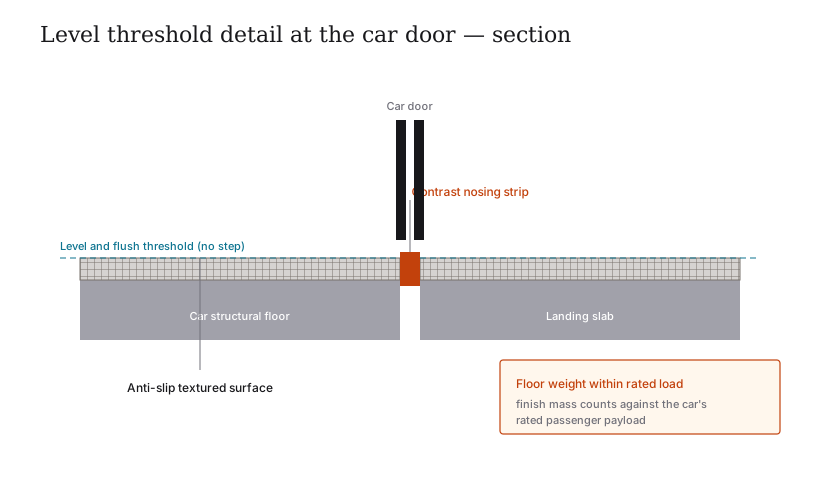
A level threshold, flush with the landing
The accessibility benchmark is that the car floor meets the landing floor with no step. The CPWD / MoHUA Harmonised Guidelines for a barrier-free built environment expect lifts to be usable by a wheelchair user without negotiating a lip at the door. A flush, level threshold is both a trip-safety feature for everyone and an accessibility requirement. This depends on accurate floor levelling by the controller and on a floor build-up matched to the landing height.
Contrast nosing and edge marking for low vision
A strip of contrasting colour at the car threshold (and at the door edge) helps a person with low vision judge where the car ends and the landing begins. Plain edge-to-edge flooring with no tonal contrast hides the gap. Contrast nosing at the threshold is a cheap, high-value safety detail and pairs with the tactile and audio-visual cues covered in our accessible-home design guidance.
Easy cleaning, no slippery polish
The floor should clean with water and mild detergent, dry quickly and not need a wax or polish that adds slip. Grouted tile in a lift collects grime in the joints; large-format or jointless finishes clean more easily. Avoid any maintenance routine that leaves a glossy, slippery film.
Weight inside the rated-load budget
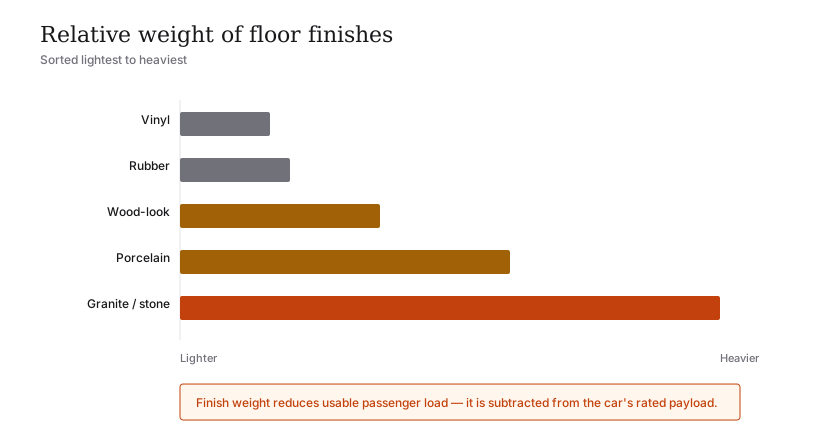
Confirm the finished floor weight with your vendor and keep it inside the platform's allowance so the rated load is preserved. Stone is the heaviest common choice; vinyl, rubber and wood-look are far lighter. In a small car, this single property can decide the material.
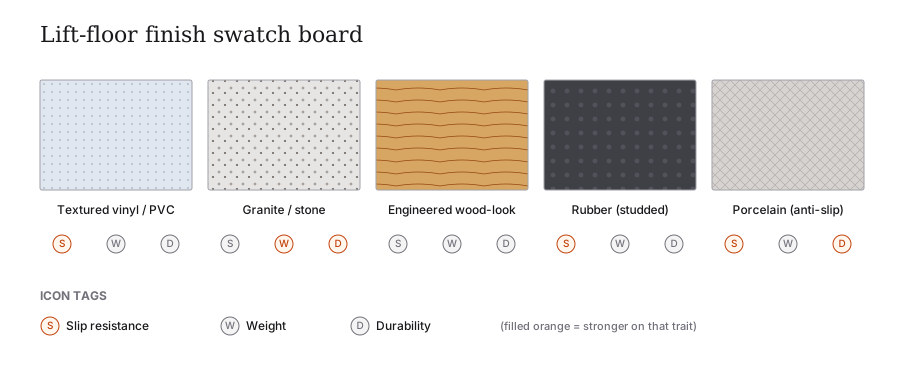
The flooring materials, by property
Textured vinyl / PVC
Sheet or tile vinyl with a textured, slip-rated wear layer is the workhorse of home-lift floors. It is light, quiet underfoot, available in a huge range of looks (including wood and stone prints), warm to stand on, and easy to clean. Commercial-grade or safety vinyl carries a wet slip rating and a thick wear layer for durability. It is the most accessible choice because it is thin and light, keeps the floor build-up low, and is simple to set flush with the landing.
Granite / natural stone
Granite is durable, premium-looking and scratch-resistant, and it is a popular Indian choice for matching the lobby floor. The catch is weight and slip. Stone is heavy, so it consumes rated load, and a polished finish is slippery when wet. If you want stone, specify a honed, flamed or leathered (not polished) finish for slip resistance, and confirm with your vendor that the slab weight fits the car's load budget. Best where the car is sized generously and you want continuity with a stone landing.
Engineered wood-look
Engineered wood or high-quality wood-look laminate / luxury vinyl plank brings warmth and a residential feel. Choose grades rated for moisture and wear, with a textured, anti-slip surface — a glossy wood lacquer is a slip risk. Good wood-look products are light and clean easily. Genuine solid wood is less common in lifts because of moisture and wear; engineered or vinyl-plank versions are more robust.
Rubber
Studded or textured rubber is the most slip-secure and forgiving floor: high wet grip, sound-damping, comfortable to stand on, and resilient. It reads as utilitarian rather than luxurious, so it suits a service-led or budget cabin, an accessibility-first home, or anywhere falls are the top concern. It is light and very easy to clean.
Porcelain
Porcelain tile is hard, durable and water-resistant, and large-format anti-slip (matt or structured) porcelain can look like stone at lower weight than granite. Specify a wet slip rating and prefer large-format pieces to minimise grout joints. Avoid polished porcelain, which is slippery wet. Heavier than vinyl or rubber but usually lighter than solid stone.
Flooring options compared
Use this table to narrow the field, then confirm the exact specification and finished weight with your vendor.
| Material | Slip resistance (wet) | Durability | Weight | Relative cost | Best for |
|---|---|---|---|---|---|
| Textured vinyl / PVC | Good to excellent (if slip-rated) | Good | Very light | Low to medium | Most homes; accessible cars; low floor build-up |
| Granite / natural stone | Poor polished; good if honed/flamed | Excellent | Heavy | Medium to high | Matching a stone lobby; generously sized cars |
| Engineered wood-look | Good (textured) | Good | Light | Medium | Warm residential look; moisture-rated grades |
| Rubber (studded/textured) | Excellent | Very good | Light | Low to medium | Accessibility-first; service cars; falls a top concern |
| Porcelain (anti-slip) | Good (matt/structured) | Excellent | Medium | Medium | Stone look at lower weight; large-format, few joints |
Costs are relative, not quotes. For real numbers, the GST treatment and what civil work is extra, see the home-lift cost guide — the floor is part of the cabin package and not usually priced on its own.
Weight: why stone can cost you a passenger
Weight is the property homeowners most often overlook. The car's rated load — the number on the data plate — is what it can safely carry. The platform and floor finish are designed into that budget. A heavy stone floor in a small car can reduce the usable passenger payload, or force a larger (and costlier) car and machine to keep the same capacity.
In practice: in a compact 2-person retrofit lift, a light vinyl or rubber floor is almost always the right call, because every kilogram matters and a flush, low build-up is easier to achieve. In a larger, generously rated car, granite or porcelain becomes feasible if you want it — but still specify a non-polished, anti-slip finish and confirm the slab weight with the vendor.
Matching the floor to the cabin and the home
Once safety and weight are settled, match the floor to the rest of the build.
- Continuity with the landing. A floor that visually flows into the lobby or corridor makes the lift feel like part of the home, not a box. Porcelain or stone can echo the lobby tile; wood-look can echo a timber-floored hallway.
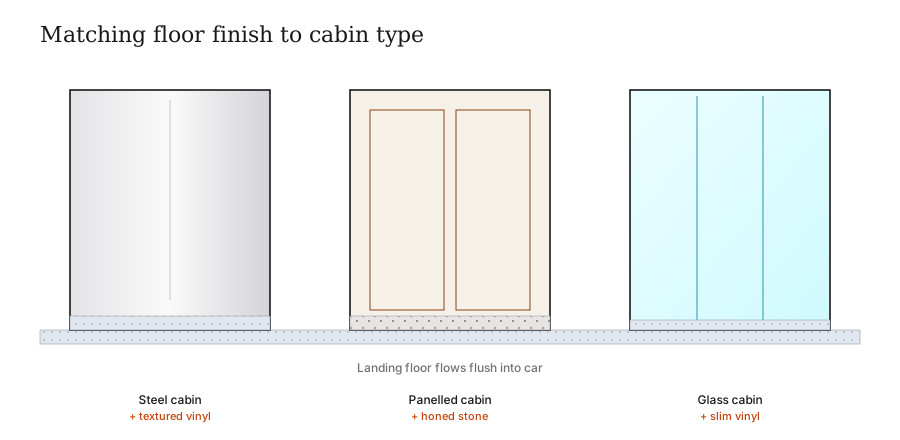
- Cabin finish pairing. A light vinyl or wood-look floor warms a stainless-steel cabin; a stone floor suits a more formal, panelled cabin. See the cabin-materials reference for the wall and ceiling side of this pairing.
- Glass and panoramic cabins. In a glass or pneumatic vacuum cabin the floor is visible from outside; a clean, low-build-up finish like textured vinyl or a slim porcelain keeps the cabin light and the threshold flush.
- Accessibility-led homes. If a wheelchair user or an elderly resident uses the lift daily, lead with rubber or slip-rated vinyl, a dead-level flush threshold, and clear contrast nosing — appearance comes after safe footing.
A quick specification checklist for the floor
- Wet slip rating specified (textured / honed / matt — not polished).
- Finished floor weight confirmed by the vendor and inside the rated load.
- Threshold meets the landing dead level and flush — no step or lip.
- Contrast nosing at the threshold for low-vision safety.
- Easy-clean finish with no slippery polish or deep grout joints.
- Finish matched to the cabin and, where sensible, to the landing floor.
For the wider build, see the lift specification checklist, and for how the car levels accurately at each landing, the controller systems reference.
Related guides
- Lift cabin materials reference — walls, ceilings and finishes that pair with the floor.
- Cabin material selection (design cluster) — choosing the overall look and feel.
- Lift door types explained — manual versus automatic and accessible openings.
- Home-lift cost guide — where the floor sits in the cabin package and what is extra.
- Lift specification checklist — the one-page brief for your vendor.
- Residential elevator buyer's guide — the pillar overview.
References
Standards and guidance referenced in this guide (cited by name; figures indicative — confirm with your vendor and local bye-laws):
- IS 14665 — Electric Traction Lifts (BIS, committee ETD 25), including Part 1 (outline dimensions) and Part 4 (components — carframe, car and platform). Part 1: https://law.resource.org/pub/in/bis/S05/is.14665.1.2000.pdf ; Part 2: https://law.resource.org/pub/in/bis/S05/is.14665.2.1-2.2000.pdf
- IS 15259 — Hydraulic lifts (companion code), cited by name.
- IS 17900 with EN 81-20 / EN 81-50 — current lift safety concept for components and controllers (levelling accuracy that lets the car stop flush at the landing), cited by name.
- National Building Code of India 2016, Part 8 (Building Services), Section 5 — Installation of Lifts, Escalators and Moving Walks: https://www.bis.gov.in/standards/technical-department/national-building-code/ ; Guide for Using NBC 2016: https://www.bis.gov.in/wp-content/uploads/2022/08/Booklet-Guide-for-Using-NBC-2016.pdf
- CPWD / MoHUA Harmonised Guidelines and Space Standards for a Barrier-Free Built Environment (2016) — accessible-lift essentials including a level, flush threshold and tactile/contrast cues: https://www.cpwd.gov.in/Publication/Harmonisedguidelinesdreleasedon23rdMarch2016.pdf
- Rights of Persons with Disabilities Act, 2016 (accessibility standards benchmark): https://ssepd.odisha.gov.in/sites/default/files/2024-01/RPWD%20ACT.pdf
Export this guide
Related Guides — Deep-dive reading
Lift Cabin Material Selection Guide (India): Steel, Glass, Wood, Laminate and Stone
A practical decision framework for choosing your home lift cabin material — compared on look, durability, maintenance, weight, cost and best-fit home style.
Home Lifts & AccessibilityLift Cabin Materials Guide (India): Grades, Finishes and Properties
A technical materials reference for home-lift cabins — stainless-steel grades, finishes and the properties that decide durability, corrosion, fire and load
Home Lifts & AccessibilityTypes of Home Lifts in India (2026): Complete Comparison and How to Choose
All seven home-lift options on one comparison table, plus a five-question decision framework to pick the right one
Home Lifts & AccessibilityRelated Tools — Try Free
Lift Safety Audit Checklist
Interactive checklist that scores your home lift on safety devices, compliance and upkeep.
ChecklistAccessibility Compliance Calculator
Check a planned lift against the CPWD and RPwD accessible-lift benchmarks for a score.
Lift CheckerHome Lift Budget Planner
Full line-item budget for a home lift — equipment, finishes, civil, GST, AMC and contingency.
Lift Planner