
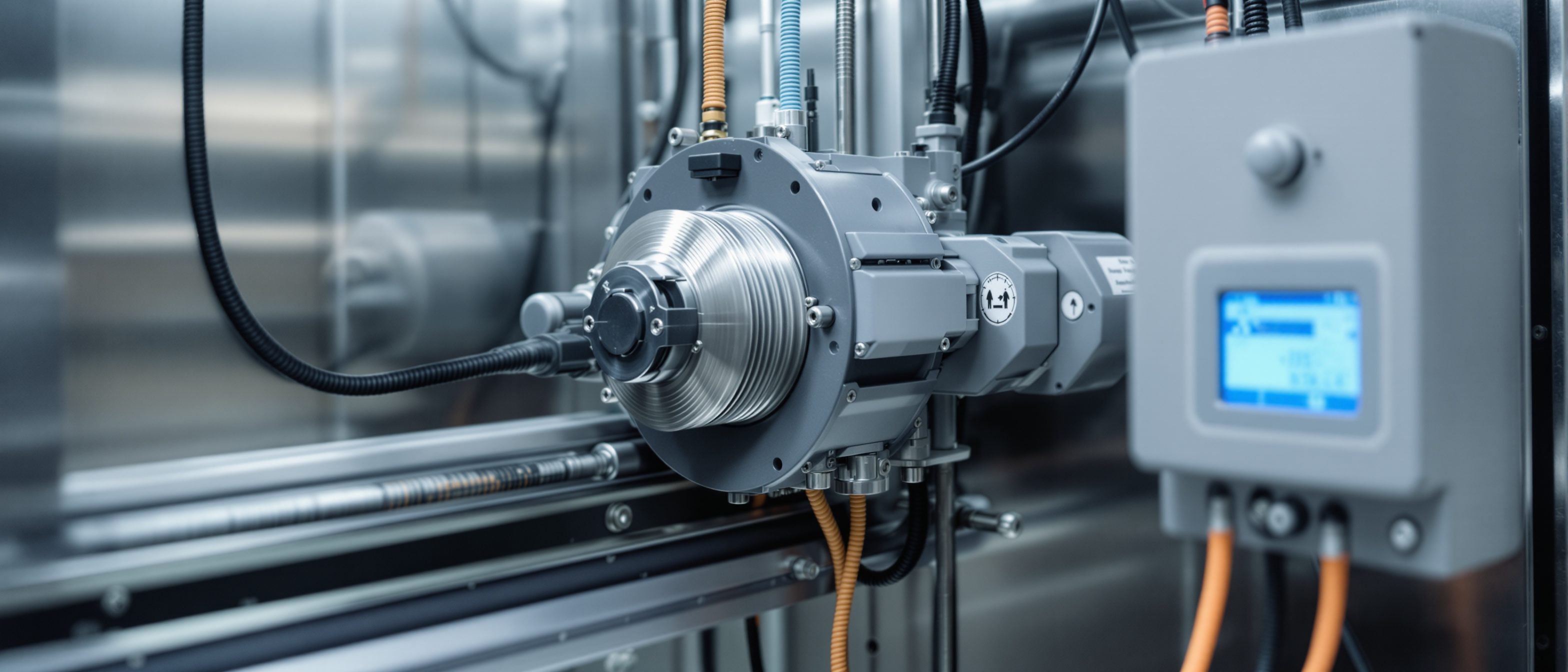
Lift Motor Technologies Explained (India): Geared, Gearless PMSM, Hydraulic and VVVF
A component-level reference to lift machines and drives — geared traction, gearless permanent-magnet, hydraulic pump motors, and VVVF and regenerative drive control for Indian homes.
The motor and its drive are the heart of a lift. They decide how quietly the car moves, how precisely it stops level with your floor, how much electricity it draws every year, and how often a technician has to visit. Yet "motor" is shorthand for two distinct things working together: the machine that produces torque (geared traction, gearless permanent-magnet, or a hydraulic pump motor) and the drive that controls it (the VVVF controller and, in newer systems, a regenerative unit). This guide is the technical reference for both.
It sits in the Studio Matrx Materials and Components sub-cluster — a component-level reference, not a buying or styling guide. If you want the plain-language picture of how a whole lift moves the car up and down, read the overview first: How Home Lifts Work. This page goes a layer deeper into the machines and drives themselves. For sibling components see elevator safety components and lift controller systems; for money, the home lift cost guide.
Indicative throughout — exact machine ratings, drive models and efficiency figures vary by manufacturer, capacity and speed. Confirm specifications against your vendor's datasheet and your state lift inspectorate's requirements.
The two halves of a drive system
Every electric lift drivetrain has two parts that are easy to confuse:
- The machine (the motor) converts electrical energy into the rotation that moves the ropes or, in hydraulics, pumps the oil. This is geared traction, gearless PMSM, or a hydraulic pump motor.
- The drive (the controller's power stage) decides exactly how the machine accelerates, runs and stops. On modern lifts this is a VVVF drive, optionally with a regenerative front end. The logic that commands the drive lives in the controller.
A geared machine with no proper drive control feels jerky and stops roughly; a gearless PMSM machine with a good VVVF drive feels seamless. The combination is what you actually experience, so this guide treats machine and drive together.
Machine types compared
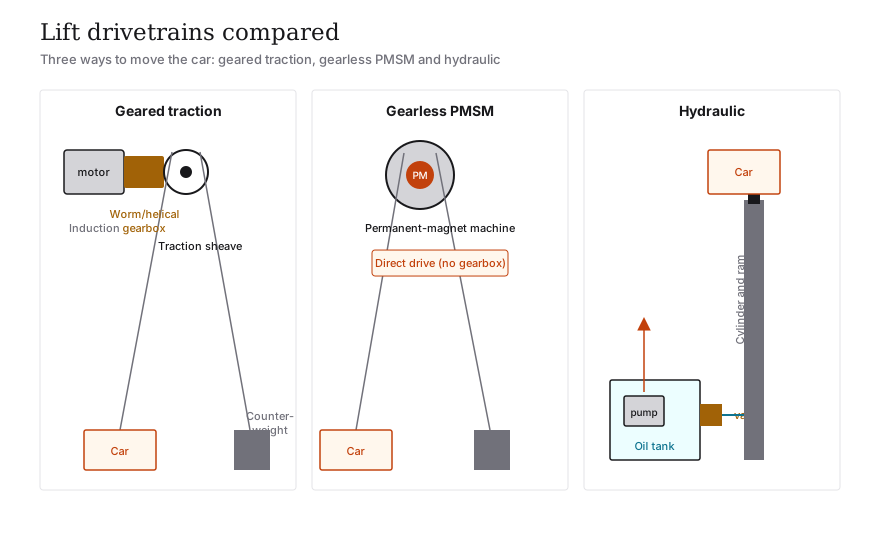
Geared traction (induction motor plus gearbox)
The older traction arrangement: a three-phase AC induction motor spins fast and a worm or helical gearbox reduces that speed to turn the traction sheave that drives the ropes. The gearbox is what makes a small, cheap, fast-spinning motor produce the high torque and low rotational speed a lift sheave needs.
It works, and millions of lifts use it, but the gearbox is the weak link: it adds mechanical noise and vibration, loses energy as friction and heat, needs gear oil that must be checked and changed, and wears over decades. Worm-geared machines are the older, less efficient sub-type; helical-geared machines are more efficient and quieter but still carry a gearbox. Geared machines historically also needed a separate machine room, usually above the shaft.
Gearless PMSM (the modern norm)
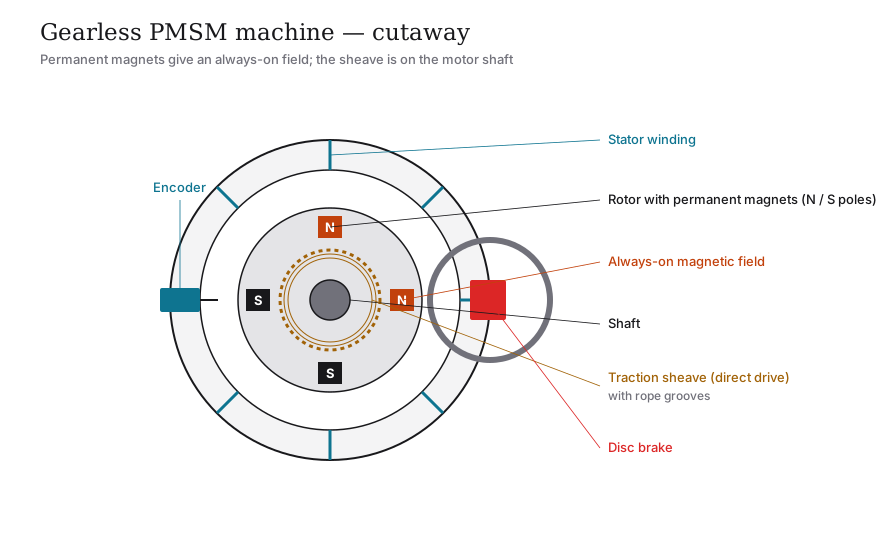
A gearless permanent-magnet synchronous machine (PMSM) removes the gearbox entirely. The traction sheave is mounted directly on the motor shaft — direct drive. Instead of relying on a separate field winding, the rotor carries permanent magnets, so the magnetic field is "always on" and the machine produces high torque at the low speeds a lift needs without any gear reduction.
The payoff is large and is why PMSM is now the default for new residential and machine-room-less (MRL) lifts:
- Quiet and smooth — no gear mesh, far less vibration.
- Energy-efficient — no gearbox friction losses; permanent-magnet excitation needs no current to maintain the field.
- Compact — small and flat enough to sit inside the hoistway, which is what makes MRL designs possible and removes the separate machine room.
- Long life, low maintenance — no gear oil, fewer wearing parts.
Hydraulic pump motors
A hydraulic lift has no traction sheave at all. An electric pump motor drives a pump that pushes oil into a cylinder; the ram extends and raises the car. To descend, a control valve releases oil back to the tank and the car comes down under controlled gravity — the motor does little on the way down.
Two arrangements exist for the pump-motor-tank unit:
- Submersible (wet) pump motor — the motor sits inside the oil tank. The oil cools the motor and damps its noise, so submersible units are quieter; this is common on modern home hydraulic packs.
- Dry pump motor — the motor is mounted outside the tank. Easier to service but typically noisier.
Hydraulic drives suit low-rise homes (roughly two to four floors), are mechanically simple, and the power pack can sit in a small adjacent cabinet. The trade-offs are that the motor only works on the way up (so it can draw a strong ascent current), oil temperature matters, and they are generally slower. See the how-lifts-work overview for where hydraulic fits among the drive types.
| Attribute | Geared traction (induction plus gearbox) | Gearless PMSM (direct-drive) | Hydraulic pump motor |
|---|---|---|---|
| Machine principle | AC induction motor plus worm or helical gearbox | Permanent-magnet synchronous motor, sheave on shaft | Electric motor drives oil pump and cylinder ram |
| Gearbox | Yes (worm or helical) | None | None (pump, not sheave) |
| Noise and vibration | Higher (gear mesh) | Lowest (no gears) | Low to moderate (submersible quieter) |
| Energy efficiency | Lower (gear and field losses) | Highest | Lower on ascent; minimal on descent |
| Maintenance | Gear oil, gear wear, more parts | Least; no gear oil | Oil changes, seals, valve service |
| Machine room | Often a separate room | None (enables MRL) | Small power-pack cabinet |
| Typical fit | Older or budget traction installs | Modern homes, MRL, the 2026 norm | Low-rise homes, 2 to 4 floors |
| Best companion drive | VVVF | VVVF, often regenerative | Soft-start or VVVF on the pump |
"Gearless" and "MRL" are not the same thing — gearless describes the machine, MRL describes a layout with no separate machine room. They go together because a compact gearless PMSM is small enough to live in the hoistway, but you can in principle have one without the other.
VVVF drive control
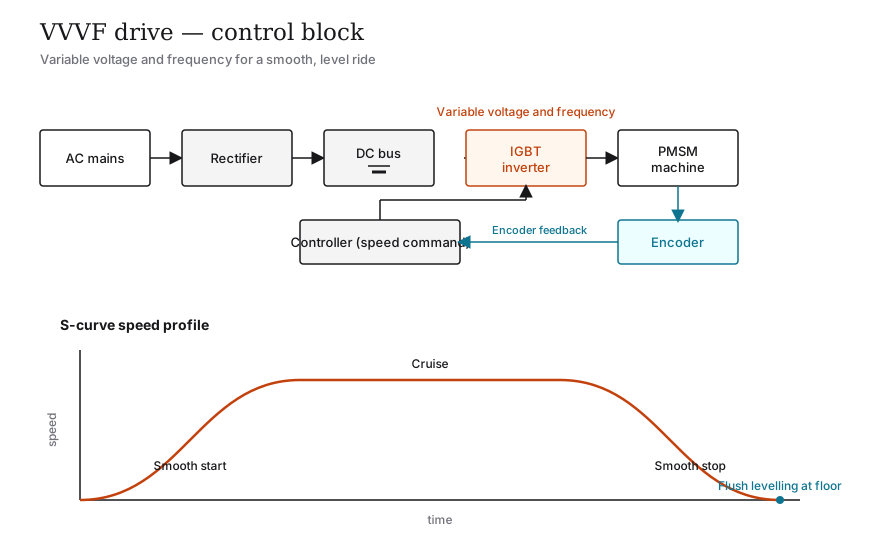
VVVF stands for variable-voltage variable-frequency. The speed of an AC machine is governed by the frequency of the supply, and its torque by the voltage. A VVVF drive can vary both, continuously, so it controls the machine precisely throughout every journey rather than just switching it on and off.
A VVVF drive has three stages:
1. Rectifier — converts the incoming AC mains into DC, stored on a DC bus.
2. Inverter — fast electronic switches (IGBTs) chop that DC back into AC at exactly the voltage and frequency the controller commands, moment by moment.
3. Feedback — an encoder on the machine reports actual position and speed so the drive corrects itself in a closed loop.
What this buys the passenger and the building:
- Smooth acceleration and deceleration — the drive ramps speed along an S-curve rather than starting and stopping abruptly, so the ride is comfortable and free of jolts.
- Accurate levelling — by tapering speed to near-zero before the floor, the car stops flush with the landing. This matters for safety (no trip step) and for wheelchair access.
- Less mechanical stress — gentle starts reduce wear on ropes, sheave, brake and structure.
- Energy saving — the drive only draws the power each phase of the journey actually needs, instead of full current at every start.
VVVF is now standard on essentially all new electric lifts and is also applied to the pump motor on better hydraulic units to soften the start. The command logic that tells the VVVF drive what to do — which call to serve, when to open doors, how to level — lives in the microprocessor controller.
Regenerative drives and energy efficiency
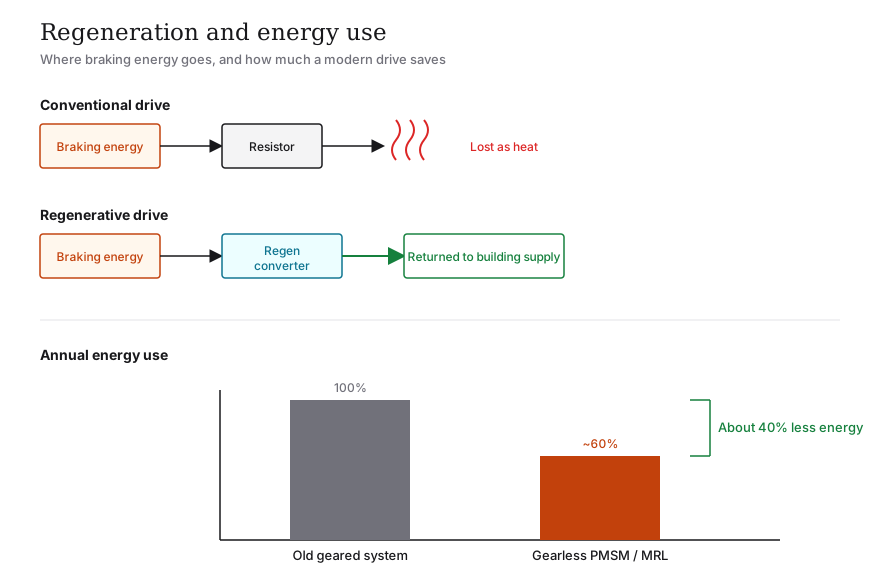
A lift spends a surprising amount of time braking — a full car going down, or an empty car going up, is an "overhauling" load where the counterweight drives the machine. In an ordinary VVVF drive, that braking energy is dumped into a resistor and lost as heat. A regenerative drive adds a converter that instead feeds that energy back into the building's electrical supply, where other loads use it.
Two efficiency gains stack up in a modern installation:
- The machine: a gearless PMSM / MRL system can use on the order of 40 percent less energy than an old geared machine, by eliminating gearbox friction and the heat of a separate machine-room motor, and by needing no current to sustain a permanent-magnet field.
- The drive: a regenerative front end recovers the braking energy that a conventional drive would have wasted, and removes the heat that resistor banks add to the shaft (cutting any cooling load too).
For a home lift the absolute rupees saved are modest because the lift runs intermittently, but the comfort, the reduced heat in the shaft and the lower running cost over a 20-plus-year life are real. Frame any quoted savings as indicative and weigh the higher upfront price of a regenerative drive against your usage. The cost guide covers running and AMC costs; remember that some maintenance contracts exclude the motor and controller, so confirm whether drive electronics are covered.
| Drive feature | Conventional VVVF | Regenerative VVVF |
|---|---|---|
| Braking energy | Burned in a resistor as heat | Returned to the building supply |
| Heat in shaft | Higher (resistor bank) | Lower |
| Running cost | Lower than old systems | Lowest |
| Upfront cost | Standard | Higher |
| Best fit | Most homes | Frequent use, taller stacks, green builds |
How to read a motor and drive specification
When you compare quotes, the machine and drive line items tell you a lot about ride quality and life-cycle cost. Look for:
- Machine type: "gearless PMSM" or "permanent-magnet synchronous" signals the modern, quiet, efficient norm; "geared" or "worm gear" signals an older arrangement. Hydraulic quotes name a submersible or dry pump motor.
- Drive type: confirm VVVF (sometimes written VF or VFD) is included — it should be, on any new lift. Ask whether the drive is regenerative if efficiency matters to you.
- Power supply: small home lifts often run on single-phase; larger traction machines need three-phase. This affects your electrical works.
- Encoder / closed-loop: closed-loop VVVF with an encoder gives the most accurate levelling.
- ARD compatibility: the drive must work with an Automatic Rescue Device so the car can reach the nearest floor on a power cut — essential in India. See the safety components catalogue.
The safety devices around the machine — the brake, the overspeed governor and safety gear, the buffers — are covered in elevator safety components; they are independent of the drive electronics by design. The intelligence that commands the drive is in lift controller systems.
Related guides
- How home lifts work (India) — the drive-types overview this page goes deeper than.
- Lift controller systems (India) — the brain that commands the VVVF drive.
- Elevator safety components (India) — brake, governor, safety gear, buffers.
- Glass elevator technologies (India) and lift shaft construction materials (India).
- Residential elevator buyer's guide (India) — the pillar.
- Home lift cost (India 2026) and lift specification checklist (India).
References
- IS 14665 (Electric Traction Lifts) — Part 2 (installation, operation and maintenance, which covers machines and drives) and Part 4 (Components) for the machine, brake and associated devices. BIS, committee ETD 25; aligned to EN 81.
- IS 14665 Part 2 (BIS): https://law.resource.org/pub/in/bis/S05/is.14665.2.1-2.2000.pdf
- IS 15259 — Hydraulic lifts (companion code covering the hydraulic power pack and pump motor), by name.
- IS 17900 — Indian lift safety standard aligned to EN 81-20 / EN 81-50, the current European safety concept, relevant to drive and machine safety.
- NBC 2016, Part 8 (Building Services), Section 5 — Installation of Lifts, Escalators and Moving Walks.
- BIS Guide for Using NBC 2016: https://www.bis.gov.in/wp-content/uploads/2022/08/Booklet-Guide-for-Using-NBC-2016.pdf
- Lift licensing and state regulation context (verify against your state Act and inspectorate): https://www.99acres.com/articles/know-all-about-the-lift-regulations-in-india.html
Standards and ratings are indicative and were verified in June 2026. Always confirm the exact machine, drive and efficiency specifications with your vendor's datasheet and your state lift inspectorate before purchase.
Export this guide
Related Guides — Deep-dive reading
How Home Lifts Work (India): Hydraulic, Traction, Screw and Vacuum Explained
A plain-language look inside the four drive types that lift a home elevator, plus the core components and safety systems every homeowner should be able to name.
Home Lifts & AccessibilitySingle Phase vs Three Phase Lift Systems (India): Which Supply Does Your Lift Need?
What 230 V single-phase can drive, what needs a sanctioned 415 V three-phase connection, and a clear method to decide for your Indian home.
Home Lifts & AccessibilityLift Specification Checklist (India): The Spec Sheet to Hand Every Home-Lift Vendor
One fillable spec sheet that forces every vendor to quote like-for-like on your shaft, your stops, your safety features.
Home Lifts & AccessibilityRelated Tools — Try Free
Lift Safety Audit Checklist
Interactive checklist that scores your home lift on safety devices, compliance and upkeep.
ChecklistHome Lift Cost Calculator
All-in home lift cost by floors, type, capacity and city — equipment, civil, GST and AMC, with a drive-type comparison.
Lift CalculatorHome Accessibility Planner
Integrate lift, ramp, stairlift and wheelchair circulation into one accessibility plan.
Planner