
Engineered & Composite Building Materials in India: A Specify-and-Select Guide (2026)
What composite materials are, why combining two materials beats either alone, and the families that matter in Indian building and interiors - engineered wood, WPC, FRP/GRP, fibre-cement, ACP and HPL panels, composite decking and advanced fibre-reinforced options. A choose-and-specify guide.
No single natural material does everything. Solid timber looks beautiful but swells, warps and feeds termites. Plastic resists water but sags and creeps under load. Glass fibre is astonishingly strong in tension but useless on its own. The clever move that runs through modern building is to combine two materials so the pair beats either one alone - and that is exactly what a composite is. This guide helps you understand and specify the engineered and composite materials you will meet on an Indian site or in an interiors fit-out, and it cross-links the detailed wood guides rather than repeating them.
This is a choose-and-specify guide. It explains what each composite is, the properties that earn its place, where it fits and the honest trade-offs on cost and recyclability. It does not tell you to fabricate or fit these materials yourself.
Scope and safety: This is a selection guide. Grades, thicknesses, spans and prices here are indicative only - they move with brand, grade, region and freight, so always get local quotes and the manufacturer's tested data sheet. Structural spans, load-bearing decisions, fire ratings, facade fixing and any wet-area detailing are engineering decisions - hand them to a qualified architect, structural engineer or facade consultant. Fabrication, machining and installation belong to skilled trades. Nothing here replaces the IS codes, the manufacturer's data sheet or a licensed professional.
What "engineered" and "composite" actually mean
A composite material is made of two or more distinct materials that stay separate at a microscopic level but act as one. Almost every composite has the same two parts: a matrix - the continuous binder that holds everything together and spreads load, such as resin, cement or plastic - and a reinforcement - the fibres, strands, particles or layers embedded in the matrix that carry the stress, such as glass fibre, wood veneer, steel or cellulose. The matrix protects and shapes; the reinforcement gives strength and stiffness. Neither could do the job alone.
Reinforced concrete is the composite everyone already knows - a concrete matrix that is strong in compression, with steel reinforcement that adds the tension strength concrete lacks (see why reinforcement steel matters). "Engineered" is the broader idea: taking a raw material and manufacturing it - layering, bonding, pressing, fibre-mixing - into a product with more predictable, better-behaved properties than the raw form. Engineered wood, for instance, is more dimensionally stable than the plank it came from.
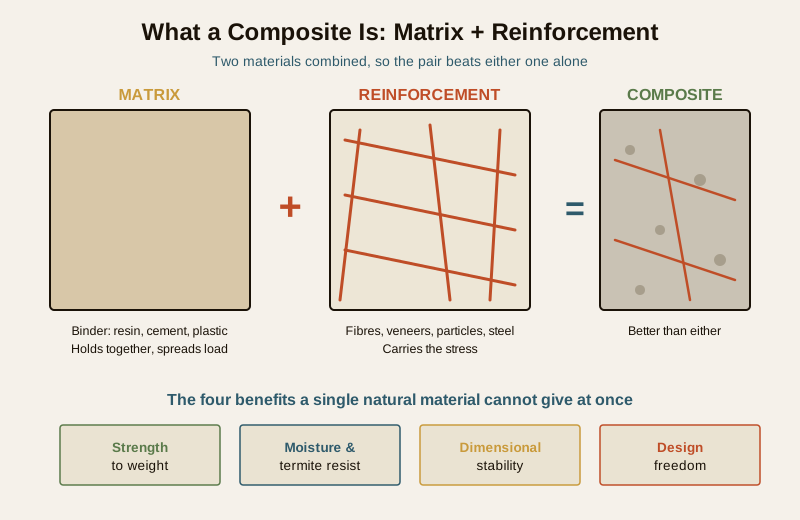
The pay-off from engineering a composite is always one or more of four things a single natural material cannot give you at once: strength-to-weight (strong yet light), moisture and termite resistance (survives wet and pests), dimensional stability (does not warp, swell or shrink with heat and humidity), and design freedom (any shape, colour, finish or span). Keep those four benefits in mind - they are the reason every material below exists.
Engineered wood - the composite you meet first
Engineered wood is the largest composite family in Indian interiors, and it has its own detailed guides, so this is the short map with cross-links rather than a repeat.
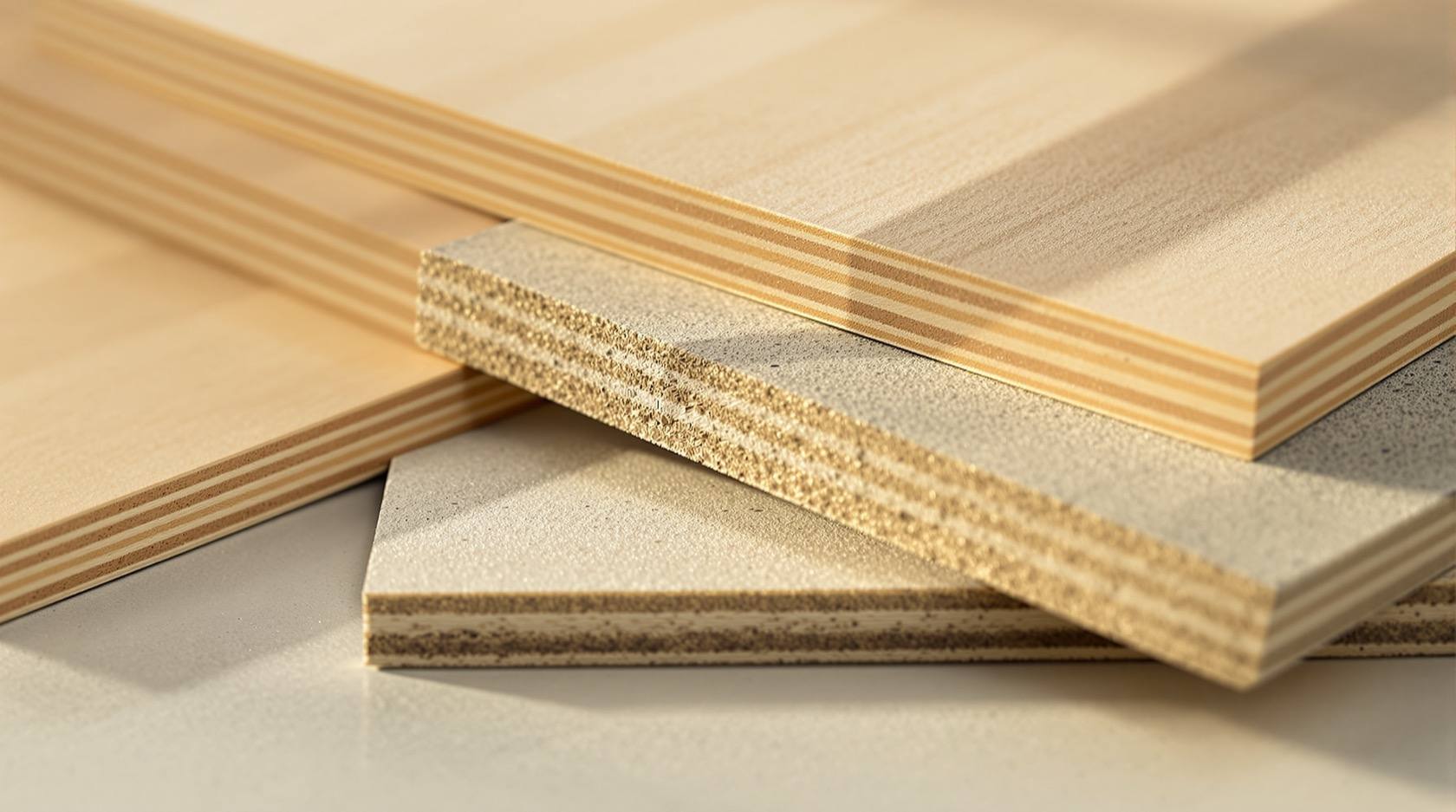
- Plywood - thin wood veneers glued in cross-laminated layers so the grain alternates, cancelling out the warping of solid wood. The workhorse of furniture and joinery. Grades and glue lines matter enormously: see the complete plywood grades guide.
- MDF (medium-density fibreboard) - wood broken to fibre and bonded under heat and pressure into a smooth, uniform board ideal for painted and moulded surfaces, but weak in wet areas.
- HDHMR (high-density high-moisture-resistance board) - a denser, more moisture-tolerant fibreboard positioned between MDF and marine ply. The marine ply vs HDHMR vs MDF comparison sorts these out.
- Particle board - wood chips and shavings bonded with resin; cheapest and flattest, but the least moisture-tolerant and lowest in strength.
- Blockboard - a core of solid wood strips faced with veneer, light and stiff for long shutters and shelves.
- LVL, glulam and CLT - laminated veneer lumber, glued-laminated timber and cross-laminated timber: structural engineered-wood members that span and carry load like beams and slabs, used in mass-timber construction. These are structural elements - specify them with an engineer.
For the wider "is engineered wood better than solid wood" question, read engineered wood vs solid wood. The common thread: cross-layering veneers or bonding fibres tames the movement of natural timber and uses the tree far more efficiently.
WPC - wood-plastic composite
WPC combines wood flour or fibre (the reinforcement) with a plastic polymer such as PVC or polyethylene (the matrix), sometimes with mineral fillers. The wood gives it a timber-like feel and workability; the plastic makes it waterproof, termite-proof and rot-proof. You can cut, drill, screw and route WPC almost like wood, but it will not swell in a bathroom or be eaten by borers.
That combination makes WPC a favourite for exactly the places solid wood struggles: bathroom and balcony door shutters and frames, kitchen cabinet carcasses, wall panelling, louvers, outdoor furniture and decking. Hollow WPC boards are light; solid foam-core WPC is denser and holds screws better. The main trade-offs are that it is heavier and pricier than particle board, can sag over long unsupported spans, and - being a plastic-wood blend - is difficult to recycle at end of life. For moisture-prone rooms it is one of several good answers; weigh it against the alternatives in best materials for moisture-prone homes and the wider moisture-resistant materials guide.
FRP / GRP - fibre-reinforced plastic
FRP (fibre-reinforced plastic), when the fibre is glass, is also called GRP (glass-reinforced plastic) or simply fibreglass. Here glass fibres are the reinforcement carrying huge tensile strength, and a thermoset resin - polyester or epoxy - is the matrix binding and shaping them. The result is remarkable: very strong for its weight, completely corrosion-proof, waterproof and mouldable into almost any shape.
In Indian building you meet FRP as water and chemical storage tanks, corrugated and flat roofing and skylight sheets, cladding and wall panels, gratings and walkways in wet or corrosive areas, ducting, doors and door shutters, and moulded shapes like domes, cornices and planters. Its stand-out virtues are corrosion resistance where steel would rust and concrete would spall, and design freedom for curved forms. The honest trade-offs: FRP is a thermoset, so it cannot be melted and remoulded and is hard to recycle; cutting and grinding it releases fine glass and resin dust that needs proper PPE; and quality varies with the fabricator, so specify tested products.
Fibre-cement, ACP and HPL - the panel composites
Three composite panel families dominate walls, ceilings and facades, and each has its own detailed guide.
Fibre-cement board combines a cement matrix with cellulose and synthetic fibres - the fibres let a thin cement panel bend a little and resist cracking. It is water-resistant, fire-resistant, termite-proof and dimensionally stable, which is why it lines wet areas and clads facades where gypsum fails. The full treatment, including asbestos-free confirmation and safe cutting, is in cement boards and fibre-cement.
ACP (aluminium composite panel) is a textbook sandwich composite: two thin aluminium skins bonded to a low-density polyethylene or mineral-filled core. The skins give a flat, coloured, weatherproof face; the light core gives stiffness at a fraction of solid-metal weight - classic strength-to-weight. ACP is the ubiquitous facade cladding on Indian commercial buildings. Fire is the critical caveat: only fire-rated (mineral-core) ACP should go on tall or high-risk facades.
HPL (high-pressure laminate) compresses kraft-paper layers soaked in phenolic resin, topped with a decorative and protective layer, under high heat and pressure into a dense, hard, scratch-resistant sheet. Exterior-grade compact HPL clads facades; thinner HPL faces furniture and doors. Both ACP and HPL as facade skins belong to the building facades hub, and fire behaviour of cladding is covered in facade fire safety cladding - a decision to take with a facade consultant, never a DIY call.
Composite decking and outdoor boards
Composite decking is WPC's outdoor specialty: wood fibre plus a capped plastic shell engineered to survive sun, rain and foot traffic on balconies, terraces, poolsides and garden decks without the annual sanding, oiling and splintering that natural-wood decking demands. It resists water, fade, stain and termites, and comes in wood-look colours and textures. It costs more up front than most timber decking and, again, is hard to recycle - but over a decade of no-maintenance outdoor life the value case is strong. Specify the joist spacing and fixing system from the maker's data sheet, and leave laying to a skilled installer.
Advanced and future composites
A few higher-performance composites are worth knowing even if you specify them only with a structural engineer:
- Fibre-reinforced concrete (FRC) - concrete with steel, glass, polypropylene or basalt fibres mixed in to control cracking and add toughness, used in floors, pavements, precast and shotcrete. It complements, not replaces, conventional rebar; read it alongside understanding concrete strength.
- GFRC / GRC (glass-fibre reinforced concrete) - a cement matrix with glass fibres cast into thin, light, mouldable panels for facades, screens, cornices and cladding - the look of cast stone at a fraction of the weight.
- Carbon-fibre strengthening - carbon-fibre-reinforced polymer (CFRP) fabrics or plates bonded to existing beams, columns and slabs to add strength during repair and retrofit, without heavy new concrete. Purely an engineered structural repair - always engineer-designed.
- GFRG (glass-fibre reinforced gypsum) - large hollow gypsum-and-glass-fibre wall panels that go up fast as a rapid building system for walls, floors and roofs in low-rise construction.
These sit at the performance edge: they buy strength-to-weight and durability that ordinary concrete or steel cannot, usually at higher material cost and with specialist installation.
The composite map - what combines with what, and why
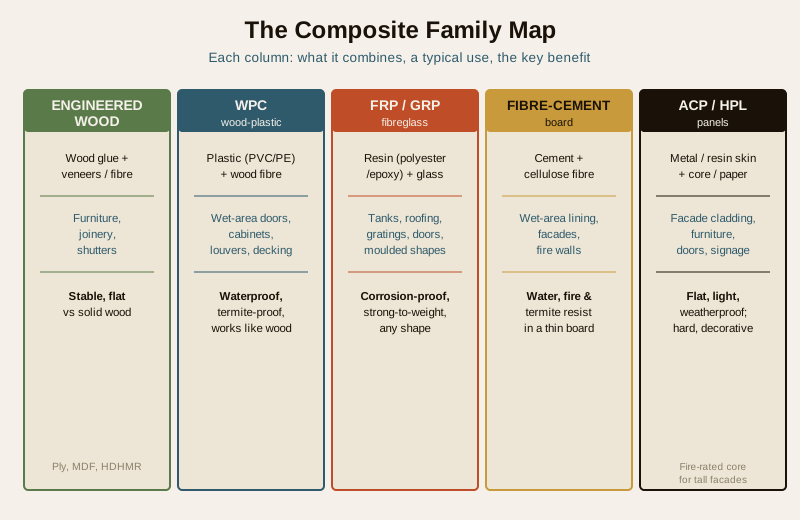
The whole family reads most clearly as a single map: each composite is a matrix plus a reinforcement, aimed at a benefit a single natural material cannot deliver.
| Composite | What it combines (matrix + reinforcement) | Where it is used | Why - the benefit it buys |
|---|---|---|---|
| Plywood | Wood glue + cross-laminated veneers | Furniture, joinery, shutters | Dimensional stability vs solid wood |
| MDF / HDHMR | Resin + wood fibre | Painted panels, moulded fronts | Smooth uniform surface, HDHMR adds moisture resistance |
| WPC | PVC/PE plastic + wood fibre | Wet-area doors, cabinets, louvers, decking | Waterproof and termite-proof, works like wood |
| FRP / GRP | Polyester/epoxy resin + glass fibre | Tanks, roofing sheets, gratings, doors, moulded shapes | Corrosion-proof, strong-to-weight, any shape |
| Fibre-cement board | Cement + cellulose/synthetic fibre | Wet-area linings, facades, fire walls | Water, fire and termite resistance in a thin board |
| ACP | Aluminium skins + polyethylene/mineral core | Facade cladding, signage | Flat, light, weatherproof - strength-to-weight |
| HPL / compact laminate | Phenolic resin + kraft paper layers | Facade cladding, furniture, doors | Hard, scratch and weather resistant, decorative |
| Composite decking | Capped plastic + wood fibre | Balconies, terraces, poolside, garden decks | No-maintenance outdoor timber look |
| FRC / GFRC | Cement + steel/glass/polymer fibre | Floors, precast, thin facade panels | Crack control, toughness, light mouldable panels |
| GFRG | Gypsum + glass fibre | Rapid wall / floor building panels | Fast, light low-rise construction |
How to choose - and the honest trade-offs
Start from the demand, not the material. Where the enemy is water or termites, reach for WPC, FRP or fibre-cement over any natural wood. Where the enemy is weight or span, sandwich composites like ACP and honeycomb, or engineered-wood beams, give strength without mass. Where you need design freedom - curves, moulded shapes, any colour - FRP, GFRC and HPL open forms that solid materials cannot. Where the enemy is movement - warping, swelling, cracking - plywood, MDF and fibre-cement stay flat where the raw material would not.
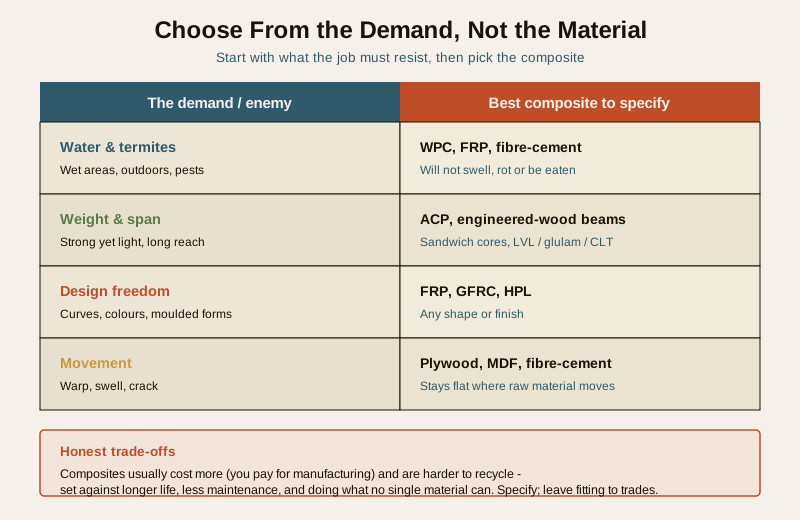
The trade-offs are real and worth stating plainly. Composites almost always cost more than the single material they replace - you are paying for the manufacturing. And most composites are harder to recycle: a thermoset FRP cannot be melted down, a wood-plastic board mixes two waste streams, and a resin-bonded panel is difficult to separate at end of life. Set that against a longer service life, far less maintenance, and doing a job no natural material could do at all.
| Composite | Relative cost | Recyclability | Sustainability note |
|---|---|---|---|
| Engineered wood | Low to moderate | Moderate (resin-bonded) | Uses the tree efficiently; low-VOC glue matters |
| WPC | Moderate to high | Poor (mixed streams) | Waterproof, long life offsets end-of-life |
| FRP / GRP | Moderate to high | Poor (thermoset) | Very long service life; cannot be remelted |
| Fibre-cement | Moderate | Poor (inert, landfill) | Durable, asbestos-free, non-combustible |
| ACP / HPL | Moderate to high | Poor (bonded layers) | Aluminium skins hold value; core does not |
| Composite decking | High | Poor (capped board) | No-maintenance decade offsets upfront cost |
Read that as guidance, not gospel - recyclability improves as recycled-content and take-back schemes grow. Where sustainability weighs heavily, favour products with recycled content, look for low-VOC binders, and read sustainability and green buildings; green-building frameworks such as GRIHA, IGBC and LEED may credit durability, recycled content and low-emission materials.
For the raw single materials these composites are built from and compared against, keep the complete building materials guide and the how to choose building materials guide close, and browse the wider materials and finishes library.
Standards and certification
Composite materials in India are covered by product-specific Bureau of Indian Standards (BIS) specifications - named generally here: IS standards govern plywood and block boards, fibre-cement flat sheets, wood-plastic composites and glass-fibre products; consult the current editions for each product. Because composites vary so much by brand and grade, the manufacturer's tested data sheet is the authoritative source for a specific product's strength, moisture rating, fire classification, span tables and fixing details - and it should confirm any asbestos-free status. Fire and life-safety provisions, especially for facade cladding, sit within the National Building Code of India (SP 7:2026). Verify against the current data sheet and code editions rather than relying on memory.
Key takeaways
- A composite material combines a matrix (binder - resin, cement, plastic) with a reinforcement (fibres, veneers, particles) so the pair beats either material alone.
- Composites buy one or more of four things a single natural material cannot give at once: strength-to-weight, moisture and termite resistance, dimensional stability, and design freedom.
- The families that matter in India are engineered wood (plywood, MDF, HDHMR, particle board, blockboard, LVL/glulam/CLT), WPC, FRP/GRP, fibre-cement board, ACP and HPL panels, composite decking, and advanced FRC, GFRC, CFRP and GFRG.
- Choose from the demand: WPC/FRP/fibre-cement for wet and termite-prone, ACP and engineered beams for light and long, FRP/GFRC/HPL for design freedom, plywood/MDF/fibre-cement for staying flat.
- The honest trade-offs are higher cost and harder recyclability - set against longer life, less maintenance and doing what no single material can. Specify the product; leave fabrication and installation to skilled trades.
References
- Bureau of Indian Standards - product-specific IS specifications for plywood and block boards, fibre-cement flat sheets, wood-plastic composites and glass-fibre reinforced products; consult the current editions for grade, strength and marking requirements.
- National Building Code of India (SP 7:2026) - fire and life-safety provisions relevant to composite cladding, panels and linings in building assemblies.
- Manufacturer technical data sheets - the authoritative source for a specific composite's tested strength, moisture rating, fire classification, span tables, fixing details and recycled content.
- Studio Matrx guides: complete building materials guide, complete plywood grades guide, engineered wood vs solid wood, marine ply vs HDHMR vs MDF, cement boards and fibre-cement and the building facades hub.
Export this guide
Related Guides — Deep-dive reading
Composite Bathroom Materials India: WPC, HDHMR, Engineered Stone, Resin & FRP Guide
The India-first guide to engineered composite materials for bathrooms — WPC and HDHMR boards for waterproof vanities, engineered stone and terrazzo for basins and counters, resin and mineral composites, FRP and SMC panels — why they beat natural wood and plywood in humidity, where each fits and what they cost.
BathroomsMetal & ACP Facades in India — Appeal, Core Types, and the Fire Lesson
Aluminium composite panels and metal cladding are India's favourite modern facade after glass. Here is how ACP is built, why the PE vs FR vs A2 core decides whether it is a finish or a fuel, what NBC 2016 and IS 17682 require, and the real cladding-fire lessons India must heed.
Building FacadesCalcium Silicate Boards in India: Fire-Rated Partition, Ceiling & Cladding Guide (2026)
What a calcium silicate board is, why it leads on fire resistance and damp tolerance, where it beats gypsum and cement boards, how to tell it apart from fibre-cement, plus indicative cost and safe cutting - a specify-and-select guide.
Building MaterialsRelated Tools — Try Free
Door Material Comparison Tool
Compare 2–4 door materials on cost, durability, maintenance, security and moisture resistance.
Comparison ToolWindow Material Comparison Tool
Compare uPVC, aluminium, wood, steel and composite windows on cost, life, upkeep and insulation.
CompareMaterial Comparison Sheet
India's interior material cheatsheet — plywood, finishes, hardware, countertops, paints, waterproofing.
Reference Guide