
Moisture-Resistant Building Materials in India: The Right Material for Every Wet Zone (2026)
Moisture is the biggest enemy of Indian buildings - monsoon, rising damp, condensation, leaks and coastal humidity. This guide separates waterproofing (a system) from choosing inherently moisture-tolerant materials, then names the right material for bathrooms, exteriors, roofs, basements and finishes - with a zone-by-zone selector table. A specify-and-select guide.
Ask any Indian builder what quietly destroys more homes than fire, earthquake or termites combined, and the honest answer is water. Not a dramatic flood - just the slow, relentless work of the monsoon soaking a wall, damp rising out of the ground, condensation sweating behind a wardrobe, a hairline leak feeding a stain, and coastal air that never quite dries out. Paint blisters, plywood swells, gypsum crumbles, steel rusts, and mould creeps across the ceiling. In much of India, moisture is simply the default enemy, and the buildings that survive it are the ones designed around that fact from day one.
This guide helps you choose and specify materials that tolerate moisture - the sheets, boards, tiles, timber-substitutes, hardware and finishes that keep performing where water is a constant. It draws one line hard: waterproofing is a system you apply; moisture resistance is a property you select. You need both, but this page is about the second - picking the right material for each wet zone. For the applied barrier itself, cross-link out to the waterproofing guides rather than repeat them here.
Scope and safety: This is a selection guide. Grades, prices and performance here are indicative only - they move with brand, region, exposure and freight, so always get local quotes and the manufacturer's tested data sheet. Waterproofing application and detailing, damp-proof-course installation, basement tanking, structural repair of water-damaged concrete and drainage design are engineering decisions - hand them to a qualified waterproofing specialist, architect or structural engineer. Nothing here replaces the IS codes, the manufacturer's data sheet or a licensed professional.
Waterproofing vs moisture-resistant materials - the difference that matters
These two ideas get muddled on site, and the confusion causes real failures. They are not the same thing.
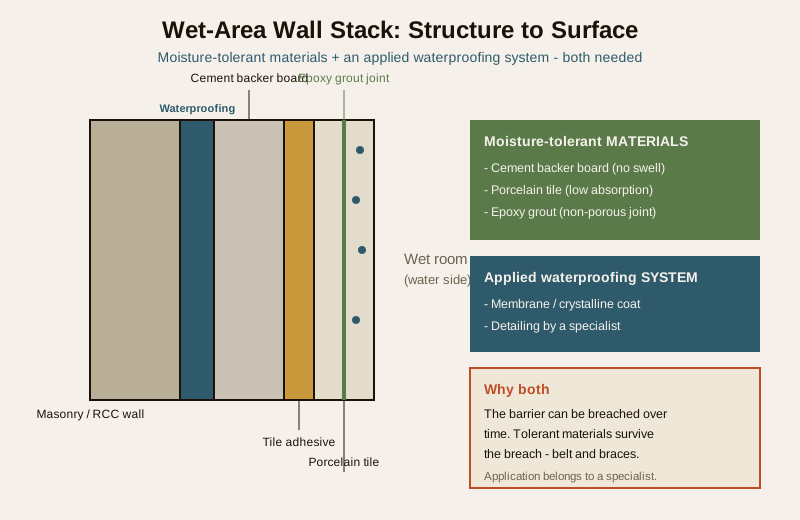
Waterproofing is an applied system - a membrane, a crystalline slurry, an integral admixture, a liquid coating - that stops water from passing through a surface. It is a barrier, built up in layers to a tested detail, and it is only as good as its weakest joint. Waterproofing application and detailing is specialist work; this guide defers it entirely to the waterproofing guide and waterproofing chemicals explained.
Moisture resistance is an inherent property of a material - whether the sheet, board, timber or tile will swell, soften, rust, rot or grow mould once water gets past the barrier. And water always, eventually, gets somewhere. A grout line cracks, a sealant ages, a pipe weeps. When it does, the question is: what is the water sitting against? Cement board shrugs; gypsum dissolves. Porcelain ignores it; commercial MDF blows up.
The professional habit is to assume the barrier will one day be breached, and specify materials that survive the breach. Belt and braces: waterproof the assembly, and build it from things that do not mind getting wet. Get the material wrong and no amount of waterproofing saves you for the life of the building.
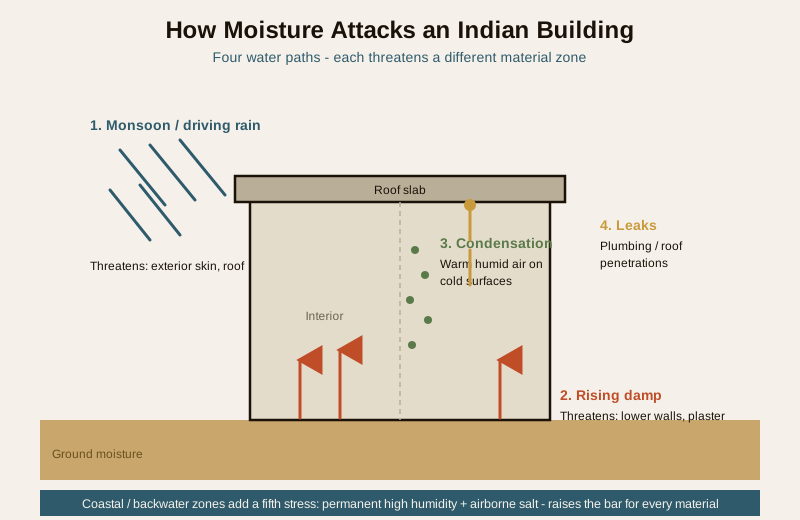
The four ways moisture attacks an Indian building
Before choosing materials, know your enemy. Water reaches a building four different ways, and each one calls for a different response.
- Monsoon and driving rain. Wind-driven rain lashes exterior walls, parapets, balconies and roofs for weeks. This is a surface-exposure problem - the outer skin must shed water and not degrade under repeated soaking and drying.
- Rising damp. Ground moisture wicks up through the foundation and lower walls by capillary action, carrying salts that blister plaster and paint. This is why buildings need a damp-proof course (DPC) and why lower-wall materials must tolerate persistent low-level damp.
- Condensation. Warm, humid air meets a cold surface - behind wardrobes on external walls, on single-glazed windows, on cold-water pipes, under un-insulated roof slabs - and water forms out of the air itself. Insulation and vapour control matter here as much as the surface material.
- Leaks. Plumbing joints, roof penetrations, sunk-slab bathrooms and terrace waterproofing failures deliver concentrated water to hidden places, where it can work for months before it shows.
Coastal and backwater regions - Mumbai, Goa, Kerala, coastal Andhra and Tamil Nadu, the Konkan - stack a fifth stress on top: permanent high humidity plus airborne salt, which corrodes metal and keeps everything perpetually damp. In those zones the moisture-tolerance bar is higher for every material, and stainless or properly coated hardware stops being optional.
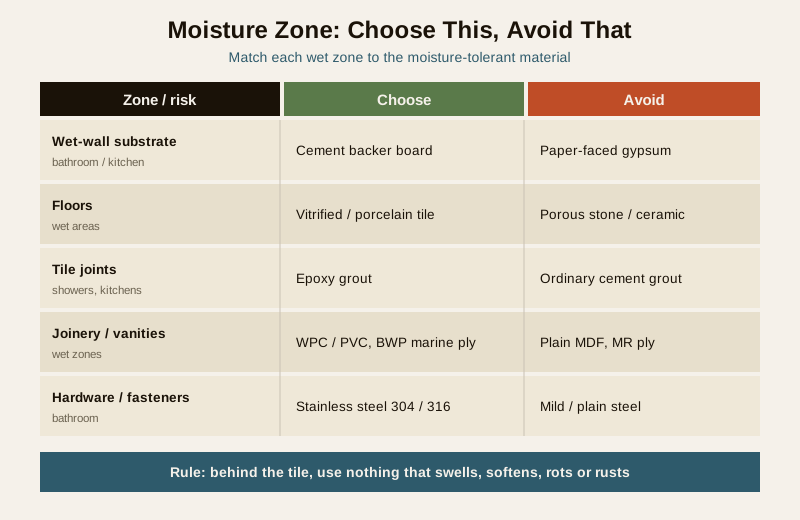
Wet areas - bathrooms, kitchens, utility and balconies
Wet areas are where material choice is most brutally tested, and where the classic mistakes cluster. The governing rule: behind the tile, use nothing that swells or softens.
- Backer board, not gypsum. Never line a wet-area wall or a sunk bathroom with ordinary paper-faced gypsum board - it drinks water and disintegrates. Use a cement backer board / fibre-cement board as the tile substrate; it is dimensionally stable, rot-proof and water-tolerant. See cement boards and fibre-cement for the full board family.
- Porcelain and vitrified tiles. Choose fully vitrified porcelain (very low water absorption) over porous ceramic or natural stone for floors and wet walls. They neither absorb nor stain and are the workhorse wet-area surface. Selection sits in the flooring hub.
- Epoxy grout, not cement grout. The grout line is the usual point of failure - cement grout is porous, cracks and grows mould. Epoxy grout is effectively non-absorbent, stain-proof and far more durable in showers and kitchens. This single upgrade prevents most tile-joint damp; see epoxy grouts and tile grouts.
- WPC and PVC for joinery and trims. For vanities, louvres, door frames and skirting in wet zones, wood-plastic composite (WPC) and PVC boards do not swell, rot or feed termites - a natural fit where timber would fail.
- BWP marine ply or HDHMR where you must use a wood board. If a wet-area cabinet has to be a wood-based board, specify BWP (boiling-water-proof) marine-grade plywood or high-density HDHMR - never commercial MR ply or plain MDF, which delaminate and blow up when wet. The full comparison is in marine ply vs HDHMR vs MDF.
- Stainless steel or aluminium hardware. Hinges, handles, channels, drain gratings and fasteners in bathrooms should be SS 304 (SS 316 near the coast) or anodised aluminium - mild steel rusts and streaks within a season.
Exteriors - facades, parapets and balconies
The building's outer skin faces the monsoon head-on. Here you want materials that shed water, dry quickly and do not degrade through endless wet-dry cycles.
- Fibre-cement boards and panels clad facades and soffits without rotting, warping or feeding fire - the go-to rainscreen substrate and a durable finished panel.
- Terracotta and full-body porcelain cladding are through-coloured, low-absorption and weather beautifully, which is why they dominate ventilated facades.
- WPC and properly treated wood replace natural timber for external decking, pergolas, louvres and cladding, where untreated wood would rot and check. If you use real wood outdoors, it must be a naturally durable species or pressure-treated.
- Weather-grade sealants at every external joint, movement gap and window perimeter are what keep water out of the wall - specify a UV-stable, exterior-rated sealant, not a cheap interior one; see the sealants guide.
The finished cladding system itself - fixing, cavity, drainage - is specialist facade work covered by the building facades hub; this guide only helps you pick a moisture-tolerant material for it.
Roofs and basements - the high-risk water zones
Roofs and below-grade spaces see the most concentrated, most damaging water, and they are where insulation and waterproofing must work together.
- XPS insulation is closed-cell and near-zero water absorption, which is why it is the default insulation over terraces, under screeds, in inverted (protected-membrane) roofs and against basement walls, where a water-absorbing insulation would fail. See XPS insulation; for the roof build-up, the roofing hub and over-deck vs under-deck insulation.
- Crystalline and integral waterproofing for the concrete itself - admixtures and slurries that make the slab or basement wall water-resisting from within - are a materials-plus-system decision; the application belongs to a specialist, so cross-link to the waterproofing guide rather than attempt it yourself.
- Damp-proof course and tanking. Basements need tanking and every wall needs a DPC at plinth level to stop rising damp - both are installed decisions for a waterproofing contractor, not DIY.
The rule for roofs and basements: choose water-tolerant materials, then have a specialist apply the barrier and detail every junction. These zones are unforgiving of a missed corner.
Moisture-safe finishes
The visible finish is the last line, and the wrong one undoes everything beneath it.
- Anti-fungal, breathable exterior emulsion or elastomeric coatings on external walls resist mould and bridge hairline cracks; interior damp-prone walls benefit from washable, mould-resistant paints.
- Waterproof, low-absorption plasters and skim - polymer-modified or ready-mix water-resistant renders on external and wet walls, rather than plain lime-heavy plaster that holds damp.
- Avoid trapping vapour. A dense finish over a damp wall traps moisture and blisters. Where rising damp or condensation is chronic, the fix is drainage, ventilation and insulation - not a thicker coat of paint. Condensation especially is beaten by insulation and airflow, letting warm surfaces stay above dew point.
Indoor air quality matters too - persistent damp breeds mould that harms health, so ventilation is part of the material strategy; see the healthy homes hub.
The zone-by-zone selector - choose this, avoid that
This is the table to keep. For each moisture zone it names the material to specify and the material to avoid.
| Zone / risk | Choose (moisture-tolerant) | Avoid |
|---|---|---|
| Bathroom / wet-wall substrate | Cement backer / fibre-cement board | Paper-faced gypsum board |
| Wet-area & kitchen floors | Vitrified / porcelain tile | Porous ceramic, untreated stone |
| Tile joints (showers, kitchens) | Epoxy grout | Ordinary cement grout |
| Wet-area joinery, vanities, trims | WPC / PVC board | Plain MDF, commercial MR ply |
| Wood board where unavoidable (wet) | BWP marine ply / HDHMR | MR-grade ply, particle board |
| Bathroom hardware & fasteners | Stainless steel (304/316), anodised aluminium | Mild / plain steel |
| External cladding & facade | Fibre-cement, terracotta, full-body porcelain | Gypsum, untreated softwood |
| External decking / louvres / pergola | WPC, treated durable timber | Untreated wood |
| Terrace / inverted roof insulation | XPS (closed-cell) | Open-cell / absorbent insulation |
| Basement walls & floor | Tanking + XPS + crystalline (specialist) | Bare porous block, gypsum |
| Plinth / lower walls (rising damp) | DPC + water-resistant plaster | Lime-only plaster, no DPC |
| External & wet-wall finish | Anti-fungal / elastomeric, waterproof render | Cheap interior emulsion on exterior |
A second way to read the same logic - matching each moisture source to the material response:
| Moisture source | Design response | Key material |
|---|---|---|
| Monsoon / driving rain | Shed and dry the outer skin | Fibre-cement, porcelain cladding, weather sealant |
| Rising damp | Break the capillary path | DPC, water-resistant plaster |
| Condensation | Keep surfaces above dew point | Insulation (XPS/others), ventilation |
| Leaks (plumbing / roof) | Assume breach; survive it | Backer board, epoxy grout, SS hardware |
| Coastal humidity + salt | Corrosion-proof everything | SS 316, WPC/PVC, low-absorption tile |
For the wider material landscape these choices sit within, start at the complete building materials guide; for a room-focused companion, read best materials for moisture-prone homes.
Detailing and ventilation - the material is only half the answer
Even the right material fails if it is detailed badly. Two principles decide whether a moisture-tolerant material actually performs.
Detailing. Water finds the joint, the penetration, the unsealed edge. Slopes must drain, drips must throw water clear, laps must shed downhill, and every pipe and fixing through a wet surface must be sealed. This is where material choice meets craftsmanship - and where the applied waterproofing detail, which is specialist work, does its job.
Ventilation. Much Indian moisture damage is condensation and trapped humidity, not a leak. Bathrooms need exhaust, kitchens need extraction, roof cavities and wardrobes on external walls need airflow, and the building as a whole needs to breathe. A well-ventilated wet room with modest materials often outperforms a sealed one built from premium boards. Insulation that keeps surfaces warm - so air cannot condense on them - is part of the same strategy.
Choose the right material for the moisture zone, detail every junction, and let the space breathe. Miss any one of the three and the damp comes back.
Cost and value
Moisture-tolerant materials cost more than their vulnerable cousins - epoxy grout over cement grout, backer board over gypsum, marine ply over MR ply, XPS over cheaper insulation, stainless over mild steel. Treat the prices as indicative and get local quotes. But the sum is small against the cost of ripping out a mouldy bathroom, refixing a delaminated vanity, or chasing rising damp across a re-plastered wall every monsoon. In wet zones the cheaper material is almost always the more expensive choice over the life of the building.
Key takeaways
- Moisture is the biggest enemy of Indian buildings - monsoon, rising damp, condensation, leaks and coastal humidity all attack differently; know which one you are fighting.
- Waterproofing is an applied system; moisture resistance is a material property. You need both - assume the barrier will one day be breached and specify materials that survive the breach.
- Wet areas: cement backer board (never gypsum), porcelain/vitrified tile, epoxy grout (never cement grout), WPC/PVC or BWP marine ply for joinery, and stainless or aluminium hardware.
- Exteriors, roofs and basements: fibre-cement and terracotta cladding, weather-grade sealants, XPS insulation, and crystalline/tanking waterproofing applied by a specialist.
- Material is only half the answer - detail every junction and ventilate the space; defer waterproofing application and DPC/tanking to a qualified specialist.
References
- National Building Code of India (SP 7:2026) - provisions relevant to damp-proofing, waterproofing and moisture control in building assemblies; consult the current edition.
- Bureau of Indian Standards (BIS) - standards governing plywood grades (BWP / marine plywood), fibre-cement flat sheets, vitrified tiles, damp-proof courses and construction chemicals; verify against the current editions and the manufacturer's tested data sheet.
- Green-building frameworks - GRIHA, IGBC and LEED may award credit for durability, moisture management and healthy indoor environments.
- Manufacturer technical data sheets - the authoritative source for a specific product's water absorption, grade, corrosion class and tested performance.
- Studio Matrx guides: waterproofing guide, best materials for moisture-prone homes, cement boards and fibre-cement, epoxy grouts and tile grouts, XPS insulation, marine ply vs HDHMR vs MDF and the complete building materials guide.
Export this guide
Related Guides — Deep-dive reading
Porcelain, Ceramic & Sintered-Stone Facade Cladding in India: A Practical Guide
Thin large-format porcelain and sintered-stone slabs can clad a building with the look of marble, concrete or weathered steel at a fraction of stone's weight — but on a facade, the fixing system is a life-safety decision, not a finish choice.
Building FacadesPlaster, Render and Texture-Paint Facades in India: The Honest Guide to the Country's Default Wall Finish
A building-physics guide to cement and lime render, exterior emulsion and weatherproof paints, and textured coatings — how these everyday facades are built, why they crack, streak and grow algae, and what actually keeps them looking good in the Indian monsoon.
Building FacadesBest Materials for Moisture-Prone Homes
Coastal, monsoon and basement specifications that actually survive Indian humidity
Materials & FinishesRelated Tools — Try Free
Cross-Ventilation Analyzer
Estimate airflow and air changes per hour (ACH) from room size, window areas, layout, and local wind — with NBC 2016 Part 8 compliance check.
Ventilation CalculatorWindow Material Comparison Tool
Compare uPVC, aluminium, wood, steel and composite windows on cost, life, upkeep and insulation.
CompareMaterial Comparison Sheet
India's interior material cheatsheet — plywood, finishes, hardware, countertops, paints, waterproofing.
Reference Guide