
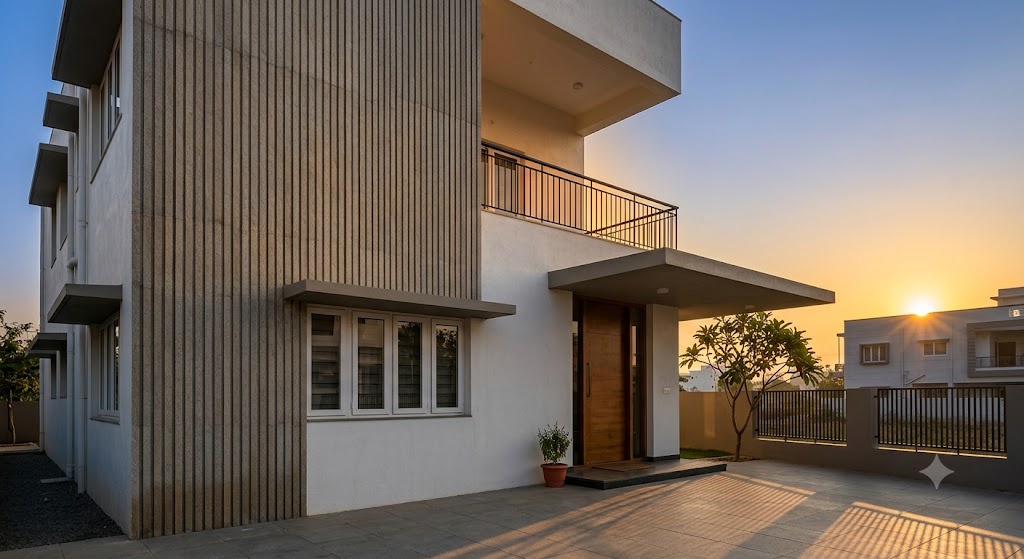
East-Facing House Plan — Complete Guide for India
Vastu Logic, Sun-Path, Room-Direction Matrix & Reference Plans for the Most-Asked Orientation in Indian Homes
Of all the Vastu orientation questions Indian homebuyers ask, "is it east-facing?" is the most asked and the most loaded. East-facing carries a real-estate premium of 8 – 15% on resale value in most Indian cities; it commands faster sale velocity; it is the first filter many buyers apply before even looking at the floor plan. Brokers know it, builders know it, and homeowners know it — yet most who buy an east-facing plot do not actually understand why east-facing is preferred, what it means technically, or how to design a house plan that lives up to the orientation.
This guide is the working answer. It covers what "east-facing" technically means (which is not what most buyers think), the climate physics and ritual logic that converged 2,000 years ago to make east-facing the default Indian residential orientation, the 12-room direction matrix you can spec against, two scaled reference plans (single-storey on 30 × 40 ft and two-storey on 30 × 50 ft), the six mistakes that ruin most east-facing plans, the real-estate premium math, and an FAQ section addressing the questions that come up after the offer letter is signed.
East-facing is not where the house is — it is where the morning sun is, when the house wakes up.
What "East-Facing" Actually Means
This is the single most-confused term in the Indian residential vocabulary. A plot can be "east-facing" in any of four different senses:
| Definition | What It Means | Vastu Authority Says |
|---|---|---|
| Plot frontage on the east | The plot's road-access side is on the east — you walk in from the east | Most commonly understood; matters secondarily |
| Main entry door on the east face | Regardless of plot orientation, the principal entry door of the building opens to the east | The authoritative definition — what Vastu and rituals care about |
| Sunrise visible from the principal living area | The morning sun is visible from the living room without obstruction | A practical bonus, not a Vastu rule |
| Building's longest facade on the east | The largest wall of the building runs north-south, with east-west aspect being the long axis | A massing decision, secondary to entry |
The authoritative definition is door direction. A plot with east-side road but a south-facing entry door is not Vastu-east-facing. Conversely, a plot with north-side road but an east-facing entry door (achieved by orienting the building inside the plot) is Vastu-east-facing.
When a broker or builder says "east-facing", verify which definition they mean before paying the premium.
Why East-Facing — Climate Physics + Ritual Logic
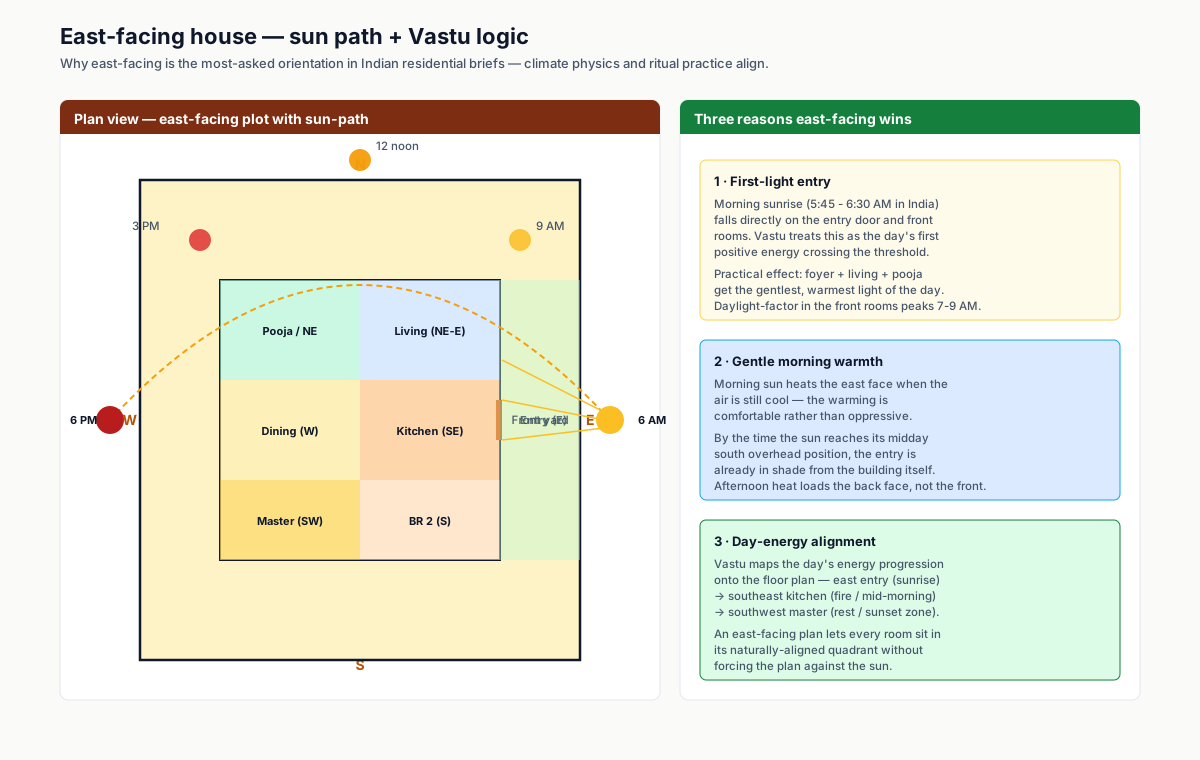
The figure above maps the architectural reasoning. Three forces align to make east-facing the canonical Indian residential orientation.
Force 1 — First-Light Entry
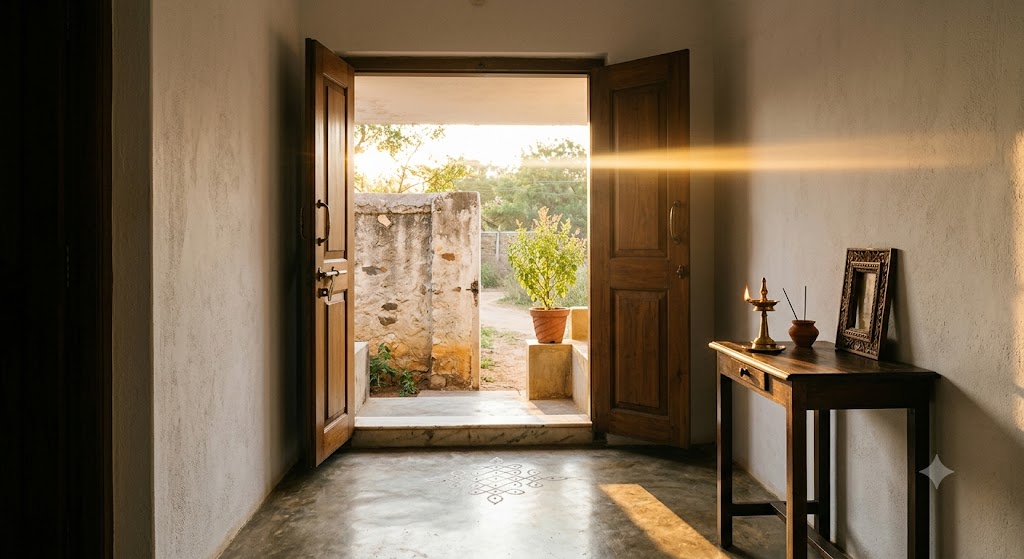
Sunrise in India occurs between 5:45 AM and 6:30 AM for most of the year. An east-facing entry door receives this light directly. Ritually, Vastu treats the morning's first light as prana — the day's first positive energy — entering the home. Practically, the foyer + living + pooja receive the warmest, gentlest daylight of the day exactly when the household begins its morning routine.
Force 2 — Gentle Morning Warmth
Morning sun heats the east face when the ambient air is still cool from the night. The warming is gradual and comfortable, not the oppressive heat of midday. By 10:30 - 11:00 AM, the sun has moved south and the building's own mass shades the east entry. The afternoon heat — when it arrives — loads the west and south, not the front.
For a country where peak summer daytime temperatures cross 40°C in April – June, "the heat is on the back of the house, not on the front door" is a profoundly comfortable rule.
Force 3 — Day-Energy Alignment
The day's energy arc, mapped onto the floor plan, lines up naturally for an east-facing layout:
| Time of Day | Sun Position | Aligned Room |
|---|---|---|
| 6 AM | East horizon | Entry, pooja, foyer |
| 9 AM | East-southeast | Living, breakfast nook |
| 12 noon | South overhead | Dining, kitchen (SE) |
| 3 PM | West-southwest | Master begins to receive late warmth |
| 6 PM | West horizon | Master bedroom for evening rest |
No room is forced to fight the sun. Every quadrant gets the light it needs at the hour it needs it.
Six Reasons East-Facing Commands a Premium
The real-estate market has priced east-facing at an 8 – 15% premium for measurable reasons:
1. Vastu compliance — 65% of Indian homebuyers prioritise Vastu in selection; east-facing satisfies the most important rule by default
2. Resale velocity — east-facing properties sell 18 – 25 days faster on average in Tier-1 cities (Magicbricks 2024-25 data)
3. Rental yield — east-facing units command 4 – 8% rental premium over west or south facing
4. Buyer pool — orthodox Vastu households (~35% of buyers) will not even view non-east non-north properties
5. Loan approval ease — bank-funded buyers often face family pressure for east-facing; affects deal closure rate
6. Daylight quality — measured daylight factor in front rooms is 30 – 45% higher than west-facing equivalents
This is not Vastu mysticism — it is market behaviour. Whether or not you personally believe in Vastu, the resale value of an east-facing plot is materially higher.
The 12-Room Direction Matrix for East-Facing
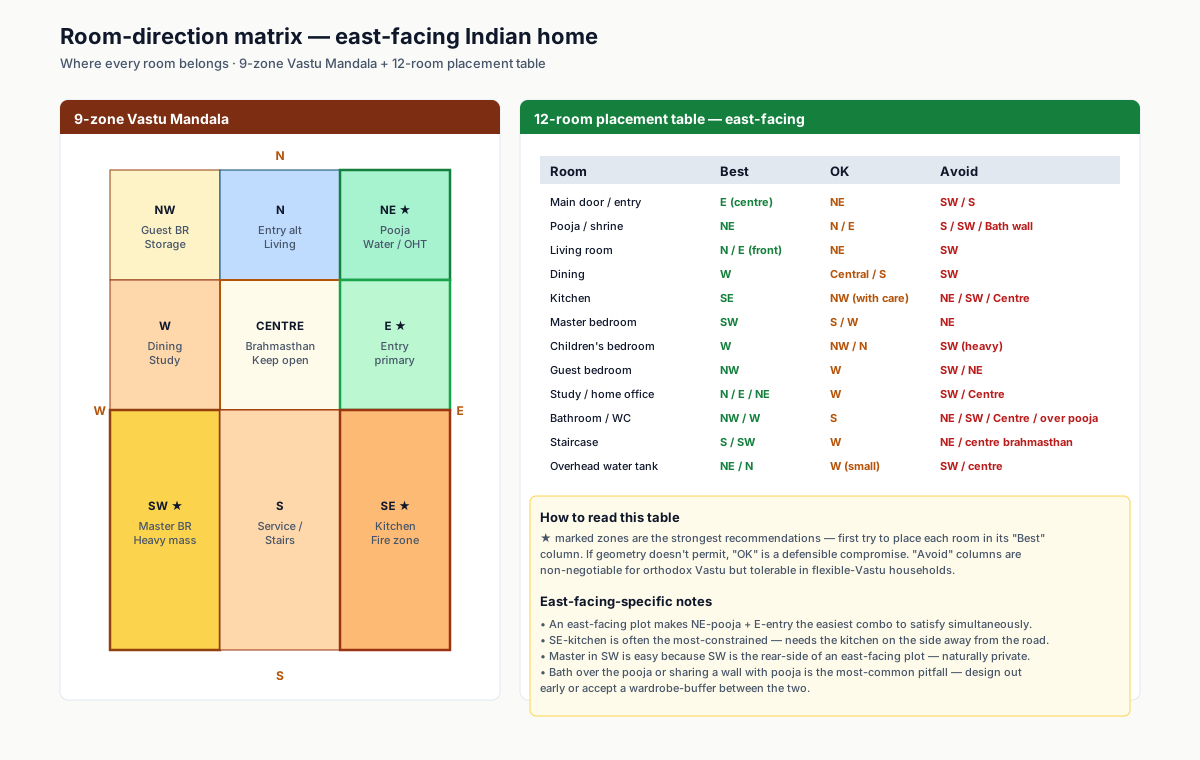
The figure above gives the working spec for every room. The pattern is clear: an east-facing plan has more degrees of freedom than any other orientation, because the entry-pooja-kitchen-master spine all naturally fall in their auspicious quadrants.
The Seven Anchor Rules
1. Main door in the east face's centre pada (4th, 5th, or 6th of 9 padas) — not at the corners
2. Pooja in the northeast corner, with deity facing east or west
3. Living + dining along the northern half of the home for diffuse cool light
4. Kitchen in the southeast (fire zone) — cook faces east while at the hob
5. Master bedroom in the southwest quadrant — heaviest mass, deepest privacy
6. Overhead water tank in the northeast corner of the roof — lightest mass direction
7. Utility / WC / stairs in the southern band — heavy services away from main rooms
If you have these seven right, the remaining placement is plan-efficiency rather than Vastu.
Where the Common Rooms Go
| Room | Best | OK | Avoid |
|---|---|---|---|
| Main door | E (centre) | NE | SW / S |
| Pooja | NE | N / E | S / SW / Bath wall |
| Living | N / E (front) | NE | SW |
| Dining | W | Central / S | SW |
| Kitchen | SE | NW (with care) | NE / SW / Centre |
| Master bedroom | SW | S / W | NE |
| Children's bedroom | W | NW / N | SW |
| Guest bedroom | NW | W | SW / NE |
| Study / home office | N / E / NE | W | SW / Centre |
| Bathroom / WC | NW / W | S | NE / SW / Centre / over pooja |
| Staircase | S / SW | W | NE / centre brahmasthan |
| Overhead water tank | NE / N | W (small) | SW / centre |
Reference Plan 1 — Single-Storey 30 × 40 ft
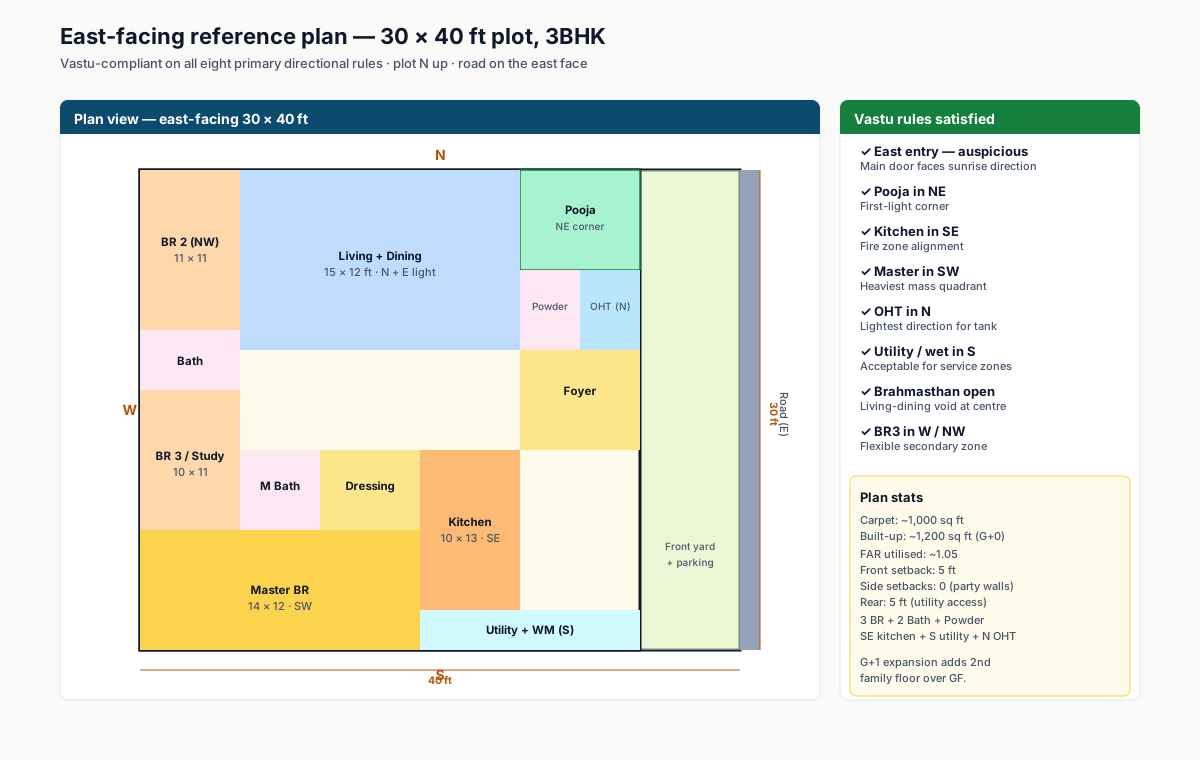
Configuration: 3BHK, G+0 (ground floor only)
Plot: 30 × 40 ft, road on east
Built-up: ~1,200 sq ft
Carpet: ~1,000 sq ft
Plan Logic
The plan obeys all eight primary Vastu rules without compromising daylight or efficiency:
- Front yard + parking on the east, with the compound wall and gate fronting the road
- Main entry centred on the east face, opening into a foyer
- Pooja tucked into the northeast corner — first-light position, accessible from the foyer
- Living-dining in the northern half, with the largest windows on the east and north for morning daylight
- Kitchen in the southeast (fire zone) — opens to the dining room and has access to the south utility
- Master bedroom suite in the southwest with dressing alcove and attached bath
- BR 2 (Vastu-NW) along the north party wall, with attached bath
- BR 3 / study (Vastu-W) along the west party wall
- Utility, washing machine, and OHT in the south + northeast respectively
Room Sizes
| Room | Dimensions | Area |
|---|---|---|
| Living + dining | 15 × 12 ft | 180 sq ft |
| Kitchen | 10 × 13 ft | 130 sq ft |
| Master bedroom | 14 × 12 ft | 168 sq ft |
| Master bath | 5 × 8 ft | 40 sq ft |
| Master dressing | 4 × 8 ft | 32 sq ft |
| BR 2 (NW) | 11 × 11 ft | 121 sq ft |
| BR 3 / Study (W) | 10 × 11 ft | 110 sq ft |
| Common bath | 5 × 6 ft | 30 sq ft |
| Pooja | 8 × 8 ft | 64 sq ft |
| Foyer + powder | 12 × 12 ft | 144 sq ft |
See 2BHK House Plan and 3BHK House Design for the working-dimensions discipline.
Reference Plan 2 — Two-Storey 30 × 50 ft
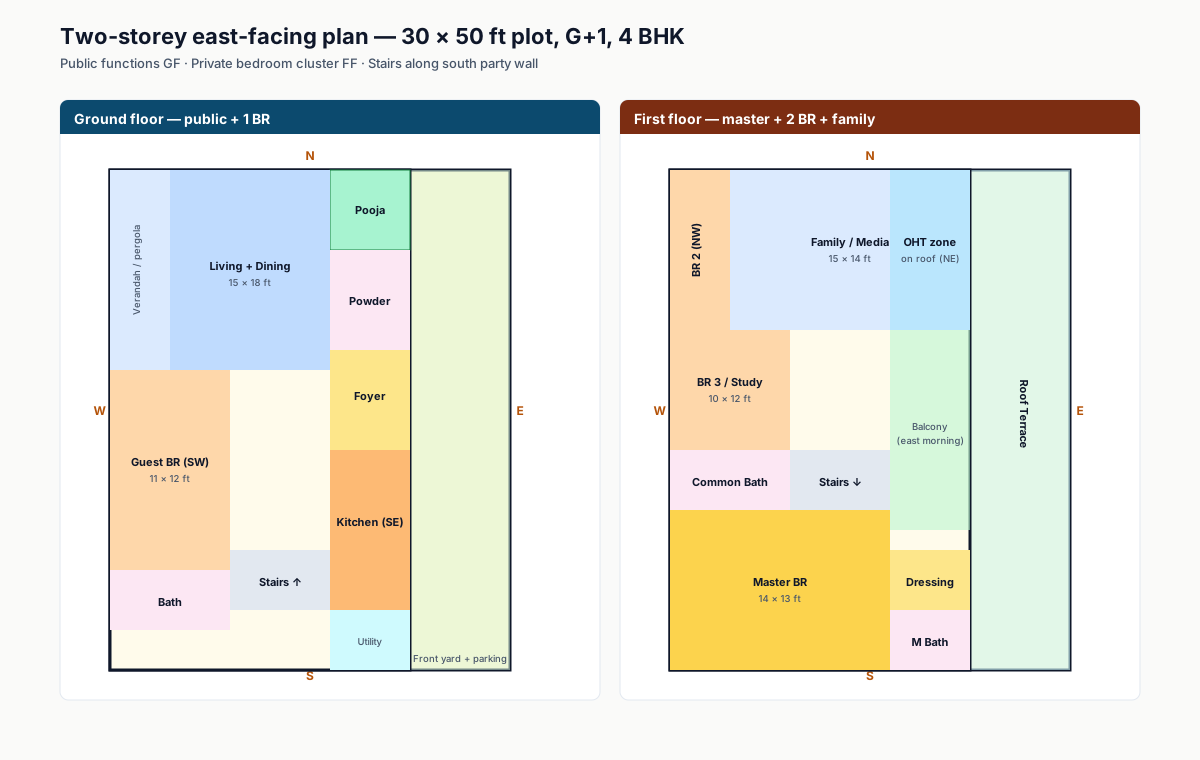
Configuration: 3+1 BHK, G+1 (ground + first floor)
Plot: 30 × 50 ft, road on east
Built-up: ~2,200 sq ft total
Ground Floor — Public + Guest
- East entry into foyer with powder room for guests
- Living + dining along the north — 15 × 18 ft
- Kitchen in the southeast — 11 × 10 ft
- Guest bedroom in the southwest with attached bath (becomes elder-parent bedroom over time)
- Stairs along the south party wall — out of brahmasthan, conventional location
- Verandah / pergola along the front edge for east morning sit-out
First Floor — Private
- Master suite in southwest — 14 × 13 ft with dressing + attached bath
- BR 2 in northwest along the corridor — 11 × 12 ft
- BR 3 / study in west — 10 × 12 ft
- Family / media room along the front (north side, east-facing balcony)
- Common bath between BR 2 and BR 3
- East balcony for morning sit-out + plants
- OHT mounted on the roof in the NE corner
This is the most-built east-facing Indian villa configuration in 2024-26 across Bengaluru, Hyderabad, Pune, and Chennai outer-ring layouts.
Six Common Mistakes — and Their Corrections
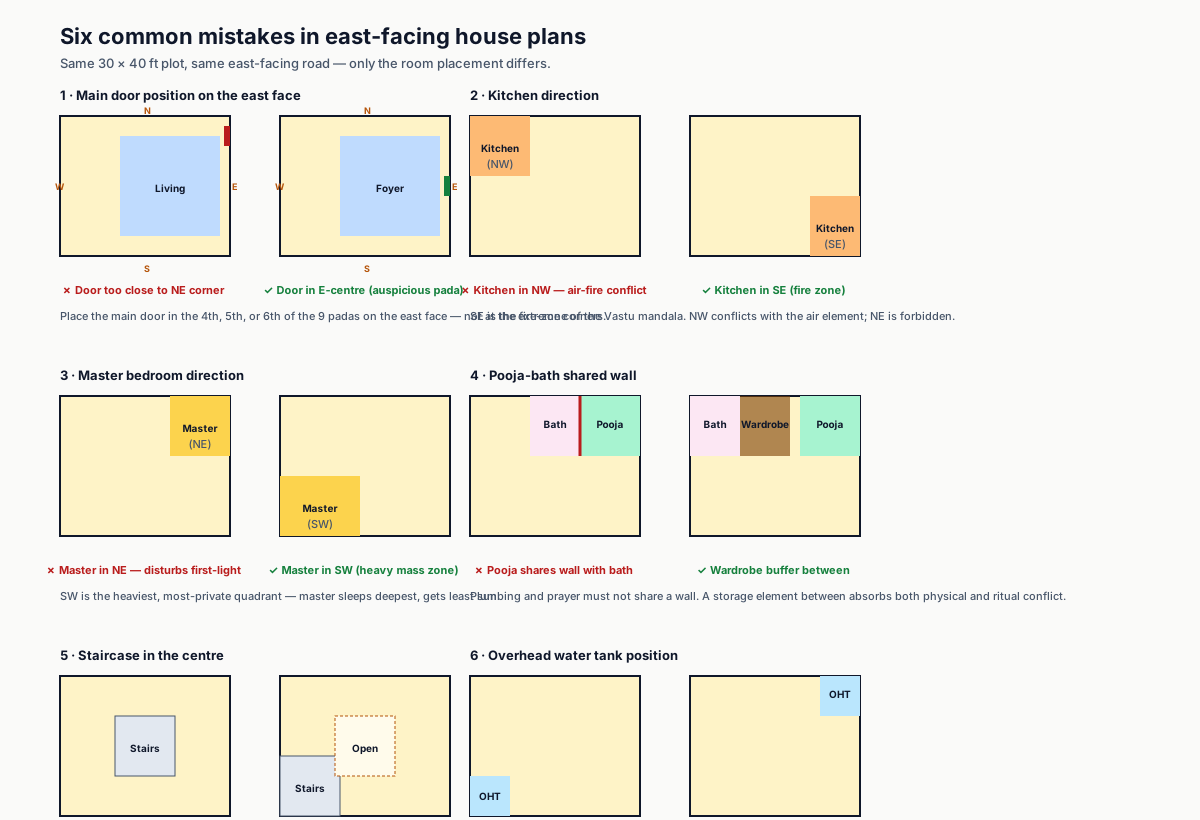
Mistake 1 — Main Door at the Corner of the East Face
The main door must be in the centre pada of the east face (4th, 5th, or 6th of nine equal subdivisions). A door at the NE corner is too close to the pooja line; a door at the SE corner is in the fire zone — both create dosha. Fix: centred door, 1.2 × 2.1 m double leaf, with a 75 – 100 mm raised threshold.
Mistake 2 — Kitchen in the Wrong Direction
The kitchen belongs in the southeast (fire zone). NW conflicts with the air element; NE is sacred and forbidden for cooking; SW is the heavy mass quadrant. Fix: southeast kitchen with the cook facing east while at the hob.
Mistake 3 — Master Bedroom in the Northeast
A frequent broker-suggested layout that maximises the largest northeast corner for the "best" bedroom. Vastu strictly forbids this — the NE is the energy-receiving corner and a sleeping mass disturbs it. Fix: master in the southwest; northeast reserved for pooja.
Mistake 4 — Pooja Sharing a Wall with a Bath
The single most-common pitfall. Builder plans often place a common bath adjacent to the northeast pooja for plumbing efficiency. Fix: a wardrobe, dresser, or storage cabinet between the pooja wall and the bath plumbing wall. The buffer absorbs both physical and ritual conflict.
Mistake 5 — Staircase in the Central Brahmasthan
The geometric centre of the house is the brahmasthan — Vastu requires it to be kept open and unobstructed. A central staircase blocks this. Fix: stairs along the south or southwest party wall.
Mistake 6 — Overhead Water Tank in the Southwest
The OHT — a heavy mass — placed on the SW corner of the roof adds weight to the already-heaviest quadrant, causing structural and ritual imbalance. Fix: OHT in the northeast corner of the roof.
East-Facing vs Other Cardinal Directions
| Direction | Vastu Rating | Resale Premium | Suits | Key Constraint |
|---|---|---|---|---|
| East ★ | ★★★ Excellent | +8 to +15% | Most households | Right-priced |
| North | ★★★ Excellent | +6 to +12% | Buyers prioritising diffuse light | Slightly cooler entry mood |
| Northeast | ★★★ Best | +10 to +18% | Orthodox Vastu | Hard to find / premium asking price |
| West | ★★ Acceptable | -2 to +3% | Pragmatic / non-Vastu buyers | Requires aggressive shading |
| South | ★★ Acceptable with mitigation | -5 to -10% | Vastu-flexible + practical | Heat-load discipline |
| Southwest | ★ Avoid | -8 to -15% | Defensible by Vastu mitigation | Both ritual and climate negatives |
See South-Facing House Design and Vastu House Plan for the deep treatments of the other orientations.
FAQ for East-Facing Buyers
Q: My plot is east-facing but the building entry is on the south. Is this east-facing?
No. Vastu cares about the entry door direction, not the plot frontage. A south-entry building on an east-facing plot is south-facing for Vastu purposes. You can redesign the building to relocate the entry to the east face, often by adjusting the foyer, compound wall gate, and walkway.
Q: My east-facing house has a slope toward the southwest. Is this a problem?
The plot should ideally slope toward the northeast for water drainage. A southwest-slope is the inverse. Vastu treats this as a serious dosha but it is correctable through landscape grading at the time of construction — earth the southwest higher with retaining walls and direct runoff toward the northeast.
Q: Should the kitchen door face east?
If the cook stands at the hob facing east, the kitchen has done its job. Whether the kitchen entry door faces east is secondary — the rule is about the cook's facing direction during the cooking ritual.
Q: Can I have a balcony on the west face of an east-facing house?
Yes, but be aware: a west balcony off the master bedroom will receive harsh afternoon sun. Specify deep chajja + vertical fins per the Facade Design for Indian Climates guide. A west balcony off a less-used room (study, guest) is more forgiving.
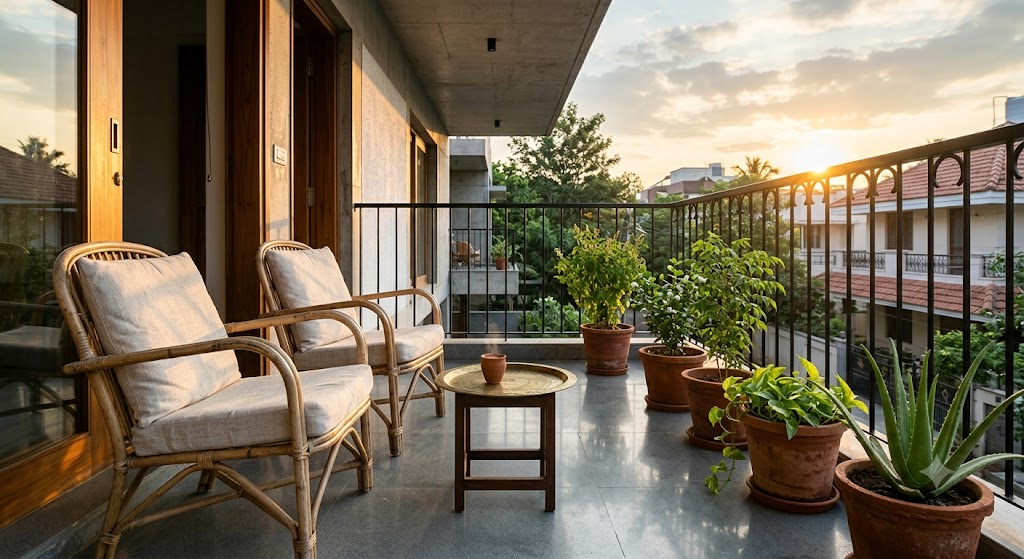
Q: My east face has an obstruction — neighbour's house, tall tree. Is the orientation lost?
The Vastu benefit is reduced but not eliminated. The orientation is defined by the door direction, not the unobstructed sunrise. However, the climate benefit — gentle morning warming — is meaningfully reduced if the east face is in deep shade.
Q: Vastu says open the northeast — but my plot has a side compound wall there. What do I do?
Keep the building open in the northeast — no rooms, no heavy mass against that corner. The compound wall is a plot boundary, not a building element; it does not affect the home-level Vastu rules.
Pre-Construction Checklist for East-Facing Plans
- [ ] Entry door direction verified — actually east, not just east-side plot
- [ ] Door positioned in the centre pada of the east face (4th, 5th, or 6th of 9)
- [ ] Pooja in NE corner, no bath wall shared
- [ ] Living + dining placed along the north for diffuse light
- [ ] Kitchen in SE — fire zone
- [ ] Master bedroom in SW — heavy mass quadrant
- [ ] Stairs along the south party wall, NOT in the brahmasthan centre
- [ ] OHT in the NE corner of the roof
- [ ] Plot slope analysis — ideally toward NE; corrective grading if SW-slope
- [ ] East face daylight verified — no immediate obstruction within 5 m
- [ ] East balcony / verandah for morning use
- [ ] West shading discipline — vertical fins + deep chajjas on west openings
- [ ] Front yard + parking on east setback
- [ ] Compound wall + gate centred on east, in line with main door
- [ ] Soil test + structural design completed — see Soil Testing
- [ ] Municipal sanction — see Building Plan Approval
- [ ] Vastu consultation signed off, if family follows orthodox practice
Cross-Links — Going Deeper
Vastu and orientation
- Vastu Shastra for Modern Homes — the foundational philosophy guide
- South-Facing House Design — the counterpart for the most-feared direction
- Vastu House Plan — deep treatment of layout-driven Vastu
- Pooja Room Design — the NE corner room
Plans and room sizing
- 2BHK House Plan — smaller-format companion
- 3BHK House Design — three-bedroom matrix
- Indian House Front Elevation Design — the facade that meets the east sun
- Modern House Design in India — eight-principle framework
- Functional House Layout Planning
- Space Zoning in Indian Homes
- Space Planning Principles
- Compact Urban Home Planning
Climate and orientation
- Designing for the Indian Climate
- Passive Design across Indian Climate Zones
- Cross Ventilation in Indian Homes
- Natural Light Planning for Indian Homes
- Daylighting Indian Homes and Buildings
- Facade Design for Indian Climates
Process and money
- Complete Guide to Building a House in India
- RERA Guide for Homebuyers & Architects
- Building Plan Approval Process in India
- Home Loan Affordability
- Architect Compliance Map — Bengaluru
References
1. Vastu Shastra mainstream consensus — Manasara, Mayamatam, Samarangana Sutradhara on entry direction and pada placement.
2. Bureau of Indian Standards (1987). SP 41 — Handbook on Functional Requirements of Buildings. New Delhi: BIS.
3. Bureau of Indian Standards (2016). National Building Code of India 2016. New Delhi: BIS.
4. Bureau of Energy Efficiency (2018). Eco-Niwas Samhita — Energy Conservation Building Code for Residential Buildings. New Delhi: Government of India.
5. Magicbricks Research (2024-25). Vastu Premium and Resale Velocity Study — Tier-1 City Residential.
6. Indian Institute of Architects. Council of Architecture Conditions of Engagement. New Delhi: CoA.
7. Krishan, A. et al. (2001). Climate Responsive Architecture. New Delhi: Tata McGraw-Hill.
8. Correa, C. (1985). The New Landscape: Urbanisation in the Third World.
9. Doshi, B.V. (2019). Paths Uncharted. Vastushilpa Foundation / Mapin.
10. National Institute of Design (1997). Indian Anthropometric Data for Ergonomic Design Practice.
Author's note: East-facing is the most market-priced of all Vastu rules — it is one of the few orientations where ritual preference, climate logic, and resale premium all converge in the same direction. Whether or not you follow Vastu personally, building an east-facing home that satisfies the seven anchor rules in this guide locks in an 8 – 15% premium at sale, a 4 – 8% premium at rent, and 18 – 25 days of additional sale velocity. The discipline this guide proposes is not orthodoxy — it is the price the Indian residential market puts on getting the orientation right.
Disclaimer: Real-estate premium figures are 2024-25 indicative for Tier-1 and Tier-2 Indian cities and vary by micro-market, builder reputation, and local Vastu consultant prevalence. Vastu prescriptions reflect mainstream practitioner consensus across regional schools; individual practitioners and family traditions may vary. Room-sizing recommendations follow the working dimensions established in the companion 2BHK and 3BHK guides. Cost bands are 2026 indicative; verify against local market quotes. Studio Matrx, its authors, and contributors accept no liability for decisions made on the basis of this guide; engage a licensed architect, a competent Vastu consultant if relevant to your family, and a qualified contractor for site-specific design and execution.
Interactive · 8-Direction Vastu Wheel
North-East · Water + Space · Ishanya / Shiva
Ideal rooms
- Pooja Room
- Meditation
- Water Feature
Avoid
- Toilet (worst defect)
- Staircase
- Heavy structure
Recommended colours
Export this guide
Related Guides — Deep-dive reading
South-Facing House Design in India
The Feared Orientation, Decoded — Sun-Path Physics, Six Mitigations, Reference Plan, Market Math & Vastu Reality
Room PlanningOrientation, Light & Views: Designing With Your Space, Not Against It
How reading your plot's sun, breeze and views — and placing each room on the right face — gives an Indian home that is cooler, brighter and quietly right, instead of one that fights its site forever.
Design PrinciplesVastu House Plan — Complete Indian Layout Reference
The 9-Zone Mandala, 20-Room Direction Matrix, Plot Rules, Four Cardinal Reference Plans & Myth-vs-Rule Field Guide
Room PlanningRelated Tools — Try Free
Cross-Ventilation Analyzer
Estimate airflow and air changes per hour (ACH) from room size, window areas, layout, and local wind — with NBC 2016 Part 8 compliance check.
Ventilation CalculatorBrise-Soleil Visualizer
Interactive horizontal-louvre cut-off angle calculator — sun altitude, louvre depth, and spacing inputs with a live shadow preview. Computes θ = arctan(spacing/depth) for façade shading, ECBC envelope compliance, hospital daylight design, and tropical sun-control detailing.
Sun Shading ToolVastu Window Planner
Vastu guidance for window placement and size by wall direction and room — rating and remedies.
Vastu