
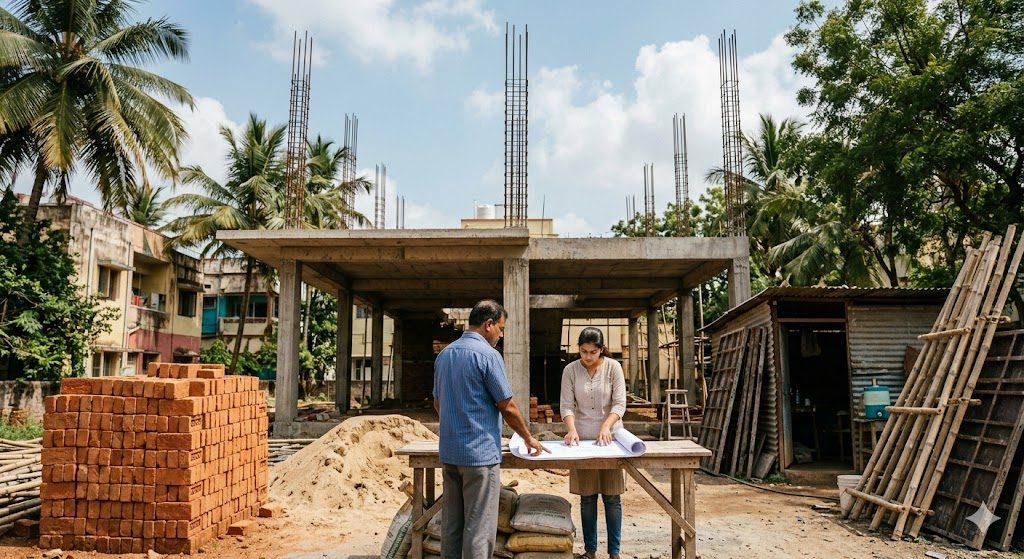
Complete Guide to Building a House in India
Step-by-Step — From Land Purchase to Housewarming
Building your own house is one of the most significant decisions you will make in your lifetime — financially, emotionally, and practically. In India, where real estate is the single largest store of household wealth, getting it right matters enormously. Getting it wrong can mean years of regret, legal disputes, cost overruns, and structural problems.
Yet most first-time homebuilders in India navigate this journey without a clear roadmap. They rely on word-of-mouth advice from relatives, unverified contractors, and WhatsApp forwards — often making expensive mistakes that could have been avoided with proper planning.
This guide walks you through the entire house-building journey — from finding the right plot to collecting the keys — in a systematic, step-by-step format. It covers land legalities, architect selection, building plan approvals, contractor hiring, construction stages, material selection, interior work, and final handover — all specific to the Indian context.
The Building Journey at a Glance
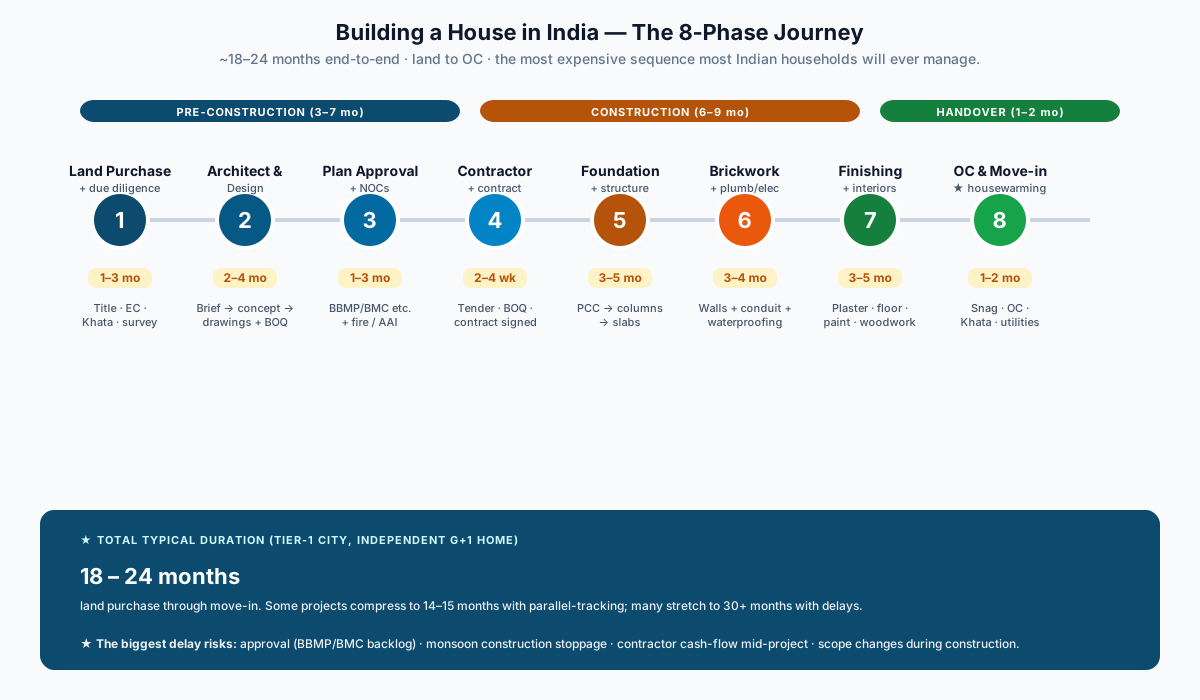
Phase 1: Land Purchase & Due Diligence
Finding the Right Plot
| Factor | What to Check | Why It Matters |
|---|---|---|
| Location | Proximity to schools, hospitals, offices, public transport | Daily convenience, future resale value |
| Plot dimensions | Minimum 30x40 ft (1200 sqft) for a comfortable independent home | Narrow plots restrict design options; irregular shapes waste area |
| Orientation | North or east-facing preferred (Vastu + natural light) | South/west-facing requires careful design to manage heat |
| Road width | Minimum 30 ft road for comfortable access; 40+ ft for commercial potential | Narrow roads restrict setbacks and FSI in many cities |
| Neighbourhood | Existing development, planned infrastructure, drainage, water table | Undeveloped areas may lack water, sewage, and electricity connections |
| Zoning | Residential zone only. Verify with local development authority | Building in wrong zone = demolition risk |
Legal Due Diligence — The 10-Point Checklist
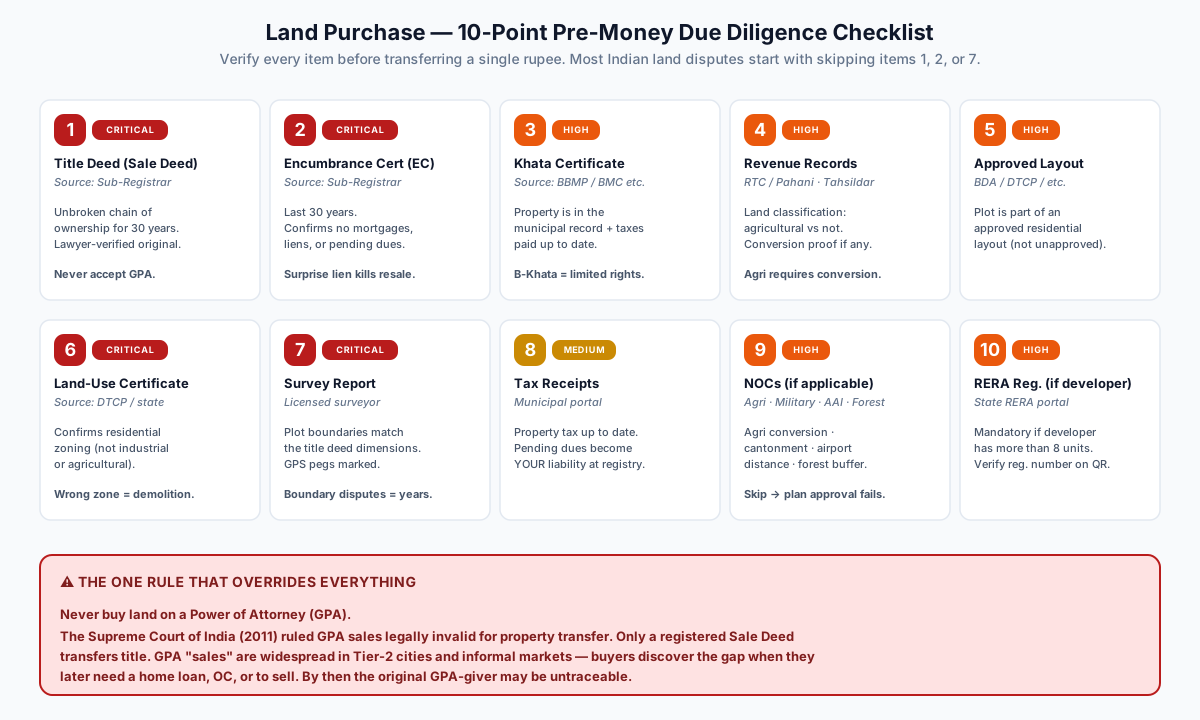
Before paying a single rupee, verify:
- [ ] Title deed (Sale Deed) — unbroken chain of ownership for at least 30 years. Get a lawyer to verify.
- [ ] Encumbrance Certificate (EC) — from Sub-Registrar's office. Confirms the property is free of legal dues, mortgages, and liens. Get EC for the last 30 years.
- [ ] Khata Certificate & Extract — from local municipal body (BBMP, BMC, etc.). Confirms the property is in the municipal records and taxes are paid.
- [ ] Revenue records — RTC (Record of Rights, Tenancy, and Crops) or Pahani from Tahsildar's office. Confirms land classification.
- [ ] Approved layout plan — from the development authority (BDA, BMRDA, DTCP, etc.). Confirms the plot is part of an approved residential layout.
- [ ] Land use certificate — confirms the land is classified as residential, not agricultural. Agricultural land requires conversion (Section 95 in Karnataka, similar in other states).
- [ ] Survey report — hire a licensed surveyor to verify plot boundaries match the title deed. Boundary disputes are among the most common land litigations in India.
- [ ] Tax receipts — property tax paid up to date. Pending taxes become the buyer's liability.
- [ ] NOCs if applicable — from agricultural department (if conversion), military (if cantonment area), airport authority (if near airport), forest department (if near forest land).
- [ ] RERA registration — if buying from a developer/promoter with more than 8 units, the project must be RERA registered.
Never buy land on a Power of Attorney (GPA). GPA sales are not legally valid for property transfer in India (Supreme Court ruling, 2011). Always insist on a registered Sale Deed.
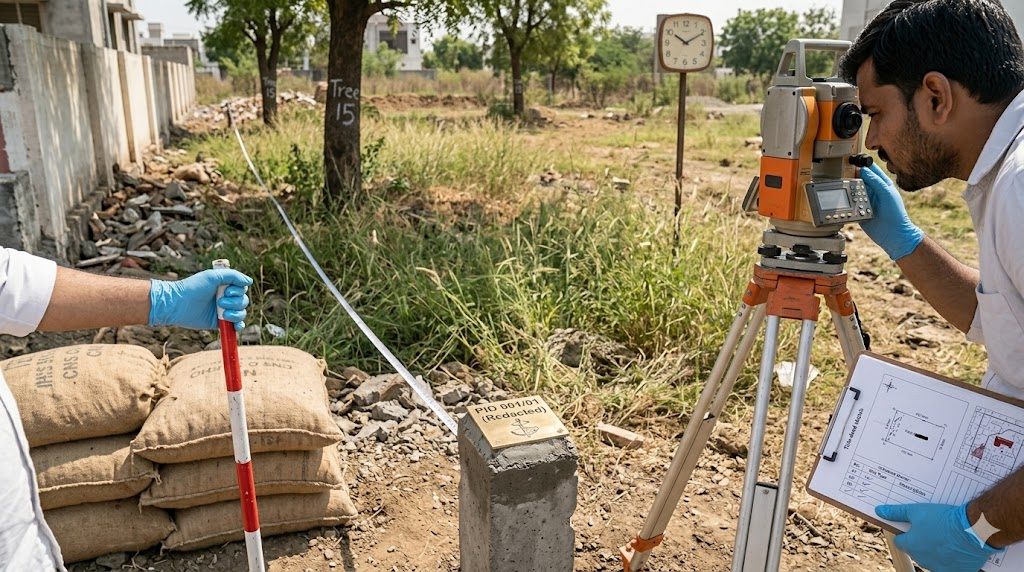
Land Purchase Costs
| Cost Component | Typical Amount | Notes |
|---|---|---|
| Land cost | Varies by city and location | 30-50% of total project cost |
| Stamp duty | 5-7% of land value (state-dependent) | Karnataka: 5% (men), 5% (women get 0% rebate on first property up to ₹45 lakh) |
| Registration fee | 1% of land value | Paid at Sub-Registrar's office |
| Legal fees | ₹15,000-50,000 | For title verification and documentation |
| Survey fees | ₹5,000-15,000 | Licensed surveyor for boundary verification |
| Brokerage | 1-2% of land value | If purchased through an agent |
Phase 2: Hiring an Architect & Design
Why You Need an Architect
In India, any building above ground floor + one floor (in most states) legally requires an architect registered with the Council of Architecture (COA) to sign the building plan. But beyond legal compliance, an architect:
- Optimises your plot — maximises usable area within building bylaws
- Ensures structural safety — coordinates with structural engineer
- Saves money — good design prevents costly changes during construction
- Manages approvals — navigates the building plan sanction process
- Supervises construction — ensures quality matches design intent
How to Choose an Architect
| Criteria | What to Look For |
|---|---|
| COA registration | Mandatory. Verify at coa.gov.in |
| Portfolio | Projects similar to yours (residential, similar budget range) |
| Client references | Talk to at least 2-3 past clients |
| Site visit | They should visit your plot before proposing design |
| Fee transparency | Clear fee structure in writing (see COA scale below) |
| Communication | Responsive, explains in plain language, listens to your needs |
| Local experience | Familiar with local building bylaws, climate, materials |
Architect Fee Structure (COA Recommended)
| Project Cost | Architecture Fee |
|---|---|
| Up to ₹50 lakh | 8-12% of construction cost |
| ₹50 lakh - 2 crore | 6-10% |
| ₹2 crore - 10 crore | 5-8% |
| Above ₹10 crore | 3-6% |
What the fee typically includes:
- Concept design (2-3 options)
- Design development
- Working drawings (architectural + coordination with structural/MEP)
- Building plan approval submission
- Periodic site supervision
- Material and colour guidance
What is usually extra:
- Interior design and detailing
- Landscape design
- Full-time site supervision
- 3D renders and walkthroughs
- Structural and MEP consultant fees
The Design Process
| Stage | Duration | Deliverable | Your Role |
|---|---|---|---|
| 1. Briefing | 1-2 weeks | Design brief document | Share your requirements, budget, preferences, lifestyle |
| 2. Concept design | 2-4 weeks | 2-3 plan options with basic elevations | Review, discuss, choose direction |
| 3. Design development | 3-4 weeks | Detailed plans, sections, elevations, 3D views | Review and approve |
| 4. Working drawings | 4-6 weeks | Construction-ready drawings (50-100+ sheets) | Final sign-off |
| 5. BOQ & Specifications | 2-3 weeks | Bill of Quantities, material specifications | Review and budget alignment |
Key Design Decisions You Must Make
| Decision | Options | Impact |
|---|---|---|
| Number of floors | G, G+1, G+2, G+3 | Cost, FSI utilisation, future flexibility |
| Staircase type | Internal vs external, straight vs U-turn | Space consumption, convenience, Vastu |
| Kitchen type | Open, closed, semi-open, L-shape, U-shape, island | Lifestyle, cooking style, ventilation |
| Parking | Open, covered, stilt, basement | Cost (basement is 3-4x costlier per sqft) |
| Terrace | Open terrace, covered, garden, utility | Waterproofing complexity, usage |
| Room sizes | Standard (10x12), comfortable (12x14), spacious (14x16) | Total built-up area and cost |
| Ventilation | Cross ventilation, courtyard, ventilation shaft | Energy efficiency, comfort, building byelaw compliance |
Phase 3: Building Plan Approval & Permits
Why Approval Matters
Building without approved plans is illegal in India. Consequences include:
- Demolition order from the local authority
- Denial of water, electricity, and sewage connections
- Cannot obtain Occupancy Certificate (OC) — required for legal habitation
- Cannot get home loan against an unapproved building
- Cannot sell the property legally without OC
- Insurance claims rejected for unapproved structures
The Approval Process (General)
| Step | Authority | Duration | Cost |
|---|---|---|---|
| 1. Submit building plan | Local planning authority (BBMP, BMC, CMDA, etc.) | 1-4 weeks (online systems) to 3 months (manual) | ₹20-60/sqft (varies by city and zone) |
| 2. Scrutiny | Planning department | Included in approval time | — |
| 3. NOCs | Fire, traffic, AAI (if near airport), environmental (if applicable) | 2-6 weeks each | Varies |
| 4. Commencement Certificate | Planning authority | Issued with approved plan or separately | — |
| 5. Plinth inspection | Planning authority | After foundation completion | — |
| 6. Completion Certificate | Planning authority | After construction completion | — |
| 7. Occupancy Certificate (OC) | Planning authority | After all inspections and NOCs | — |
City-Wise Approval Systems
| City | Authority | Online Portal | Typical Duration |
|---|---|---|---|
| Bengaluru | BBMP / BDA | BBMP Sahaya (online) | 30-45 days (online), 3-6 months (manual) |
| Mumbai | BMC / MCGM | MCGM Portal | 45-90 days |
| Delhi | MCD / DDA | MCD Building Plan Portal | 30-60 days |
| Chennai | CMDA / GCC | CMDA Online | 30-45 days |
| Hyderabad | GHMC / HMDA | TS-bPASS (online) | 21 days (auto-approval for <500 sqm) |
| Pune | PMC / PMRDA | PMC AutoDCR | 30-45 days |
| Kolkata | KMC / KMDA | KMC Portal | 45-90 days |
Common Building Bylaws (General — Check Your City)
| Parameter | Typical Regulation |
|---|---|
| FAR / FSI | 1.5-2.5 (residential, varies by road width and zone) |
| Ground coverage | 50-65% of plot area |
| Setbacks | Front: 3-6m, Side: 1.5-3m, Rear: 1.5-3m (varies by plot size) |
| Building height | Determined by road width and zone |
| Parking | 1 car space per dwelling unit (minimum) |
| Rainwater harvesting | Mandatory for plots above 1200 sqft in most cities |
| Solar panels | Mandatory in some states for plots above 1500 sqft |
| Septic tank / STP | Required where municipal sewage is unavailable |
Pro tip: Your architect handles the entire approval process. This is one of the key reasons to hire a registered architect — they know the bylaws, the submission process, and the required documentation.
Phase 4: Hiring a Contractor & Budgeting
Contractor Selection
| Method | Pros | Cons |
|---|---|---|
| Tender / competitive quotes | Best price discovery, transparent | Time-consuming, cheapest is not always best |
| Architect's recommendation | Proven track record, architect trust | Limited options, potential bias |
| Referral from friends/family | First-hand experience | May not suit your project size/type |
| Labour contract (daily wages) | Lower cost, direct control | Requires full-time supervision, owner procures materials |
| Turnkey contract | Single point of responsibility, fixed price | Higher cost, less control over materials |
Types of Construction Contracts
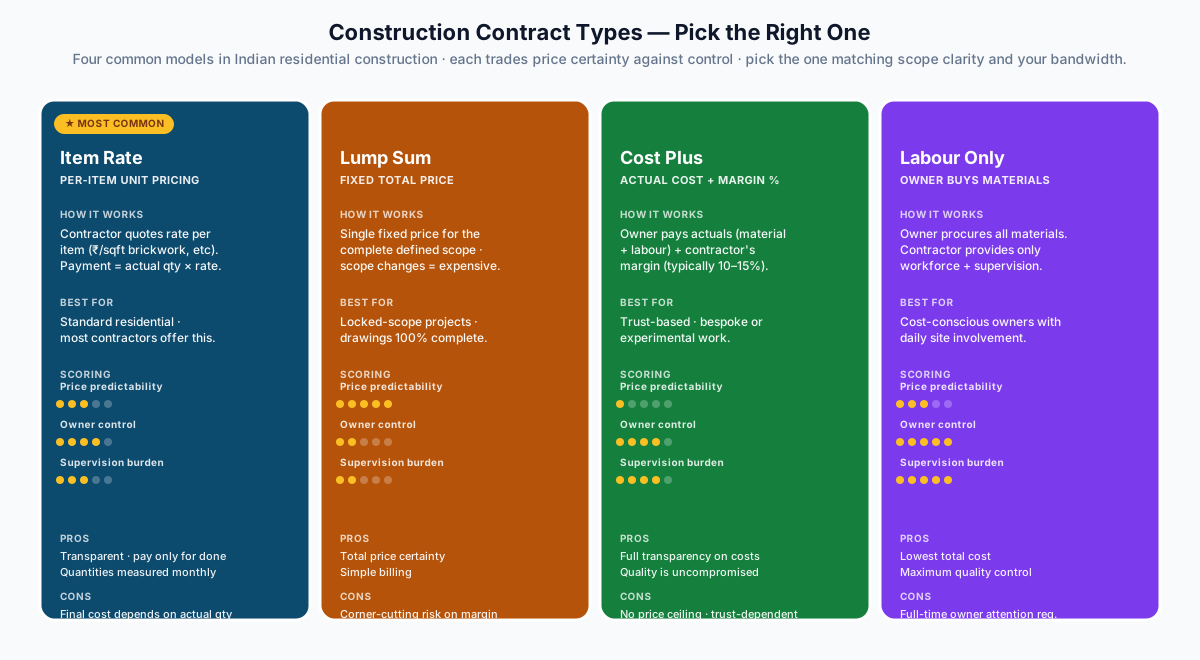
| Type | How It Works | Best For |
|---|---|---|
| Item rate contract | Contractor quotes rate per item (₹/sqft for brickwork, ₹/sqft for plastering, etc.) | Most common for residential. Transparent. Owner pays for actual quantities. |
| Lump sum contract | Fixed total price for complete work | When scope is 100% defined. Risk of corner-cutting. |
| Cost plus contract | Owner pays actual cost + contractor's margin (10-15%) | Trust-based relationship. Transparent but no price certainty. |
| Labour-only contract | Owner buys all materials, contractor provides only labour | Maximum control, lowest cost, but requires full-time owner involvement |
Construction Cost Estimates (2025-26)
| City Tier | Basic (₹/sqft) | Standard (₹/sqft) | Premium (₹/sqft) | Luxury (₹/sqft) |
|---|---|---|---|---|
| Tier 1 (Bangalore, Mumbai, Delhi, Chennai) | ₹1,800-2,200 | ₹2,200-2,800 | ₹2,800-3,500 | ₹3,500-6,000+ |
| Tier 2 (Pune, Hyderabad, Ahmedabad, Kochi) | ₹1,500-1,800 | ₹1,800-2,400 | ₹2,400-3,000 | ₹3,000-5,000+ |
| Tier 3 (Smaller cities, towns) | ₹1,200-1,500 | ₹1,500-2,000 | ₹2,000-2,500 | ₹2,500-4,000+ |
These rates are for construction only — they do not include land cost, architect fee, approval charges, or interior work. For a complete home, add 15-25% on top for interiors.
The Contract Agreement — Must-Have Clauses
Every construction contract must include:
- [ ] Scope of work — detailed list of all work items
- [ ] Bill of Quantities (BOQ) — item-wise quantities and rates
- [ ] Material specifications — brand, grade, IS code for every material
- [ ] Payment schedule — milestone-based (not time-based)
- [ ] Timeline — start date, milestone dates, completion date
- [ ] Penalty clause — for delays beyond agreed timeline (typically ₹500-2,000/day)
- [ ] Defect liability period — 12-24 months after completion
- [ ] Variation order process — how changes are approved and priced
- [ ] Insurance — contractor's all-risk policy during construction
- [ ] Termination clause — conditions under which either party can exit
- [ ] Dispute resolution — arbitration vs litigation
Payment Schedule (Typical Milestone-Based)
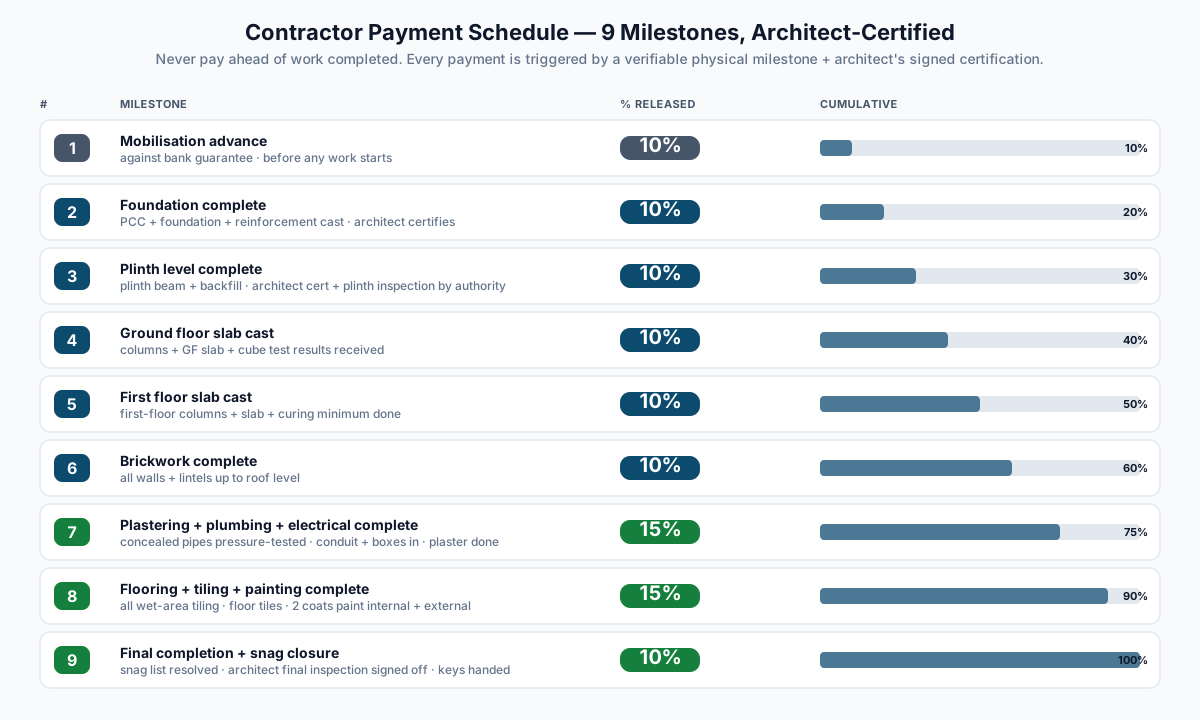
| Milestone | % of Contract | Verification |
|---|---|---|
| Mobilisation advance | 10% | Against bank guarantee |
| Foundation complete | 10% | Architect certification |
| Plinth level complete | 10% | Architect certification + plinth inspection |
| Ground floor slab | 10% | Architect certification |
| First floor slab | 10% | Architect certification |
| Brickwork complete | 10% | Architect certification |
| Plastering + plumbing + electrical | 15% | Architect certification |
| Flooring + tiling + painting | 15% | Architect certification |
| Final completion + snag list | 10% | Architect final inspection |
Never pay ahead of work completed. The single most common mistake homeowners make is advancing money to contractors before the corresponding work is done. Milestone-based payment protects you.
Phase 5: Foundation & Structure
Soil Testing (Before Foundation)
Every site needs a soil test before foundation design. Refer to our detailed guide on soil testing.
| Test | Purpose | Cost |
|---|---|---|
| Standard Penetration Test (SPT) | Determines soil bearing capacity | ₹15,000-30,000 (2-3 bore holes) |
| Water table test | Determines groundwater level | Included in SPT |
| Soil type classification | Determines foundation type | Included in SPT |
Foundation Types
| Foundation | When Used | Cost (relative) |
|---|---|---|
| Isolated footing | Good soil (SBC > 15 T/sqm), low-rise | Low |
| Combined footing | Columns close together, moderate soil | Medium |
| Strip footing | Load-bearing wall construction | Low-Medium |
| Raft foundation | Weak soil (SBC < 10 T/sqm), high water table | High |
| Pile foundation | Very weak soil, marine clay, filled ground | Very high |
Construction Sequence — Structure
| Stage | What Happens | Duration (G+1 house) | Key Quality Checks |
|---|---|---|---|
| 1. Excavation | Digging foundation trenches/pits | 3-5 days | Depth as per structural drawing, no loose soil at bottom |
| 2. PCC (Plain Cement Concrete) | Levelling bed for foundation | 1-2 days | Level check, correct mix (M15) |
| 3. Foundation | Reinforcement + formwork + concrete | 5-7 days | Steel as per drawing, concrete grade M25, cube test |
| 4. Plinth beam | Beam at ground level connecting all columns | 3-5 days | Level check, steel continuity, concrete cover |
| 5. Backfilling | Filling soil inside plinth | 2-3 days | Compacted in layers, no organic matter |
| 6. Column casting | Vertical RCC columns | 3-5 days per floor | Vertical alignment (plumb), steel as per drawing |
| 7. Beam + slab | Horizontal RCC structure | 7-10 days per floor | Steel spacing, concrete grade, curing for 14 days minimum |
| 8. Staircase | RCC staircase | 5-7 days | Riser/tread dimensions, steel continuity, anti-slip nosing |
Critical Quality Checks During Structure
| Check | What to Verify | When |
|---|---|---|
| Steel grade | Fe 500D, ISI marked, mill certificate | Before use |
| Concrete grade | M25 minimum for RCC (IS 456) | Every pour |
| Slump test | 75-100mm (site mix), 100-150mm (RMC pump) | Every batch |
| Cube test | Cast 6 cubes per 5 cu.m — test at 7 and 28 days | Every pour |
| Cover blocks | 25mm cover for beams/columns, 15mm for slabs | Before pouring |
| Curing | Minimum 14 days water curing for slabs and beams | After casting |
| Plumb check | Columns must be perfectly vertical | After casting |
| Level check | All slabs at same level, 1:100 slope for terraces | After casting |
Phase 6: Brickwork, Plumbing & Electrical
Brickwork / Block Work
| Material | Cost (₹/sqft of wall) | Best For |
|---|---|---|
| Red clay bricks | ₹40-55 | Traditional, available everywhere |
| Fly ash bricks | ₹35-50 | Eco-friendly, uniform, lower cost |
| AAC blocks | ₹55-75 | Faster construction, thermal insulation, lighter |
| Solid concrete blocks | ₹45-60 | Strong, uniform |
Concealed Plumbing
| System | Material | IS Code | Notes |
|---|---|---|---|
| Hot water supply | CPVC pipes | IS 15778 | Heat-resistant up to 93°C |
| Cold water supply | uPVC pipes | IS 4985 | Pressure-rated |
| Drainage | SWR pipes | IS 13592 | Soil, waste, and rainwater |
| Gas line | Copper / GI | IS 1239 | If piped gas is available |
Plumbing best practices:
- Get plumbing points marked on-wall before chasing (cutting grooves)
- Pressure test all supply lines at 7-8 kg/sq.cm for 24 hours before plastering
- Slope drainage pipes at 1:40 minimum (1 inch drop per 40 inches)
- Use separate drainage for soil (toilet) and waste (sink, shower)
- Install floor traps with water seal in every wet area
Electrical Wiring
| Component | Specification | Notes |
|---|---|---|
| Wires | FR/FRLS grade, ISI marked, copper | Minimum 1.5 sq.mm for lights, 2.5 sq.mm for sockets, 4 sq.mm for AC/geyser |
| MCB | As per load calculation | Individual MCB for each circuit |
| RCCB | 63A, 30mA sensitivity | One per floor minimum — life-saving device |
| Earthing | IS 3043, <1 ohm resistance | Minimum 2 earth pits per house |
| Conduit | PVC/HDPE, ISI marked | 20mm for wiring, 25mm for heavy circuits |
| DB (Distribution Board) | One per floor | Properly labelled circuits |
Electrical planning tips:
- Plan switch and socket positions based on furniture layout — not just room dimensions
- Provide 5-amp sockets for lamps and chargers, 15-amp for AC and geyser
- Plan for future needs: EV charging point in parking, extra conduits for later additions
- LED panel lights: plan false ceiling before electrical rough-in
- Smart home wiring: provide Cat6 ethernet and extra conduits even if not installing now
Waterproofing
| Area | Method | Material | Cost (₹/sqft) |
|---|---|---|---|
| Terrace | Membrane + protective screed | APP/SBS membrane (IS 14767) | ₹40-80 |
| Bathroom | Liquid coating + coba | Polymer-modified cementitious coating | ₹30-50 |
| Basement | External membrane + drainage | Crystalline + membrane | ₹80-150 |
| Water tank | Internal coating | Epoxy / crystalline | ₹50-80 |
| External walls | Silicone-based water repellent | Spray-on transparent coating | ₹15-25 |
Waterproofing is the most commonly neglected step — and the most expensive to fix later. Terrace leaks are the #1 post-construction complaint in India. Invest in good waterproofing now. It costs 1-2% of construction but prevents 10-15% repair costs later.
Phase 7: Finishing & Interiors
Plastering
| Type | Thickness | Cost (₹/sqft) | Where |
|---|---|---|---|
| Internal plaster | 12-15mm (two coats) | ₹20-30 | All internal walls |
| External plaster | 18-20mm (two coats) | ₹25-35 | All external walls |
| Ceiling plaster | 10-12mm | ₹22-32 | All ceilings |
| POP punning | 3-5mm | ₹12-18 | Smooth finish over plaster |
| Gypsum plaster | 8-11mm (single coat) | ₹30-45 | Alternative to sand-cement plaster (faster, smoother) |
Flooring
| Material | Cost (₹/sqft including laying) | Best For | Durability |
|---|---|---|---|
| Vitrified tiles (double-charged) | ₹60-120 | Living room, bedrooms | High |
| Porcelain tiles | ₹80-200 | All areas | Very high |
| Natural granite | ₹80-200 | Staircase, external, kitchen platform | Very high |
| Italian marble | ₹200-800 | Living room (premium) | High (needs maintenance) |
| Indian marble (Makrana) | ₹100-300 | Living room, pooja room | High |
| Wooden flooring (engineered) | ₹150-400 | Bedrooms | Medium (moisture-sensitive) |
| Terrazzo | ₹60-100 | Budget-friendly, trending retro | Very high |
| Cement tiles (handmade) | ₹100-250 | Feature areas, balconies | High |
Painting
| Type | Cost (₹/sqft, 2 coats) | Finish | Best For |
|---|---|---|---|
| Distemper | ₹8-12 | Matte | Budget option, ceilings |
| Emulsion (acrylic) | ₹14-22 | Matte to semi-gloss | Most internal walls |
| Premium emulsion | ₹22-35 | Rich finish, washable | Living room, bedrooms |
| Texture paint | ₹40-100 | Textured patterns | Feature walls |
| Exterior emulsion | ₹18-30 | Weather-resistant | All external walls |
| Enamel | ₹15-25 | Glossy | Doors, windows, grills |
Woodwork & Modular
| Item | Material Options | Cost Range |
|---|---|---|
| Wardrobes | MR plywood + laminate, HDHMR + laminate, modular (Hettich/Hafele) | ₹800-2,000/sqft |
| Kitchen | Marine plywood + granite, modular (Sleek/Hafele/Hettich) | ₹1,200-3,000/sqft (modular) |
| Main door | Teak wood, engineered wood, metal | ₹25,000-1,50,000 |
| Internal doors | Flush doors (IS 2202), membrane doors | ₹4,000-15,000 each |
| Window frames | UPVC, aluminium (powder-coated), wood | ₹350-800/sqft (UPVC) |
| False ceiling | Gypsum board, POP, metal grid | ₹60-150/sqft (gypsum) |
Bathroom Fittings
| Item | Budget Range | Premium Range | Brands |
|---|---|---|---|
| WC (EWC) | ₹5,000-10,000 | ₹15,000-50,000 | Jaquar, Hindware, Kohler, Duravit |
| Basin | ₹2,000-5,000 | ₹8,000-30,000 | Hindware, Cera, Kohler |
| Shower | ₹3,000-8,000 | ₹15,000-50,000 | Jaquar, Grohe, Kohler |
| Mixer/tap | ₹1,500-4,000 | ₹6,000-20,000 | Jaquar, Grohe |
| Accessories | ₹2,000-5,000/set | ₹8,000-20,000/set | Jaquar, Kohler |
| Mirror | ₹1,500-3,000 | ₹5,000-15,000 | Local/imported |
Phase 8: Inspection, OC & Move-In
Pre-Handover Checklist (Snag List)
Before accepting the house from the contractor, inspect every item:
Structure & Walls:
- [ ] No visible cracks (hairline cracks in plaster are normal; structural cracks are not)
- [ ] Walls are plumb (vertical) — check with spirit level
- [ ] Door and window frames are square and properly aligned
- [ ] External walls show no signs of dampness
Plumbing:
- [ ] All taps and mixers function properly
- [ ] No leaks at any joint
- [ ] Hot water reaches all intended points
- [ ] Drainage is smooth with proper slope — water should not pool
- [ ] Flush tanks fill and flush correctly
- [ ] Overhead tank fills and supply pressure is adequate
Electrical:
- [ ] Every switch operates its intended point
- [ ] All sockets work (test with a device)
- [ ] RCCB trips when tested (test button on the device)
- [ ] Earthing resistance is <1 ohm (get certificate from electrician)
- [ ] Fan and light points are centred in rooms
- [ ] Geyser and AC points have dedicated MCBs
Flooring & Tiling:
- [ ] No hollow tiles (tap with a coin — hollow sound = poor bonding)
- [ ] Grout lines are consistent and clean
- [ ] No chipped tiles or edges
- [ ] Floor slopes toward drain in wet areas (pour water and check)
- [ ] Skirting is flush and uniform
Painting:
- [ ] No patchwork, brush marks, or roller marks
- [ ] Uniform colour (no shade variation between walls)
- [ ] Clean edges at corners, switches, and frames
- [ ] External paint shows no drip marks or bubbles
Woodwork:
- [ ] Wardrobe doors and drawers open and close smoothly
- [ ] Soft-close hinges work properly
- [ ] No visible gaps between panels
- [ ] Kitchen shutters are aligned and level
- [ ] Laminates are properly bonded (no bubbling or peeling)
Obtaining the Occupancy Certificate (OC)
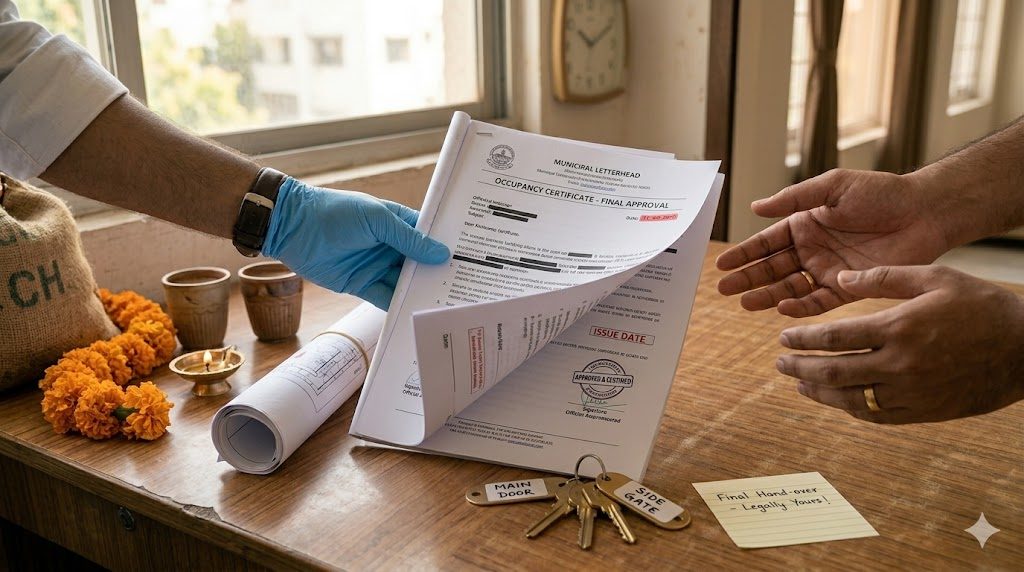
The Occupancy Certificate (OC) certifies that the building has been constructed as per the approved plan and is safe for habitation.
Requirements for OC:
- Completion Certificate from architect
- Structural stability certificate from structural engineer
- Plumbing and drainage completion certificate
- Electrical inspection report (from state electrical inspectorate)
- Fire safety certificate (if applicable — usually for G+3 and above)
- Rainwater harvesting completion certificate
- Solar panel installation certificate (if mandatory in your state)
- Lift safety certificate (if applicable)
Why OC matters:
- Legal habitation: Without OC, residing in the building is technically illegal
- Utility connections: BESCOM/BWSSB (or equivalents) require OC for permanent connections
- Property tax: Assessment and Khata transfer require OC
- Resale/loan: No bank will give a loan against property without OC
- Insurance: Building insurance requires OC
Post-Construction Property Steps
| Step | Authority | Duration | Cost |
|---|---|---|---|
| Khata transfer | Municipal body (BBMP etc.) | 15-30 days | ₹5,000-15,000 |
| Property tax assessment | Municipal body | With Khata | Based on built-up area and zone |
| BESCOM connection | Electricity board | 7-15 days | ₹5,000-20,000 (based on load) |
| BWSSB connection | Water board | 15-30 days | ₹10,000-30,000 |
| Gas connection | Gas company | 7-15 days | ₹5,000-8,000 |
| Internet / cable | Service providers | 3-7 days | As per plan |
Complete Cost Summary — Building a House in India
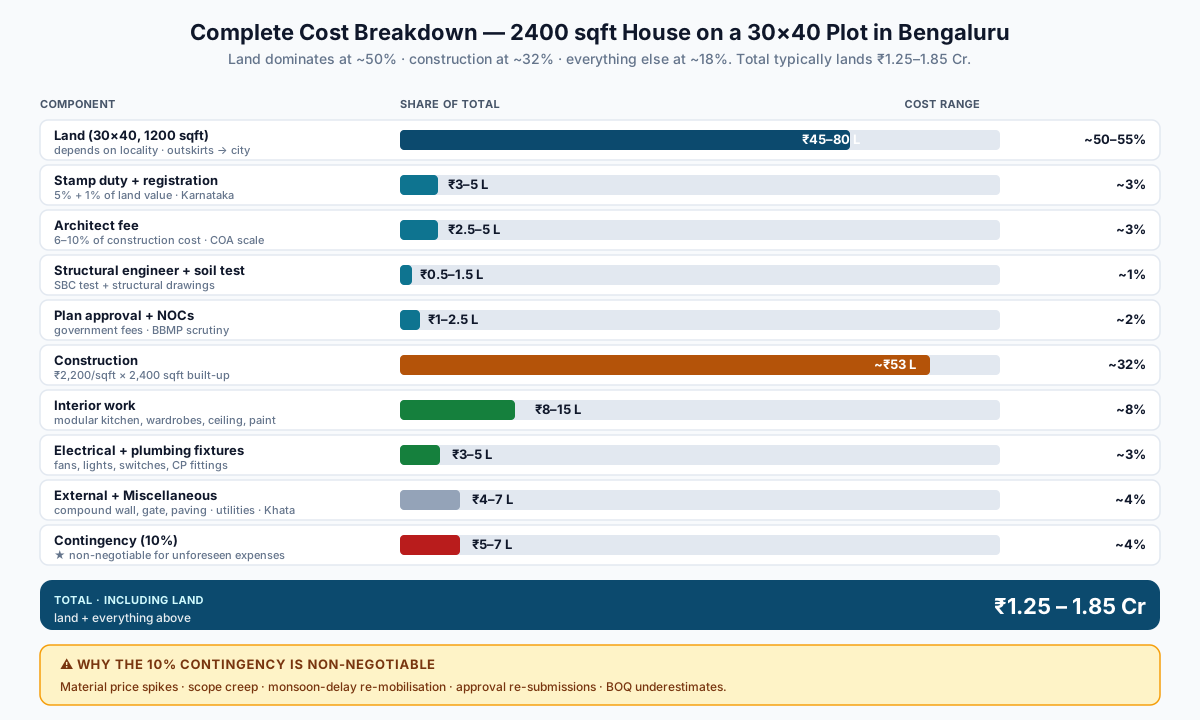
Example: 2400 sqft (built-up) house on a 30x40 plot in Bengaluru
| Component | Cost Range | Notes |
|---|---|---|
| Land (30x40, 1200 sqft) | ₹45-80 lakh | Depends on location (outskirts to city) |
| Stamp duty + registration | ₹3-5 lakh | 5% + 1% of land value |
| Architect fee | ₹2.5-5 lakh | 6-10% of construction cost |
| Structural engineer | ₹50,000-1.5 lakh | Soil test + structural design |
| Plan approval | ₹1-2.5 lakh | Government fees + NOCs |
| Construction (₹2,200/sqft) | ₹53 lakh | Standard finish, 2400 sqft built-up |
| Interior work | ₹8-15 lakh | Modular kitchen, wardrobes, false ceiling, painting |
| Electrical + plumbing fixtures | ₹3-5 lakh | Fans, lights, switches, CP fittings |
| External development | ₹2-4 lakh | Compound wall, gate, paving, landscaping |
| Miscellaneous | ₹2-3 lakh | Water connection, electricity, Khata, insurance |
| Contingency (10%) | ₹5-7 lakh | For unforeseen expenses |
| TOTAL (excluding land) | ₹80-105 lakh | — |
| TOTAL (including land) | ₹1.25-1.85 crore | — |
Payment Flow Over Time
| Month | Activity | Approximate Spend |
|---|---|---|
| 1-3 | Land purchase, legal, stamp duty | 40-50% of total |
| 4-6 | Architect, plan approval, soil test | 3-5% |
| 7-8 | Foundation, plinth | 8-10% |
| 9-12 | Structure (columns, slabs, staircase) | 15-20% |
| 13-15 | Brickwork, plumbing, electrical | 10-12% |
| 16-18 | Plastering, flooring, painting | 10-12% |
| 19-21 | Interiors, woodwork, fixtures | 8-12% |
| 22-24 | Final touches, OC, move-in | 3-5% |
Home Loan Tips for Construction
| Feature | Details |
|---|---|
| Loan type | Construction-linked disbursement (not full amount at once) |
| Interest rate | 8.5-9.5% (2025-26, floating) |
| Disbursement | In stages linked to construction milestones |
| Pre-EMI interest | You pay interest-only during construction phase |
| Full EMI | Starts after construction completion or 18-24 months (whichever is earlier) |
| Documents needed | Approved building plan, land documents, architect certificate, contractor agreement |
| Tax benefit | Section 24(b): Up to ₹2 lakh interest deduction. Section 80C: Up to ₹1.5 lakh principal. |
Pro tip: Get pre-approval for the home loan before starting construction. This gives you clarity on budget and ensures you don't run out of funds mid-construction — the worst possible scenario.
Common Mistakes — And How to Avoid Them
| Mistake | Consequence | Prevention |
|---|---|---|
| Skipping soil test | Wrong foundation type, future settlement | Always test — it costs ₹15,000-30,000 and can save lakhs |
| Not hiring an architect | Poor design, bylaw violations, approval issues | Mandatory for G+1 and above. Worth every rupee for any building |
| Verbal agreements with contractor | Disputes over scope, cost, and quality | Written contract with BOQ, specifications, and payment milestones |
| Paying contractor in advance | Loss of leverage, risk of abandonment | Milestone-based payment only |
| Using cheap materials | Premature deterioration, safety risk | Insist on ISI-marked materials with test certificates |
| No waterproofing | Leaks within 2-3 years, expensive repair | Invest 1-2% of construction cost in proper waterproofing |
| Changing design during construction | Cost overrun (20-40%), delays, structural risk | Finalise design completely before construction starts |
| Ignoring drainage | Waterlogging, foundation damage | Plan site drainage and connect to municipal stormwater drain |
| No contingency budget | Stress, compromised quality | Keep 10-15% of budget as contingency |
| Not documenting | Disputes, no accountability | Photograph every stage. Keep all receipts, test certificates, and approvals |
Key Takeaways
- Due diligence on land is non-negotiable — verify title, EC, Khata, survey, and conversion before buying
- Hire a COA-registered architect — they optimise your design, manage approvals, and supervise quality
- Get building plan approved — unapproved construction is illegal and cannot get OC, loans, or resale
- Written contract with milestone-based payment — protects you from contractor disputes and cost overruns
- Soil test before foundation — ₹15,000-30,000 that can save you lakhs in future structural problems
- Never compromise on structural materials — use Fe 500D steel, M25 concrete, and ISI-marked cement
- Waterproofing is not optional — invest now or pay 10x later in repair costs
- Keep 10-15% contingency — no construction project ever costs exactly what was estimated
- Document everything — photographs, test certificates, receipts, minutes of meetings
- The best time to make changes is during design, not during construction — finalise everything on paper before breaking ground
References:
- Registration Act, 1908 — Property registration requirements
- Transfer of Property Act, 1882 — Land purchase legalities
- RERA (Real Estate Regulation and Development Act), 2016
- National Building Code of India (NBC), 2016
- IS 456:2000 — Plain and Reinforced Concrete
- IS 1786:2008 — Steel for Reinforcement
- IS 1077:1992 — Common Burnt Clay Building Bricks
- CPWD General Specifications for Building Works, 2019
- COA (Council of Architecture) — Conditions of Engagement and Scale of Charges
- Karnataka BBMP Building Bye-Laws 2019
- BMC Development Control Regulations, Mumbai
- CMDA Building Rules, Chennai
- GHMC Building Permission Rules, Hyderabad
- Indian Stamp Act, 1899 (as amended by states)
- Income Tax Act — Sections 24(b) and 80C for housing benefits
Export this guide
Related Guides — Deep-dive reading
Plot Due Diligence in India: The Complete Pre-Purchase Check (2026)
Before you pay a rupee for a plot, run the full pre-purchase check with your lawyer and a licensed surveyor - legal title, revenue records, planning approvals, physical survey and financial dues. This guide walks through each pillar, gives you a checklist and tells you when to walk away.
Buying LandRERA Buyer Rights: A Homeowner's Guide (2026)
What RERA actually gives you as a home buyer -- registered projects, sale on carpet area, an escrow rule that curbs fund diversion, defined possession dates with delay compensation, a defects-liability period, and a real complaint route -- plus how to check a project on your state RERA portal before you pay a rupee.
Building RegulationsUnderstanding Construction Contracts & Retainage in India
A homeowner-protective guide to the contract and payment structure behind every interiors or build project — the contract types and when each fits, how to stage payments so your money trails the work, and the retention clause that quietly protects you more than any other.
Cost & MoneyRelated Tools — Try Free
Property Tax Calculator — 10 Indian Cities
Estimate annual municipal property tax across BBMP / MCD / MCGM / GHMC / GCC / KMC / PMC / AMC / TMC / PCMC — with self-occupied, tenanted, and age-rebate adjustments.
Property TaxRainwater Tank Sizer
How big should your rainwater tank be? Computes annual harvest, recommended tank capacity in litres, water-bill savings, and payback — for 10 Indian cities.
RWH CalculatorCross-Ventilation Analyzer
Estimate airflow and air changes per hour (ACH) from room size, window areas, layout, and local wind — with NBC 2016 Part 8 compliance check.
Ventilation Calculator