
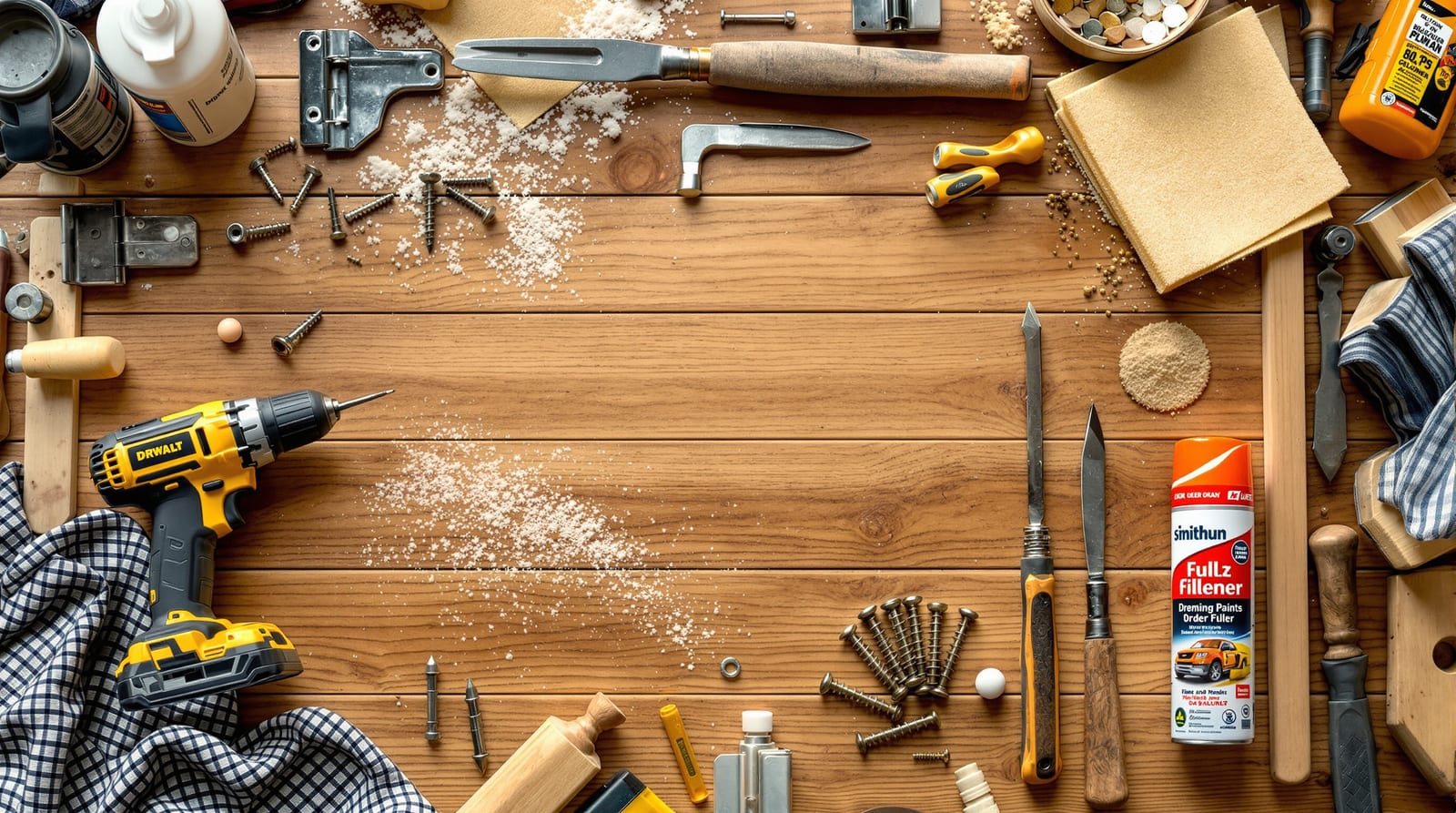
Door Repair Tools: The DIY Toolkit You Need (India 2026)
The exact tools and consumables an Indian home needs to fix sticking, squeaking and loose doors — with indicative ₹ and beginner vs advanced kits.
Most door problems in an Indian home are small: a screw that has worked loose, a hinge that squeaks every monsoon, a leaf that rubs the frame, a chip in the polish. You do not need a carpenter's full kit to handle these — you need the right door repair tools and a small box of consumables that live in a drawer and come out twice a year. This guide lists exactly what to buy, what each item is for, an honest ₹ range, and how to split it into a beginner kit and an advanced kit so you are not over-buying. We will also be clear about where DIY stops and a carpenter (or replacement) begins.
Why a small toolkit pays for itself
A carpenter's visit for a simple job — tightening hinges, planing a sticking edge, lubricating a closer — runs roughly ₹400-800 for a half-day call-out, and ₹800-1,500 for a full day, more in the metros. A one-time toolkit of the essentials costs about the same as two or three of those visits, and then it is yours forever. Tighten your own hinge screws, ease your own swollen door after the rains, fill your own dents, and the kit pays for itself inside a year. Pair this with our door repair guide for the fixes, and the door troubleshooting flow when you are unsure what is wrong. Not sure a job is worth doing yourself? Run it through the repair vs replace door calculator before you spend on parts.
The essential door repair tools
These are the hand and power tools. Buy decent mid-range — the cheapest screwdrivers strip screw heads, which creates a worse problem than the one you started with.
Tools you will reach for most
| Tool | What it is for | Indicative ₹ (incl GST) | Kit |
|---|---|---|---|
| Screwdriver set (Phillips + flat, magnetic) | Tightening/removing hinge, handle, strike-plate screws | 200-600 | Beginner |
| Cordless drill-driver (12-18V) + bit set | Driving long screws, drilling pilot holes, hinge jobs | 2,500-6,000 | Advanced |
| Wood chisel (12mm or 19mm) | Cutting/deepening hinge and strike-plate mortises | 150-500 | Advanced |
| Hand planer or surform/rasp | Shaving a sticking or swollen door edge | 350-1,500 | Advanced |
| Sanding block + sandpaper (120-400 grit) | Smoothing edges, prepping for filler/polish | 100-300 | Beginner |
| Spirit level (300-600mm) | Checking the door and frame are plumb/level | 200-700 | Beginner |
| Tape measure (3-5m) | Measuring gaps, leaf size, hardware spacing | 100-300 | Beginner |
| Allen/hex key set | Adjusting closers, set-screws on levers, sliding rollers | 100-400 | Beginner |
| Utility knife | Scoring laminate/veneer, trimming weatherstrip | 80-250 | Beginner |
| Hinge jig / self-centring bit | Drilling perfectly centred pilot holes in hinges | 400-1,200 | Advanced |
| Pencil, masking tape | Marking, protecting edges while polishing | 50-150 | Beginner |
A tip on India realities: keep steel tools dry — coastal and humid homes rust a chisel or planer blade fast, so a smear of oil and a sealed box matter. For self-centring pilot holes (the trick to stop screws sitting crooked), a hinge jig or self-centring bit is the single tool that most improves DIY hinge work; see door hinge replacement.
The consumables — the other half of the kit
Tools do the work; consumables make the repair last. These get used up, so restock them.
| Consumable | What it is for | Indicative ₹ | Notes |
|---|---|---|---|
| Wood filler / putty | Filling dents, gouges, old screw holes | 100-400 | Match to wood; see fill door holes & dents |
| Assorted wood screws | Replacing stripped/short hinge & hardware screws | 80-250 | Keep longer ones for loose hinges |
| Silicone or PTFE spray | Lubricating hinges, locks, sliding tracks | 150-400 | Dry-film type attracts less dust |
| Graphite powder (lock lube) | Easing stiff cylinder/pin locks | 80-200 | Do not oil a lock cylinder |
| Weatherstrip / draught tape | Sealing gaps to stop draughts, dust, monsoon water | 100-500 | See stop door draughts |
| Touch-up marker / crayon | Hiding scratches in polish/laminate | 100-400 | Match wood tone |
| PU or melamine polish (small tin) | Refinishing a sanded patch | 200-700 | Use in a ventilated room |
| Candle wax / paraffin | Quick rub on a sticking edge | 30-80 | Cheap first try before planing |
| Sandpaper refills (assorted grit) | Ongoing prep work | 100-300 | 120 / 220 / 320 grit covers most |
The right lubricant matters: wet oil on a hinge drips and traps grit, while a dry silicone or PTFE spray stays clean. Our lubricate door hinges guide explains which to use where, and sliding door track cleaning covers the gritty, hard-water build-up that jams Indian tracks.
A simple repair, start to finish
Here is the most common DIY job — a sagging door whose hinge screws have worked loose — so you can see the kit in action. Difficulty: easy. Time: 20-40 minutes.
1. Diagnose. Open and close the door. If it rubs the top of the frame on the latch side, the top hinge is usually loose or pulling out. Confirm with the door troubleshooting flow.
2. Test the screws. With your magnetic screwdriver, try to tighten each hinge screw. If one spins without biting, it is stripped — that is the culprit.
3. Pack or upsize. For a stripped hole, insert a couple of wooden toothpicks with a dab of wood filler and let it set, or drive a longer, thicker screw that reaches the frame stud — the stripped hinge screw fix guide covers both.
4. Pilot, then drive. Use the self-centring bit or hinge jig for a clean pilot hole, then drive the screw firmly — do not overtighten and crush the wood.
5. Re-check and lubricate. Hold the spirit level against the leaf; if it closes without rubbing, finish with a shot of silicone on the hinge pin. See fix loose door hinges.
If the leaf is genuinely sagging at the corner rather than just loose, do not force it — that is the fix sagging door job, and a dropped frame needs a carpenter.
DIFFICULTY, TIME AND COST AT A GLANCE
Beginner kit vs advanced kit
You do not have to buy everything at once. Start with the beginner kit; add the advanced tools when a job demands them.
Beginner kit (around ₹900-2,000)
This handles the 80% of jobs that are tightening, lubricating, sealing and cosmetic touch-ups: a magnetic screwdriver set, tape measure, small spirit level, allen-key set, utility knife, sanding block with paper, plus consumables — wood filler, assorted screws, silicone spray, graphite powder, weatherstrip tape and a touch-up marker. With this you can do everything in wooden door maintenance.
Advanced kit (add ₹4,000-9,000)
When you want to plane a swollen monsoon door, re-cut a hinge mortise, or replace hinges and handles cleanly, add a cordless drill-driver with bits, a wood chisel, a hand planer or surform, a hinge jig/self-centring bit, and a small tin of PU or melamine polish. This unlocks the bigger jobs in fix swollen door (monsoon) and door handle replacement. The door repair cost estimator compares DIY vs carpenter for each job.
Basic safety — read before you start
Door DIY is low-risk, but a few rules matter:
- Eyes and lungs. Wear safety glasses when drilling or planing, and a simple dust mask when sanding filler or old polish — Indian hardwood and MDF dust both irritate.
- Power tools. Unplug or remove the battery before changing drill bits. Keep the cord clear of the door swing.
- Automatic and sensor doors. Isolate the power at the mains before touching any motor, sensor or controller. Auto-operators carry voltage and stored tension — leave these to a technician. See automatic door troubleshooting.
- Glass doors. Handle with care, and never try to DIY a cracked toughened-glass panel — it can shatter. Call a professional.
- Sharp blades. Cut away from your body with a chisel or knife, and keep them sharp; a blunt blade slips.
- Polish fumes. Use PU and melamine polish in a ventilated room.
When to stop and call a carpenter
No toolkit fixes a structural problem. Stop and call a professional when: the door leaf is visibly warped or bowed; the bottom rail is soft and rotted from monsoon water (see door bottom rot repair); the frame has dropped or the wall is cracking; you see borer holes or fungus spreading (treat with door borer & fungus treatment); or it is a sliding-glass, automatic or fire-rated door. A carpenter half-day is ₹400-800 — cheaper than ruining a good leaf with the wrong tool. When repair stops making sense, our door replacement guide and door cost (India 2026) help you plan the next step, and the full picture lives in the complete door guide.
Frequently asked questions
What is the single most useful tool for door repair?
A good magnetic screwdriver set, closely followed by a self-centring drill bit or hinge jig. The vast majority of door faults in Indian homes are loose, stripped or crooked screws — fix those cleanly and you have solved most problems before reaching for anything bigger.
Do I really need a drill, or will a screwdriver do?
For tightening and lubricating, a screwdriver is enough — that is the whole beginner kit. You only need a cordless drill once you start drilling pilot holes for new hinges, replacing handles, or driving long screws into a frame stud. Borrow or rent before buying if it is a one-off job.
What should I use to lubricate hinges and locks?
Use a dry silicone or PTFE spray on hinges and sliding tracks — it does not attract dust the way wet oil does. For stiff cylinder and pin locks, use graphite powder, never oil, which gums up the pins over time.
Can I fix a swollen monsoon door myself?
Often yes, if it is only a sticking edge — rub a candle on the rubbing spot first, and plane lightly with a surform if it still binds. But if the whole leaf has warped or the bottom has absorbed water and gone soft, that is replacement territory, not a DIY fix.
How much should a basic door repair toolkit cost?
A solid beginner kit of essential tools and consumables runs roughly ₹900-2,000. Adding the advanced tools — a cordless drill, chisel, planer, hinge jig and refinishing polish — brings the total to around ₹5,000-11,000, which still pays back inside a few carpenter visits.
When is a repair not worth attempting at all?
When the door is structurally compromised — a warped solid leaf, a rotted or borer-infested frame, a dropped wall opening, or a cracked toughened-glass or automatic door. In those cases the tools cannot help; budget for replacement instead.
Export this guide
Related Guides — Deep-dive reading
Door Repair Guide India: Fix Holes, Dents, Swelling, Hinges & Locks (2026)
A fix-it reference for Indian homes: every common door problem with a quick fix, a proper repair, a replace verdict, the materials needed, and indicative rupee costs.
Home Doors & EntrancesDoor Maintenance Guide India: A Seasonal Care Routine to Keep Doors Smooth for Decades
Oil the hinges, tighten the screws, lube the lock, check the seals and re-coat the finish — a simple seasonal calendar that stops Indian doors from binding in the monsoon, sagging, tarnishing on the coast or falling to termites.
Home Doors & EntrancesDoor Hinge Replacement: DIY Step-by-Step Guide (India 2026)
Match the size, type and finish, then swap a worn or rusted hinge yourself without taking the whole door off its frame.
Home Doors & EntrancesRelated Tools — Try Free
Window Hardware Cost Calculator
Estimate window hardware cost — hinges, handles, locks, rollers and multipoint gears.
Window CalculatorWindow Cleaning Cost Calculator
Estimate professional window cleaning cost per visit and per year by access and frequency.
Window CalculatorDoor Hardware Cost Estimator
Estimate the all-in hardware cost for a door — hinges, lock, handle, closer, bolts, stopper and fitting — with GST.
Door Calculator