
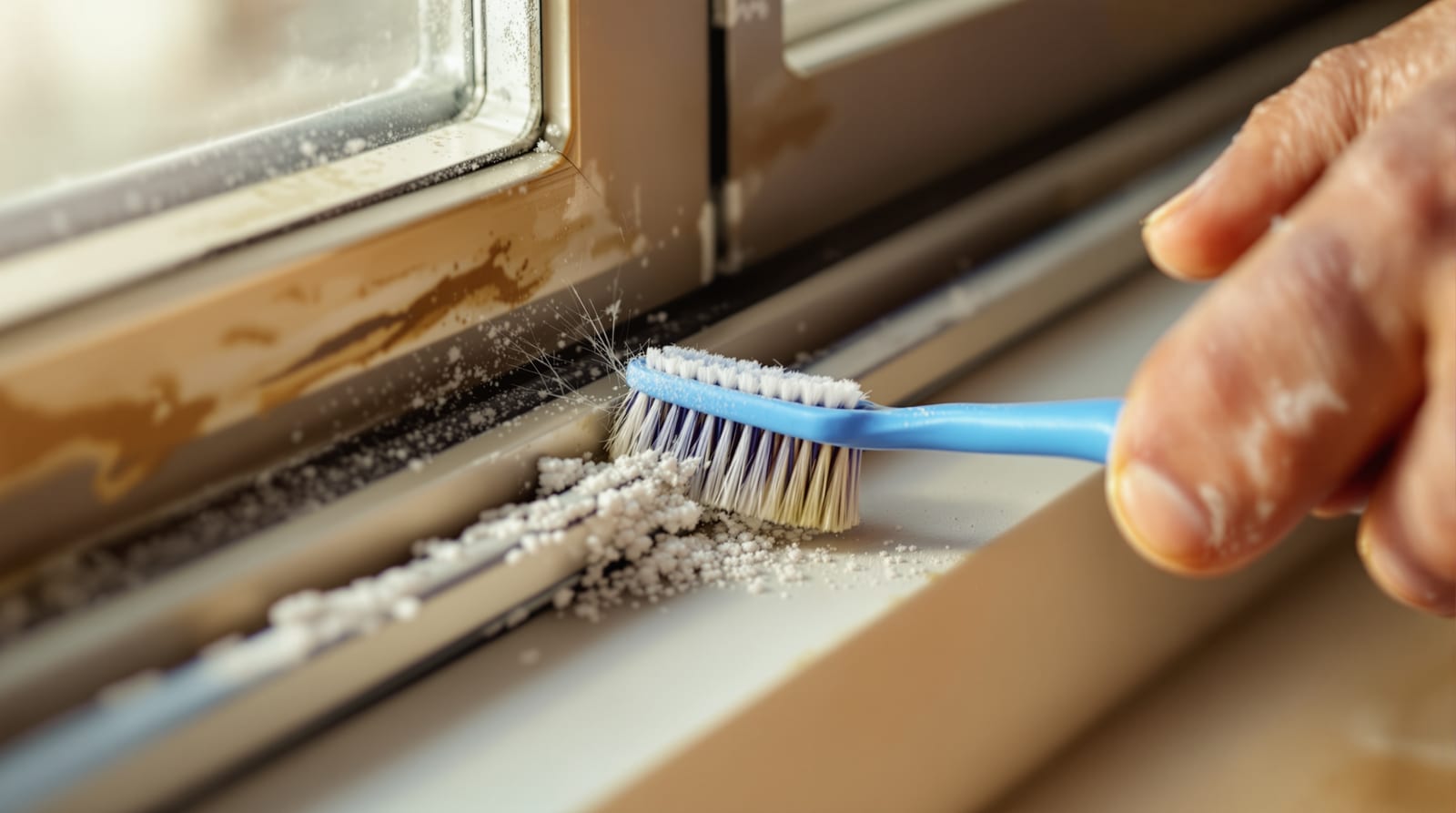
Sliding Door Track Cleaning: Easy DIY Fix (India 2026)
Why Indian sliding doors get stiff — dust, grime and hard-water scale in the track — and the step-by-step clean-dry-lubricate routine that fixes it.
When a sliding door or window starts to fight you, the culprit is almost never the rollers — it is the track. Sliding door track cleaning is the single most useful thing you can do for a stiff slider, because the channel the wheels run in quietly fills with a paste of dust, grit, dead insects and, in most Indian homes, a chalky crust of hard-water scale from rain splash and mopping. The wheels then climb over the debris instead of rolling, the door judders, and people start blaming the rollers and calling a carpenter. Half an hour with a vacuum, a brush and the right lubricant usually brings the door back to a one-finger glide — no parts, no labour bill.
Difficulty: easy. Time: 20-40 minutes per door. No carpenter needed for cleaning; budget ₹0-300 for consumables you probably already own.
Why Indian sliding tracks get stiff
Three things gang up on a track in India, and they feed each other.
Dust and grit. Open windows, construction nearby, street dust and the daily sweep all settle into the low channel of the track — it is the lowest open groove in the room, so everything ends up there. Each grain is a tiny speed-breaker the roller has to climb.
Grime and oily film. Cooking vapour, hand grease near the handle, and pollen bind the dust into a sticky paste that ordinary wiping cannot shift. This is why a quick swipe with a cloth never seems to help for long.
Hard-water scale. This is the India-specific villain. Mopping water, rain blowing in, and the spray off wet floors leave behind dissolved calcium and magnesium — the same chalky white crust you see on taps and tiles. On an aluminium track it bonds hard, roughens the surface, and in the monsoon it mixes with grit into a grinding compound. It also blocks the small weep holes that drain rainwater out of the bottom track, so water pools and the scale just keeps building.
Get all three out and keep them out, and the door slides like new.
Symptom to cause to fix
| What you notice | Likely cause | The fix |
|---|---|---|
| Door drags or judders along its run | Dust and grit packed in the track | Vacuum and brush the track clean |
| Sticky, gritty paste in the channel | Oily grime bound with dust | Baking-soda or vinegar scrub |
| White chalky crust, rough patches | Hard-water scale | Vinegar soak, then scrub |
| Water pools in the bottom track | Blocked weep holes | Clear weep holes with a pin |
| Smooth for a week, then stiff again | No lubricant, or wrong (oily) lubricant | Dry silicone or PTFE after cleaning |
| Still stiff after a thorough clean | Worn, flat-spotted or seized rollers | See sliding door roller repair |
Tools & materials you'll need
- Vacuum cleaner with a narrow crevice nozzle (the single most useful tool)
- An old toothbrush, plus a stiffer brush or grout brush for stubborn bits
- A few clean rags or microfibre cloths, and some old newspaper
- A butter knife or flat screwdriver wrapped in cloth (to reach the corners)
- Baking soda (a small bowl) for the grime paste
- White vinegar for hard-water scale (₹40-80 a bottle)
- A pin, paperclip or thin wire to clear weep holes
- Dish soap and warm water
- A dry silicone spray or dry PTFE lubricant (₹150-350) to finish — NOT oil or grease
Most of this is already in the house; the only thing worth buying is a proper dry lubricant.
The step-by-step clean
Work in good light, with the newspaper down to catch the muck. You do not need to lift the door out for a routine clean — just slide it fully to one side so you can do the exposed half, then slide it the other way for the rest.
1. Slide the door open to one end and vacuum the exposed track. Use the crevice nozzle and run it slowly along the channel and into both corners to pull out loose dust, grit and dead insects. This first pass removes most of the problem.
2. Loosen the packed grime. Wrap the butter knife in a cloth and run it along the bottom and sides of the channel to scrape the compacted paste loose, then vacuum again.
3. Make a baking-soda paste — a spoon of baking soda with a little water — and scrub the channel with the toothbrush. This lifts greasy, sticky grime without scratching the aluminium. For a really filthy track, a little dish soap in warm water helps too.
4. Tackle hard-water scale with vinegar. Soak a rag in white vinegar, lay it along the scaled section, and leave it 10-15 minutes to soften the chalky crust. Then scrub with the stiffer brush. Repeat on stubborn patches — vinegar dissolves the scale chemically, so let it do the work rather than forcing it.
5. Clear the weep holes. Look for the small slots or holes in the bottom track that let rainwater drain out. Poke a pin or thin wire through each one and flush with a little water until it runs clear. Blocked weep holes are why water (and fresh scale) keeps pooling.
6. Rinse and WIPE everything dry. Wipe out all the vinegar, paste and loosened muck with a clean damp cloth, then dry the track completely with a dry rag. This step matters: any leftover moisture in our humidity invites fresh scale and, on steel components, rust.
7. Slide the door to the other end and repeat steps 1-6 on the half you couldn't reach.
8. Apply the right lubricant — last, on a dry track. A light, even mist of dry silicone spray or dry PTFE along the clean track. Slide the door back and forth several times to spread it, then wipe any excess off the visible edges.
That is the whole job. The order — clean, clear, dry, then lubricate — is what makes it last.
The lubricant rule: dry, never oily
This is where most people undo their good work. Oil, grease, WD-40 as a final coat, or petroleum jelly all feel slippery on day one — and then they turn the track into a dust magnet. Within a week the wet film has glued a fresh layer of grit in place, and the door is stiffer than before.
Use a dry-film lubricant instead: silicone spray or a PTFE (Teflon-type) product. These leave a slick, dry coating that grit cannot stick to. WD-40 has its place — to free and clean a seized roller or a corroded spot — but always wipe it off and finish with a dry lubricant.
How often to clean and lubricate
The right cadence depends on how exposed the track is. A balcony or main sliding door catches far more dust and rain than a quiet interior wardrobe slider.
| Track location | Quick vacuum | Deep clean | Lubricate | India note |
|---|---|---|---|---|
| Interior / wardrobe slider | Monthly | Every 6 months | Every 6 months | Low dust, mostly fine grit |
| Living-room / patio door | Fortnightly | Every 3 months | Every 3 months | High traffic, hand grime |
| Balcony / exterior slider | Weekly | Every 1-2 months | Every 1-2 months | Rain, dust, fastest scale build-up |
| Coastal homes | Weekly | Monthly | Monthly | Salt air accelerates corrosion |
The golden rule for India: always do a deep clean and re-lubricate just before and just after the monsoon. That is when wind-blown grit and hard-water scale build up fastest, and a track that was smooth in May can seize by August. You can set reminders for every sliding door and window in the house with the home door maintenance planner, and if you're unsure whether the problem is the track or something else, run it through the door problem diagnoser first.
When cleaning isn't enough — stop and look closer
A clean track fixes a stiff slider most of the time. If the door is still hard to move after a thorough clean and lube, the problem is elsewhere:
- Worn or flat-spotted rollers — the wheels themselves are damaged or seized. A roller set is only ₹200-900 plus a little labour: see sliding door roller repair.
- A bent or dented track — if the aluminium channel is crushed or kinked, no amount of cleaning helps; it needs straightening or replacing by a fitter.
- The door has dropped or jumped its track — the rollers may need re-adjusting on their height screws (covered in the roller-repair guide).
- Toughened-glass sliders that are heavy or cracked — do not wrestle with a damaged glass panel; call a professional, as a slipping glass door is a safety risk.
For the wider picture, the door maintenance guide covers keeping every door type healthy, the cluster complete door guide pulls it all together, and if the slider is part of a broader fault, start at door troubleshooting. For the right products and method across hinges, locks and tracks, see how to lubricate door hinges, locks and tracks.
Frequently asked questions
Why is my sliding door so hard to slide all of a sudden?
Nine times out of ten it is a dirty track, not the rollers. Dust, sticky grime and hard-water scale build up in the channel until the wheels have to climb over the debris instead of rolling. Vacuum and scrub the track clean, clear the weep holes, dry it, and finish with a dry lubricant before you blame the hardware.
What is the best way to clean a sliding door track?
Slide the door aside and vacuum out the loose dust and grit, scrape the packed grime loose with a cloth-wrapped knife, scrub with a baking-soda paste, then soften any chalky hard-water scale with a vinegar-soaked rag for 10-15 minutes and brush it off. Wipe everything dry, then apply a dry silicone or PTFE lubricant.
How do I remove hard-water (white scale) stains from the track?
White vinegar dissolves the calcium scale. Soak a rag in vinegar, lay it over the crusty section, leave it 10-15 minutes so it softens, then scrub with a stiff brush or old toothbrush. Repeat on stubborn patches. Always dry the track afterwards so fresh scale doesn't re-form.
What lubricant should I use on a sliding door track?
A dry-film lubricant — silicone spray or PTFE (Teflon-type). They leave a slick, dry coating that grit cannot stick to. Avoid oil, grease, petroleum jelly or WD-40 as a final coat: they feel slippery at first but quickly trap dust and make the track stiffer than before.
Do I have to remove the sliding door to clean the track?
No, not for a routine clean. Slide the panel fully to one end, clean the exposed half of the track, then slide it the other way and do the rest. You only need to lift the door out if you're replacing or re-adjusting the rollers, which is covered in the roller-repair guide.
How often should I clean my sliding door tracks in India?
Give exposed balcony and patio tracks a weekly vacuum and a deep clean every one to two months, and interior sliders a deep clean every six months. The most important habit is a thorough clean-and-lubricate just before and just after the monsoon, when dust and hard-water scale build up fastest.
Export this guide
Related Guides — Deep-dive reading
Door Repair Guide India: Fix Holes, Dents, Swelling, Hinges & Locks (2026)
A fix-it reference for Indian homes: every common door problem with a quick fix, a proper repair, a replace verdict, the materials needed, and indicative rupee costs.
Home Doors & EntrancesHow to Clean Bathroom Tiles (India): Shine, Hard-Water Film & Soap Scum
A practical, India-first routine for cleaning bathroom tiles and keeping them glossy — the daily squeegee habit, weekly wash, monthly deep clean, and the safe cleaner for each tile type, including the golden rule that natural stone must never meet acid.
BathroomsHow to Lubricate Door Hinges, Locks & Tracks India 2026
The right lubricant for hinges, locks, latches and tracks — plus the lift-the-pin trick and why WD-40 and cooking oil are a mistake.
Home Doors & EntrancesRelated Tools — Try Free
Window Cleaning Cost Calculator
Estimate professional window cleaning cost per visit and per year by access and frequency.
Window CalculatorDoor Problem Diagnoser
Tell us the symptom and get the likely cause, the fix, DIY difficulty and indicative cost for any door fault.
Diagnostic ToolWindow Hardware Cost Calculator
Estimate window hardware cost — hinges, handles, locks, rollers and multipoint gears.
Window Calculator