
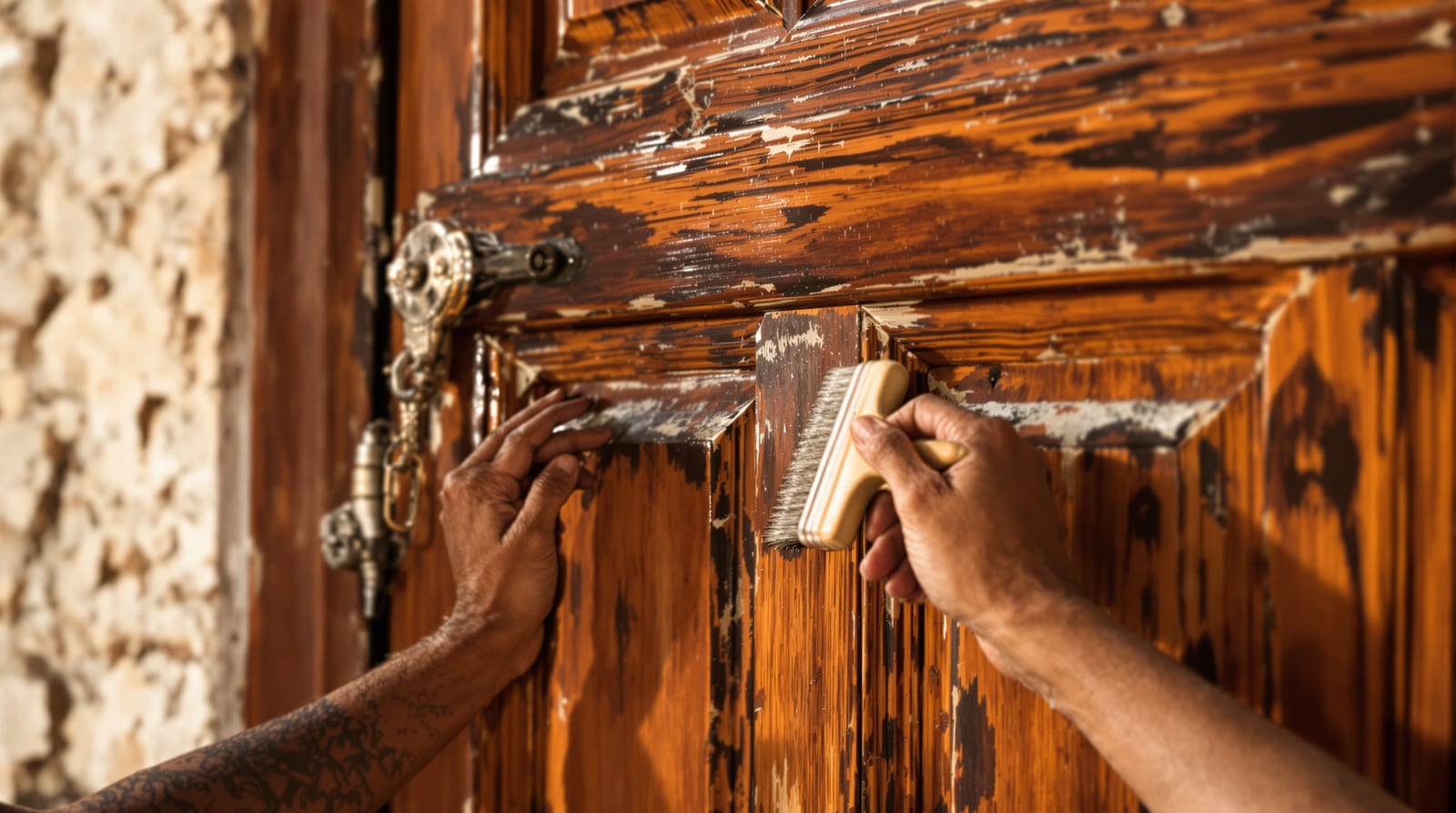
Door Borer Fungus Treatment: DIY Fix (India 2026)
Spot wood borer and fungus on doors, treat the holes and mould yourself, fix the moisture source, and know when to call a pest pro.
Tiny round holes with a sprinkle of fine powder under your door, or black and green patches creeping up from the bottom with a musty smell, point to two of the most common wooden-door enemies in Indian homes. The good news: early door borer fungus treatment is genuinely a do-it-yourself job, cheap and effective, if you catch it before the damage runs deep. This Studio Matrx guide shows you how to tell borer from fungus (and both from termites), treat each properly, stop the moisture that feeds fungus, and the honest point where the door needs a pest professional or replacement.
Door borer fungus treatment starts with the right diagnosis
Getting door borer fungus treatment right means treating the right problem — borer, fungus or termite damage a door very differently, and the wrong treatment wastes money.
| Sign you see | Likely culprit | What it means |
|---|---|---|
| Fine, flour-like powder (frass) below tiny round holes (1–2 mm) | Wood borer (powder-post beetle) | Larvae eating tunnels inside the timber; fresh powder = active |
| Clusters of pinhole exit holes, door sounds hollow when tapped | Advanced borer | Inside is honeycombed; structural risk |
| Black, green or white fuzzy patches; musty damp smell | Fungus / mould | Surface or deeper rot driven by moisture |
| Soft, spongy, crumbling timber (often at the bottom) | Wet rot fungus | Wood is decaying — may be past saving |
| Mud tubes on frame, hollow paper-thin timber, no powder | Termites | A different problem — see termite-proofing |
The quick rule: powder = borer, patches and smell = fungus, mud tubes = termites. Borer leaves dry powder you can rub between your fingers; fungus leaves discoloured, often damp wood. Termites leave mud and almost never the clean dry powder of a borer. For the termite path, see our existing termite-proofing for doors guide — this article is about borer and fungus only.
Is the borer still active?
Clean away the existing powder, mark the spot, and check again after a few days. Fresh powder reappearing means live larvae are still chewing and you must treat. No new powder over a week or two often means an old, dormant infestation — but still worth sealing the holes so you can monitor.
Tools and materials you'll need
- Borer-killer / wood preservative with permethrin or boron (₹150–500), OR kerosene + boric acid powder to mix your own
- A syringe or a fine-nozzle oil can / spray straw to inject into holes
- Anti-fungal wash: a copper or boron-based wood fungicide, or diluted bleach (sodium hypochlorite) for surface mould (₹100–400)
- Stiff brush, old toothbrush, sandpaper (120–220 grit), dust mask, rubber gloves, eye protection
- Wood filler / putty to seal treated holes (₹100–300)
- Sealer to refinish: PU/melamine polish, primer + paint, or varnish (₹200–500)
- A clean dry cloth, a fan or sunlight to dry the door
Safety first: borer killer and fungicides are biocides. Work in a ventilated space, wear a mask and gloves, keep children and pets away until dry, and never use these chemicals near food.
Step-by-step: treating wood borer in a door
Difficulty: easy to moderate. Time: 1–2 hours plus drying. Cost: ₹200–700 DIY; ₹400–1,500 for a carpenter or local pest visit on a single door.
1. Brush away all the powder and vacuum the area so you can see every hole. Wear your mask — borer frass is a fine dust.
2. Lightly sand any polish or paint off the affected zone so the treatment can soak in; bare timber absorbs far better than a sealed surface.
3. Inject the holes. Draw borer killer (or a kerosene-boric mix — roughly 1 part boric acid powder dissolved warm into kerosene) into a syringe and squirt it firmly into each visible hole until it backs up. The tunnels connect, so liquid travels through the network and reaches the larvae.
4. Brush a coat over the whole face and edges as well, especially the unsealed bottom and top edges. Larvae you cannot see are killed as they tunnel into treated wood.
5. Let it penetrate — leave 24–48 hours, ventilated.
6. Re-treat once more after a week for a stubborn or active infestation; borer life-cycles are long and one pass can miss late hatchers.
7. Fill the holes with matching wood filler once you are sure the borer is dead (no new powder), sand smooth.
8. Reseal the whole door with polish, paint or varnish so it is protected and you can spot any new powder instantly against the clean finish.
Step-by-step: treating fungus and mould on a door
Difficulty: easy. Time: 1 hour plus a day or two of drying. Cost: ₹150–500 DIY.
Fungus is a moisture problem first and a wood problem second. Kill the patch, but if you do not fix what is keeping the door wet, it comes straight back.
1. Protect yourself — mask and gloves; mould spores irritate lungs.
2. Brush off the loose growth outdoors if you can, so spores do not spread inside.
3. Wash the patch with a wood fungicide or diluted bleach (about 1 part bleach to 4 parts water for surface mould). Scrub with a stiff brush, let it sit a few minutes, wipe clean.
4. Dry the door thoroughly — a fan, dehumidifier or a few hours of sun. Damp wood will simply re-grow fungus under any new coat.
5. Sand back any soft, discoloured surface fibre to sound timber.
6. Apply a boron or copper-based wood preservative to discourage regrowth, especially on the bottom edge.
7. Fix the moisture source — this is the real cure (see below).
8. Reseal both faces and all edges with paint, polish or varnish once bone dry.
If the wood feels soft, spongy or crumbles, that is wet rot — the fungus has eaten the timber's strength. A small soft patch at the bottom can sometimes be cut out and patched (see door bottom rot repair and water-damaged door repair); widespread rot means the leaf is finished.
Fix the moisture source — or the fungus returns
Borer and fungus both love damp, poorly ventilated wood, which India's monsoon and humid coastal air supply in abundance. Treatment without fixing the damp is only a temporary patch.
| Where the damp comes from | Fix |
|---|---|
| Unsealed door bottom wicking floor water | Seal the bottom edge; add a small clearance gap |
| Bathroom / kitchen splashes on the door | Fit a splash-resistant finish; wipe dry; ventilate |
| Monsoon humidity sitting against an unsealed face | Seal both faces equally; run a fan |
| Water leaking down the frame or wall | Trace and fix the leak first |
| Door against an outside wall, no airflow | Improve ventilation; keep a gap from the wall |
| Mopping water pooling at the threshold | Squeegee dry; raise storage off the floor |
For the seasonal version of this, see fix swollen door in monsoon, and for ongoing care wooden door maintenance and the door maintenance guide.
Prevention checklist
| Task | Cadence |
|---|---|
| Inspect doors for fresh powder or damp patches | Monthly in monsoon, quarterly otherwise |
| Keep all faces and edges sealed (polish/paint/varnish) | Refresh yearly or when worn |
| Wipe down bathroom and external doors after wet days | As needed |
| Apply boron preservative to bare or repaired wood | At every repair |
| Ventilate damp rooms; keep doors a little off the wall | Ongoing |
| Choose borer-resistant timber or treated WPC for wet spots | At replacement |
When to stop and call a pro — or replace
DIY treatment handles early, localised borer and surface fungus well. Stop and call a pest-control professional if: fresh powder keeps appearing after two treatments; multiple doors and furniture are affected (the infestation is in the home, not one door); or the door sounds hollow and honeycombed, meaning the inside is largely eaten. A professional fumigation or pressure-treatment job for serious borer is far beyond a syringe of borer killer.
Replace the door when wet rot has left it soft and crumbling over a large area, or borer has hollowed out a structural main door. A new flush leaf is ₹3,000–6,000 — weigh it with our repair vs replace door calculator and door problem diagnoser, and see the door replacement guide. For the full picture of door faults, start at the complete door guide and the door troubleshooting hub.
Frequently asked questions
How do I know if my door has borer or termites?
Borer leaves fine, flour-like powder below tiny round holes — dry dust you can rub between your fingers. Termites leave mud tubes and paper-thin hollow timber with no clean powder. If you see mud, treat it as termites and see our termite-proofing guide instead.
Does kerosene and boric acid really kill door borer?
Yes — it is a long-used, low-cost home treatment. Boric acid is the active killer and kerosene carries it deep into the borer tunnels when injected into the holes. A shop-bought permethrin or boron wood preservative is cleaner and equally effective. Re-treat after a week for active infestations.
How do I stop mould coming back on my door?
Kill the existing mould, dry the door completely, then fix the moisture source — a damp wash always returns if the wood stays wet. Seal both faces and all edges, ventilate the room, and apply a boron preservative to bare wood. Fungus cannot grow on dry, sealed timber.
Can I save a door that's soft and crumbly at the bottom?
A small soft patch can sometimes be cut out and patched with epoxy wood filler. But if a large area is spongy and crumbling, wet rot has destroyed the timber's strength and replacement is the honest call — patched rotten wood will not hold a hinge or take a knock.
Is borer treatment safe to do with kids at home?
The chemicals are biocides, so work ventilated, wear a mask and gloves, and keep children and pets away until the door is fully dry — usually a day or two. Once sealed under a fresh coat of polish or paint, the treated door is safe to touch.
How much does professional door borer treatment cost in India?
A local carpenter or small pest visit for a single door runs ₹400–1,500. A whole-home fumigation costs far more and is worth it only when several doors and furniture are infested. For one early-stage door, DIY at ₹200–700 usually does the job.
Export this guide
Related Guides — Deep-dive reading
Fix a Water-Damaged Door: Repair Guide (India 2026)
Dry it, assess swelling vs delamination vs rot, sand and fill, re-glue veneer, seal every edge, and know when to switch to WPC or uPVC.
Home Doors & EntrancesDoor Repair Guide India: Fix Holes, Dents, Swelling, Hinges & Locks (2026)
A fix-it reference for Indian homes: every common door problem with a quick fix, a proper repair, a replace verdict, the materials needed, and indicative rupee costs.
Home Doors & EntrancesHow to Fill Door Holes and Dents: DIY (India 2026)
Patch screw holes, dents and punched hollow-core damage with filler or epoxy, then sand, prime and paint so it disappears.
Home Doors & EntrancesRelated Tools — Try Free
Door Problem Diagnoser
Tell us the symptom and get the likely cause, the fix, DIY difficulty and indicative cost for any door fault.
Diagnostic ToolMonsoon-Readiness Checklist
Pre-rain home audit across 9 categories — terrace, drains, waterproofing, electrical, HVAC, pest, vehicles, documents.
Seasonal AuditDoor Paint Calculator
Estimate paint and primer litres and cost to paint your doors by size, number of doors, coats and paint type.
Door Calculator