
Construction Site Security in India (2026): Protecting a Moving Target
How to secure a live construction site — a temporary, constantly changing, high-risk environment where material and plant theft is the dominant loss, the site sits unmanned at night, and keeping trespassers (especially children) out is a life-safety duty as real as protecting the assets.
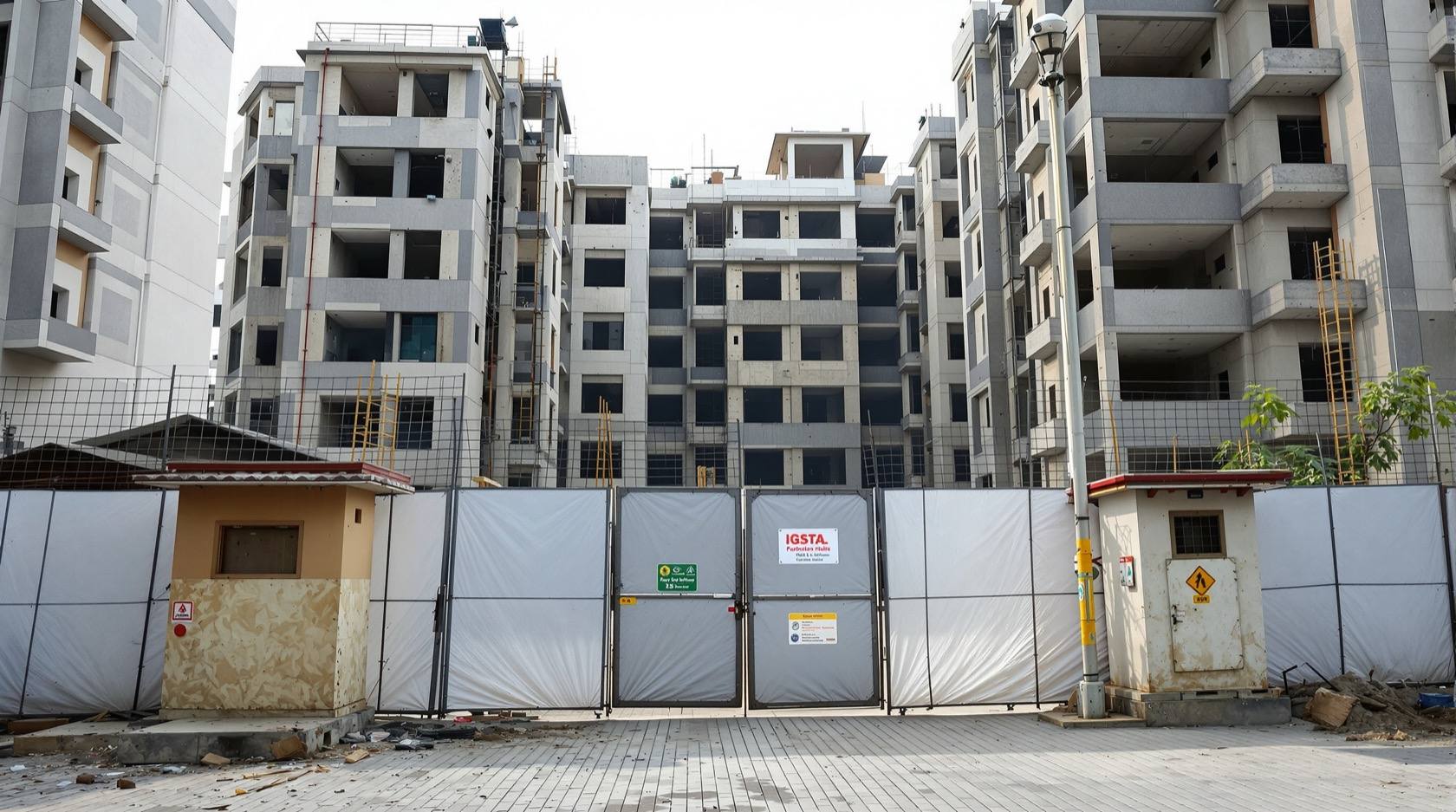
Drive past any Indian construction site and the vulnerability is obvious. Stacks of steel and cement sit in the open. An excavator or generator waits where it was last used. A gap in the hoarding lets anyone step through. After the last shift the whole thing goes dark and empty. And more often than the industry admits, children treat it as an adventure playground — climbing scaffolding, peering into pits, clambering onto idle machines.
A construction site is unlike any of the other buildings in this hub, and that is the whole point. It is temporary, constantly changing and high-risk. There is no finished building to fit a fixed alarm to; the thing you are protecting is a moving target that transforms week by week — open groundwork one month, a bare frame the next, a shell full of expensive fittings the month after. Security that was right in the first week is wrong by the third. It has to be planned as a phased, evolving discipline, not a one-time install.
Scope & safety. This is a planning and coordination guide for architects, builders, project managers and contractors — not an installation manual, and strictly defensive. Right-size to the real threat: material and plant theft, an unmanned site at night, and the duty to keep people out. Life-safety comes first and it points both ways here. You owe a duty of care to workers on the site AND to trespassers who may wander in, including children — securing the site is as much about their safety as your assets. General worker-safety and welfare on construction sites in India fall under the Building and Other Construction Workers (BOCW) Act, 1996 and related state rules; fire and egress on site and in the finished building are governed by the National Building Code (NBC = SP 7:2026). CCTV and worker/attendance data are personal data under the DPDP Act 2023, and any deployed guards must come through a PSARA 2005-registered agency. Verify all standards current, and engage a security consultant or licensed installer for a site of any scale.
The threat profile: theft is the dominant loss
On most Indian sites the everyday enemy is not vandalism or arson — it is theft, and it is relentless. The material and equipment that make a build possible are exactly what a thief wants, because they are portable, valuable and easy to resell.
- Material theft. Steel and rebar, bags of cement, and above all copper wiring and cable are the classic targets — copper especially, because scrap value is high and it is easy to move. Bulk material delivered ahead of need, and offcuts left where they fall, are the low-hanging fruit.
- Plant and machinery theft. Heavy plant — excavators, generators, compressors, pumps — is stolen from Indian sites regularly, sometimes driven straight out through an unguarded gate. It is expensive, it is often uninsured against theft in the way a car is, and its loss can halt a schedule.
- Fuel theft. Diesel is drawn off from machine tanks and site bowsers, quietly and repeatedly. It rarely makes the loss report but it adds up.
- Tool theft. Hand and power tools walk off constantly — a steady drip of small losses, and a demoralising one for an honest workforce.
The response is a layered composition of the same building blocks used everywhere else in this hub, arranged for a temporary yard.
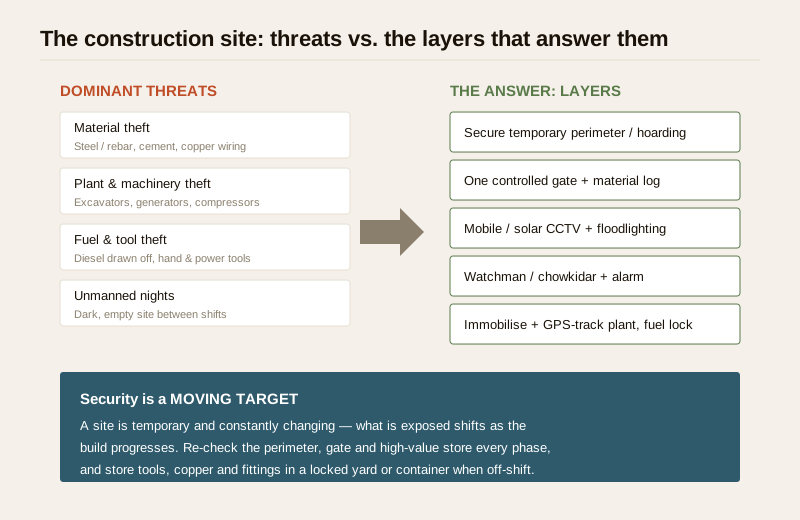
Layer 1 — a secure temporary perimeter and a single controlled gate
Everything starts with the boundary. On a site there is no compound wall, so the hoarding is the perimeter — and it must be continuous, hard to climb, and free of the convenient gaps that appear when panels are moved for a delivery and never put back. A sound perimeter does two jobs at once: it keeps thieves out and it keeps trespassers out (more on that below). This is the same discipline as any boundary; the perimeter security hub and the perimeter security pillar cover how a continuous line, lighting and detection compose.
Channel everyone through one controlled gate. A single manned entry — for people, vehicles and deliveries — is what makes material control possible; multiple casual openings make it impossible. The gate access control guide covers doing this on a working site, and a simple manned cabin helps the guard do the job — see guardhouse design.
Layer 2 — material, delivery and inventory control
Much site loss is not dramatic theft over the wall; it is stock that quietly leaves through the gate. The fix is boring and effective: know what came in, what is on site, and what leaves.
- Delivery control at the single gate. Log deliveries against orders so what arrives matches what was paid for, and so nothing leaves without a reason. This is material issue and access management applied to a yard.
- A locked store and high-value yard. Keep tools, copper, fittings and small valuables in a locked container, store or yard when off-shift, rather than lying in the open. A high-value store inside the perimeter is a second line behind the hoarding.
- Mark tools and equipment. Visibly marking tools and plant with the company's identity makes them harder to resell and easier to recover, and deters casual pilferage.
- Order to need where you can. Bulk material delivered weeks early is bulk material exposed for weeks. Phasing deliveries to the programme cuts the exposure.
Layer 3 — locking, immobilising and tracking plant; fuel security
Heavy plant needs its own treatment because it is both the most valuable single target and, if a child starts it, a lethal one.
- Immobilise it. Machinery that cannot be started cannot be driven out — or climbed on and started by a trespasser. Remove keys, use immobilisers or isolators, and where possible move plant into a compound or wheel-clamp it at the end of a shift. The vehicle and plant theft prevention guide covers immobilisation and tracking that apply directly to site machinery.
- GPS-track it. Fitting GPS trackers to excavators, generators and vehicles turns a stolen asset into a recoverable one and deters the theft in the first place.
- Secure the fuel. Lock machine fuel caps and site bowsers, and control who draws diesel and how much. Fuel theft is the quiet, cumulative loss most sites under-count.
Layer 4 — the unmanned site at night: CCTV, lighting, alarm and a watchman
A construction site's single biggest window of risk is the hours it stands empty — overnight and between shifts. Because the site keeps changing and has no permanent power in the early phases, the answer is deliberately mobile and self-sufficient.
- Mobile / solar CCTV. Redeployable, often solar-powered and battery-backed CCTV towers or units are made for sites precisely because they can move as the build moves and need no fixed mains. Site the cameras on the gate, the material store, the plant park and the perimeter. The CCTV hub covers placement; the site discipline is few units, well sited, that actually record.
- Floodlight the dark. A dark site is an invitation. Floodlighting the perimeter, gate and material areas removes the cover a thief needs and is one of the cheapest deterrents there is — see the security lighting hub.
- An alarm that summons a response. A site alarm is only as good as the response behind it. Understand honestly what alarm monitoring does and does not guarantee in India before relying on it, and pair detection with someone who will actually attend.
- A watchman / chowkidar — the classic and effective measure. For all the technology, a live guard or chowkidar on the site overnight remains the single most effective deterrent on most Indian sites: a present, watching human. Any deployed guard must come through a PSARA 2005-registered agency. A guard plus mobile CCTV and lighting is the workhorse combination.
Trespasser safety — a life-safety and liability duty, not an afterthought
This is the part of site security that has nothing to do with your losses and everything to do with your conscience and your liability.
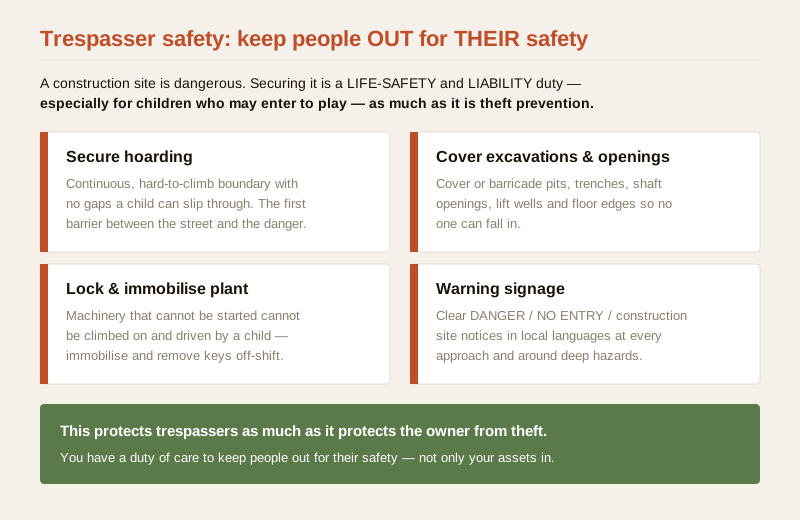
A construction site is dangerous, and securing it protects trespassers — especially children who may enter to play — from injury or death, as much as it protects the owner from theft. You have a duty to keep people OUT for their safety. That means secure hoarding a child cannot slip through, covered or barricaded excavations and openings, plant locked and immobilised so it cannot be started, and clear warning signage. This is central to site security, not an afterthought.
Every measure below does double duty — it deters theft and it saves a life:
- Secure hoarding is the barrier between a curious child and the hazard; gaps are not just theft routes, they are the way a child gets in.
- Cover excavations and openings. Pits, trenches, shaft and lift openings, and unprotected floor edges must be covered or barricaded so no one can fall in.
- Lock and immobilise plant so it cannot be climbed onto and started — removing keys protects the trespasser as much as the asset.
- Warning signage — clear DANGER / NO ENTRY / construction-site notices, in the local languages, at every approach and around deep hazards.
Layer 5 — the transient workforce: access, attendance and material issue
A site's workforce is large, changing and drawn from many contractors and gangs — a different access problem from a fixed building. The aim is not to treat honest workers as suspects, but to know who is on site (for safety headcount in an emergency as much as for security) and to control material issue so stock goes to work, not out of the gate.
- Labour access and attendance at the single gate. A workforce entry and attendance record — increasingly biometric on larger sites — gives an accurate on-site headcount for emergencies and a controlled entry. This is the yard version of access control; route contractors and one-off visitors through a visitor management log at the same gate.
- Material issue tied to the same point. Issuing tools and materials against a record, from the locked store, closes the internal-loss gap without treating anyone as a thief.
Phased security — the moving target across the build
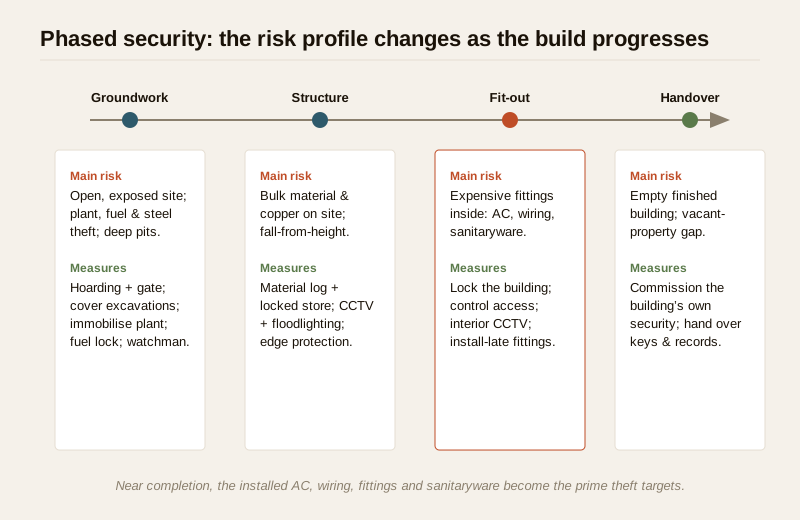
Here is what makes site security genuinely different: the risk profile changes at every stage of the build, and the measures must change with it. Plan security phase by phase.
- Groundwork. The site is open and exposed. Plant, fuel and steel are the targets; deep pits are the hazard. Get the hoarding, gate, floodlighting, plant immobilisation and a watchman in first, and cover every excavation.
- Structure. Bulk material and copper accumulate; work-at-height introduces fall risk. Material logging, a locked store, CCTV and edge protection come to the fore.
- Fit-out. The risk profile inverts. The building can now be locked, but inside it are expensive finishes and fittings — air-conditioning, wiring, sanitaryware, fixtures — that become prime theft targets. Lock the shell, control interior access, add interior CCTV, and install the most-stealable fittings as late as the programme allows.
- Handover. The finished building stands empty — briefly a vacant property with all its fittings in place. Commission the building's own permanent security and hand it over cleanly, so there is no gap between the site guard leaving and the building's alarm going live. The security for vacant properties guide covers this empty-building overlap directly.
| Phase | Main risk | Security measures |
|---|---|---|
| Groundwork | Open exposed site; plant, fuel & steel theft; deep excavations | Hoarding + single gate; cover excavations; immobilise/track plant; fuel lock; floodlighting; watchman |
| Structure | Bulk material & copper on site; work-at-height | Material log + locked store; mobile/solar CCTV; edge protection; watchman + alarm |
| Fit-out | Expensive fittings inside — AC, wiring, sanitaryware, fixtures | Lock the building; control access; interior CCTV; install stealable fittings late |
| Handover | Empty finished building (vacant-property gap) | Commission the building's own security; hand over keys, records & footage |
Fire and safety on the live site
A construction site carries its own fire and safety load that security planning must not ignore. Flammable materials (timber, packaging, solvents, LPG, fuel) accumulate; hot work (welding, cutting, grinding) is a routine ignition source; and general worker safety runs throughout. Keep flammables stored and separated, control and permit hot work, keep extinguishers and a water source available, and keep escape routes off the working levels clear. Worker safety and welfare are governed generically by the BOCW Act, 1996 and state construction-safety rules, and fire and egress by NBC (SP 7:2026); the fire-safety hub covers principles that apply on site as much as in a finished building. Treat fire and worker safety as part of the same duty of care that keeps trespassers out.
Documentation as evidence — disputes and insurance
The CCTV, gate log, delivery records and attendance data a site keeps for security do a second, valuable job: they are evidence. Recorded footage and logs help resolve disputes over deliveries, damage, boundary and third-party incidents, and support insurance claims after a theft or loss. Keep footage and records for a sensible period, and remember they hold personal data under the DPDP Act 2023 — agree who can view them, for how long they are kept, and how workers' and visitors' data is protected.
Putting it together
A well-secured Indian site looks calm and deliberate. Continuous hoarding with one manned gate. Deliveries logged, tools and copper in a locked store, plant immobilised and GPS-tracked, fuel locked. Mobile solar cameras and floodlights covering the gate, store and plant park, an alarm with a real response, and a chowkidar through the empty hours. Excavations covered, plant locked, danger signs up — because keeping a child out matters as much as keeping a thief out. And a security plan that is re-checked at every phase, ending with a clean handover to the finished building's own permanent security.
Two Studio Matrx tools help you do this concretely: the site perimeter security assessment checks the hoarding-and-gate fundamentals this whole approach rests on, and the home security risk scorecard is a useful cross-check as the finished building nears handover.
Key takeaways
- A construction site is a temporary, constantly changing, high-risk environment — a moving target. Plan security as a phased, evolving discipline, not a one-time install.
- Theft is the dominant loss — material (steel, cement, copper), heavy plant, fuel and tools. Answer it with a secure hoarding perimeter, one controlled gate, material and delivery control, a locked high-value store, and marked tools.
- The site is unmanned at night — use mobile/solar CCTV, floodlighting, an alarm with a real response, and above all a watchman/chowkidar, the classic and effective measure.
- Lock, immobilise and GPS-track plant, and secure fuel — machinery that cannot be started cannot be stolen or started by a trespasser.
- Trespasser safety is a life-safety and liability duty, not an afterthought — secure hoarding, covered excavations, locked plant and warning signage keep people, especially children, out for THEIR safety.
- Security is phased — groundwork to structure to fit-out to handover; near completion the installed AC, wiring, fittings and sanitaryware become the prime targets, and handover has a vacant-property gap to close.
- Fire, worker safety and documentation matter — control flammables and hot work (BOCW, NBC = SP 7:2026), and keep CCTV and logs as evidence for disputes and insurance (DPDP Act 2023).
Where to go next
- Perimeter security and the perimeter pillar, plus gate access control and guardhouse design — the hoarding-and-gate fundamentals.
- Vehicle and plant theft prevention — immobilising and tracking site machinery and fuel security.
- CCTV, security lighting and alarm monitoring — covering the unmanned site.
- Access control and visitor / material management — the transient workforce and material issue.
- Security for vacant properties and the fire-safety hub — the handover gap and on-site fire safety.
- The building-type security pillar and the building-types sub-hub, plus the main security hub.
References
- Building and Other Construction Workers (Regulation of Employment and Conditions of Service) Act, 1996 (BOCW) and the state construction-safety rules made under it — worker safety, welfare and site-safety obligations on a live construction site. Verify the current provisions and your state's rules before relying on them.
- National Building Code of India (SP 7), Bureau of Indian Standards — fire safety, means of egress and construction-safety provisions for the site and the finished building. Verify the current edition (SP 7:2026) via the BIS catalogue: https://www.services.bis.gov.in/
- Digital Personal Data Protection Act, 2023 — site CCTV footage, gate logs and worker attendance data are personal data; agree who may view them, retention periods, and how workers' and visitors' data is protected.
- Private Security Agencies (Regulation) Act, 2005 (PSARA) — any watchman or guard deployed on site must be supplied through a PSARA-registered agency; verify licensing before contracting.
- Crime Prevention Through Environmental Design (CPTED) — the named approach behind a continuous perimeter, controlled single entry, lighting and natural surveillance applied to a temporary site.
This is an educational, right-sizing overview for builders, project managers and design teams — not legal advice or an installation manual. Life-safety, worker safety and the duty of care to keep trespassers out take priority over any asset-protection measure; engage a security consultant or licensed installer for a site of any scale, deploy guards only through PSARA-registered agencies, and verify any standard's current status via the BIS catalogue before relying on it.
Export this guide
Related Guides — Deep-dive reading
Complete Guide to Building Type Security in India (2026): Right-Sizing Protection to Homes, Schools, Hospitals, Warehouses and Temples
The same security building blocks — perimeter, gate and access, CCTV, alarms, lighting, fire, guards and cyber — are composed very differently for a villa, a school, a hospital, a warehouse or a temple. This pillar maps the whole library of building-type guides and gives you the framework to tailor security to each kind of building.
SecurityFactory Security in India (2026): A Layered Guide for Manufacturing Plants and MSME Units
How a manufacturing factory, industrial plant or MSME unit protects a large site of machinery, raw materials, finished goods and scrap, controls a shift-based workforce and the movement of material through its gate, hardens its OT and IP, and treats hazardous-process and fire safety as non-negotiable life-safety.
SecurityBasement Parking Security in India: A Professional Guide
The basement is the hardest parking to secure and the highest personal-safety risk in the building — fully enclosed, out of sight, full of blind corners, and used at odd hours. Here is the layered response, kept honest about people-safety and non-negotiable about life-safety.
SecurityRelated Tools — Try Free
Home Security Risk Scorecard
Score your home across six security layers — perimeter, entry points, lighting, detection, alarm and habits — and get a prioritised action plan.
Security ScorecardSolar CCTV Sizing Calculator
Enter cameras, sun-hours and backup days to get the solar panel wattage, battery Ah and an indicative kit cost for an off-grid camera.
Solar SizingCross-Ventilation Analyzer
Estimate airflow and air changes per hour (ACH) from room size, window areas, layout, and local wind — with NBC 2016 Part 8 compliance check.
Ventilation Calculator