
The Complete STP Terminology Guide: 40+ Terms Explained
BOD, MLSS, F/M, SRT, HRT, RAS, KLD, CTE/CTO and every other acronym you meet in a sewage treatment plant — grouped by theme and explained in one or two plain lines each. The dictionary the rest of this library links back to.
Every field has its private language, and sewage treatment has more than most. Walk onto any STP site or open any design report and you are met with a wall of three-letter acronyms — BOD, MLSS, SRT, RAS, KLD, CTO — traded back and forth as if everyone was born knowing them. Most of them are simpler than they sound. Each one is just a shorthand for a single, concrete idea: how strong the sewage is, how many microbes are in a tank, how long the water stays, how much sludge comes back.
This guide is the dictionary the rest of our STP guide library points back to. The terms are grouped the way an engineer actually thinks about a plant — the water's journey, the numbers that describe it, the biology that does the work, the hardware that holds it, the way a plant is sized, and the paperwork that lets it run. Keep it open in a tab; you will meet these words again and again.
Almost none of these terms describe anything exotic. They describe one of four things: how dirty the water is, how many microbes are eating it, how long everything stays in the tank, and whether the government will let you switch it on.
1. The water's journey — process and stage terms
These describe where the water is and what is being done to it at each point in the plant. For the full walk-through, see how an STP works and the treatment process flow.
| Term | What it means |
|---|---|
| Sewage | The raw used water leaving a building — from toilets, kitchens, bathrooms and washing. |
| Wastewater | The broad umbrella term for any spent water; sewage is the domestic kind. See sewage vs wastewater vs effluent. |
| Influent | The raw sewage entering the plant — the "before" water. |
| Effluent | The treated water leaving the plant — the "after" water that gets reused or discharged. |
| Preliminary treatment | The first stage: screening and grit removal that catch rags, plastics and sand to protect the machinery. |
| Primary treatment | Plain gravity settling — heavy solids sink, floating matter is skimmed, before any biology. |
| Secondary treatment | The biological heart of the plant, where microbes eat the dissolved organic waste. |
| Tertiary treatment | The final polish — filtration and disinfection that make the water reuse-grade. |
| Sludge | The concentrated solids removed at every stage — the plant's one real waste product. |
| Greywater / Blackwater | Greywater is lightly soiled water from baths and basins; blackwater is toilet sewage. See greywater vs blackwater. |
2. The numbers — wastewater quality parameters
These are the measured values that say how polluted the water is, at the inlet and the outlet. They are covered in depth in wastewater characteristics: BOD, COD, TSS, pH.
| Parameter | What it measures |
|---|---|
| BOD (Biochemical Oxygen Demand) | The oxygen microbes need to eat the organic waste — the headline "strength" of sewage, in mg/L. |
| COD (Chemical Oxygen Demand) | The oxygen needed to break down all matter chemically; always higher than BOD. |
| TSS (Total Suspended Solids) | The weight of solid particles floating in the water — what makes it cloudy. |
| TDS (Total Dissolved Solids) | Dissolved salts and minerals the water carries; important for reuse quality. |
| pH | How acidic or alkaline the water is; microbes want it near neutral (6.5–8.5). |
| DO (Dissolved Oxygen) | The free oxygen actually present in the water — the microbes' air supply, kept around 2 mg/L in aeration. |
| FOG (Fats, Oil & Grease) | The greasy fraction from kitchens that must be trapped early or it clogs everything. |
| Nutrients (N & P) | Nitrogen and phosphorus — good for plants, but they choke lakes with algae if discharged. |
| Coliform / MPN | A count of gut bacteria used as the disease-risk indicator; disinfection must knock it down. |
| Turbidity | A quick optical measure of cloudiness, in NTU — a fast proxy for TSS. |
The one comparison worth memorising is BOD versus COD, because their ratio tells you what kind of waste you are dealing with:
| BOD | COD | |
|---|---|---|
| Measures | Only the biodegradable waste | All oxidisable waste |
| Test time | ~3–5 days | ~3 hours |
| Typical value | The smaller number | Always larger |
| A high ratio (BOD/COD) means | Mostly digestible — ideal for a biological STP | Lots of hard, industrial matter — may need an ETP instead |
3. The living machine — biological process terms
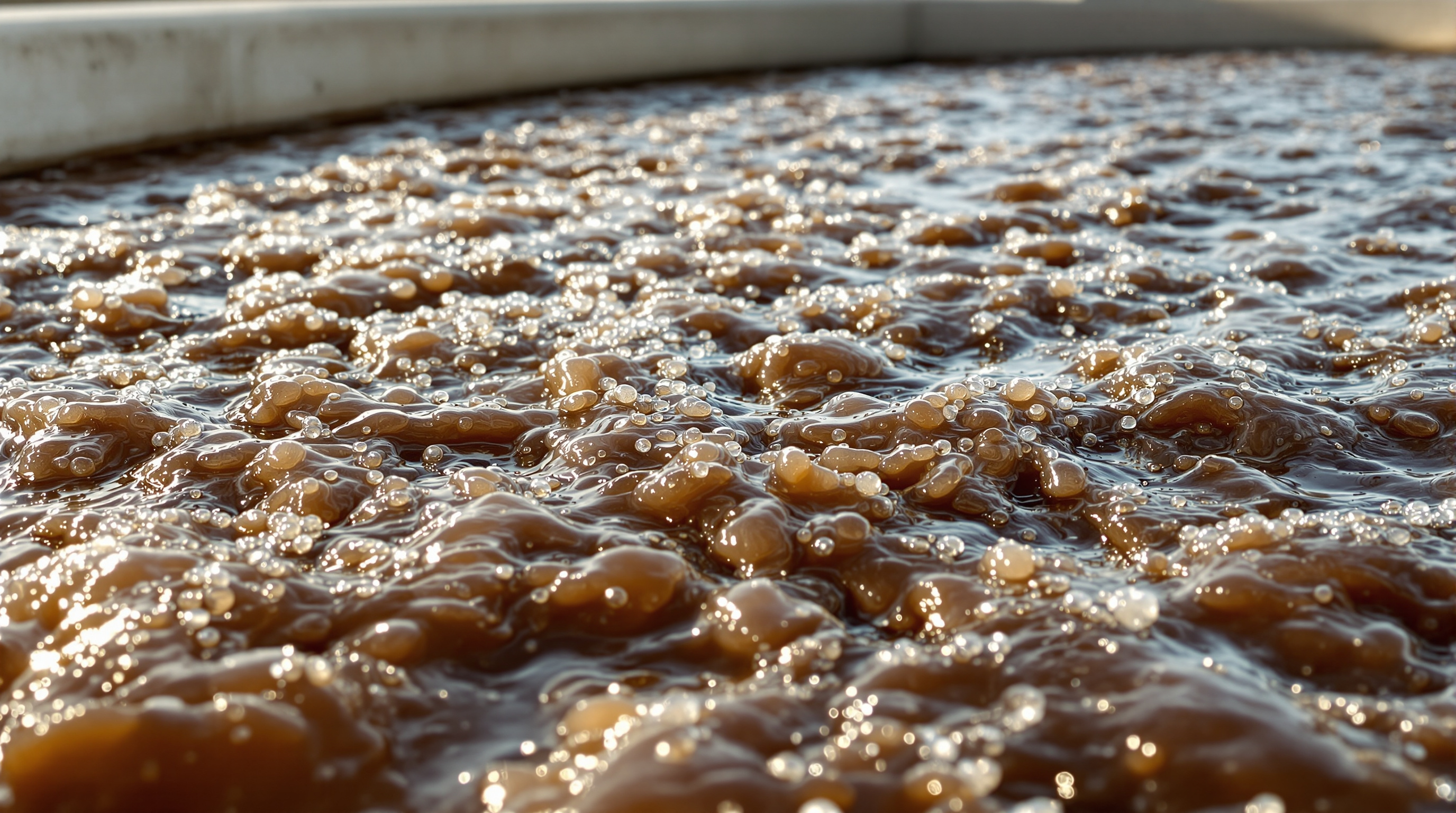
This is where the real jargon lives. Once the sewage reaches the aeration tank, engineers stop talking about water and start talking about the microbial culture doing the eating — the "activated sludge." For the master process, see the Activated Sludge Process.
| Term | What it means |
|---|---|
| Activated sludge | The dense, living mass of bacteria that consumes the waste — the "workforce" of the plant. |
| MLSS (Mixed Liquor Suspended Solids) | The concentration of that microbial mass in the aeration tank, in mg/L — how "thick" the culture is. |
| MLVSS (Mixed Liquor Volatile Suspended Solids) | The living, organic fraction of the MLSS — the microbes that are actually active. |
| F/M ratio (Food-to-Microorganism) | The balance of incoming food (BOD) against the microbe population; the master dial of plant health. |
| HRT (Hydraulic Retention Time) | How long the water stays in a tank — usually hours. Too short and the microbes cannot finish eating. |
| SRT (Sludge Retention Time, or sludge age) | How long the microbes stay in the system — usually days. It sets how mature and stable the culture is. |
| RAS (Return Activated Sludge) | Settled microbes pumped back from the clarifier to the aeration tank to keep the population high. |
| WAS (Waste Activated Sludge) | The surplus microbes deliberately removed to stop the population overgrowing — sent to the sludge line. |
| SVI (Sludge Volume Index) | How well the sludge settles; a high SVI means light, bulking sludge that refuses to sink. |
| Nitrification | Microbes converting ammonia to nitrate — the first half of removing nitrogen. |
| Denitrification | Other microbes converting that nitrate to harmless nitrogen gas — the second half. |
| Aerobic / Anaerobic / Anoxic | With free oxygen / with none / with no oxygen but nitrate present — the three worlds different microbes live in. |
| Anaerobic digestion | Oxygen-free breakdown of sludge that produces biogas (methane) — the basis of UASB systems. |
| Bulking / Foaming | Two classic upsets — filamentous bacteria making sludge that won't settle, or a stubborn scum on the tank. |
Getting the F/M ratio, HRT and SRT right is essentially the whole art of running an SBR, MBBR or MBR plant. Every technology is just a different way of holding a lot of hungry, well-fed microbes in contact with the water for the right length of time.
4. The hardware — equipment and unit terms

The tanks, pumps and filters the process actually runs in.
| Term | What it means |
|---|---|
| Bar screen | The grille at the inlet that rakes out rags, plastics and large solids. |
| Grit chamber | A settling channel that drops out sand and grit before they wear down pumps. |
| Equalisation tank | A buffer that smooths the daily surges (the 7 a.m. shower peak) into a steady flow. |
| Aeration tank | The main biological reactor where air is pumped in and the microbes eat. |
| Blower | The air pump that forces oxygen into the aeration tank — usually the biggest power draw on site. |
| Diffuser | The membrane at the tank floor that breaks blower air into fine bubbles for efficient transfer. |
| Clarifier / Settling tank | The quiet tank where fattened microbes clump and sink, leaving clear water on top. |
| SOR (Surface Overflow Rate) | The design flow per unit of clarifier surface area — sets whether solids get enough time to settle. |
| PSF / ACF | Pressure Sand Filter and Activated Carbon Filter — the tertiary units that strip fine particles, colour and odour. |
| Disinfection (Cl₂ / UV) | The final kill step — chlorine dosing or ultraviolet light — that destroys remaining pathogens. |
| Sludge drying beds | Where wet sludge is dewatered before disposal. |
| SCADA / PLC | The automation that monitors and controls pumps, blowers and valves without constant manual work. |
5. Sizing the plant — capacity and load terms
The numbers a design starts from. Turn your building's headcount into these figures with the STP Capacity Calculator and the sewage generation calculator.
| Term | What it means |
|---|---|
| PE (Population Equivalent) | The design headcount — how many people's worth of sewage the plant must handle. |
| Per capita sewage | The litres of sewage one person generates per day (roughly 80–90% of water used). |
| KLD | Kilolitres (thousand litres) per day — the standard unit of STP capacity in India. |
| MLD | Million litres per day — the unit for large municipal plants. |
| Peak factor | The multiplier applied to average flow to size for the busiest hour, not the daily average. |
| Organic load | The total BOD arriving per day (flow × concentration) — the real measure of the job, not just water volume. |
| Hydraulic load | The volume of water arriving — sized alongside organic load. |
| Design margin | The spare capacity built in for future occupancy and off-days. |
6. The paperwork — compliance and regulatory terms
An STP is not legal until the regulator says so. These are the approvals and standards that govern it, directionally aligned to CPCB and the National Building Code.
| Term | What it means |
|---|---|
| CPCB / SPCB | The Central and State Pollution Control Boards — the authorities that set and enforce discharge norms. |
| CTE (Consent to Establish) | The permission needed before you build the plant. |
| CTO (Consent to Operate) | The permission needed to run the plant, granted once it proves it meets norms. |
| Discharge norms / standards | The legal maximum BOD, COD, TSS, pH etc. the effluent must meet (e.g. BOD often ≤ 10–20 mg/L for reuse-grade water). |
| NBC | The National Building Code, which directs when and how buildings must provide on-site treatment. |
| ZLD (Zero Liquid Discharge) | A regime where no effluent leaves the site at all — everything is recovered. See ZLD explained. |
| DEWATS | Decentralised Wastewater Treatment Systems — low-energy, community-scale treatment. See DEWATS. |
| STP vs ETP | An STP treats domestic sewage; an ETP treats industrial effluent with chemicals a domestic plant cannot handle. |
How to use this glossary
You do not need to memorise all forty terms. In practice they cluster into a single sentence that describes what any STP is doing at any moment: water of a certain strength (BOD, COD, TSS) enters at a certain rate (KLD, PE), is held for the right time (HRT, SRT) in contact with the right amount of microbes (MLSS, F/M), which are recycled (RAS) and trimmed (WAS), until the effluent meets the norms (CPCB, CTO) and can be reused. Everything else is detail hung on that frame.
From here, the natural next steps are the foundational what is an STP explainer for the big picture, and the wastewater characteristics guide to go deeper on the parameters that start every design. Bookmark this page — when a term trips you up anywhere else in the library, this is where to come back to.
Export this guide
Related Guides — Deep-dive reading
The Sewage Treatment Process Flow, Explained: Every Stage From Inlet to Reuse
Follow a drop of sewage through a typical STP — inlet, screening, aeration, clarifier, filtration, disinfection and reuse — as one connected flow, with a block diagram and a unit-by-unit table, in plain language.
Sewage Treatment PlantsBiological Culture Management in an STP: The Heart of Good O&M
The microbes in your aeration tank do the actual work of cleaning sewage. Keep them healthy — the right MLSS, food, oxygen and nutrients — and everything else falls into place. Here is how operators manage the living culture, diagnose bulking and foaming, and recover after a crash.
Sewage Treatment PlantsWastewater Characteristics Explained: BOD, COD, TSS and pH
The four numbers that tell you how dirty sewage is and how well your STP is cleaning it — BOD, COD, TSS and pH — explained in plain language, with typical raw-sewage values, treated-water targets, and why each one matters.
Sewage Treatment PlantsRelated Tools — Try Free
STP Technology Comparison Matrix
Compare Extended Aeration, MBBR, SBR, MBR and UASB across six criteria, set your priority, and see the best-fit STP technology instantly.
ComparatorPopulation Equivalent (PE) Calculator
Convert an organic pollution load into Population Equivalent from flow and BOD concentration — the BOD load in kg/day and equivalent number of people.
STP CalculatorSewage Generation Calculator
Estimate the daily sewage a building generates and its peak flow in KLD from occupancy, LPCD, sewage return factor and peak factor.
STP Calculator