
Greywater vs Blackwater Explained (And Why It Matters for Reuse)
The used water your building produces is not all the same. Separating the lightly dirty water from the truly foul water is the single trick that makes on-site water reuse cheap, safe and practical — explained in plain language, with no engineering background assumed.
Not all the dirty water a building produces is equally dirty. The water swirling down your shower drain after a bath is a world apart from the water leaving your toilet — yet in most Indian buildings they are dumped into the same pipe, mixed into one foul stream, and then have to be cleaned back apart again at great cost. That is a wasteful habit, and understanding why is the whole point of this guide.
Wastewater engineers split the used water of a building into two families: greywater and blackwater. Keep them separate and reuse becomes cheap and simple. Mix them and you have thrown away your easiest win. This guide explains what each one is, what it takes to clean, and why the humble decision of which pipe carries what quietly decides how much water your building can save.
Greywater is water that is dirty but not dangerous. Blackwater is water that is genuinely hazardous. The engineering — and the cost — of reusing water depends almost entirely on which of the two you are dealing with.
What is greywater?

Greywater is the gently used water from everything in your building except the toilet and the kitchen. It comes from:
- Showers and bathtubs
- Washbasins and hand-wash points
- Washing machines and laundry
What makes it "grey" rather than "black" is what is not in it. Greywater carries soap, shampoo, a little dirt, skin oils, hair and lint — things that make it cloudy and soapy, but that are not, on their own, a serious disease risk. There are no faeces in it. Its BOD (the measure of how much organic pollution is present — see our guide on wastewater characteristics) is modest, and its pathogen load is low.
In older Indian plumbing terminology this stream is sometimes called sullage. The key point: greywater is typically 50–70% of the total wastewater a home produces — a large volume of only-lightly-dirty water that is relatively easy to clean up and reuse.
What is blackwater?
Blackwater is the heavily contaminated wastewater from toilets and, usually, the kitchen sink. It comes from:
- Toilets and urinals — carrying human faeces, urine and toilet paper
- The kitchen sink and dishwasher — carrying food waste, fats, oils and grease
Blackwater is dangerous in a way greywater is not. Toilet water is loaded with pathogens — bacteria, viruses and parasite eggs that cause cholera, typhoid and hepatitis. Kitchen water is loaded with organic matter and grease that rot quickly, smell, and are hard to break down. Its BOD is high and its pathogen count is enormous.
Kitchen wastewater is a grey area — some standards treat it as greywater — but because of its heavy grease and food load that decomposes fast and attracts bacteria, most engineers group it with blackwater for safety. When in doubt, treat the kitchen line as black.
Greywater vs blackwater: the comparison at a glance
| Greywater | Blackwater | |
|---|---|---|
| Comes from | Showers, basins, baths, washing machines | Toilets, urinals, kitchen sinks |
| Main contaminants | Soap, hair, lint, skin oils, light dirt | Faeces, urine, pathogens, food waste, grease |
| Pathogen risk | Low | Very high |
| Organic strength (BOD) | Low to moderate | High |
| Share of total flow | Roughly 50–70% | Roughly 30–50% |
| Treatment needed | Simple: filter + disinfect | Full biological treatment (an STP) |
| Cost to reuse | Low | High |
| Typical reuse | Flushing, gardens, floor washing | Reused only after full treatment |
The pattern in that table is the entire argument of this guide: greywater is a large, easy, cheap stream to recycle, and blackwater is a smaller, difficult, expensive one. The moment you mix them, all of your water becomes as hard and expensive to treat as blackwater. Separation is what preserves the easy win.
Why separating them makes reuse cheap
Imagine two buckets. One holds clean-ish soapy water; the other holds raw sewage. If you tip the sewage bucket into the soapy one, you now have two buckets' worth of sewage. You cannot un-mix them. That, in miniature, is what a combined drainage system does to a whole building.
Keeping the two streams apart unlocks three advantages:
- Greywater needs far less treatment. Because it has no faeces and little organic load, greywater can often be made reusable with nothing more than coarse filtration and disinfection — a fraction of the equipment, energy and chemicals a full sewage treatment plant needs. Cleaning it is closer to polishing than to purifying.
- You cut the load on the expensive plant. If half your building's wastewater is diverted as easy-to-treat greywater, the sewage treatment plant handling the blackwater can be smaller, and it runs on a more concentrated, more predictable feed. Smaller STP, lower running cost.
- You reuse water sooner. Treated greywater is available quickly and close to where it is produced, ideal for immediate low-contact uses like flushing and irrigation.
There is a catch worth stating plainly: greywater goes bad if you store it. Left in a tank for more than a day, the organics in it start to rot and it turns septic and smelly — effectively becoming blackwater. So greywater systems are built to treat and use the water quickly rather than hoard it.
The dual-plumbing idea
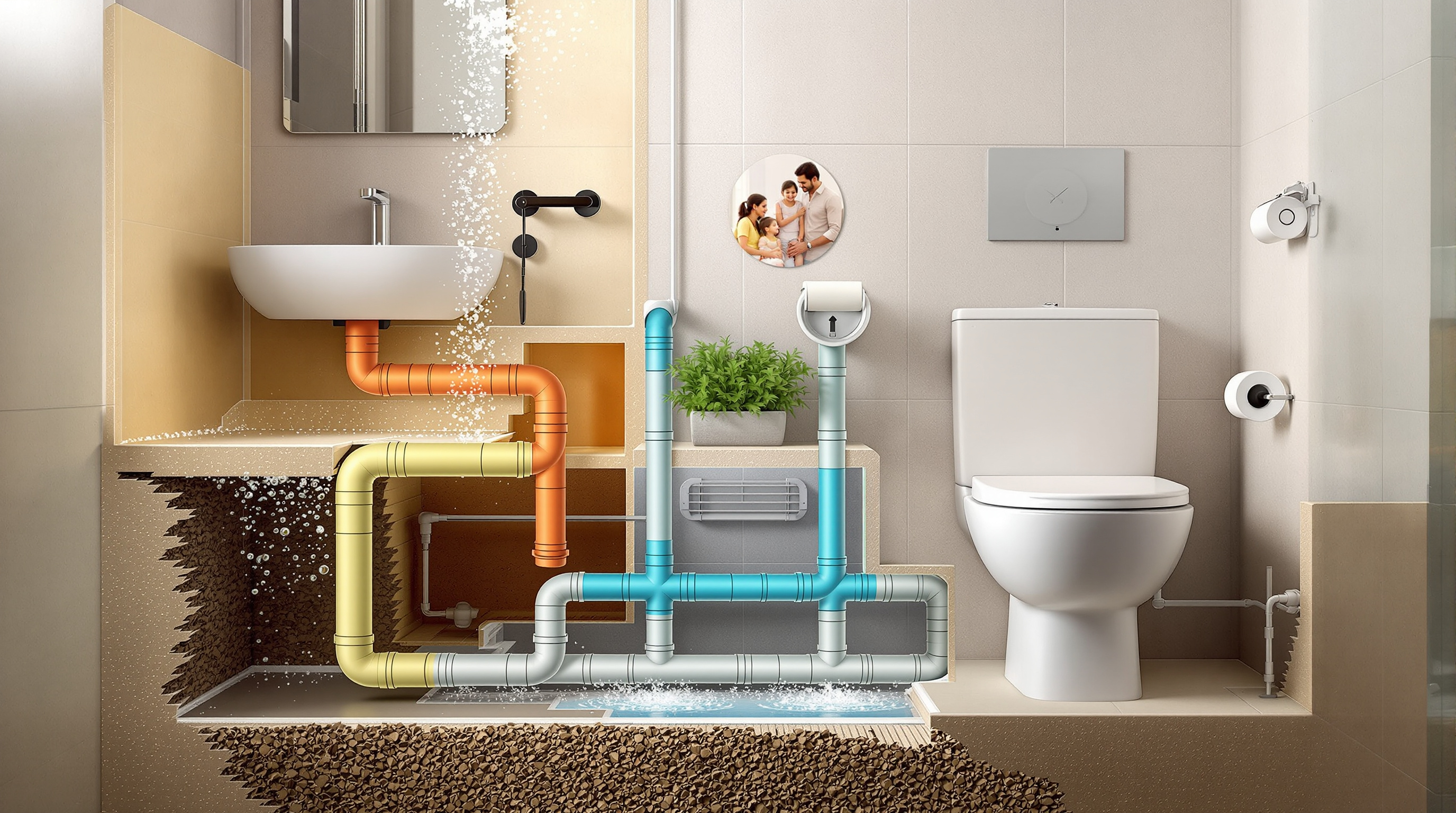
Separation has to be designed into the building from the start, because it is fundamentally about pipes. A conventional building has one drainage network that collects everything. A building set up for greywater reuse has two:
- A greywater line collecting the showers, basins and washing-machine outlets, routed to a small greywater treatment unit.
- A blackwater line collecting the toilets and kitchen, routed to the STP or septic tank.
This is called dual plumbing, and India's building codes (the National Building Code, directionally) increasingly encourage it, along with a third set of pipes — a separate, clearly marked line that carries the treated water back up to the toilet cisterns and garden taps. That treated-water line is usually colour-coded and never cross-connected to drinking water, so no one can accidentally drink recycled water.
The honest trade-off: retrofitting dual plumbing into an existing building is expensive and disruptive, because it means opening up walls and shafts to run new pipe. Designing it into a new building costs very little extra. This is why greywater reuse is far easier to justify at the drawing-board stage than as an afterthought — and why it is worth insisting on in any new project.
What each stream actually needs to be reused
Greywater treatment is deliberately lightweight. A typical small system:
1. Screens out hair and lint with a simple filter.
2. Settles or filters the water to drop the fine solids and soap scum — often through a sand or membrane filter, sometimes a small planted reed bed.
3. Disinfects with chlorine or UV so it is hygienically safe to handle.
That is usually enough to make greywater fit for flushing toilets and watering gardens. It is not made drinkable — that is neither the goal nor worth the cost.
Blackwater treatment is the full job — the multi-stage biological process described in how an STP works and the sewage treatment process flow: screening, letting solids settle, feeding the dissolved waste to oxygen-hungry microbes in an aeration tank, then filtering and disinfecting. Only after all of that is blackwater safe to reuse. For a smaller standalone home without an STP, blackwater still needs at least a septic tank — never direct reuse.
Where the recycled water goes
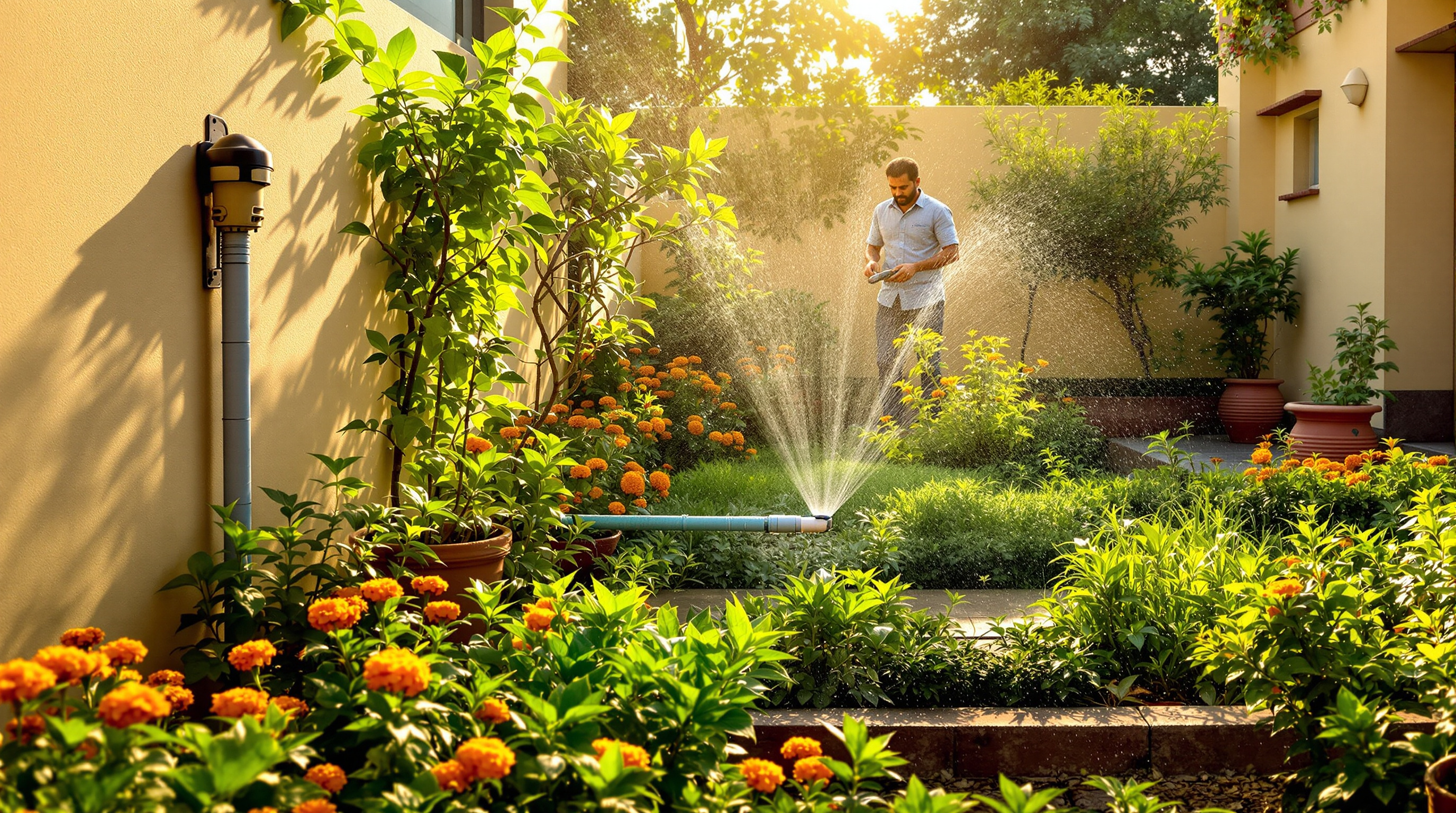
Once treated, both streams feed the same set of non-drinking uses — the trick is simply matching the quality of water to the risk of the use:
- Toilet flushing — the single biggest reuse, and a perfect match for treated greywater.
- Garden and landscape irrigation — greywater is ideal here; even gently treated, the mild nutrients in it can help plants (though harsh detergents should be avoided).
- Floor, driveway and vehicle washing.
- Cooling towers and common-area cleaning in larger buildings.
- Groundwater recharge for any surplus.
The guiding principle is fit-for-purpose: you do not need drinking-quality water to flush a toilet, so it is wasteful to use treated drinking water for it. Greywater reuse simply puts the right grade of water to the right job.
The bottom line
The difference between greywater and blackwater is really a difference in effort: greywater is dirty but harmless and cheap to reclaim; blackwater is hazardous and demands a full treatment plant. Mix them and you lose the cheap water forever. Keep them apart — with dual plumbing designed in from day one — and a building can recycle half or more of its water for flushing and gardens at a modest cost, easing both its water bills and the pressure on India's stressed cities.
If you are sizing the treatment side of this equation, the STP Capacity Calculator turns your building's occupancy into a required treatment capacity in litres per day. And to go deeper on how the blackwater half is actually cleaned, browse the full Sewage Treatment Plants guide library.
Export this guide
Related Guides — Deep-dive reading
Home Greywater Recycling Systems: Simple Reuse at Home
How a single house can recycle its bath, basin and laundry water for flushing and gardens — without a full sewage treatment plant. What to build, how to size it, where to reuse it, and the mistakes that turn a clever system into a smelly one.
Sewage Treatment PlantsGreywater Recycling India: Reusing Bathroom Water for Flushing & Gardens
How to recycle the basin and shower greywater from an Indian bathroom — simple diversion versus filtered and disinfected systems, the separate drainage you must plan at construction, storage, dual-plumbing to the WC cistern, and honest numbers on cost, payback and health.
BathroomsThe Sewage Treatment Process Flow, Explained: Every Stage From Inlet to Reuse
Follow a drop of sewage through a typical STP — inlet, screening, aeration, clarifier, filtration, disinfection and reuse — as one connected flow, with a block diagram and a unit-by-unit table, in plain language.
Sewage Treatment PlantsRelated Tools — Try Free
STP vs Septic Tank Decision Tool
Answer five yes/no questions about your site and get a clear STP-or-septic-tank recommendation, with a confidence score and the reasons driving it.
Decision ToolPopulation Equivalent (PE) Calculator
Convert an organic pollution load into Population Equivalent from flow and BOD concentration — the BOD load in kg/day and equivalent number of people.
STP CalculatorTreated Water Reuse Planner
Allocate a building's treated water across flushing, landscape, cooling and washing, and see the remaining volume for groundwater recharge — all in KLD.
Planner