
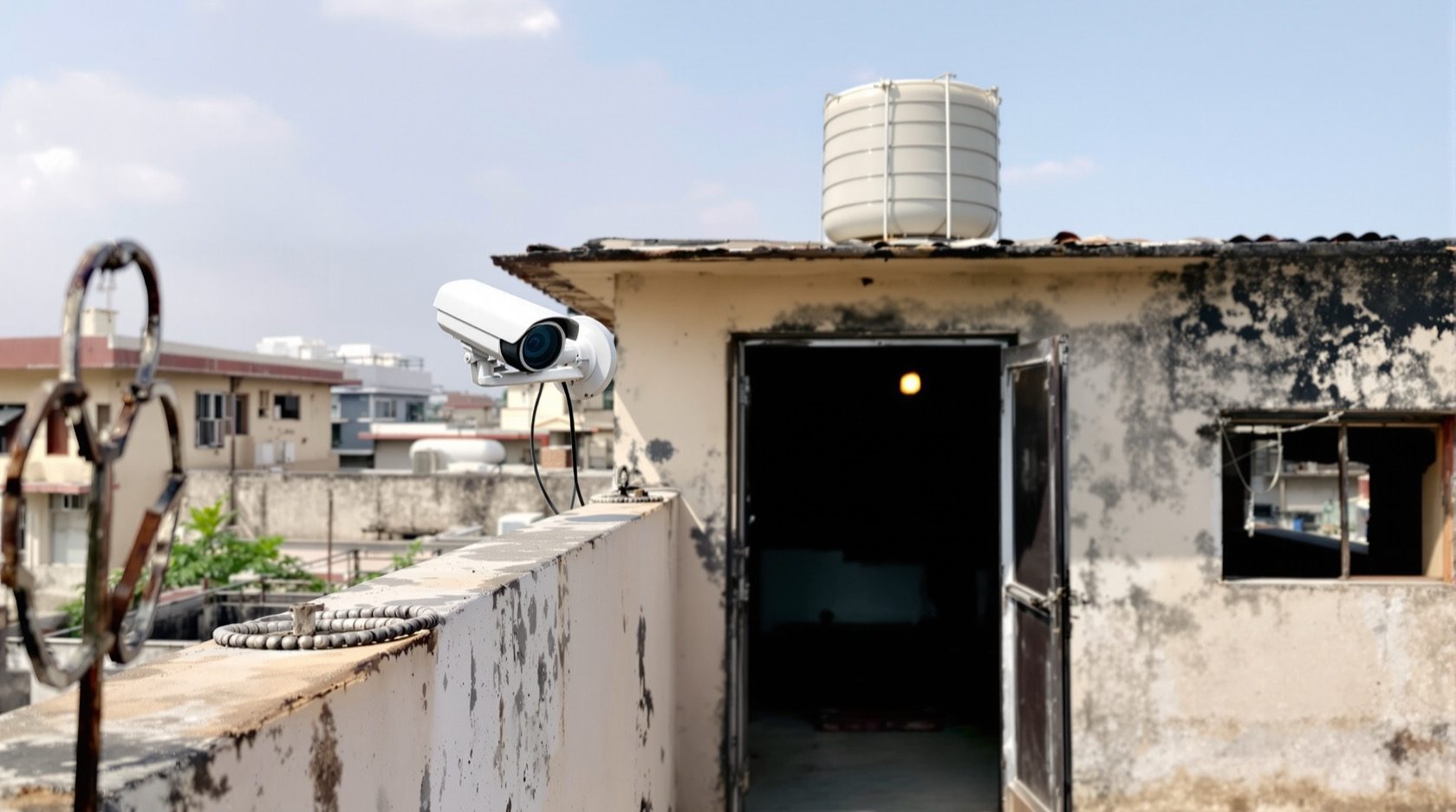
CCTV Placement Terrace Roof in India (2026): The Overlooked Entry Point
The terrace is a real entry route via adjoining roofs and low parapets, yet most homes leave it dark. How to cover the access door and the open roof, weatherproof a fully exposed camera, and mount safely on a parapet.
Ask most people where a burglar comes in and they will point to the gate or the front door. Almost no one points up. Yet in row houses, apartments and gated societies across India, the terrace is a genuine entry route — someone steps across from an adjoining roof over a low shared parapet, drops onto your terrace, and walks down the stairs into the house, never once passing the gate you spent money watching. This is the zone guide for getting a camera onto that overlooked route.
This is part of Studio Matrx's zone-by-zone series in the CCTV hub. It applies the placement principles to one place — the terrace and roof — so read it alongside the camera placement principles and the sibling zones for the perimeter and compound wall and the entrance and main gate, which together close the loop around the property.
Scope & safety. This guide helps you plan and decide where terrace cameras go, then brief a professional. Working at height on a parapet or roof, anchoring brackets, running cabling and any mains-electrical work belong to licensed installers — never balance on a parapet yourself. A camera or its cabling must never block a roof-access hatch, a fire-escape route or fire-fighting access. Cameras belong only on your own roof and legitimate shared areas — never aimed into a neighbour's terrace, windows or private space — positioned in the spirit of the DPDP Act, 2023. This is educational, not legal advice.
Why the terrace is worth a camera at all
Three things make the roof a soft spot that a thief understands better than most homeowners:
- It is the least-watched face of the house. All the attention — lights, cameras, a dog, a guard — sits at ground level. The roof is dark, quiet and private.
- Adjoining roofs form a hidden path. In a terrace of row houses or a cluster of society blocks, parapets are often low, shared or stepped. Someone can move from one roof to the next and reach yours without touching a single gate. See the perimeter guide for the boundary-line logic this shares.
- The access door leads straight inside. Once on your terrace, the stair-head door is usually the weakest lock in the house — and it opens onto the private floors. Watch that door and you watch the whole route.
There is a legitimate day-to-day case too: water tanks, solar panels, inverters, DTH dishes and stored material all live on the roof, and a camera settles disputes about who went up and when.
Cover the access door first, the open roof second
The single most valuable terrace camera watches the stair-head door — the one way up from inside and the point every intruder must cross to get down into the house. Treat it exactly like a gate: you want a clear, front-lit face of anyone who steps onto the roof.
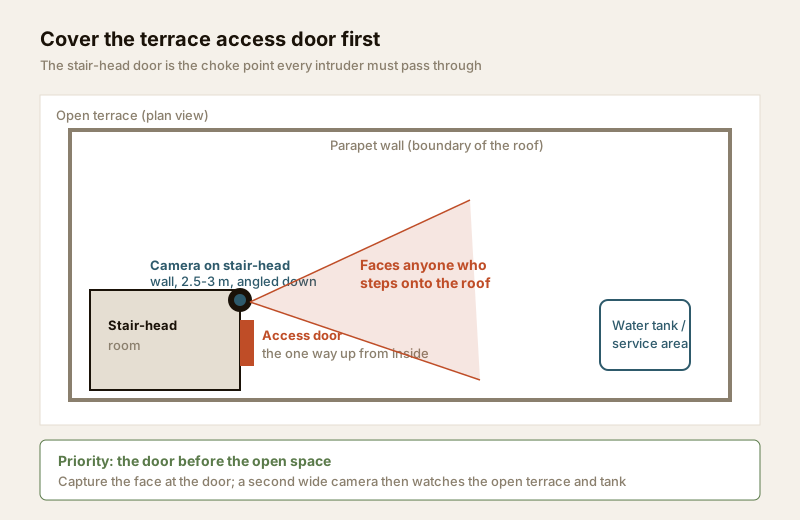
- Mount on the stair-head room wall, roughly 2.5–3 m high, angled down and back toward the door so the camera reads the face of a person emerging, not the back of their head as they walk away.
- A second, wider camera then owns the open terrace — the parapet line, the corners, and the water-tank and service area where equipment sits. One camera rarely does both jobs well: the door needs a tighter, ID-quality view; the open roof needs width.
- Keep the door itself clear. Position the bracket so neither the camera nor its cabling fouls the door swing or the stair below — that stair is an escape route.
For choosing the actual camera bodies for these two jobs, the outdoor CCTV guide and the bullet camera guide cover the exposed-line workhorses; a turret suits the shorter door view under an eave.
Camera choice for the two terrace jobs
| Job on the roof | Camera to plan for | Why |
|---|---|---|
| Access-door / ID view | 4MP bullet or turret, IR, tighter lens | Reads faces at the door; the priority capture |
| Open-terrace overview | 4MP wide bullet or varifocal, strong IR | Covers parapet line, corners and open floor |
| Adjoining-roof corner | Bullet on the roof edge, along the parapet | Watches the step-across point, grazing angle |
| Water-tank / service area | Wide camera or shared overview view | Records who accesses tanks, solar, inverter |
| Large / L-shaped terrace | Consider a PTZ on a big society roof only | Motorised sweep for a genuinely large area |
Watch the adjoining-roof route, not the sky
If your terrace shares a wall or a low parapet with the next roof, that corner is your real vulnerability — and it is invisible from the ground.
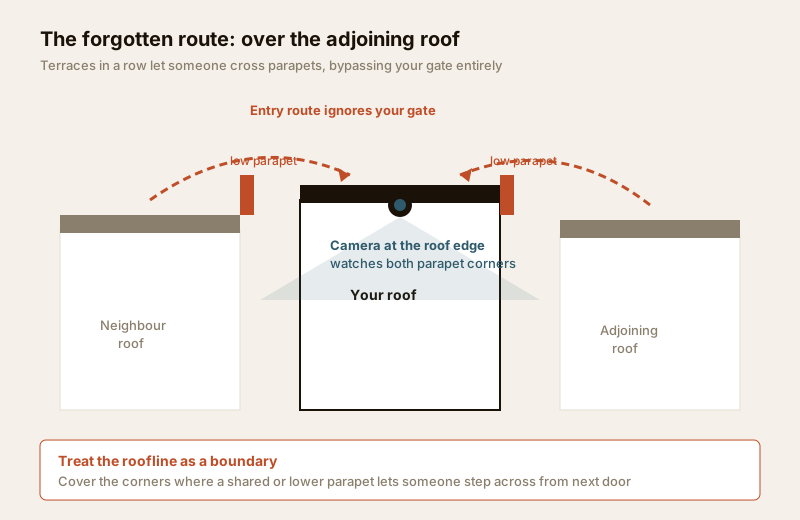
- Treat the roofline as a boundary. Put a camera at the roof edge looking along the parapet, so it captures anyone stepping across at the corner — the same grazing-angle idea used on a compound wall.
- Do not aim across into the neighbour's terrace. Angle the camera to watch your side of the parapet only. Overshooting into the adjoining home is both a privacy problem under the DPDP Act and, in a society, a sure source of a complaint. Use privacy masking to blank out any sliver of a neighbour's space that unavoidably falls in frame — see the privacy masking guide.
- In a society, this is an RWA matter. Roof-edge and common-terrace cameras usually need RWA / society consent and a shared view of who monitors the footage. Raise it as a common-area safety measure, not a private surveillance point; the gated-community security guide covers the approvals.
Weatherproofing: a roof camera has nowhere to hide
Every terrace camera is fully exposed — no eave, no porch, no shade. It takes the full monsoon, months of dust, and India's flat overhead heat all year. Spec accordingly.
- IP66 minimum, IP67 preferred. On an open roof with driving rain and standing dust there is no partial shelter to fall back on. The weatherproof IP rating guide explains what each digit protects against — do not settle for an IP54 indoor-grade body up here.
- Sun-shield and WDR are not optional. A fully exposed lens facing a bright sky washes out. Choose a body with a sun-shield/hood and WDR (wide dynamic range), and aim it so the low morning and evening sun is behind the camera, never in front. A backlit terrace turns every face into a black silhouette.
- Heat and cabling. Terrace temperatures cook cheap plastic and adhesive. Use a proper weatherproof junction/gland box for every cable joint — a taped joint on a parapet is the classic first-monsoon failure — and route cabling in UV-stable conduit. For the wider night-visibility choice, the low-light camera guide helps you pick a body that still delivers a usable face after dark.
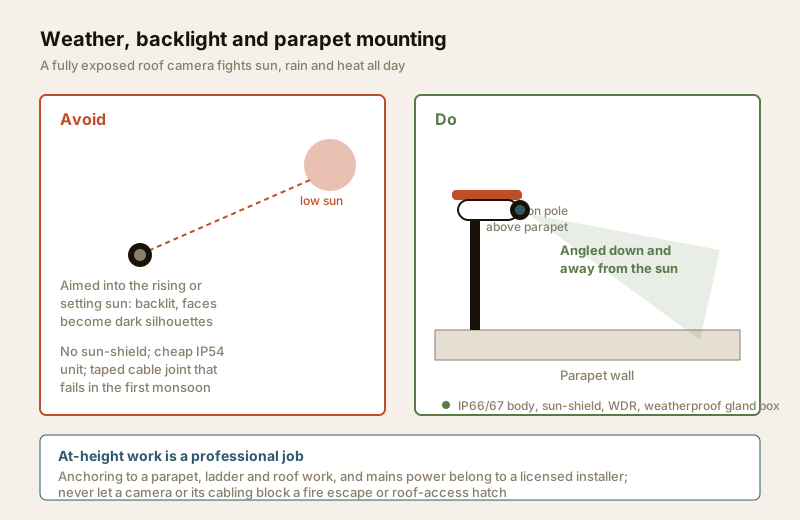
Terrace mounting spec (plan it, hand it to the installer)
| Item | What to plan for | Note |
|---|---|---|
| Access-door camera height | 2.5–3 m on stair-head wall | Angled down at the door, out of reach |
| Parapet / edge camera | On a short extension pole above the parapet | Clears the parapet lip; grazing angle along the line |
| Weather rating | IP66 minimum, IP67 for full exposure | No shelter on an open roof |
| Sun / glare | Sun-shield + WDR; aim away from low sun | Backlight ruins face capture |
| Cable joints | Weatherproof gland box + UV conduit | Never a taped joint on a parapet |
| Power backup | UPS on the recorder + network | A roof camera is useless during a power cut |
| Night reach | Strong IR or a low white light | Verify the IR reaches the far corner |
Night coverage on a dark roof
The roof is the darkest zone on the plot, and it is exactly where you most need a face at 2 a.m. Plan the light with the camera:
- Check the IR actually reaches the far corner. A big open terrace easily out-runs a small camera's IR; verify the throw covers the parapet corner and the tank, not just the first few metres.
- A little light goes a long way. A single motion-triggered or dusk-to-dawn lamp near the stair-head both deters and lifts the whole scene into colour — see the lighting and visibility assessment guide. Keep any light off a neighbour's bedroom window.
- Pair the camera with detection. Line-crossing detection along the parapet, or motion detection on the open floor, turns a passive recording into an alert the moment someone crosses onto the roof — far more useful than footage you only watch after the fact.
When to bring in a professional
Route the height and power work out. Decide the camera positions, counts and views yourself using this guide and the CCTV placement planner — then hand the at-height mounting, parapet anchoring, ladder and roof work, cable pulling, weatherproof terminations and recorder commissioning to a licensed installer. Anything at the mains board is a licensed electrician's job; see the electrical hub. Working on a parapet edge is genuinely dangerous — a fall risk that is not worth saving an install fee. And confirm no camera, bracket or cable blocks the roof-access hatch or the escape stair.
Key takeaways
- The terrace is a real entry route in Indian row houses and societies — someone crosses adjoining roofs and low parapets and comes down the access-door stairs, bypassing your gate entirely.
- Cover the stair-head access door first (an ID-quality face view at 2.5–3 m, angled down), then add a wide camera for the open roof, parapet corners and the water-tank/service area.
- Watch along the parapet line, not across into a neighbour's terrace — use privacy masking and get RWA consent for common-terrace cameras.
- A roof camera is fully exposed: spec IP66/IP67, a sun-shield and WDR, aim away from the low sun, and use a weatherproof gland box with a UPS on the recorder.
- Plan the positions yourself, then route at-height mounting, parapet work and mains power to a licensed professional — and never let a camera block the roof hatch or escape stair.
References
- Digital Personal Data Protection Act, 2023 — cover only your own roof and legitimate shared areas; use privacy masking so a camera does not capture a neighbour's terrace, windows or private space.
- Ingress Protection (IP) ratings — verify a camera's weatherproofing (IP66 or higher, IP67 for full exposure) on the manufacturer's specification sheet before ordering.
- National Building Code of India (SP 7), Bureau of Indian Standards, and local municipal bye-laws for any structural, life-safety, roof-access or electrical aspect of a terrace install; verify the current edition via the BIS catalogue: https://www.services.bis.gov.in/
This is an educational overview. Working at height, mounting on a parapet, cabling and any electrical work are qualified professional tasks — engage licensed installers and verify any standard's current status via the BIS catalogue before relying on it.
Export this guide
Related Guides — Deep-dive reading
CCTV Placement Perimeter and Compound Wall in India (2026): Watch the Line
How to position cameras ALONG your boundary wall at a grazing angle so you catch anyone approaching or climbing it, pair the view with line-crossing detection, light the line, cover corners and gates, and keep every camera on your own side.
SecurityCCTV Placement Staircase Guide (India 2026): Watch the Flight Without Blocking the Escape
Where to mount a camera on the staircase so it reads faces going up and down the flight, why it must never obstruct the escape route or handrail, and how to beat the dim, backlit stairwell in an Indian home or society.
SecurityHome Lighting and Visibility Security Assessment for Indian Homes
How to assess your home's security lighting after dark — checking every entry, path and boundary for coverage, uniformity and glare, testing what each camera can actually see at night, and turning the findings into a simple lighting plan.
SecurityRelated Tools — Try Free
CCTV Placement Planner
Pick your property and zones to get a prioritised, zone-by-zone checklist of which camera goes where and how to mount it.
Placement PlannerCCTV Camera Coverage & Count Calculator
Estimate how many CCTV cameras you need, the NVR channels, storage in TB for your retention period, and an indicative all-in cost with GST.
CCTV CalculatorSecurity Backup Power Calculator
Size a UPS/inverter and battery to keep CCTV, NVR, router and alarm running through a power cut — load, Ah, VA and cost.
Backup Power