
Low-Light CCTV Cameras in India: Starlight-Class Night Colour, Explained
What a low-light (Starlight-class) camera is, how a large sensor and wide-aperture lens gather faint ambient light for full-colour night footage without IR glare, where it beats plain infrared, and where it still needs some glow to work.
Most night footage from a cheap camera looks the same: a flat, grainy, black-and-white world lit by the camera's own infrared lamp, where you can see that someone walked past but never what colour their shirt or their scooter was. Low-light cctv cameras — sold under names like Starlight, ColorVu, Full-Color and Darkfighter depending on the brand — set out to fix exactly that. They gather the faint light already in the scene and turn the night into something that looks, on a good evening, almost like dusk in colour.
This guide is the focused explainer on the low-light approach within Studio Matrx's CCTV hub and its night-vision overview. It sits between two siblings: plain infrared cameras, which make their own invisible light, and colour night-vision cameras with a built-in spotlight, which add their own visible light. A low-light camera is the one that tries to add no light at all.
Scope & safety. This guide helps you choose and plan. Mounting cameras at height, running cabling and any mains-electrical work belong to licensed professionals — decide the positions here, then have a qualified installer fit them. A camera must never block a window, door or fire-escape route, and cameras belong only on your own property and shared areas — never bathrooms, bedrooms or changing areas, and positioned to respect neighbours and the spirit of the DPDP Act, 2023.
What a low-light camera actually is
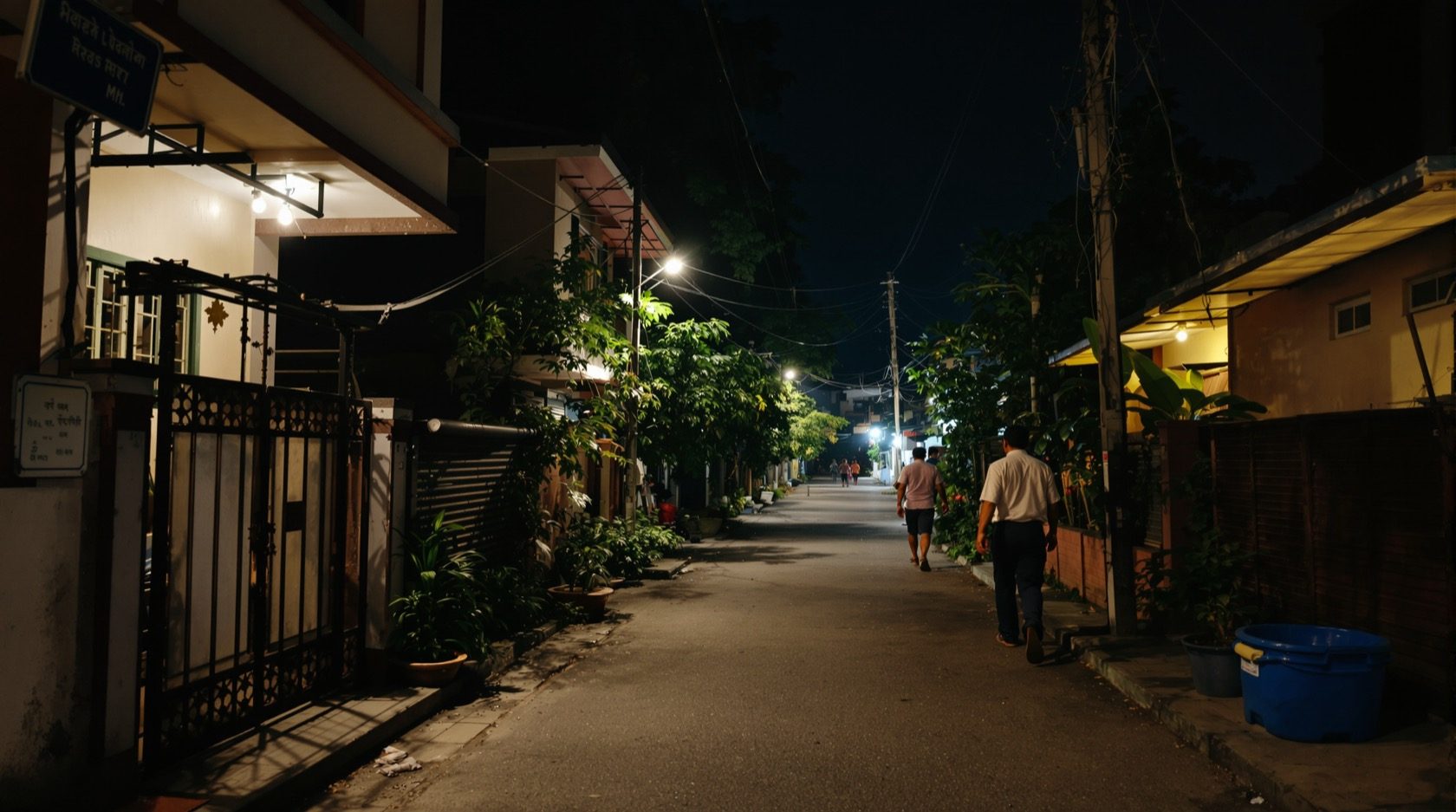
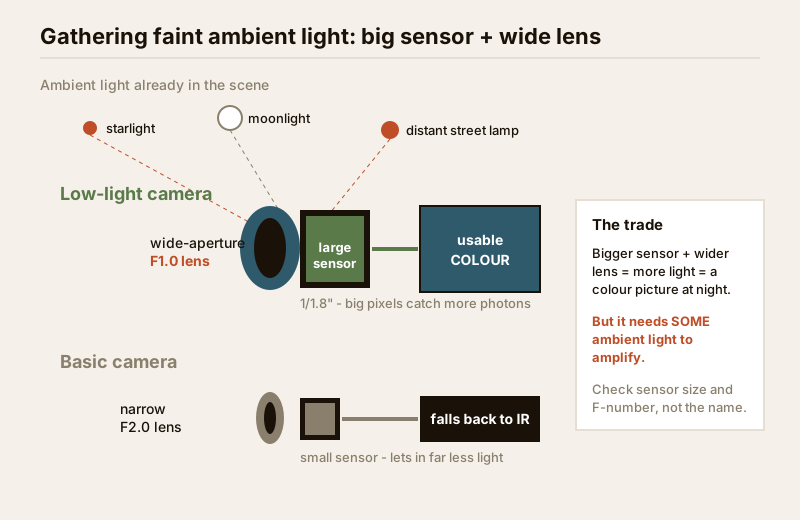
A low-light camera is built around one idea: instead of manufacturing light, collect more of the light that is already there. Even a night that looks dark to your eye usually is not truly black — there is starlight, moonlight, the wash of a distant street lamp, the glow of a neighbour's porch or a shop sign down the road. A low-light camera is engineered to make the most of that faint ambient light and produce a usable, often full-colour image from it.
Three pieces of hardware do the work:
- A large, very sensitive image sensor. The bigger the sensor and the bigger each pixel on it, the more of the scarce photons it can catch. Sensor size is the single most honest indicator here — a genuine low-light camera typically uses a larger sensor (often quoted in fractions of an inch, such as 1/1.8" rather than the tiny 1/2.9" of a basic camera) so each pixel gathers more light.
- A wide-aperture lens. Aperture is quoted as an F-number — and smaller means wider. An F1.0 or F1.2 lens opens up like a wide pupil and lets in far more light than the F1.6 or F2.0 glass on an ordinary camera. A wide aperture is what lets the sensor see in near-darkness.
- Clever image processing. The camera's processor stacks and cleans the faint signal, pulling a low-noise picture out of what would otherwise be a grainy mess.
Put a large sensor behind a wide lens and add smart processing, and the camera can hold a colour image at light levels — often quoted as very low lux figures — where a normal camera would have long since flipped to black-and-white infrared.
The strengths — why people pay more for low-light
The appeal is real, and it comes down to what you can actually recognise in the footage.
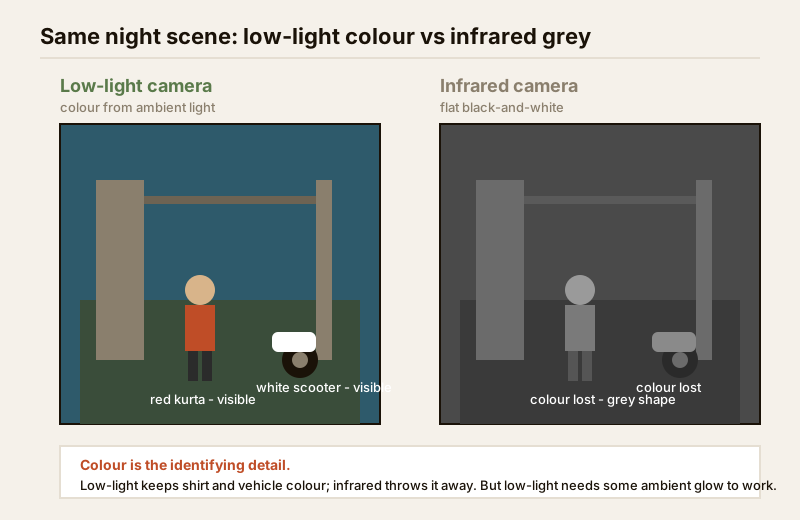
- Natural, low-noise colour at night. This is the headline. Good low-light footage of a lit street looks like early evening, not a ghostly IR negative — more pleasant and more legible to review.
- Colour detail for identification. The strength that matters when something goes wrong. Infrared gives you a shape in grey; low-light can give you a red kurta, a white scooter, a blue car. Colour is often what helps identify a person or vehicle after the fact — exactly what black-and-white IR throws away.
- No IR glare or hotspot. Infrared cameras can bounce their own lamp off a wall, a gate, rain or dust and wash out part of the frame — the classic blown-out IR hotspot. A low-light camera makes no such light, so there is nothing to reflect and no glare.
- No visible light pollution. Unlike a colour-plus-spotlight camera, a low-light camera throws no white beam across your compound. Nothing to annoy the neighbours, nothing to light a bedroom window, and it stays discreet with no IR shimmer either.
For how night footage fits into a whole outdoor scheme alongside your existing lighting, see the outdoor CCTV guide and the lighting and visibility security assessment.
The limits — read these before you commit
A low-light camera is not magic, and the marketing often oversells it. Understand the catch before you buy.
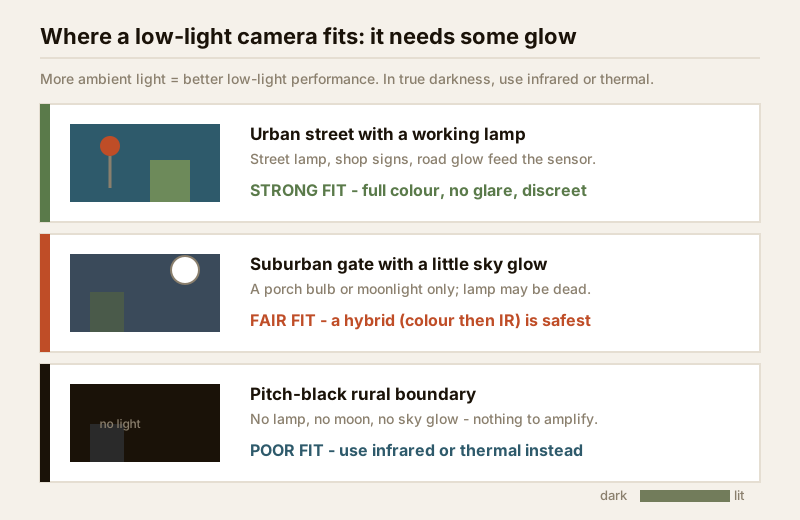
- It needs some ambient light. This is the whole point and the whole limit. A low-light camera amplifies existing light; it cannot amplify light that is not there. On a street with a working lamp or a bit of sky glow, it shines. On a totally dark rural boundary with no moon, no lamp and no sky glow, it struggles just like any camera — and there it will either fall back to its own infrared or give you a noisy, near-useless colour frame. Match the camera to the site, not the brochure.
- It costs more. A larger sensor and a wide, fast lens are genuinely more expensive to build, so a real low-light camera sits above a basic IR camera in price. Do not expect Starlight performance at a ₹1,500 price point.
- Marketing terms vary and mislead. Starlight, ColorVu, Full-Color, Darkfighter, Smart Night — every brand has its own name, and cheaper units borrow the label without the hardware. The honest tells are the sensor size and the aperture (F-number) on the spec sheet, plus the quoted low-lux colour figure. If a listing hides all three, be sceptical.
- A hybrid is often the real answer. Many good cameras are hybrids: they run in low-light colour while there is ambient light, then automatically switch to infrared (or trigger a spotlight only on motion) when it gets truly dark. That is usually the most sensible buy for an Indian home, where street lighting is patchy and unreliable.
Low-light pros, cons and best-fit
| Aspect | What a low-light camera gives you |
|---|---|
| Best strength | Natural, low-noise full colour at night from ambient light alone |
| Identification | Keeps colour — clothing, vehicle and object colour for recognition |
| Glare | None of its own — no IR hotspot, no reflection off walls, gates or rain |
| Light pollution | None — no visible beam; kind to neighbours and discreet |
| Key requirement | Needs some ambient light — street lamp, moon or sky glow |
| Weakest where | Pitch-black sites with zero ambient light (dark rural boundary) |
| Cost | Higher than a basic IR camera; larger sensor and wide lens cost more |
| Best-fit | Streets, gates and yards with a little glow; urban and society settings |
| Poor fit | Totally dark plots; long dark perimeters (use IR, spotlight or thermal) |
How low-light compares to the other night approaches
There are three common ways a camera sees at night, and they are not rivals so much as tools for different sites. The short version:
| Factor | Low-light (Starlight) | Infrared (IR) | Colour + spotlight |
|---|---|---|---|
| Where the light comes from | Existing ambient light in the scene | Camera's own invisible IR lamp | Camera's own visible white lamp |
| Night image | Full colour (if some glow) | Black-and-white | Full colour |
| Colour for ID | Yes | No | Yes |
| Works in total darkness? | Poorly — needs some glow | Yes, out to the IR range | Yes, when the lamp fires |
| Glare / reflection risk | None of its own | IR hotspot off walls, rain, dust | White glare, harsh up close |
| Visible light pollution | None | None (IR is invisible) | Yes — a bright beam all night |
| Neighbour / discretion | Best — quiet and dark | Good — invisible lamp | Worst — obvious visible beam |
| Typical cost | Higher | Lowest | Moderate |
| Best home use | Lit streets, urban gates, yards | Dark perimeters, budget builds | Deterrent + colour on a dark spot |
If your site is genuinely, completely dark and you need to see into it, neither low-light nor a modest spotlight is the honest answer — that is where a plain infrared camera with strong LEDs, or for the hardest cases a thermal camera that ignores visible light entirely and reads heat, does the job. To weigh all of these against your actual lighting, use the night-vision selector and read the night-vision overview first.
Where a low-light camera fits best in India
India makes the case and the caution for low-light in the same breath. Street lighting is patchy — a working lamp on one corner, a dead one on the next. Read your actual site after dark before you spend.
- Urban and society gates. Where there is a street lamp, a shop sign or the wash of a busy road, a low-light camera gives you colour faces and vehicle context that IR cannot.
- Yards, porches and drives with a little glow. A porch bulb, a neighbour's light or moonlight is often enough for good low-light colour.
- Anywhere IR glare has been a problem. If an existing camera blows out against a near wall, a gate or monsoon rain, a low-light unit removes the glare entirely.
- Where you do not want a spotlight. Bedroom windows nearby, a neighbour who objects to a beam, or you simply want the camera discreet — low-light stays dark.
And where it does not fit: a long, unlit rural wall; the back of a plot with no lamp; a godown with the lights off. There, reach for infrared, a motion-triggered spotlight, or thermal. Most homes end up mixing — low-light on the lit street side, IR or a spotlight on the dark rear. For the whole-home logic, see the complete guide to CCTV systems.
India price bands (indicative)
Prices move with brand, sensor, lens and season — treat these as ballparks to sanity-check a quote, not fixed rates. Figures are for the camera only.
| Item | Typical range (₹) | Notes |
|---|---|---|
| Basic IR camera (for reference) | ₹1,200 – ₹3,000 | Black-and-white at night; the baseline to beat |
| Entry low-light / hybrid 2MP–4MP | ₹3,500 – ₹7,000 | Colour while there is glow; IR fallback in the dark |
| Genuine Starlight-class 4MP (1/1.8" sensor) | ₹6,000 – ₹13,000 | Insist on the sensor size and F1.0–F1.2 aperture |
| 8MP (4K) low-light | ₹10,000 – ₹22,000 | More detail and storage; verify the low-lux colour figure |
| Weatherproof junction box / gland | ₹300 – ₹900 | Keeps the outdoor cable joint dry — do not skip |
| Mounting + aiming labour (per camera) | ₹400 – ₹1,200 | Part of the installer's quote |
For India specifically, weight two things beyond the sensor. Weatherproofing: choose at least IP66 for anything outdoors so dust and driving monsoon rain stay out. Reality-check the lux claim: a headline like 0.001 lux colour is a lab number; what matters is how the camera looks on your street on a moonless night. If you can, ask the installer to demo the exact model at your gate after dark before you commit. Size and cost a full system with the camera coverage calculator and the security system cost estimator.
Getting a low-light install right
A few things decide whether a low-light camera earns its premium:
- Point it at the light, not away from it. Aim so ambient light falls on your subject, not so the subject is a silhouette against a bright lamp. A low-light sensor still needs the target lit.
- Keep the glass spotless. A wide-aperture lens shows up smears and dust more than a cheap one — plan an occasional wipe against spider webs and monsoon grime.
- Buy the sensor, not the sticker. Choose on quoted sensor size and aperture, not the marketing word on the box.
- Prefer a hybrid for mixed sites. Where one side is lit and another dark, a hybrid that runs colour then falls back to IR (or a motion spotlight) is the pragmatic pick.
- Put the recorder on backup. A camera that dies with the evening power cut is only half a system — plan a UPS as part of the resilience picture in the building security systems guide.
When to bring in a professional. Decide the positions, the night-vision approach and the count yourself — then hand the mounting at height, cable pulling, weatherproof terminations and recorder commissioning to a licensed installer. Anything at the mains board is a licensed electrician's job; see the electrical hub. Ask the installer to demo the exact camera at your site after dark: a real low-light unit proves itself in five minutes on your own gate.
Key takeaways
- Low-light (Starlight-class) cameras use a large, sensitive sensor and a wide-aperture lens to gather faint ambient light and shoot usable, often full-colour footage at night.
- Their strengths are natural low-noise colour, colour detail for identification (clothing and vehicle colour), no IR glare, and no visible light pollution to annoy neighbours.
- Their key limit: they need some ambient light — a street lamp, moon or sky glow. On a pitch-black site they struggle, and they cost more than a basic IR camera.
- Compared to siblings: plain infrared works in total darkness but only in grey; colour + spotlight adds a bright visible beam; thermal ignores light entirely for detection in true darkness.
- Choose on sensor size and aperture, not the marketing word; a hybrid suits India's patchy streets. Check your options with the night-vision selector and route mounting, cabling and mains work to a licensed professional.
References
- Digital Personal Data Protection Act, 2023 — position cameras to cover only your own property and shared areas with a legitimate purpose; avoid capturing neighbours' private spaces.
- Ingress Protection (IP) ratings — verify a camera's weatherproofing (IP66 or higher for outdoors) on the manufacturer's specification sheet before ordering.
- Manufacturer specification sheets — verify the quoted image-sensor size, lens aperture (F-number) and low-lux colour figure for any camera sold as low-light, Starlight or colour night vision before relying on the marketing name.
- National Building Code of India (SP 7), Bureau of Indian Standards, and local municipal bye-laws for any structural, electrical or life-safety aspect of an install; verify the current edition via the BIS catalogue: https://www.services.bis.gov.in/
This is an educational overview. Mounting at height, cabling and any electrical work are qualified professional tasks — engage licensed installers and verify any standard's current status via the BIS catalogue before relying on it.
Export this guide
Related Guides — Deep-dive reading
How to Choose a CCTV Camera (2026): The Homeowner's Decision Guide for India
Cut through the spec-sheet noise and choose the right CCTV camera for each spot around an Indian home. What actually matters — sensor and low-light performance, lens and field of view, form factor, IP and IK ratings, honest smart features — and the marketing claims to ignore.
SecurityInfrared vs Colour Night Vision CCTV in India (2026): Which Sees Better in the Dark?
A homeowner's head-to-head between traditional infrared (IR) night vision, which lights the scene invisibly and shows a black-and-white image, and colour night vision, which keeps the picture in colour at night using a very sensitive sensor and a little white light — with an honest verdict on when each wins and why a hybrid camera is usually the smartest buy.
SecurityLow-Light Camera Illumination in India (2026): The IR and White-Light Illuminators That Let a Camera See in the Dark
The emitter side of night vision — how an infrared illuminator gives a camera an invisible monochrome image, how a white-light illuminator gives a usable colour one, and how to match the light to the scene without dazzling your own lens.
SecurityRelated Tools — Try Free
CCTV Night-Vision Selector
Answer five questions and get the right night technology — infrared, low-light, colour night vision or thermal — with reasons.
Night-VisionCCTV Camera Coverage & Count Calculator
Estimate how many CCTV cameras you need, the NVR channels, storage in TB for your retention period, and an indicative all-in cost with GST.
CCTV CalculatorSecurity Backup Power Calculator
Size a UPS/inverter and battery to keep CCTV, NVR, router and alarm running through a power cut — load, Ah, VA and cost.
Backup Power