
Bullet CCTV Cameras in India: The Visible-Deterrent Camera, Explained
What a bullet camera is, why its long cylindrical shape works as a visible deterrent for gates and driveways, where it beats a dome or turret, and how to plan one for an Indian home.
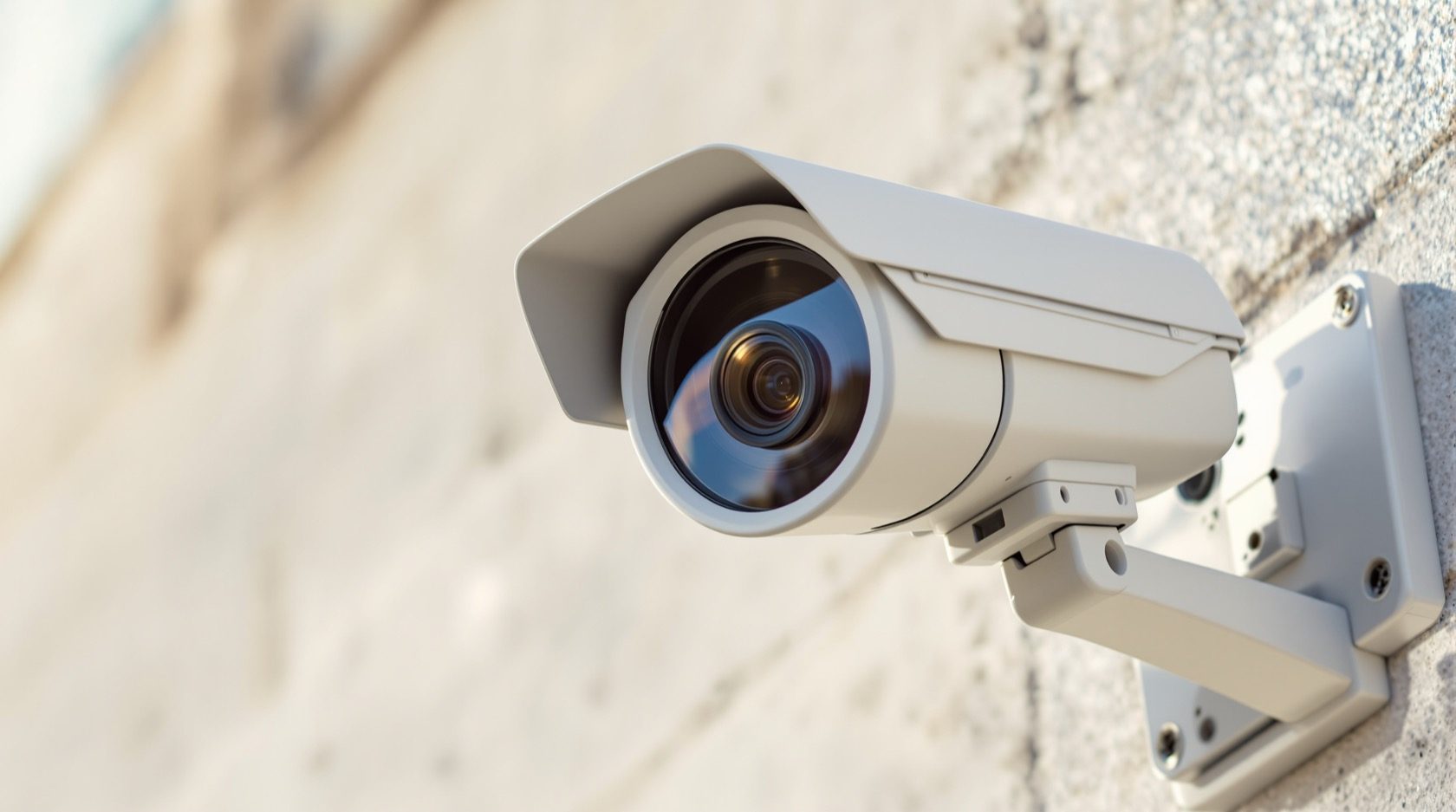
The bullet CCTV cameras you see jutting out from the corner of a house, under an eave, or on a gate post are the most recognisable shape in home security — a long cylinder on a bracket, hood over the lens, pointed unmistakably in one direction. That obvious, deliberate look is not an accident. A bullet camera is designed to be seen, and being seen is half its job.
This guide is the focused explainer on the bullet form factor in Studio Matrx's CCTV hub. It is not about analogue vs IP or wired vs wireless — a bullet can be any of those. It is about the shape of the camera and what that shape does well and badly, so you can decide where a bullet belongs on your plot and where a dome or turret fits better instead.
Scope & safety. This guide helps you choose and plan. Mounting cameras at height, running cabling, and any mains-electrical work belong to licensed professionals — plan the positions here, but have them installed by a qualified installer. A camera must never block a window, door or fire-escape route, and cameras belong only on your own property and shared areas — never bathrooms, bedrooms or changing areas, and positioned to respect neighbours and the spirit of the DPDP Act, 2023.
What a bullet camera actually is
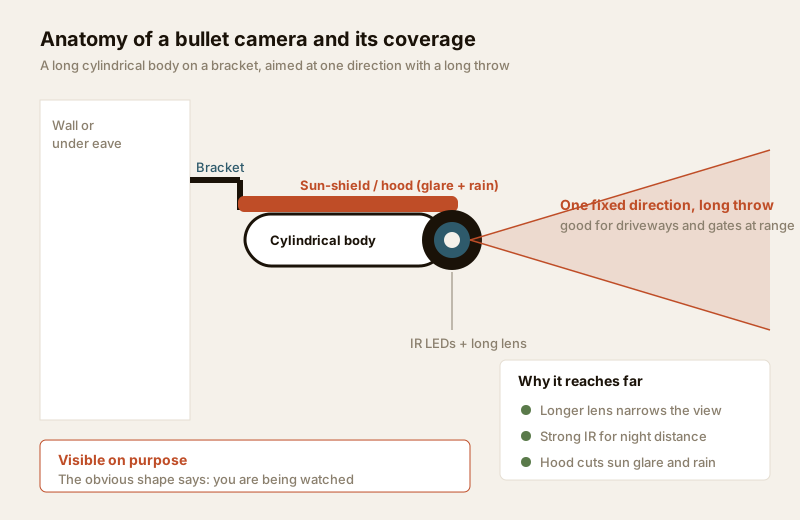
A bullet camera is a camera housed in a long, cylindrical body — roughly the shape and size of a large torch or a small telescope — mounted on an adjustable bracket that fixes to a wall, eave or pole. The name comes purely from the shape. Inside is the same core as any other camera: a lens, a sensor, infrared (IR) LEDs for night vision and, on modern units, a small processor for motion and object detection.
Two features define the form:
- The bracket and single direction. You aim a bullet once, at one target, and it holds that view. There is no motor and no dome to hide the aim — what it looks at is exactly where the barrel points.
- The sun-shield (hood). That little visor over the lens is a weather-shield: it cuts direct sun glare that would wash out the image, and it keeps monsoon rain off the glass so the lens stays clear. It is the single most useful outdoor feature the shape gives you.
The strengths — why people reach for a bullet
The bullet shape earns its place outdoors for a handful of concrete reasons.
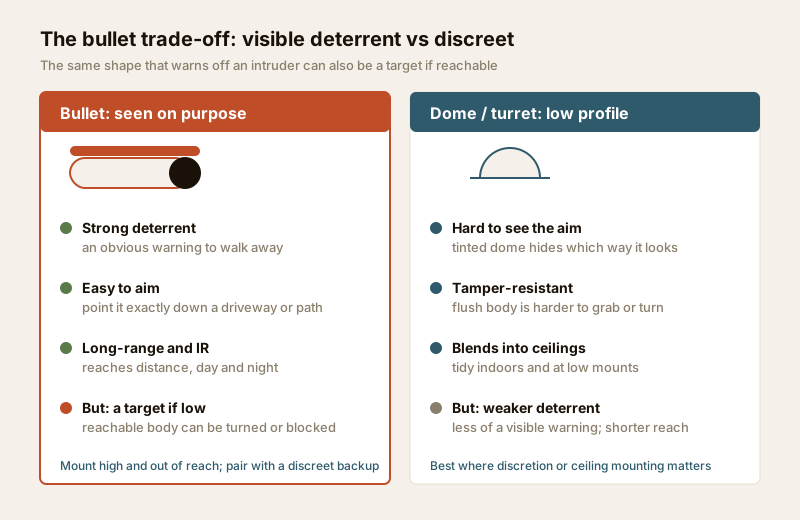
- A visible deterrent. This is the headline strength. A bullet reads instantly, even from the street, as a camera watching this spot. Much of home security is discouraging the opportunist before anything happens, and an obvious camera at the gate does exactly that. It says, plainly, "you are being watched."
- Easy to aim at one target. Because it points where the barrel points, a bullet is the simplest camera to line up on a specific thing — the gate, a stretch of boundary wall, the car in the porch. What you see when you set it up is what it records.
- Longer-range lenses and strong IR. Bullets are commonly built with longer focal-length lenses and larger IR arrays than a compact dome, so they hold detail further away and light up a longer stretch at night. That makes them the natural pick for distance — driveways, long approaches, the far end of a compound.
- The sun-shield. As above: glare control and rain protection, built into the shape, at no extra thought.
- Obvious, flexible mounting. A bullet's bracket takes it comfortably onto a wall, under an eave, or on a pole, angled down at a driveway or along a fence line. It is the easiest shape to place where there is no ceiling to work with — which is most of the outdoors.
For how bullets fit into a whole outdoor scheme alongside lighting and blind-spot removal, see the outdoor CCTV guide and the blind-spot identification guide.
The limitations — read these before you commit
The same qualities that make a bullet good outdoors have a flip side.
- Conspicuous, so a possible target. Being obvious cuts both ways. If a bullet is mounted within reach — on a low wall, beside a gate at head height — a determined person can turn it away, cover it, or knock it out of alignment. The fix is height: mount it out of reach and it stays both a deterrent and a working camera.
- A single fixed direction. One bullet watches one line. It cannot cover a wide junction of paths or a room's four corners the way a ceiling dome can, and it has no motor to sweep like a PTZ. Cover a wide area with several bullets, or a dome, rather than expecting one to do it all.
- Outdoor grime on the housing. Outdoors, the protruding body collects birds perching, spider webs across the lens, and dust — very much an Indian-summer and monsoon reality. Spiders in particular love the warm IR glow at night and spin webs that trigger false motion alerts. This is a maintenance item, not a fault: the housing needs an occasional wipe.
- Weaker where discretion matters. Sometimes you want a camera that does not announce itself, or that hides which way it looks. There, a tinted dome or a low-profile turret is the better shape.
Bullet pros, cons and best-fit
| Aspect | What a bullet gives you |
|---|---|
| Best strength | Visible deterrent — obvious "you are being watched" presence |
| Aiming | Easy — points exactly where the barrel points, one fixed direction |
| Range | Strong — longer lenses and larger IR for distance and night |
| Weather | Built-in sun-shield for glare and monsoon rain; choose IP66+ |
| Mounting | Flexible — wall, eave or pole; no ceiling needed |
| Main weakness | Conspicuous, so a target if reachable; wipe off webs and dust |
| Coverage | One direction only — use several, not one, for a wide area |
| Best-fit | Outdoor perimeters, gates, driveways, long approaches, car parks |
| Poor fit | Discreet indoor rooms; wide junctions; anywhere within easy reach |
Where a bullet fits best
Play to the strengths. A bullet is at its best watching an outdoor line — a defined direction it can own from a height.
- The main gate. The classic position: a bullet on the house corner or gate pillar, aimed to read faces and number plates of anyone arriving.
- The driveway and approach. A long, narrow view straight down a driveway is exactly what a longer bullet lens is built for.
- Long approaches and boundary walls. A single bullet can run a stretch of side wall or a long approach path where a wide camera would waste its pixels on empty ground.
- Car parks and the porch. Watching a parked car or a society parking bay at range, day and night.
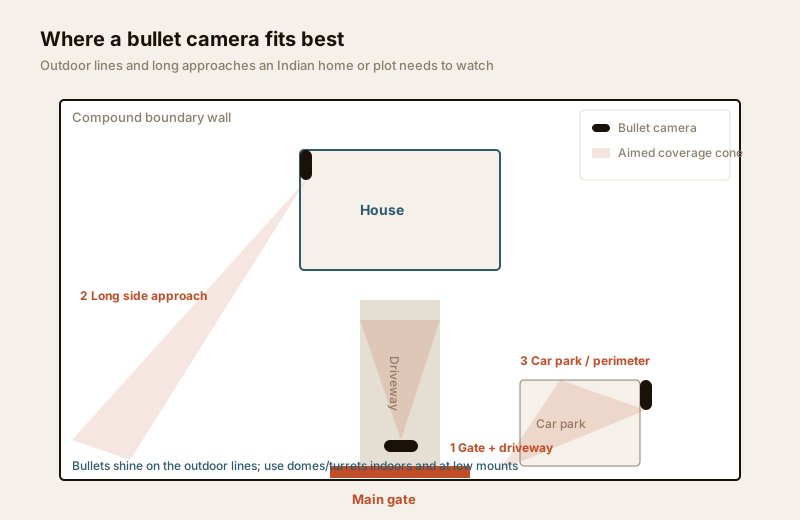
Indoors, and anywhere a camera sits low or needs to be discreet, hand the job to a dome or turret instead. Most homes end up mixing shapes — bullets on the outdoor lines, domes or turrets under the porch ceiling and inside. For the whole-home logic of layering cameras, see the complete guide to CCTV systems and, for how the recording and network side works, how CCTV systems work.
Bullet vs dome vs turret — the comparison
The three fixed shapes solve different problems. This is the short version; use it to decide the shape for each position.
| Factor | Bullet | Dome | Turret |
|---|---|---|---|
| Shape | Long cylinder on a bracket | Half-ball under a cover | Ball in an open socket |
| Visible deterrent | Strongest — obvious | Moderate; aim is hidden | Moderate |
| Aim visible? | Yes, clearly | No, tinted cover hides it | Yes |
| Range / IR | Longest reach | Shorter, wide | Medium |
| Weather / glare | Built-in sun-shield | Cover can catch rain drops | Good; no dome to fog |
| IR reflection glare | Rare | Can bounce off the dome | Rare (open design) |
| Tamper if low | Easier to turn/block | Harder — flush body | Moderate |
| Best home use | Outdoor gate, drive, perimeter | Indoors, ceilings, discretion | Porch, walls, all-rounder |
If you are weighing the shapes for each spot on your plot, the CCTV camera type selector walks you through it view by view, and the turret guide covers the increasingly popular "no dome glare" middle option. A PTZ camera is a different animal — a motorised camera that pans and zooms — and suits large compounds, not a typical home line.
India climate and price bands (indicative)
Prices move with brand, sensor, lens and season — treat these as ballparks to sanity-check a quote, not fixed rates. All figures are installed-order estimates for the camera only.
| Item | Typical range (₹) | Notes |
|---|---|---|
| 2MP outdoor bullet (analogue/IP) | ₹1,200 – ₹3,000 | Entry level; fine for a short driveway |
| 4MP IP bullet (the home workhorse) | ₹2,500 – ₹6,000 | The sweet spot; insist on IP66 for outdoors |
| 5MP / 8MP (4K) long-range bullet | ₹5,000 – ₹12,000 | Range and plate/face detail; more storage |
| Varifocal (zoomable lens) bullet | ₹6,000 – ₹14,000 | Dial the exact field of view on site |
| Junction box / weatherproof gland | ₹300 – ₹900 | Keeps the cable joint dry — do not skip outdoors |
| Mounting + aiming labour (per camera) | ₹400 – ₹1,200 | Part of the installer's quote |
For India specifically, weight two things. Weatherproofing: choose at least IP66 for anything outdoors so dust and driving monsoon rain stay out, and use a proper weatherproof junction box for the cable joint — a taped joint on a wall fails in the first monsoon. Heat and glare: the sun-shield helps, but avoid aiming a bullet straight into the low morning or evening sun, which washes the image out. Size and cost a full system with the camera coverage calculator and the security system cost estimator.
Getting a bullet install right
A few things decide whether a bullet earns its keep:
- Mount it high, out of reach. Above roughly 3 metres it stays a deterrent and a working camera that no one can casually turn. This usually means working at height — a professional's job.
- Angle down, not level. Tilt it so it looks down at the target; a level camera catches sky and glare and misses faces.
- Mind the sun. Aim across a scene, not into the sunrise or sunset.
- Plan the cable route dry. The cable joint needs a weatherproof box; the run to the recorder should be planned and pulled by the installer. For the wider wired-vs-wireless choice behind the camera, see the wired CCTV guide.
- Put the recorder on backup. A camera that dies with the evening power cut is only half a system — plan a UPS for the recorder and network as part of the wider resilience picture in the building security systems guide.
When to bring in a professional. Decide the positions, shapes and count yourself — then hand the mounting at height, cable pulling, weatherproof terminations and recorder commissioning to a licensed installer. Anything at the mains board is a licensed electrician's job; see the electrical hub. A well-aimed, well-sealed, out-of-reach bullet is worth far more than a cheap one screwed on in the wrong place.
Key takeaways
- A bullet camera is the long cylindrical camera on a bracket — a form factor built to be seen and aimed at one direction.
- Its strengths are a visible deterrent, easy aiming, long range and strong IR, and a built-in sun-shield for India's glare and monsoon.
- Its limits: conspicuous so a target if reachable, one fixed direction only, and outdoor grime (birds, spiders, dust) that needs an occasional wipe.
- It fits best on outdoor lines — gates, driveways, long approaches, car parks and perimeters — mounted high and out of reach, angled down.
- Use domes or turrets indoors and at low mounts; check each view with the camera type selector and route mounting, cabling and mains work to a licensed professional.
References
- Digital Personal Data Protection Act, 2023 — position cameras to cover only your own property and shared areas with a legitimate purpose; avoid capturing neighbours' private spaces.
- Ingress Protection (IP) ratings — verify a camera's weatherproofing (IP66 or higher for outdoors) on the manufacturer's specification sheet before ordering.
- National Building Code of India (SP 7), Bureau of Indian Standards, and local municipal bye-laws for any structural, electrical or life-safety aspect of an install; verify the current edition via the BIS catalogue: https://www.services.bis.gov.in/
This is an educational overview. Mounting at height, cabling and any electrical work are qualified professional tasks — engage licensed installers and verify any standard's current status via the BIS catalogue before relying on it.
Export this guide
Related Guides — Deep-dive reading
How to Choose a CCTV Camera (2026): The Homeowner's Decision Guide for India
Cut through the spec-sheet noise and choose the right CCTV camera for each spot around an Indian home. What actually matters — sensor and low-light performance, lens and field of view, form factor, IP and IK ratings, honest smart features — and the marketing claims to ignore.
SecurityCCTV Varifocal vs Fixed Lens (India 2026): Choosing the Right Angle of View
Focal length sets how wide and how far a camera sees. What a fixed 2.8mm or 3.6mm lens gives you, when an adjustable varifocal earns its higher price, manual versus motorised, and how to pick the right angle for each spot on an Indian plot.
SecurityBox CCTV Cameras in India: The Interchangeable-Lens Camera for Exact Framing
What a box camera is, why its C/CS-mount interchangeable lens lets you pick the exact field of view and identification range for a spot, when a weatherproof housing is worth the extra cost, and how it compares to fixed-lens dome, bullet and turret cameras.
SecurityRelated Tools — Try Free
CCTV Camera Type Selector
Answer five questions and get the right camera form factor — dome, vandal dome, bullet, turret or PTZ — with reasons.
Camera SelectorCCTV Camera Coverage & Count Calculator
Estimate how many CCTV cameras you need, the NVR channels, storage in TB for your retention period, and an indicative all-in cost with GST.
CCTV CalculatorCCTV System Type Selector
Answer five questions and get the right CCTV setup — analog / IP / hybrid, wired / wireless, local / cloud — with reasons.
CCTV Selector