
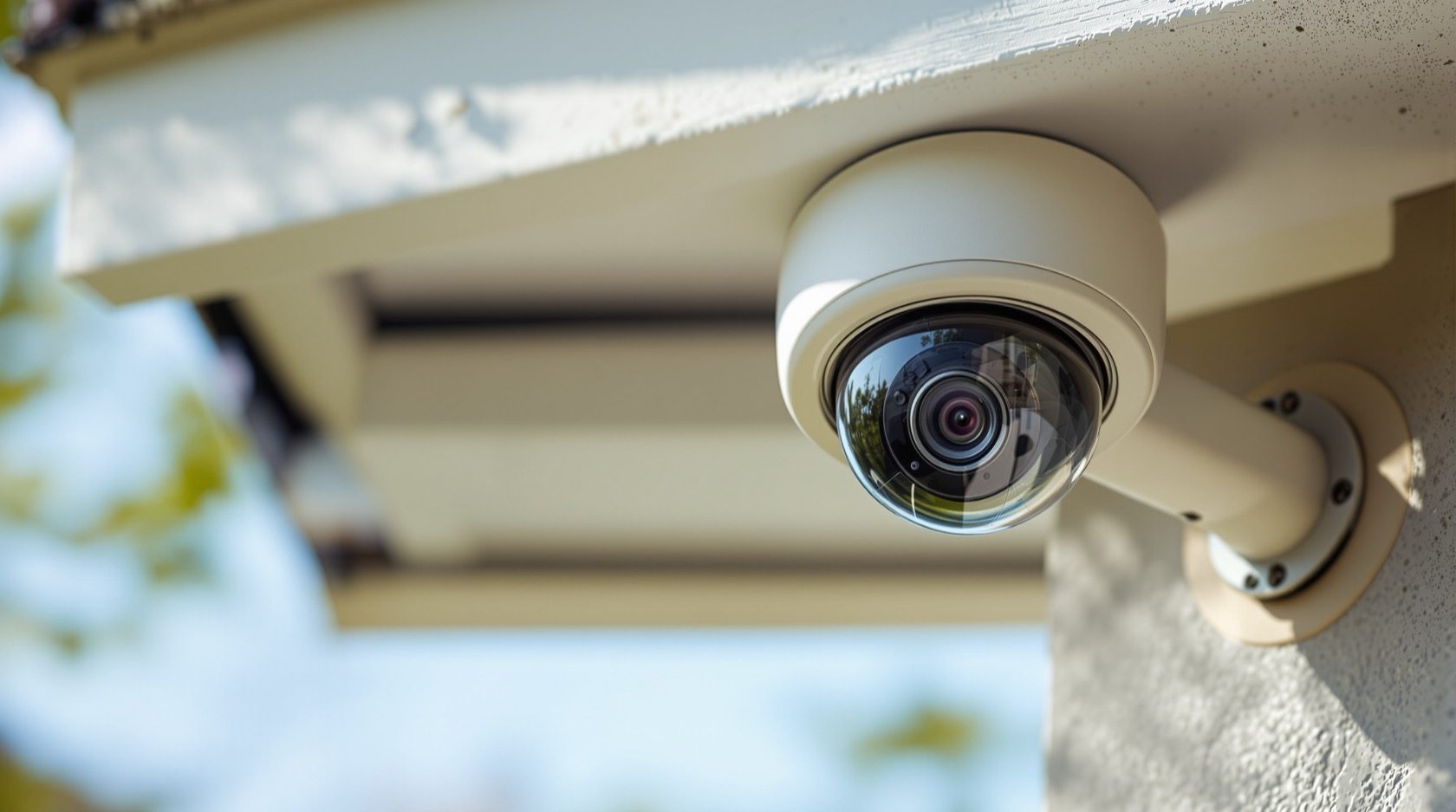
Turret Cameras: The Eyeball Form Factor That Became India's Default
What a turret (eyeball) camera is, why its open ball-and-socket lens gives cleaner night footage than a dome, where it fits best around an Indian home or shop, and how it compares to dome, bullet and PTZ.
Walk down any street of new Indian homes and shops today and you will see the same small shape tucked under the eaves: a compact half-ball sitting in an open cup, its lens aimed frankly at the gate. That is a turret camera — also sold as an eyeball or mini-ball — and it has quietly become the default form factor for outdoor and general-purpose CCTV. This guide explains what a turret actually is, why it won, where it belongs, and where a dome, bullet or PTZ still does the job better.
This is a form-factor deep-dive in Studio Matrx's CCTV hub. It sits alongside its siblings — the dome camera guide, the bullet camera guide and the PTZ camera guide — so read this to decide whether a turret is right for a given spot, then use the camera type selector to lock in the mix. Form factor is about shape and mounting; whether the camera is analogue or IP is a separate choice covered in the IP CCTV guide.
Scope & safety. This guide helps you choose and coordinate, not install. Mounting at height, drilling into walls, running cable and any mains-power work belong to a licensed professional. Cameras must never point into a bathroom, bedroom or a neighbour's private space, and hardware must never block a door or fire-escape route — respect the DPDP Act 2023 and cover only your own property and shared areas.
What a turret camera actually is
A turret is a ball-and-socket camera. The lens, sensor and infrared (IR) lights all live inside a small ball that sits in an open, cup-shaped mount. You loosen a collar, rotate the ball to aim it exactly where you want, and tighten it down. It is a fixed-direction camera — once aimed, it watches that one scene until someone re-aims it by hand.
The defining thing is what it does not have: there is no clear dome bubble over the lens. A traditional dome camera hides its lens under a tinted acrylic dome; a turret leaves the lens open to the air inside a short recessed hood. That single design choice is the reason the whole category exists.
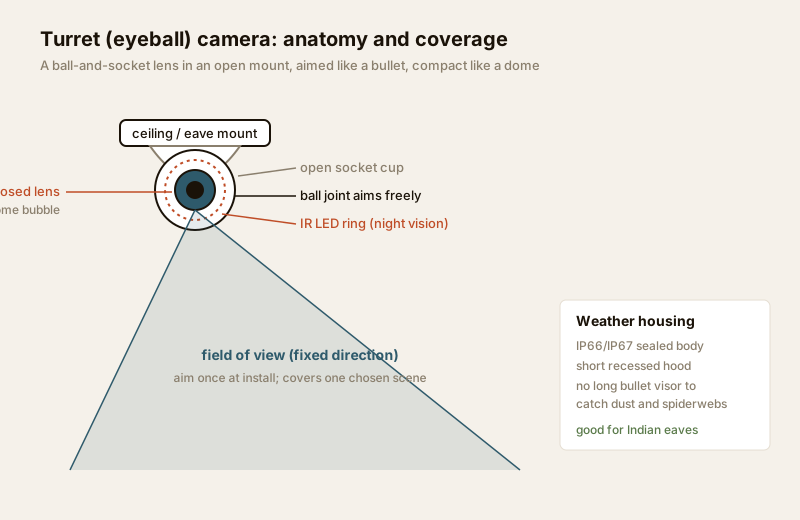
Think of it as a deliberate hybrid. From a bullet camera it borrows the easy ball-joint aiming and the honest, exposed lens. From a dome it borrows the compact, low-profile, semi-discreet body that tucks neatly against a soffit or wall. It is smaller and less aggressive-looking than a bullet, yet far easier to aim than most fixed domes.
Why turrets took over
The turret is popular because it removes the single biggest complaint about outdoor cameras in India: bad night footage — and it does so without the bullet's downsides.
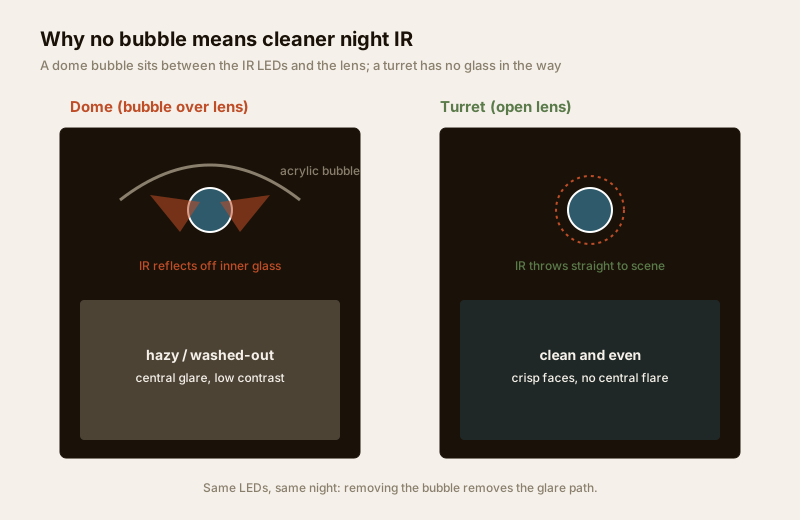
- Far less IR glare at night. This is the headline. In a dome, the IR LEDs sit behind the same acrylic bubble as the lens, so some of that infrared light bounces off the inside of the glass straight back into the lens — a washed-out central haze that ruins the very frames you need after dark. A turret has no glass between the IR and the lens, so the light throws cleanly onto the scene and comes back as a crisp image.
- Cleaner than a bullet in daily life. A bullet camera has a long protruding barrel and a sun visor that, in Indian conditions, becomes a shelf for dust, cobwebs and spiderwebs — and a spider spinning across the lens at night triggers endless false motion alerts. The turret's short, recessed hood gives the same webs far less to cling to.
- Easy aiming. The ball joint means an installer can point it at the exact corner of the gate in seconds, then re-aim later if the driveway layout changes — no need to unscrew a whole bracket like some domes.
- Semi-discreet and tidy. It reads as a small, modern half-ball rather than a jutting "watching you" barrel, so it suits a home entrance or a smart shopfront without looking like a fortress.
- A genuine all-rounder. The same model works under an eave, over a main door, on a side wall or indoors in a room. Buying one shape for most of the house simplifies choosing, stocking spares and matching the look.
The limitations — read before you buy
A turret is excellent, not perfect. Go in knowing the trade-offs.
- The lens is more exposed. Because there is no dome bubble in front of it, the lens itself has slightly less physical protection than a camera hidden behind a tough dome. For most eave-height home and shop positions this is a non-issue — nobody can reach it — but see the vandal note below.
- Slightly less vandal-resistant than a vandal-dome. A dedicated vandal-rated (IK10) dome is the hardest form factor to smash or twist because there is little to grab and the lens is behind a solid cover. A turret's ball can, in principle, be shoved or the exposed lens tampered with if someone can physically reach it. This only matters at reachable heights in exposed public spots.
- Still a fixed direction. Like a dome or bullet, a turret watches one scene. It does not pan, tilt or zoom to follow a person across a large yard — that is a PTZ camera's job (see the PTZ guide). Plan its aim carefully; a fixed camera pointed at the wrong corner is wasted.
- Direct-light flare. With the lens open, a bright light or the low sun shining straight into it can flare more than a shaded dome. Aim it so strong light sources sit behind or above it, not in frame.
When to bring in a professional. Choose the camera, the count and each aim-point yourself — that is planning you can and should do. Then hand the mounting at height, wall drilling, cable pulls and any mains-power work to a licensed installer. They will fix the bracket into sound masonry, seal the cable gland against monsoon water, dress the cable so it cannot be cut, and set the aim and focus properly. Any work at the mains board is a licensed electrician's task — see the electrical hub. Never mount a camera where it blocks a window, door or fire-escape route.
Turret at a glance: pros, cons and best fit
| Aspect | What a turret gives you |
|---|---|
| Form | Compact open ball-in-socket; no dome bubble; short hood |
| Aiming | Easy ball-joint, aim in seconds; fixed once set |
| Night footage | Best of the fixed types — minimal IR glare, clean IR |
| Weather | IP66/IP67 bodies handle Indian heat, dust and monsoon |
| Discretion | Semi-discreet; tidier and less aggressive than a bullet |
| Vandal resistance | Good, but below a dedicated IK10 vandal dome |
| Best fit | Outdoor eaves, entries, driveways, shopfronts, general indoor + outdoor |
| Weakest at | Reach-height high-vandal spots; wide areas needing to pan/follow |
Turret vs dome vs bullet — the honest comparison
All three are fixed-direction cameras; the choice is about mounting, discretion, night IR and vandal exposure. (For a moving camera, jump to the PTZ guide.)
| Factor | Turret (eyeball) | Dome | Bullet |
|---|---|---|---|
| Night IR glare | Lowest — open lens, no bubble | Highest — IR bounces off the bubble | Low — but visor collects webs |
| Aiming ease | Very easy (ball joint) | Moderate (some need bracket work) | Very easy (arm + knuckle) |
| Discretion | Semi-discreet, compact | Most discreet; hard to see aim | Least — obvious barrel, visible aim |
| Vandal resistance | Good | Best (IK10 vandal dome) | Fair; barrel can be knocked |
| Dust / cobweb magnet | Low (short hood) | Lowest (smooth dome) | Highest (long visor + barrel) |
| Visual deterrent | Moderate | Low (hidden aim) | High (clearly aimed at you) |
| Best home use | Eaves, entries, all-round | Reachable indoor + vandal spots | Long driveways, clear "watched" signal |
The short version: pick a turret when you want the best night footage from a fixed camera in a normal eave or entry position — which covers most of a home or shop. Pick a dome when you need maximum discretion or a vandal-hardened unit at reachable height. Pick a bullet when you want an obvious, long-range deterrent down a driveway and a visor for direct sun. When you are weighing a specific spot, the camera type selector turns this table into a recommendation.
Where a turret fits best around an Indian home
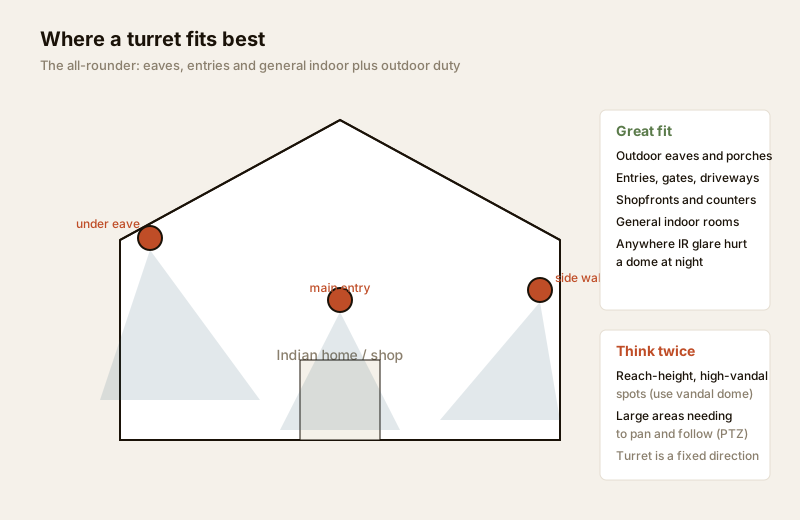
- Under the eaves and porch soffit. The classic turret home. Tucked under the overhang it is rain-shaded, out of reach, and its clean night IR makes the most of a dark compound.
- The main entry and gate. Where you most need to read a face after dark, the turret's glare-free night image earns its keep.
- Driveways and side passages. A good all-round watch on the approaches, though a very long driveway may want a bullet's reach or narrower lens.
- Shopfronts and counters. Compact and modern-looking, with clean footage of faces at the till.
- General indoor rooms. Living rooms, hallways and stair heads — never bedrooms, bathrooms or changing areas.
For the wider question of what belongs outside versus inside, read the outdoor CCTV guide and the indoor CCTV guide. To make sure a turret is not staring into a blind corner or a neighbour's window, work through blind-spot identification and the privacy assessment first.
India price bands (indicative)
Prices move with brand, resolution and season — treat these as ballparks to sanity-check a quote, not fixed rates. Form factor barely changes the price; resolution and IP-vs-analogue do.
| Item | Typical range (₹) | Notes |
|---|---|---|
| 2MP analogue turret | ₹900 – ₹1,800 | Budget indoor / short-range outdoor |
| 4MP IP (PoE) turret | ₹2,200 – ₹5,500 | The home workhorse; IP66/IP67 |
| 5MP colour-night turret | ₹3,500 – ₹7,000 | Full-colour after dark with warm LED |
| 8MP (4K) IP turret | ₹5,500 – ₹12,000 | Range and detail; more storage needed |
| Weatherproof junction box | ₹250 – ₹700 | Protects the cable tail at the mount |
| Professional mounting + cabling | ₹400 – ₹900 / point | Height work, gland sealing, aim + focus |
A turret costs about the same as the equivalent dome or bullet at the same resolution — so choose the shape on fit and night performance, not price. To size a whole system and its storage, use the camera coverage calculator, and for the total budget try the security system cost estimator.
Choosing a turret well
1. Confirm the spot suits a fixed camera. If you need to follow movement across a large area, that is a PTZ, not a turret.
2. Match resolution to the view. 4MP is the home default; step to 8MP only for wide or long shots where you must read detail at range.
3. Decide night mode. Standard IR (black-and-white at night) versus full-colour night vision with a warm LED — colour helps identify clothing but needs a little ambient light.
4. Check the weather rating. IP66 or IP67 for anything outdoors in Indian dust and monsoon; look for a sensible operating-temperature range for summer heat.
5. Plan the aim on paper. Keep strong light behind the camera, cover the approach not just the doorway, and avoid pointing into a neighbour's property.
6. Back it up. Put the recorder and network on a UPS so a power cut is not a blind spot — India's supply is not guaranteed. For the wider camera-plus-alarm-plus-access picture, see the building security systems guide.
Key takeaways
- A turret (eyeball / mini-ball) is a ball-and-socket camera with an open lens and no dome bubble — a deliberate hybrid of dome and bullet.
- Its big win is clean night IR: no bubble means no infrared bouncing back into the lens, so faces stay sharp after dark — and its short hood collects fewer cobwebs than a bullet.
- Trade-offs: the lens is more exposed and it is slightly less vandal-proof than an IK10 dome, and like all fixed cameras it watches one direction only.
- It is the best all-rounder for outdoor eaves, entries, driveways, shopfronts and general indoor use — the reason it has become India's default shape.
- Form factor costs about the same across dome, bullet and turret, so choose on fit and night performance; route all mounting, cabling and mains work to a licensed professional and confirm the mix with the camera type selector.
References
- Digital Personal Data Protection Act, 2023 — position cameras to cover only your own property and shared areas with a legitimate purpose; never capture neighbours' private spaces, and never place cameras in bathrooms, bedrooms or changing areas.
- Ingress Protection (IP) ratings such as IP66/IP67 and impact (IK) ratings such as IK10 — verify a specific product's rating against its manufacturer datasheet before relying on it outdoors.
- National Building Code of India (SP 7), Bureau of Indian Standards, and local municipal bye-laws for any structural, electrical or life-safety aspect of an install; verify the current edition via the BIS catalogue: https://www.services.bis.gov.in/
This is an educational overview. Mounting at height, structured cabling and any electrical work are qualified professional tasks — engage licensed installers and verify any standard's current status via the BIS catalogue before relying on it.
Export this guide
Related Guides — Deep-dive reading
How to Choose a CCTV Camera (2026): The Homeowner's Decision Guide for India
Cut through the spec-sheet noise and choose the right CCTV camera for each spot around an Indian home. What actually matters — sensor and low-light performance, lens and field of view, form factor, IP and IK ratings, honest smart features — and the marketing claims to ignore.
SecurityIndoor CCTV for Indian Homes and Shops: Coverage With Privacy
What indoor cameras are actually for, where they belong (and the rooms where they never do), how to choose and place them for full coverage, and how to stay lawful and respectful under the DPDP Act.
SecurityInfrared vs Colour Night Vision CCTV in India (2026): Which Sees Better in the Dark?
A homeowner's head-to-head between traditional infrared (IR) night vision, which lights the scene invisibly and shows a black-and-white image, and colour night vision, which keeps the picture in colour at night using a very sensitive sensor and a little white light — with an honest verdict on when each wins and why a hybrid camera is usually the smartest buy.
SecurityRelated Tools — Try Free
CCTV Camera Type Selector
Answer five questions and get the right camera form factor — dome, vandal dome, bullet, turret or PTZ — with reasons.
Camera SelectorCCTV Camera Coverage & Count Calculator
Estimate how many CCTV cameras you need, the NVR channels, storage in TB for your retention period, and an indicative all-in cost with GST.
CCTV CalculatorCCTV Night-Vision Selector
Answer five questions and get the right night technology — infrared, low-light, colour night vision or thermal — with reasons.
Night-Vision