
Boundary Intrusion Detection in India (2026): Choosing & Layering Perimeter Sensors
The umbrella guide to the perimeter intrusion-detection family — beam, fence-mounted, buried, microwave, outdoor PIR and video analytics — and how to match each to the boundary, reject false alarms, and layer two technologies you verify on camera.
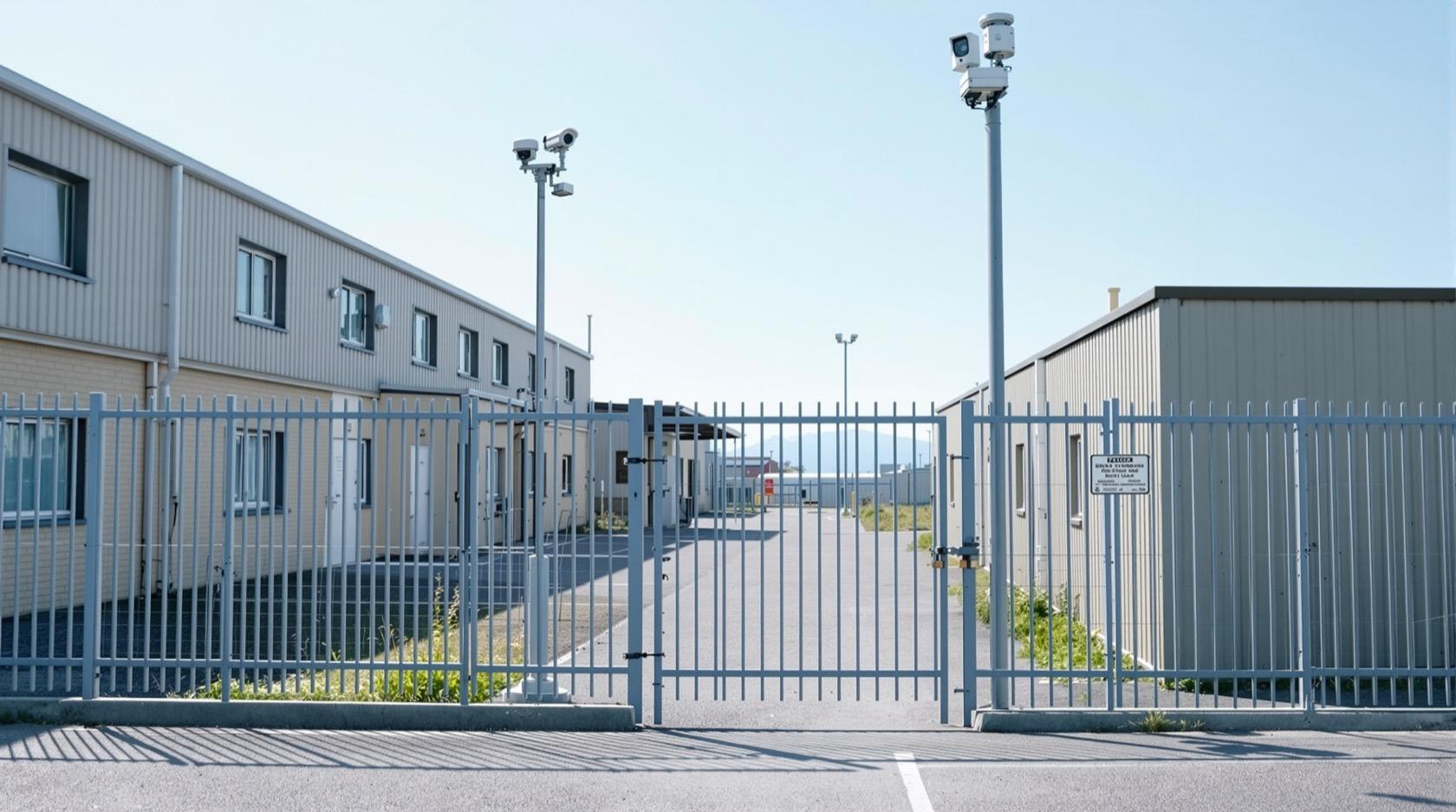
A compound wall or a fence only ever buys you one thing: delay. It slows an intruder down; it does not tell anyone they are there. Boundary intrusion detection is the layer that turns that delay into a warning — a signal that someone is crossing the line while there is still time to look, verify and respond. This is the umbrella guide to the whole family of perimeter detection technologies: what each one is, the boundary and environment it suits, and — the heart of good perimeter design — how to choose the right one and layer two together so you get a confident alarm rather than a sensor that cries wolf and gets switched off.
It sits alongside, not on top of, the perimeter alarm systems guide, which frames the outer detection ring for a typical home. This guide is the professional's map of the technologies — the survey a facility manager, RWA committee, factory or campus owner needs before specifying a system — and part of the wider perimeter security library under the perimeter security pillar.
Scope, honesty & safety. This guide is strictly about detecting an intruder at the boundary and choosing detection well — never about defeating, blinding or bypassing a sensor. Two truths anchor everything below. First, detection is worthless without verification and response: a perimeter sensor only helps if someone — a guard, a monitoring station, a neighbour — VERIFIES the alarm (almost always on CCTV) and acts on it; an unmonitored or ignored sensor saves no one, and India's alarms are overwhelmingly self- or guard-monitored, not police-dispatched. Second, outdoor detection lives or dies on rejecting nuisance alarms; the fix is always the right technology, good placement and camera verification, never "turn up the sensitivity" and never switching it off. Mains wiring, work at height and any monitoring contract are licensed-professional work. Educational guidance, not legal advice.
Why the boundary needs its own detection layer
Every good perimeter is a sequence of concentric rings — the pillar guide lays out the deter, delay, detect, respond logic in full. Physical barriers (a wall, security fencing, anti-climb toppings) do the deter-and-delay work. Detection is the separate job of knowing the line has been challenged. Put a sensor on the outermost line and you move the alarm from "the intruder is at my door" to "someone is at the boundary" — often several minutes and one whole building-skin earlier.
The professional question is never "which sensor is best?" but "which sensor fits this boundary, in this environment, feeding this response capability?" A 40-metre villa wall in a quiet lane, a two-kilometre factory fence beside a highway, and a farm boundary with cattle and monkeys are three completely different detection problems. The site perimeter security assessment tool is a good way to structure that survey before you shortlist any hardware.
The perimeter detection family — technology by technology
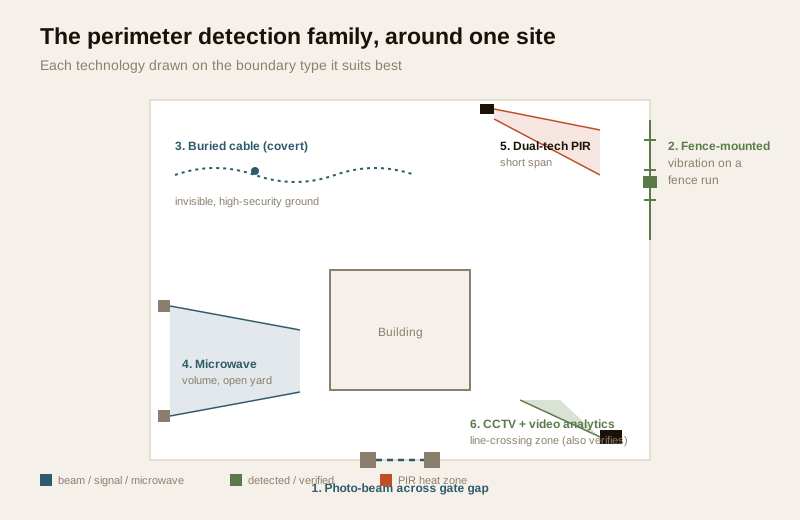
Six broad families cover almost every real perimeter. None is universal; each has a boundary type it loves and an environment that defeats it.
Photo-beam (infrared beam) detection
A transmitter sends one or more invisible infrared beams to a receiver; breaking the beam raises the alarm. A single pair guards a gap — a gate, a driveway entrance, a break between buildings — and a multi-beam "tower" pair creates an invisible fence of beams across an open span or along a wall top. Beams give a clean, precise detection line and are cheap per metre, which is why they suit gateways and straight open runs. Their weakness is weather (heavy rain and fog scatter infrared) and line-of-sight (they need clear, stable, obstruction-free paths). This is the outdoor application of ordinary beam sensors; the dedicated boundary treatment is the perimeter beam sensors guide.
Fence-mounted detection (vibration, tension, fibre)
These turn an existing fence into the sensor. Vibration/accelerometer sensors feel the knock and shake of a climb or cut; tension/strain sensors on a taut-wire fence feel the pull; fibre-optic cable woven through the mesh senses the micro-disturbance of anyone handling it. Ideal wherever you already have a long fence or grille and want detection along its whole length. The catch is that the fence itself must be sound and taut — a loose, rattly fence in the wind is a false-alarm generator. This is the fence lens of fence intrusion detection and vibration sensors; the boundary-specific write-up is the fence vibration sensors guide.
Buried (covert ground) detection
Sensors buried in the ground detect someone walking or driving over a zone — seismic/geophone cable feeling footstep vibration, pressure/ported hose sensing weight, or leaky-coaxial (ported coax) cable sensing the disturbance of a body in the radio field between two buried cables. Their great virtues are that they are invisible and covert (an intruder cannot see the detection line) and they follow the ground with no visible hardware to weather or vandalise. That makes them the choice for high-security open ground — critical infrastructure, secure yards, sterile zones — where concealment matters. They are the most specialised and installation-sensitive of the family (soil, drainage and burial depth all matter) and are overkill for an ordinary home.
Microwave / radar volumetric detection
A microwave transmitter-receiver pair (bistatic) or a single radar unit (monostatic) floods a detection volume across open ground; a person moving through the volume changes the signal and trips the alarm. This suits wide, flat, open approaches — a clear buffer strip inside a fence, an open forecourt — where you want a body of detection rather than a single line. It needs a clear, level, stable zone (tall grass, standing water and moving foliage inside the volume cause nuisance trips), which is exactly why it pairs so well with a maintained sterile strip.
Outdoor PIR and dual-technology
The outdoor cousin of the indoor motion sensor, hardened for weather and tuned for open ground, covers a fan-shaped zone over a short span — a service passage, a courtyard, a single wall corner. Because open ground is full of moving warm bodies, the outdoor units worth specifying are dual-technology (PIR plus microwave, alarming only when both agree) and pet-tolerant. PIR is inexpensive and easy but has the shortest useful reach and the most nuisance sensitivity outdoors, so it earns its place on short, defined spans rather than long boundaries.
Video analytics on perimeter CCTV
Modern perimeter cameras run line-crossing and intrusion-zone analytics: you draw a virtual line or region on the camera view and the system alarms when a person (increasingly, a person as distinct from an animal or vehicle, via object classification) crosses it. This does double duty — it is both a detector and the verification picture at once, which is why it is the natural partner for every other technology. It depends on good perimeter CCTV design: adequate scene lighting or thermal cameras at night, sensible fields of view and camera placement. It is not a magic replacement for physical sensors — rain, glare, shadows and camera blind spots all limit it — but as one layer it is superb.
| Technology family | What it watches | Best-fit boundary | Environment / weakness |
|---|---|---|---|
| Photo-beam (IR) | A line across a gap or open span | Gates, driveways, straight open runs | Heavy rain, fog, needs clear line of sight |
| Fence-mounted (vibration / tension / fibre) | The fence being climbed, cut or shaken | Existing chain-link, welded-mesh, grille runs | A loose or rattly fence; strong wind |
| Buried (seismic / pressure / leaky-coax) | Footfall or a body over a ground zone | High-security open ground, sterile strips | Soil/drainage sensitive, specialist install |
| Microwave / radar volumetric | A moving body in an open detection volume | Wide, flat, clear approaches and buffer strips | Tall grass, standing water, moving foliage |
| Outdoor PIR / dual-technology | A fan-shaped zone over a short span | Passages, corners, courtyards, single spans | Short reach; animals, heat shimmer (single-tech) |
| Video analytics (perimeter CCTV) | A virtual line or zone in the camera view | Anywhere with good camera coverage and light | Rain, glare, shadows, night lighting, blind spots |
Choosing: match the technology to the boundary and the environment
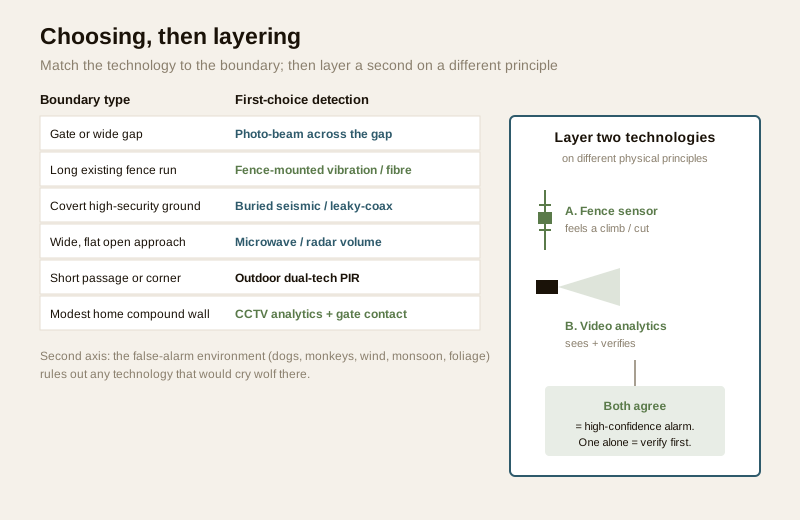
Selection is a two-axis decision. Axis one is the boundary type — a gap, a fence, open ground, a short span, a walled line. Axis two is the false-alarm environment — what moves near this boundary that is not an intruder. A photo-beam is perfect across a gate but wrong across a monkey-frequented open lawn; a microwave volume is superb over a maintained sterile strip but hopeless over tall monsoon grass; buried cable is covert and weatherproof but wasted on a suburban villa.
| Boundary situation | Likely first choice | Sensible layer-two partner |
|---|---|---|
| A gate or a single wide gap | Photo-beam across the gap | Video analytics on a camera watching the gate |
| A long existing fence run | Fence-mounted vibration / fibre | Perimeter CCTV with line-crossing analytics |
| Open ground where concealment matters | Buried seismic / leaky-coax cable | Microwave volume or thermal CCTV overhead |
| A wide, flat, open approach | Microwave / radar volumetric | Fence-mounted detection on the fence behind it |
| A short service passage or corner | Outdoor dual-technology PIR | A perimeter camera covering the same span |
| A modest home compound wall | Perimeter CCTV analytics + a gate contact | An outdoor dual-tech PIR on the vulnerable side |
Two design rules cut through the detail. First, layer two complementary technologies on anything you actually care about protecting. Two detectors that work on different physical principles almost never false-alarm on the same stimulus at the same instant — wind that shakes a fence sensor does not trip a photo-beam; a bird that clips a beam does not register on a buried cable. So when both fire together, confidence is high; when only one fires, it is a candidate for verification, not an automatic dispatch. Second, the layer-two partner should usually be a camera (video analytics or CCTV coverage of the same zone), because that gives you the sensor and the verification picture in one.
The false-alarm reality — and why layering plus verification beats one over-sensitive sensor
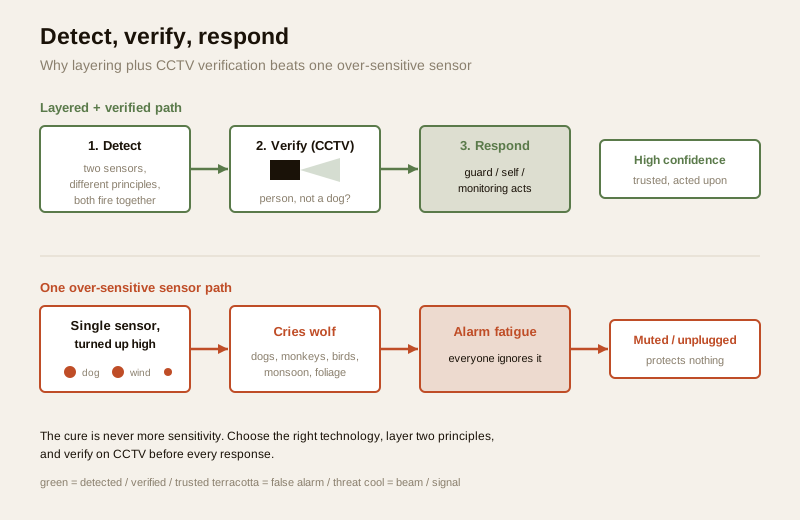
Here is the failure mode that defeats most Indian perimeter installs: a single, over-sensitive sensor is fitted, it fires on street dogs, monkeys, wind, birds, blowing rubbish, rain and the neighbour's cat, everyone gets alarm fatigue, and within a month it is muted or unplugged. A muted detector protects nothing. The problem is never solved by making one sensor more sensitive; it is solved by three moves that every professional design applies.
- Choose the right technology for the environment. A dual-technology sensor requiring two independent signals to agree, a multi-beam array that ignores a single bird, a buried cable immune to wind — the technology itself does most of the nuisance-rejection if you match it to what actually moves near the boundary.
- Layer two complementary principles. Cross-confirmation between two different physics is the single most powerful nuisance filter there is: treat a lone trip as "verify," and a double trip as "respond."
- Verify on CCTV before every response. This is the decisive step. Detection tells you that the line was crossed; the camera tells you what crossed it — a person or a pi-dog. Verifying on perimeter CCTV before dispatching a guard or a neighbour converts a noisy alarm into a trustworthy one and is the real cure for false-alarm fatigue. Never respond blind, and never "solve" false alarms by lowering guard trust in the system.
In India specifically, name the usual nuisances up front and design for them: stray dogs and cattle at ground level (aim and choose sensors so ordinary animal movement is out of the detection profile); monkeys and birds on walls and beams; monsoon rain and fog (favour multi-beam and non-optical technologies where fog is chronic, and weatherproof everything to a high IP rating); wind on loose fencing (tension the fence, tune sensitivity to a genuine climb signature); and power cuts (detection, cameras and lighting all need battery or solar backup, or the perimeter goes dark exactly when it is needed). None of these is a reason to skip detection — each is a reason to specify it properly.
Integration, monitoring and the honest India response reality
Detection is only the front end. Every sensor and analytics stream has to report somewhere and drive an action, or it is a light that blinks in an empty room.
- Integration into the panel or VMS. Physical sensors (beam, fence, buried, microwave, PIR) wire or radio back to the intrusion alarm panel; camera analytics report into the video management system (VMS). On a serious site the two are integrated so a sensor trip automatically calls up the relevant camera for instant verification — the gold standard of alarm-verified CCTV. Zoning matters: a good design divides the boundary into named zones so an alarm says where, not just that.
- Monitoring: be honest about what exists. India has no meaningful automatic police dispatch for private alarms. Realistically your monitoring is one of: a site guard (very common — the perimeter alarm and cameras exist to make one or two guards effective over a long boundary), self-monitoring by app/SMS to the owner or committee, or a professional monitoring station for larger campuses. Whichever it is, the alarm must reach a human who can verify and act, at all hours, with backup power — and that human path is the part most often neglected. The perimeter alarm systems guide covers this monitoring reality in full for the home case.
- Where a home needs little, and a critical site needs layers. A modest villa is well served by good perimeter CCTV with analytics, a gate contact and perhaps one outdoor dual-tech PIR on the weak side — verified on a phone, responded to by the owner or a neighbour. A factory, warehouse, farm or campus with a long, remote, high-value boundary justifies layered detection — fence sensors plus buried or microwave in the open, all verified on thermal or lit CCTV, zoned into the VMS, and watched by guards or a monitoring station. Spend in proportion to the boundary and the consequence, not on gadgets for their own sake.
False alarms, neighbourliness & when to bring in a professional. The measure of a perimeter system is not how sensitive it is but how trusted it is — one that fires only on real events and is verified before response. Design out nuisance alarms with the right technology, layering and CCTV verification, never by cranking sensitivity or, worse, muting the system. Mind the neighbours too: cameras that overlook a neighbouring plot or the public road carry duties under the DPDP Act 2023, and any security lighting must be aimed and shielded so it does not dazzle a neighbour's window or the road (see security lighting). Bring in a licensed professional for anything at height, all mains-connected power and lighting, buried-cable and fence-sensor commissioning, beam alignment, and any monitoring or response contract — and for a factory, farm, campus or RWA, commission a proper site survey and a written specification with a maintenance plan before you buy a single sensor.
Key takeaways
- Boundary intrusion detection is the layer that turns a wall's delay into a warning — the professional's job is to choose the technology and layer it, not to buy the most sensitive box.
- Six families, each with a home: photo-beam across gaps, fence-mounted along fences, buried for covert high-security ground, microwave over open approaches, outdoor dual-tech PIR on short spans, and video analytics anywhere with good CCTV and light.
- Select on two axes — the boundary type and the false-alarm environment — and layer two complementary technologies (ideally one of them a camera) so a double trip means confidence and a lone trip means verify.
- Verify every alarm on CCTV before responding; a single over-sensitive sensor that cries wolf on dogs, monkeys, wind and monsoon gets muted, and a muted sensor protects nothing — layering plus verification beats sensitivity every time.
- Detection needs verification, response and backup power: integrate sensors and cameras into the panel/VMS, zone the boundary, be honest that India's monitoring is guard or self-monitored, and scale from a home's light touch to a critical site's layered design.
References
- The applicable BIS / IEC / EN intrusion-detection and CCTV standards — verify the current status, scope and any detection-performance or environmental-classification figures on the official catalogue before relying on them; do not assume a withdrawn or superseded edition. Bureau of Indian Standards catalogue: https://www.services.bis.gov.in/
- Digital Personal Data Protection Act, 2023 — perimeter CCTV and video analytics that capture a neighbouring plot, a shared lane or a public road process personal data; agree access, retention and any monitoring/response terms in writing with a reputable provider and restrict who can view the footage.
- National Building Code of India (SP 7:2026), Bureau of Indian Standards, and local municipal bye-laws — for the electrical, security-lighting glare/light-nuisance and life-safety aspects of any perimeter install; confirm the current edition via the BIS catalogue.
This is an educational overview for planning and coordinating perimeter detection, not legal advice, and is strictly about detecting an intruder rather than defeating detection. Work at height, outdoor and buried cabling, mains-connected power and lighting, sensor commissioning, beam alignment and any monitoring contract are qualified professional tasks — engage licensed installers, and verify any standard's current status via the BIS catalogue before relying on it.
Export this guide
Related Guides — Deep-dive reading
Perimeter Beam Sensors in India (2026): Invisible Trip-Lines Along the Boundary
How stacked active-infrared and laser photo-beams strung between towers along a wall, gap or long straight run raise the alarm the moment someone crosses the boundary — and how to place them so fog, birds and foliage do not.
SecurityPerimeter CCTV in India (2026): Watching the Boundary and Verifying the Alarm
How cameras earn their place on the perimeter — watching along the fence and wall line, and letting a human confirm a real intruder before response — designed for Indian darkness, weather and neighbour privacy.
SecurityPerimeter Alarm Systems in India (2026): Detect an Intruder at the Boundary
How an outer detection layer — outdoor motion sensors, beam barriers, fence and wall-top sensors and gate contacts — warns you the moment someone crosses your compound wall, and how to design it for Indian weather without endless false alarms.
SecurityRelated Tools — Try Free
CCTV Cable-Length Calculator
Total cable to buy for a CCTV job and a warning when a run exceeds the cable's maximum length.
Cable LengthMonsoon-Readiness Checklist
Pre-rain home audit across 9 categories — terrace, drains, waterproofing, electrical, HVAC, pest, vehicles, documents.
Seasonal AuditSecurity Backup Power Calculator
Size a UPS/inverter and battery to keep CCTV, NVR, router and alarm running through a power cut — load, Ah, VA and cost.
Backup Power