
Robotic & 3D-Printed ConstructionVolume 1 · Issue 4 · September 2026
Robotic & 3D-Printed Construction
Automating the act of building — why automate construction (the site becoming a factory floor), construction-robotics foundations (what a robot is, factory to site, the unstructured-site problem, autonomy and the human), robots on and off site (task robots, prefab robotics, autonomous machines, drones/wearables/exoskeletons), 3D-printing fundamentals, printing with concrete (3DCP, printable materials, the reinforcement problem, printed formwork), other printed materials (earth, metal, polymer, bio), designing for robots and printing, on the site (setup, quality, safety, the real site), performance/codes/economics (structural testing, approval, the cost case, carbon), reality/limits/honesty (hype vs reality, where it works today, jobs and skills, when not to automate), and practice and the future. Rigorous and honest — the field is real and advancing but still early, niche and over-hyped, not a mature replacement for conventional construction — for architects, interior designers and students. Defers binding structural design and testing, the reinforcement strategy, code compliance and approval, and machine/site safety to qualified engineers, material specialists, certified testing, the manufacturers and the governing codes (NBC India), treating strengths, speeds and costs as illustrative.
Course byAmogh N P· Architect & interior designer11 modules · 44 lessons · ~15 hrs · 44 of 44 lessons live

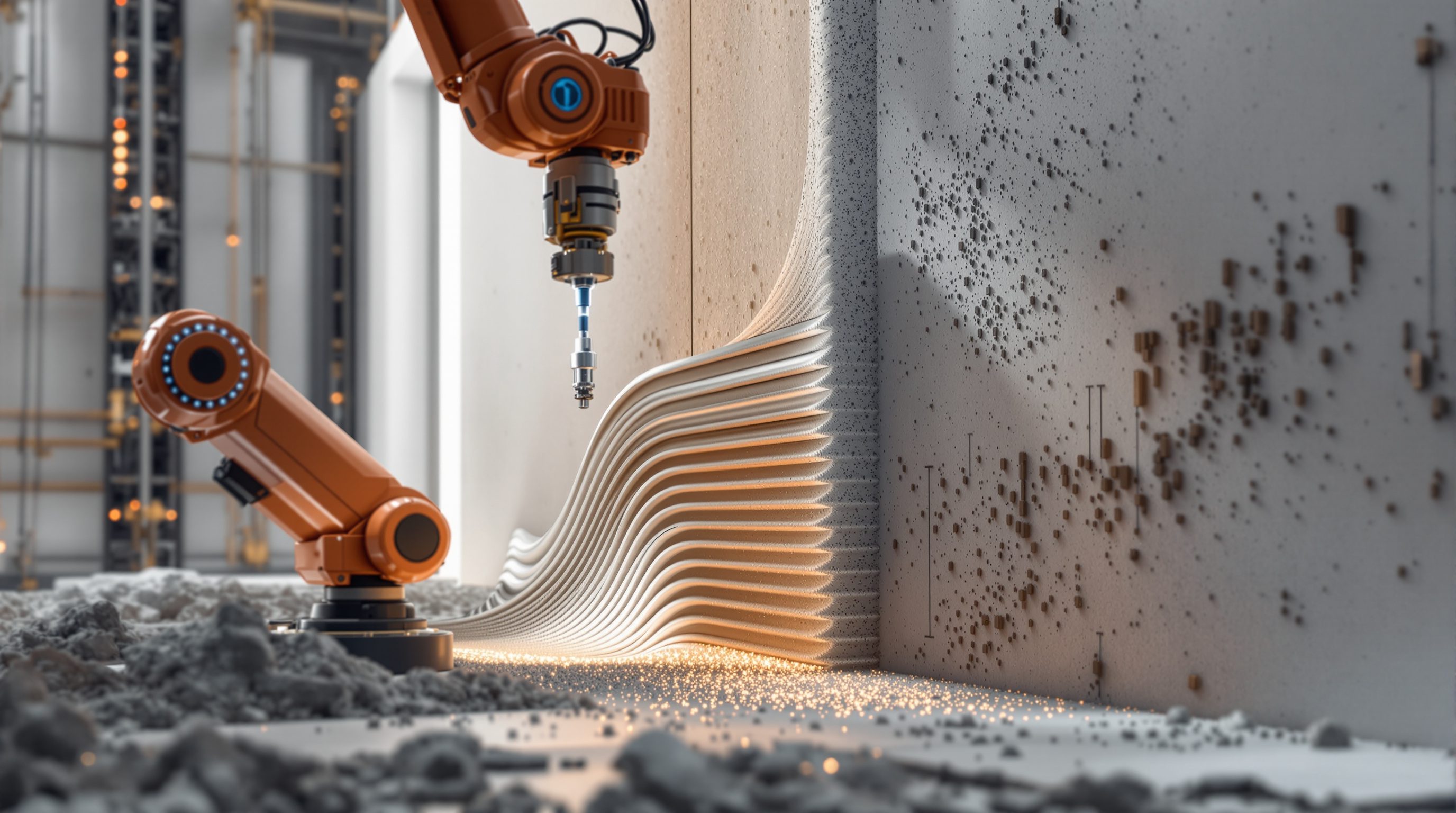 Module 0 · The Machine Builds
0.1 · When the Building Site Becomes a Factory Floor
Manufacturing automated a century ago; construction stayed manual. Robotic and 3D-printed construction aim to close that gap — machines that lay brick, print concrete walls and fabricate components. This lesson frames the two frontiers, why they matter, and why the reality is still early and hype-heavy.
Read itStart with Module 0 — The Machine Builds
Free · open0.1 · When the Building Site Becomes a Factory Floor
Open0.2 · Why Automate Construction?
Open0.3 · The Automation Landscape
Open0.4 · The Promise & the Hype
Open0.✓ · Mastery check: The Machine Builds
OpenWhat this course covers
The through-line- 1Construction Robotics Foundations. The core concepts: what a robot actually is, the leap from the factory to the construction site, the unstructured-site problem that makes construction so hard to automate, and autonomy, teleoperation and the human in the loop.
- 2Robots On and Off Site. The machines at work: on-site task robots (bricklaying, welding, rebar, drilling, finishing), off-site and prefab robotics, autonomous machines and site logistics, and drones, wearables and exoskeletons.
- 33D Printing Fundamentals. The additive idea: what additive manufacturing is, the leap from desktop to building scale, the print process from model to structure, and the machine types (gantry, robotic arm, mobile).
- 4Printing with Concrete. The dominant approach: 3D concrete printing, printable concrete and materials, the hard reinforcement problem, and printed formwork and hybrid methods.
The full course ahead
11 modules · 44 lessons11 modules and 44 lessons, from the foundations through to practice — each lesson with a three-tier read, a hands-on workshop, hand-drawn figures and a scored mastery check.
0Module 0 · The Machine Builds
LiveBefore any robot arm: when the building site becomes a factory floor; why we would automate construction at all; the automation landscape from robots to printers; and the promise separated honestly from the hype.
Module 0 · The Machine Builds
LiveBefore any robot arm: when the building site becomes a factory floor; why we would automate construction at all; the automation landscape from robots to printers; and the promise separated honestly from the hype.
1Module 1 · Construction Robotics Foundations
LiveThe core concepts: what a robot actually is, the leap from the factory to the construction site, the unstructured-site problem that makes construction so hard to automate, and autonomy, teleoperation and the human in the loop.
Module 1 · Construction Robotics Foundations
LiveThe core concepts: what a robot actually is, the leap from the factory to the construction site, the unstructured-site problem that makes construction so hard to automate, and autonomy, teleoperation and the human in the loop.
2Module 2 · Robots On and Off Site
LiveThe machines at work: on-site task robots (bricklaying, welding, rebar, drilling, finishing), off-site and prefab robotics, autonomous machines and site logistics, and drones, wearables and exoskeletons.
Module 2 · Robots On and Off Site
LiveThe machines at work: on-site task robots (bricklaying, welding, rebar, drilling, finishing), off-site and prefab robotics, autonomous machines and site logistics, and drones, wearables and exoskeletons.
3Module 3 · 3D Printing Fundamentals
LiveThe additive idea: what additive manufacturing is, the leap from desktop to building scale, the print process from model to structure, and the machine types (gantry, robotic arm, mobile).
Module 3 · 3D Printing Fundamentals
LiveThe additive idea: what additive manufacturing is, the leap from desktop to building scale, the print process from model to structure, and the machine types (gantry, robotic arm, mobile).
4Module 4 · Printing with Concrete
LiveThe dominant approach: 3D concrete printing, printable concrete and materials, the hard reinforcement problem, and printed formwork and hybrid methods.
Module 4 · Printing with Concrete
LiveThe dominant approach: 3D concrete printing, printable concrete and materials, the hard reinforcement problem, and printed formwork and hybrid methods.
5Module 5 · Other Printed Materials
LiveBeyond concrete: earth and clay printing, metal and polymer printing, bio-based and novel materials, and how to choose a print material for the job.
Module 5 · Other Printed Materials
LiveBeyond concrete: earth and clay printing, metal and polymer printing, bio-based and novel materials, and how to choose a print material for the job.
6Module 6 · Designing for Robots & Printing
LiveThe design shift: designing for robotic fabrication, the new freedom and the new constraints, computational and parametric workflows, and the digital-to-physical chain.
Module 6 · Designing for Robots & Printing
LiveThe design shift: designing for robotic fabrication, the new freedom and the new constraints, computational and parametric workflows, and the digital-to-physical chain.
7Module 7 · On the Site
LiveThe real-world reality: site setup and integration, quality, tolerance and monitoring, safety and human-robot collaboration, and logistics, power and the messy real site.
Module 7 · On the Site
LiveThe real-world reality: site setup and integration, quality, tolerance and monitoring, safety and human-robot collaboration, and logistics, power and the messy real site.
8Module 8 · Performance, Codes & Economics
LiveThe hard questions: structural performance and testing, codes, standards and approval, the honest cost and time case, and sustainability and carbon.
Module 8 · Performance, Codes & Economics
LiveThe hard questions: structural performance and testing, codes, standards and approval, the honest cost and time case, and sustainability and carbon.
9Module 9 · Reality, Limits & Honesty
LiveThe honest ledger: hype versus reality, where it genuinely works today, jobs, skills and the workforce, and when not to automate.
Module 9 · Reality, Limits & Honesty
LiveThe honest ledger: hype versus reality, where it genuinely works today, jobs, skills and the workforce, and when not to automate.
10Module 10 · Practice & the Future
LiveTurning fabrication literacy into practice: the designer's role, getting started and experimenting, robotic and printed construction in India, and becoming fabrication-literate.
Module 10 · Practice & the Future
LiveTurning fabrication literacy into practice: the designer's role, getting started and experimenting, robotic and printed construction in India, and becoming fabrication-literate.
The author
Amogh N P
Architect, interior designer, and creative polymath. Studio Matrx began in his notebooks — his vision of design made honest, useful, and open to everyone. Its Academy is written and taught in his memory, and free, forever.
More about Amogh →