
 Lesson 9.4
Lesson 9.4 · Reality, Limits & Honesty
When Not to Automate
The hardest and most valuable discernment of all - knowing when conventional construction is simply better, when automation is premature, a gimmick or uneconomic, and how to match the method to the real problem rather than to the hype
The most sophisticated thing you can say about a new building technology is not 'we can use it' - it is 'here, we shouldn't'.
This course has spent ten modules taking robotic and printed construction seriously - how the robots work, how the printers form matter, how to design for them, where they genuinely deliver. It would be a strange ending to conclude that the goal is to use them wherever possible. It is not. The goal is judgement, and judgement includes, above all, the discipline of the honest no.
There is a temptation, once you have learned a powerful new tool, to look for places to use it - to let the capability drive the decision. In construction that temptation is amplified by the hype this module opened with: the pull to do the innovative, photogenic thing, to print because printing is exciting, to automate because automation sounds like progress. This lesson is the corrective. For the great majority of ordinary projects being built today - especially in a labour-rich country like India - conventional construction is simply the better answer: cheaper, faster in practice, lower-risk, fully code-compliant, and drawing on an abundant skilled workforce. Knowing when to reach for automation is useful; knowing when to leave it on the shelf is the mark of real mastery. So we end not with a machine but with a question: what does this project actually need?
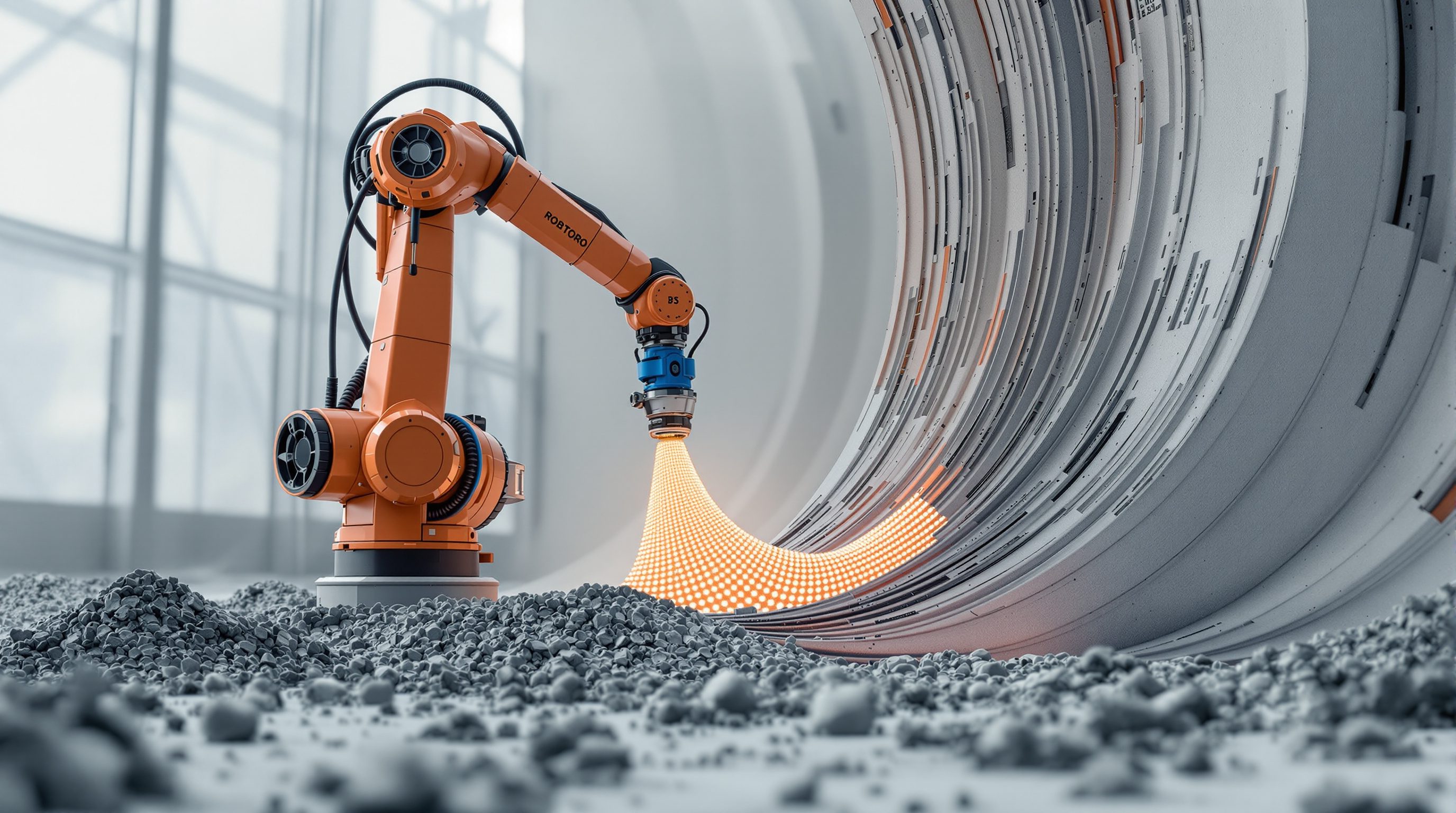
When NOT to automate. Conventional is the honest default. Three failures: premature, gimmick, uneconomic. Start from the problem, not the tool. Clear eyes.
Conventional construction is the right answer for most projects
Begin from the honest baseline, stated without apology: for most buildings going up in the world today, and a still larger majority in India, conventional construction is not a fallback or a failure of imagination - it is the correct choice. This is not a grudging admission to be hurried past; it is the central conclusion a clear-eyed look at the evidence produces, and a designer who cannot say it has not understood the field.
The reasons are concrete. Conventional construction is mature: its methods, materials, costs, timelines and failure modes are deeply understood, and a vast ecosystem of skilled trades, suppliers, and established practice supports it. It is fully code-compliant by default, with no approval uncertainty for a novel method. It is flexible - it handles the messy, variable, one-off reality of real sites, exactly where automation struggles. And in a labour-rich economy it is economically hard to beat: abundant, affordable, skilled labour means the central driver of construction automation elsewhere - replacing expensive, scarce workers - largely does not apply, while the trades deliver quality and adaptability that machines cannot yet match on an open site.
Against that, robotic and printed methods today carry real costs and risks that the hype omits: immature and still-maturing codes and approval; the unsolved reinforcement problem for printed structure; specialised equipment and expertise that may not be locally available; uncertain economics outside specific niches; and the simple fact that the technology does only part of the job, leaving the conventional majority to be done anyway. So the correct mental default - the position you start from and depart only with good reason - is conventional construction, with automation considered where a genuine case overrides that default. This inverts the hype's framing, which treats automation as the exciting future and conventional building as the tired past. The clear-eyed view is the reverse: conventional construction is the proven, sensible norm, and automation is a specialised tool to be reached for deliberately, in the specific situations that genuinely warrant it, not a destination every project should be steered toward.
Three ways automation goes wrong - premature, gimmick, uneconomic
If conventional construction is the default, it helps to name precisely how the departure from it goes wrong, because the failures are recognisable and recurring. Three patterns cover most bad automation decisions, and learning to spot them protects you and your clients from expensive mistakes dressed as innovation.
The first is premature automation - using the technology before it is ready for the job. This is automation applied where the unstructured site still defeats it, where the method lacks code approval for the intended use, where reinforcement or structural performance is not yet solved for the element in question, or where the process is still a prototype rather than proven. The result is cost overruns, delays, quality problems, approval battles, and sometimes genuine safety risk - all the predictable consequences of deploying a lower rung of the demo-to-production ladder as if it were the top. The honest test is the rung question from lesson 9.1: is this actually ready, approved, and proven for this use, or am I hoping it is?
The second is the gimmick - automation chosen for how it looks rather than what it does. This is the printed pavilion that a conventional method would have built better and cheaper, justified because 'it is 3D-printed' and therefore innovative. The tell is that the technology is the point rather than the solution: strip away the novelty and there is no real problem it solves that a conventional method would not solve as well or better. Innovation theatre is expensive, and a thoughtful designer distinguishes a genuine application from a photo opportunity dressed as one.
The third is uneconomic automation - the method may work technically but simply costs more, all-in, than the conventional alternative, with no offsetting benefit that justifies the premium. This is especially common in labour-rich contexts, where the labour savings that justify automation elsewhere are small or absent, and where specialised equipment, expertise and risk add cost rather than removing it. A full, honest accounting - including setup, equipment, expertise, risk, approval and the conventional work still required - frequently shows the automated route more expensive, not less, once the headline 'fraction of the cost' is examined. Recognising these three failure modes - premature, gimmick, uneconomic - turns the vague instinct 'this feels like a stretch' into a precise diagnosis you can explain and defend.
Three ways it goes wrong: PREMATURE (not ready/approved), GIMMICK (chosen to look innovative), UNECONOMIC (costs more all-in). Name the failure precisely.
A decision process - match the method to the problem
All of this resolves into a disciplined way of choosing, and it inverts the question the hype invites. The wrong question is 'can we use robots or printing here?' - the answer is often yes, and it leads nowhere useful. The right question is 'what does this project actually need, and what method best serves that need?' Start from the problem, not the tool.
A workable decision process runs roughly as follows, and it draws the whole module together. First, define the real need honestly - the project's actual goals, constraints, budget, timeline, context and site. Second, ask whether there is a genuine problem that automation solves better than conventional construction; if not, stop - it is a gimmick, and conventional construction is the answer. Third, if there is a real problem, test it against the conditions from lesson 9.2: is the environment structured or can it be made so, is the task repeated, is the technology's unique strength genuinely needed, is the conventional alternative weak? A low score points back to conventional methods. Fourth, test readiness honestly: is the method code-approvable for this use, is it proven rather than prototype, is the reinforcement and structural question solved for this element, is the expertise and equipment available? If not, it is premature - wait, or use conventional. Fifth, run the honest, all-in economics against the conventional alternative, including every hidden cost; if it does not hold, it is uneconomic. Only if a real problem survives all of these - a genuine need, a good fit, proven readiness, and sound economics - does automation genuinely earn its place. This is the decision tree this lesson leaves you with.
Notice what this process does. It makes conventional construction the honest default and forces automation to justify itself positively, which is the exact inversion of the hype. It gives you precise language - gimmick, premature, uneconomic, good fit - to explain a recommendation to a client or studio. And it keeps the binding questions where they belong: even when automation passes every screen, the structural design, reinforcement strategy, code compliance and safety remain decisions for qualified engineers, certified testing and the governing codes, never settled by the choice of method alone. The highest expression of the literacy this whole course has built is not enthusiasm for the machines; it is the calm, well-reasoned judgement to use them exactly where they genuinely serve, to refuse them everywhere else, and to be able to say clearly why in each case.
Clear eyes - the stance this whole course has built
This lesson closes the reality-check module, and with it the honest core of the course, so it is worth drawing the whole stance together, because it is the real thing you are meant to carry away - more durable than any fact about any particular printer or robot.
Robotic and 3D-printed construction are two genuine frontiers - robots that do building tasks, printers that form structure additively - trying to close construction's long automation gap. They are real, advancing, and already useful in identifiable niches: off-site prefab robotics above all, printed formwork and bespoke components, low-rise walls in specific markets, remote and disaster building, complex geometry. They are also early, limited in scale, heavily hyped, and nowhere near a general replacement for conventional construction, which remains the right answer for most projects today and more so in labour-rich India. The unstructured site is why construction resists automation; reinforcement is the central unsolved problem of printed structure; immature codes and honest economics constrain deployment; and the human question - a real shift in work, real new skills, a real and uneven cost weighing heavily on a huge workforce - deserves serious, humane thought.
The competent stance that ties it all together is what this module has been teaching by example: excited literacy without credulity. Take the technology seriously enough to understand how it really works and where it genuinely fits; refuse to be taken in by the headlines; know when conventional construction is simply better and have the discipline to say so; match the method to the real problem rather than the hype; treat the people the technology affects as owed real thought; and leave every binding result - the structural design and testing of any printed or robotically built element, the reinforcement strategy, code compliance and building approval, and machine and site safety - to qualified structural engineers, material specialists, the manufacturers' verified data, certified testing, and the governing codes (the National Building Code of India and local regulations). Any figure, strength, speed, tolerance or cost in this course is illustrative, never a specification. Hold that stance - clear eyes, real knowledge, honest judgement, and the humility to defer what must be deferred - and you are genuinely literate in one of construction's most important and most over-hyped frontiers, which is exactly what this course set out to make you.
Structural design, whichever method
Conventional, printed or robotic alike
Choosing a method never settles structural safety; design and certified testing against the governing codes belong to a qualified structural engineer regardless of how the element is made. Module 8.1.
Code approval for the chosen method
Especially for any novel method
If automation passes the decision process, its code-approvability for the specific use must still be confirmed with the NBC India, the local authority and the engineer before it proceeds. Module 8.2.
Honest all-in cost accounting
Testing the economic case
The economic screen requires a full accounting - equipment, expertise, risk, approval and the conventional work still needed - not a headline figure. Quantity surveyors and cost engineers own this; treat quoted costs as illustrative.
Reinforcement for any load-bearing print
Readiness of printed structure
The readiness screen must include reinforcement: a load-bearing printed element is not ready unless its reinforcement strategy is engineered and tested. The central unsolved problem, Module 4.3.
Workshop - write the honest recommendation
The capstone skill of this module is giving a client a clear, well-reasoned method recommendation that resists the hype. Here you take a project tempted toward automation and write the recommendation a clear-eyed professional would actually give - including, where honest, a well-argued no.
A project scenario (given or your own), this lesson's decision process, and a notebook. No equipment - this is the judgement the whole course has been building toward.
Goal: a clear, defensible method recommendation driven by the real problem
Inputs: a project scenario where a client is keen to use 3D printing or robotics (use the one below or your own) + this lesson's decision process + a notebook
Time: ~50 minutes
- 1Scenario - a client developing a boutique hotel in an Indian city has seen printed-building videos and wants the project 'to be 3D-printed' as a marketing and sustainability statement. Write down their stated wish and the project's real needs, budget, timeline and context.
- 2Run the decision process step by step: is there a real problem automation solves better than conventional construction here, or is the wish mainly about image? Score the fit conditions; test readiness (code approval, proven method, reinforcement, local expertise); and reason about the honest all-in economics.
- 3Diagnose honestly: if automation does not earn its place, name which failure mode applies (gimmick, premature, uneconomic) and why. If a genuine niche does fit - say, printed formwork for an expressive feature, or off-site prefab for repeated rooms - identify it specifically.
- 4Draft the recommendation: lead with the real need, state the recommended method (which may be mostly conventional with a targeted use of fabrication where it genuinely fits), and give the client precise, respectful reasons - not 'it won't work' but 'here is what the project actually needs and why this serves it best'.
- 5Add the deferral clause: name the binding structural, reinforcement, code and cost questions you would route to the engineer, the authority and the cost consultant before committing - flagged clearly as beyond the method recommendation itself.
You’ll walk away with
A one-page honest method recommendation for a hype-tempted project: the real need, the decision-process reasoning, an explicit diagnosis (gimmick/premature/uneconomic or genuine fit), a clear recommendation that matches method to problem, and the binding questions deferred to the experts - demonstrating the discipline of the well-reasoned no.
Three altitudes on the same idea
Read the band that fits you — or all three.
Your most valuable contribution on this subject may be a well-reasoned no. When a client arrives enchanted by a printed-building video, your job is not to dampen enthusiasm but to steer it with judgement: define the real need, test it against fit and readiness and honest all-in economics, and recommend the method that genuinely serves the project - which for most ordinary buildings, especially in India, will be conventional construction. Be able to name precisely why a proposed use is a gimmick, premature or uneconomic, and equally able to champion automation where it genuinely fits. Keep the binding structural, reinforcement, code and safety judgements with the qualified engineers and the governing codes, whichever method you choose. Matching method to problem is the whole skill.
In interiors the question is usually smaller but the discipline is identical: does robotic fabrication genuinely serve this piece, or is it being chosen because it sounds innovative? Reach for printing or robotic fabrication where its geometric freedom or precision genuinely solves a problem - a complex bespoke component a conventional shop cannot make or cannot make affordably - and choose conventional making where a skilled fabricator would do it better, cheaper or faster. Run the honest cost and readiness check; avoid the gimmick of fabricating something digitally just to claim novelty. Match the method to the piece, value the craftspeople you work with, and coordinate any structural, fire or safety-critical element with the relevant specialists.
End the course on this, because it is the real mark of mastery: not enthusiasm for the machines, but the judgement to use them only where they genuinely serve. Anyone can be dazzled by a printed house; a literate professional can explain exactly when conventional construction is the better answer and why - premature, gimmick, uneconomic, or simply a poor fit. Internalise the decision process: start from the real problem, not the tool; test fit, readiness and honest economics; default to conventional and make automation justify itself. Carry the whole course's stance - excited literacy without credulity, humane awareness of the people affected, and the humility to defer the binding engineering. That calm, well-reasoned judgement is what sets you apart, far more than repeating a headline.
“Now that robotic and 3D-printed construction exist and are advancing, the forward-thinking, innovative choice is to use them wherever you can - sticking with conventional construction is just resistance to progress.”
Do it yourself
No tools needed - reason it through.
- 1Explain why conventional construction is the correct default for most projects today, especially in India, and why that is a clear-eyed conclusion rather than a failure of imagination.
- 2Name and define the three ways automation goes wrong - premature, gimmick, uneconomic - and give a recognisable tell for each.
- 3State the right question to ask when choosing a method, and explain why it inverts the question the hype invites.
- 4Walk through the decision process from real need to final choice, naming what makes automation genuinely earn its place.
- 5Summarise the whole course's stance - excited literacy without credulity - and say what must always be deferred to engineers and the codes regardless of method.
The one line to carry out
Peer-reviewed journals & authoritative standards
- 01Automation — Wikipedia - Automation, 2026.
- 02Construction management — Wikipedia - Construction management, 2026.
- 03Construction — Wikipedia - Construction, 2026.
- 04Affordable housing — Wikipedia - Affordable housing, 2026.
This closes Module 9, the honest core of the course. The final module turns from judgement to practice: the designer's real role, how to get started, the Indian context in depth, and becoming genuinely fabrication-literate for the years ahead.
The author
Amogh N P
Architect, interior designer, and creative polymath. Studio Matrx began in his notebooks — his vision of design made honest, useful, and open to everyone. Its Academy is written and taught in his memory, and free, forever.
More about Amogh →