
WPC door maintenance: clean, lubricate & fix (India 2026)
WPC and PVC doors are waterproof and termite-proof, but smart cleaning, lubrication and edge checks keep them looking new for years.
WPC door maintenance is refreshingly simple compared with solid timber, which is exactly why these doors have taken over Indian bathrooms, balconies, utility areas and washrooms. Wood-Plastic Composite (and its close cousin, the moulded PVC door) is waterproof, termite-proof and borer-proof by design, so you will never sand off rot or treat for borers the way you would with a teak leaf. But "low maintenance" is not "no maintenance". The plastic-and-wood-flour core holds screws differently from solid wood, the decorative laminate or foil skin can peel at the edges if water gets behind it, and the hinges still need the same love any door demands. This guide gives you a clear cadence checklist, the right cleaning agents, and honest fixes for the two faults WPC owners actually face: a sagging leaf and minor surface damage. For the bigger picture on the material itself, see our WPC doors guide.
Why WPC and PVC doors still need care
The selling point of WPC is that the core does not absorb water or feed termites, so the structural threats that destroy wooden doors simply do not apply. What can still go wrong is at the surface and the fittings:
- The decorative skin (laminate, PU paint, or a thin PVC foil) is bonded to the core. If the bond fails at an edge, usually a wet bottom rail in a bathroom, it can lift and peel.
- Screws sit in a softer, denser-foam core than oak or teak. Over-tightening or repeated slamming can wallow the hole, so hinges and handles work loose over time.
- Hinges, locks and tower bolts are ordinary metal hardware and rust, stick and squeak just like on any door, especially in humid coastal cities.
- Heat is the one genuine enemy: a WPC leaf left to bow in direct afternoon sun, or scrubbed with boiling water, can distort because the plastic content softens.
So your job is gentle cleaning, keeping hardware moving, protecting the edges, and never letting screws stay loose. For wooden doors the routine is very different; compare with our wooden door maintenance guide.
Cleaning a WPC or PVC door the right way
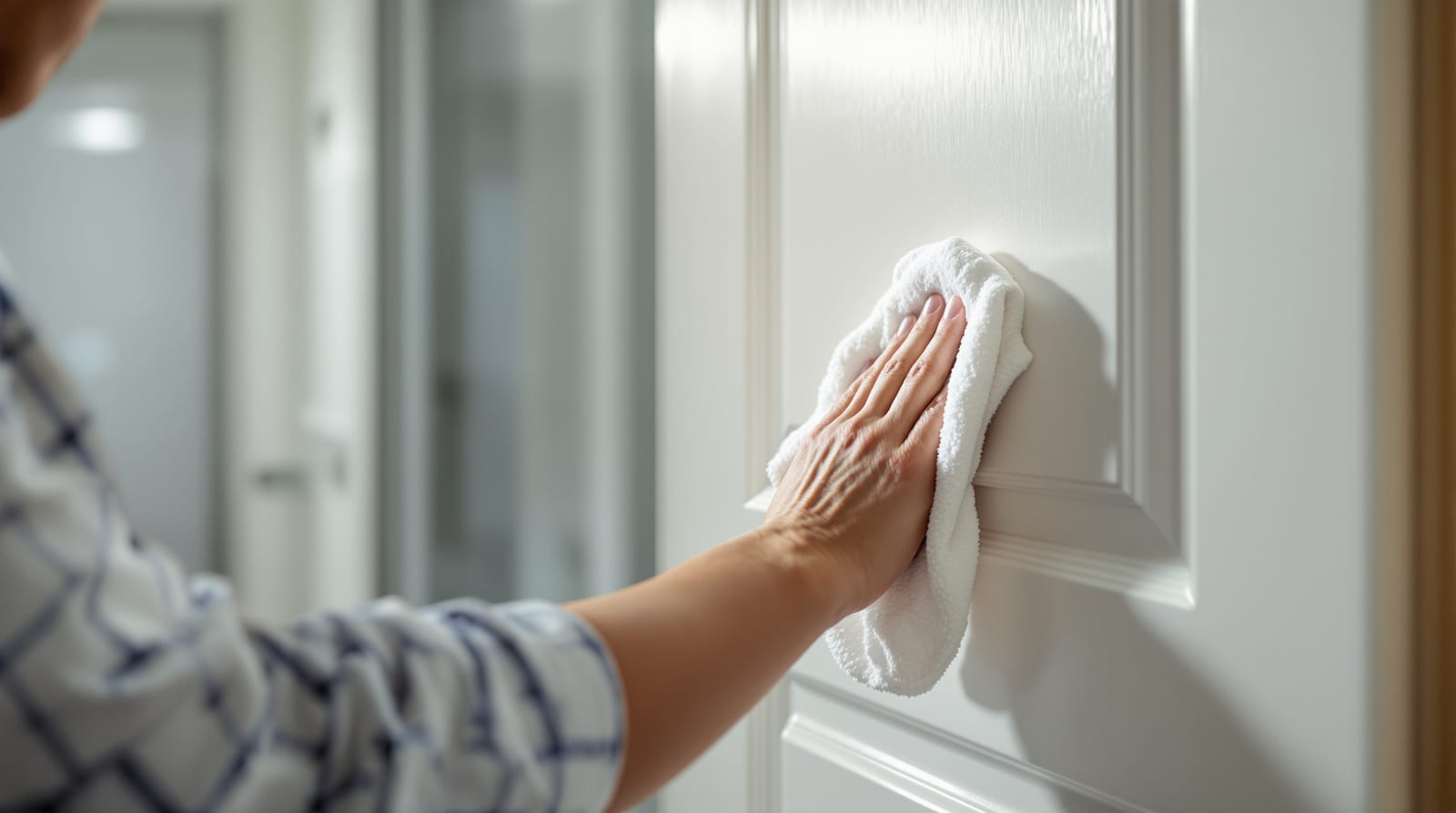
This is the heart of WPC door maintenance, and it takes two minutes. The surface is non-porous, so dirt sits on top rather than soaking in.
Do:
- Wipe with a soft cloth or sponge dampened in plain water, or water with a few drops of mild dishwashing liquid or a pH-neutral floor cleaner.
- Dry with a clean dry cloth afterwards so no water pools along the bottom rail.
- For grease near the kitchen or hand marks near the handle, a little diluted soap solution lifts it easily.
Don't:
- No abrasive scrubbers (steel wool, green scotch-brite, scouring powder) — they scratch and dull the foil/laminate permanently.
- No strong solvents — acetone, thinner, nail-polish remover and harsh acids can soften or stain the skin. Avoid bleach on coloured foils.
- No boiling water or steam directly on the surface, and no parking the door in long, hot direct sun.
Cleaning agents at a glance
| Surface issue | Safe to use | Avoid |
|---|---|---|
| Everyday dust | Dry/damp soft cloth | — |
| Hand marks, light grime | Mild dish soap + water | Scouring powder |
| Kitchen grease | Diluted neutral degreaser | Thinner, acetone |
| Hard-water spots (bathroom) | Damp cloth, dry immediately | Strong acid descalers |
| Sticker/tape residue | Dab of mild soap, gentle rub | Steel wool, blade scraping |
WPC door maintenance checklist and cadence
WPC rewards a light touch on a regular rhythm. Here is the schedule that keeps a leaf looking new for a decade.
| Task | Cadence | Why it matters |
|---|---|---|
| Wipe down surface | Weekly (bathroom) / monthly (bedroom) | Stops grime build-up, spots water-pooling early |
| Lubricate hinges, lock, tower bolt | Every 3-6 months | Prevents squeak, rust, stiff latching |
| Check & re-tighten all screws | Every 6 months | WPC core works screws loose; catches sag early |
| Inspect laminate/foil edges | Every 6 months | Catch peeling before it spreads |
| Check bottom rail for trapped water | Monthly (wet areas) | Bottom edge is the one vulnerable spot |
| Touch up scratches/chips | As needed | Keeps moisture out of the core at a breach |
| Confirm leaf swings true (no sag/rub) | Every 6 months | Loose hinges are the No. 1 WPC complaint |
A monthly two-minute wipe plus a twice-a-year ten-minute hardware check is genuinely all most WPC doors need. You can build a personalised reminder schedule for every door in the house with our home door maintenance planner.
Lubricating hinges and locks
Difficulty: easy. Time: 5 minutes per door. Squeaks and a stiff latch are friction, not failure.
1. Open the door to a comfortable working angle and steady it.
2. Hinges: apply a couple of drops of light machine oil, or a quick puff of silicone/PTFE spray, to the top of each hinge pin. Avoid heavy oils that attract dust.
3. Swing the door several times to work the lubricant into the knuckle, then wipe drips off the WPC face immediately (oil can stain a light foil if left).
4. Lock and latch: a tiny amount of graphite powder or silicone spray into the keyway and on the latch bolt. Skip thick grease in the keyway; it gums up pins.
5. Tower bolt / aldrop: a drop of oil on the sliding rod.
For the dedicated walkthrough see lubricate door hinges, and if a hinge has already rusted in a damp bathroom, follow rusted door hinges fix.
Re-securing loose screws (WPC holds screws differently)
This is the WPC-specific skill. The core is firmer than chipboard but softer than seasoned hardwood, so a screw hole can wallow out with vibration and slamming.
Tools & materials you'll need
- Screwdriver (matching the screw head) or a drill on low torque
- Replacement screws, slightly longer and/or fatter than the originals
- Matchsticks/toothpicks + wood glue, or two-part epoxy, or WPC-friendly filler
- A few wooden plugs (optional, for badly wallowed holes)
Steps
1. Tighten gently first. If the screw still bites, you are done; do not over-torque, which strips the soft core.
2. If it spins free, back the screw out fully.
3. Pack the hole: push glue-coated matchsticks/toothpicks (or a wooden plug) into the hole, or fill with two-part epoxy. Let it set.
4. Re-drill a small pilot and drive a longer, slightly thicker screw so it grips fresh material.
5. For hinge leaves that keep loosening, move to a machine bolt-through fixing if the frame allows.
Use a self-tapping screw sized for WPC; the soft core grips better when the screw is a touch longer than the original. The full method, common to all loose hinges, is in fix loose door hinges, and for a hole that simply won't hold see stripped hinge screw fix.
Fixing a sagging WPC door
Difficulty: easy-to-moderate. Time: 15-30 minutes. A WPC leaf rarely warps on its own; when it droops and rubs the frame, the cause is almost always hinge screws losing grip in the soft core, not the door bending.
1. Find the slack hinge. Have someone lift the handle edge slightly; the hinge whose screws move is the culprit, usually the top one.
2. Re-secure those screws using the packing method above (matchsticks/epoxy + longer screws). This alone fixes most sags.
3. If the frame side is loose, drive a longer screw through the frame into the wall plug behind.
4. Re-check the swing. The leaf should now clear the frame and floor evenly.
When to stop and call a carpenter: if the hinge mortise itself is damaged, the frame is loose in the masonry, or the leaf has genuinely bowed from sustained heat (rare), don't keep packing screws into failing material. A carpenter visit is ₹400-800 for a simple half-day; a new WPC leaf is ₹3,000-6,000-plus. Our general fix sagging door guide covers the timber cases too. Not sure which way to go? Try the repair vs replace door calculator.
Fixing minor surface damage and peeling edges
Scratches & light scuffs: clean the area, then use a matching touch-up marker or wax stick, feathering it in. Deep gouges can be filled with a colour-matched WPC/PVC filler, smoothed flush, then over-painted with PU paint where the door is paintable. See scratched door repair.
Chips that expose the core: seal them. Even though the core is waterproof, an open chip is unsightly and collects grime; fill, sand lightly with fine paper, and touch up the colour. The method overlaps with fill door holes & dents.
Peeling laminate or foil edge (the classic WPC bathroom fault, usually at the wet bottom rail):
1. Lift the loose flap gently; clean dust from underneath.
2. Apply a thin line of contact/PVC adhesive to both surfaces.
3. Press down firmly, wipe away squeeze-out, and weight or tape it until cured.
4. Wipe a thin bead of clear silicone along the bottom edge afterwards to keep water out. Full detail in door laminate peeling fix.
| Symptom | Likely cause | Your fix | Difficulty |
|---|---|---|---|
| Door rubs frame at one corner | Loose hinge screws in soft core | Pack + longer screws | Easy |
| Squeak / stiff latch | Dry hinge / lock | Lubricate | Easy |
| Foil lifting at bottom rail | Water behind skin | Re-glue + seal edge | Moderate |
| Dull, scratched face | Abrasive cleaning | Touch-up wax/marker | Easy |
| Faint bow in the leaf | Sustained direct heat | Reposition; replace if severe | Pro |
How WPC care compares
WPC sits between fully waterproof uPVC and high-maintenance timber. You skip polishing, termite treatment and rot repair entirely, but you watch the edges and the screws. Compare the upkeep routines in uPVC door maintenance and steel door maintenance if your home mixes materials. For a master overview of every door type, start at our complete door guide, and for fault-finding across all doors see the door troubleshooting pillar.
Frequently asked questions
Can I use phenyl or strong floor cleaner on a WPC door?
A few drops of mild, pH-neutral floor cleaner in water is fine. Avoid concentrated phenyl, acids and bleach on coloured foils, and never use abrasive scouring powder, which permanently dulls the surface. Plain soapy water handles almost everything.
Why do my WPC door hinges keep coming loose?
The WPC core is softer than seasoned hardwood, so screw holes wallow out with slamming and vibration. Pack the hole with glue-coated matchsticks or epoxy and drive a slightly longer, fatter screw. A self-tapping screw sized for WPC grips the foam core far better.
My bathroom WPC door's bottom edge foil is peeling. Is the door ruined?
No. The core underneath is waterproof, so the door is sound. Clean under the flap, re-glue with PVC/contact adhesive, weight it until cured, and run a thin silicone bead along the bottom to stop water getting behind it again.
Do WPC doors really never need termite treatment?
Correct. WPC and PVC doors have no cellulose food for termites or borers, so they are inherently termite-proof and do not need the chemical treatment a teak or flush door does. Your maintenance is purely surface and hardware.
Can a sagging WPC door be saved or must I replace it?
Almost always saved. A WPC sag is nearly always loose hinge screws, not a bent leaf, so re-securing the screws with longer fixings fixes it. Replace only if the frame is failing in the masonry or the leaf has genuinely bowed from heat, which is rare.
Will direct sunlight damage my WPC door?
Prolonged, intense afternoon sun can soften the plastic content and, in extreme cases, cause a faint bow, plus colour fade on dark foils over years. For an exterior or balcony WPC door, choose UV-stabilised grades and shade it where you can; interior bathroom doors are unaffected.
Export this guide
Related Guides — Deep-dive reading
Door Maintenance Guide India: A Seasonal Care Routine to Keep Doors Smooth for Decades
Oil the hinges, tighten the screws, lube the lock, check the seals and re-coat the finish — a simple seasonal calendar that stops Indian doors from binding in the monsoon, sagging, tarnishing on the coast or falling to termites.
Home Doors & EntrancesDoor Repair Guide India: Fix Holes, Dents, Swelling, Hinges & Locks (2026)
A fix-it reference for Indian homes: every common door problem with a quick fix, a proper repair, a replace verdict, the materials needed, and indicative rupee costs.
Home Doors & EntrancesDoor Lock Repair: Fix Stiff & Sticky Locks (India 2026)
A stiff, sticky or hard-to-turn lock is usually a clean, lubricate and realign job, not a replacement. Here is the full DIY fix-it guide.
Home Doors & EntrancesRelated Tools — Try Free
Door Material Comparison Tool
Compare 2–4 door materials on cost, durability, maintenance, security and moisture resistance.
Comparison ToolBathroom Door Material Selector
Get the best wet-area door material — WPC, FRP, PVC, marine ply or aluminium — ranked for your bathroom or utility.
Material SelectorWindow Hardware Cost Calculator
Estimate window hardware cost — hinges, handles, locks, rollers and multipoint gears.
Window Calculator