
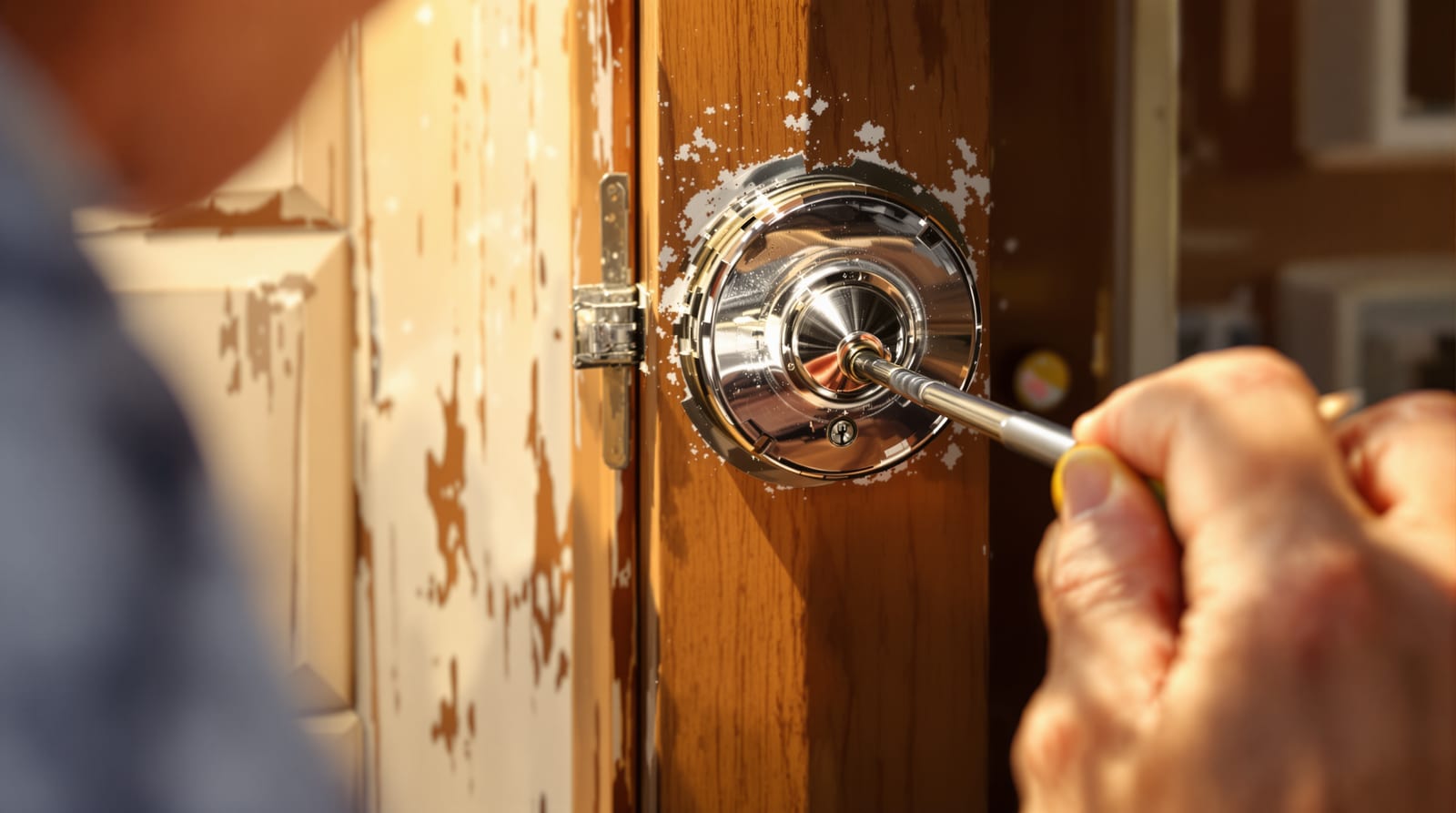
Door Lock Repair: Fix Stiff & Sticky Locks (India 2026)
A stiff, sticky or hard-to-turn lock is usually a clean, lubricate and realign job, not a replacement. Here is the full DIY fix-it guide.
When a key fights you every morning, jiggles before it turns, or the deadbolt drags as it slides home, you do not usually need a new lock. Most of the time a door lock repair is a fifteen-minute job of cleaning, lubricating and realigning, parts that cost less than a hundred rupees. Indian homes are hard on locks: monsoon humidity rusts the internals, fine dust packs the keyway, hard-water splashes near bathroom and main doors leave deposits, and a door that has dropped on its hinges pulls the bolt out of line with the frame. Fix the cause and the lock turns sweetly again.
This guide is about reviving a lock you want to keep. If the mechanism is broken beyond cleaning, see the sibling door lock replacement; if your key or thumb-turn is jammed solid and will not move at all, start with fix a stuck door lock. For the bigger picture, see the complete door guide and the door troubleshooting pillar.
First, diagnose what is actually wrong
Door lock repair is easy once you know which part is misbehaving. A lock has three jobs that can each fail separately: the cylinder (where the key goes and turns), the latch or bolt (the metal tongue that slides), and the alignment between bolt and frame strike plate. Work out which one before you touch anything.
| Symptom | Likely cause | The fix |
|---|---|---|
| Key is stiff, gritty or hard to turn | Dirty/dry cylinder, dust in keyway | Clean and lubricate the cylinder |
| Key turns but the bolt does not throw | Worn mortise mechanism, snapped cam, debris | Free the mortise; if internal part broken, replace |
| Bolt throws in the air but not into the frame | Misaligned latch / strike plate | Realign strike plate or fix the sagging door |
| Cylinder wobbles or spins loosely | Loose retaining/grub screw | Tighten the cylinder fix screw |
| Lock seizes only in monsoon | Humidity rust + swollen door | Lubricate + treat door swelling |
| Whole lock body rattles in the door | Loose lock-body screws | Tighten the body screws |
A quick test
With the door open, throw the bolt with the key. If it slides smoothly into thin air, your mechanism is fine and the problem is alignment with the frame. If the key is stiff even with the door open, the problem is inside the cylinder or mortise. This one test saves you from lubricating a lock that never needed it.
Tools & materials you'll need
- A screwdriver set (Phillips and flat; most Indian locks use Phillips)
- Powdered graphite or a dedicated PTFE/dry lock lubricant (NOT oil or grease, see below)
- A can of compressed air, or a bicycle pump, to blow out the keyway
- A soft cloth, an old toothbrush and a thin pick or paperclip
- A pencil (graphite from the lead is a genuine emergency lubricant)
- Fine sandpaper or a file, and a marker pen (for realignment work)
- Optional: silicone spray for latch springs, masking tape
The golden rule: graphite, not oil
This is the single most important thing to get right. Never put cooking oil, machine oil, WD-40 or grease into a key cylinder. Oils feel helpful for a day, then they go sticky, attract dust, and turn the keyway into a gummy paste that jams the pins far worse than before. Indian dust makes this happen fast.
Use powdered graphite (sold in a small puffer tube at any hardware shop for ₹40-150) or a proper dry PTFE lock lubricant. Graphite is a dry slip that the dust cannot stick to. In a pinch, rub a soft pencil over the key, work it in and out, and repeat, the graphite in the pencil lead does the job. Keep oil for hinges only, see lubricate door hinges and fix a squeaky door.
Fix 1: Clean and lubricate a stiff cylinder (easy, 15 min)
This cures the most common complaint, a key that is stiff, gritty or needs jiggling.
1. Blow out the keyway. Aim compressed air (or a pump nozzle) into the keyhole to clear dust and grit. Do this first, lubricating dirt only makes mud.
2. Puff in graphite. Insert the nozzle of the graphite tube into the keyhole and give two short puffs. Do not overdo it, a little goes a long way.
3. Work the key. Slide the key fully in and out ten or twelve times, then turn it gently both ways. This carries the graphite onto the pins.
4. Wipe and repeat. Pull the key out, wipe off black residue, and add one more small puff if it still feels stiff.
5. Test smooth. The key should now turn with light finger pressure. If it is still gritty, the cylinder may be rusted internally, treat the humidity cause and consider replacement.
Difficulty easy, time 15 minutes, cost ₹40-150 for graphite. This same routine belongs in your seasonal upkeep, see the door maintenance guide.
Fix 2: Realign a latch or deadbolt that misses the frame (moderate, 30 min)
If the bolt throws fine in the air but drags or refuses to enter the frame, the bolt and the strike-plate hole no longer line up, usually because the door has dropped on its hinges or the strike plate has shifted.
1. Find the misalignment. Smear a little lipstick, marker or chalk on the end of the bolt, close the door, and throw the bolt. The mark on the strike plate shows exactly where the bolt is hitting, high, low or to one side.
2. Small miss, file the strike. If the bolt hits the edge of the strike hole by a millimetre or two, file the strike-plate opening slightly larger with a small file. Quick and effective.
3. Bigger miss, move the strike plate. Unscrew the strike plate and reposition it up, down or sideways to meet the bolt; fill old screw holes with matchsticks and glue first so the screws hold. See stripped hinge screw fix for the matchstick trick.
4. If the door has sagged, the real fix is the hinges, not the strike. Lift the door by tightening or packing the top hinge; read fix a sagging door.
For the full alignment method see the sibling door strike plate alignment. Difficulty moderate, time 30 minutes, cost ₹0-50.
Fix 3: Tighten a loose or wobbling cylinder (easy, 10 min)
If the cylinder spins, wobbles, or pulls out slightly, a retaining screw has worked loose, common with daily use and door slamming.
1. Find the grub/fix screw. On most mortise locks it sits on the edge (forend) of the door beside the bolt; on cylindrical locks it is under the rose or behind the handle plate.
2. Tighten it gently. Snug it up, but do not over-torque, an over-tight grub screw can bind the cylinder so the key will not turn. Tighten until the wobble stops, then test the key.
3. Tighten the body screws too. If the whole lock plate rattles, tighten the two screws holding the lock body or the rose plate.
Difficulty easy, time 10 minutes, cost ₹0.
Fix 4: Free a sticky mortise mechanism (moderate, 45 min)
When the key turns but the bolt is sluggish or will not throw fully, the mortise body inside the door is gummed with old grease, dust or light rust.
1. Remove the lock body. Unscrew the two forend screws on the door edge and the rose/handle screws, then slide the mortise body out of its pocket. Keep the parts in order.
2. Clean it. Brush off dust and old sticky grease with an old toothbrush; for rust, wipe with a rag dampened with a little kerosene or rust-cutter, then dry fully.
3. Dry-lubricate moving parts. Apply graphite or a thin dry PTFE film to the bolt slides and springs. Avoid thick grease that will re-gum.
4. Work and refit. Operate the bolt and cam by hand until it moves freely, then refit the body and screw it back. Test before closing the door.
Difficulty moderate, time 45 minutes. If a spring is snapped or the cam is cracked, the body needs replacing, see below and door lock replacement.
Where the wear happens
Repair or replace? The honest verdict
Not every lock is worth saving. Use this to decide.
| Situation | Verdict | Why |
|---|---|---|
| Stiff/sticky key, lock otherwise sound | Repair | Clean + graphite fixes it for under ₹150 |
| Bolt misses the frame | Repair | Realignment, no new lock needed |
| Loose or wobbly cylinder | Repair | Tighten the grub screw |
| Internal spring/cam snapped | Replace body | Worn-out part cannot be cleaned back to life |
| Cylinder badly rusted inside | Replace cylinder | Rust pits the pins; cleaning is temporary |
| Lock is old and key security is a worry | Replace | Upgrade to a better cylinder or smart lock |
| Keys lost / break-in concern | Replace/rekey | Repair does not restore security |
If the answer is replace, the door lock replacement sibling walks you through choosing and fitting a new one; for upgrades see smart door locks and the door hardware guide. Still unsure? Run the repair vs replace door calculator or get a figure from the door repair cost estimator.
What it costs in India (2026)
| Job | DIY cost | If a locksmith/carpenter does it |
|---|---|---|
| Clean + graphite a cylinder | ₹40-150 (graphite) | Part of a ₹400-800 visit |
| Realign strike plate | ₹0-50 | ₹400-800 visit |
| Tighten loose cylinder | ₹0 | ₹400-800 visit |
| Free a sticky mortise | ₹0-100 (cleaner) | ₹500-900 |
| New pin/cylinder lock | ₹300-1,500 part | + ₹400-800 labour |
| New mortise lock body | ₹800-4,000 part | + half-day ₹800-1,500 |
GST of 18% applies on the goods. As the table shows, a genuine repair almost always costs less than ₹200, which is why cleaning and lubricating should be your first move before you ever buy a replacement.
When to stop and call a pro
- A smart, electronic or sensor lock is misbehaving: isolate the power or remove the batteries first, then call the installer, do not DIY-open electronic internals.
- A glass-door lock or patch fitting is faulty, toughened glass is unforgiving; call a specialist.
- The key has snapped off in the lock, see broken key in lock rather than forcing it.
- Keys are lost or you suspect tampering, a locksmith should rekey or replace for security.
- The mortise body is seized solid despite cleaning, the internal parts have failed and need replacing.
Frequently asked questions
Why is my key suddenly stiff to turn?
Dust and grit have packed the keyway, or the cylinder has dried out and started to rust in the humidity. Blow out the keyhole with air, puff in powdered graphite, and work the key in and out. Nine times out of ten it turns smoothly again, no replacement required.
Can I use oil or WD-40 in a door lock?
No. Oils and sprays feel helpful for a day then turn sticky, attract dust and gum up the pins far worse. Use dry powdered graphite or a PTFE lock lubricant instead. Save the oil for hinges, never the key cylinder.
My key turns but the bolt won't slide out, what's wrong?
Either the mortise mechanism inside the door is gummed or rusted, or an internal part (a spring or cam) has broken. Remove the lock body, clean and dry-lubricate it. If the bolt still will not throw, the mechanism is worn out and the body should be replaced.
The deadbolt won't go into the frame, but it works with the door open. Why?
That is an alignment problem, not a lock fault. The door has usually dropped on its hinges so the bolt no longer lines up with the strike-plate hole. Mark the bolt to find the offset, then file or move the strike plate, or lift the sagging door at the hinge.
How often should I lubricate my door locks?
In most Indian homes, once or twice a year is plenty, ideally just before and after the monsoon, when humidity and rust do the most damage. Add it to your seasonal door check-up alongside hinges and weatherstripping.
Is it worth repairing an old lock or should I just replace it?
If the lock turns and just needs cleaning, realigning or tightening, repair it, it costs under ₹200. Replace only when an internal part has snapped, the cylinder is badly rusted, or you need better security after lost keys or a break-in scare.
Export this guide
Related Guides — Deep-dive reading
Door Repair Guide India: Fix Holes, Dents, Swelling, Hinges & Locks (2026)
A fix-it reference for Indian homes: every common door problem with a quick fix, a proper repair, a replace verdict, the materials needed, and indicative rupee costs.
Home Doors & EntrancesDoor Troubleshooting Guide: Fix Any Door Fault (India 2026)
Symptom to cause to fix for every common door problem in Indian homes, with difficulty, time, cost and when to call a carpenter.
Home Doors & EntrancesDoor Not Closing Properly? Fix It Step-by-Step (India 2026)
A clear decision tree for a door that won't shut — latch, hinge-bind, swelling, sag, warp or a moved frame — with DIY fixes and ₹ costs.
Home Doors & EntrancesRelated Tools — Try Free
Door Lock Selector
Answer a few questions and get the right lock type — mortise, multipoint, deadbolt, privacy or smart — for any door.
Door ToolDoor Security Rating Calculator
Score your main door out of 100 across leaf, frame, lock and hardware — and see the top upgrades.
Security ToolWindow Hardware Cost Calculator
Estimate window hardware cost — hinges, handles, locks, rollers and multipoint gears.
Window Calculator