
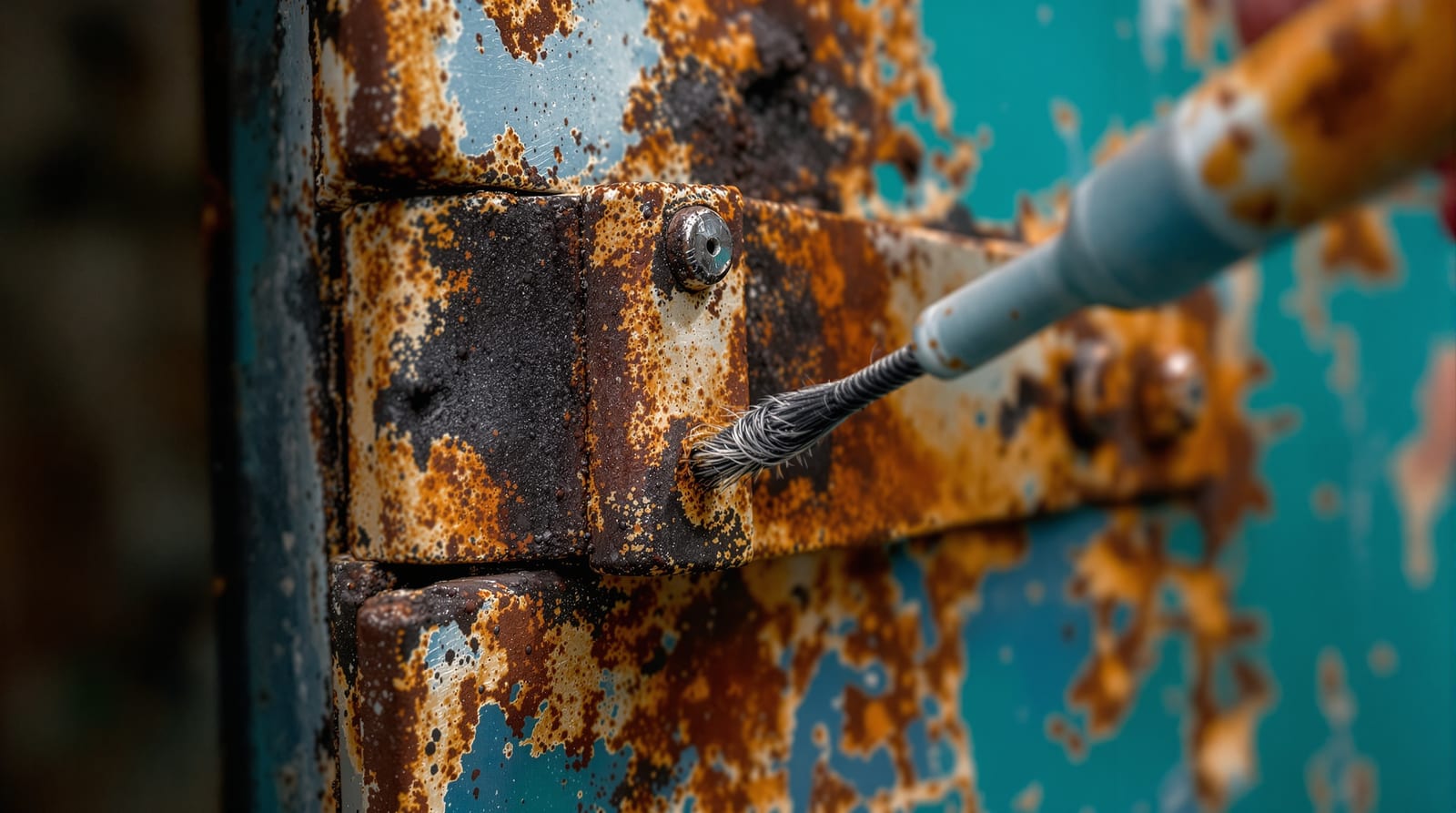
Rusted Door Hinges Fix: Clean, Prevent & Replace (India 2026)
A homeowner's step-by-step guide to cleaning light rust off door hinges, knowing when to replace them, and stopping rust coming back in humid, coastal India.
If your door squeaks, leaves orange streaks on the frame, or feels stiff to swing, a rusted door hinges fix is usually the first thing to try. Rust is the number-one hinge killer in India, especially along the coast and through the monsoon, where damp air, salt and sweat attack ordinary mild-steel and iron hinges. The good news: light surface rust is an easy, cheap DIY job you can finish in an afternoon. The honest part: badly pitted or seized hinges are safer replaced than nursed. This guide walks you through cleaning rust, repainting, deciding when to swap the hinge, and — most importantly — stopping rust coming back for good.
Difficulty: easy to moderate. Time: 30-60 minutes per hinge for a clean-up; 20-40 minutes to replace one. Cost: DIY clean-up under ₹200 in consumables; a carpenter visit ₹400-800; new hinges ₹150-700 each.
Why door hinges rust so fast in India
Most builders fit cheap mild-steel (MS) or iron pin hinges to keep costs down. These have a thin electroplated coat that wears off at the knuckle and screw heads within a year or two. Once bare metal meets moisture, rust spreads — and India gives it plenty of help:
- Coastal salt air (Mumbai, Chennai, Kochi, Goa, Vizag) corrodes plated steel within months.
- Monsoon humidity keeps hinges permanently damp from June to September.
- Bathroom and kitchen doors sit in steam all day.
- Sweaty hands on knuckles and constant friction strip the coating at the pivot.
That is why the real fix is two-part: clean what you have, then prevent recurrence by upgrading the metal and sealing it.
Spot the problem early
| Symptom | Likely cause | Fix |
|---|---|---|
| Squeak or groan on opening | Dry, lightly rusted pivot | Clean and oil the knuckle |
| Orange streaks below hinge | Active surface rust washing down | Clean, treat, repaint |
| Stiff, jerky swing | Rust seizing the pin | Free the pin, clean, lubricate |
| Flaky, crumbly metal | Deep pitting / structural rust | Replace the hinge |
| Screw heads rusted, won't turn | Corroded fasteners | Replace screws (and likely hinge) |
| Door sagging at top hinge | Rust-weakened leaf or loose screws | Inspect; replace if pitted |
Tools & materials you'll need
- Phillips and flat screwdriver (a hand impact driver helps with stuck screws)
- A thin nail or punch and a small hammer (to tap out hinge pins)
- Wire brush or an old toothbrush; medium and fine sandpaper (120 and 220 grit)
- White vinegar OR a proprietary rust remover (e.g. a phosphoric-acid rust converter)
- Penetrating oil (the WD-40 type) to free seized pins
- Silicone spray, graphite, or light machine oil for final lubrication
- Clean rags, gloves, eye protection, a small container for soaking
- Optional: enamel touch-up paint or a zinc/metal primer for repainting
- Optional replacements: new SS 304/316 hinges and matching screws
| Item | Indicative ₹ (2026) | Notes |
|---|---|---|
| White vinegar (1 L) | 50-90 | Cheapest light-rust soak |
| Rust remover / converter | 150-400 | Faster on stubborn rust |
| Penetrating oil spray | 150-350 | Frees seized pins |
| Silicone / machine oil | 100-300 | Final lubrication |
| Wire brush + sandpaper | 80-200 | Reusable |
| SS 304 hinge (each) | 150-450 | Good all-India choice |
| SS 316 hinge (each) | 350-700 | Best for coastal homes |
| Carpenter visit | 400-800 | If you'd rather not DIY |
GST of 18% applies to goods. Most clean-ups are pure consumables.
Step-by-step: clean light rust off a hinge
This is the core rusted door hinges fix for hinges with surface rust but solid, un-pitted metal.
1. Test how bad it is. Press a screwdriver against the rusty area. If the metal is firm and only the surface is orange, clean it. If it flakes, crumbles or has visible holes, skip to When to replace.
2. Free a seized pin first. If the door won't swing, spray penetrating oil into the top and bottom of the knuckle, wait 10-15 minutes, then work the door gently back and forth.
3. Remove the hinge pin (if removable). With the door closed and supported, place a thin nail under the pin head and tap upward with a hammer. Lift the pin out. For fixed-pin (welded) hinges, you'll clean them in place or unscrew the whole leaf.
4. Unscrew the hinge leaf if you can. For a thorough job, remove the leaf from the door or frame. Wedge the door so it doesn't drop. If only one hinge is being done, leave the others to hold the door.
5. Knock off loose rust. Use a wire brush on the knuckle and flat faces, then 120-grit sandpaper to take it back toward bright metal.
6. Dissolve the rest. Soak loose hardware (pin, removed leaf, screws) in white vinegar for 1-3 hours, or brush on a rust remover and leave per the label. For in-place hinges, hold a vinegar-soaked cloth against the rust.
7. Scrub and rinse. Brush off the softened rust, rinse with clean water, and dry completely — any leftover moisture restarts rust within hours. A hairdryer speeds this up in the monsoon.
8. Smooth and protect. Finish with 220-grit paper. If repainting, wipe with thinner, apply a thin coat of metal primer, then enamel touch-up to match.
9. Lubricate. Put a drop of light oil or silicone on the pin and inside the knuckle. Avoid thick grease — it traps grit. Graphite suits dusty homes.
10. Refit. Drop the pin back in, re-seat the leaf, and replace any rusty screws with new ones (ideally stainless). Swing the door a few times to spread the lubricant.
Safety note: Wear gloves and eye protection when wire-brushing or spraying. Keep penetrating oil away from flames. Don't force a heavy door off its hinges alone — get a helper.
When to repaint vs when to replace
Repainting buys time on a hinge that is solid but discoloured. Strip back to clean metal, prime with a zinc or metal primer, and topcoat with enamel. Painted hinges look tidy but the paint at the friction points wears off, so expect to redo it.
Replace when the leaf is pitted, thinned, or holed, when the pin is seized solid, when screw holes have rusted oval, or when a rust-weakened hinge is letting the door sag. A pitted top hinge is a safety issue on a heavy main door — don't gamble. If your door is already sagging, read our fix sagging door guide alongside this one, and see door hinge replacement for the swap-out steps.
Prevent rust coming back
Cleaning is only half the job. To stop recurrence:
- Upgrade the metal. Switch to SS 304 stainless hinges for most of India, or SS 316 (marine grade) within a few kilometres of the sea. Solid brass also resists rust well but is pricier and softer. Avoid plain MS or cheaply plated "steel" hinges.
- Use stainless screws to match — a stainless hinge on rusty MS screws still streaks.
- Seal the recess. Before refitting, dab primer or sealant in the screw holes and mortise so trapped damp can't reach bare wood and metal.
- Keep the pivot lubricated. A drop of silicone every few months — and a check before the monsoon — keeps moisture out and the swing smooth.
- Control room damp. Ventilate bathrooms, run exhaust fans, and wipe condensation off doors near kitchens and bathrooms.
- Wipe coastal hinges often. Salt film builds fast near the sea; a monthly wipe and re-oil pays off.
| Hinge metal | Rust resistance | Indicative ₹/hinge | Best for |
|---|---|---|---|
| Mild steel (plated) | Poor | 60-150 | Dry, low-budget interiors only |
| SS 304 stainless | Very good | 150-450 | Most Indian homes |
| SS 316 marine grade | Excellent | 350-700 | Coastal & high-humidity homes |
| Solid brass | Very good | 250-900 | Heritage / decorative doors |
A simple maintenance routine
| Cadence | Task |
|---|---|
| Monthly (coastal) | Wipe hinges, check for fresh rust spots, re-oil pivots |
| Pre-monsoon (May-June) | Clean, lubricate, tighten screws, seal any bare metal |
| Every 6 months (inland) | Inspect, lubricate, touch up paint if chipped |
| Yearly | Remove a pin, check pivot wear, plan replacements for tired hinges |
For a whole-home plan, our door maintenance guide and wooden door maintenance cover the door alongside the hardware. If your hinges mainly squeak rather than rust, the quick fix squeaky door walkthrough may be all you need, and lubricate door hinges details the right oils.
When to stop and call a carpenter
Call a pro if the door is heavy and sagging at a rust-weakened hinge, if screws have rusted into the frame and won't budge, if the frame timber around the hinge is soft or rotted, or if you're dealing with a steel security door or auto/sensor door where the hinge ties into a closer or operator. A carpenter visit (₹400-800) is cheap insurance against a dropped main door.
Not sure whether to repair or swap? Try our repair vs replace door calculator, and to budget a hardware refresh use the door repair cost estimator. For the bigger picture, start at our complete door guide and the phase pillar on door troubleshooting.
Frequently asked questions
Will vinegar damage my hinges or the door?
White vinegar dissolves surface rust without harming solid steel, but rinse and dry thoroughly afterwards — leftover acid and moisture will restart rust. Keep vinegar off the wood and any painted finish; wipe spills immediately.
Can I just paint over rust to save time?
No. Paint over active rust traps moisture and the rust keeps spreading underneath. Always sand or treat the rust back to firm metal, prime, then paint. Painting is a finish, not a cure.
Should I replace one rusty hinge or all of them?
If one hinge has failed from rust, the others are usually the same age and metal and not far behind. On a main or heavy door it's worth replacing all hinges together with SS 304/316 so the door hangs evenly and you don't repeat the job in a few months.
Which hinge metal is best for a coastal home?
SS 316 (marine grade) stainless resists salt corrosion best and is the right choice within a few kilometres of the sea. SS 304 is fine for most inland homes. Avoid plain mild-steel or cheaply plated hinges in any humid area.
My hinge pin is rusted solid — what now?
Spray penetrating oil into both ends of the knuckle, wait 15 minutes, then tap the pin from below with a nail and hammer. If it still won't move, the hinge is likely seized beyond saving — replace it rather than risk wrenching the door.
How often should I oil my hinges in India?
Every 6 months inland, and monthly near the coast or in steamy bathrooms. Always lubricate and check screws just before the monsoon, when humidity is highest and rust gets its best chance to take hold.
Export this guide
Related Guides — Deep-dive reading
Door Hinge Replacement: DIY Step-by-Step Guide (India 2026)
Match the size, type and finish, then swap a worn or rusted hinge yourself without taking the whole door off its frame.
Home Doors & EntrancesDoor Maintenance Guide India: A Seasonal Care Routine to Keep Doors Smooth for Decades
Oil the hinges, tighten the screws, lube the lock, check the seals and re-coat the finish — a simple seasonal calendar that stops Indian doors from binding in the monsoon, sagging, tarnishing on the coast or falling to termites.
Home Doors & EntrancesDoor Troubleshooting Guide: Fix Any Door Fault (India 2026)
Symptom to cause to fix for every common door problem in Indian homes, with difficulty, time, cost and when to call a carpenter.
Home Doors & EntrancesRelated Tools — Try Free
Door Paint Calculator
Estimate paint and primer litres and cost to paint your doors by size, number of doors, coats and paint type.
Door CalculatorWindow Hardware Cost Calculator
Estimate window hardware cost — hinges, handles, locks, rollers and multipoint gears.
Window CalculatorDoor Cost Calculator
Estimate the all-in cost of a door — leaf, frame, hardware, fitting and GST — by type, material and size.
Door Calculator