
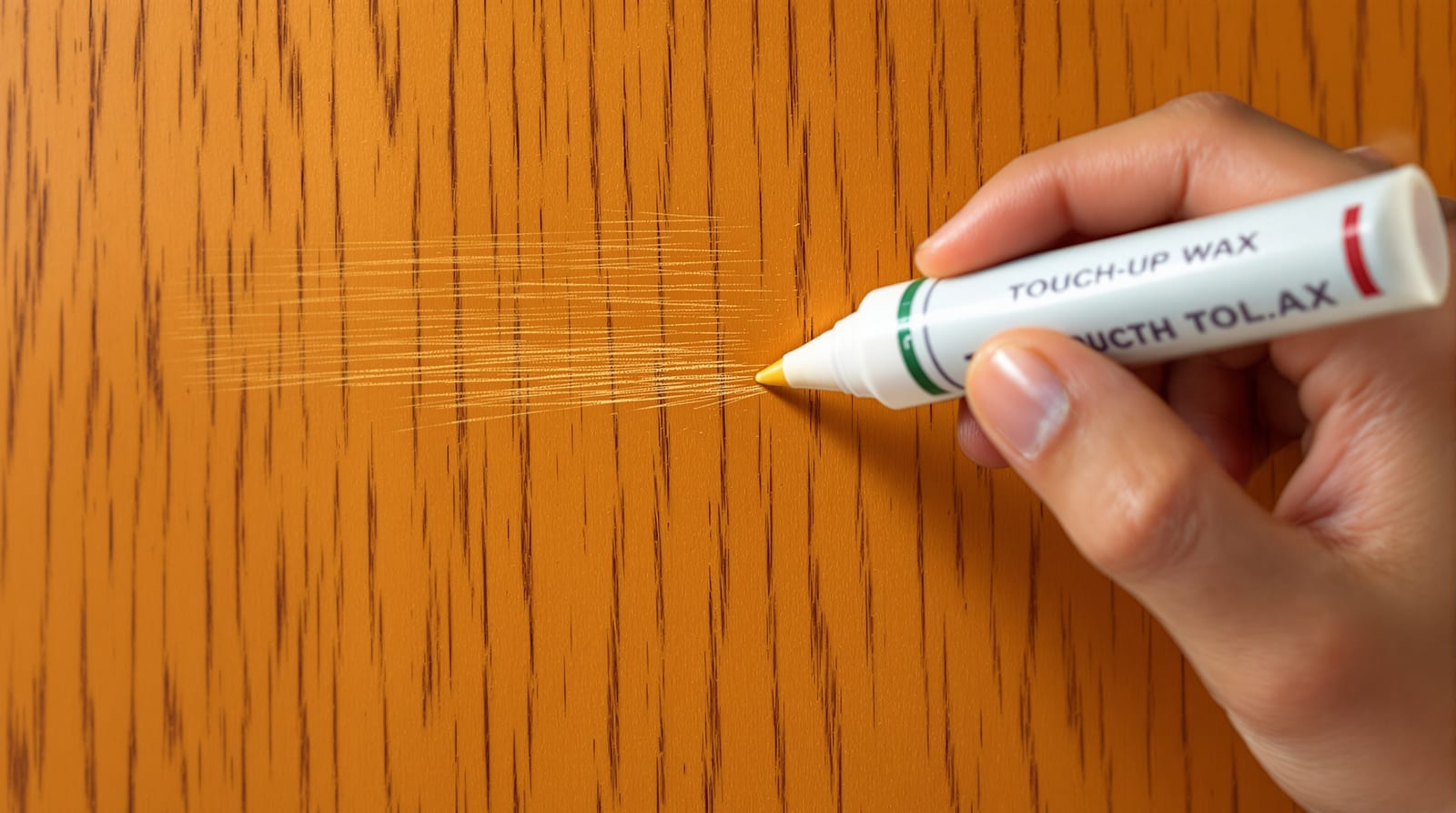
Scratched Door Repair: Fix Scuffs by Finish India 2026
From a hairline scratch to a deep gouge, here is how to repair and colour-match every door finish at home and make it disappear.
A fresh scratch across an otherwise lovely door is one of those small annoyances that catches the light every time you walk past. The good news: most scratched door repair is genuinely a DIY job, and the secret is less about hiding the mark and more about matching the finish — the colour and the sheen — so your eye stops noticing it. This guide walks you through every common door surface in Indian homes (solid wood, veneer, laminate, painted, and PU/melamine polished) and shows you exactly what to reach for, from a ₹150 touch-up marker to a colour-matched re-polish.
Before you start, take ten seconds to classify the damage. A light scratch sits in the finish (polish, paint or laminate skin) and you can barely catch a fingernail in it. A deep gouge goes into the material below — you can feel the edge, and on wood you may see bare timber. The two need very different treatments, so be honest about which you have.
Scratched door repair starts with the finish
Successful scratched door repair depends entirely on the surface, not just the colour. Here is a quick way to tell them apart.
| Finish | How to recognise it | Common in India |
|---|---|---|
| Solid / veneered wood (polished) | Visible natural grain, warm depth, often teak/sal; PU or melamine polish on top | Main doors, premium internal doors |
| Laminate (flush door) | Printed grain that repeats; perfectly uniform; hard plastic-like skin | Bedroom & bathroom flush doors |
| Painted | Opaque flat colour, no grain showing through | Budget flush, steel, MDF doors |
| PU / Duco painted | Glossy or matt opaque colour, very smooth, factory-like | Modern designer doors, wardrobes |
| WPC / uPVC | Moulded, plastic body, often foiled or painted | Bathroom & balcony doors |
For the underlying door material, our complete door guide covers each type; if the damage turns out to be more than skin-deep, jump to repair cracked wooden door or fill door holes and dents instead.
Light scratches: the quick fixes
Difficulty: easy. Time: 10-30 minutes. Cost: ₹150-600 in consumables.
Light scratches rarely need filling — you are just re-colouring the scuffed finish and restoring shine.
Wood (polished or veneered)
1. Clean the area with a barely-damp cloth and let it dry fully.
2. For very faint marks, rub a fresh walnut or cashew kernel along the scratch — the natural oils darken and disguise it surprisingly well on medium-brown wood. (An old Indian trick that genuinely works on shallow marks.)
3. For a clearer line, use a wood touch-up marker matched to your shade. Draw along the scratch, wipe off the excess on the surface with a cloth within 30 seconds, leave the colour sitting in the groove.
4. Let it dry, then blend with a tiny dab of furniture wax or beeswax polish to restore sheen.
Laminate
1. Clean and dry. Laminate cannot absorb stain, so use a laminate/melamine touch-up marker in the closest shade, applied only inside the scratch line.
2. For a dull scuff (not a cut), a pea-sized blob of automotive scratch-removing polish (e.g. a rubbing compound) buffed with a soft cloth can lift a surprising amount — laminate behaves a lot like a car's clear-coat.
3. Finish with a wipe of laminate polish for an even sheen.
Painted / PU
1. Clean gently. For a scuff that is only on the surface (a black shoe-mark, a drag mark), try a magic eraser (melamine sponge) or a little baking-soda paste first — often the "scratch" is just transferred material.
2. For a real scratch into the paint, dab matching paint with a fine artist's brush, building up thin coats. PU is unforgiving on sheen, so see the sheen section below.
Deep scratches & gouges: fill, colour, re-finish
Difficulty: moderate. Time: 1-2 hours plus drying. Cost: ₹300-900 DIY; ₹500-2,000 carpenter.
When you can catch a fingernail or see bare material, you must fill first.
1. Clean & lightly sand the gouge and a small margin around it with 220-grit paper to give the filler grip. Wipe away dust.
2. Fill. On wood use a colour-matched wood filler / putty; on laminate or PU use a hard filler or a wax fill stick (melted in with a warm putty knife) — wax sticks are ideal because they need no drying and accept marker colour over them.
3. Level it. Slightly overfill, then scrape flush with a flat blade once set. Sand gently flush — careful not to scuff the surrounding finish on laminate.
4. Colour-match. Build the colour with markers or a fine brush. On grained finishes, draw a few fine grain lines with a darker marker so the patch reads as wood, not a blob.
5. Seal & match sheen. Apply a compatible top-coat (PU/melamine lacquer pen for polished wood; clear nail-varnish-style sealer for laminate) and adjust sheen as below. For a full re-polish of an older door, follow door polishing and refinishing.
If the gouge is on a load-bearing edge, near a hinge mortise, or on a swollen/warped door, stop — fix the structure first via warped door fix or call a carpenter.
Matching the sheen — the step everyone skips
You can nail the colour and still see the repair, because the patch is glossier or duller than the door. Light bouncing off a mismatched sheen is what your eye catches. Always finish to match the door's existing gloss level.
| Door sheen | How to match the repaired patch |
|---|---|
| Matt / satin polish | Use a matt lacquer pen; or rub the dried patch lightly with 0000 steel wool / a grey scuff pad to knock back shine |
| Semi-gloss | Apply gloss sealer, then buff back gently with a soft cloth until it sits level with the door |
| High-gloss (PU / laminate) | Build clear gloss in thin coats, then polish with automotive cutting + finishing compound for a glassy match |
A handy test: photograph the door with the flash on from an angle. The camera exaggerates sheen differences, so a patch that looks invisible to the eye but flares in the photo still needs adjusting.
Tools & materials you'll need
| Item | Use | Typical ₹ (incl. 18% GST) |
|---|---|---|
| Wood / laminate touch-up marker (set) | Re-colour light scratches | 150-500 |
| Wax fill sticks (assorted shades) | Fill gouges, no drying time | 250-700 |
| Wood filler / putty | Deep gouges on wood | 100-350 |
| Fine artist's brushes | Paint/PU touch-up | 80-200 |
| Sandpaper 220 & 320-grit | Prep and feathering | 50-150 |
| 0000 steel wool / scuff pad | Knock back excess sheen | 60-150 |
| Lacquer / sealer pen (matt + gloss) | Seal and match sheen | 200-600 |
| Automotive scratch & finishing compound | Buff laminate / high-gloss | 200-500 |
| Soft microfibre cloths | Cleaning and buffing | 100-200 |
Most homes spend ₹400-900 building a small kit that handles years of touch-ups. Want a per-door figure or to weigh DIY against a pro visit? Try the door repair cost estimator or, if the door is badly damaged, the repair vs replace door calculator.
Symptom to fix at a glance
| What you see | Finish | Fix | Difficulty |
|---|---|---|---|
| Faint surface scratch | Polished wood | Walnut rub or touch-up marker + wax | Easy |
| Scratch into laminate skin | Laminate | Laminate marker; buff scuffs with compound | Easy |
| Black drag/scuff mark | Painted/PU | Melamine sponge or baking-soda paste | Easy |
| Deep gouge, bare wood showing | Wood | Filler, colour, grain lines, seal | Moderate |
| Chip down to substrate | Laminate/PU | Hard filler + colour + clear gloss | Moderate |
| Patch repaired but still visible | Any | Re-match the sheen | Easy |
| Multiple deep scratches all over | Any | Sand back and re-polish/re-paint whole door | Pro |
When to stop and call a carpenter
DIY scratch repair is low-risk, but call a professional when: the door is water-damaged or swelling (the finish will keep failing — see fix water-damaged door); the veneer is lifting or torn, which needs gluing and clamping (door veneer repair); the laminate is peeling at edges (door laminate peeling fix); or the whole door is so scratched that a full re-polish or repaint makes more sense than patching. A carpenter visit for a single patch runs ₹400-800; a full re-polish ₹800-1,500 with materials. For the wider menu of fixes, see the door troubleshooting guide and door repair guide.
Keeping the finish healthy stops scratches showing up so easily — a quick read of wooden door maintenance pays off. In India's humidity, a well-sealed door also resists the swelling and dullness that make scuffs look worse.
Frequently asked questions
Can I really hide a scratch with a walnut?
Yes, for light scratches on medium-brown wood. The natural oils tint and fill the shallow groove. It will not work on deep gouges, laminate, or painted doors — use a colour-matched marker or filler for those.
My touch-up looks right in colour but still catches the light. Why?
The sheen does not match. A patch that is glossier or duller than the door reflects light differently. Adjust it: buff matt patches with 0000 steel wool, or add thin gloss coats and polish glossy ones until they sit level.
Can I fix a scratch on a laminate door, or does laminate always need replacing?
Light scratches and scuffs respond well to a laminate marker and automotive compound. Only when the laminate is chipped through to the board, or peeling at the edges, do you need a patch or replacement — see door laminate peeling fix.
What is the cheapest way to refresh a heavily scratched old door?
If scratches are everywhere, patching is a losing battle. A full re-polish (₹800-1,500) or repaint via the door painting guide gives a uniform finish for less effort than dozens of touch-ups.
Will the repair survive Indian monsoon humidity?
If you seal the patch properly and the door itself is dry and sound, yes. But if the door is absorbing moisture and swelling, the finish will keep cracking — treat the moisture problem first, otherwise scratches and dullness will return.
Export this guide
Related Guides — Deep-dive reading
Fix a Water-Damaged Door: Repair Guide (India 2026)
Dry it, assess swelling vs delamination vs rot, sand and fill, re-glue veneer, seal every edge, and know when to switch to WPC or uPVC.
Home Doors & EntrancesVeneer Doors in India (2026): Natural Wood Looks, Finishing, Cost & Care
Why a thin slice of real wood over a flush door gives the warmest premium internal-door look in Indian homes — and what it takes to keep it that way.
Home Doors & EntrancesDoor Repair Guide India: Fix Holes, Dents, Swelling, Hinges & Locks (2026)
A fix-it reference for Indian homes: every common door problem with a quick fix, a proper repair, a replace verdict, the materials needed, and indicative rupee costs.
Home Doors & EntrancesRelated Tools — Try Free
Door Material Comparison Tool
Compare 2–4 door materials on cost, durability, maintenance, security and moisture resistance.
Comparison ToolDoor Cost Calculator
Estimate the all-in cost of a door — leaf, frame, hardware, fitting and GST — by type, material and size.
Door CalculatorDoor Paint Calculator
Estimate paint and primer litres and cost to paint your doors by size, number of doors, coats and paint type.
Door Calculator