
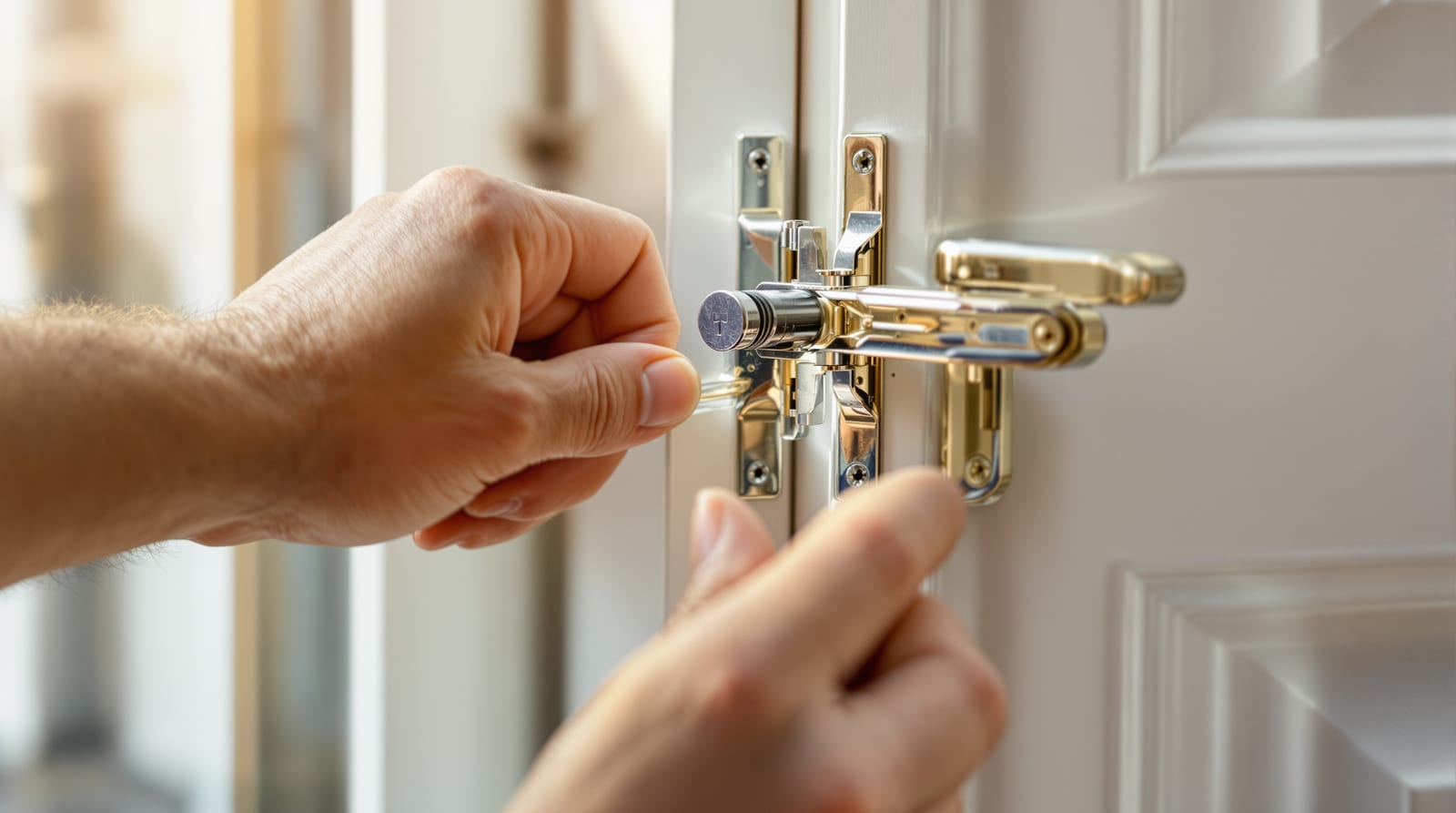
uPVC Door Maintenance: Hardware-First Care (India 2026)
Keep uPVC doors smooth for decades — the profile barely ages, but the locks, hinges and drainage need regular attention.
Good uPVC door maintenance is mostly about the hardware, not the door. The profile itself — that white (or laminated) multi-chambered plastic with a galvanised-steel core — is the part Indian homeowners worry about, yet it is the part that ages the slowest. It does not rot, swell in the monsoon, feed termites, or need polishing. What does wear out is everything attached to it: the multi-point lock, the friction hinges, the rubber gaskets, and the little drainage slots that keep rain out. Look after those, and a uPVC door stays smooth and weather-tight for fifteen to twenty years. Ignore them, and you get a door that drags, will not lock, or quietly leaks during the first heavy rain.
This guide is friendly, India-specific, and honest about when a screwdriver is enough versus when to call the fabricator who installed the door. For the full picture across every material, start at the complete door guide; if your door is actively misbehaving, the door troubleshooting hub will point you to the exact fix.
Why the hardware needs the attention, not the profile
A uPVC door is a system. The frame and sash are inert plastic; the mechanics that make it open, close, seal and lock are precision metal parts living in a humid, dusty Indian environment. Coastal salt air, gritty pre-monsoon dust, and hard-water spray on a balcony door all attack the moving parts first.
Three habits cause almost every uPVC door problem:
- Cleaning the profile with the wrong thing (scouring powder, thinner, kerosene) — which dulls and micro-scratches the surface so it traps dirt faster.
- Never lubricating the multi-point lock — so the hooks and rollers stiffen, you force the handle, and eventually a gearbox tooth shears.
- Letting the bottom drainage slots silt up — so rainwater pools inside the frame and seeps onto your floor, and you blame the "plastic door" for leaking.
None of these is the profile's fault. All three are easy, cheap chores. Compare this with timber, where the material itself is the maintenance job — see wooden door maintenance — and you will appreciate how little a uPVC door actually asks of you.
If you are still choosing doors, the background on the material lives at uPVC doors.
Clean the profile the right way
Difficulty: easy. Time: 15-20 minutes per door. Cadence: monthly wipe, deep clean quarterly.
uPVC has a smooth factory surface; your job is to preserve it, not polish it off.
1. Dust the frame and sash dry first (a soft brush gets grit out of the corners and gasket channels).
2. Wash with warm water and a few drops of mild dishwashing liquid, using a soft cloth or sponge.
3. For stubborn marks, a dedicated uPVC cleaner or a paste of bicarbonate of soda works gently.
4. Rinse and wipe dry — especially in hard-water areas, where evaporating droplets leave white scale.
5. Wipe the glass separately with a normal glass cleaner; keep it off the gaskets.
Never use: scouring powder, steel wool, nail-polish remover, thinner, petrol/kerosene, or strong solvents. They etch and yellow the surface permanently. For laminated woodgrain uPVC, be even gentler — solvents can lift the foil.
Lubricate the lock and hinges
This is the single most valuable thing you can do. A uPVC door usually has a multi-point lock — turn the key and several hooks, rollers or deadbolts shoot into the frame along the height of the door. That is a lot of moving metal.
Difficulty: easy. Time: 20 minutes. Cadence: every 6 months (every 3 months near coast/heavy dust).
Tools & materials you'll need
- A light machine oil or, better, a PTFE/silicone spray (dry-ish, doesn't attract dust)
- Graphite powder or a graphite spray for the key cylinder (NOT oil)
- A soft cloth and an old toothbrush
- A Phillips and a flat screwdriver
- An Allen-key set (hinge adjustment screws are usually hex)
- A torch
1. Open the door fully. Wipe the lock strip and all the visible hooks/rollers clean.
2. Apply a light film of PTFE/silicone spray to each moving lock point, the latch, and the central gearbox where you can reach it. Work the handle and key several times to draw it in.
3. For the cylinder (where the key goes), use graphite, never oil — oil gums up and jams pin-tumbler cylinders. A puff of graphite and a few key turns is enough.
4. Drip a little oil/spray onto each hinge knuckle and pivot, then swing the door to spread it. (For squeak specifics see lubricate door hinges and fix a squeaky door.)
5. Wipe off excess so it doesn't run down the white profile and collect grime.
Clean and clear the drainage slots
Look along the bottom of the outer frame (and sometimes the sash) and you will see small horizontal slots, often with little flap covers. These let any rain that gets past the gasket drain back outside instead of pooling inside the frame. In India, pre-monsoon dust plus the first rains turn that dust into mud that blocks the slots.
Difficulty: easy. Time: 10 minutes. Cadence: before and during monsoon, then quarterly.
1. Find each slot along the bottom rail.
2. Clear it with an old toothbrush, a thin sliver of wood, or a burst of compressed air. Avoid metal tools that scratch.
3. Pour a little water onto the inner sill to confirm it drains out the front, not onto your floor.
A blocked slot is the number-one reason a perfectly sound uPVC door "leaks" in the monsoon. For broader monsoon prep across materials, see stop door draughts.
Check and replace the gaskets
The black or grey rubber seal running around the sash and frame is the gasket — it gives uPVC doors their air- and water-tightness, and their quiet close. Over years of sun and heat it can harden, shrink at the corners, or flatten so it no longer seals.
Difficulty: easy-moderate. Time: 30-45 minutes per door. Cadence: inspect yearly, replace every 7-10 years (sooner in harsh sun).
1. Run a finger along the gasket — if it is hard, cracked, or pulling away at corners, it needs replacing.
2. Note the profile: gaskets push into a groove. Buy the matching gasket from your door's fabricator/brand (₹15-60 per metre); the wrong profile won't seat.
3. Pull the old gasket out of its groove (it lifts out by hand).
4. Clean the groove, then press the new gasket in, starting at a top corner, working around without stretching it. Cut to length with a slight overlap, butting the ends at a top corner.
5. Close the door and check for even contact all round.
If only the weather contact at the threshold is failing, the wider techniques in door seals & weatherstripping apply.
Adjust hinges and keeps for alignment — and fix a dropped sash
uPVC friction/flag hinges are adjustable in two or three planes (height, sideways, and compression) using small Allen screws — usually hidden under a clip-off cover cap. This is how you cure a door that has dropped, rubs the frame, or won't latch into its keeps.
Difficulty: moderate. Time: 20-40 minutes. Cadence: as needed.
1. Find the cause. A heavy uPVC door (especially a wide French or sliding-fold leaf) settles over time so the bottom corner drags — a "dropped sash". Open the door and look at the gaps; uneven gaps confirm it. (For diagnosing gaps, uneven door gaps fix helps.)
2. Pop the hinge caps to reveal the adjustment screws.
3. Lift the sash: turn the vertical/height screw (usually on the bottom hinge) to raise the door so the bottom corner clears the frame.
4. Centre it sideways: the lateral screw moves the sash left/right so the gaps are even and the hooks line up with the keeps.
5. Set compression: adjust so the door presses the gasket evenly — firm but not so tight you fight the handle.
6. Adjust the keeps (strike plates) on the frame if the lock hooks still don't slide in cleanly. (See door strike plate alignment.)
7. Test: the door should close with a light push and lock with one smooth handle lift and key turn.
Make small quarter-turn changes and re-test each time. If you over-adjust, the door binds; under-adjust, it rattles.
When to stop and call the fabricator
Most uPVC chores are genuinely DIY. Call the company that installed it (warranty doors especially) when:
- The gearbox inside the multi-point lock has failed — the handle lifts but no hooks throw, or it grinds. This is a sealed unit; matching and swapping it is a fabricator job (₹1,500-5,000 part + labour).
- A toughened-glass panel is cracked or fogged (sealed double-glazing) — never DIY glass; risk of injury and it must be re-ordered to size.
- The reinforcing steel core or the welded corner has failed, or the frame has pulled away from the wall — that is structural.
- An automatic / sensor uPVC entrance (showroom, clinic). Isolate the power first and call the operator's service engineer; see automatic door troubleshooting.
Honest note: a uPVC door rarely "warps" like timber, but a badly fitted one can bow in extreme heat. If the sash itself is deformed, adjustment won't save it — it needs re-hanging or replacement. For that decision, the door replacement guide and door cost (India 2026) set out the numbers.
Cost & difficulty at a glance
| Task | Difficulty | Time | DIY cost (parts) | If you call a pro |
|---|---|---|---|---|
| Clean profile correctly | Easy | 15-20 min | ₹0-150 (cleaner) | n/a |
| Lubricate lock + hinges | Easy | 20 min | ₹150-400 (spray + graphite) | ₹400-800 visit |
| Clear drainage slots | Easy | 10 min | ₹0 | n/a |
| Replace gasket (one door) | Easy-mod | 30-45 min | ₹150-600 | ₹600-1,500 |
| Adjust hinges / fix dropped sash | Moderate | 20-40 min | ₹0 | ₹500-1,000 |
| Replace multi-point gearbox | Pro | — | — | ₹1,500-5,000 + labour |
| Replace cracked glazed unit | Pro | — | — | quote (size-made) |
GST 18% applies on parts. Metro labour runs higher than tier-2 towns.
uPVC door care matrix
| Part | Use | Avoid | Telltale it needs attention |
|---|---|---|---|
| Profile (frame/sash) | Mild soap + water, uPVC cleaner | Scourers, thinner, kerosene | Dull, hard-water scale |
| Multi-point lock | PTFE/silicone spray | Thick grease, oil in cylinder | Stiff handle, hard to throw |
| Key cylinder | Graphite powder | Any oil | Key turns roughly |
| Hinges | Light oil/spray + Allen adjust | Over-tightening | Squeak, drag, sag |
| Gaskets | Replace like-for-like | Stretching old one | Draughts, rattle, water inside |
| Drainage slots | Brush/air, keep clear | Metal pokers | Water pooling on inner sill |
Your uPVC door maintenance schedule
| Cadence | Do this |
|---|---|
| Monthly | Soft wipe of profile + glass; quick look at gaskets |
| Quarterly | Deep clean; clear drainage slots; check gap evenness |
| Pre-monsoon (May-Jun) | Clear drains, test water drainage, check gasket seal |
| Every 6 months | Lubricate multi-point lock, latch and hinges; graphite the cylinder |
| Yearly | Inspect gaskets, tighten loose handle screws, re-check hinge alignment |
| Every 7-10 years | Replace hardened gaskets; service or replace worn lock |
Want a reminder system tailored to your home? The home door maintenance planner builds a schedule, and the door problem diagnoser helps pin down a fault before you grab a screwdriver.
Frequently asked questions
Can I oil the lock cylinder of my uPVC door?
No — use graphite powder in the key cylinder, not oil. Oil collects dust and gums up the pin tumblers, eventually jamming the lock. Oil/PTFE spray is fine for the hooks, latch and hinges, just not inside the cylinder.
My uPVC door leaks during the monsoon — is it faulty?
Usually not. The most common cause is blocked drainage slots along the bottom of the frame. Clear them with a brush or compressed air and pour a little water in to confirm it drains outside. If water still gets in with clear slots, check the gasket for hardening or gaps at the corners.
Why does my uPVC door drag at the bottom corner?
It has likely "dropped" — the sash has settled over time, common on heavy or wide leaves. Pop the hinge caps and use the height-adjustment (Allen) screw on the bottom hinge to lift the sash, then fine-tune the lateral screw so the gaps are even. Small quarter-turns, testing each time.
Do uPVC doors need polishing or painting like wooden doors?
No. That is the big advantage — the colour is through the profile (or a laminated foil), so there is nothing to polish or repaint. Just clean it. Avoid solvents that could dull or yellow the surface. Timber doors are the ones that need refinishing; see door polishing & refinishing.
How often should I replace the rubber gaskets?
Inspect them yearly. They typically last 7-10 years, sooner if the door faces harsh direct sun. Replace when they feel hard, crack, flatten, or pull away at corners — symptoms are draughts, rattling, or water creeping inside. Match the gasket profile to your door brand.
My multi-point lock won't throw the hooks even after lubricating — what now?
That points to a failed internal gearbox, which is a sealed unit best replaced by the fabricator who installed the door (₹1,500-5,000 for the part plus labour). Don't force the handle in the meantime — you can shear more teeth. The door lock repair guide covers what's worth attempting yourself first.
Export this guide
Related Guides — Deep-dive reading
Sliding Door Track Cleaning: Easy DIY Fix (India 2026)
Why Indian sliding doors get stiff — dust, grime and hard-water scale in the track — and the step-by-step clean-dry-lubricate routine that fixes it.
Home Doors & EntrancesWindow Hardware Maintenance: Servicing Hinges, Stays, Rollers and Locks in India
Clean, lubricate, adjust and de-rust the moving parts of every window — a 6-monthly servicing routine for Indian conditions
Windows & GlazingDoor Lock Repair: Fix Stiff & Sticky Locks (India 2026)
A stiff, sticky or hard-to-turn lock is usually a clean, lubricate and realign job, not a replacement. Here is the full DIY fix-it guide.
Home Doors & EntrancesRelated Tools — Try Free
Monsoon-Readiness Checklist
Pre-rain home audit across 9 categories — terrace, drains, waterproofing, electrical, HVAC, pest, vehicles, documents.
Seasonal AuditFalse Ceiling Cost Estimator
Live ₹/sqft across 8 ceiling types — POP, gypsum, designer, metal, PVC, wooden — with cove and spot lighting for 20 Indian cities.
Cost CalculatorMaterial Schedule Generator
Generate a room-wise finish schedule — walls, floors, ceilings, trim, and joinery by location.
Material Schedule