
Wooden Flooring in India: Solid, Engineered, Laminate & Wood-Look SPC Compared (2026)
The decision-oriented hub for wood floors in Indian homes — the three families plus wood-look SPC, the warm look, honest monsoon-and-termite caveats, where wood works, finishes, installation types, ₹/sq ft ranges and maintenance.
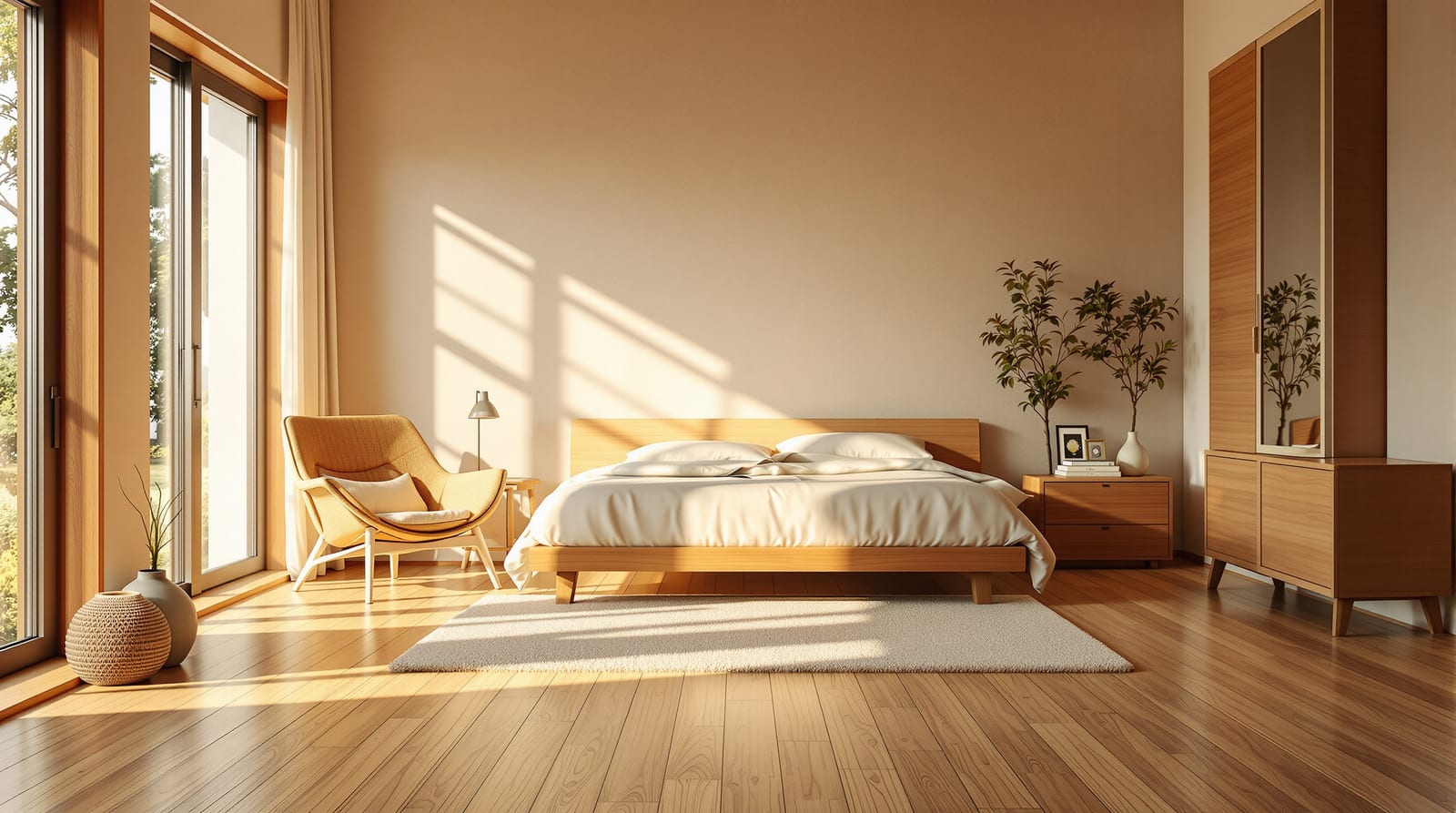
There is a particular warmth a wood floor brings to a room that no tile or stone can fake — it is soft underfoot, quiet to walk on, forgiving when a glass falls, and it makes a bedroom feel like a retreat rather than a showroom. But "wooden flooring" in India is one of the most misunderstood phrases in home building, because it covers four completely different products at four completely different price points, and only one of them is actually solid wood. Choose the wrong one for the Indian climate and you get swollen planks after the first monsoon, faded boards under a south window, or termite damage you only discover when it is too late. This guide is the decision hub: the three families (plus wood-look SPC), where each belongs, the honest caveats for our humidity and heat, finishes, how they are laid, real 2026 ₹/sq ft ranges and how to keep them looking good.
The three families of "wood" flooring (plus a fourth)
Almost everything sold as wooden flooring in India falls into one of these groups. They look broadly similar once laid, but they are made differently and behave very differently — especially in our climate.
1. Solid hardwood — planks milled from a single piece of timber (oak, teak, walnut, merbau). The real, traditional wood floor: can be sanded and re-finished several times, lasts generations, but is the most sensitive to humidity and the most expensive. See the deep guide on solid hardwood flooring.
2. Engineered wood — a real-wood top layer (the "wear layer" or veneer, typically 2-4 mm) bonded over a cross-laminated plywood or HDF core. Looks and feels like real wood because the surface is real wood, but the layered core resists swelling far better, which makes it the most sensible "real wood" choice for most Indian homes. See engineered wood flooring.
3. Laminate — a high-resolution printed photo of wood pressed onto an HDF core under a tough melamine wear layer. No real wood on the surface at all; it is a picture of wood. Cheapest of the "looks like a plank" options, scratch-resistant, but cannot be re-sanded and swells if water gets into the joints. See laminate flooring.
4. Wood-look SPC / WPC / vinyl — rigid or resilient planks with a printed wood design and a 100% waterproof mineral or plastic core. Not wood at all, but the most water-tolerant "wood look" and increasingly the practical winner in Indian wet-prone homes. See SPC flooring, WPC flooring and vinyl flooring.
The short version: if you want the genuine article and have a dry, climate-controlled room, look at solid or engineered. If you want the look at a low price, look at laminate. If the space sees water, balconies, ground floors in humid cities or just heavy real-world abuse, look at wood-look SPC.
At a glance: which family for which home
| Family | ₹/sq ft (material) | Real wood? | Moisture tolerance | Durability / re-finish | Best for |
|---|---|---|---|---|---|
| Solid hardwood | 250-1,500 | Yes (solid) | Low — swells with humidity | Highest; sand & re-finish 3-5x | Dry bedrooms, studies, hill-station homes, heritage feel |
| Engineered wood | 180-700 | Yes (top veneer) | Medium — better than solid | High; re-finish 1-2x (thick veneer) | Living rooms, bedrooms, most Indian homes wanting real wood |
| Laminate | 80-250 | No (printed) | Low-medium; joints swell | Good scratch resistance; no re-finish | Budget bedrooms, rentals, low-water rooms |
| Wood-look SPC | 90-250 | No (printed) | High — waterproof core | Good; no re-finish | Humid/coastal homes, ground floors, kids/pets, near (not in) wet areas |
Costs are indicative material-only figures and vary by city, brand and grade; add 18% GST and installation. For laying, underlay, skirting and a wastage allowance, use the wooden flooring cost calculator, and to weigh wood against a tiled floor for the same room read wooden flooring vs tiles.
The plank, layer by layer
Whatever the family, a modern wood-look plank is a sandwich of layers — knowing the build-up explains why one swells and another does not, and why the wear layer (not the price) decides how long the floor lasts.
The honest India caveats
Wood flooring is wonderful, but India is a hard environment for it, and a good guide tells you that before you spend. These are the failure modes to plan around.
- Humidity and monsoon swelling. Real wood is hygroscopic — it absorbs moisture from the air and expands, then shrinks when it dries. In coastal Mumbai, Chennai, Kochi or Kolkata, or any ground-floor home, solid hardwood can cup, gap or buckle across a wet season. Engineered wood resists this far better thanks to its cross-laminated core; SPC ignores humidity entirely because its core is mineral, not wood. Always leave an expansion gap (6-10 mm) at the walls and let real wood acclimatise on site for several days before laying.
- Termites. White ants are a genuine threat to any cellulose-based floor — solid, engineered and even the HDF core of laminate. Insist on pre-construction or pre-laying anti-termite soil treatment (as per IS 6313), keep planks off direct contact with damp screed, and treat the subfloor. SPC and vinyl are the only wood-look options termites cannot eat.
- Sun fade. Strong Indian sunlight through a south or west window will lighten real wood and some printed planks over months. Use a UV-stable finish, blinds or sheer curtains over the worst-hit floors, and rotate rugs so you do not end up with a pale rectangle.
- Not for wet areas. No wood floor belongs in a bathroom, in an open balcony, on a terrace or under a kitchen sink. Standing water and wood do not mix; for those zones use anti-skid vitrified, porcelain or stone instead. If you love the look, wood-look SPC is the only family that tolerates an occasional splash — but even SPC is "water resistant near wet areas," not a shower floor.
If your home is humid, coastal or on the ground floor, read how to choose flooring for Indian weather before committing to real wood.
Where wood actually works
Match the room to the family and wood flooring rewards you for years.
- Bedrooms — the classic, best use. Dry, low-traffic, bare feet in the morning. Engineered wood or solid hardwood shine here; laminate is the budget pick. See bedroom flooring.
- Living and family rooms — warm and inviting, but expect traffic and the odd spill. Engineered wood with a tough finish, or wood-look SPC if there are kids and pets. See living room flooring.
- Home theatre / media rooms — wood deadens echo and feels premium; a dim, dry, climate-controlled room is ideal for solid or engineered.
- Studies, dressing rooms, pooja-adjacent lounges — small, dry, low-water rooms where the warmth is felt daily.
Avoid wood in kitchens, bathrooms, utility areas, balconies and terraces — for those, the kitchen flooring, bathroom flooring and balcony flooring guides point you to the right anti-skid surfaces.
Finishes: matte, gloss and oiled
The finish changes the look, the feel and how the floor wears.
| Finish | Look | Wear / scratch hiding | Repairability | Notes |
|---|---|---|---|---|
| Matte / natural | Soft, contemporary, low-sheen | Hides scratches and dust best | Spot-touchable | Most popular in 2026 Indian homes |
| Satin / semi-gloss | Gentle warmth, slight reflection | Moderate | Moderate | A safe middle ground |
| High gloss | Bright, formal, mirror-like | Shows every scratch and footprint | Hard to spot-repair | High-maintenance; less common now |
| Oiled (hardwax oil) | Very natural, matte, you feel the grain | Wears gradually, easy to re-oil patches | Best — re-oil locally, no full sanding | Real-wood only; needs periodic re-oiling |
| Lacquered / UV-cured | Durable factory film | Good; protects the surface | Whole-board sanding to renew | Standard on engineered and laminate |
Matte, oiled and natural finishes dominate current Indian taste because they hide the scuffs of real life and feel less like a showroom. For the broader finish vocabulary across all floor types see flooring finishes specification.
Installation types: floating, glue-down, nail-down
How the floor attaches to your subfloor affects cost, noise and repairability.
- Floating (click-lock). Planks click together into a single "raft" that sits on a foam or rubber underlay, not fixed to the subfloor. Fast, clean, DIY-friendly, easy to lift and replace a board. Standard for laminate, SPC and most engineered wood. Needs a flat, dry subfloor and an expansion gap at the walls.
- Glue-down. Planks bonded directly to a level screed with flooring adhesive. Feels more solid underfoot, quieter, good for large areas and engineered wood, but slower and harder to remove later. Demands a perfectly level, moisture-tested base.
- Nail-down (secret-nailed). Solid hardwood fixed to a timber sub-frame (battens / plywood deck). Traditional and very durable, but rarely practical over Indian concrete slabs without first building a wooden subfloor, which adds cost and height.
For most Indian flats, a floating engineered or SPC floor over a flat, dry, moisture-checked screed is the sweet spot. A 2-3 mm acoustic underlay is worth it in apartments to cut the hollow click of footsteps.
₹/sq ft ranges across the families
Indicative 2026 material-only figures; add 18% GST, plus underlay (₹15-40/sq ft), laying labour, skirting/beading and a 7-10% wastage allowance (more for diagonal or herringbone layouts).
| Product | Material ₹/sq ft | Typical wear layer / veneer | Installed feel |
|---|---|---|---|
| Laminate | 80-250 | 0.2-0.5 mm melamine over print | Budget real-wood look |
| Wood-look vinyl / LVT | 40-350 | 0.3-0.7 mm | Resilient, soft, waterproof |
| SPC (wood-look) | 90-250 | rigid, UV wear layer | Waterproof, stable, value |
| WPC (wood-look) | 100-300 | rigid, warmer foot-feel | Waterproof, slightly softer than SPC |
| Engineered wood | 180-700 | 2-4 mm real veneer | Real wood, climate-sensible |
| Solid hardwood | 250-1,500 | full solid timber | The genuine article, premium |
To turn these into a room total — material plus underlay, wastage and labour — run the wooden flooring cost calculator. For a full picture of every floor type's pricing see the flooring materials explained and complete home flooring guides.
Maintenance: keeping a wood floor looking good
Wood floors are easy to live with if you respect a few rules. Across all four families:
- Sweep or dry-mop daily — grit is the enemy; it scratches the wear layer underfoot. Felt pads under furniture legs and a doormat at the entrance do more for longevity than any polish.
- Damp-mop, never wet-mop. Use a well-wrung mop and a pH-neutral wood-floor cleaner. Standing water is the fastest way to swell real wood and creep into laminate joints.
- Wipe spills immediately, especially on solid, engineered and laminate. SPC tolerates a delay; the others do not.
- Manage humidity. In very humid cities, fans, AC or a dehumidifier in the wet season keep real wood stable.
- Re-finish on a schedule. Solid hardwood can be sanded and re-coated every several years to look new; thick-veneer engineered wood usually allows one or two light sandings. Oiled floors are re-oiled in patches as needed. Laminate and SPC cannot be re-finished — when they wear, you replace boards, which is why a few spare planks from the original batch are worth keeping.
Done right, a quality engineered or solid wood floor will outlast most of the furniture in the room, and a good SPC floor will shrug off a decade of family life.
How to decide in one minute
If you want the genuine warmth of real wood and your room is dry and reasonably climate-controlled, choose engineered wood — it gives you real wood with far fewer monsoon headaches than solid. If budget is tight and the room stays dry, laminate delivers the look cheaply. If the space is humid, coastal, ground-floor, or full of kids and pets, choose wood-look SPC for its waterproof core. Reserve solid hardwood for the dry, premium, forever-floor where you will happily re-sand it once a decade. And never put any of them in a bathroom, balcony or terrace.
Frequently asked questions
Is wooden flooring a good idea in humid or coastal India?
Real solid wood is risky in high humidity — it can swell, cup or gap across the monsoon. Engineered wood is much more stable thanks to its cross-laminated core, and wood-look SPC is fully waterproof and ignores humidity entirely. In coastal Mumbai, Chennai or Kochi, lean toward engineered or SPC and keep rooms ventilated or air-conditioned in the wet season.
Which is cheapest — laminate, engineered or solid wood?
Laminate is the cheapest real-wood look at roughly ₹80-250 per sq ft (material), followed by SPC at ₹90-250. Engineered wood runs ₹180-700, and solid hardwood is the most expensive at ₹250-1,500 and beyond. Add 18% GST, underlay, labour and wastage to all of them; use the wooden flooring cost calculator for a room total.
Can I put wooden flooring in a bathroom or balcony?
No. Bathrooms, open balconies, terraces and utility areas see standing water and should use anti-skid vitrified, porcelain or stone instead. Wood-look SPC tolerates the occasional splash near (not in) wet zones, but no wood-based floor belongs where water collects.
How do I protect a wood floor from termites?
Insist on pre-laying anti-termite soil treatment as per IS 6313, keep planks from sitting on damp screed, and treat the subfloor. Be aware that solid, engineered and laminate all contain cellulose that termites can attack — only SPC and vinyl are immune because their cores are mineral or plastic.
Matte or glossy finish for an Indian home?
Matte and natural-oiled finishes are the current favourites because they hide everyday scratches, dust and footprints far better than high gloss, and they feel less like a showroom. High gloss looks dramatic but shows every scuff and is harder to maintain in a busy Indian household.
Export this guide
Related Guides — Deep-dive reading
Engineered Wood Flooring in India: Layers, Wear Layer, Install & Cost (2026)
Engineered wood is a real-wood top veneer bonded over a cross-laminated plywood or HDF core, which makes it far more dimensionally stable than solid wood in Indian humidity — the practical way to get a genuine timber floor here. This guide covers the layer build-up, wear-layer thickness, click vs glue-down install, where it suits, ₹/sq ft, brands and maintenance.
Flooring & SurfacesCork Flooring in India: Warm, Quiet, Eco Floors for Bedrooms, Study & Kids' Rooms
Why cork is genuinely sustainable (bark is harvested while the tree lives on), the comfort and acoustic benefits, the natural look, ₹200-500/sq ft, click-floating vs glue-down tiles, sealing, and the dent, moisture and sun-fade caveats every Indian homeowner should know.
Flooring & SurfacesLaminate Flooring in India: AC Ratings, Cost, Brands & the Honest Limits (2026)
The budget wood-look floor for Indian homes — an HDF core with a printed decor and tough melamine wear layer, click-lock floating install over underlay, DIY-friendly and fast, with the water and refinishing caveats made plain.
Flooring & SurfacesRelated Tools — Try Free
Wooden Flooring Cost Calculator
Estimate installed wood or wood-look floor cost — solid, engineered, laminate or SPC — with underlay and skirting.
Flooring CalculatorDoor Material Comparison Tool
Compare 2–4 door materials on cost, durability, maintenance, security and moisture resistance.
Comparison ToolFlooring Cost Calculator
Estimate the all-in cost of a floor — material, laying, wastage, skirting and GST — by area and material.
Flooring Calculator