
Solid Hardwood Flooring in India: Species, Cost, Refinishing & the Humidity Caveats (2026)
Real solid timber planks of teak, oak, merbau or walnut give the deepest premium feel and can be sanded and refinished for decades — but in India's humidity they need acclimatisation, expansion gaps and the right rooms. Here is the honest homeowner's guide, with species, Janka hardness, ₹/sq ft and how it compares with engineered wood.
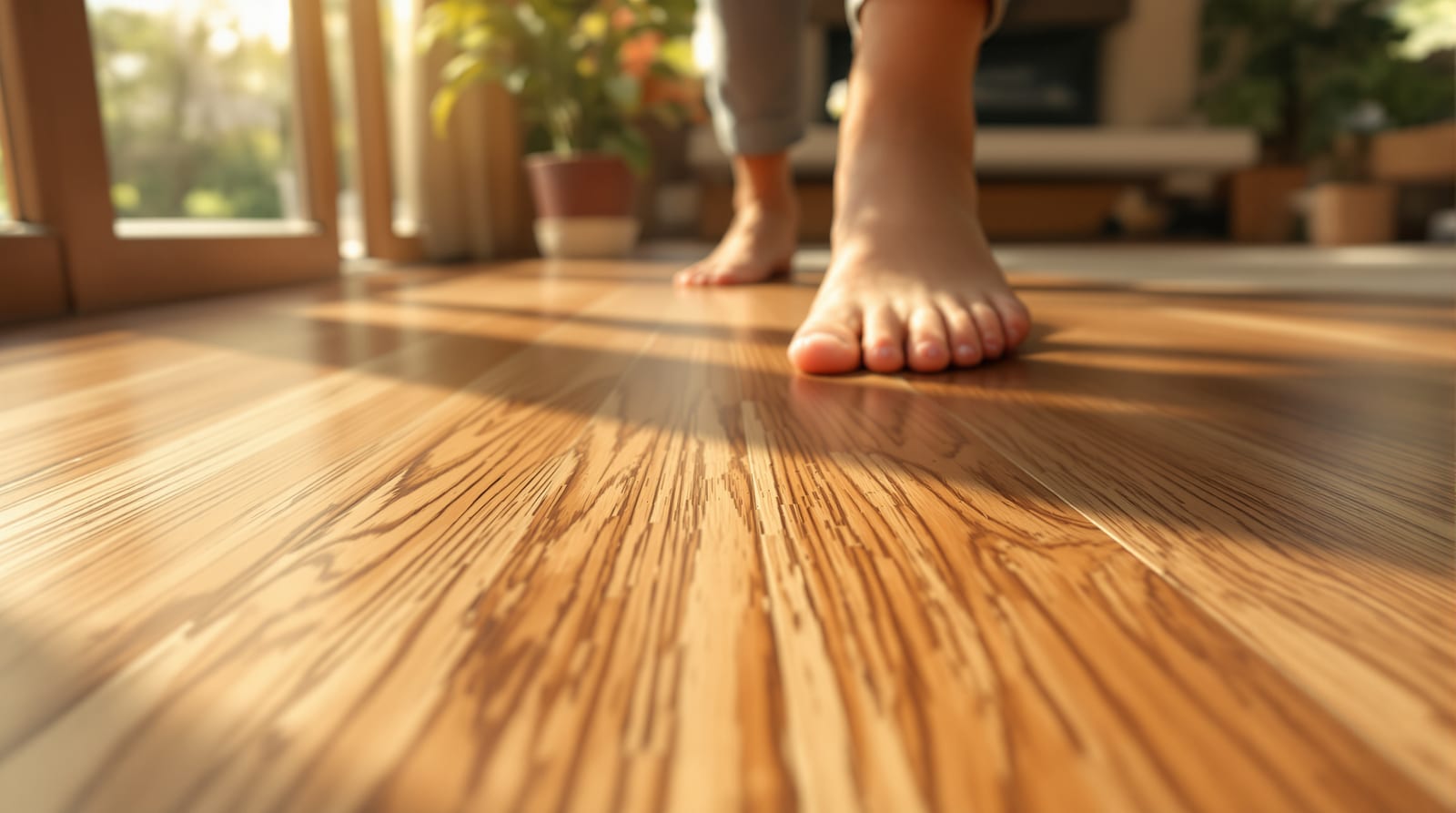
Nothing else feels quite like a solid hardwood floor. Each plank is a single piece of real timber — teak, oak, merbau, walnut — so the grain runs all the way through, the surface warms under bare feet, and a small dent only adds character. The killer feature is longevity: because the plank is solid wood top to bottom, it can be sanded back and refinished many times over decades, outliving almost every other floor in the house. But India is humid, and solid wood lives and breathes with that humidity. This guide is the honest version: where solid hardwood belongs in an Indian home, where it absolutely does not, the species and hardness to specify, the real ₹/sq ft, and why many Indian buyers end up choosing engineered wood instead.
Why people fall for solid hardwood
A solid hardwood plank is exactly what it sounds like — milled from one piece of timber, typically 18-22 mm thick, with a tongue on one edge and a groove on the other so planks lock together. There is no plywood core, no printed layer, no laminate. That single-material honesty is the whole appeal.
- The deepest premium feel. Real wood underfoot is warmer and softer than stone or tile, quietens a room, and reads as genuine luxury in a way no print can fully copy.
- Sand and refinish many times. This is the headline. A solid plank has a thick layer of usable wood above the tongue, so it can be sanded down and re-coated several times across its life. Scratches, dullness, even a colour change are all recoverable. A well-kept solid hardwood floor can serve 50-100 years.
- Ages with character. Wood patinas. Minor marks, a softened sheen and the natural movement of grain make an old hardwood floor feel richer, not worn out.
- Repairable. A badly damaged single plank can be cut out and replaced — harder than swapping a tile, but possible.
If you want one floor that can be made to look new again decades from now, solid hardwood is the only mainstream option that truly delivers it. Everything that follows is about earning that payoff in Indian conditions.
The big India caveats — read this before you buy
Solid wood is hygroscopic: it absorbs moisture from humid air and swells, then gives it back in dry air and shrinks. Across India's monsoon-to-summer swing that movement is large, and it is the single thing that makes or breaks a solid hardwood floor here.
- Humidity movement. In a damp coastal monsoon the planks expand; in a dry air-conditioned summer they contract. Without room to move, an expanding floor cups or buckles; a shrinking floor opens visible gaps between planks. The fixes are non-negotiable: proper acclimatisation, expansion gaps, and a reasonably stable indoor relative humidity.
- Acclimatisation. The planks must sit unwrapped in the actual room for several days to a couple of weeks before laying, so the wood reaches the room's own moisture content. Skipping this is the most common cause of floors that move after install.
- Expansion gaps. A continuous gap (commonly around 10-15 mm, per manufacturer spec) must be left around the entire perimeter and at doorways, hidden under the skirting, so the floor can breathe without pushing against walls.
- Stable indoor RH. Solid hardwood is happiest in conditioned interiors kept roughly in a 40-60% relative-humidity band. Homes that are sealed and air-conditioned, or in drier inland cities, suit it better than open, naturally ventilated houses on the humid coast.
- Never in wet or damp areas. No solid wood in bathrooms, near kitchen sinks, on open balconies, terraces or anywhere with ground-contact damp. Standing water and rising damp will warp, stain and rot it. Keep it to dry living spaces only.
- Termites. This is India — termite protection is essential. Specify naturally durable or termite-resistant species (teak is famously resistant), use treated timber, treat the subfloor, and maintain an anti-termite barrier. Untreated softwood-adjacent species are at real risk.
- Sun fade. Strong direct sunlight through large windows will lighten and unevenly fade wood over time. Use blinds or UV film on sun-blasted west and south rooms, and rearrange rugs occasionally so the floor ages evenly.
None of this means avoid solid hardwood — it means respect it. A solid wood floor laid by someone who acclimatises, gaps and seals correctly, in the right room, behaves beautifully for generations.
Species and Janka hardness — what to specify
Janka hardness measures how well a wood resists denting (higher = harder). For an Indian home with elders, children and joint-family traffic, harder species and dense tropical timbers hold up best. These are indicative figures and material-only ₹/sq ft (before laying, +18% GST); imported and graded stock sits at the top of each range.
| Species | Look | Janka (approx, lbf) | Notes for India | ₹/sq ft (material) |
|---|---|---|---|---|
| Burma / plantation teak | Warm golden-brown, classic Indian luxury | ~1,000-1,150 | Naturally oily, termite- and moisture-resistant — the traditional premium choice | 700-1,500+ |
| European / American oak | Pale honey to mid-brown, open grain | ~1,290-1,360 | Hard, stable-ish, takes stains well; the global standard | 350-900 |
| Merbau | Rich reddish-brown, very dense | ~1,840-1,925 | Tropical hardwood, hard and water-tolerant; can leach tannin when wet | 400-900 |
| American walnut | Deep chocolate-brown, luxurious | ~1,000-1,010 | Softer than oak, premium dark look, scratches show more | 600-1,200 |
| Indian rosewood (sheesham) | Dark, dramatic grain | ~1,600-2,440 | Very hard, regional availability; check sourcing/legality | 500-1,000 |
| Maple / birch | Pale, fine, even grain | ~1,260-1,450 | Light modern look, harder; less common in India | 350-800 |
For high-traffic homes, lean towards harder species (oak, merbau) or accept that softer beauties like walnut will show life sooner. Teak remains the sentimental and practical Indian favourite precisely because its natural oils help it shrug off both humidity and termites.
How solid hardwood is laid
Solid planks are normally nailed (or stapled) down to a timber sub-deck of battens/plywood, or glued down with flexible wood adhesive onto a clean, dry, dead-level screed. They are not designed to float loose the way some engineered and laminate floors do.
- Level, dry subfloor first. The screed or sub-deck must be flat, fully cured and dry — trapped construction moisture is a slow killer of wood floors. Many specifiers add a moisture barrier/DPM over a concrete subfloor.
- Acclimatise the planks in the room for the manufacturer's stated period before a single board goes down.
- Leave the perimeter expansion gap all the way round and at thresholds, then cover it with skirting or beading — never grout or cement a solid wood floor tight to the wall.
- Nail-down over battens or ply gives the traditional, slightly resilient timber-floor feel; glue-down over screed gives a solid, quiet result and is common over concrete.
- Finish: factory pre-finished planks arrive sealed and ready; site-finished floors are sanded and coated (oil or polyurethane lacquer) after laying, which lets you choose sheen and colour but adds dust and time.
Concept: solid plank tongue-and-groove and the perimeter expansion gap
The diagram shows two solid planks joined by tongue-and-groove, sitting on the subfloor, with the all-important expansion gap left at the wall and hidden by the skirting.
What solid hardwood actually costs in India
Solid hardwood is a premium floor, and the spread is wide because species drives most of the price. Treat these as 2026 benchmarks, indicative and varying by city, vendor and grade.
| Component | Indicative ₹/sq ft | Notes |
|---|---|---|
| Solid hardwood planks (material) | 250-1,500+ | Oak mid-band; teak, walnut and graded imports at the top |
| Subfloor prep / battens / ply / DPM | 40-150 | Levelling and moisture barrier are not optional |
| Laying labour (nail or glue-down) | 40-100 | Skilled carpentry; herringbone or patterns cost more |
| Site sanding + finishing (if not pre-finished) | 60-150 | Plus periodic re-finishing across the floor's life |
| Skirting, beading, thresholds | extra | Plus 18% GST on material |
A laid solid hardwood floor commonly lands well above ₹400-600/sq ft all-in for oak and can run far higher for teak and walnut. Add about 5-10% wastage (more for patterns). For a number tied to your exact area, species and finish, use the Studio Matrx wooden flooring cost calculator, and compare it against other materials with the flooring cost calculator.
The way to think about the cost: the high entry price buys decades of refinishable life. Amortised over 50+ years with two or three sandbacks instead of full replacements, a hardwood floor can be reasonable per year — provided the conditions keep it healthy.
Finishing and maintenance
- Finish choice. Oil finishes soak in, look natural and matt, and are easy to spot-repair but need re-oiling more often. Polyurethane/lacquer sits on top as a tougher film, resists water and traffic better, but a worn lacquer eventually needs a full sand-and-recoat.
- Daily care. Sweep or vacuum (soft head) regularly so grit does not act like sandpaper. Damp-mop with a barely-wet, wood-safe cleaner — never flood a wood floor and never use steam mops, soap or wax build-up cleaners.
- Protect it. Felt pads under furniture, doormats at entries to catch monsoon grit, and rugs in heavy paths. Wipe spills immediately — standing liquid is wood's enemy.
- Refinish on a cycle. Every several years (traffic-dependent) a light buff-and-recoat refreshes the surface; a full sand-and-finish, done only a handful of times in the floor's life, makes it look brand new.
- Hold the RH steady. In very dry AC months, gaps may open slightly; in peak monsoon, planks tighten. Some seasonal movement is normal in solid wood — stable indoor humidity keeps it minimal.
Solid hardwood vs engineered wood — the honest comparison
This is the decision most Indian wood-floor buyers actually face. Engineered wood has a real-wood top layer (veneer) bonded to a cross-laminated plywood/HDF core, which makes it far more dimensionally stable in humidity — its trade-off is a thinner wear layer, so it can only be refinished once or twice (or not at all on thin veneers).
| Solid hardwood | Engineered wood | |
|---|---|---|
| Construction | One solid piece of timber | Real-wood veneer on plywood/HDF core |
| Humidity stability | Moves more — needs RH control, gaps | Much more stable — better for India |
| Refinishing | Many times — decades of life | Once or twice (thin veneers: none) |
| Best rooms | Dry, conditioned living/bed areas | Same, but tolerates more variation |
| Wet areas | Never | Never (still wood on top) |
| Cost ₹/sq ft (material) | 250-1,500 | 180-700 |
| Lifespan | 50-100 yrs if cared for | 20-40 yrs typically |
The short verdict: choose solid hardwood when you want the deepest premium feel and a floor you can refinish for generations, you live in a drier or well-conditioned home, and you will do the acclimatisation and humidity control properly. Choose engineered wood when you want the look of real wood with much better behaviour in Indian humidity and a friendlier price. Go deeper in the Studio Matrx comparisons: engineered wood vs solid wood and the dedicated engineered wood flooring guide. For the overview of all timber options, see wooden flooring in India, and for the full material landscape start with the complete home flooring guide for India.
Frequently asked questions
Is solid hardwood flooring a good idea in India's humid climate?
It can be excellent, but only with discipline. Solid wood moves with humidity, so it needs proper acclimatisation, perimeter expansion gaps and a reasonably stable indoor relative humidity (roughly 40-60%). It suits drier inland cities and sealed, air-conditioned homes more than open houses on the humid coast. If you cannot keep conditions stable, engineered wood is the safer real-wood choice.
How many times can a solid hardwood floor be sanded and refinished?
Several times across its life — that is its defining advantage. A solid plank has a thick layer of usable wood above the tongue, so it can typically take three or more full sand-and-finish cycles plus many light recoats, letting a well-kept floor last 50-100 years. Engineered wood, by contrast, can usually be refinished only once or twice.
Which wood species is best for Indian homes?
Teak is the traditional favourite for good reason — its natural oils resist both humidity and termites. Oak is the global standard: hard, takes stains well and good value. Merbau is very dense and hard for high-traffic homes. Walnut is a softer, luxurious dark option that shows wear sooner. Match species to traffic and budget, and insist on termite-treated, properly seasoned timber.
Can I use solid hardwood in a kitchen or bathroom?
Keep it out of bathrooms, balconies, terraces and anywhere with standing water or ground damp — moisture warps and rots solid wood. A dry kitchen away from the sink zone can take it with care and immediate spill wiping, but most homeowners prefer anti-skid vitrified, porcelain or stone in wet and splash-prone areas and reserve hardwood for living and bedroom spaces.
Why is solid hardwood so expensive compared with laminate or vinyl?
You are paying for solid real timber and the ability to refinish it for decades, versus a printed surface that must be replaced when worn. Material runs about ₹250-1,500/sq ft (laminate is ₹80-250, vinyl ₹40-150). Over a 50-plus-year life with refinishing instead of replacement, hardwood's cost per year narrows — but only if you protect it from India's humidity, water and termites.
Export this guide
Related Guides — Deep-dive reading
Engineered Wood Flooring in India: Layers, Wear Layer, Install & Cost (2026)
Engineered wood is a real-wood top veneer bonded over a cross-laminated plywood or HDF core, which makes it far more dimensionally stable than solid wood in Indian humidity — the practical way to get a genuine timber floor here. This guide covers the layer build-up, wear-layer thickness, click vs glue-down install, where it suits, ₹/sq ft, brands and maintenance.
Flooring & SurfacesWooden Floor Maintenance in India: Care for Wood, Engineered & Laminate Floors
How to clean, protect, recoat and repair wood, engineered and laminate floors in India's humid, monsoon-prone climate.
Flooring & SurfacesCast Iron Bathtub India: The Heirloom Tub, Weight & Slab Load, Enamel Care & Cost (2026)
Why an enamelled cast-iron bathtub is the heirloom tub — unbeatable heat retention, a quiet soak and a vitreous-enamel surface that shrugs off scratches and stains for decades — set against the one thing India buyers must plan for: the sheer weight on the slab, the crew it takes to carry it up, chip repair, the cost premium, and an honest verdict versus acrylic.
BathroomsRelated Tools — Try Free
Home Building & Interior Cost Calculator — 20 Cities
Construction + interior costs for 20 Indian cities across kitchen, wardrobes, flooring, painting, ceiling.
Cost CalculatorFlooring Cost Calculator
Estimate the all-in cost of a floor — material, laying, wastage, skirting and GST — by area and material.
Flooring CalculatorCross-Ventilation Analyzer
Estimate airflow and air changes per hour (ACH) from room size, window areas, layout, and local wind — with NBC 2016 Part 8 compliance check.
Ventilation Calculator