
Sludge Drying Beds: How STP Sludge Is Dewatered for Disposal
Every STP produces wet sludge that has to be dried before it can leave the site. This guide explains how sand-and-gravel drying beds use drainage and evaporation to do it, how much area they need, and when a filter press or centrifuge makes more sense.
Every sewage treatment plant has a problem it cannot flush away: sludge. As microbes eat the pollution in your wastewater, they multiply and clump into a thick, wet, biological mud. That mud is collected, thickened, and stored — but it cannot leave the site as a liquid. It has to be dried first, because hauling water is expensive and wet sludge is impossible to handle. The quiet, unglamorous part of the plant that does this drying is the sludge drying bed.
If the aeration tank is the plant's stomach and the clarifier its kidney, the drying bed is where the plant finally takes out the trash. This guide explains what a drying bed is, how it turns watery sludge into a spadeable cake using nothing but gravity and sunshine, roughly how much land it needs, and when a machine — a filter press or centrifuge — should replace it.
Fresh STP sludge is over 97% water. The entire job of dewatering is to squeeze that down to around 60–70% water — a solid "cake" you can lift with a spade — so that a tanker isn't paying to cart away mostly water.
Where sludge comes from — and why it must be dried
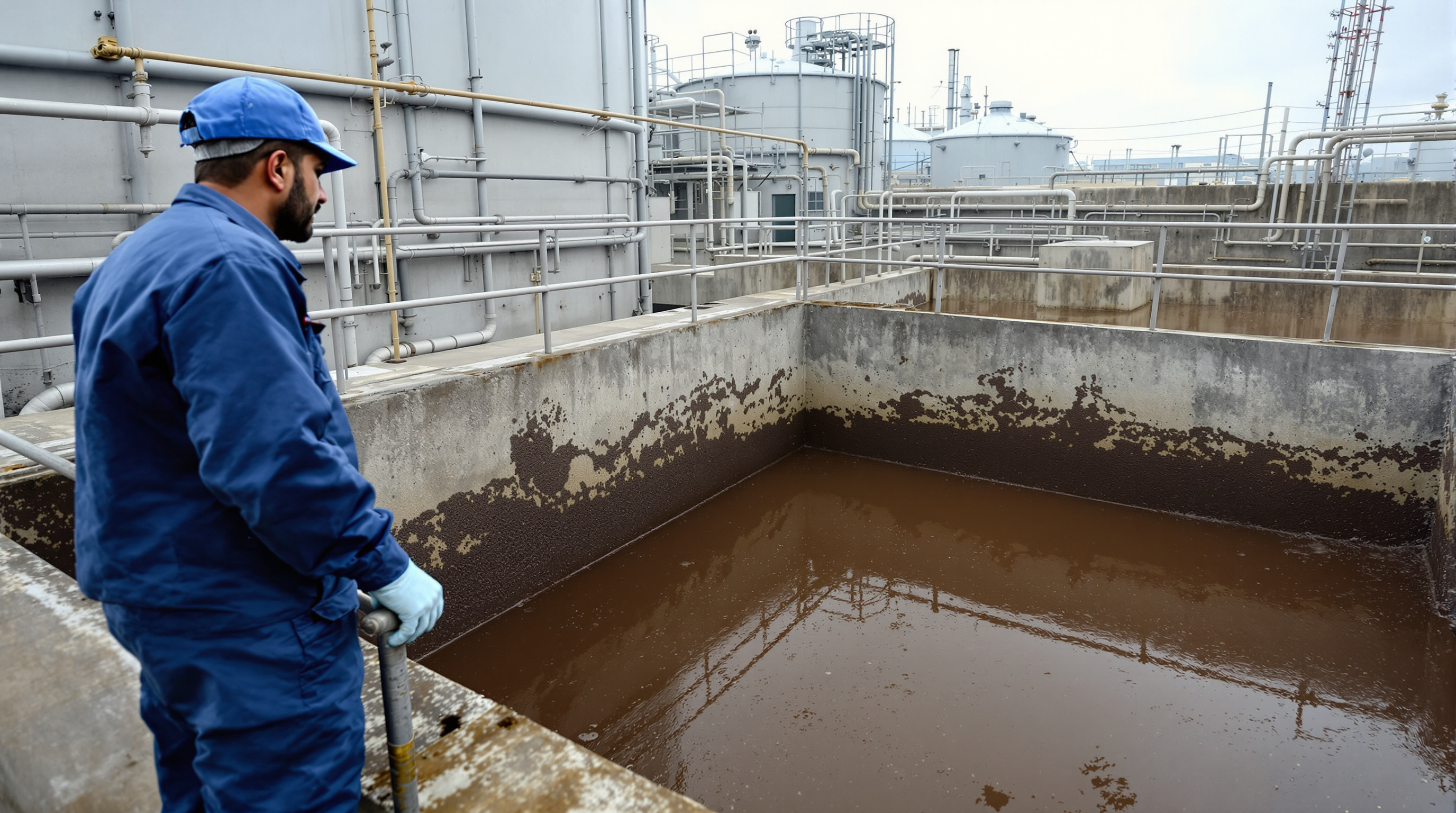
Sludge is generated at almost every stage of treatment. Solids settle out in primary tanks, and in the biological stage the activated sludge process constantly grows new microbial mass. The clarifier concentrates it at the bottom, and the excess ("waste activated sludge") is pumped to a sludge holding tank, where it is stored and gently aerated until it is ready to be dewatered.
At this point the sludge is typically 1–3% solids — meaning 97–99% of what you are looking at is still water. You cannot bag it, you cannot landfill it, and you certainly cannot cart it economically. Dewatering reduces that water content dramatically, so the final product is:
- Small enough to haul — a fraction of the original volume and weight.
- Solid enough to handle — a moist cake, not a slurry that sloshes out of the truck.
- Stable enough to dispose of — as landfill cover, or after further composting, as a soil conditioner.
How a sand drying bed works
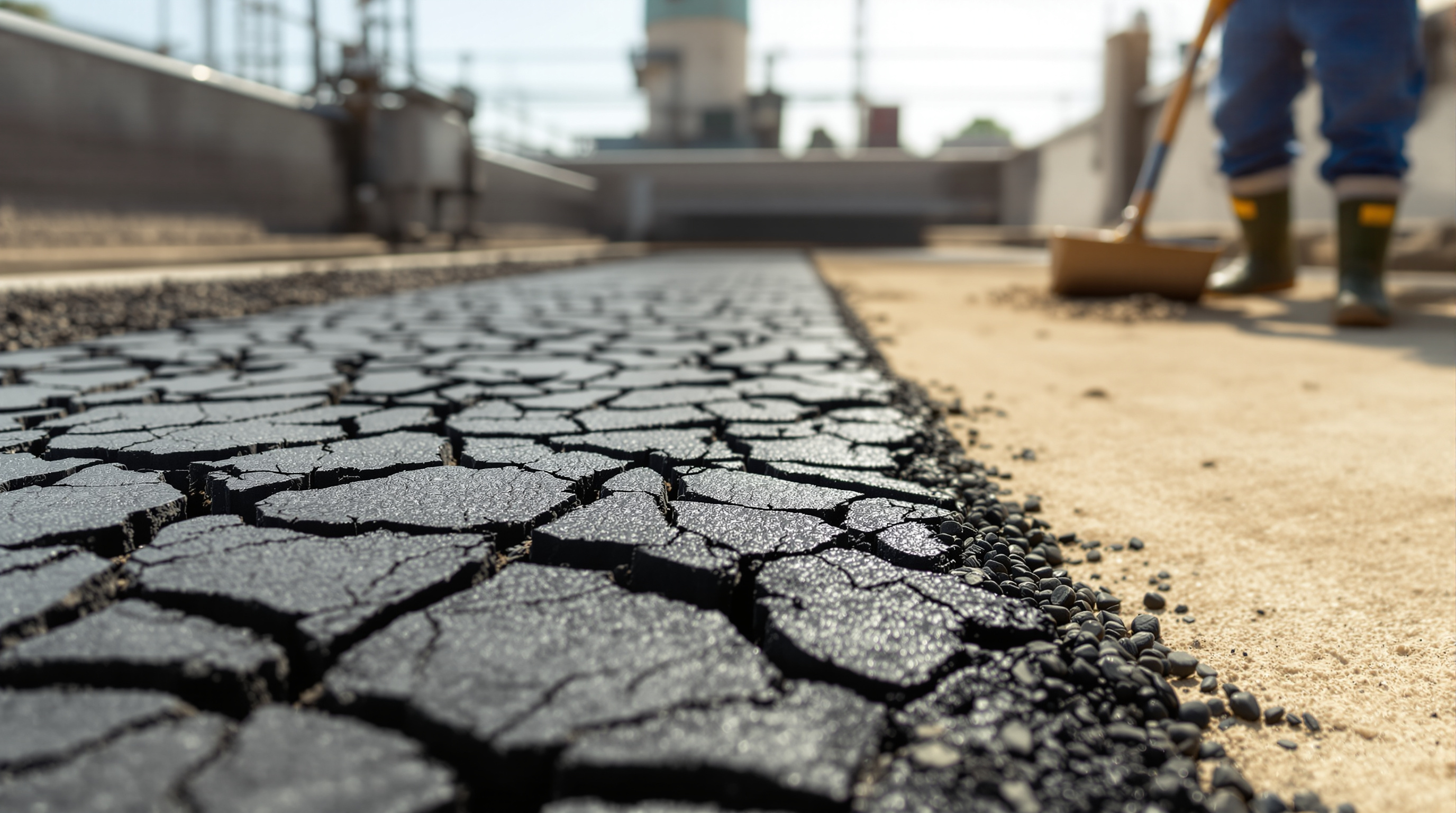
The classic sludge drying bed is beautifully low-tech: an open, shallow, rectangular basin with a layered floor. Wet sludge is pumped in as a layer 200–300 mm deep and left to dry through two mechanisms working at once.
1. Drainage (the fast part). The floor of the bed is built up in layers — coarse gravel at the bottom, then finer gravel, topped with a 150–300 mm layer of clean sand. Perforated underdrain pipes run beneath the gravel. As soon as sludge is applied, free water percolates down through the sand, into the gravel, and out through the underdrains within the first day or two. This filtrate is collected and sent back to the head of the plant — usually the equalization tank — to be treated again. Drainage alone removes a large share of the water quickly.
2. Evaporation (the slow part). Once the free water has drained, the remaining moisture must leave as vapour. The top of the sludge forms a crust, cracks as it shrinks, and those cracks let air reach the wet material underneath. In a warm, dry Indian climate this takes 1 to 3 weeks; in the monsoon, with the beds exposed to rain, it can take much longer — which is why beds are often built with a transparent roof or in covered sheds.
When the cake has shrunk, cracked and pulled away from the sand — usually at 60–70% moisture — a worker lifts it off with a spade or a small loader, and the bed is scraped, the top sand topped up, and refilled for the next batch.
The layered floor, from top to bottom
| Layer | Typical depth | Job |
|---|---|---|
| Sludge (applied) | 200–300 mm | The wet batch being dried |
| Sharp sand | 150–300 mm | Filters solids, lets water pass, forms the cake surface |
| Fine gravel | 150–250 mm | Transition layer, stops sand washing down |
| Coarse gravel | 200–300 mm | Surrounds and protects the underdrain pipes |
| Perforated underdrains | — | Carry drained filtrate back to the plant |
How much area do drying beds need?
This is the question that decides whether beds are practical for your site. Drying beds are land-hungry — that is their single biggest drawback. Sizing depends on how much sludge the plant produces, the climate, and how many drying cycles you can fit into a year.
As a directional rule of thumb for domestic STPs in Indian conditions, a rough starting point is on the order of 0.1–0.25 square metres of bed area per m³/day of plant capacity, split across at least two or three beds so one can dry while another is being filled and a third emptied. In practice:
- A small 100 KLD STP might need a few beds totalling roughly 20–40 m².
- A large 1 MLD plant would need beds measured in hundreds of square metres — often the point at which land cost tips the decision toward a machine.
To translate your building's occupancy into a plant capacity in the first place, run the numbers through the STP Capacity Calculator or estimate flows with the Sewage Generation Calculator. Treat every drying-bed area figure here as a planning estimate — the real design depends on sludge quantity and local rainfall, and should be confirmed by your STP consultant.
Typical problems and O&M
Drying beds are simple, but they are not maintenance-free:
- Clogged sand and underdrains. Fine solids and grease gradually blind the sand so water stops draining. The fix is routine: scrape and replace the top 20–30 mm of sand periodically, and keep grease out upstream with a working oil and grease trap.
- Rain during monsoon. Uncovered beds simply stop working when it rains — the cake re-wets. Covered beds or a transparent roof are almost essential in high-rainfall parts of India.
- Odour and flies. Sludge that sits too long or too deep turns septic and smells. Applying thinner layers, not overloading the bed, and lifting the cake promptly keep nuisance down.
- Applying too thick. Over-deep layers never dry through the middle. Discipline on batch depth is the main operating skill.
When to skip beds: mechanical dewatering
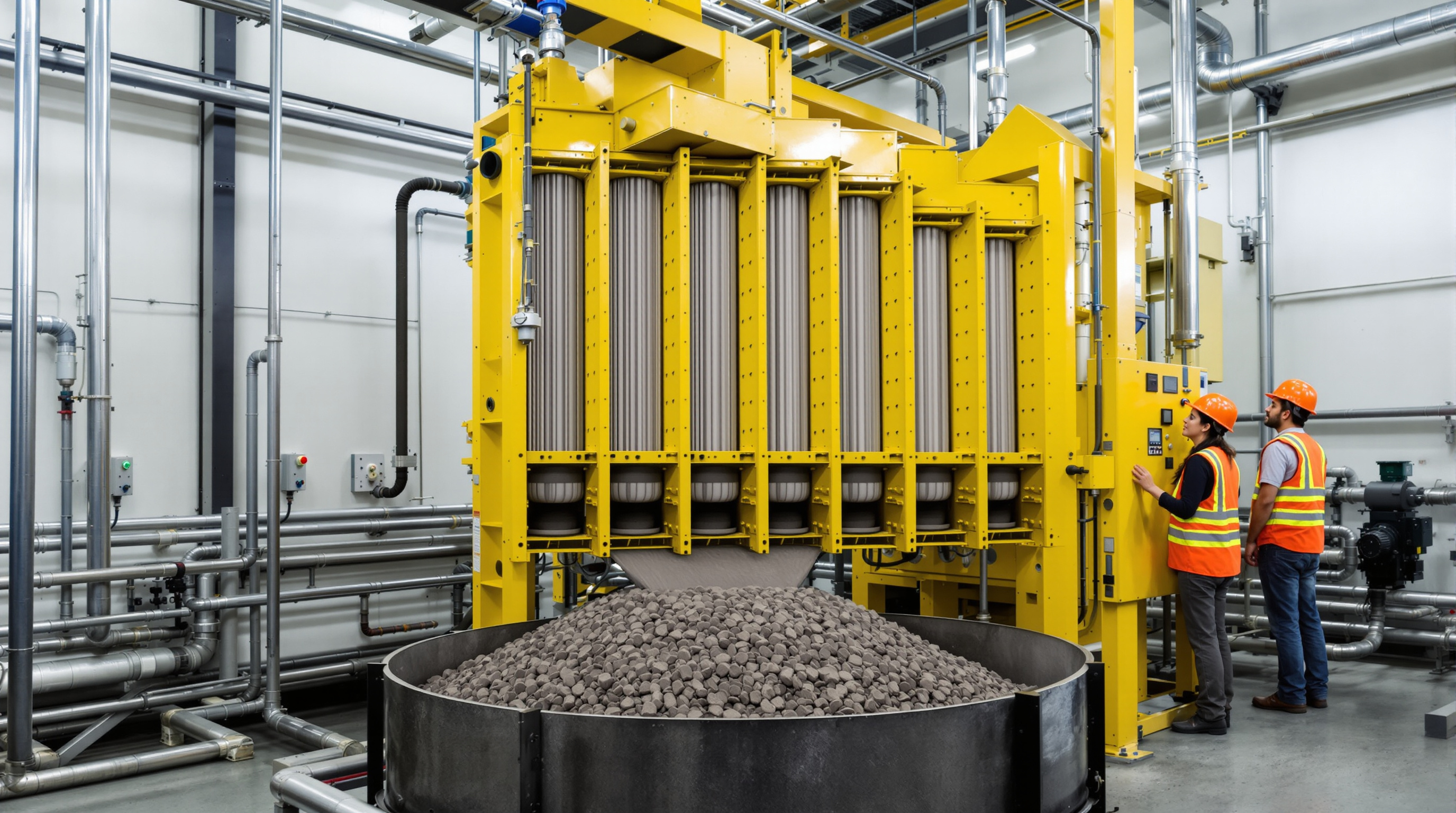
When land is scarce, sludge volumes are large, or you simply cannot wait weeks for the sun, sludge is dewatered by machine instead. These run continuously, need far less space, and give you a predictable, drier cake regardless of the weather — at the cost of power, spare parts and skilled operation.
| Method | How it works | Cake dryness | Best for |
|---|---|---|---|
| Sand drying beds | Gravity drainage + solar evaporation | ~30–40% solids | Small plants, cheap land, warm dry climate |
| Filter press (plate-and-frame) | Sludge squeezed between plates under high pressure | ~30–40%+ solids, driest cake | Batch operation, drier cake, mid-large plants |
| Belt filter press | Sludge pressed between two moving belts through rollers | ~18–25% solids | Continuous operation, moderate power |
| Centrifuge (decanter) | High-speed spinning flings solids to the bowl wall | ~20–28% solids | Compact footprint, large plants, minimal odour |
Most machines also need a small dose of polymer (a flocculant) mixed into the sludge first, to make the fine particles clump so they release water more readily. The choice among them comes down to the same trade-off every time: beds cost land and time but almost no money to run; machines cost money and skill but almost no land or time. A compact basement STP in a metro almost always ends up with a filter press or centrifuge; a plant on a spacious campus with cheap land and strong sun often sticks with beds.
Where drying beds sit in the treatment flow
Drying is the very last step of the solids stream, running in parallel with the water treatment you can trace in the STP process flow guide. The clean water leaves through filtration and disinfection for reuse; the sludge, meanwhile, travels from clarifier to holding tank to drying bed, ending as a cake that is trucked out every few weeks. It is the one genuine "waste" the whole plant produces — and getting rid of it cheaply is a real part of an STP's running cost.
To see how this stage fits the whole machine, start with What is a Sewage Treatment Plant, and browse the full Sewage Treatment Plants guide library for the tanks and processes that feed sludge to the beds in the first place.
Export this guide
Related Guides — Deep-dive reading
Sludge Generation Estimation in STPs: How Much Sludge Will Your Plant Produce?
Every STP that cleans water also makes sludge — and the biosolids you forget to plan for become the operating headache you cannot ignore. Here is how to estimate sludge generation, understand the yield concept, and size dewatering before you build.
Sewage Treatment PlantsSTP Sludge Removal & Disposal: A Practical O&M Guide for Operators
How to waste sludge on schedule, dewater it on drying beds or a filter press, dispose of or reuse it safely, and keep the compliance records that inspectors ask for — written for the people who actually run building STPs in India.
Sewage Treatment PlantsSludge Holding Tank in an STP: Role, Sizing & Odour Control Explained
The tank that stores, aerates and thickens waste sludge before it is dewatered — what it does, how big it needs to be, why it smells if neglected, and where it sits in your STP's treatment flow, in plain language.
Sewage Treatment PlantsRelated Tools — Try Free
Sewage Generation Calculator
Estimate the daily sewage a building generates and its peak flow in KLD from occupancy, LPCD, sewage return factor and peak factor.
STP CalculatorSTP Capacity Calculator
Size a sewage treatment plant in KLD from your building's occupancy — water demand, sewage generated and recommended STP capacity.
STP CalculatorApartment STP Planner
Plan an apartment complex sewage treatment plant from flats and occupancy — get population load, sewage flow, recommended STP capacity in KLD, treatment technology and approximate space.
Planner