

STP Odour Control Design: Why STPs Smell and How to Stop It
Sewage plants only stink when something is wrong. This guide explains what actually causes STP odour, and the practical fixes — keeping the plant aerobic, sealing and venting foul air, activated-carbon and bio-scrubbers, and smart siting — that keep a plant a good neighbour.
The single loudest complaint an apartment association or facility manager will ever field about their sewage treatment plant is not about power bills or water quality. It is about the smell. A plant that stinks turns residents against the very idea of on-site treatment, invites pollution-board notices, and quietly signals that something in the process has gone wrong. Because that is the key insight most people miss: a healthy, correctly operated STP is almost odourless. When an STP smells, it is not doing its job — the odour is a symptom, not an inevitability.
This guide is for the professional designing or troubleshooting a plant, and for the informed owner who wants to know whether the smell they are living with is normal (it is not) and what can fix it. We will cover why STPs smell, and the four levers of odour control: keeping the biology aerobic, sealing and venting the foul air, scrubbing what escapes, and siting the plant sensibly in the first place.
The smell of a sewage plant is the smell of oxygen starvation. Keep the microbes breathing and the rotten-egg gases are never made in the first place — everything else is a second line of defence.
Why STPs smell: the chemistry of a rotten plant
Fresh domestic sewage is not strongly offensive. The eye-watering "rotten egg" and "drain" smells come almost entirely from what happens when sewage goes septic — that is, when it sits without oxygen and a different, anaerobic population of bacteria takes over.
Aerobic microbes (the ones an STP is built around) breathe dissolved oxygen and produce carbon dioxide and water — no smell. Starve them of oxygen and anaerobic bacteria step in, breaking down the same organic matter but releasing a cocktail of nuisance gases:
- Hydrogen sulphide (H₂S) — the classic rotten-egg smell, detectable by the human nose at astonishingly low concentrations and also corrosive and toxic.
- Ammonia — sharp, from the breakdown of nitrogen compounds.
- Mercaptans and volatile organic acids — the "sour drain" and cabbage-like notes.
So the design question is not "how do we mask the smell?" but "where in the plant is sewage going anaerobic, and how do we stop it?" The usual culprits are predictable:
- Raw sewage sitting too long in collection sumps, equalisation tanks or long gravity mains before it reaches aeration.
- Under-aeration — a blower undersized, tripped, or throttled to save power, so dissolved oxygen in the aeration tank falls below the ~1.5–2.0 mg/L the biology needs.
- Sludge left too long in clarifiers, thickeners or drying beds, where it turns septic and gases off.
- Screenings and grease rotting in the preliminary chambers.
Get the plant back to genuinely aerobic operation and the majority of odour complaints disappear at the source.
Lever 1 — Keep the plant aerobic (the real fix)
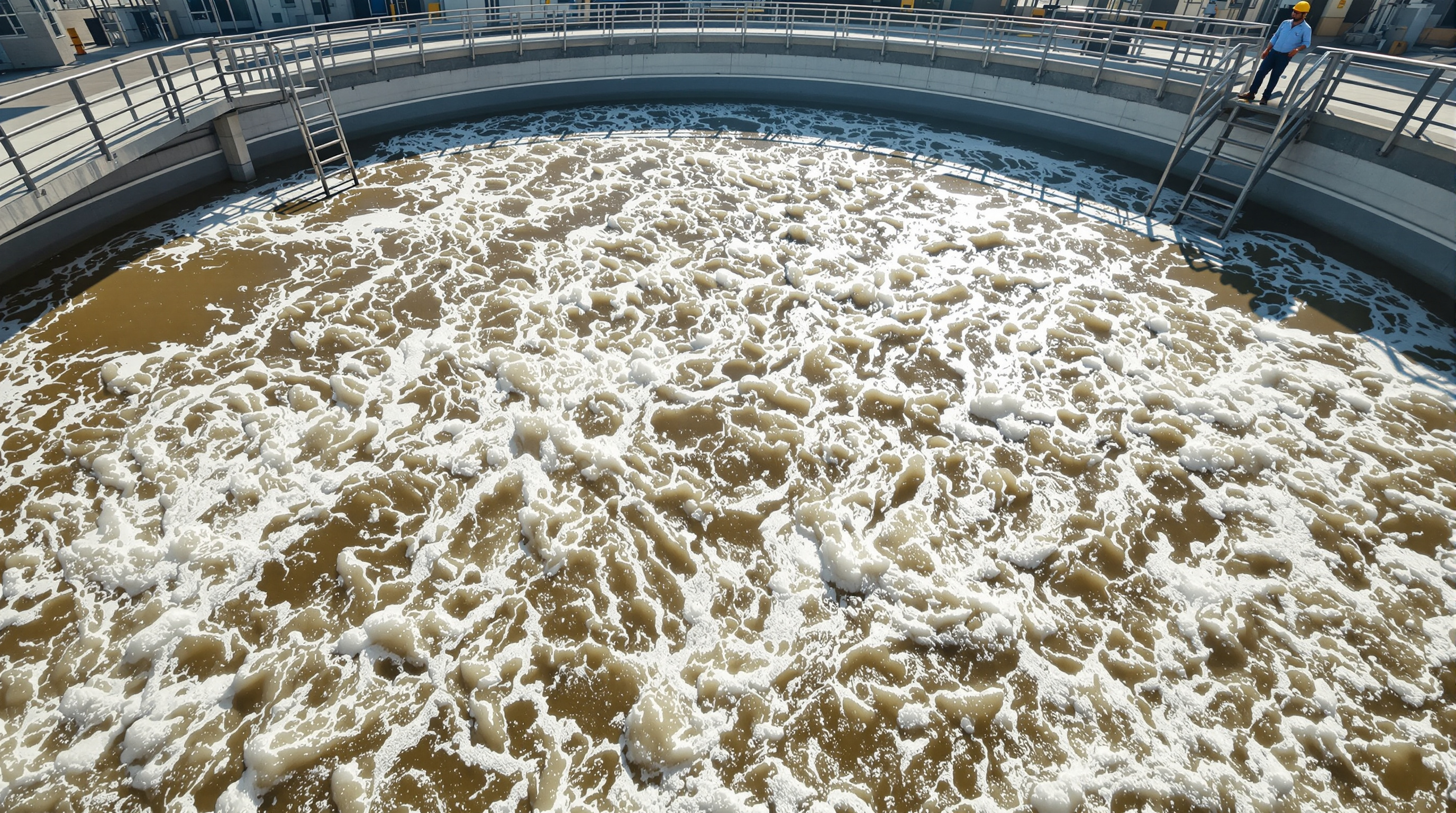
Every other technique on this page is damage control for air you failed to keep clean. The primary design objective is to never let sewage sit oxygen-starved.
- Aerate the equalisation tank. The single most effective — and most often skipped — odour measure is coarse-bubble aeration or mechanical mixing in the raw-sewage equalisation tank. It keeps incoming sewage fresh and stops H₂S forming before biological treatment even begins.
- Size and maintain the blowers properly. Chronic under-aeration is usually a false economy — the plant tips septic and smells. Design for dissolved oxygen in the aeration tank of 2 mg/L and don't let operators throttle below it. Continuously aerated technologies like the activated sludge process and MBBR are inherently low-odour when run right; anaerobic front-ends such as UASB inherently produce sulphide-rich gas and demand enclosed, vented, scrubbed design.
- Move and dewater sludge promptly. Wasted sludge should not linger. De-sludge clarifiers on schedule and don't let sludge sit on drying beds past the point where it stabilises.
- Keep screens and grease traps clean. A daily housekeeping routine on the preliminary chambers removes the small, concentrated sources of smell that no scrubber will ever fully catch.
If your plant is chronically septic because it is simply overloaded or undersized, no amount of venting will save it — start with the How to Size an STP guide and the STP Capacity Calculator to confirm the plant matches the load it is actually receiving.
Lever 2 — Seal and vent the foul air
Even a well-run plant produces some foul air at specific points — the wet well, the screen chamber, the equalisation tank surface. The strategy is containment and controlled ventilation: don't let that air drift across the property; capture it and send it somewhere safe.
- Enclose the odour-generating units — screen chambers, sumps, equalisation and sludge tanks — with sealed covers rather than open surfaces. This matters most in underground STPs, where foul air otherwise collects in the basement.
- Design a dedicated foul-air extraction system. Small exhaust fans draw air from the headspace of covered tanks and route it through a duct to a treatment unit and a vent stack, keeping those spaces under slight negative pressure so nothing leaks out at ground level.
- Take the vent stack high and clear. Discharge the (ideally scrubbed) air well above the plant and away from balconies, windows and walkways so any residual trace disperses.
Containment does double duty: it protects concrete and steel from H₂S corrosion, and it collects all the foul air into one manageable stream you can then clean.
Lever 3 — Scrub the captured air
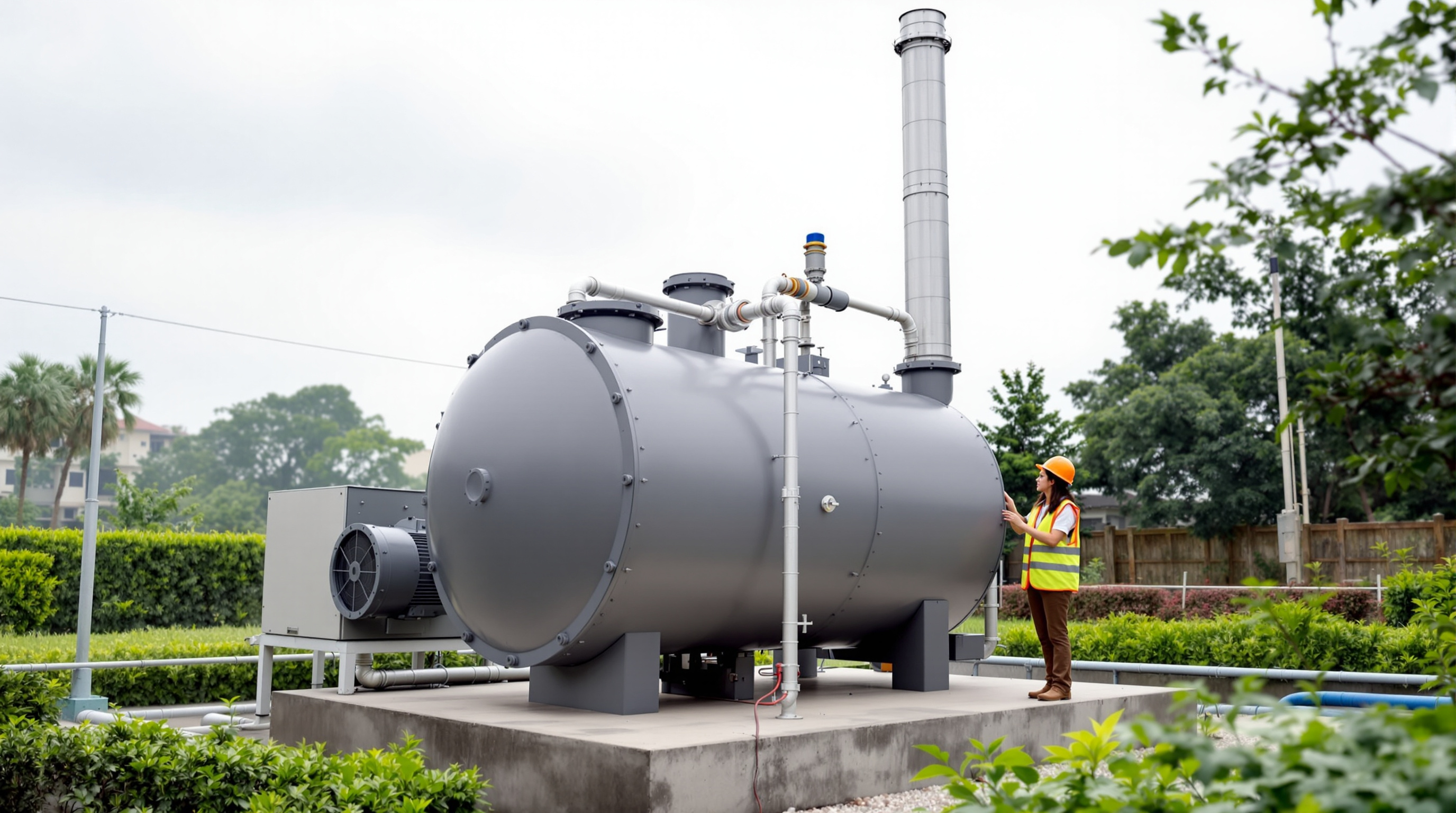
Once foul air is captured, it passes through an odour-control unit before release. Two families dominate Indian practice; the right choice depends on the load and the operator's appetite for maintenance.
| Technology | How it works | Best for | Trade-offs |
|---|---|---|---|
| Activated-carbon filter | Foul air passes through a bed of activated carbon that physically adsorbs H₂S and organic odour molecules | Small–medium plants, low–moderate odour loads; simplest option | Carbon saturates and must be replaced periodically — a recurring cost; poor fit for very high sulphide loads |
| Biofilter / biotrickling filter | Air passes through a moist media bed where microbes consume the odour compounds biologically | Steady, continuous high loads; low running cost once established | Larger footprint; needs moisture and acclimatised biology; slower to respond to shock loads |
| Chemical (wet) scrubber | Foul air is contacted with a chemical solution (e.g. caustic/hypochlorite) that reacts with H₂S | High, variable sulphide loads; industrial-scale plants | Chemical handling, dosing and effluent to manage; higher operating complexity |
For most residential and commercial STPs in India, a well-maintained activated-carbon unit on the captured foul-air stream is the pragmatic default — provided the upstream biology is aerobic so the carbon is polishing a light load, not fighting a chronically septic plant. Larger STPs, or those with an anaerobic stage, justify a biofilter or wet scrubber. Note that the activated-carbon filter in the tertiary treatment train polishes the water; the odour scrubber here treats the air — two different carbon beds doing two different jobs.
Lever 4 — Site and lay out the plant well
The cheapest odour control is designed in before a single tank is poured. Siting decisions made at the STP site-selection stage set the ceiling on how much any downstream fix can achieve.
- Distance and wind. Place the plant, and especially its vent stack, downwind of and away from the most sensitive receptors — bedrooms, clubhouses, restaurant seating, the main entrance. Study the prevailing wind direction on the site.
- Buffer with landscaping. A vegetated buffer or green screen between the plant and occupied areas both disperses residual odour and softens the plant visually.
- Ventilate the plant room. For an underground plant, adequate mechanical ventilation of the plant room itself is a safety requirement (H₂S is toxic and heavier than air) as much as an odour one.
- Plan access for housekeeping. A layout where operators can easily reach screens, grease traps and sludge beds is a layout that stays clean — and clean plants don't smell. See the STP layout-planning guide for the full picture.
The bottom line
Odour control is not a bolt-on gadget; it is the visible proof that an STP is being run the way it was designed to be. The hierarchy is clear: keep the biology aerobic so the smell is never made, contain and vent the foul air that is unavoidable, scrub that captured stream with carbon or a biofilter, and site the plant so residual traces disperse harmlessly. A plant that follows all four almost never generates a complaint.
If your existing plant smells, resist the urge to buy a bigger scrubber first. Check dissolved oxygen, blower runtime and sludge age — the fix is usually upstream. From here, continue through the Sewage Treatment Plants guide library for the biology and machinery behind each stage, or compare enclosed underground layouts with the Underground vs Aboveground STP Comparator to weigh the containment trade-offs before you build.
Export this guide
Related Guides — Deep-dive reading
Biological Culture Management in an STP: The Heart of Good O&M
The microbes in your aeration tank do the actual work of cleaning sewage. Keep them healthy — the right MLSS, food, oxygen and nutrients — and everything else falls into place. Here is how operators manage the living culture, diagnose bulking and foaming, and recover after a crash.
Sewage Treatment PlantsDaily STP Checklist: What Operators Must Check Every Day
The exact round an STP operator should walk every single day — dissolved oxygen, blowers, MLSS colour and smell, flow, chlorine residual, screens, pumps and the logbook — laid out as a practical checklist a facility manager can actually follow.
Sewage Treatment PlantsUnderground vs Above-Ground STPs: The Complete Comparison Guide
Space, cost, maintenance, odour, aesthetics, ventilation and flood risk — a plain, honest comparison of underground and above-ground sewage treatment plants, and how to choose the right one for your Indian project.
Sewage Treatment PlantsRelated Tools — Try Free
Cross-Ventilation Analyzer
Estimate airflow and air changes per hour (ACH) from room size, window areas, layout, and local wind — with NBC 2016 Part 8 compliance check.
Ventilation CalculatorFalse Ceiling Cost Estimator
Live ₹/sqft across 8 ceiling types — POP, gypsum, designer, metal, PVC, wooden — with cove and spot lighting for 20 Indian cities.
Cost CalculatorApartment STP Planner
Plan an apartment complex sewage treatment plant from flats and occupancy — get population load, sewage flow, recommended STP capacity in KLD, treatment technology and approximate space.
Planner