
Site Analysis for Homeowners: How to Read a Plot Before You Build
The master guide to reading your land — its legal envelope, sun, wind, slope, soil, access, neighbours, views, services and microclimate — before you buy a plot or draw a plan.
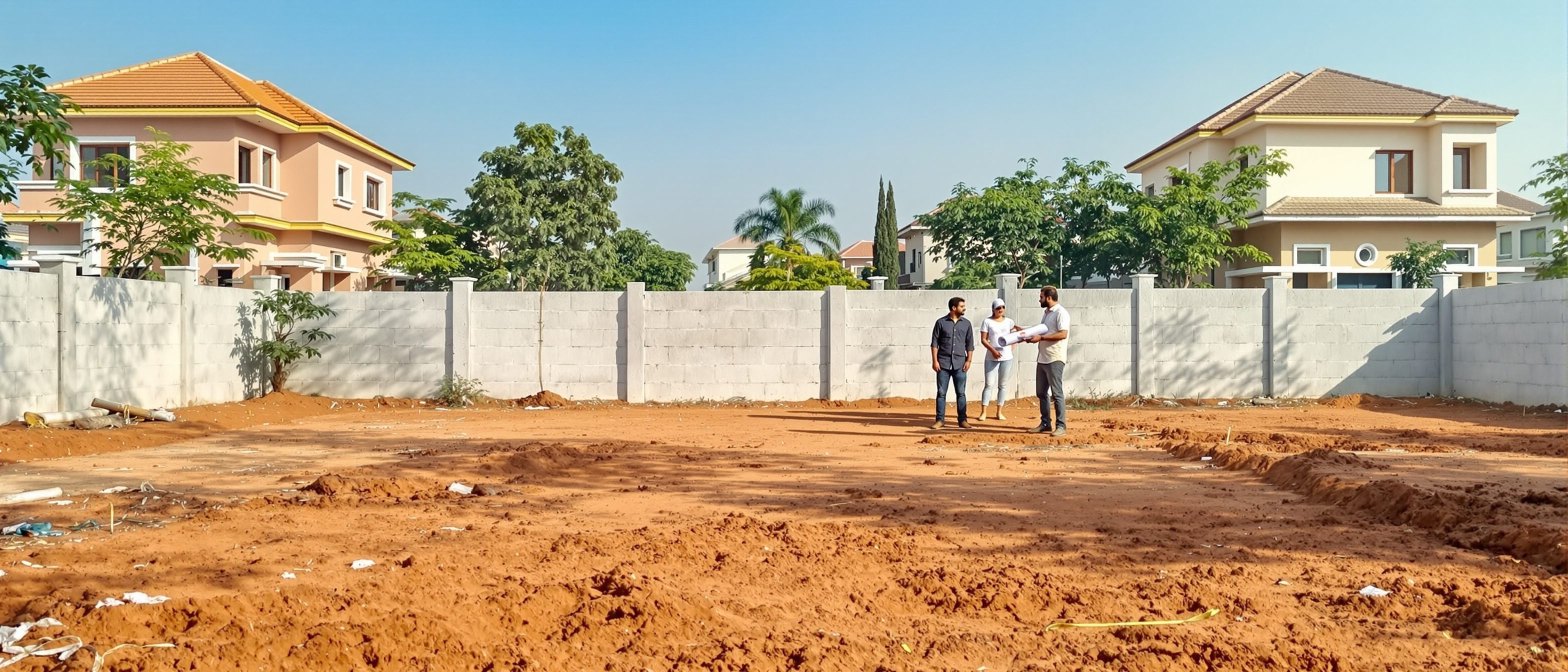
A family in Bengaluru pays the full asking price for a tidy 30×40 plot in a gated layout, charmed by the wide road and the corner location. Two summers later they discover the long west wall bakes every afternoon, the monsoon sends the neighbour's runoff straight under their compound gate, and the only good light comes from the side they walled up for privacy. None of this was hidden. It was all readable on the day they signed — if anyone had known how to look.
This is the quiet truth behind most disappointing homes: the building was fine, but the site was never properly read. A plot is not a blank rectangle. It is land with a direction, a tilt, a wind, a water path, neighbours, a soil and a legal envelope — and a house can either cooperate with all of that or fight it for thirty years.
Reading a site is a learnable skill, and you do not need to be an architect to do the first, most important pass yourself. This guide is the map of the whole territory: ten dimensions to check, what each means for your money and comfort, and where to go deeper.
The single argument of this guide: read your land across all ten dimensions — legal, sun, wind, slope, soil, access, neighbours, views, services and microclimate — before you buy or design, because almost every flaw a site has is cheap to avoid at this stage and ruinously expensive to fix once concrete is poured.
1. Where this guide sits
Studio Matrx has two close cousins to this article, and it helps to know the difference so you read the right one. Site Analysis for Architecture in India treats the subject as a formal studio discipline for students and professionals; Understanding Site Planning for Residential Projects approaches the plot from the landscape and garden side. This guide is the practical homeowner master: it assumes you are standing on, or about to buy, a real plot and want to know what to look at, in plain language, before money changes hands.
Think of it as the hub of a wheel. Each of the ten dimensions below has a dedicated, deeper guide in this cluster, and three interactive Studio Matrx tools let you put numbers to the most decisive ones. Skim this page to get the whole picture; follow the links to go deep where it matters for your plot.
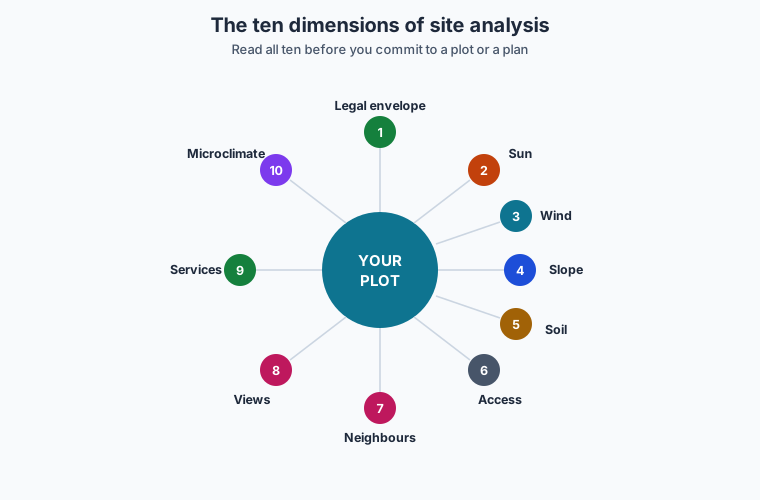
Figure 1: The ten dimensions of site analysis. No single layer decides a plot — you read them together, and the worst plots fail on several at once.
2. The ten dimensions at a glance
Here is the whole framework as a checklist. For each dimension there is a one-line "what to check" and a link to the guide that covers it in depth. Print this, take it to the plot, and tick as you go.
| # | Dimension | What to check (one line) | Go deeper |
|---|---|---|---|
| 1 | Legal envelope | Zoning, plot area, FSI/FAR, setbacks, height limit, road width — what you may actually build | This guide, §3 |
| 2 | Orientation & sun | Which way the plot faces; where summer and winter sun fall on each wall | Site orientation explained |
| 3 | Wind & ventilation | Prevailing breeze direction by season; whether you can cross-ventilate | Understanding wind analysis |
| 4 | Slope & drainage | How the ground falls; where rain collects and exits; flood risk | Designing on a sloping site |
| 5 | Soil | What the ground is made of — black cotton, rock, fill, sand — and its bearing capacity | This guide, §6 |
| 6 | Access & street | Road width, gate position, parking, turning, distance from junction | Evaluating a residential plot |
| 7 | Neighbours & overlooking | Adjacent windows, heights, future construction, who can see in | Designing for views & privacy |
| 8 | Views | What you'd want to frame; what you'd want to screen | Designing for views & privacy |
| 9 | Services & utilities | Water, power, sewer, drains, gas, internet — present, planned or absent | Evaluating a residential plot |
| 10 | Microclimate | The local heat, damp, glare and breeze created by neighbours, paving and trees | Understanding sun-path analysis |
The rest of this guide walks through each in turn, then closes with a visit checklist and the mistakes that catch buyers out.
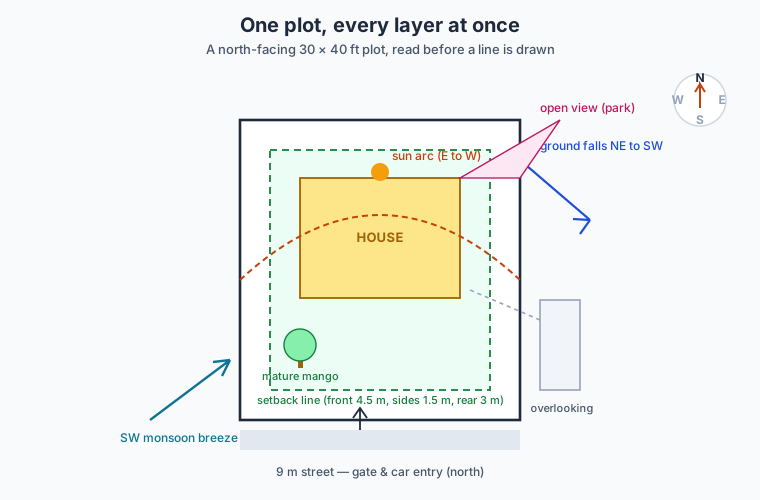
Figure 2: A single plot carries every layer at once — the skill is learning to see them all on one drawing rather than one at a time.
3. The legal envelope: what you may actually build
Start here, because it caps everything else. A plot's value to you is not its area but its buildable area — the slice left after the bye-laws take their share. Three numbers decide it.
Setbacks are the mandatory open margins you must leave on each side. They grow with plot size and road width and vary by city: a small plot might need a 1.5 m side and 3 m rear, a larger one 3 m or more all round. FSI (Floor Space Index), also called FAR, sets total floor area as a multiple of plot area — roughly 1.5 to 2.5 for residential plots in most Indian cities, higher in a few metro pockets. Height and ground-coverage limits then cap how that area stacks up. The National Building Code (NBC 2016) frames these nationally, but the binding numbers are in your local development authority's bye-laws — BBMP, BDA, PMC, CMDA, GHMC and so on.
"The provisions of this Code apply to the design, construction, alteration, addition... so as to ensure safety from fire, structural failure and health hazards." — National Building Code of India (NBC 2016), on the purpose of the building bye-laws every plot is subject to.
Don't eyeball this. Run your plot's dimensions and your city's FSI through the FAR/FSI calculator to see your real built-up potential, and use the setback visualizer to watch the buildable rectangle shrink as the margins come in. A plot that looks generous can lose 40% of its footprint to setbacks alone — better to know before you pay.
What to check
- Approved layout / khata / RTC and that the plot is residential-zoned, not agricultural or under any reservation.
- Front road width on record (it drives both setbacks and permissible FSI).
- Any high-tension line, nala, drain, or future road-widening reservation crossing the plot.
4. Orientation and the sun
The direction your plot faces decides which walls cook and which stay cool, where you place living rooms versus service areas, and how much you'll spend on cooling for the life of the home. In India's predominantly hot climate the prize is to keep the harsh west and south-west sun off your main living spaces and glazing, while welcoming gentle morning light from the east and steady, glare-free light from the north.
A north or east entrance is generally the most forgiving; a plot whose only long open face is to the west needs deep shading, smaller west windows and careful planting. Crucially, the sun's path changes with season — high overhead in summer, low and raking in winter — so a wall that's shaded in June can be glared at in December.
Because this single dimension reshapes the whole plan, it has its own guide — Site orientation explained for Indian homes — and the sun-path analyzer lets you see the sun's arc over your specific plot, latitude and date so you can position rooms and overhangs with real angles rather than guesswork.
5. Wind and ventilation
Good natural ventilation is the cheapest comfort you will ever buy, and it is entirely a function of how the prevailing wind crosses your plot. Most of India's habitable winds blow from the south-west during the monsoon and from the south-east or east in other seasons, but it is intensely local — a tall neighbour, a compound wall or a row of buildings can divert or kill the breeze entirely.
The homeowner's question is simple: can air enter one side of the house and leave the other? That cross-ventilation needs openings on opposite or adjacent walls aligned with the breeze, and it is far easier to design in at plot stage than to retrofit. Stand on the plot at different times and feel where the air comes from; note any obstruction upwind.
For the why and how, see Understanding wind analysis for your site, and test opening layouts against your plot's prevailing wind with the cross-ventilation analyzer. (Note that structural wind — the gust loads an engineer designs the building to resist — is a separate subject covered in wind loads on buildings; here we mean comfort airflow.)
6. Slope, drainage and soil
These two literally underlie everything. Slope is how the ground falls across the plot. A gentle fall is an asset — it drains rain naturally and can be terraced beautifully — but it must be measured, not eyeballed. Commission a simple level or contour survey; even a 300–600 mm difference across a plot changes where water collects and where the building should sit. A steep slope can be a wonderful site for a stepped, split-level home, but it adds retaining walls and cost, so go in with eyes open — the dedicated guide is Designing on a sloping site.
Drainage follows from slope. Walk the plot during or just after rain and watch where water pools, which way it runs, and whether the neighbour's or the road's water flows onto your land. Finished floor levels must sit above the road and above flood lines; the plot must be able to shed monsoon water without flooding the plinth.
Soil decides your foundation cost and risk. Black cotton soil (common across the Deccan) swells and shrinks dramatically with moisture and needs special foundations; rock is excellent but expensive to excavate; loose fill or reclaimed marshy land is a warning sign. A simple soil-bearing test from a local geotechnical lab is inexpensive insurance before you buy or design.
| Soil / ground type | Tell-tale signs | Implication for the homeowner |
|---|---|---|
| Hard murram / weathered rock | Firm, reddish, hard to dig | Excellent bearing; low foundation cost |
| Black cotton (expansive clay) | Dark, cracks when dry, sticky when wet | Swells & shrinks; needs deeper or designed foundations |
| Sandy / alluvial | Loose, drains fast | Usually workable; check water table |
| Filled / reclaimed land | Mixed debris, uneven settlement, near low-lying areas | High risk; insist on soil test and history |
7. Access, neighbours and views
Three human-scale dimensions that decide daily life. Access is the road and the gate: its width sets your setbacks and FSI, but also your parking, your turning circle (around 5–5.5 m radius is comfortable for a car), and how safely you enter. A plot tight to a busy junction or on a blind bend is harder than its area suggests. The plot-evaluation depth lives in How to evaluate a residential plot.
Neighbours and overlooking are about privacy and the future. Look at adjacent windows and balconies, who can see into your courtyard or terrace, and — critically — what could be built next door under the bye-laws, since today's empty plot is tomorrow's three-storey wall. Views are the flip side: what you'd love to frame (a park, a lake, distant hills) and what you'd rather screen (a transformer, a blank wall, the drying yards opposite). Both are covered together in Designing for views and privacy, because on a real plot the same window often does both jobs.
Two plot shapes deserve their own strategies because they concentrate these trade-offs: the corner plot, which gains light and access on two sides but loses area to double setbacks and exposure, and the narrow plot, where light, ventilation and privacy all become a single design puzzle.
8. Services and microclimate
Services and utilities are the unglamorous make-or-break: is there a municipal water connection or only borewell; is the electricity supply adequate and the transformer not right outside your bedroom; is there a sewer line or will you need a septic/STP; where do the storm drains run; is there piped gas and decent internet? An attractive plot with no water security or a failing drain is a long, costly fight.
Microclimate is the local weather your specific corner experiences, often quite different from the city average. A plot ringed by tall buildings traps heat and blocks breeze; a large paved forecourt radiates warmth into the evening; a mature tree on the south-west can drop the felt temperature by several degrees. Reflected glare, damp pockets and wind tunnels between towers are real and only visible on site. The sun-path analyzer helps you predict the shadowing part of the microclimate from neighbouring masses.
"Buildings, gardens, walls — everything at this scale is governed by the same balance of light, air and enclosure that we feel without being told." — after Christopher Alexander, A Pattern Language, on reading a place before shaping it.
9. The site-reading visit checklist
The most common — and most expensive — mistake is to visit a plot once, at one convenient time, and design from memory. The flaws that matter (heat, glare, flooding, overlooking, noise) only reveal themselves at the right hour or season. Visit four times if you can.
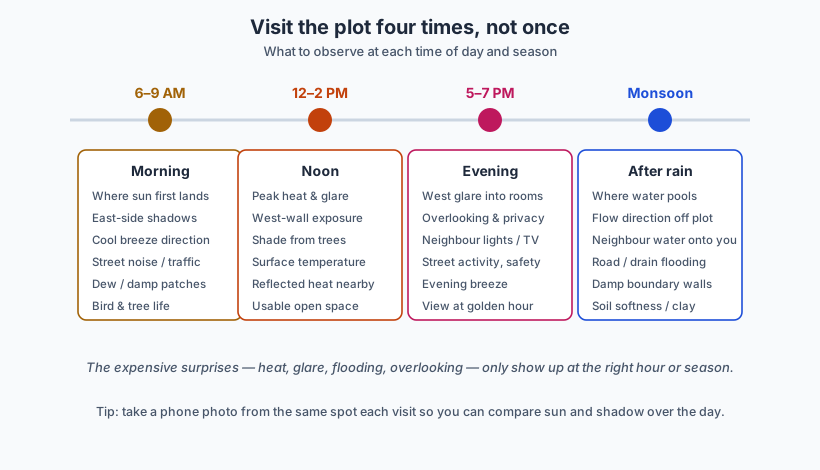
Figure 3: Visit the plot at four different times — each reveals a different layer that a single daytime visit hides.
| When to visit | What you're looking for | Why it matters |
|---|---|---|
| Morning (6–9 AM) | First sun, east shadows, cool breeze, street activity, damp patches | Sets where to put bedrooms, breakfast spaces, the morning garden |
| Noon (12–2 PM) | Peak heat, glare, west/south exposure, available shade | Shows which walls cook and where you must shade or avoid glazing |
| Evening (5–7 PM) | West glare, overlooking, neighbour lights/noise, safety, the view at golden hour | Decides privacy screening and the best living-space orientation |
| Monsoon / after rain | Water pooling, flow direction, road/drain flooding, soil softness | Reveals drainage and flood risk you cannot see in dry weather |
Bring a compass (or the phone compass), a measuring tape, this checklist, and your phone camera — photograph from the same spot each visit so you can compare sun and shadow over the day. To turn all these observations into a single comparable score across multiple plots, run each one through the plot-evaluation tool; it weighs orientation, access, shape, services and surroundings into one number so you can compare a Bengaluru corner plot against a Pune row-house site on the same scale.
10. The mistakes this all prevents
Every dimension above maps to a classic, avoidable regret — paying full price for a plot whose buildable area is half its size, walling up the only good light for privacy, discovering black cotton soil after the foundation quote, or buying the lowest plot in a layout that floods. These are gathered, with fixes, in Plot-selection mistakes to avoid — read it alongside this guide before you shortlist.
The encouraging part: none of this requires special equipment or expertise for the first pass. A compass, a tape, four visits and this checklist will catch the great majority of site problems. Where the stakes are high — a steep slope, suspect soil, a tight legal envelope — bring in a surveyor, a geotechnical test and an architect early. Reading the land first is the single highest-return hour you will spend on your home.
Sources & further reading
1. Bureau of Indian Standards, National Building Code of India (NBC) 2016, Volumes 1 & 2 — Part 3 (Development control, general building requirements) and Part 8 (Building services).
2. Bureau of Indian Standards, IS 1904: Code of Practice for Design and Construction of Foundations in Soils — guidance on bearing capacity and expansive (black cotton) soils.
3. Energy Conservation Building Code (ECBC) and Eco-Niwas Samhita (ENS), Bureau of Energy Efficiency, Government of India — orientation, shading and envelope guidance for residential buildings.
4. Local development authority building bye-laws — e.g. BBMP/BDA (Bengaluru), PMC/PMRDA (Pune), CMDA (Chennai), GHMC (Hyderabad), MCGM (Mumbai) — for binding setbacks, FSI/FAR and height limits.
5. Christopher Alexander, Sara Ishikawa & Murray Silverstein, A Pattern Language: Towns, Buildings, Construction (Oxford University Press) — patterns on site repair, sun, outdoor rooms and privacy.
6. Francis D. K. Ching, Architecture: Form, Space & Order — fundamentals of site, orientation and spatial organisation.
7. Survey of India and state revenue records — survey numbers, contour data and authoritative plot boundaries.
This is the master guide of the Site Planning cluster. To go deeper on the dimensions that decide your plot, read How to evaluate a residential plot, Site orientation explained, and — before you shortlist anything — Plot-selection mistakes to avoid.
Export this guide
Related Guides — Deep-dive reading
Understanding Site Planning for Residential Projects
A homeowner's landscape guide to reading your plot's sun, wind, water, soil and trees before zoning and building the grounds.
LandscapeSloping Site Design: Building on a Gradient
How to read a slope, choose between terracing, cut-and-fill and stilts, and turn a hillside plot in Pune, Bengaluru's outskirts or the Ghats into an asset instead of a liability.
Site PlanningUnderstanding Sun Path Analysis for Your Home
How the sun actually moves over an Indian site through the day and the year — and why that single fact quietly decides where your kitchen, bedroom and living room should sit.
Site PlanningRelated Tools — Try Free
Cross-Ventilation Analyzer
Estimate airflow and air changes per hour (ACH) from room size, window areas, layout, and local wind — with NBC 2016 Part 8 compliance check.
Ventilation CalculatorBrise-Soleil Visualizer
Interactive horizontal-louvre cut-off angle calculator — sun altitude, louvre depth, and spacing inputs with a live shadow preview. Computes θ = arctan(spacing/depth) for façade shading, ECBC envelope compliance, hospital daylight design, and tropical sun-control detailing.
Sun Shading ToolProperty Tax Calculator — 10 Indian Cities
Estimate annual municipal property tax across BBMP / MCD / MCGM / GHMC / GCC / KMC / PMC / AMC / TMC / PCMC — with self-occupied, tenanted, and age-rebate adjustments.
Property Tax