
Designing for Views and Privacy
The site-level craft of capturing the good view while screening the neighbour's window three metres away — tuned for dense Indian plots.
A family buys a 30x40 site in a Bengaluru layout. On paper it is lovely — a small park sits across the road to the east. But the house next door, barely three metres away across the side setback, has a first-floor balcony that looks straight into where the master bedroom will go. The architect's first scheme put a big picture window on that side "for light". Two years in, that window stays curtained 24 hours a day, and the park view to the east was never opened up at all.
This is the most common quiet failure in Indian homes. We think about views and privacy far too late — at the stage of curtains, frosted film and potted plants — when both are really decided much earlier, when we decide where the windows go and which way the rooms face. On a tight urban plot the two are locked together: every opening that lets you see out also lets someone see in.
The good news is that the tools are old, cheap and beautiful. A raised sill, a clerestory, a jaali, a courtyard — Indian builders have balanced openness and seclusion for centuries. You just have to use them on purpose.
Treat every window as a decision with two faces: what it lets you see, and what it lets others see of you — then place, size and screen it so the good view comes in and the gaze stays out, without choking off the daylight and cross-breeze your climate depends on.
1. Prospect and refuge: why we want both
There is a simple idea behind why some rooms feel wonderful and others feel exposed or boxed-in. We are happiest in a space that offers prospect — a long, open view out — together with refuge — a sense of being sheltered, our back protected, unseen by others. A window seat in a thick wall, a verandah under a deep eave, a reading nook beside a tall window: all of them give you the wide view and the protected back at once.
"There is a tendency to gravitate to places where you can see without being seen... places with a clear outlook (prospect) and a place of refuge." — paraphrasing the prospect-refuge principle developed by geographer Jay Appleton in The Experience of Landscape, and echoed in Christopher Alexander, A Pattern Language (patterns such as Window Place and Zen View).
For a homeowner this translates into a working rule. The rooms where you relax — living room, the spot where you have your morning coffee, the bed you wake up in — want prospect and refuge. So you give them a generous opening toward the good view, but you also make sure no one can stand and stare back into them. A room that is all glass and no shelter feels like a fishbowl; a room that is all wall and no outlook feels like a cell. The craft is the balance.
Alexander's Zen View pattern adds a sharp warning: do not splash a precious view across a whole wall where you see it constantly and stop noticing it. Frame it — catch it from a doorway, a turn in the stair, a single well-placed window — so it stays a small daily gift. On Indian plots, where genuinely good views are rare, this is liberating: you do not need a glass facade, you need one well-aimed opening.
2. Audit your site's views before you draw a single wall
Before the plan exists, walk the plot — or stand on the open terrace of the half-built shell — and look in all eight directions at roughly the height your future windows will sit. Some views are worth capturing; most are worth hiding. Write it down. This is the single most useful hour you will spend on the project, and it is the natural next step after the broader plot study covered in our site analysis for homeowners guide and the directional logic in site orientation explained.
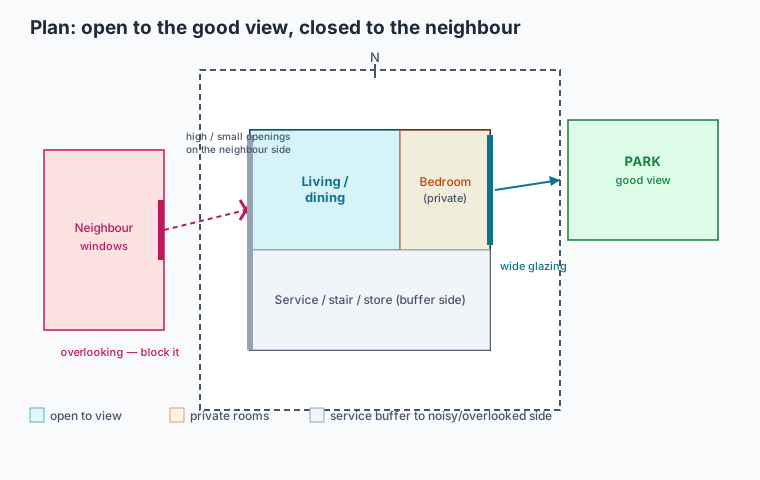
Figure 1: The whole strategy on one plan — wide glazing aimed at the park, blank or high windows on the overlooking neighbour's side, and a service zone used as a buffer.
A simple eight-direction audit table keeps you honest:
| Direction | What's actually there | Frame or screen? | Device |
|---|---|---|---|
| North | Neighbour's blank wall, 3 m away | Screen (but harvest the soft north light) | High clerestory, frosted glass |
| East | Park / open road | Frame | Wide low window in the living room |
| South-east | Distant hills, morning sun | Frame, with shading | Window + chajja / louvre |
| South | Adjacent terrace, washing lines | Screen | Jaali or raised sill |
| West | Neighbour's first-floor balcony looking in | Screen hard | Blank wall + high window only |
| Street (front) | Footpath, parked vehicles, passers-by | Screen ground floor | Raised plinth, compound, high sill |
The pattern that emerges almost everywhere in urban India is the same: one or two directions are worth opening to, and the rest need protecting. Your floor plan should follow that map — public, view-facing rooms toward the good direction; private rooms and the service spine (stairs, stores, toilets, utility) packed against the bad ones, where they double as a sound and sight buffer. This is the site-level half of privacy; the interior-level craft of zoning bedrooms and quiet retreats deep inside the house is covered in detail in zones of retreat, rest and privacy.
3. Three kinds of privacy — and they need different fixes
"Privacy" is really three separate problems, and a fix for one rarely solves the others.
Privacy from the street. Passers-by, the chaiwala, parked autos, and anyone on the footpath can see into a ground-floor room whose sill sits at the usual 0.6 m. The cheapest, oldest fix is height: raise the plinth half a metre to a metre so the floor is above eye level from the road, and the inside vanishes from view while you still see out over the boundary wall. Combine with a compound wall or planting at the front setback line.
Privacy from neighbours. This is the acute one on Indian plots, where side setbacks are often only 1–1.5 m and a neighbour's window or balcony can sit a few metres from yours. The killer is the direct, horizontal, eye-to-eye line between two windows at the same level. Break that line — stagger window positions so they do not align, raise sills on the neighbour side, or screen with a jaali — and most of the discomfort disappears.
Privacy between your own zones. Inside the house, you do not want a guest in the drawing room to see straight into a bedroom or the kitchen mess, and you want the puja or prayer corner to feel set apart. This is solved by planning — a buffer like a passage or wardrobe wall between public and private, a turn in the circulation so sightlines do not run straight through — rather than by screens on windows.
4. The tools of the trade
Here is the working toolkit, with the honest trade-off each one makes against the light and air you still need. None of these is free; every device that blocks a sightline also dims a room or slows a breeze a little, so choose the lightest tool that does the job.
| Privacy device | How it works | Light / air trade-off |
|---|---|---|
| Raised sill (1.5–1.8 m) | Window starts above standing eye level, so people outside see ceiling, not you | Minimal — you lose the low view out, daylight is barely affected |
| Clerestory / high window (above 2.1 m) | Opening sits near the ceiling, throws light deep into the room, no sightline either way | Excellent daylight and stack ventilation; you lose any view |
| Jaali / perforated screen | Lattice breaks the image into fragments — you can sense out, no one reads in | Cuts roughly 30–60% of light depending on porosity; lets breeze through; superb glare control |
| Louvres / fins (angled) | Tilted blades block the horizontal gaze but pass light from above and breeze between | Good light and air if angled up; adjustable louvres let you tune it |
| Frosted / textured glass | Passes light, blurs the image | Keeps daylight, kills the view and the breeze (it is sealed glass) |
| Level change / raised plinth | Floor sits above outsider eye level | No light or air penalty — pure geometry |
| Courtyard / internal opening | Rooms borrow light and air from a private inner space, not the boundary | Brilliant on tight plots; needs floor area |
| Planting / green buffer | Trees and hedges screen and soften, season by season | Living screen; deciduous species let in winter sun, shade in summer |
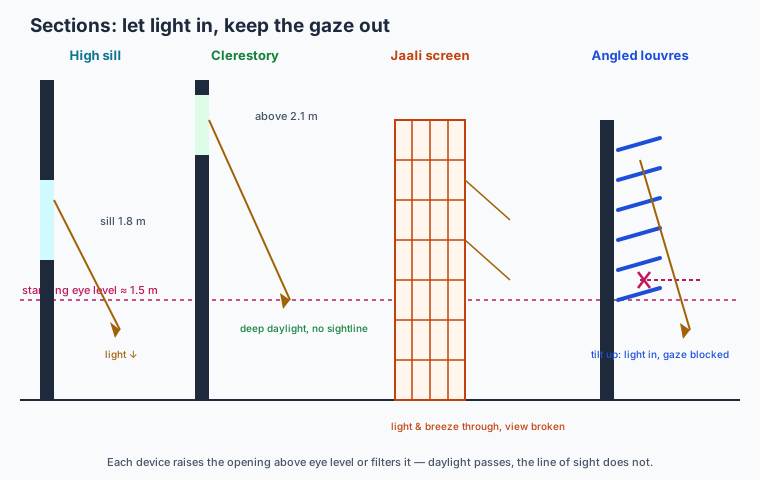
Figure 2: The four workhorses in section. Each one either lifts the opening above standing eye level (≈1.5 m) or filters it — daylight passes through, the line of sight does not.
Window placement and sill height
This is the lever you reach for first because it costs nothing. A standard sill is around 0.9 m; raise it to 1.5 m on a neighbour-facing wall and a seated person inside is invisible to a standing person outside, while the room still reads as bright. Stagger windows so yours never sits directly opposite the neighbour's — even half a metre of offset breaks the eye-to-eye line.
Clerestory and high windows
A strip of glazing near the ceiling is the most under-used trick in Indian homes. It pulls daylight deep into a plan, drives hot air out by stack effect (pairs beautifully with the airflow logic in our cross-ventilation analyzer), and gives away nothing of the room. Perfect on the dead, overlooked side of the house.
Jaali, screens and louvres
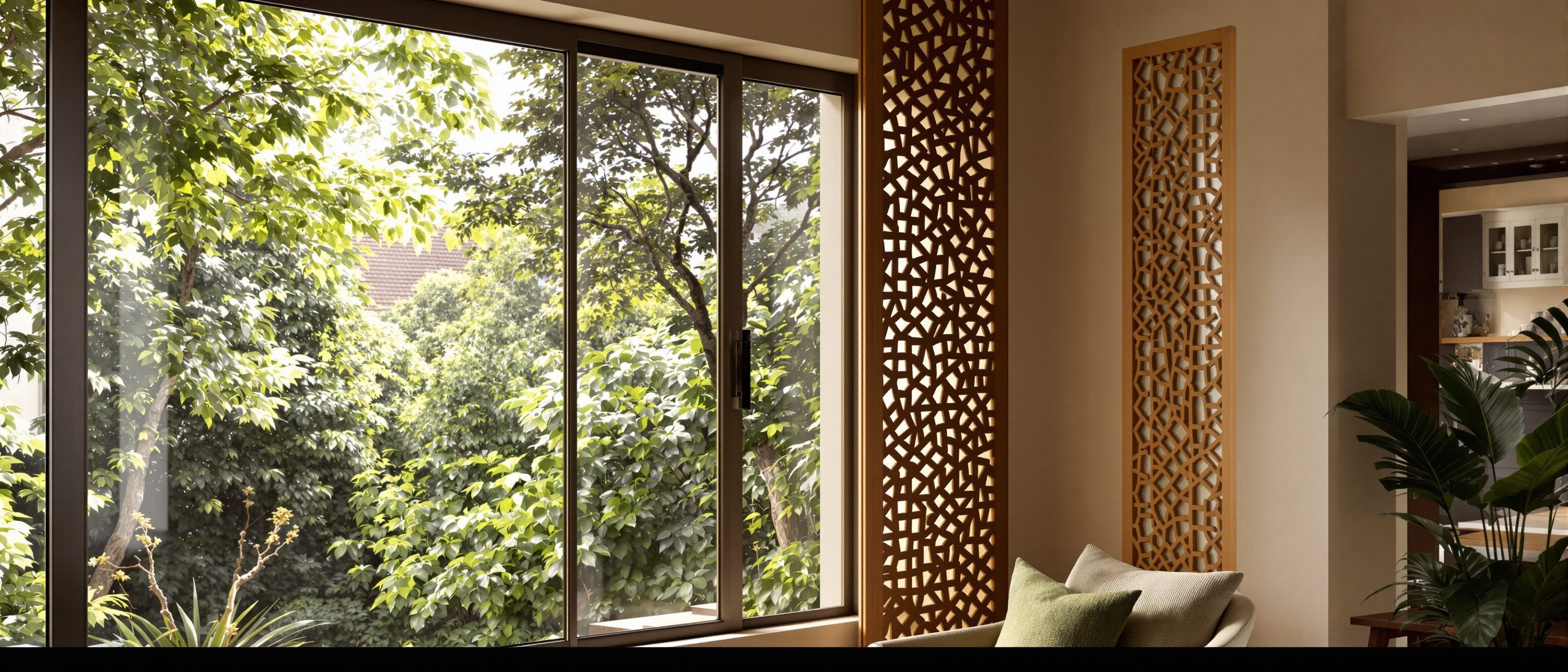
The jaali is India's signature answer to exactly this dilemma — it lets you live with the breeze and filtered light while remaining unseen, the way the jharokhas and screened zenanas of Rajasthan and the Deccan always did. A jaali on the street or neighbour side of a balcony or stair turns a privacy liability into the most beautiful surface in the house. Adjustable louvres do the same job in a modern idiom and let you open the view fully when you choose.
Courtyards and internal-facing layouts
When the boundary is hostile on every side — the classic deep, tight city plot — stop fighting the edges and turn the house inward.
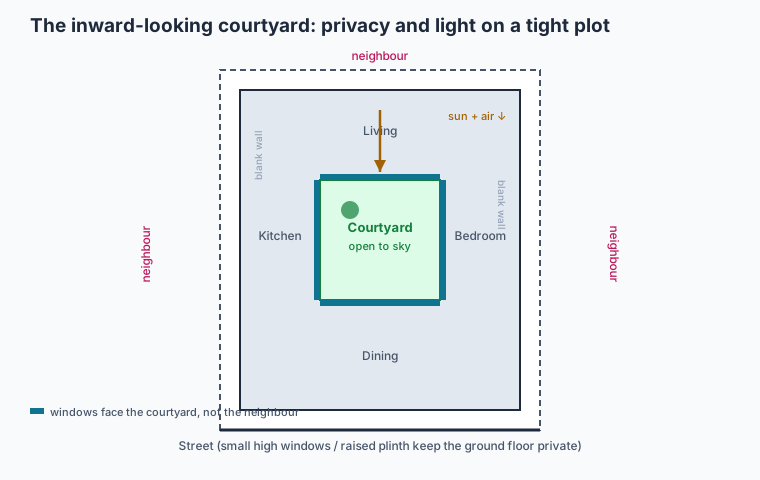
Figure 3: The inward-looking courtyard house. Rooms borrow light and cross-breeze from a private inner court open to the sky, while presenting near-blank walls to the overlooking neighbours on three sides.
The central courtyard — the aangan, the Kerala nadumuttam, the Chettinad muttram — is not nostalgia; it is the most efficient privacy-and-daylight machine ever invented for the dense plot. Every room opens onto a calm private outdoor space; the world is shut out without shutting out the sky.
Level changes and balcony positioning
A balcony is where overlooking gets worst — it pushes you out past the wall line, closer to the neighbour, at first-floor height. Place balconies toward the good view and the open setback, never cantilevered toward the neighbour's windows. Where you must build a balcony on a sensitive side, give it a solid or jaali parapet to chest height and a side fin to block the angled gaze from next door.
5. Don't trade away the light and air you need
India's climate punishes the over-sealed house. The temptation, once you start worrying about being seen, is to wall everything up — and then you have a dark, stuffy box that needs lights and a fan running all day. The whole point of the toolkit above is that you almost never have to make that trade.
The trick is to separate the jobs of an opening. Daylight and ventilation can come from high up — clerestories, courtyards, jaalis — where privacy is automatic. The view, where you have a good one, comes from a single low, generous, well-aimed window. You are not choosing between privacy and a bright airy home; you are giving each need its own opening at its own height. Use our sun-path analyzer to check that your view window does not also become a glare-and-heat trap, and the plot evaluation tool early on to score how much privacy pressure your specific plot is under before you commit.
| Need | Best opening | Privacy by default? |
|---|---|---|
| Daylight, deep | Clerestory, courtyard, skylight | Yes |
| Cross-ventilation | High + low pair, jaali, louvres | Yes (high/screened) |
| The good view | One low, wide, framed window | No — aim it carefully |
| The bad view (overlooked) | Blank wall or high window | Yes — by design |
6. The overlooking question, in Indian terms
A few realities specific to building in India are worth stating plainly. Side setbacks in most residential zones are small — often 1.0 to 1.5 m on the sides for a typical plot under municipal/NBC-aligned bylaws — which means a neighbour's wall, window or balcony can legally sit only two to three metres from yours. The National Building Code of India (NBC 2016) and local bylaws set minimum window areas for light and ventilation, but they do not protect you from being overlooked; that is your design problem to solve.
Ground-floor street privacy is the other persistent issue, because Indian streets are busy and intimate — vendors, neighbours, children, parked vehicles, all close to the boundary. The raised plinth, the compound wall within the front setback, and a high sill on street-facing rooms together solve it without making the house hostile to the street.
Finally, plan for the neighbour you cannot see yet. The empty plot next door will get built on, often taller than you expect. Assume a future first-floor balcony exactly where it would most overlook you, and design as if it already exists — staggered windows, screened balconies, a buffer zone of stairs and stores on the party-wall side. This forward thinking on overlooking sits alongside the broader cautions in our narrow plot design strategies and the wider design-with-your-site lens of orientation, light and views.
Sources & further reading
1. Bureau of Indian Standards, National Building Code of India (NBC) 2016, Part 8 (Building Services) and Part 3 (Development Control & General Building Requirements) — minimum light, ventilation and openings.
2. Christopher Alexander, Sara Ishikawa & Murray Silverstein, A Pattern Language (1977) — patterns Zen View, Window Place, Half-Open Wall and Courtyards Which Live.
3. Jay Appleton, The Experience of Landscape (1975) — the prospect-and-refuge theory.
4. Francis D. K. Ching, Architecture: Form, Space & Order — openings, enclosure and the framing of views.
5. Energy Conservation Building Code (ECBC) / Eco-Niwas Samhita, Bureau of Energy Efficiency — daylighting and openable-area guidance for the Indian residential climate.
6. Charles Correa, A Place in the Shade — courtyards, terraces and the "open-to-sky" tradition in the Indian climate.
If this is your first pass at the plot, start with site analysis for homeowners for the full survey, then read site orientation explained to fix which way your view-facing rooms should turn — and if you are squeezed onto a deep, slim site, the moves here pair directly with narrow plot design strategies.
Export this guide
Related Guides — Deep-dive reading
Orientation, Light & Views: Designing With Your Space, Not Against It
How reading your plot's sun, breeze and views — and placing each room on the right face — gives an Indian home that is cooler, brighter and quietly right, instead of one that fights its site forever.
Design PrinciplesWindow Design for Villas (India): Using the Freedom of All Four Sides
With walls free on all four sides, you can tune every window to its sun: north light for studies, east for bedrooms, shaded south for living, minimal west, plus feature windows, dual-aspect rooms and stairwell glazing.
Windows & GlazingUnderstanding Sun Path Analysis for Your Home
How the sun actually moves over an Indian site through the day and the year — and why that single fact quietly decides where your kitchen, bedroom and living room should sit.
Site PlanningRelated Tools — Try Free
Cross-Ventilation Analyzer
Estimate airflow and air changes per hour (ACH) from room size, window areas, layout, and local wind — with NBC 2016 Part 8 compliance check.
Ventilation CalculatorBrise-Soleil Visualizer
Interactive horizontal-louvre cut-off angle calculator — sun altitude, louvre depth, and spacing inputs with a live shadow preview. Computes θ = arctan(spacing/depth) for façade shading, ECBC envelope compliance, hospital daylight design, and tropical sun-control detailing.
Sun Shading ToolWindow Orientation Planner
Pick the best window type, glass and shading by wall direction — north, east, south and west.
Window Tool