
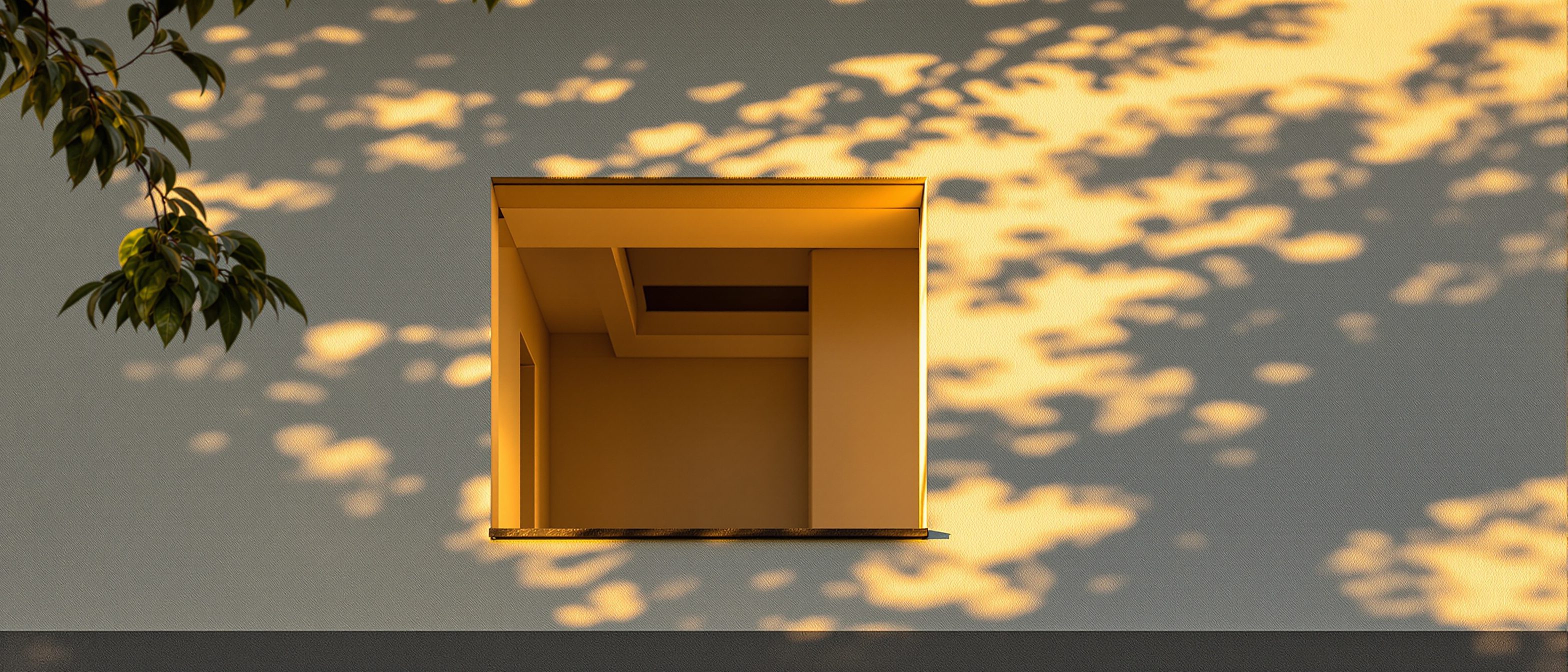
Understanding Sun Path Analysis for Your Home
How the sun actually moves over an Indian site through the day and the year — and why that single fact quietly decides where your kitchen, bedroom and living room should sit.
A young couple in Whitefield, Bengaluru, fell for a flat because the living room got beautiful golden light at 4 pm during the site visit. They moved in. By their first April, that same west-facing living room was unusable from 3 pm onwards — the wall was hot to the touch, the AC ran flat out, and the "golden light" had become a glare they drew the curtains against by noon. They had met the sun at its kindest hour and signed up for it at its cruellest.
This is the most common, most expensive misunderstanding in Indian home-buying. We judge a site by how it feels for the ten minutes we stand on it, when the sun moves across the whole sky every day and shifts its path twice a year. A room that is a delight in December can be an oven in May, and the wall that bakes in the evening is the one nobody tested.
Sun path analysis is simply learning to see all of those positions at once — to picture where the sun will be at 8 am in June and at 9 am in January — so you place the rooms you love in the light you want, and push the heat onto the walls you can sacrifice.
In India the sun is not a friend to be invited in everywhere — it is a powerful guest you welcome through the eastern door in the morning and firmly keep off the western and south-western walls all afternoon.
1. How the sun moves: the daily arc and the seasonal swing
Two motions matter, and you can hold both in your head without any trigonometry.
The daily arc. Every day the sun rises in the east, climbs across the sky and sets in the west. That much everyone knows. The part that matters for your home is that for almost all of India — which sits between roughly 8°N (Kanyakumari) and 34°N (the far north) — the sun spends the middle of the day in the southern half of the sky. At solar noon it is roughly due south of you. So the south face of your house sees sun for the longest stretch of the day, the east face gets it only in the morning, and the west face only in the afternoon and evening. The north face, for most of the year, barely sees direct sun at all — which is exactly why north light is the cool, even, glare-free light that artists and architects prize.
The seasonal swing. The sun does not trace the same arc all year. In summer it rises early, climbs very high (near vertical at midday across much of India) and sets late — a long, steep, high arc. In winter it rises later, stays low in the southern sky and sets earlier — a short, shallow arc that hugs the south. Around the summer solstice (21 June) the noon sun can be almost directly overhead in central and southern India; around the winter solstice (22 December) it sits much lower and further south.
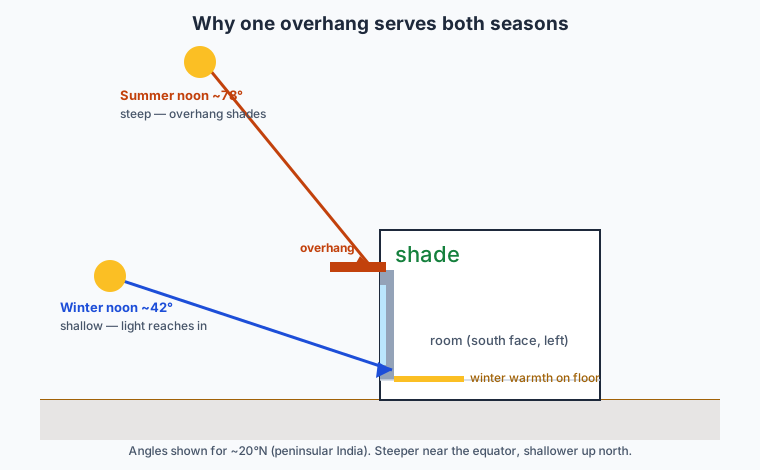
Figure 1: The same overhang shades the steep summer sun yet welcomes the shallow winter sun. This one geometric fact is the foundation of passive shading in India.
That seasonal difference is the gift. Because summer sun is high and winter sun is low, a single horizontal projection over a south window can block the heat you don't want and let in the warmth you do — without you lifting a finger. We will use that repeatedly.
2. Why east sun is gentle and west sun is brutal
East and west both get "half a day" of sun, so people assume they are equivalent. They are not even close, and the reason is heat, not light.
In the morning, the air, the ground and your walls are cool after the night. The sun is low, so it strikes east-facing walls and windows at a shallow angle, and the day has not yet built up heat. East light is bright, cheerful and forgiving. You can open an east window wide and enjoy it.
By the afternoon and evening, everything has been heating up for hours. The ambient temperature peaks somewhere between 2 pm and 4 pm. The low evening sun then drives almost horizontally into west-facing walls and glass, dumping energy into surfaces that are already hot and storing it in the masonry well into the night. This is why west bedrooms stay warm at bedtime long after sunset, and why the family in Bengaluru could not cool that living room.
The south-west corner is the worst of all: it catches both the high south sun through the middle of the day and the punishing low west sun in the evening. In Vastu and in plain building physics alike, the south-west is treated as the heaviest, hottest quarter of the house — a place for thick walls, stores and stairs, not for the rooms you live in.
"Place the most important rooms... so that they are sunlit in the morning when people get up, and shaded in the afternoon when the day grows hot." — paraphrasing the intent of Christopher Alexander's pattern Indoor Sunlight, in A Pattern Language (1977).
| Face | When it gets sun | Heat character (India) | Treat it as |
|---|---|---|---|
| East | Morning only | Gentle, cool, welcome | Open up — windows, breakfast spaces, kitchens |
| North | Little/none direct | Cool, even, glare-free | Daylight without heat — studies, work, art |
| South | Midday, longest | Strong but predictable, easily shaded by overhangs | Living spaces with proper overhangs |
| West | Afternoon/evening | Brutal — low-angle, into peak heat | Protect — small windows, buffers, trees |
| South-west | Midday + evening | Hottest quarter | Service core: stores, stairs, toilets, garage |
3. Which rooms want which sun
Once you accept that east sun is a blessing and west sun is a tax, room placement almost designs itself. The principle, true everywhere in India barring the high Himalaya, is: morning sun for the rooms you use in the morning; afternoon sun pushed onto the rooms you barely occupy.
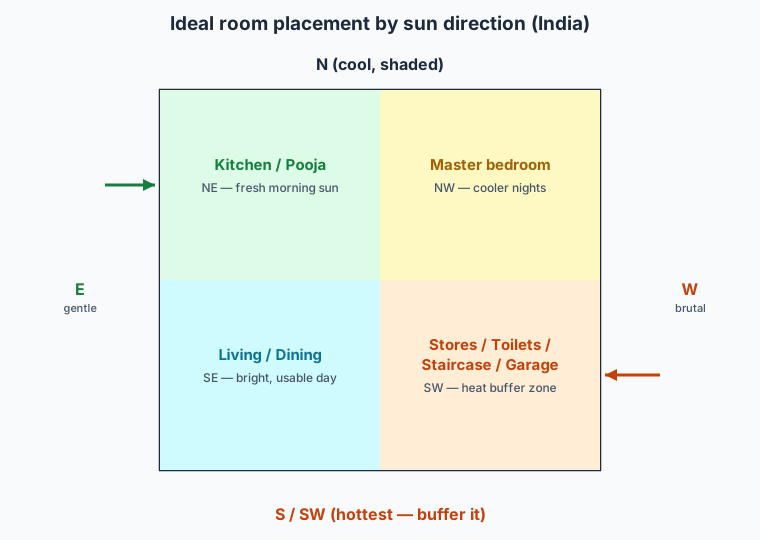
Figure 2: A robust default layout for the Indian climate — fresh morning sun to the east, heat-tolerant service spaces buffering the hot south-west.
- Kitchen — north-east or east. You cook in the morning; gentle east light is pleasant and the space has all day to cool before evening. A west kitchen turns into a furnace exactly when the evening meal is being made.
- Bedrooms — north, north-east or north-west. A bedroom that catches morning sun (east/north-east) wakes you naturally and is comfortable by night. Avoid west bedrooms: they store the day's heat and stay warm at bedtime. If a west bedroom is unavoidable, treat the window ruthlessly (small opening, deep shade, blackout).
- Living and dining — south-east, or south with good overhangs. These rooms want generous daylight through the day; the south face gives the most and is the easiest to shade because summer sun is high.
- Study / home office — north. North light is even, cool and glare-free all day — ideal for screens, reading and drawing.
- Service spaces — toilets, stores, staircase, utility, garage — in the south-west and south. Let these unloved rooms soak up the worst heat and act as a thermal buffer protecting the rooms behind them.
- Pooja room — traditionally north-east, which also happens to be the coolest, freshest, gentlest-lit quarter — Vastu and physics agreeing for once.
For the deeper design-principles treatment of weaving sun, prevailing breeze and views into a single coherent plan, read our companion guide on orientation, light and views; this guide stays focused on the sun alone.
4. Summer versus winter: the angles that change everything
The whole of passive solar design rests on one contrast: the noon sun is steep in summer and shallow in winter, and the difference grows as you go north.
| Summer noon (≈ 21 Jun) | Winter noon (≈ 22 Dec) | What it means for you | |
|---|---|---|---|
| Chennai / Bengaluru (≈ 13°N) | Sun nearly overhead, ~80°+ | Lower, ~53° | Small south overhangs do a lot; west is the real problem |
| Mumbai / Pune / Hyderabad (≈ 18–19°N) | Very high, ~75° | ~48° | Overhangs ~0.5 × window height shade south well |
| Ahmedabad / Indore (≈ 23°N) | High, ~90° (overhead at Tropic) | ~43° | Deeper overhangs; brutal pre-monsoon heat |
| Delhi / Jaipur (≈ 27–28°N) | High, ~85° | Low, ~38° | Big seasonal swing — overhangs earn their keep; welcome winter sun |
| Srinagar / Shimla (≈ 32–34°N) | ~78° | Low, ~32° | Winter sun is a heating asset — invite it onto south walls |
(Angles are altitude above the horizon, rounded — use them as feel, not gospel. Your latitude is what sets them, which is why a Delhi house and a Kochi house should not be shaded the same way.)
The practical takeaways: in the hot south and west of peninsular India, your enemy is the low east and west sun, and the south is comparatively easy to tame. In the north, the seasonal swing is dramatic — the same south window that you shade in May should be uncovered in December to harvest free warmth on cold mornings.
5. Shading basics: overhangs, verandahs, jaali and trees
You cannot move the sun, but you can intercept it. Four tools, roughly in order of how Indian homes use them:
Horizontal overhangs (chhajja)
A projection over a window — the humble chhajja — is the workhorse. Because summer sun is high, even a modest overhang casts shade across a south window at midday; because winter sun is low, that same overhang lets light slip underneath. As a starting rule of thumb for a south-facing window in peninsular India, a horizontal projection of about 0.4 to 0.6 times the window height gives good summer shade. Go deeper as you move south towards the equator, shallower as you go north.
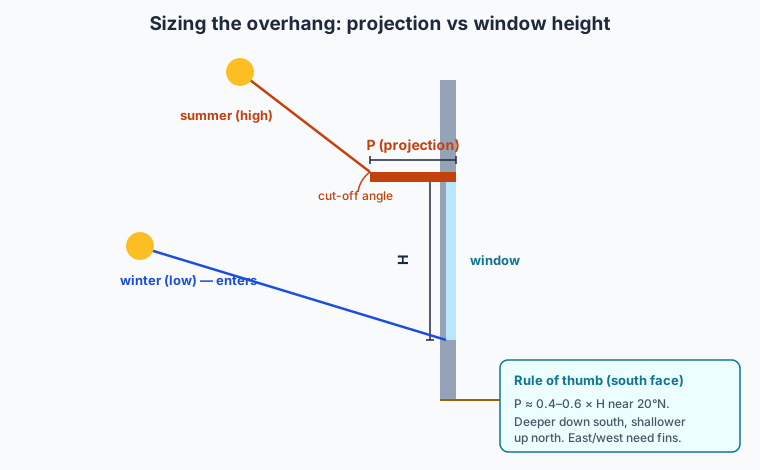
Figure 3: The overhang's projection P and the window height H set the cut-off angle. Get this right on the south face and the window self-regulates through the year.
The catch: overhangs work on the south face, where the sun is high. They are almost useless against the low east and west sun, which comes in nearly horizontal and ducks straight under any horizontal projection.
Vertical fins, verandahs and deep reveals (for east and west)
For east and especially west exposure, you need vertical shading — fins, projecting side walls, deep-set windows, a verandah or a balcony, or a screened transition space. The traditional Indian answer is the verandah: a shaded outdoor room wrapping the west and south, keeping direct sun off the inner walls entirely while still letting breeze through. The best west window is often a small one, deeply recessed, behind a verandah or a screen.
Jaali (perforated screens)
The jaali is one of India's great climate inventions — a perforated stone, brick or terracotta screen that breaks up harsh light into soft dapple, blocks much of the direct sun, and speeds the breeze passing through it. Used on west and south-west faces it tames glare and heat while keeping the wall alive — from Fatehpur Sikri to modern precast-concrete and terracotta screens.
Trees and landscape
The cheapest air-conditioner is a tree. A deciduous tree on the west or south-west shades the wall through the brutal summer, then drops its leaves in winter to let warmth through — a living overhang. Evergreens are better as a permanent screen against the relentless west sun where you never want it. Even a creeper on a pergola, or a row of potted plants on a west balcony, measurably cuts the heat reaching the wall behind. Plan planting at the same time as the building, not as an afterthought.
| Exposure | Best shading tools | Avoid relying on |
|---|---|---|
| South | Horizontal overhang / chhajja, balcony | (works well; just size it) |
| East | Small overhang + morning is mild anyway | deep fins not usually needed |
| West | Verandah, vertical fins, jaali, deciduous trees, small recessed windows | horizontal overhangs alone |
| South-west | Buffer rooms + jaali + dense planting | any large glazing |
| Roof | Insulation, cool/reflective finish, shaded terrace, solar panels | bare exposed RCC slab |
6. The roof and your solar future
The roof is the single most sun-struck surface of any Indian house — the summer noon sun beats almost straight down on it for hours, and an unshaded RCC slab radiates that heat into the rooms below all evening. Two things follow from understanding the sun.
First, treat the roof as a heat problem: insulate it, finish it in a reflective or "cool" light colour, shade it with a pergola or a terrace garden, or add a ventilated second layer. A hot roof undoes a lot of careful wall shading.
Second, the same sun is an asset for solar power. Rooftop solar performs best on a roof or panel array that faces broadly south (so it sees the sun through the long midday) and is tilted up at roughly your latitude — about 13° in Bengaluru, about 28° in Delhi. Keep that future south-facing roof area clear of overshadowing by water tanks, parapets, taller neighbours or trees. When you study your site's sun path, you are also scouting your future solar yield: a roof that bakes in May is a roof that will generate well year-round.
7. Read your own site before you commit
You do not need software to begin — but a little structure beats a ten-minute gut feel. Walk the plot, or stand in the flat, with a compass (your phone's works) and ask:
- Which way is true north? Mark east, south and west.
- Which walls or windows will take the morning sun? Those are your assets — line up the rooms you use in the morning behind them.
- Which walls face west and south-west? Those will take the evening beating — keep living and sleeping rooms off them, or commit to serious shading.
- Is there a tall neighbour, tree or building to the south that will shadow your south windows in winter (when you want the sun) — or one to the west that mercifully blocks the evening sun in summer?
- Where on the roof is the clear, south-facing patch for future solar?
Then make it concrete with our Sun Path Analyzer. Enter your city or latitude and it plots the sun's arc across the sky for summer, winter and the equinoxes — and, on a phone, lets you hold the device up and see the real summer and winter sun paths overlaid on your actual plot in AR. Stand at the spot where your living-room window will go, point the phone west, and watch exactly how low and how late the June evening sun will rake across it. Walk to the kitchen corner and confirm it catches the kind January morning. It turns this whole guide from theory into something you can literally see standing on your land — before you finalise a single wall.
Pair it with the rest of your site read: our site analysis guide for homeowners ties the whole pre-design read together, while the wind and ventilation companion and the orientation primer handle the other two great forces on your plot.
Sources & further reading
1. Bureau of Indian Standards — SP 41 (S&T) : 1987, Handbook on Functional Requirements of Buildings and IS 3792 : 1978, Guide for Heat Insulation of Non-Industrial Buildings — orientation, shading and thermal-comfort guidance for Indian conditions.
2. National Building Code of India (NBC) 2016, Part 8 (Building Services) and Part 11 (Approach to Sustainability) — daylighting, ventilation and energy-conservation provisions.
3. Bureau of Energy Efficiency — Energy Conservation Building Code (ECBC) 2017 and Eco-Niwas Samhita (Energy Conservation Building Code for Residential Buildings) — envelope, shading and solar-orientation requirements for homes.
4. Christopher Alexander et al., A Pattern Language (Oxford University Press, 1977) — patterns Indoor Sunlight, South Facing Outdoors and Filtered Light.
5. Francis D. K. Ching, Architecture: Form, Space & Order — fundamentals of sun-path geometry and solar orientation.
6. Ministry of New & Renewable Energy (MNRE), Government of India — rooftop solar guidelines and the National Portal for Rooftop Solar (orientation and tilt for residential PV).
7. Charles Correa, A Place in the Shade: The New Landscape & Other Essays — on building with India's climate, the verandah and "open-to-sky" space.
Next, read site orientation explained to turn these sun lessons into a final compass decision for your plot, then site analysis for homeowners for the full pre-design checklist, and understanding wind analysis to pair daylight with the cooling breeze.
Export this guide
Related Guides — Deep-dive reading
Orientation, Light & Views: Designing With Your Space, Not Against It
How reading your plot's sun, breeze and views — and placing each room on the right face — gives an Indian home that is cooler, brighter and quietly right, instead of one that fights its site forever.
Design PrinciplesDesigning a Naturally Energy-Efficient Indian Home
Comfort first, gadgets last — passive design, orientation, insulation, ventilation and the climate wisdom that cuts Indian energy bills
SustainabilityNorth-Facing Window Design (India): The Best Light With the Least Heat
Why the north wall gives soft, even, glare-free daylight with almost no heat, and how to design large, high-VLT windows that make the most of it.
Windows & GlazingRelated Tools — Try Free
Brise-Soleil Visualizer
Interactive horizontal-louvre cut-off angle calculator — sun altitude, louvre depth, and spacing inputs with a live shadow preview. Computes θ = arctan(spacing/depth) for façade shading, ECBC envelope compliance, hospital daylight design, and tropical sun-control detailing.
Sun Shading ToolCross-Ventilation Analyzer
Estimate airflow and air changes per hour (ACH) from room size, window areas, layout, and local wind — with NBC 2016 Part 8 compliance check.
Ventilation CalculatorWindow Orientation Planner
Pick the best window type, glass and shading by wall direction — north, east, south and west.
Window Tool