
Security for Pets in Indian Homes (2026): Keeping Pets Safe Within a Security Setup - and Stopping Them Undermining It
Pets are family, and home security has a two-way relationship with them. Keep the dog or cat from triggering the alarm every day (the commonest reason people switch security off), keep the pet safe while you are out, and mind the ways a pet can become an entry, escape or theft risk - all with warmth, and with the pet's own safety first.
For a great many Indian households the dog on the sofa or the cat on the windowsill is not an accessory to the home - it is a member of the family, waited for at the gate, worried about in a power cut, missed on every holiday. So when we talk about home security and pets, we start from that warmth, not from treating the animal as a nuisance. And the honest truth is that security and pets have a two-way relationship. A well-set-up home keeps the pet safe. A badly-set-up one either drives you to switch your security off because the pet keeps tripping it, or - far worse - puts the pet in danger. This guide covers both directions, gently and practically. It sits under the security for specific users pillar and the for-users sub-hub.
Scope & safety. This is a warm, practical guide, and one rule sits above every other: the pet's life-safety comes first, always. A pet must never be trapped, injured or forgotten by a security setup - fail-safe escape and a pet's welfare beat any security convenience, every time. Cameras and monitoring in a home with pets still capture your household's data, so handle them under the Digital Personal Data Protection Act, 2023 with the usual care - no cameras in genuinely private spaces, and mind who can see the feed. For fire and escape planning, the National Building Code of India (SP 7) frames egress generically. And engage the right help: a competent alarm installer for pet-immune sensors and anti-crush gates, and a vet for microchipping, registration and your pet's welfare. This is educational guidance, not veterinary or legal advice, and standards' current status should be verified before you rely on them.
1. Stop the pet triggering false alarms - so you keep your security
Here is the single most important thing this guide can tell you, because it is the point at which most people quietly lose their home security altogether. A motion-sensor alarm that fires every time the dog crosses the living room, or the cat jumps onto the sofa at 2 a.m., becomes unbearable within a week. And what people do next is entirely human: they stop arming the alarm. A pet that trips the alarm every day is the commonest reason people disable their alarm - and once it is off, the home has no alarm at all. The pet did not defeat your security; a mismatched sensor did.
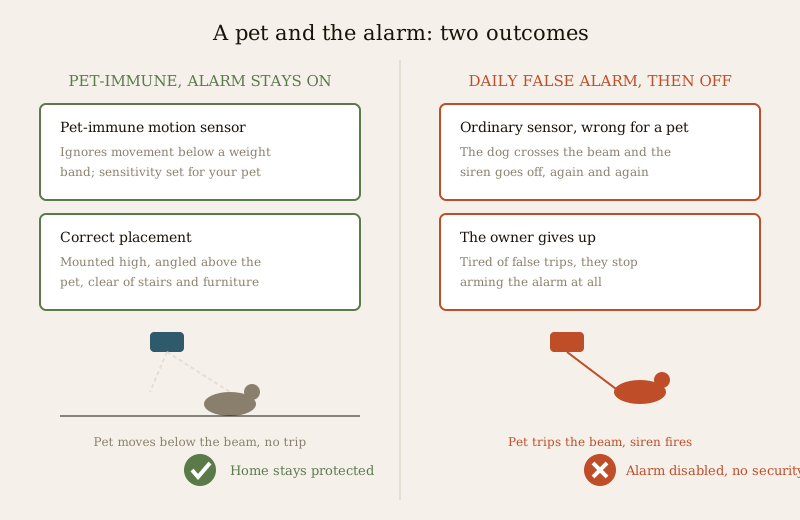
The fix is not to accept a useless alarm or to shut the pet in one room forever. It is to use the right sensor and place it correctly.
- Choose pet-immune (pet-friendly) motion sensors. These are designed to ignore the movement of an animal below a certain weight band while still detecting a person, using the shape, mass and heat pattern of what moves. Matched to your pet's size, they let a dog or cat roam while the alarm stays armed. This is the whole subject of the pet-friendly motion sensors guide, which is the companion to this section; the underlying technology is covered in the motion sensors guide.
- Place and angle sensors so the pet stays out of the beam. A sensor mounted higher and angled to look across a room above the animal's path sees a standing person but not a pet on the floor. Keep the beam clear of the furniture a cat will climb and the staircase a dog will use, since a pet at head height defeats the weight logic. Good placement does as much work as the right sensor.
- Set the sensitivity for the pet you actually have. A large dog needs a higher immunity threshold than a small cat, and two cats moving together can register as one larger mass. Tune the sensitivity with your installer to your real household - the goal is an alarm that is armed and trusted, not one that is technically present but always off.
- Use zoning so the pet has a pet-safe area. If part of the home can be a no-pet zone at night - say the pet sleeps in the utility area - you can arm sensors normally there and use pet-immune sensors in the rooms the pet shares. A little zoning turns an either-or problem into a workable arrangement.
The measure of success is simple and worth repeating: an alarm you actually arm. A pet-immune, well-placed system keeps the security switched on, which is the entire point.
2. Keep the pet safe while you are out
Security in a home with pets is not only about intruders. For much of the year the real worry is the pet itself, alone in the house while you are at work or away - and here a modern setup genuinely helps, as long as it never becomes a cage.
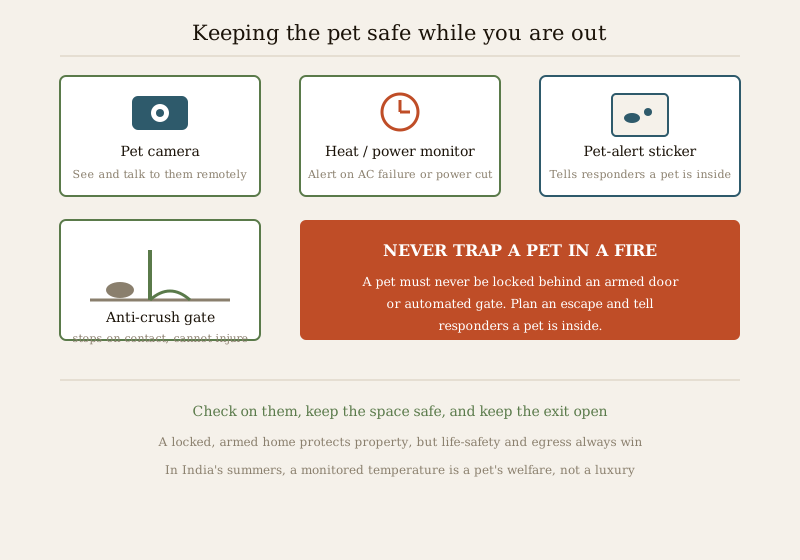
A pet camera to check on them - and talk to them. A simple indoor camera lets you look in on the pet from your phone, and a two-way-audio model lets you speak to a dog that pines when the house is empty. It is reassurance for you and comfort for them, and it doubles as an indoor camera when the house is unoccupied. Set it up under the wider smart home security guide, and if you want a service watching the feed rather than only you, see remote security monitoring. Keep the camera to shared living areas, mind who can access the feed under the DPDP Act, and treat it as a window onto your pet, not a spy on your household.
The life-safety rule, in bold, because it does not bend. A pet must never be trapped behind a locked or armed door, or behind an automated gate, in a fire or any emergency. Plan an escape route the pet can actually use, and tell responders a pet is inside by putting a pet-alert sticker at your entry so firefighters know to look for the animal. An automatic gate must have anti-crush (obstacle) detection so that it stops on contact and cannot injure a pet that walks into its path. A security setup that would leave a dog behind a fail-secure lock or a cat behind a heavy sliding gate has failed at the one thing that matters most. The mechanics of a safe, releasable exit are in emergency door release, and how locks and gates must not conflict with escape is in fire-egress compatibility. A pet-alert sticker costs almost nothing and can save a life.
Environmental safety in India's heat. In much of India the deadliest thing that can happen to a pet left at home is not a burglar but a failed air-conditioner or a long power cut on a summer afternoon. A small temperature sensor or a smart plug that reports power state can alert your phone if the AC trips or the power goes off, so you can rush home or call a neighbour before a closed flat becomes dangerously hot. Treat heat, AC-failure and power-cut monitoring as part of your pet's safety, not an afterthought - in an Indian summer it is welfare, not luxury.
3. The ways a pet can become a security risk - and how to manage them
Loving a pet does not mean pretending it changes nothing about your security. A pet quietly creates a few specific gaps, and naming them - warmly, without blame - lets you close them.
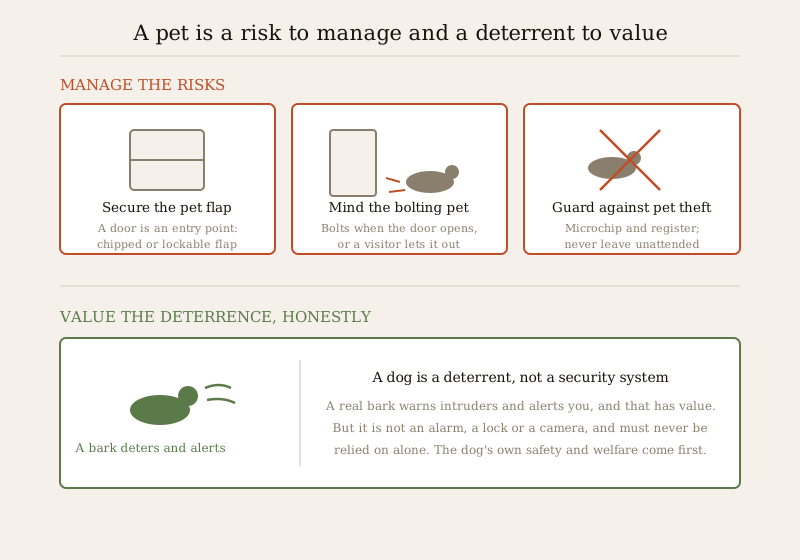
A pet flap or dog door is a potential entry point. A hole in an external door big enough for a Labrador is big enough for an arm, a tool, or a small person. Treat any pet flap as part of your perimeter: place it where it cannot be reached to unlock a nearby latch, and prefer a secured or electronically-chipped flap that opens only for a microchip on your own pet's collar and stays locked to everything else. A pet door left unmanaged is one of the easiest openings to overlook.
A pet that bolts when the door opens. Many dogs and some cats rush the moment the front door or gate opens - a safety risk for the pet on a busy road, and a security one if it means the door is left standing open while you chase them. A simple internal gate, a "airlock" habit of a closed inner door, or leashing an excitable dog before opening up keeps the pet in and the entrance controlled. This also matters at the gate: an automatic gate that opens for your car should never let the dog slip out onto the street.
A pet a visitor could let out - or in. A delivery rider, a plumber or a house-guest who opens a door without knowing the dog bolts can lose your pet in seconds, and a service person given casual run of the house is also a security consideration in its own right. Fold this into your visitor and access management: tell people at the door that there is a pet, keep the animal secured while strangers come and go, and do not leave a pet loose in the yard while the gate is being worked on.
4. Pet theft is real - protect against it
This is the part people underestimate. Pedigree dogs and cats are stolen in India for resale and for breeding - a well-bred animal has a cash value, and a friendly dog in a front yard is an easy target. Protecting against it is mostly common sense applied consistently.
- Microchip and register your pet. A microchip is a permanent, tamper-proof identity that a vet or shelter can scan, and registration links that chip to you. It does not stop a theft, but it is by far the best route to recovery and to proving the animal is yours - arrange it with your vet. Keep clear recent photographs too.
- Do not leave a pet unattended where it can be taken. A dog tied at the gate, left alone in a front yard, or shut in a parked car is exposed - to theft, and in a hot car to something worse. An unattended, visible, valuable pet is an opportunity; keep it with you or secured out of easy reach.
- Be careful about who has access. A dog-walker, a boarding kennel or a pet-sitter is someone you are handing your pet to - choose people you can verify and trust, agree clearly where the dog will and will not go, and do not broadcast your pet's routine and walking route publicly.
- Let boundary security protect the pet too. A secure gate and boundary that a stranger cannot reach over or lure a dog through is protecting the animal as much as the property - the same gate and perimeter thinking that keeps intruders out keeps a pet from being coaxed or snatched from the fence line. Run the boundary through the site perimeter security assessment.
5. The honest note: a dog can deter, but is not a security system
A dog is one of the oldest and most genuine deterrents there is, and it would be dishonest to pretend otherwise - a real bark is a real deterrent. A barking dog warns an approaching stranger off, alerts you and the neighbours, and buys time. That has value, and it is a lovely thing that your companion also happens to watch the house.
But the honest line has to be drawn clearly. A dog deters and alerts; it is not a security system, and must never be relied on alone. A dog is not an alarm that reaches a monitoring station, not a lock that resists a forced door, not a camera that records what happened, and not a sensor that works when the dog is asleep, out on a walk, distracted, befriended or, sadly, harmed. Lean on the deterrent for what it is worth, and put a real alarm, real locks and real cameras behind it.
And there is a warmer, firmer point underneath: the dog's own safety and welfare come first, and a "guard dog" must never be a dog kept in distress. A frightened, chained, under-socialised animal left to "guard" a property is neither secure nor humane - it is a welfare failure, and often a bite risk to your own household and to responders. The right picture is a well-cared-for family pet whose bark is a bonus, not a distressed animal made to do a security system's job. If a proposed "security" arrangement would harm or frighten the dog, that is the signal to stop.
6. Pets when you travel
An empty-looking home is a target, and a pet left behind needs real care - so travel is where both halves of this guide meet.
- Do not advertise the empty house. The same discipline as any holiday home applies: keep travel plans off public social media, and make the home look lived-in with occupancy simulation - lights and routines that suggest someone is home - which reassures would-be intruders that the pet is not alone in an abandoned house.
- Choose a pet-sitter with care and with dignity. Whether a boarding facility or someone staying in your home, this is a person you are trusting with your pet and, if they stay over, with access to your house. Verify and choose them the way you would any trusted helper, brief them clearly on the pet's needs and the escape plan, and treat them as a trusted carer, not a suspect - the same respect owed to anyone given access to your home.
- Keep the safety nets running. Leave the pet camera and the heat and power monitoring on while you are away, make sure the sitter knows the pet-alert sticker is there and the exit the pet can use, and leave a vet's number and clear instructions. The point of the whole setup is that even from another city, the pet is watched over and can get out safely.
The pet-and-security do-vs-don't
Held together, the guidance comes down to a short list of things that keep both the home secure and the pet safe - and their opposites.
| Do this (secure home, safe pet) | Don't do this |
|---|---|
| Fit pet-immune sensors, placed and tuned for your pet, so the alarm stays armed | Live with false alarms until you give up and stop arming the alarm at all |
| Use a pet camera and heat / power monitoring to check on and protect the pet | Leave a pet alone all day with no way to know the AC has failed |
| Keep a fail-safe escape and a pet-alert sticker; use an anti-crush gate | Let a lock, armed door or automated gate trap or injure a pet in an emergency |
| Secure the pet flap (chipped or lockable) and treat it as part of the perimeter | Fit an open dog door within reach of a latch and forget it is an opening |
| Manage the bolting pet and brief visitors and delivery people about the pet | Let a rushing dog or a careless visitor leave the door standing open |
| Microchip and register the pet; keep it secured and out of easy reach | Leave a pedigree pet tied at the gate, in a front yard, or in a parked car |
| Value the dog's bark as a deterrent, backed by a real alarm, locks and cameras | Rely on the dog alone as your security, or keep a distressed "guard dog" |
| Choose a verified, well-briefed pet-sitter and keep the house looking lived-in | Advertise the empty house online and leave the pet with an unvetted stranger |
Run your own home against the home security risk scorecard to see where the pet-and-security picture is strong and where a gap - a sensor that keeps false-tripping, an un-secured pet flap - is quietly waiting.
Key takeaways
- Keep the alarm usable, and you keep your security. A pet that trips the alarm daily is the commonest reason people switch it off; pet-immune sensors, placed and tuned for your pet, keep the alarm armed and trusted.
- Watch over the pet, don't cage it. A pet camera lets you check on and talk to them, and heat / power monitoring guards against India's summers - real safety that never becomes a trap.
- Life-safety first, always. A pet must never be trapped behind a locked or armed door or an automated gate in a fire; plan an escape, use a pet-alert sticker so responders know a pet is inside, and require anti-crush on any automatic gate.
- Close the pet-shaped gaps. Secure the pet flap as an entry point, manage the bolting pet and the visitor who could let it out, and protect against real pet theft with microchipping, registration and not leaving a pet unattended.
- A dog deters but is not a security system. A real bark is a real deterrent, but it must never be relied on alone - and the dog's own safety and welfare come first, never a guard-dog-in-distress.
- Travel with both halves in mind. Don't advertise the empty house, use occupancy simulation, and choose a verified, well-briefed pet-sitter treated with dignity - so the pet is watched over and can get out safely.
Where to go next
- Security for specific users - the pillar that tailors home security to who lives in the home.
- Pet-friendly motion sensors and motion sensors - the companion detail on sensors that a pet will not trip.
- Complete guide to smart home security and remote security monitoring - the pet camera and watching over the home from your phone.
- Emergency door release and fire-egress compatibility - never letting a lock or gate trap a pet in an emergency.
- Visitor and access management - briefing delivery and service people so a pet is not lost at the door.
- Security for holiday homes and occupancy simulation - keeping the home safe, and the pet cared for, when you travel.
- Home security risk scorecard and site perimeter security assessment - test your own pet-and-security setup.
References
- Digital Personal Data Protection Act, 2023 - any pet camera or indoor monitoring in your home still captures your household's personal data; keep cameras out of genuinely private spaces, mind who can access the feed, and handle recordings with consent and care.
- National Building Code of India (SP 7), Bureau of Indian Standards - the egress and life-safety provisions that any lock, door or gate affecting a pet's escape route must respect; verify the current edition via the BIS catalogue: https://www.services.bis.gov.in/
- Microchipping and pet registration - a permanent scannable identity linked to you is the best route to recovering a stolen or lost pet; arrange microchipping and registration through your veterinarian, and keep recent photographs and records.
- Manufacturer specifications for pet-immune sensors and anti-crush gate operators - immunity weight bands, placement heights and obstacle-detection behaviour vary by product; confirm the specification against your actual pet and installation with a competent installer before relying on it.
This is an educational overview, not veterinary or legal advice. Sensor choice and placement, gate anti-crush behaviour, escape planning, microchipping and travel arrangements for a home with pets should be confirmed with a competent installer and your veterinarian, and any standard's current status verified via the BIS catalogue before you rely on it.
Export this guide
Related Guides — Deep-dive reading
Security for People Living Alone in India (2026): Calm, Practical Habits When There Is No Second Person to Notice
Living alone is an ordinary and growing part of Indian life - the student in a new city, the working single, the elder whose children are abroad, the person after a separation. It does not call for fear. It calls for a few deliberate habits, because there is no second person in the home to notice trouble, raise the alarm, or catch an accident. This is calm self-reliance, layer by layer.
SecuritySecurity for Holiday Homes in India (2026): Protecting a Second Home That Sits Empty — Make It Look Lived-In, Put Someone Local In Charge, and Watch It From Afar
A hill-station cottage, a Goa flat, a farmhouse or the family house back home — visited a few times a year and empty the rest, often far from where you live. This is how to secure a home you are not living in: look occupied, keep a trusted local presence, monitor it remotely, harden the empty house against break-ins and burst pipes alike, and check your insurance for long vacancy.
SecuritySecurity Guide for Senior-Citizen Homes
How to protect elderly people living independently or with family in India without stripping away their dignity or independence — verifying who is at the door, simple one-touch systems, the overlap of security with fall and medical emergencies, respectful remote reassurance for family, and honest vetting of caregivers and help.
SecurityRelated Tools — Try Free
Home Security Risk Scorecard
Score your home across six security layers — perimeter, entry points, lighting, detection, alarm and habits — and get a prioritised action plan.
Security ScorecardStamp Duty Calculator — All Indian States
Stamp duty + registration charges for all 28 states and 8 UTs — gender concessions, urban/rural variants, metro cess built in.
Stamp DutyCross-Ventilation Analyzer
Estimate airflow and air changes per hour (ACH) from room size, window areas, layout, and local wind — with NBC 2016 Part 8 compliance check.
Ventilation Calculator