
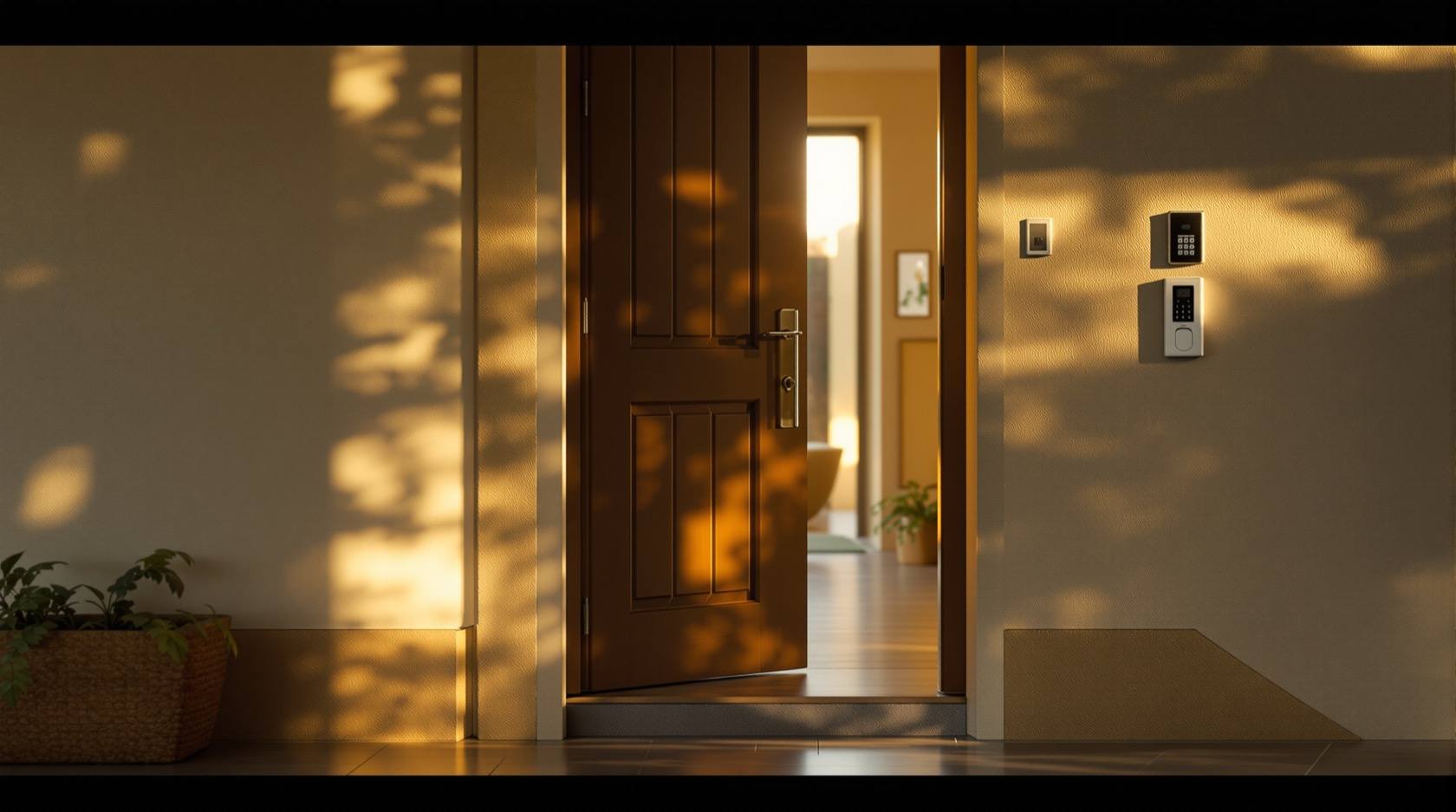
Security for People with Disabilities
How to design home security that works for and empowers a person with a disability in India — reachable, usable controls; multi-sensory alerts that everyone can perceive; a reliable path to summon help; and accessible escape that is never traded away for a lock. Tailored by disability type, with dignity, autonomy and the RPwD Act 2016 at the centre.
A home security system is only as good as the person's ability to use it. For most households that is invisible — the keypad is at eye level, the siren is loud, the escape route is a flight of stairs nobody thinks twice about. But for a person with a disability, each of those quiet assumptions can turn a "security" system into a barrier: a panic button too high to press, an alarm that a deaf resident never hears, a smart lock that a fire drives them toward but that a stiff hand cannot turn, an escape route that a wheelchair cannot take. Security that excludes the person it is meant to protect is not security at all.
This guide is for the homeowner, family member, or the disabled person themselves who wants a home that protects and empowers, not one that traps or watches. The framing throughout is empowerment, never pity. A person with a disability is the expert on their own life; the job of a good system is to extend their independence — to let them verify a caller, summon help, and get out safely, all on their own terms. Disability is also not one thing. A wheelchair user, a blind resident, a Deaf resident and a person with a cognitive disability each need a different design, and this guide is organised around exactly that difference.
Scope & safety. This guide helps you plan, decide and coordinate. Accessible escape must never be traded for security — fail-safe egress and a reliable help path always win, in line with the RPwD Act 2016 (accessibility) and the National Building Code's accessibility and life-safety provisions. Fire and medical alerting, electric locks and mains wiring are life-safety-critical: specify them, then have a licensed professional or an established monitored service design, install and certify them. Involve the person in every decision and, where you can, an occupational therapist or accessibility professional. The system supports the person's autonomy — it is not a cage or a monitor imposed on them, and a carer's access is by consent (DPDP Act 2023). Nothing here replaces a site-specific assessment or professional advice.
Start with the person, not the product
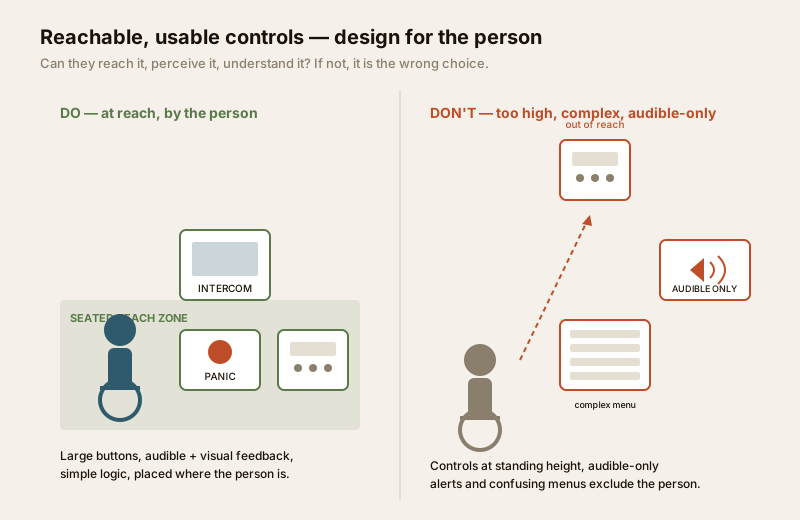
The single biggest mistake in "accessible" security is buying a standard system and bolting on a feature. The right order is the reverse: understand how this person moves, senses, communicates and thinks, then choose kit that fits. Sit with the person and, ideally, an occupational therapist (OT) or accessibility professional and ask three plain questions of every control, alert and lock:
- Can they reach and operate it — from where they usually are, with the strength and dexterity they have, without a movement that is painful or impossible?
- Can they perceive its signals — will they see, hear or feel an alert reliably, day or night, awake or asleep?
- Can they understand and trust it — is the logic simple and consistent enough that it never confuses them at the worst moment?
If any answer is no, the design is wrong for that person — no matter how highly rated the product. This is also where dignity begins: the person is a partner in the brief, not a subject of it. The wider senior-and-vulnerable context sits in the pillar guide to security for specific users, and there is close overlap with the security guide for senior-citizen homes.
Needs by disability type — the map
Because the needs genuinely differ, the table below maps the four broad disability categories to the security design priorities that matter most for each. Most homes involve more than one; read across, not just down.
| Disability type | What can fail in a standard system | Design priority |
|---|---|---|
| Mobility (wheelchair / limited mobility) | Controls too high; heavy manual locks; security hardware blocking a step-free path; stair-only escape | Controls, keypads, intercoms and panic buttons at reachable height and near where the person is; smart locks / auto-doors needing no hard physical action; step-free escape kept clear; accessible egress in a fire |
| Vision (blind / low vision) | Silent screens, tiny text, visual-only indicators, changed layouts | Audible and tactile signals and controls; voice interfaces used safely; consistent, memorised layouts; an alarm that is heard and understood |
| Hearing (Deaf / hard of hearing) | Audible-only siren, doorbell and phone alerts that are simply never perceived | Visual and vibrating alerts — strobe light, bed-shaker, phone notification — because an audible-only alarm is useless here |
| Cognitive / intellectual | Confusing arming states, complex menus, easy-to-misuse controls, false alarms | Simple, consistent, hard-to-misuse controls; no confusing arming modes; carer support by consent; a single, obvious help action |
Two principles cut across all four. First, redundancy of sense — never rely on a single channel; an alert that only beeps, or only flashes, or only vibrates will fail someone. Second, a reachable, reliable help path for every resident, which the last sections cover in full.
Mobility — reach, actuation and a clear way out
For a wheelchair user or a person with limited mobility, security fails in two ways: controls they cannot reach or operate, and hardware that blocks the very routes they depend on.
- Mount controls in the reachable zone, near the person. Keypads, intercoms, video-door-phone screens, alarm panels and panic buttons belong within a comfortable seated reach — not at standing eye level — and placed where the person actually is: by the bed, beside the favourite chair, at the desk, near the accessible entrance. A second panic button by the bed and in the bathroom (a high-risk zone) costs little and matters enormously.
- Choose locks and doors that need no hard physical action. A heavy deadbolt or a stiff key is a daily barrier. Prefer a well-chosen smart lock or a powered/auto door that opens with a tap, a card, a phone or a voice command — while always keeping a manual override that the person, not only a carer, can use. The selection discipline is in the complete guide to smart locks; accessible door hardware and widths are covered in accessible doors and the wider accessible home design guide.
- Never let security hardware block the step-free path. Grille gates, boxes, cables and floor-standing panels must not narrow a corridor below wheelchair clearance or create a lip a wheel cannot cross. The escape route is a design constraint, not an afterthought.
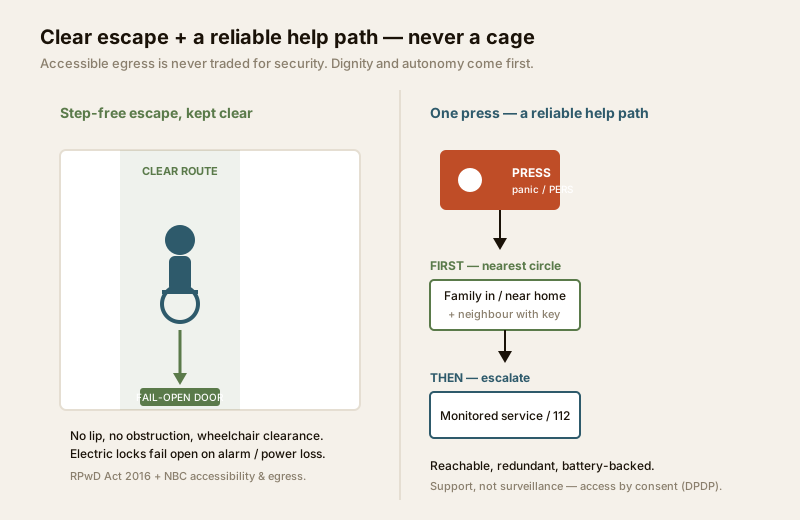
- Plan accessible egress in a fire — this is non-negotiable. A person who cannot use stairs needs a ground-level step-free exit, or a planned refuge and rescue arrangement, and any electric or magnetic lock on that route must fail open on alarm or power loss so it can never trap them. Coordinate this with the emergency door release and fire-egress compatibility guidance, and with a professional against the National Building Code's accessibility and egress provisions.
The rule for mobility is simple: the person reaches every control, and every route the security touches stays open to them.
Vision — make it audible, tactile and consistent
For a blind or low-vision resident, a security system built around screens and lights is mute. The design shifts to sound, touch and memory.
- Audible and tactile controls. Choose panels with spoken prompts, distinct tactile buttons, and clear audio feedback ("armed", "disarmed", "front door open") rather than silent touchscreens. Tactile markers on a keypad let the person operate it by feel.
- An alarm that is heard and understood. Different, distinguishable sounds for intrusion, fire and doorbell — plus a spoken announcement where possible — so an alert is not just noise but information the person can act on.
- Voice interfaces, used safely. A voice assistant can be a powerful equaliser — arming a system, checking a door, calling for help hands-free. Use it deliberately: never let voice alone unlock a door or disarm life-safety, keep a non-voice fallback for when the network is down, and mind privacy (an always-listening device is a data question). The safe-use patterns are in the smart-home security library and the complete guide to smart-home security; privacy discipline is in smart-home security and privacy.
- Consistency is a safety feature. A blind resident navigates by a memorised map. Do not move a panel, rearrange furniture on an escape route, or leave an obstacle in a known path without telling them. A predictable home is a safe home.
Hearing — because an audible-only alarm is useless
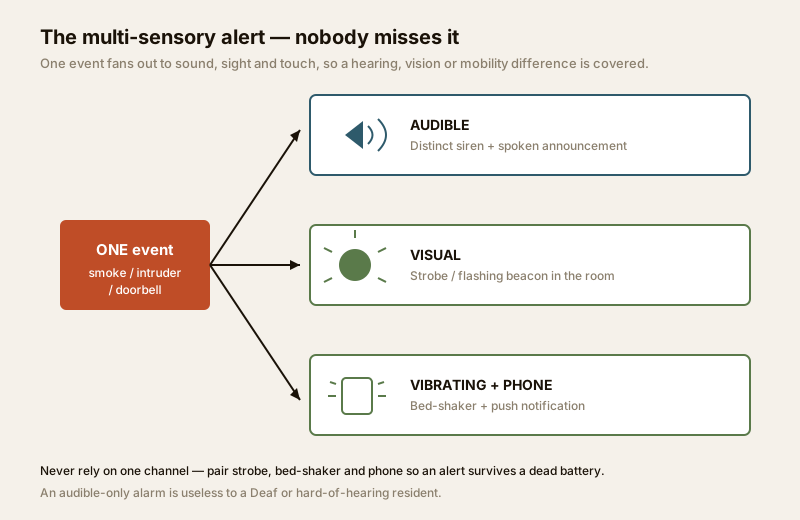
For a Deaf or hard-of-hearing resident, the most dangerous security device in most homes is the one everyone else trusts: the siren. If a smoke alarm or intruder siren only makes noise, it protects everyone but them. The fix is to convert every important alert into something seen or felt.
- Visual alerts. Bright strobe or flashing beacons for fire and intrusion, in the rooms the person uses — especially bedrooms — so an alarm is impossible to miss.
- Vibrating and tactile alerts. A bed-shaker pad under the pillow or mattress wakes a sleeping resident when a smoke alarm sounds; wearable and pillow vibration devices do the same by day.
- Phone and app notifications. A push notification with a clear, distinct pattern turns the person's phone into a personal alert channel for the doorbell, a triggered alarm or a smoke event.
- A door signal they can perceive. A visual or vibrating doorbell indicator, ideally tied to a video door phone, so a caller is never missed and the person can still see and verify who is there.
Never rely on a single one of these — pair a strobe with a phone alert with a bed-shaker so an alert survives a dead battery or a phone left in another room. Systems built for exactly this are covered in accessible alarm systems and smart security notifications.
Cognitive and intellectual — simple, consistent, hard to misuse
For a person with a cognitive or intellectual disability, complexity is the enemy. A system with confusing arming modes, cryptic menus and frequent false alarms will be misused, feared, or switched off — and a switched-off system protects no one.
- One obvious action, not a menu. Favour a single, large, unmistakable control — one button to call for help, a simple "home / away" rather than a stack of partial-arm modes with countdown codes. If a state can confuse, remove it.
- Consistency and low false-alarm rates. The same action always does the same thing; sensors are tuned (and pets accounted for — see pet-friendly motion sensors) so alarms mean something. A system that "cries wolf" teaches everyone to ignore it.
- Carer support, by consent and in the open. A family member or carer can help manage arming, receive alerts, or check the door remotely — arranged transparently, with the person's agreement, and only to the extent that supports their independence. This is support, not surveillance: no covert monitoring, and access is scoped to what genuinely helps.
- Reassuring, not alarming, feedback. Calm spoken or visual confirmations ("the door is locked", "everything is fine") reduce anxiety and build the person's confidence in using the home independently.
The goal is a system the person understands, trusts and can use on their hardest day — which is the truest measure of accessible security.
The emergency and help path — reachable and reliable
Cutting across every disability type is one requirement: a reachable, reliable way to summon help, fast, without a barrier in the way. This is where independence is won or lost.
- A panic button within reach, wherever the person is — bedside, bathroom, living area — large, simple, and needing no phone-unlock or menu. The design patterns are in panic buttons.
- A personal emergency response system (PERS) — a wearable or fixed device that, at one press, connects to family, a neighbour with a key, or a monitored service with real people answering. See personal emergency response systems and, for the medical-alert case, medical emergency buttons.
- A rehearsed alert chain. One press reaches the nearest circle first — a family member in or near the home, and a neighbour who holds a key so responders are never locked out — then escalates to a second contact, a monitored service and emergency services. Proximity beats everything in the first minutes.
- Redundancy and power backup. Battery backup on alerting devices and the door phone, plus a non-app fallback, so a power cut or a dead phone never severs the help path.
A crucial honesty: medical alerting and monitored emergency response are life-safety functions, not gadgets to improvise. Use an established, monitored service or a properly commissioned device, involve the person's doctor where medical need is in play, and test it regularly.
Dignity, rights and privacy — the line that must hold
Security for a disabled person is for them. The moment it becomes a way to watch, restrict or decide for them, it has failed — and may breach both their rights and the law.
The person's autonomy and privacy come first. Security exists to support independence — it is never a cage or a monitor imposed on them, and any carer's or family member's access is by the person's consent, in the open, scoped to what genuinely helps. Covert cameras, always-on monitoring the person has not agreed to, or a lock arrangement that lets a carer confine rather than assist them, are not security — they are control, and they are wrong. Under the DPDP Act 2023, the sensitive personal data a camera, voice device or monitoring app collects must rest on consent, notice and minimisation; there are no cameras in private spaces — bathrooms, bedrooms, a live-in carer's quarters. Where a person has a guardian or needs supported decision-making, involve them respectfully, but keep the disabled person as central to their own security as their situation allows.
Equally binding is life-safety. The RPwD Act 2016 frames accessibility as a right, and the National Building Code sets accessibility and egress provisions; between them the message is one line: accessible escape must never be traded for security. No lock, grille or arming state may leave a disabled person unable to get out in a fire. When those two goals seem to collide, egress and the help path win — every time.
When to bring in a professional
Plan, choose and coordinate these yourself with the person — but do not design, wire, certify or self-monitor them:
- The person and an occupational therapist or accessibility professional — the most important "specialists" in the room; they turn a generic brief into one that fits this life.
- Fire and smoke detection with visual and vibrating alerting — must be specified and commissioned so every resident is warned and can escape.
- Electric, magnetic and smart locks on escape routes — must fail open on alarm and keep a manual override the person can use; a licensed installer and code compliance are non-negotiable.
- Monitored personal-emergency-response and medical-alert services — use an established, monitored provider with people who answer; involve the doctor for any medical need.
- Mains electrical work for powered doors, strobes, lighting and panels — use a licensed electrician.
Your job is to know the person, set a humane brief, choose systems that fit, and coordinate the help. Their job is to make it safe, accessible, code-compliant and reliable. Pressure-test the whole picture with the home security risk scorecard.
Key takeaways
- Design for the person, not the product. Ask of every control, alert and lock: can they reach it, perceive it, and understand it? If not, it is the wrong choice.
- Tailor by disability type. Mobility needs reachable controls and clear egress; vision needs audible and tactile signals; hearing needs visual and vibrating alerts; cognitive needs simple, consistent, hard-to-misuse controls.
- An audible-only alarm is useless to a Deaf resident — pair strobe, bed-shaker and phone notification so no alert is ever missed.
- A reachable, reliable help path for everyone — a panic button within reach, a monitored PERS, and a rehearsed alert chain with a key-holding neighbour.
- Dignity, rights and privacy hold the line. Autonomy first; carer access by consent; no cameras in private spaces (DPDP Act 2023); support, never surveillance.
- Accessible escape is never traded for security — RPwD Act 2016 and NBC accessibility; egress and the help path always win.
Where to go next
- The section: Security for specific users and the sub-hub for tailored home security.
- Closely related: security guide for senior-citizen homes and accessible home design.
- Score your gaps: the home security risk scorecard, or browse all security guides.
References
- The Rights of Persons with Disabilities Act, 2016 (RPwD Act) — accessibility as a right for the built environment and services; verify the current text and rules.
- National Building Code of India (SP 7), Bureau of Indian Standards — accessibility and fire life-safety and egress provisions relevant to accessible controls, refuge and escape-openable hardware; verify the current edition via the BIS catalogue.
- The Digital Personal Data Protection Act, 2023 (DPDP Act) — consent, notice and minimisation governing cameras, voice devices and monitoring apps, and the sensitive personal data they collect.
- The person themselves, an occupational therapist or accessibility professional, the family doctor, and an established monitored personal-emergency-response provider — for a fit-to-life assessment, medical-alert monitoring and safe installation.
This is an educational overview for planning and decision-making, not medical, legal or accessibility-assessment advice. Fire and medical alerting, electric and smart locks on escape routes, monitored emergency response and mains electrical work are qualified professional or monitored-service work — engage the person, an occupational therapist or accessibility professional, licensed installers and established providers for design, installation, monitoring and certification, and verify any Act's or standard's current status before relying on it.
Export this guide
Related Guides — Deep-dive reading
Accessible Alarm Systems for Indian Homes (2026): Alerts Everyone Can Perceive, Understand and Operate
An alarm only protects if the people in the home can hear or see it, make sense of it, and reach the controls. How to make an Indian home alarm accessible for a deaf, blind, elderly, cognitively disabled or wheelchair-using resident - with multi-sensory alerting, reachable controls and a help path that never traps anyone.
SecuritySecurity Guide for Senior-Citizen Homes
How to protect elderly people living independently or with family in India without stripping away their dignity or independence — verifying who is at the door, simple one-touch systems, the overlap of security with fall and medical emergencies, respectful remote reassurance for family, and honest vetting of caregivers and help.
SecurityPersonal Emergency Response Systems for Indian Homes (2026): The Help Button When a Phone Is Out of Reach
A personal emergency response system is the wearable or bedside help button that lets an elder living alone, or anyone with a medical condition or disability, summon help fast when they cannot reach a phone. This guide covers how it works, what to choose, and the honest truth: it is only as good as the response behind it.
SecurityRelated Tools — Try Free
Acoustic Privacy (STC) Visualizer
Indian healthcare acoustic visualizer — compare wall assemblies and noise sources, see received SPL after STC attenuation, and check FGI 2018 / IS 1950 / NABH speech-privacy compliance with live dual-canvas waveform.
Acoustic ToolAccess-Control Battery-Backup Calculator
Size the standby battery so an access system keeps running through a power cut, with an egress life-safety note.
Battery BackupApartment Video Door System Planner
Enter flats, entrances, floors and guard desk for a first-pass building intercom plan — door stations, indoor monitors, guard station, the right architecture and an indicative cost band.
Building Planner