
XPS Insulation in India: Extruded Polystyrene Boards, Uses & Cost (2026)
A specifier's guide to XPS (extruded polystyrene) rigid board insulation - what it is, why its high compressive strength and near-zero water absorption make it the default for over-deck roofs, podium decks and basements, how it compares with EPS, and what it costs in India.
When a flat RCC roof, a podium deck or a basement wall needs insulation that can be walked on, screeded over or buried in wet ground and still keep working, one material keeps coming up: XPS. Short for extruded polystyrene, it is the dense, coloured rigid foam board you see going down under terrace waterproofing and screed. Its combination of strength and water resistance is what sets it apart from the cheaper white foam it is often confused with.
This guide helps you choose and specify XPS with confidence: what it actually is, the properties that matter, exactly where it earns its keep, how it stacks up against EPS, and what to budget in India. It sits inside our building insulation materials guide, the anchor that maps every insulation family; read that first if you want the big picture before zooming into XPS.
Scope and safety: This is a selection guide, not an installation manual. Prices, R-values and thicknesses here are indicative - they move with brand, region and board density, so get local quotes and manufacturer data sheets. The actual roof build-up, waterproofing detailing, structural loading and, above all, fire compliance are decisions for a qualified architect, structural engineer and waterproofing or fire consultant. Insulation is a combustible organic foam; its protection and code compliance belong to professionals.
What XPS actually is
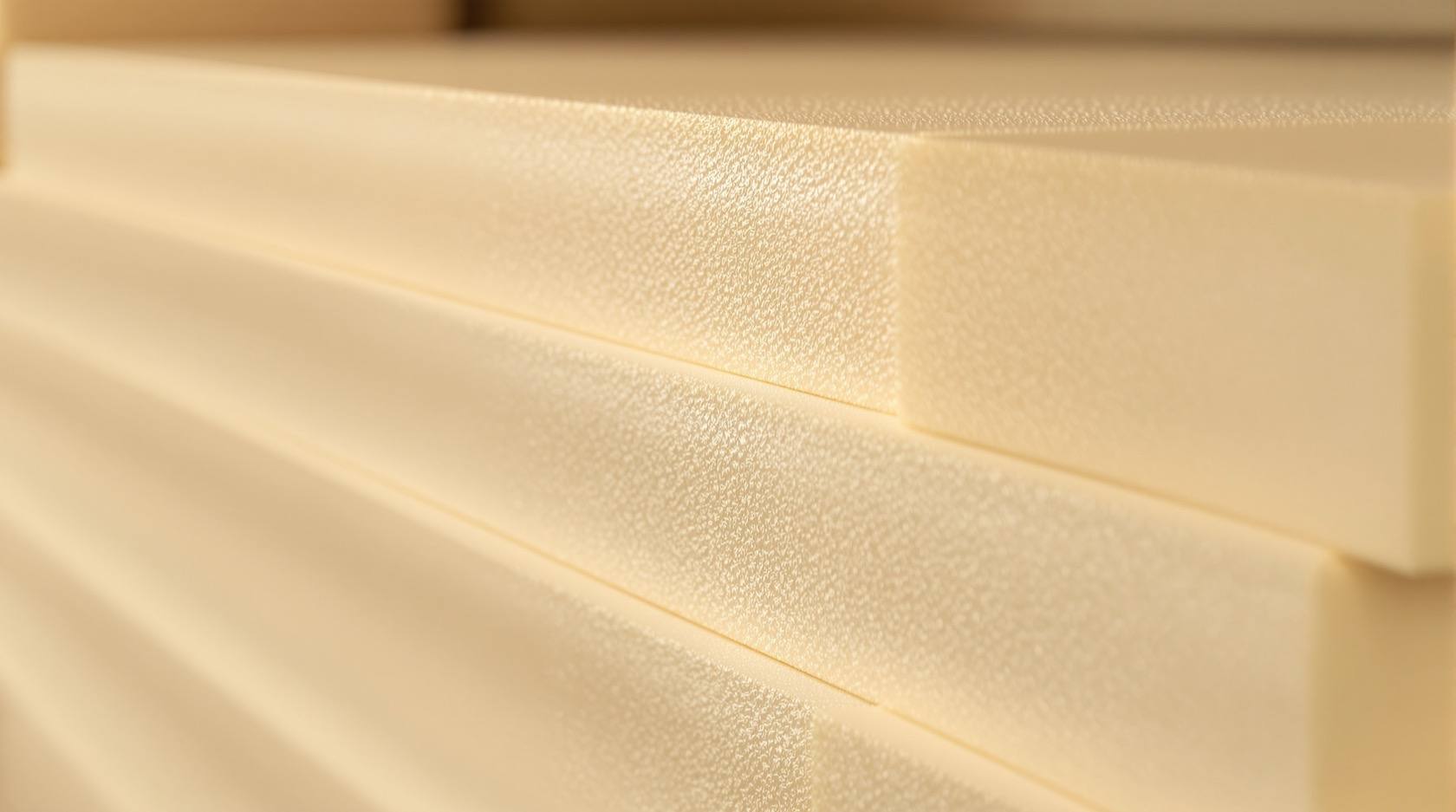
XPS is made by melting polystyrene with a blowing agent and forcing it through a die - extruding it - into a continuous board with a fine, uniform closed-cell structure. "Closed-cell" is the whole point: every tiny bubble is sealed, so water cannot travel through the foam and the trapped gas keeps insulating. The finished boards are rigid, smooth-skinned and usually coloured - blue, pink or green depending on the maker - which is how you tell XPS apart on site from the white beadboard look of EPS.
Boards come in standard sheets (commonly around 600 mm by 1200 mm or 600 mm by 2500 mm) in thicknesses from about 25 mm up to 100 mm, and often with a shiplap (ship-lap) rebated edge - a stepped edge that overlaps the next board to close the joint and stop thermal gaps at the seams. Typical board density is roughly 28 to 45 kg per cubic metre, considerably denser than standard EPS, which is what gives XPS its strength.
Three properties do the heavy lifting:
- High compressive strength - typically 200 to 700 kPa (about 0.2 to 0.7 MPa) depending on grade, so it carries screed, paving, planters or foot traffic without crushing.
- Excellent moisture resistance - water absorption under about 0.7 percent by volume, so it barely wets out even when buried or submerged, and its R-value stays stable in damp conditions.
- A stable, high R-value - thermal conductivity around 0.028 to 0.035 W per m.K, giving roughly R-5 per inch (about R-0.2 per mm), a touch higher per unit thickness than EPS and holding that value over time.
Why XPS is the over-deck default
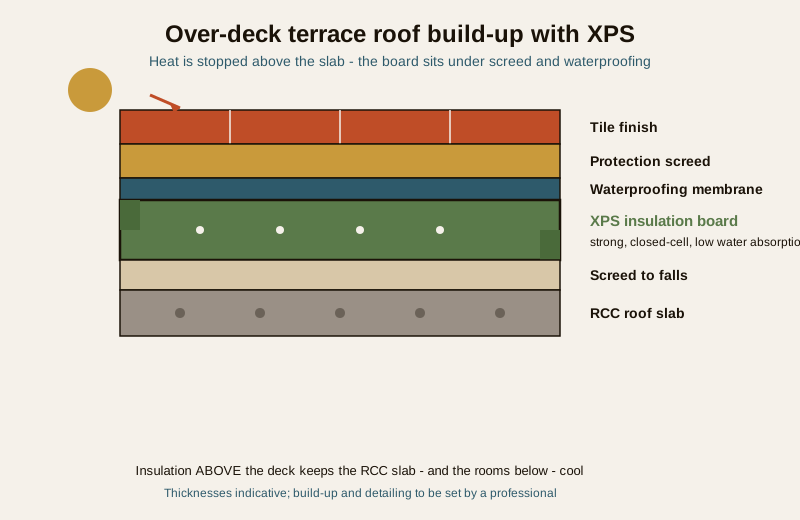
The single most important use of XPS in Indian building is over-deck roof insulation - insulation laid on TOP of the roof slab rather than below it. On a hot terrace, an exposed RCC slab bakes all day and radiates heat down into the rooms; putting a rigid insulation board over the deck stops that heat before it reaches the concrete. Because the board then sits under screed, waterproofing and tile - and often has water pooling on it in the monsoon - it must be strong enough to bear the load and indifferent to moisture. That is precisely XPS's sweet spot, and it is why specifiers reach for it here rather than for soft or absorbent insulation. To weigh over-deck against insulating below the slab, see our dedicated comparison, over-deck vs under-deck insulation.
The same logic extends to every application where insulation has to survive load and water:
- Podium and plaza decks - insulation over a structural slab that carries landscaping, driveways or paving above habitable space.
- Basements and below-grade walls - boards against foundation walls or under the ground-floor slab, permanently in contact with damp soil.
- Inverted (protected-membrane) roofs - where the waterproofing goes DOWN first and the XPS sits ABOVE it, protecting the membrane from heat and UV; only a near-non-absorbent board can be used this way.
- Cold rooms and perimeter insulation - where a thin, strong, moisture-proof board is worth its cost.
For the wider roof picture - reflective coatings, ventilation and material choices - read our roof insulation guide alongside this, and the roofing hub for the full roofing-materials library.
XPS vs EPS - the comparison that matters
XPS and EPS (expanded polystyrene) are both polystyrene foams, which is why they get muddled. The difference is how they are made: XPS is extruded into a dense continuous closed-cell board, while EPS is expanded from pre-puffed beads fused together, leaving tiny voids between the beads that can wick water. In practice XPS is denser, stronger and far more moisture-resistant, but costlier; EPS is lighter, cheaper and perfectly good where those extreme conditions do not apply. Our EPS insulation guide covers the beadboard side in full.
| Property | XPS (extruded) | EPS (expanded) |
|---|---|---|
| Cell structure | Uniform closed-cell, extruded | Fused beads, small inter-bead voids |
| Typical density | 28 to 45 kg/cu m | 15 to 30 kg/cu m |
| Compressive strength | High (200 to 700 kPa) | Lower to moderate (70 to 200 kPa) |
| Water absorption | Very low (under ~0.7 percent) | Higher (can wick and retain water) |
| R-value per inch | ~R-5 (slightly higher) | ~R-3.6 to R-4.2 |
| R-value stability when damp | Stays stable | Can drop if it wets out |
| Relative cost | Higher (premium board) | Lower (budget board) |
| Best-fit uses | Over-deck roofs, podiums, basements, inverted roofs | Walls, cavities, dry under-slab, cores, EPS panels |
| Appearance | Coloured (blue/pink/green), smooth skin | White beadboard |
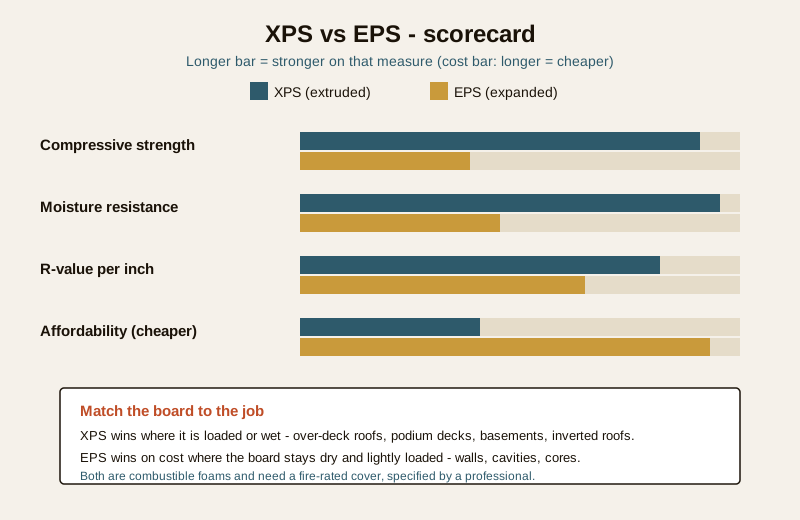
The takeaway is not that one is better - it is match the board to the job. Pay the XPS premium exactly where strength and water resistance are non-negotiable (roofs you screed over, decks you build on, walls in wet ground). Use EPS where the board stays dry and lightly loaded and save the money. For a broader look at other families - mineral wools and foams - see our guides on rock wool, glass wool and PU and PIR foam.
Best use at a glance
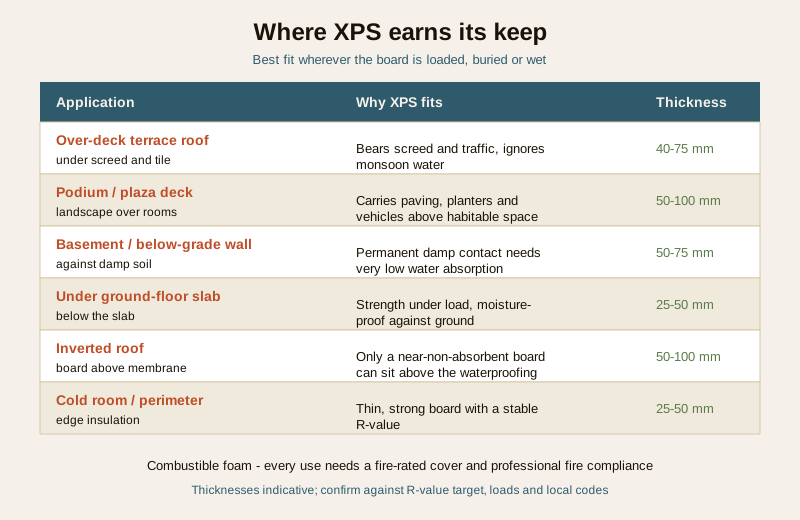
| Where | Why XPS fits | Typical thickness |
|---|---|---|
| Over-deck terrace roof (under screed) | Bears screed and traffic, ignores monsoon water | 40 to 75 mm |
| Podium / plaza deck | Carries paving, planters, vehicles above rooms | 50 to 100 mm |
| Basement / below-grade wall | Permanent damp contact, needs low water absorption | 50 to 75 mm |
| Under ground-floor slab | Strength under load, moisture-proof against soil | 25 to 50 mm |
| Inverted / protected-membrane roof | Only near-non-absorbent board works above the membrane | 50 to 100 mm |
| Cold room / perimeter | Thin, strong, stable R-value | 25 to 50 mm |
Fire: the caution you must respect
XPS is an organic, combustible foam. Like all polystyrene it will burn, and it can release dense smoke, so it is never left exposed in an occupied space. This is a genuine safety matter, not a footnote:
- XPS must be covered by a fire-rated barrier or protective layer - the screed, concrete topping, masonry or a rated board that separates the foam from the room and from ignition sources.
- Keep it away from open flames, hot works, welding and cutting during construction and storage.
- Boards are typically supplied with a flame-retardant grade, but flame-retardant is not fireproof - it slows ignition, it does not remove the fuel.
- Fire compliance is a professional's job. The reaction-to-fire classification, the required cover, and how the assembly meets the National Building Code (NBC, SP 7:2026) and local fire rules are decisions for a fire consultant and architect. Do not self-certify a foam-insulated build-up.
Treat the fire strategy as inseparable from the insulation decision: specify the board AND its protective cover together, and get the assembly signed off.
Cost in India (indicative)
XPS is a premium board - you are paying for density, strength and moisture performance. As a rough guide, expect roughly Rs 45 to Rs 120 per sq ft for a 40 to 50 mm board, rising with thickness and grade; thicker high-compressive boards for decks cost more. That is materially higher than EPS of the same thickness, which is the whole trade-off. Treat these as ballpark material-only figures - add labour, adhesives or mechanical fixings, screed and waterproofing, and confirm with local suppliers and current manufacturer rates.
To turn a target R-value into a board thickness for your climate, use our insulation R-value calculator; it does the arithmetic so you can specify a thickness rather than guess.
Sustainability notes
XPS is petroleum-derived and not biodegradable, and its blowing agents have historically carried a higher global-warming impact than EPS's - though newer low-GWP blowing agents have improved this, so ask the manufacturer. On the positive side, the energy the board saves over a building's life typically dwarfs its embodied energy, and boards are long-lived and reusable. It is broadly recyclable in principle but rarely recycled in practice in India. For low-impact alternatives where conditions allow, see our natural insulation materials guide; for green-building context, insulation contributes to GRIHA, IGBC and LEED thermal-performance credits.
Key takeaways
- XPS is extruded, closed-cell, coloured rigid polystyrene - denser and stronger than the white EPS beadboard it is often confused with.
- Its stand-out properties are high compressive strength, near-zero water absorption and a stable, high R-value (about R-5 per inch).
- That makes it the default for over-deck terrace roofs, podium decks, basements, under-slab and inverted roofs - anywhere it is loaded or wet.
- XPS vs EPS: XPS is stronger and more moisture-resistant but costlier; EPS is cheaper and fine where dry and lightly loaded. Match the board to the job.
- It is a combustible foam - it needs a fire-rated cover, must be kept from ignition, and its fire compliance belongs to a professional.
References
- Bureau of Indian Standards - standards covering rigid cellular polystyrene thermal insulation boards; consult current editions for board grades, density and marking.
- National Building Code of India (SP 7:2026) - thermal insulation, roofing and fire-safety provisions.
- GRIHA / IGBC / LEED - green-building rating references for thermal-envelope and insulation credits (general).
- Studio Matrx guides: building insulation materials guide, EPS insulation, PU and PIR foam, over-deck vs under-deck insulation, roof insulation guide and the complete building materials guide.
Export this guide
Related Guides — Deep-dive reading
Fire-Resistant Building Materials in India: A Specify-and-Select Guide (2026)
The difference between how a material reacts to fire and how long a rated assembly resists it, then the materials that deliver passive fire protection - non-combustible structure, mineral wool, fire-rated boards, intumescent coatings, spray fireproofing and fire-stopping - with a material-to-role selection table.
Building MaterialsBuilding Insulation Materials Guide (India): Types, R-Value & How to Choose (2026)
The complete anchor guide to building insulation in Indian homes - why it matters, the physics in plain terms, where insulation goes, and a side-by-side comparison of every material family with clear guidance on how to choose the right one.
Building MaterialsRock Wool Insulation in India: Fire-Rated Thermal & Acoustic Insulation Guide (2026)
What rock wool (stone mineral wool) is, why it beats most insulants on fire and sound, the forms and densities it comes in, where it wins over glass wool and foams, indicative cost and safe fibre handling - a specify-and-select guide.
Building MaterialsRelated Tools — Try Free
Cross-Ventilation Analyzer
Estimate airflow and air changes per hour (ACH) from room size, window areas, layout, and local wind — with NBC 2016 Part 8 compliance check.
Ventilation CalculatorMaterial Decision Framework (M-Score)
Score 30+ Indian construction materials across cost, durability, climate fit, maintenance, and sustainability.
MaterialsGreen Building Water Score Calculator
Score a building's water efficiency 0–100 from treated-water reuse, rainwater harvesting, low-flow fixtures and metering, with an IGBC/GRIHA-style rating and your biggest improvement lever.
Sustainability