
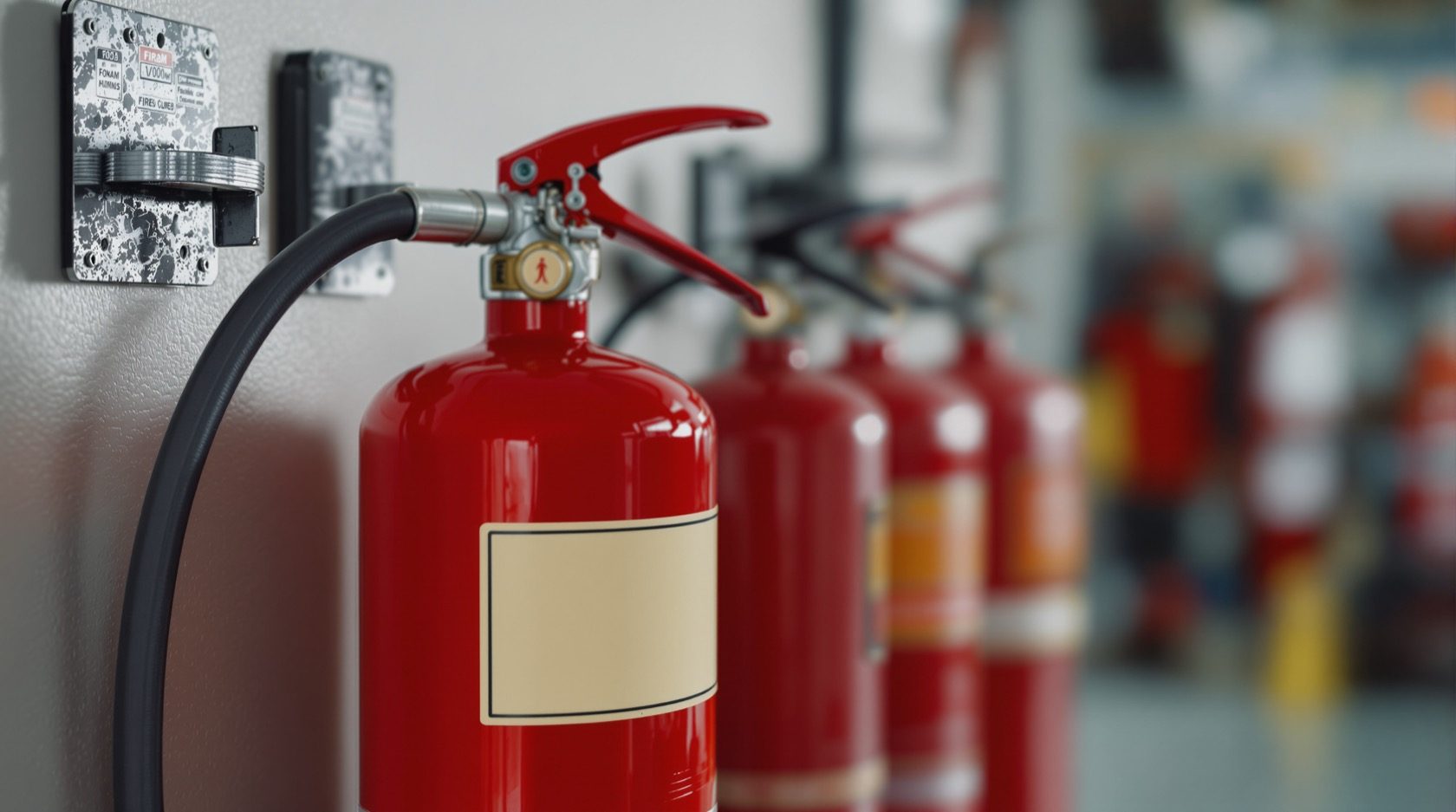
Foam Extinguishers in India (2026): Class A & B, Where They Shine & the Electrical Caution
The AFFF foam extinguisher smothers burning solids and, crucially, flammable liquids like petrol, paint and solvent. Here is where it belongs, and the two fires it must never touch.
Most people think of a fire extinguisher as the thing for a fire, as if one red cylinder fought every fire the same way. It does not. The whole craft of using an extinguisher safely is matching the agent to the fire class, and the foam extinguishers in this guide have one clear talent that sets them apart: they are the portable extinguisher built for flammable liquids. Where dry powder knocks a liquid fire down and water makes it worse, foam floats a blanket across the burning surface, smothers the flame and seals the vapour so it cannot flash back. That single trick is why a foam extinguisher belongs in a garage, a fuel or paint store, a workshop or a generator room — and why it must never be pointed at a chip-pan or a live socket.
This is the foam chapter of Studio Matrx's fire-safety library. It sits under the complete guide to fire safety in India and, more closely, under the fire-extinguishers pillar, which sets out all the fire classes and the PASS technique in full. Read this alongside its siblings — the water extinguisher for pure Class A, the CO2 extinguisher for electrical and liquid, the dry chemical powder (DCP) extinguisher for the most universal cover, and the wet chemical extinguisher for cooking oil — because choosing well means knowing what each one is for.
Scope and safety — read this first. A portable foam extinguisher fights a small, early fire only. Before you ever reach for it: raise the alarm, get everyone out, and keep your back to a clear exit. Only tackle a fire that is smaller than you are, and only if you are sure of the class and have the right extinguisher. Foam is for Class A solids and Class B flammable liquids — not for a cooking-oil (Class K) fire, and not for live electrical equipment. If the fire does not go out in seconds, or it grows, leave it and get out. Call the fire brigade on 101 or 112. This is educational guidance, not legal advice or a substitute for a licensed fire-safety professional.
What a foam extinguisher is, and how it works
A foam extinguisher holds a water-based foam concentrate — historically an aqueous film-forming foam (AFFF) — that is expelled through an aspirating nozzle so it comes out as a thick, spreading blanket rather than a jet of water. That blanket does three jobs at once, and understanding them explains everything about where foam fits.
- It smothers. The foam layer sits on top of the fuel and cuts the fire off from the oxygen in the air. Starve a fire of oxygen and it dies.
- It cools. The foam is mostly water, so it also carries away heat from the burning surface and the material beneath, which is what makes it good on Class A solids too.
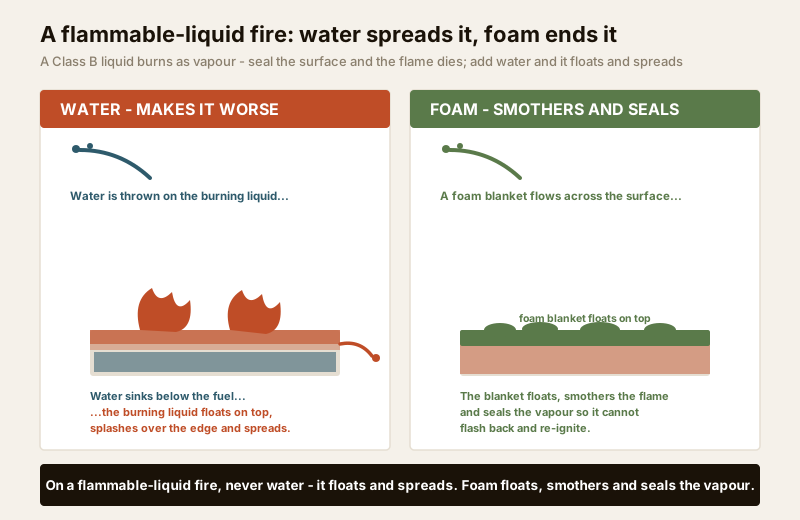
- It seals the vapour. This is the part that matters on liquids. A flammable liquid does not burn — its vapour does. The foam blanket floats on the liquid and forms a film that seals the vapour in, so even if a stray ember is nearby, the fuel cannot flash back and re-ignite. Water alone cannot do this; on a liquid, water sinks and the burning fuel simply floats on top and spreads.
That last point is the headline. On a tray of burning petrol or a spill of solvent, water spreads the fire and foam ends it — the blanket floats, smothers and seals, and stays sealing after the flame is out.
The fire classes foam covers — and the two it must not
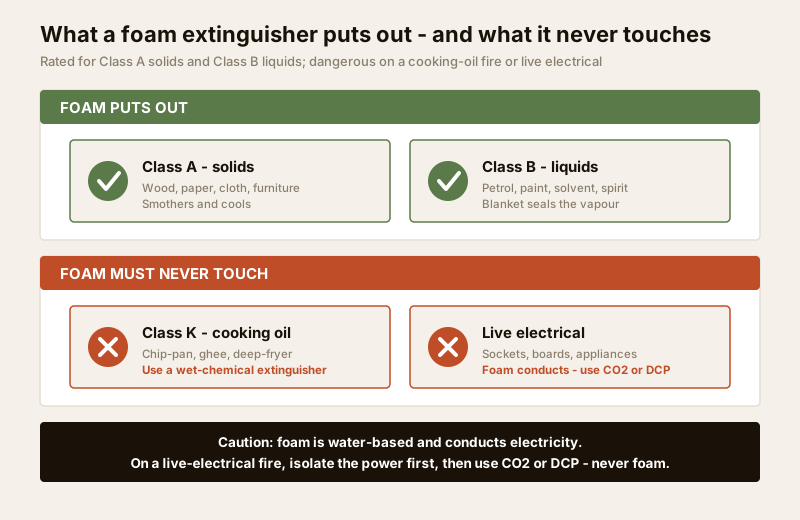
Fire is sorted into classes by what is burning, and every extinguisher agent is rated for some classes and dangerous on others. A foam extinguisher is rated for Class A (ordinary solids — wood, paper, cloth, furniture) and Class B (flammable liquids — petrol, diesel, kerosene, paint, thinner, solvent, spirits). It is not for the others, and two of those exclusions are genuinely dangerous to get wrong.
| Fire class | What is burning | Foam extinguisher? |
|---|---|---|
| A — solids | Wood, paper, cloth, furniture, rubbish | Yes — smothers and cools |
| B — flammable liquids | Petrol, diesel, paint, solvent, spirits | Yes — its speciality; blanket seals the vapour |
| C — flammable gases | LPG, PNG, other gas leaks | No — shut off the gas supply; a gas fire is not a foam fire |
| K / F — cooking oils and fats | Deep-fry oil, ghee, a chip-pan | No — use a wet-chemical (Class K) extinguisher |
| Electrical (a hazard, not a fuel) | Live wiring, sockets, appliances | No — foam conducts; isolate power, use CO2 or DCP |
| D — metals | Magnesium, sodium and similar | No — specialist agent only |
Two rules on that table save lives:
- Never on a cooking-oil (Class K) fire. A chip-pan or a pot of ghee is not an ordinary Class B liquid fire — it burns far hotter and needs an agent that chemically seals and cools the oil. Foam is not that agent. The right tool is a wet-chemical (Class K) extinguisher, and at home the honest first answer is a fire blanket and turning off the heat — see the kitchen fire-safety guide and the fire blankets guide.
- Never on live electrical equipment. Foam is water-based, and water conducts electricity. Spraying foam onto a live board, socket or appliance can carry the current back up the jet to you. If there is a live-electrical fire, isolate the power first at the switch or MCB, and use a CO2 extinguisher (the clean choice for electronics) or a DCP extinguisher instead. The electrical fire-safety guide covers this in full.
Where a foam extinguisher earns its place
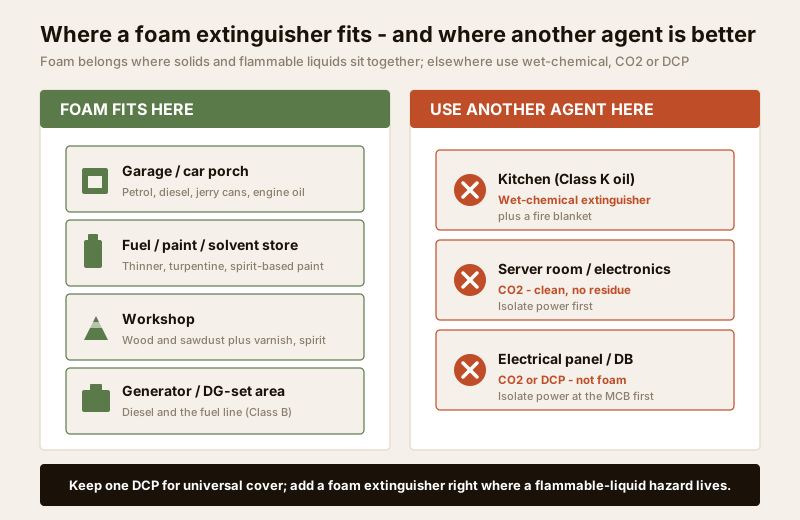
Foam is not the extinguisher for a plain living room — a home living space is Class A, and there DCP or even water does the job. Foam earns its keep exactly where solids and flammable liquids sit together, because it is the one portable agent that handles both classes cleanly and, on the liquid, seals against flashback. Think of the places in a home or small premises where fuel, paint or solvent live:
- The garage or car porch. Petrol and diesel in the tank and in jerry cans, engine oil, spilt fuel on the floor — a classic mixed Class A/B setting. A foam extinguisher mounted by the door is the natural fit.
- A fuel, paint or solvent store. Any cupboard or store holding petrol, thinner, turpentine, spirit-based paints or cleaning solvents.
- A workshop. A carpentry or general workshop mixes wood and sawdust (Class A) with varnish, spirit and solvent (Class B) — foam covers both.
- A generator or DG-set area. Diesel and the fuel line make this a Class B setting; foam suits the fuel, though anything with live electrical parts running means isolating power and reaching for CO2 or DCP if the fire is on the electrics.
Compare that to where foam is the wrong pick: a kitchen (Class K — wet chemical), a server room or electrical panel (electrical — CO2), or a plain bedroom (Class A — DCP is simpler and leaves you one universal unit). The point of a foam extinguisher is precision: put it exactly where flammable liquids are, and it outperforms everything else.
Foam versus dry powder (DCP) — the honest comparison
The real-world choice for most Indian homes and small premises is between a foam extinguisher and a DCP (ABC dry powder) extinguisher, so it is worth being clear-eyed about the trade-off. DCP is the most universal portable extinguisher — it is rated A, B and C, works on flammable gases, and is safe to use near (though not ideal for) electrical equipment. That is why the single realistic home extinguisher is usually an ABC dry powder unit. Foam wins on a narrower but important front: on a Class B liquid fire it is cleaner, seals the vapour against re-ignition, and does not bury the whole room in a fine, corrosive powder that gets into every crevice and every electronic device.
| Factor | Foam (AFFF) | Dry chemical powder (DCP / ABC) |
|---|---|---|
| Fire classes | A and B | A, B and C (most universal) |
| Class B liquid fire | Excellent — seals vapour, resists flashback | Good knock-down, but no vapour seal (can re-ignite) |
| Flammable gas (Class C) | No | Yes |
| Live electrical | No (conducts) | Not ideal, but tolerated after isolating power |
| Residue and clean-up | Wet, but far less pervasive | Fine powder everywhere; corrosive to electronics |
| Best home role | The liquid-fire specialist (garage, store) | The one universal all-rounder |
In short: if you keep only one extinguisher, make it DCP for its universal cover; if you have a distinct flammable-liquid hazard — a garage, a fuel or paint store, a workshop — add a foam extinguisher right there, because on that hazard it is the better, cleaner tool. See the DCP extinguisher guide for the full picture on powder.
Buying and mounting a foam extinguisher
A foam extinguisher is homeowner-doable to buy, mount and check. Get the choice and the placement right.
- Buy to Indian standards. A portable foam extinguisher must be made to IS 15683 : 2018 (portable fire extinguishers — performance and construction) and carry the ISI mark of the Bureau of Indian Standards. That mark is your assurance the cylinder, valve and rating are genuine — an unmarked import is not protection.
- Read the rating on the label. The body carries an A and B rating (for example a figure followed by A and a figure followed by B) showing the size of fire it is tested against, plus a clear pictogram of the classes it covers and, importantly, a do-not-use-on-electrical symbol.
- Mount it where the hazard is, near an exit. Fix it on the wall on its bracket at the specified height, on the escape side of the room so you are never reaching past the fire to get it — in the garage or store, by the door. Selection, placement and rating are governed by IS 2190 : 2024, and for any commercial premises the number, type and siting of extinguishers is set by that code together with the National Building Code (via SP 7 : 2026, Part 4) and your Fire NOC.
- Check the gauge monthly. Look at the pressure gauge every month — the needle should sit in the green. If it has dropped into the red, or the extinguisher shows damage, corrosion or a broken tamper seal, it needs servicing.
The PASS technique — how you actually use it
If — and only if — it is safe to fight the fire (small, right class, back to a clear exit), the method is PASS:
- P — Pull the safety pin, breaking the tamper seal.
- A — Aim the nozzle at the base of the fire, not the flames. On a liquid fire, do not blast the centre hard enough to splash the fuel — aim so the foam lands on a near surface and flows across to build the blanket, or sweep it onto a back wall and let it fall over the fire.
- S — Squeeze the handle to discharge.
- S — Sweep side to side across the base until the fire is out, keeping the blanket unbroken. Watch for re-ignition, and be ready to leave.
If the extinguisher empties and the fire is not out, or it grows at any point — stop, leave, close the door behind you and call 101 or 112. An extinguisher buys you one attempt on a small fire; it does not make you a firefighter.
A note on modern foams — the fluorine-free shift
There is an environmental change worth knowing about. Traditional AFFF foams rely on PFAS ("forever chemicals") for their film-forming action, and these are now being phased down worldwide because they persist in the environment and water supplies. The industry is moving to fluorine-free foams (often labelled F3) that achieve the same blanketing and vapour-sealing on Class B fires without the persistent chemistry. For a homeowner this changes nothing about how you use the extinguisher — it still smothers a liquid fire the same way — but when you buy or replace one, a fluorine-free / F3 foam is the responsible modern choice, and it is increasingly what reputable suppliers stock. Verify the specification against the current BIS listing at purchase.
Servicing — and when to leave it to professionals
Get it serviced, and know the limits. A foam extinguisher must be refilled and pressure-tested after any use — even a one-second discharge — because a partly used unit cannot be trusted to work again. Beyond the monthly gauge check you do yourself, book an annual service with a licensed refiller, who will weigh, inspect and recharge it, and a periodic hydrostatic (pressure) test of the cylinder at the interval set by IS 2190 : 2024. For a home, buying, mounting and checking is yours to do; for any shop, office, restaurant, workshop or society premises, the provision, type, number and servicing of extinguishers is the owner's statutory duty under the State Fire Services Act and Rules, the Model Building Bye-Laws and the premises Fire NOC, carried out through a licensed fire-safety agency — not a one-off retail purchase. If you manage such a premises, the commercial-building security guide and the office fire-safety guide set the wider picture.
To size and place your extinguishers across the whole home or premises, the fire-extinguisher selector turns the fire classes into a room-by-room recommendation, and the home fire-safety scorecard checks your overall readiness in ten minutes. For settings with a distinct flammable-liquid or fuel hazard, see also the basement fire-safety guide, which often houses generators, pumps and stored fuel.
Key takeaways
- Foam is the flammable-liquid extinguisher. It is rated for Class A solids and Class B liquids, and its special talent is that the foam blanket floats on a burning liquid, smothers it and seals the vapour so it cannot re-ignite — where water would sink and spread the fire.
- Never on cooking oil, never on live electrical. A Class K oil fire needs a wet-chemical extinguisher; a live-electrical fire needs the power isolated first and a CO2 or DCP extinguisher — foam is water-based and conducts.
- Put it where the liquids are: the garage, a fuel or paint or solvent store, a workshop, a generator area — anywhere solids and flammable liquids sit together.
- Foam versus DCP: keep one DCP for universal cover; add a foam extinguisher at a specific liquid hazard, where it is cleaner and resists flashback. Buy ISI-marked to IS 15683 : 2018, placed per IS 2190 : 2024, and prefer a modern fluorine-free (F3) foam.
- Check monthly, service annually, refill after any use — and remember an extinguisher is for a small early fire only: right class, back to the exit, and if it does not go out fast, get out and call 101 / 112.
References
- IS 2190 : 2024, Selection, Installation and Maintenance of First-Aid Fire Extinguishers (Portable and Mobile) — Code of Practice, Bureau of Indian Standards — the core code for selecting, siting, servicing and pressure-testing a foam extinguisher. Verify the current edition via the BIS catalogue: https://www.services.bis.gov.in/
- IS 15683 : 2018, Portable Fire Extinguishers — Performance and Construction — Specification, Bureau of Indian Standards — the product standard behind the ISI mark on a genuine foam extinguisher. Verify the current edition via the BIS catalogue: https://www.services.bis.gov.in/
- National Building Code of India, SP 7 : 2026 (the NBC), Part 4 "Fire and Life Safety" — the fire and life-safety framework that, with IS 2190, sets extinguisher provision for buildings; the older SP 7 : 2016 edition is withdrawn but still widely quoted. Verify via the BIS catalogue: https://www.services.bis.gov.in/
- The relevant State Fire Services Act and Rules and the Model Building Bye-Laws (MoHUA) — these set when extinguisher provision, servicing and a Fire NOC are legally required for a given premises.
This is an educational overview, not legal advice, and not a substitute for a licensed fire-safety professional or refiller. Extinguisher provision, servicing and the Fire NOC for any commercial or institutional premises are qualified professional tasks — engage a licensed fire-safety agency and the State Fire Services, and verify any standard's current status via the BIS catalogue before relying on it.
Export this guide
Related Guides — Deep-dive reading
Dry Chemical Powder Extinguishers in India (2026): The ABC All-Rounder Explained
The ABC dry powder is the most common extinguisher in India and the right single one for most homes and shops - it fights solids, liquids and gas, is safe on live electrics, but makes a corrosive mess.
SecurityFire Extinguishers in India (2026): Types, Fire Classes, PASS and the Right One to Buy
The umbrella guide to portable fire extinguishers in India: the fire classes, which agent kills which fire, the deadly wrong-agent mistakes, the PASS technique, and the realistic home kit that actually works.
SecurityWater Extinguishers in India (2026): Class A Only — and the Deadly Wrong Uses
The cheapest, simplest extinguisher cools solids brilliantly but can kill on the wrong fire. Here is where a water extinguisher belongs, and why oil, flammable liquids and live electrical are absolute no-go.
SecurityRelated Tools — Try Free
Fire Extinguisher Selector
The wrong extinguisher can make a fire worse. Pick a space and get the right extinguisher type(s) to consider — ABC powder, CO2, foam, wet-chemical, water or a fire blanket — matched to the fire class, with the deadly never-use warnings.
ExtinguisherFull-Room BOQ — Living, Bedroom, Kitchen, Bath
Room-wise BOQ across living, bedrooms, kitchen, utility, and bathrooms with line-item pricing.
Full-Room BOQElectrical Safety & Load Audit
Home electrical audit — 10 categories, 65+ checkpoints across earthing, RCCB, MCB, wiring, switchboards, appliance circuits, DG/inverter backup.
Safety Audit