
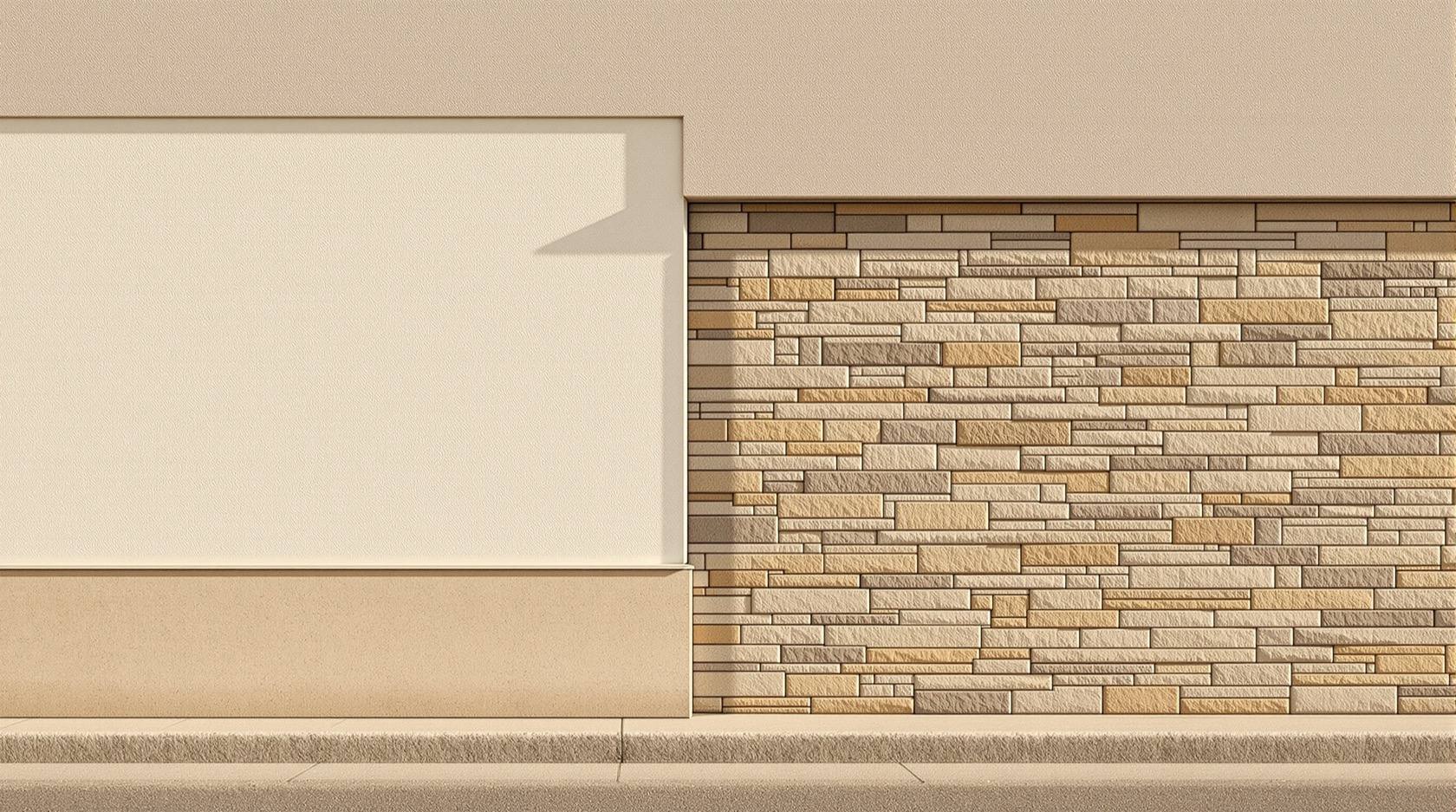
Compound Wall Finishes in India: Plaster, Texture, Cladding and Paint (2026)
A plain, India-grounded guide to choosing the exterior finish for a compound wall — plaster and exterior paint, textured coatings, stone, tile, laminate and HPL cladding, exposed brick, concrete and rubble stone, and decorative faces — compared on look, weather durability, maintenance and cost band, with the front wall treated as your street facade.
The finish is the part of a compound wall you actually see, and it is the part that has to survive rain and sun on both faces for the next fifteen years. A boundary wall has no roof over it and no room behind it — the street side and the garden side are both exposed, wetted by every monsoon and baked by every summer, so a finish that would be fine on a sheltered internal wall can fail badly here. Choosing it well drives two things at once: how your plot reads from the road, and how much you spend keeping it looking that way.
This is the finishes guide for the Compound Walls and Gates hub. It builds on the compound wall materials guide (what the wall is made of) and the compound wall design guide (footing, piers, coping), and it deliberately does not re-teach each finish from scratch — for the deep craft, follow the Wall Finishes library and its guides on exterior wall paint, wall texture paint, wall cladding panels and decorative wall finishes. Here the job is narrower: choose and specify a finish as the skin of a compound wall, weather-first.
Scope & how to read this. Every cost band, coat and coverage figure here is typical and indicative to help you plan and compare — confirm the exact specification against the product's own datasheet, the relevant IS codes (IS 1905 and IS 2645 for masonry and waterproofing, IS 456 for concrete, named generally), NBC (SP 7:2026) and your local municipal bye-laws, and get local quotes. The finish is not the waterproofing: an exterior finish must be breathable so the wall can dry, and it works only over a wall that is detailed to shed water — coping, plinth band and DPC come first. Any wall lighting is a licensed electrician's job (see the compound wall lighting guide); this guide covers the surface, not the wiring.
Two hard truths for a compound-wall finish
Before the menu of finishes, the two facts that should decide most of your choice — because a compound wall is not an internal feature wall and treating it like one is where money gets wasted.
It must be weather-durable on both sides
An internal wall gets one exposed face in a controlled room. A compound wall gets two fully exposed faces, both taking driving rain, UV, dust and heat cycling all year. That rules out anything interior-grade: interior emulsion, ordinary putty finishes, standard laminates and non-exterior tiles will chalk, peel, delaminate or grow algae within a season or two. Only exterior-grade systems belong here — exterior emulsion or elastomeric paint, exterior-rated textured coatings, exterior-grade cladding and natural stone. Just as important, the finish must be breathable (vapour-permeable) so any moisture that gets into the masonry can escape; a sealed, impermeable film traps damp, and trapped damp blisters paint and spalls plaster. Breathability is why a compound-wall finish is a partner to the waterproofing detailing, never a substitute for it.
It is a big visible area, so finish drives look and maintenance cost
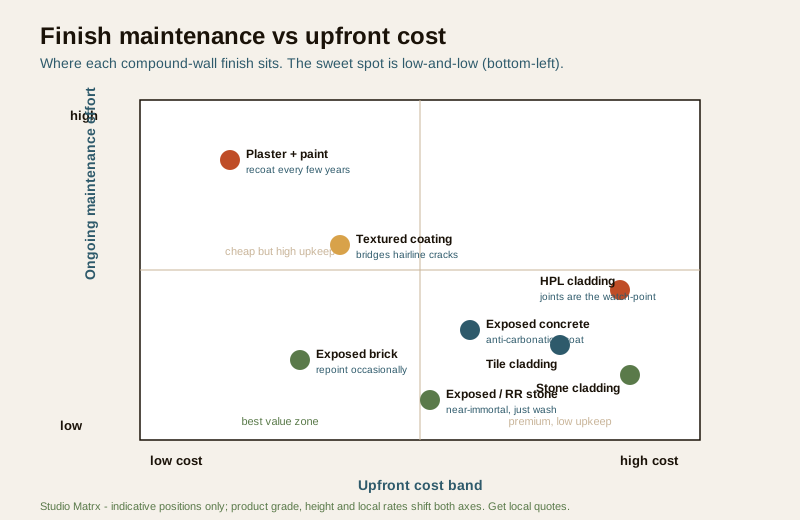
A boundary wall is often the largest single surface on your plot and the first thing anyone sees. That cuts two ways. The look carries a lot of the plot's character, especially the front wall, which acts as your street facade — a good reason to spend a little more on the roadside face than on the back run. And because the area is large, the finish sets your lifetime maintenance bill: a painted wall wants recoating every few years, while an exposed-stone or well-detailed cladding wall can go a decade-plus with little more than a wash. Cheaper to finish is not cheaper to own. Estimate the surface area and coats with the plaster quantity calculator and the paint calculator before you commit.
The finish options for a compound wall
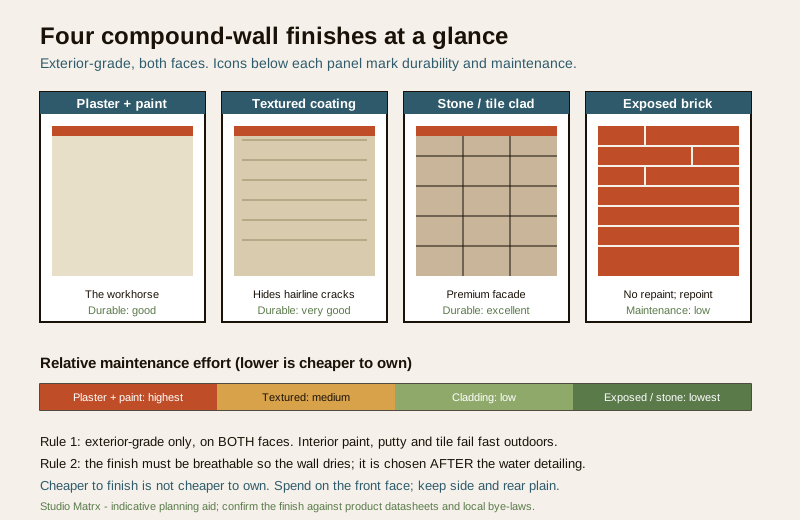
Read cost as a relative band, not a price — rates swing with product grade, city, height and labour. The workhorse sits at the top; the lower-maintenance exposed finishes sit further down.
| Finish | Typical look | Weather durability | Maintenance | Relative cost band | Best for |
|---|---|---|---|---|---|
| Plaster + exterior paint | Clean, any colour; the default | Good if exterior-grade + breathable | Recoat every ~4-6 years; wash algae | Low | The everyday workhorse; most residential boundaries |
| Textured / exterior coating | Matte, grained, hides hairline cracks | Very good; thick, UV-stable, crack-bridging | Wash; recoat less often than plain paint | Low to medium | Front walls wanting depth without cladding cost |
| Natural stone cladding | Premium, characterful, regional stone | Excellent; stone shrugs off weather | Very low; re-seal joints occasionally | Medium to high | Front / facade wall; a statement roadside face |
| Tile / porcelain cladding | Crisp, uniform, wipe-clean | Very good if exterior-rated vitrified | Low; check joints and fixing | Medium | Modern look, easy-clean, urban plots |
| HPL / laminate cladding | Flat, contemporary panels | Good only if genuine exterior-grade HPL | Low; joints and fixings are the watch-point | Medium to high | Contemporary gate-side feature panels |
| Exposed brick | Warm, traditional, honest | Good with good bricks + breathable sealer | Low; repoint occasionally | Low to medium | Character walls; no-plaster aesthetic |
| Exposed concrete (board-formed) | Modern, monolithic, grey | Very good on dense, well-cured RCC | Very low; anti-carbonation coat helps | Medium | Contemporary / architect-led walls |
| Exposed random-rubble (RR) stone | Rugged, rooted-to-site | Excellent; near-immortal | Very low; ages gracefully | Medium (low where stone is local) | Farmhouses, sloping / stony sites |
Each row is a starting point. Two things cut across all of them: exterior-grade only, and the finish is chosen after the wall body and its water detailing — the deep how-to for each lives in the Wall Finishes library, while the softer, greener alternative of a planted face is in green and living walls.
Plaster and exterior paint — the workhorse
For most boundaries, plaster plus a good exterior paint is the right answer: cheapest, most flexible on colour, understood by every mason and painter, and repairable anywhere. The wins and the watch-points are all in exterior wall paint — use an exterior emulsion or elastomeric system (never interior emulsion outside), insist on the primer and the stated number of coats, and remember it wants recoating every few years, sooner on the weather-facing side. It is the workhorse precisely because it is easy to renew.
Texture and exterior-grade textured coatings
A step up in depth and durability, textured coatings are thick, grained exterior systems that add a tactile, matte character, hide hairline cracks by bridging them, and are highly UV-stable — so they often outlast plain paint between recoats. They suit a front wall that wants richness without the cost of cladding. Specify an exterior-rated texture (many textures sold for interiors are not weatherproof) and mind that a heavy texture holds more dust and algae in damp, shaded corners.
Stone, tile, laminate and HPL cladding
Cladding fixes a separate skin — natural stone, exterior vitrified tile, or genuine exterior-grade HPL / laminate — onto the wall, usually on the front / facade face where it earns its cost. Stone is the most durable and characterful and reads as premium from the road; exterior tile and porcelain are crisp and wipe-clean; HPL gives a flat contemporary panel look but only in a true exterior grade with a proper fixing and drainage detail. Across all cladding the fixing, adhesive and joints are the failure points on an exposed boundary wall — water gets behind poorly-fixed cladding and pushes it off — so this is where specification and workmanship matter most.
Exposed finishes — lower maintenance by design
The lowest-maintenance route is often to skip the applied finish and let the wall body be the face: exposed brick, board-formed exposed concrete, or exposed random-rubble stone. These age gracefully, need no repainting, and read as honest and rooted. The catch is that they must be built to be seen — good facing bricks and neat pointing, a dense well-cured concrete mix with an anti-carbonation coat, or well-fitted rubble — because you cannot plaster over a mistake. A breathable water-repellent sealer keeps them from soaking up monsoon without trapping damp. For a farmhouse or a sloping stony plot, exposed stone is frequently the honest first choice; see residential compound walls.
Decorative and mixed finishes, and the front wall as facade
Beyond a single flat finish, a compound wall can carry decorative treatments — a stone or tile band, a jali or grille panel, a mixed plaster-and-cladding composition, or a planted green face — usually concentrated on the front wall, which functions as your street facade. The move that gives the best value is to spend on the roadside face and gate surround (stone, texture or a decorative band) while keeping the side and rear runs a plain painted or exposed finish. The front wall sets the first impression; the back run just needs to be weather-durable. Coordinate the finish with the gate finish so wall and gate read as one composition.
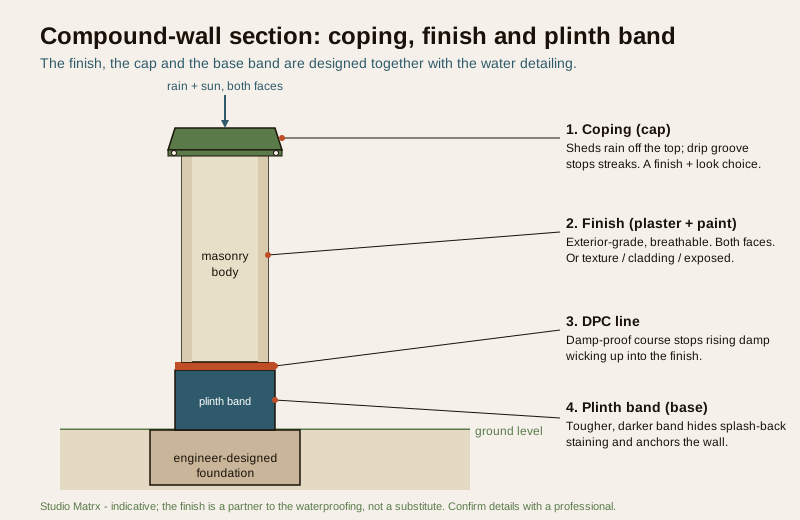
Coping and plinth band are part of the finish
Two elements are technically water-shedding details but they are also finish decisions, because they are always visible and they protect everything below them.
- Coping — the cap on top of the wall. It sheds rain off the top (an unprotected top is where water gets in and streaks the face), and it is a strong visual line, so its material and profile are a finish choice: a plastered-and-painted coping, a projecting stone or precast coping, or a tile-clad cap. A drip groove on its underside stops rainwater running back onto the wall face and leaving dirty streaks.
- Plinth band — a darker, tougher band at the base, usually of a hardier finish (stone, tile, dark textured paint or exposed plinth). It hides the splash-back staining and mud that always dirties the bottom 300-450 mm of a boundary wall, and it visually anchors the wall. A contrasting plinth band is one of the cheapest ways to make a plain painted wall look considered.
Both sit within the wall's water-shedding detailing — the finish and the waterproofing are designed together, not separately.
How to choose and specify your finish
Finish selection is a short set of questions about the face, the exposure and the budget. Work down the checklist, then confirm the shortlist and the exact product with your contractor and the datasheet.
| Question about your wall | If yes / this applies | Lean towards |
|---|---|---|
| Is this the front / roadside face (your facade)? | First impression matters | Stone or tile cladding, textured coating, or a decorative band |
| Is this a side or rear run, budget-led? | Just needs to be durable | Plaster + exterior paint, or exposed brick / concrete |
| Do you want the lowest lifetime maintenance? | Recoating is a chore | Exposed stone, exposed concrete, or stone cladding |
| Does the wall show hairline cracks or movement? | Older / masonry wall | Exterior textured (crack-bridging) coating |
| Is the site coastal or high-humidity? | Salt air, heavy monsoon | Dense stone / vitrified tile cladding, or elastomeric exterior paint; avoid porous, interior-grade |
| Is good stone quarried locally? | Peninsular / western / hill site | Exposed random-rubble, or local-stone cladding |
| Is it an exposed-concrete architect-led wall? | Modern, monolithic look | Board-formed exposed concrete + anti-carbonation coat |
| Tight budget across the whole boundary? | Cost is the driver | Plaster + exterior paint everywhere; a plinth band for character |
A few cross-cutting rules that decide more finishes than people expect:
- Exterior-grade only, both faces. Confirm on the datasheet that the paint, texture, tile or laminate is rated for external use. Interior products fail fast outdoors.
- Breathable, so the wall dries. Prefer vapour-permeable systems; do not seal a damp-prone wall under an impermeable film. The waterproofing guide explains why drying matters.
- Detail before finish. Coping, drip groove, DPC and plinth band come first; the best paint cannot fix a wall with no cap that soaks water from the top.
- Spend where it shows. Concentrate premium finish on the front face and gate surround; keep the rest plain and durable.
- Match the gate. Coordinate colour and material with the gate finish and rust prevention so the whole boundary reads as one design.
Estimating finish quantities and cost
Once you know the finish and the wall's length and height, you can get an early sense of quantities and spend:
- The plaster quantity calculator turns wall area and thickness into an indicative plaster and cement-sand quantity so you can sanity-check a contractor's number.
- The paint calculator estimates litres and coats for the painted area — remember a compound wall is painted on both faces, so count both.
- The compound wall cost calculator puts an indicative cost band on the whole wall including finish — a planning figure to compare options, not a quote.
Treat all three as planning aids. The real number comes from local quotes against your finish specification, because product grade, height, access and labour move the total far more than any online estimate.
How it connects
- Sits under the Compound Walls and Gates hub and pairs with the compound wall materials guide (what the wall is made of) and the compound wall design guide (footing, piers, coping).
- The deep finish references live in the Wall Finishes library: exterior wall paint, wall texture paint, wall cladding panels and decorative wall finishes.
- The finish is a partner to the water detailing in the waterproofing guide and to upkeep in repair and maintenance; coordinate with the gate finish and rust prevention guide.
- For a softer, planted boundary face see green and living walls; for where finishes land by plot type, residential compound walls.
- Estimate with the plaster quantity calculator, the paint calculator and the compound wall cost calculator.
Key takeaways
- A compound-wall finish must be weather-durable on both faces — exterior-grade only, and breathable so the wall can dry; interior products fail fast outdoors.
- Plaster plus exterior paint is the workhorse — cheapest and most flexible, but recoat every few years; exposed brick, concrete and rubble stone are lower-maintenance by design.
- Textured coatings add depth and bridge hairline cracks; stone, tile and HPL cladding read premium but live or die by their fixing and joints.
- The finish is a big visible area, so it drives both the look and the lifetime maintenance cost — cheaper to finish is not cheaper to own.
- Coping and plinth band are finish decisions too — cap the top with a drip groove and give the base a tougher band; and the finish is designed with the waterproofing, not instead of it.
- Spend where it shows: treat the front wall as your street facade and concentrate premium finish there, keeping side and rear runs plain and durable. All figures here are indicative — confirm against datasheets, IS codes, NBC (SP 7:2026) and local bye-laws, and get local quotes.
References
- IS 1905, Bureau of Indian Standards — code of practice for structural use of unreinforced masonry (plastered and exposed masonry walls; named generally).
- IS 2645, Bureau of Indian Standards — integral waterproofing compounds and related guidance for masonry and plaster (named generally).
- IS 456, Bureau of Indian Standards — code of practice for plain and reinforced concrete (exposed and clad concrete walls; named generally).
- National Building Code of India, NBC (SP 7:2026), Bureau of Indian Standards — general building, materials and durability provisions.
- Manufacturer product datasheets — exterior paint, textured coating, cladding, adhesive and sealer systems (exterior grade, coats, coverage and application; product-specific).
- Local municipal bye-laws and development-control regulations — boundary-wall and front-wall finish, height and appearance requirements (city-specific; these govern approval).
- Local contractor and supplier quotations — current finish, material and labour rates for your specific site.
All cost bands, coats, coverage figures and finish comparisons here are indicative planning aids only; confirm the governing specification against the product datasheet, the relevant IS codes, NBC (SP 7:2026) and your local municipal bye-laws, and have a qualified professional finalise the finish, its detailing and any wall lighting or structural work.
Export this guide
Related Guides — Deep-dive reading
Plaster, Render and Texture-Paint Facades in India: The Honest Guide to the Country's Default Wall Finish
A building-physics guide to cement and lime render, exterior emulsion and weatherproof paints, and textured coatings — how these everyday facades are built, why they crack, streak and grow algae, and what actually keeps them looking good in the Indian monsoon.
Building FacadesCompound Wall Cost in India: Materials, Labour and What Drives the Price (2026)
An honest, indicative cost-literacy guide to what a boundary wall really costs in India — why the price swings so much (material first, then height, foundation, finish, gate and site), the full cost stack most people forget, how the wall is measured, and where to trim without cutting the wrong corner. Relative bands, not quotes — get local numbers.
Compound WallsCompound Wall Waterproofing in India: Coping, DPC and Damp Protection (2026)
A plain, India-grounded guide to keeping water out of your boundary wall — the three ways rain and ground damp get in, and the three defences that stop them: a proper overhanging coping with a drip on top, a damp-proof course and plinth-protection band at the base, and a breathable rain-resistant render and paint on the face. Plus efflorescence, drainage and coastal care.
Compound WallsRelated Tools — Try Free
Door Paint Calculator
Estimate paint and primer litres and cost to paint your doors by size, number of doors, coats and paint type.
Door CalculatorPainting Prep & Quality Checklist
Painting audit — 10 categories, 65+ checkpoints across surface prep, putty, primer, emulsion coats, enamel, external, ceilings, defects, final QC.
Painting QCMonsoon-Readiness Checklist
Pre-rain home audit across 9 categories — terrace, drains, waterproofing, electrical, HVAC, pest, vehicles, documents.
Seasonal Audit