
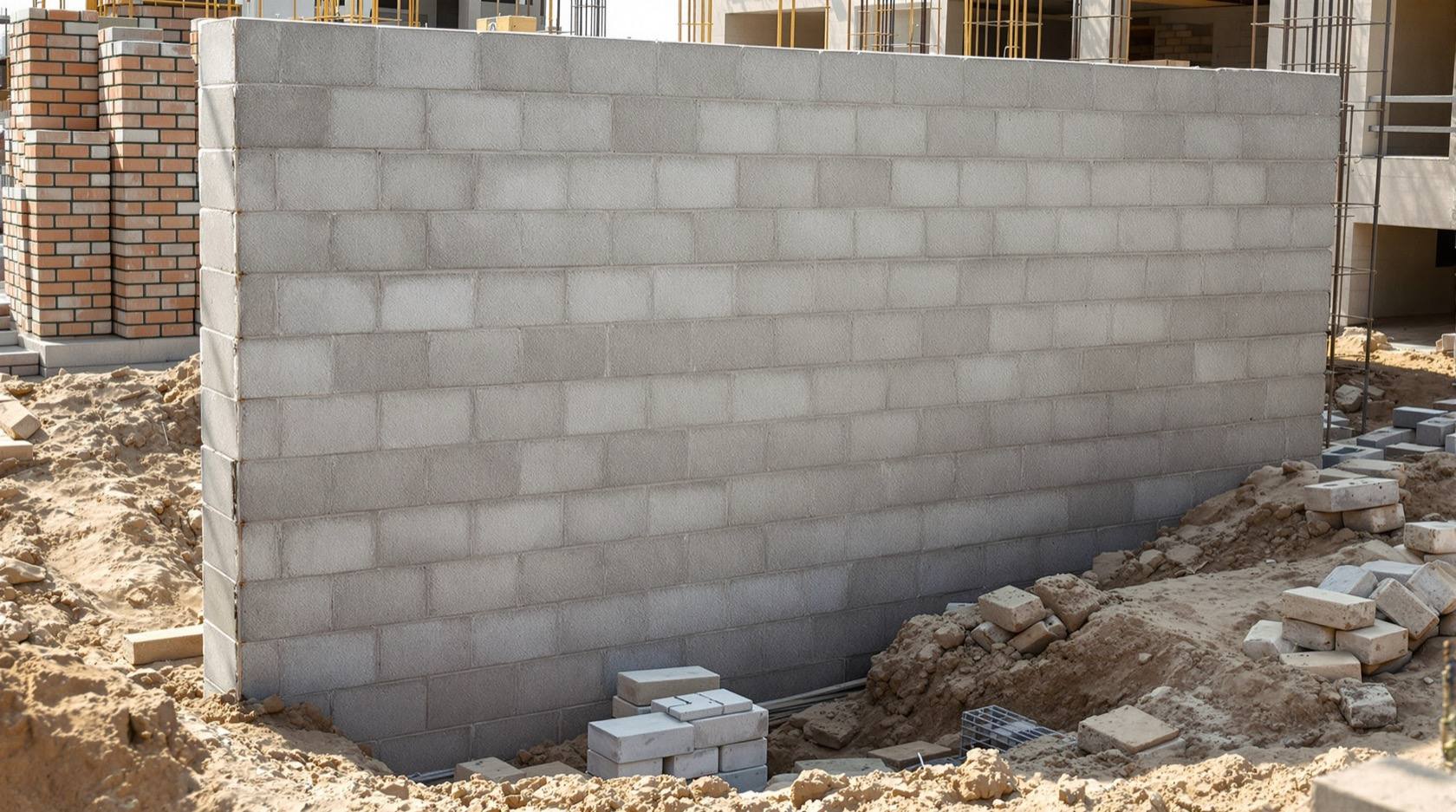
Compound Wall Cost in India: Materials, Labour and What Drives the Price (2026)
An honest, indicative cost-literacy guide to what a boundary wall really costs in India — why the price swings so much (material first, then height, foundation, finish, gate and site), the full cost stack most people forget, how the wall is measured, and where to trim without cutting the wrong corner. Relative bands, not quotes — get local numbers.
Ask three contractors what a compound wall costs and you will get three very different numbers — not because someone is cheating you, but because "a compound wall" is not one thing. A knee-high garden boundary in local brick and a 2.4 m plastered wall with a designed foundation and an automated steel gate are different animals that happen to share a name. Before you can judge a quote, you need to understand what actually drives the price and what the price is supposed to include — because the most expensive mistake is costing only the wall and forgetting the foundation, the finish and the gate.
This is the cost-literacy guide for the Compound Walls and Gates hub. It does not hand you a rupee-per-foot rate — those move too fast and vary too much by city, soil and the day's steel and cement price to print honestly. Instead it teaches you the shape of the cost: which choices swing it most, what belongs in a complete estimate, and where you can trim without cutting the wrong corner. The material choice underneath it all is covered in the compound wall materials guide; the foundation in the foundation guide; the finish in the finishes guide; and all the actual arithmetic lives in the compound wall cost calculator.
Scope & how to read this. Every cost figure here is a relative band (Low, Medium, High, Very High) to help you compare choices and sanity-check a quote — not a price, not a rate, and not a quote. Real numbers come only from local contractor quotations against a drawing, because rates swing enormously by city, soil, transport, height and the day's steel and cement price. Structure is engineer-led: a tall wall, a retaining wall or a wall on weak soil needs an engineer-designed foundation whose cost you cannot guess from a thumb-rule, and skimping there is dangerous, not thrifty. Deep material economics live in the Construction Materials library; gate security and automation costs sit with the Perimeter Security library.
Why compound wall cost swings so much
The single biggest reason quotes differ is that the underlying choices differ. Five levers move the total more than anything else, roughly in order of impact:
1. Material — the biggest driver. A long run in brick or block costs a fraction of the same run in random-rubble stone or cast-in-situ RCC. Material sets the base band before anything else is decided. See the materials guide for the full comparison.
2. Height — cost does not rise linearly with height. A taller wall needs a deeper footing, thicker section, piers and reinforcement, so going from a modest wall to a security-height wall can more than double the per-foot cost. The height and privacy guide explains where the structural lines sit.
3. Foundation and soil — invisible and easy to under-cost. Firm soil takes a modest footing; soft, made-up, black-cotton or sloping ground needs a deeper or engineered foundation, which is real money you cannot skip.
4. Finish — the same wall body can be left rough or dressed to a premium texture. Plain paint over plaster is cheap; stone cladding, designer texture or a premium finish can rival the cost of the wall it sits on.
5. The gate — often a single large line item, sometimes more than a whole span of wall. A plain welded gate and an automated, clad, wide double gate are worlds apart in price; the gate design guide covers the range.
Site conditions — access for materials, a sloping or irregular plot, the need to demolish an old wall, distance from the nearest supplier — sit underneath all five and nudge every one of them.
The relative-cost picture by material
Read the bands below as relative, not as prices. They tell you which way a choice pushes the total, so you can see the trade before you commit — then confirm with local quotes.
| Material (wall body) | Relative cost band | What drives it up or down |
|---|---|---|
| Concrete / AAC / fly-ash block | Low to Medium | Big units, less mortar, fast labour; band rises with plaster and paint quality |
| Burnt-clay brick masonry | Low to Medium | Familiar wet trade; cheap where bricks are local, dearer with piers and reinforcement for height |
| Precast RCC panels | Medium | Factory panels + posts; economical over long runs, needs delivery and craneage access |
| Random-rubble (RR) stone | Medium to High | Cheap where stone is quarried nearby, expensive once trucked in; skilled slow labour and heavy foundation |
| Cast-in-situ RCC | High to Very High | Formwork, steel and curing; the answer for tall, retaining or high-security walls, at a price |
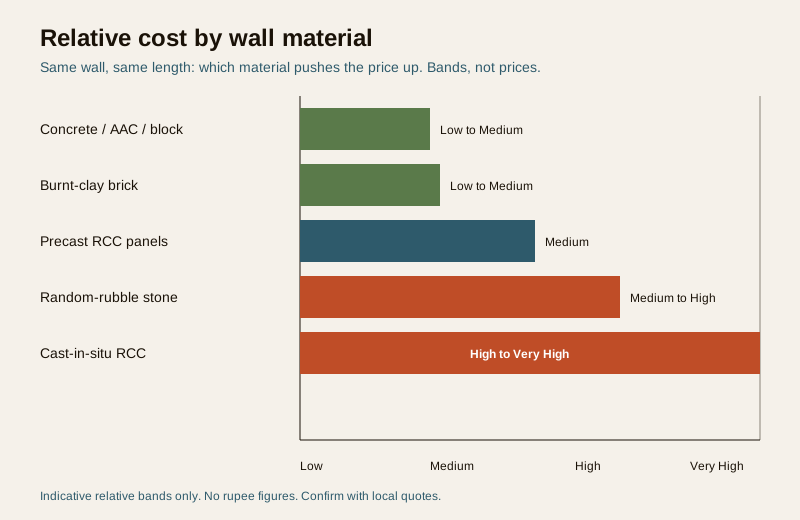
The chart says something important: the gap between the cheapest and dearest material for the same wall is large — often several times over. If budget is the constraint and the height is normal, material is the first lever to pull, and a long boundary is exactly where an economical material saves the most.
The cost stack: what a complete estimate includes
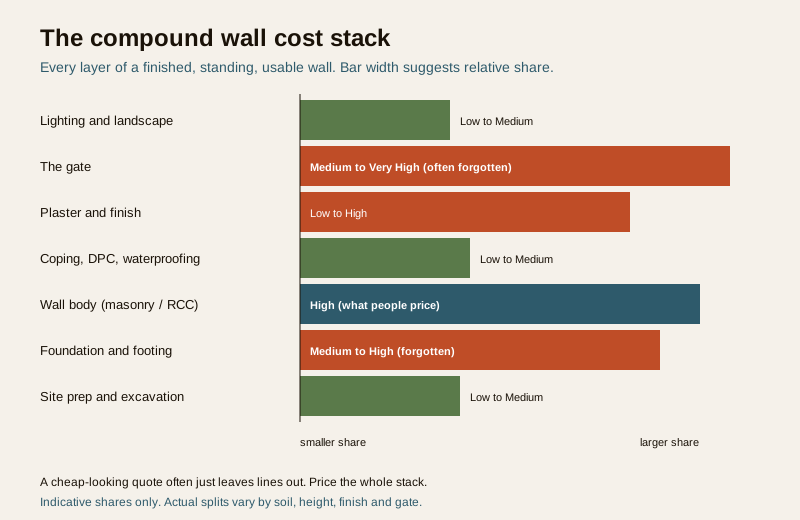
Here is the trap that costs people the most: they price "the wall" and forget that a finished, standing, usable compound wall is a stack of items, several of which are invisible in the quote for the masonry alone. A quote that looks cheap is often cheap because it quietly left things out. Walk the whole stack before you compare numbers.
| Cost-stack layer | What it is | Relative share | Easy to forget? |
|---|---|---|---|
| Site prep and excavation | Clearing, marking, digging the footing trench, demolition of any old wall | Low to Medium | Sometimes |
| Foundation and footing | The engineer-designed footing, deeper on weak or sloping soil | Medium (High on bad soil) | Very often |
| Wall body (masonry / RCC) | The masonry or concrete itself, with piers and reinforcement as needed | High | No — this is what people price |
| Coping, DPC and waterproofing | The cap on top, damp-proof course at the base, waterproofing against rising and driving damp | Low to Medium | Very often |
| Plaster and finish | Rendering, finish and paint or cladding — plain to premium | Low to High | Often (premium finishes) |
| The gate | The gate, posts, hardware and any automation | Medium to Very High | Rarely, but under-costed |
| Lighting and landscape | Any wall lighting wiring and boundary planting | Low to Medium | Very often |
| Labour and overheads | Masons, helpers, curing time, contractor margin, wastage | Baked into each line | Hidden in "per foot" |
Two lines dominate the surprises. The foundation is the one people cannot see and therefore cannot picture paying for — yet on poor soil it can be one of the largest items, and it is the one you must never trim. The gate is the other: a single opening can carry a cost that rivals many running feet of wall, especially once you add width, cladding, and automation. Cost the stack, not the span.
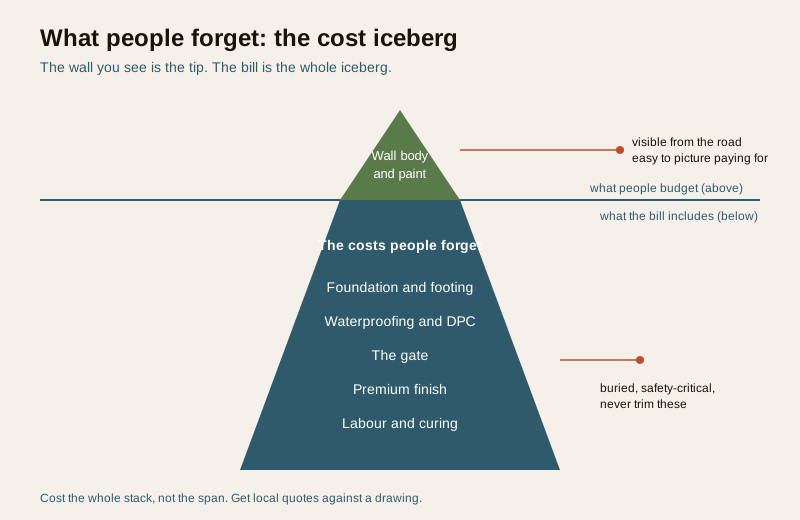
The "only the wall" trap, drawn
Picture an iceberg. The wall you see from the road — the masonry and its paint — is the tip above the waterline. Below it sit the foundation, the finish detailing, the gate, the waterproofing and the labour that make the visible wall stand, stay dry and actually open. People quote and budget the tip; the bill is the whole iceberg. This single mental picture prevents the most common compound-wall cost shock.
How compound walls are measured and quoted
Understanding the unit a contractor quotes in helps you compare like with like — because two quotes in different units are not directly comparable.
- Per running foot (or running metre) at a stated height. The most common residential unit: a rate for each foot of wall length, quoted for a specific height and specification. Change the height or the finish and the rate changes — so a running-foot rate is meaningless without the height and spec attached.
- Per square foot of elevation. Some quote the wall's face area (length times height) at a rate per square foot. This handles varying heights more honestly but still needs the specification pinned down.
- Itemised / BOQ. The most transparent: a bill of quantities listing excavation, foundation, masonry, plaster, coping, gate and so on separately. Harder to read but far easier to check for the missing lines above.
Whichever unit you are given, insist that the quote states height, thickness, foundation type, finish and whether the gate is included — an unqualified "Rs per foot" is where the misunderstandings live. To sanity-check quantities yourself, the brick and block quantity calculator turns length, height and thickness into an indicative unit count, and the compound wall cost calculator puts an indicative band on the whole job for comparison.
Regional and soil variation
The same wall does not cost the same across India. Stone is cheap in a quarry district and dear in an alluvial plain; sand and aggregate rates vary with local availability and haulage; labour rates differ city to city; and soil is the wildcard — a foundation on black-cotton or made-up ground costs far more than the same wall on firm murram. This is exactly why a national "rate" is a fiction and why local quotes against your own drawing are the only honest number. Coastal and high-water-table sites add waterproofing and durable-material costs that inland sites do not carry.
Where to save without cutting the wrong corner
There is a right way and a wrong way to bring a compound wall down to budget. The wrong way trims the foundation, the reinforcement or the waterproofing — the invisible, safety-critical, expensive-to-redo layers. The right way pulls the levers that cost a lot but matter less to whether the wall stands and stays dry.
| Cost-cutting lever | How it saves | Watch-out |
|---|---|---|
| Right height, not over-tall | Height multiplies footing, section and reinforcement cost; build only as tall as privacy, security and local rules require | Do not go below what security or bye-laws need |
| Economical material on long runs | Block or precast over a long boundary saves the most; reserve stone or RCC for where they earn their keep | Match material to soil and height, per the materials guide |
| Phase the finish | Build the wall now, apply the premium finish or cladding later when budget allows | Still do coping and waterproofing now — those are not optional |
| Simpler gate now, upgrade later | A plain, well-built gate now; automation and cladding as a later upgrade | Size the opening and posts correctly the first time |
| Straight runs, fewer piers | A simple rectilinear layout uses less material than steps, curves and extra piers | Do not remove piers a tall wall structurally needs |
| Never trim these | Foundation, reinforcement, DPC, coping, waterproofing — the safety and durability layers | Cutting these is not saving; it is deferred, larger cost |
The honest summary: save on what you can see and change later (finish, gate upgrade, decorative flourishes) and spend properly on what is buried and permanent (foundation, reinforcement, waterproofing). A wall that falls or stays wet is the most expensive wall of all.
How it connects
- Sits under the Compound Walls and Gates hub and rests on the compound wall materials guide (which material sets the base band) and the compound wall foundation guide (the cost people forget).
- The finish and the gate — the two swing items — are covered in the compound wall finishes guide and the compound gate design guide; waterproofing in the waterproofing guide.
- Height drives cost; see the height and privacy guide, and confirm what you are allowed to build in the compound wall regulations guide.
- Deep material economics live in the Construction Materials library — for example the cost trade in fly-ash bricks vs clay bricks; gate security and automation costs sit with the Perimeter Security library.
- Do the arithmetic with the compound wall cost calculator and sanity-check quantities with the brick and block quantity calculator.
Key takeaways
- Material is the biggest cost driver — block and brick are Low to Medium, precast Medium, stone Medium to High, cast-in-situ RCC High to Very High for the same wall; on a long boundary an economical material saves the most.
- Cost does not rise linearly with height — a taller wall needs a deeper footing, thicker section and reinforcement, so security-height walls cost far more per foot than modest ones.
- The foundation is the cost people cannot see and must never trim — on weak, sloping or black-cotton soil it can be one of the largest and most variable items.
- Price the whole stack, not just the wall — excavation, foundation, coping, DPC, waterproofing, finish, gate, lighting and labour; a cheap-looking quote often just left lines out.
- The gate is a big single line item — a wide, clad or automated gate can rival many feet of wall; budget it deliberately, not as an afterthought.
- Save on the visible and deferrable (finish, gate upgrade) and spend properly on the buried and permanent (foundation, reinforcement, waterproofing); confirm quantities in the cost calculator.
- Every band here is indicative — get local quotes against a drawing; rates swing by city, soil, transport and the day's steel and cement price.
References
- IS 1905, Bureau of Indian Standards — code of practice for structural use of unreinforced masonry (wall specification behind any cost; named generally).
- IS 456, Bureau of Indian Standards — code of practice for plain and reinforced concrete (RCC and precast wall specification; named generally).
- IS 2185, Bureau of Indian Standards — concrete masonry units (block specification that a quote should meet; named generally).
- National Building Code of India, NBC (SP 7:2026), Bureau of Indian Standards — general building, materials and structural-safety provisions that a compliant wall must meet.
- Local municipal bye-laws and development-control regulations — boundary-wall height and setback rules that constrain what you can build and therefore what it costs (city-specific).
- Local contractor and supplier quotations — the only reliable source of current material, steel, cement, transport and labour rates for your specific site and soil.
All cost bands and shares here are indicative planning aids only, not prices, rates or quotes; actual costs vary widely by city, soil, transport, height, finish and the day's material rates. Confirm the specification against the relevant IS codes, NBC (SP 7:2026) and your local municipal bye-laws, get local quotes against a drawing, and have a licensed structural engineer design and certify the foundation and any tall or retaining wall.
Interactive · Indicative estimate
120 rft @ ₹700/rft
Finish tier (sets an indicative rate)
Indicative total
₹84,000
Total at each tier's indicative rate, for your quantity.
Per running foot for a ~5–6 ft wall — foundation, masonry, plaster and finish. Tier rates are indicative starting points — set the rate to the figures in the tables above or your actual quote. Estimate only.
Export this guide
Related Guides — Deep-dive reading
Compound Wall Materials in India: Brick, Stone, RCC, Precast and Block Compared (2026)
A plain, India-grounded guide to choosing what your boundary wall is made of — burnt-clay brick, random-rubble stone, concrete and AAC block, cast-in-situ RCC and precast RCC panels compared on cost band, strength, durability, speed, maintenance, look and where each one fits your budget, soil, height and coast.
Compound WallsCompound Wall Foundation in India: Footings, Soil and Reinforcement (2026)
The part of a boundary wall you never see is the part that decides whether it stands straight for decades or leans, cracks and falls — a plain, India-grounded literacy guide to what sits under your compound wall: how your soil drives the footing, the common footing types, how deep to go, the plinth and DPC transition, and why footing size and reinforcement are engineer-designed to your soil and wall height, never a build-to number.
Compound WallsSustainable Compound Walls in India: Fly Ash, Recycled and Green Materials (2026)
An honest, India-grounded guide to building a lower-impact compound wall — lower-carbon masonry (fly-ash bricks, AAC, reduced-clinker cement), using less material by right-sizing the wall, recycled and local stone and reclaimed brick, a green or living boundary instead of a tall solid wall, a permeable base that lets water recharge, and durable finishes that need fewer repaints.
Compound WallsRelated Tools — Try Free
AI BOQ Generator
AI generates detailed Bill of Quantities with city-specific rates and labour breakdown.
ArchitectAIMaterial Comparison Sheet
India's interior material cheatsheet — plywood, finishes, hardware, countertops, paints, waterproofing.
Reference GuideWindow Hardware Cost Calculator
Estimate window hardware cost — hinges, handles, locks, rollers and multipoint gears.
Window Calculator