
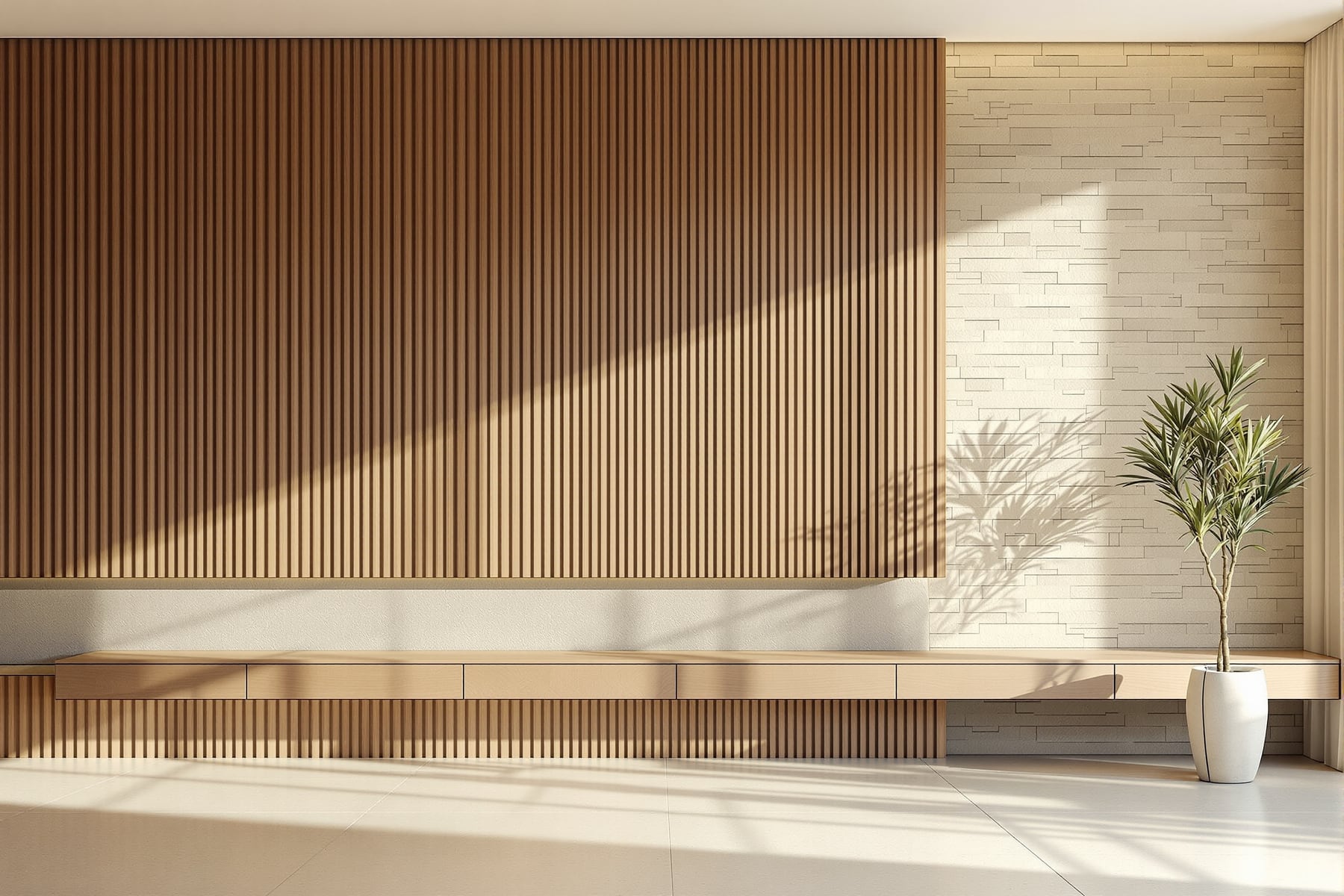
Wall Cladding & Panels: The Complete Guide for Indian Homes
The fast, dry way to transform a wall — the whole family from PVC to natural stone, how each is fixed, where it belongs indoors and out, the cost ladder, the fire-and-moisture cautions, and how to choose by what you want the wall to do.
There is a moment in almost every Indian home renovation when paint stops being enough. You want a wall to carry the room — to have depth, warmth, texture, a sense that someone designed it — and no colour, however rich, quite gets there. That is where cladding comes in. Cladding and wall panels are the fast, dry way to transform a wall: no curing weeks, no repainting every few years, just a surface fixed over the wall in a day or two that reads as stone, wood, brick or sleek metal. It is the finish behind most of the feature walls you admire.
This is the complete guide to wall cladding and panels for Indian homes — the deep dive under the master wall-finishes guide into the whole "dry" side of the wall. We will lay out the full family from cheap PVC to permanent stone, show how each is fixed to the wall, map where each belongs indoors and out (with the fire and moisture cautions that matter), climb the cost ladder, and give you a simple way to choose by what you actually want the wall to do.
The cladding and panel family
Cladding is not one product but a wide family, spanning a ten-to-one range in price and very different characters. Seeing the whole menu is how you find the one that fits your wall, your budget and the weight the wall can bear.
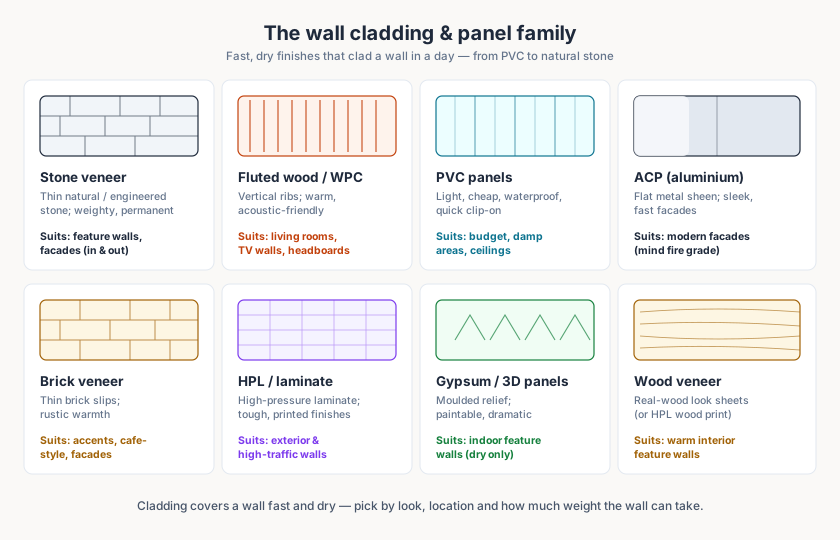
- Stone veneer / cladding — thin natural or engineered stone; weighty, permanent, at home indoors or on a facade.
- Fluted wood / WPC — the vertical ribbed panels everywhere right now; warm, softly acoustic, ideal for living-room and TV walls. See the dedicated fluted panel design guide.
- PVC panels — light, cheap, waterproof and quick to clip on; the budget and damp-area choice, and common on ceilings.
- ACP (aluminium composite) — flat metal sheen for sleek, fast facades — with an important fire caveat below.
- Brick veneer — thin brick slips for rustic, cafe-style warmth on an accent wall or facade.
- HPL / laminate — high-pressure laminate; tough, printed finishes, and capable outdoors (fibre-cement & HPL cladding).
- Gypsum / 3D panels — moulded relief that throws shadow; paintable and dramatic, but strictly for dry indoor walls.
- Wood veneer — real-wood-look sheets for warm interior feature walls.
The through-line: cladding covers a wall fast and dry — you pick by look, by location, and by how much weight the wall can take.
How cladding is fixed to the wall
The look gets the attention, but the fixing decides whether cladding lasts — and it scales with the panel's weight and its exposure to weather. There are three broad systems, and choosing the right one matters as much as choosing the panel.
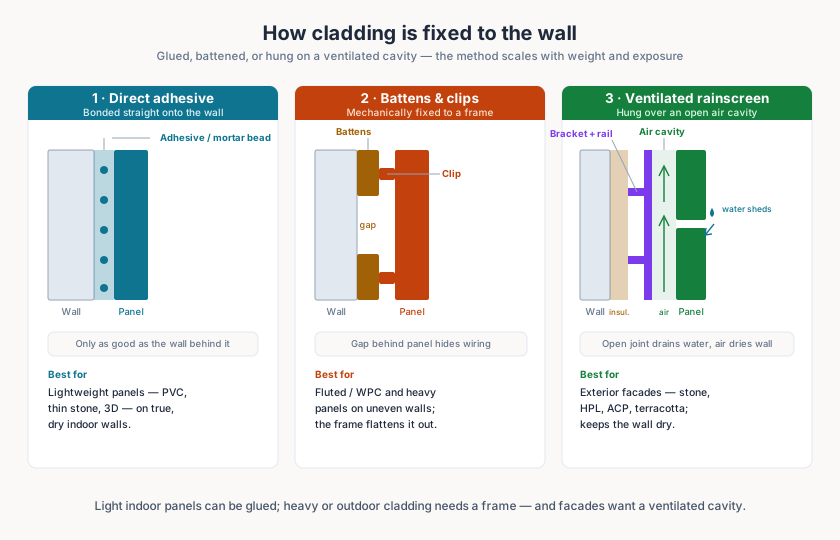
- Direct adhesive — the panel is bonded straight onto a flat, sound, dry wall. Fast and cheap, but only as good as the wall behind it; right for lightweight panels (PVC, thin stone, 3D) on true indoor walls.
- Mechanical — battens & clips — the panel screws or clips onto a timber or metal batten framework. This is how fluted, WPC and heavier panels go up; it forgives an uneven wall and hides wiring in the gap.
- Ventilated rainscreen — the panel hangs on rails and brackets with an open air cavity behind it, so rain drains away and moving air keeps the wall dry. This is the right system for exterior facades in stone, HPL, ACP or terracotta, and it is why serious facades last.
The simple rule: light indoor panels can be glued; heavy or outdoor cladding needs a frame — and a facade wants a ventilated cavity so the wall behind it can breathe and dry.
Which cladding belongs where
Cladding failures are almost always a location mistake — a moisture-hungry panel in a wet zone, or a combustible one on a tall facade. Get the zone right first and the shortlist narrows safely.
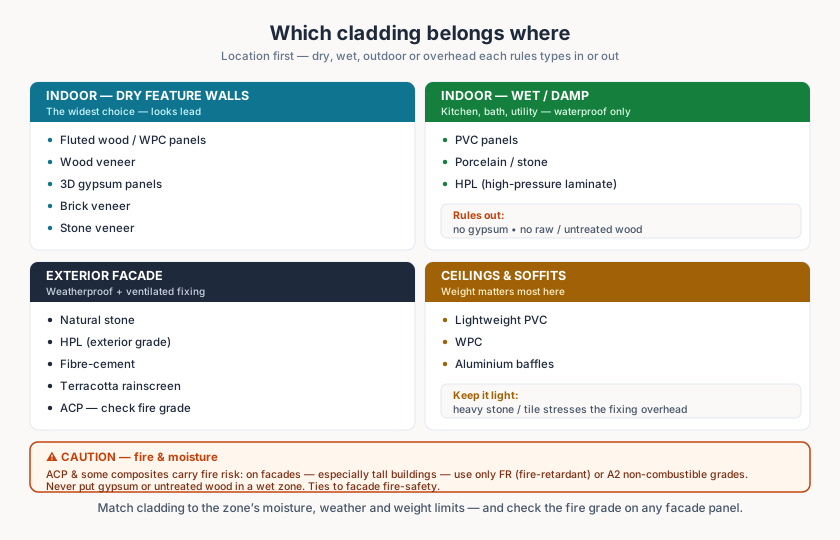
Dry indoor feature walls enjoy the widest choice — fluted wood/WPC, wood veneer, 3D gypsum, brick and stone veneer all work. Wet or damp zones (kitchen, bath, utility) demand waterproof panels only — PVC, porcelain/stone or HPL — and rule out gypsum and untreated wood entirely. Exterior facades need weatherproof panels on ventilated fixings — natural stone, HPL, fibre-cement, terracotta rainscreen or ACP. Ceilings and soffits care about one thing above all: weight, so lightweight PVC, WPC and aluminium baffles dominate.
Two cautions are worth stating plainly. Fire: ACP and some composite panels carry real fire risk — use only FR (fire-retardant) or A2 non-combustible grades on facades, especially on tall buildings, a point our facade fire-safety guide covers in depth. Moisture: never put gypsum or raw wood in a wet zone, however good it looks dry.
What it costs
Cladding spans an enormous price range, and — unlike paint — most of it needs a fixing framework too, which adds to every number. Knowing the ladder keeps the ambition and the budget in the same room.
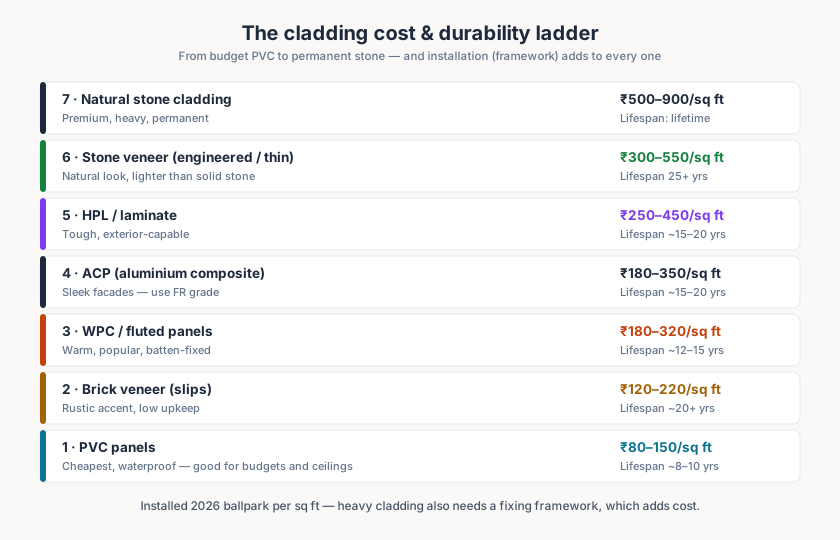
As a 2026 installed ballpark: PVC panels run ₹80–150/sq ft (8–10 years); brick veneer ₹120–220 (20-plus years); WPC/fluted ₹180–320 (12–15); ACP ₹180–350 (15–20, FR grade); HPL ₹250–450 (15–20); engineered stone veneer ₹300–550 (25-plus); and natural stone cladding ₹500–900, effectively for the life of the building. Remember that heavier cladding also needs battens or rails, typically adding ₹60–200/sq ft — the estimator on this page gives you the material figure for your own wall and type, and flags that framework and labour sit on top.
How to choose — start from the goal
With so many options, the cleanest way to decide is to ignore the products at first and ask what you want the wall to do. The goal points straight to the panel.
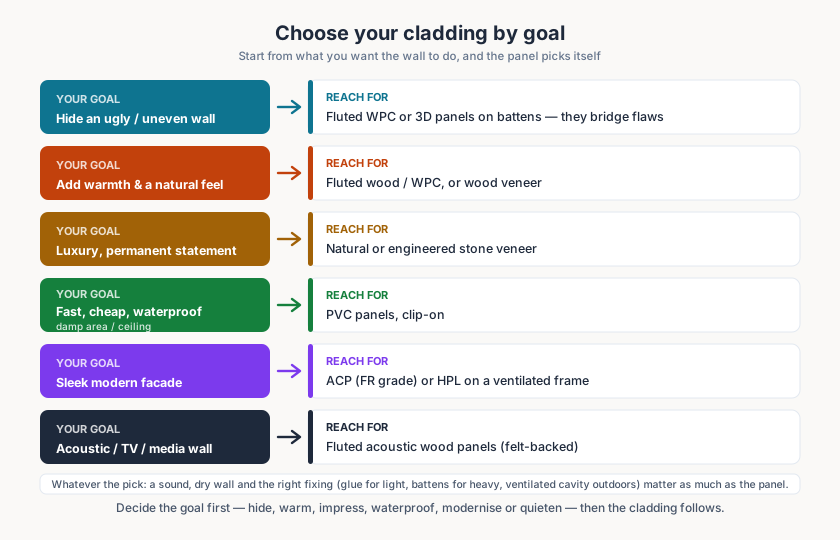
Want to hide an ugly, uneven wall? Fluted WPC or 3D panels on battens bridge the flaws. Want warmth and a natural feel? Fluted wood, WPC or wood veneer. Chasing a luxury, permanent statement? Natural or engineered stone veneer. Need fast, cheap and waterproof for a damp area or ceiling? Clip-on PVC. Building a sleek modern facade? ACP (FR grade) or HPL on a ventilated frame. Quietening a TV or media wall? Felt-backed acoustic fluted panels.
Whatever the pick, the fundamentals hold: a sound, dry wall and the right fixing — glue for light panels, battens for heavy ones, a ventilated cavity outdoors — matter as much as the panel you choose. Decide the goal first and the cladding almost chooses itself; then, if a softer or wetter finish turns out to suit the wall better, step back to the master wall-finishes guide and compare cladding against paint, wallpaper and plaster with clear eyes.
Interactive · Wall cladding coverage + cost
132 sq ft to buy · ₹33,000 material
Estimated material cost
₹0
132 sq ft to buy (incl. 10% wastage)
Export this guide
Related Guides — Deep-dive reading
Fibre Cement & HPL Cladding in India: The Affordable Rainscreen Board Guide
How fibre-cement boards and high-pressure-laminate (HPL) compact panels deliver a crisp, contemporary ventilated rainscreen for a fraction of stone or terracotta — and the fixing, fire and UV truths that decide whether they last twenty years or two.
Building FacadesPorcelain, Ceramic & Sintered-Stone Facade Cladding in India: A Practical Guide
Thin large-format porcelain and sintered-stone slabs can clad a building with the look of marble, concrete or weathered steel at a fraction of stone's weight — but on a facade, the fixing system is a life-safety decision, not a finish choice.
Building FacadesUltimate Guide to Wall Finishes for Indian Homes
Paint, wallpaper, panels, stone, plaster, microcement and more — the whole family of wall finishes, a five-question way to choose, and the real cost, climate and maintenance trade-offs.
Wall FinishesRelated Tools — Try Free
False Ceiling Cost Estimator
Live ₹/sqft across 8 ceiling types — POP, gypsum, designer, metal, PVC, wooden — with cove and spot lighting for 20 Indian cities.
Cost CalculatorCross-Ventilation Analyzer
Estimate airflow and air changes per hour (ACH) from room size, window areas, layout, and local wind — with NBC 2016 Part 8 compliance check.
Ventilation CalculatorDoor Material Comparison Tool
Compare 2–4 door materials on cost, durability, maintenance, security and moisture resistance.
Comparison Tool