
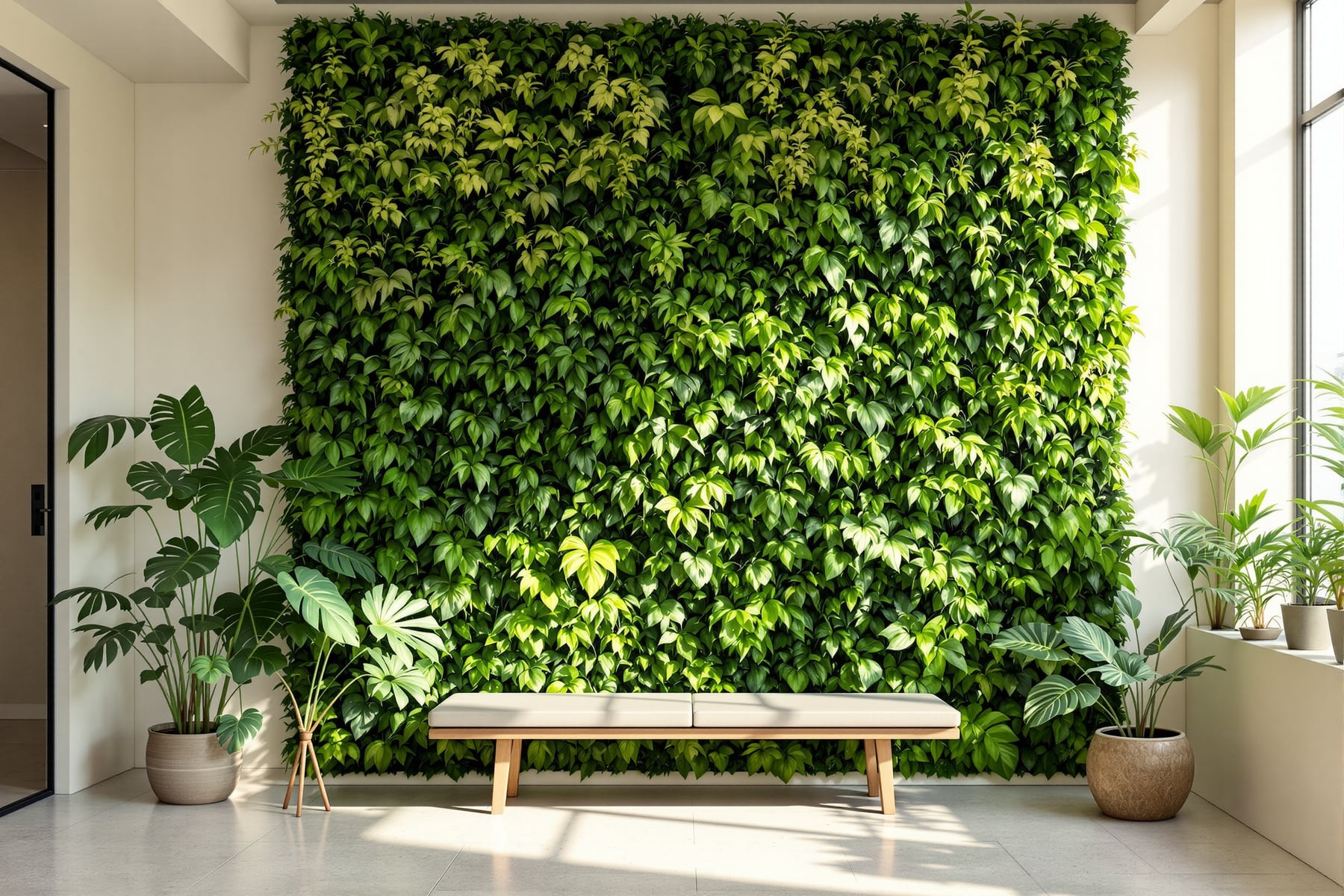
Green & Living Walls: The Complete Guide for Indian Homes
A garden on your wall — the three routes (live, preserved and faux), how a live wall is built, choosing plants for Indian light, the honest care reality, and how to choose by cost and upkeep.
A green wall turns a flat vertical surface into a living garden — a panel of foliage that cleans the air a little, softens sound, cools the space, and does something to a room that no paint or panel can: it makes it feel alive. It is the ultimate biophilic move, and in a dense Indian city where a real garden is a luxury, a wall of plants can be the greenery a home otherwise cannot have. But a living wall is also the most misunderstood finish in this whole guide — because a true living wall is not décor, it is a vertical garden with a garden's plumbing, light and daily needs. Choose the right version and it thrives; underestimate it and it browns within a season.
This is the complete guide to green and living walls for Indian homes — a deep dive under the specialty & functional walls guide and the master wall-finishes guide, and a companion to our guides on indoor plants and biophilic design. We will lay out the three routes and their very different upkeep, open up how a live wall is actually built, help you choose plants for Indian light, tell the honest truth about maintenance, and help you choose by cost and appetite for care.
Three kinds of green wall
The single most important decision is which kind of green wall you want — because they look similar in a photo and demand wildly different commitment in real life.
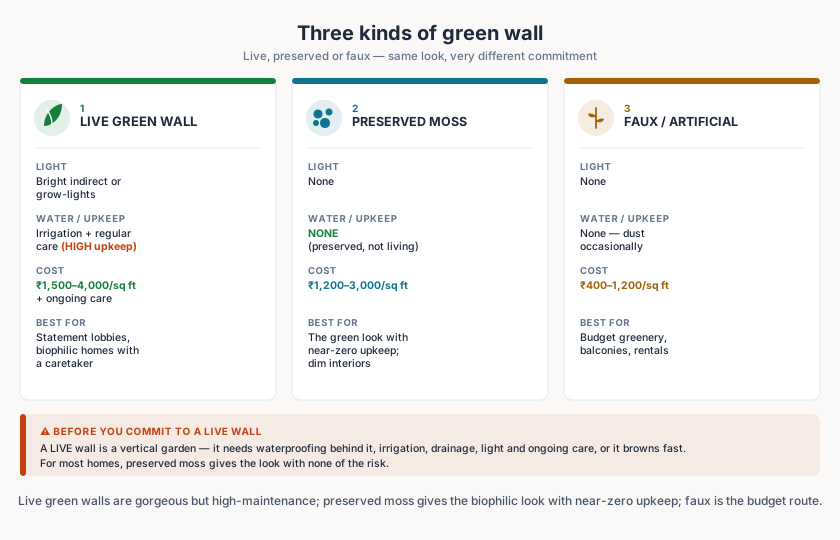
A live green wall needs bright light or grow-lights, an irrigation system and regular care, and costs ₹1,500–4,000/sq ft installed plus ongoing upkeep — magnificent, but it browns fast if neglected. A preserved moss (or plant) wall is real foliage that has been preserved, not living: no water, no light, near-zero upkeep, at ₹1,200–3,000/sq ft — the green look without the risk. A faux/artificial wall is cheapest at ₹400–1,200/sq ft and needs only occasional dusting. The blunt truth up front: a live wall is a vertical garden — it needs waterproofing, irrigation, drainage, light and ongoing care, or it browns fast. For most homes, preserved moss gives the look with none of the risk.
Anatomy of a live green wall
If you do want the real thing, it helps enormously to see that a living wall is as much plumbing and waterproofing as it is planting.
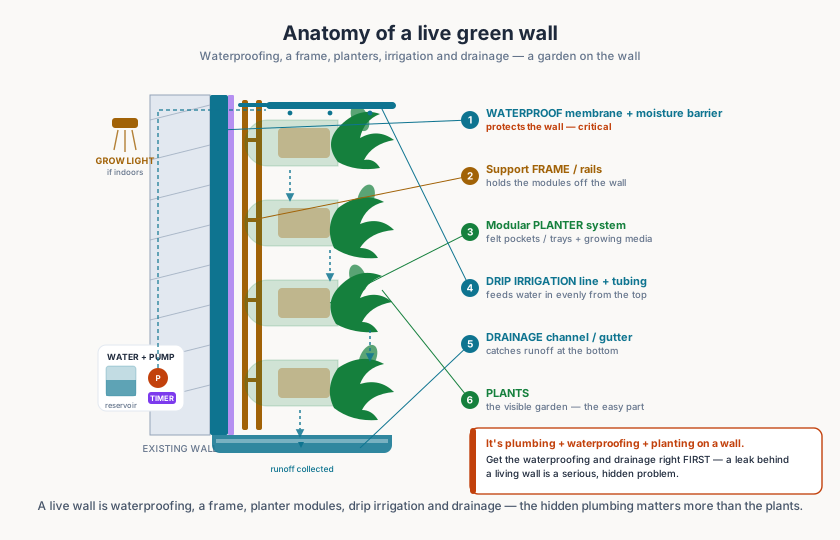
From the wall out, a live wall is: a waterproof membrane and moisture barrier (protecting the wall — the single most critical layer), a support frame or rails, a modular planter system (felt pockets or trays holding growing media), a drip-irrigation line at the top feeding tubing down, a drainage channel at the bottom to catch runoff, the plants themselves, and — indoors — a grow light, plus a water tank, pump and timer. In other words it is plumbing, waterproofing and planting on a wall, and the golden rule is to get the waterproofing and drainage right first, because a leak behind a living wall is a serious, hidden problem.
Choosing plants for Indian light
A living wall lives or dies by matching its plants to the wall's actual light — and to India's warm, humid conditions.
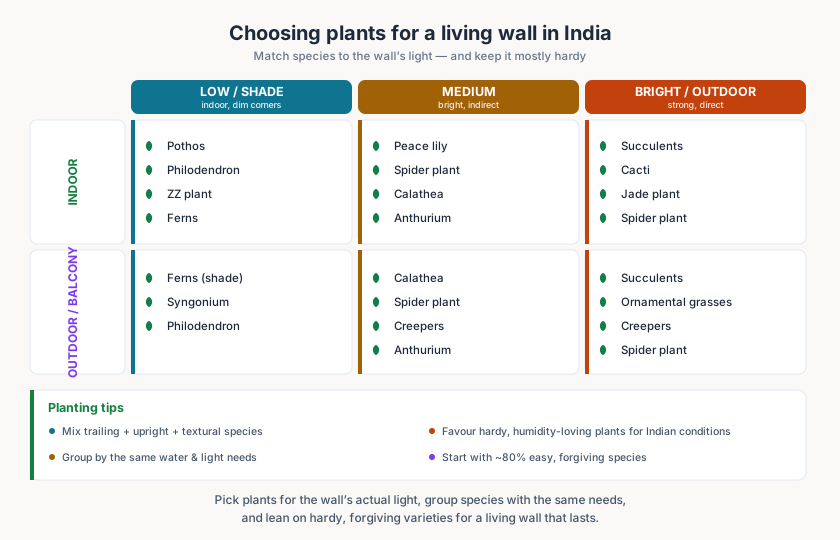
Match species to the light the wall really gets. In low/shade indoor light, hardy foliage like pothos, philodendron, ferns, ZZ and syngonium thrive; in medium/bright-indirect light, peace lily, spider plant, calathea and anthurium do well; and for bright/outdoor walls, succulents, ornamental grasses, creepers and shade-tolerant ferns work. The tips that keep a wall alive: mix trailing, upright and textural species; group plants with the same water and light needs together; favour hardy, humidity-loving varieties suited to Indian conditions; and start with about 80% easy species so early failures do not gut the wall.
The care reality
This is the section that saves the most heartbreak (and money): a live wall is ongoing gardening, and it must be planned for.
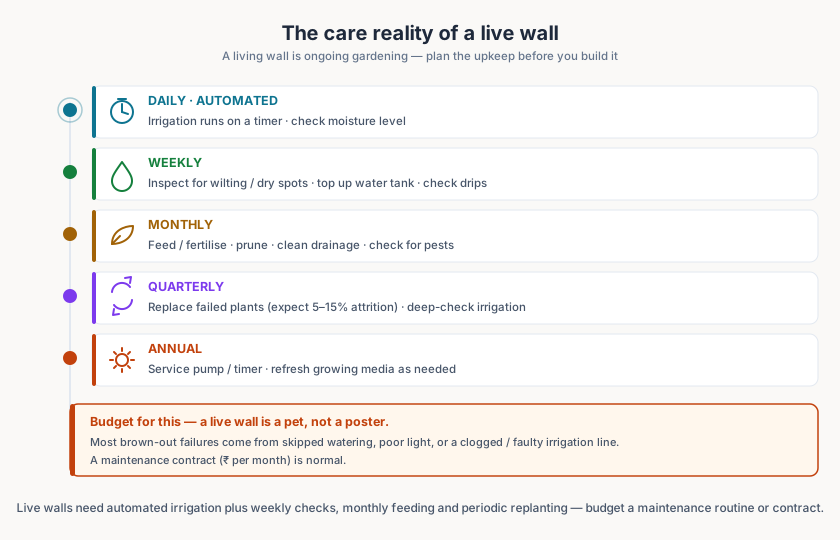
Realistically: irrigation runs daily on a timer (with moisture checks); weekly you inspect for wilting and dry spots and top up the tank; monthly you feed, prune, clean the drainage and check for pests; quarterly you replace failed plants (expect 5–15% attrition) and deep-check the irrigation; and annually you service the pump and timer. The honest callout: a live wall is a pet, not a poster. Most brown-out failures come from skipped watering, poor light or a clogged irrigation line — and a monthly maintenance contract is completely normal. Budget for the upkeep before you build it.
Live vs preserved vs faux: choosing
Put the three routes side by side and the decision comes down to two honest questions: your budget, and how much upkeep you will really do.
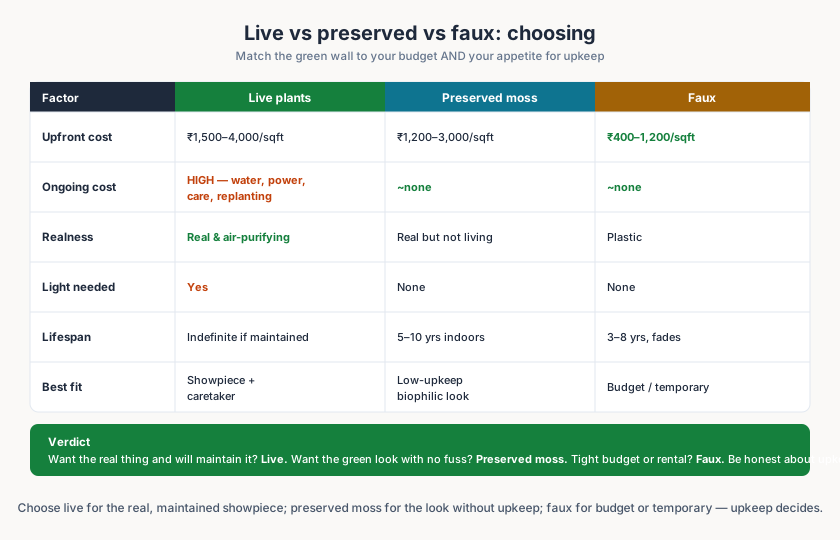
A live wall costs most to build (₹1,500–4,000/sq ft) and, crucially, most to keep (water, power, care, replanting), but it is real and gently air-purifying, needs light, and lasts indefinitely if maintained. A preserved moss wall (₹1,200–3,000) has almost no ongoing cost, is real but not living, needs no light, and lasts 5–10 years indoors. A faux wall (₹400–1,200) is cheapest, plastic, maintenance-free bar dusting, and lasts 3–8 years before it fades. The verdict: want the real thing and will maintain it? Live. Want the green look with no fuss? Preserved moss. Tight budget or a rental? Faux — and be honest about upkeep before you commit.
A green wall is the most alive a wall can be — a slice of garden brought indoors, cooling, softening and lifting a whole room. Choose the version that matches not just your budget but your genuine appetite for care: a live wall for the maintained showpiece, preserved moss for the biophilic look without the work, faux for budget or temporary. For the wider family of walls that do a job, return to the specialty & functional walls guide.
Interactive · Green-wall size + cost
64 sq ft · ₹96,000 – ₹2,56,000
Estimated install cost
₹0
range ₹96,000 – ₹2,56,000 · Live green wall
Export this guide
Related Guides — Deep-dive reading
Specialty & Functional Walls: The Complete Guide for Indian Homes
Walls that do a job — absorb sound, grow plants, store, display or glow. The whole family of functional walls, which problem each one solves, how they're built, the truth about green walls, and what they cost to install and to keep.
Wall FinishesGreen & Living Facades in India — Vertical Gardens and Living Walls as a Building Skin
The honest guide to planted facades: the crucial difference between a green facade (climbers on cables and trellis) and a living wall (plants growing in modular or hydroponic panels), how each is built and watered, the real benefits and the Indian caveats — water, maintenance, cost and what kills them.
Building FacadesUltimate Guide to Wall Finishes for Indian Homes
Paint, wallpaper, panels, stone, plaster, microcement and more — the whole family of wall finishes, a five-question way to choose, and the real cost, climate and maintenance trade-offs.
Wall FinishesRelated Tools — Try Free
Rainwater Tank Sizer
How big should your rainwater tank be? Computes annual harvest, recommended tank capacity in litres, water-bill savings, and payback — for 10 Indian cities.
RWH CalculatorMonsoon-Readiness Checklist
Pre-rain home audit across 9 categories — terrace, drains, waterproofing, electrical, HVAC, pest, vehicles, documents.
Seasonal AuditAnnual Interior Maintenance Checklist
Seasonal maintenance checklist for woodwork, paint, plumbing, electrical, and appliances.
Maintenance