
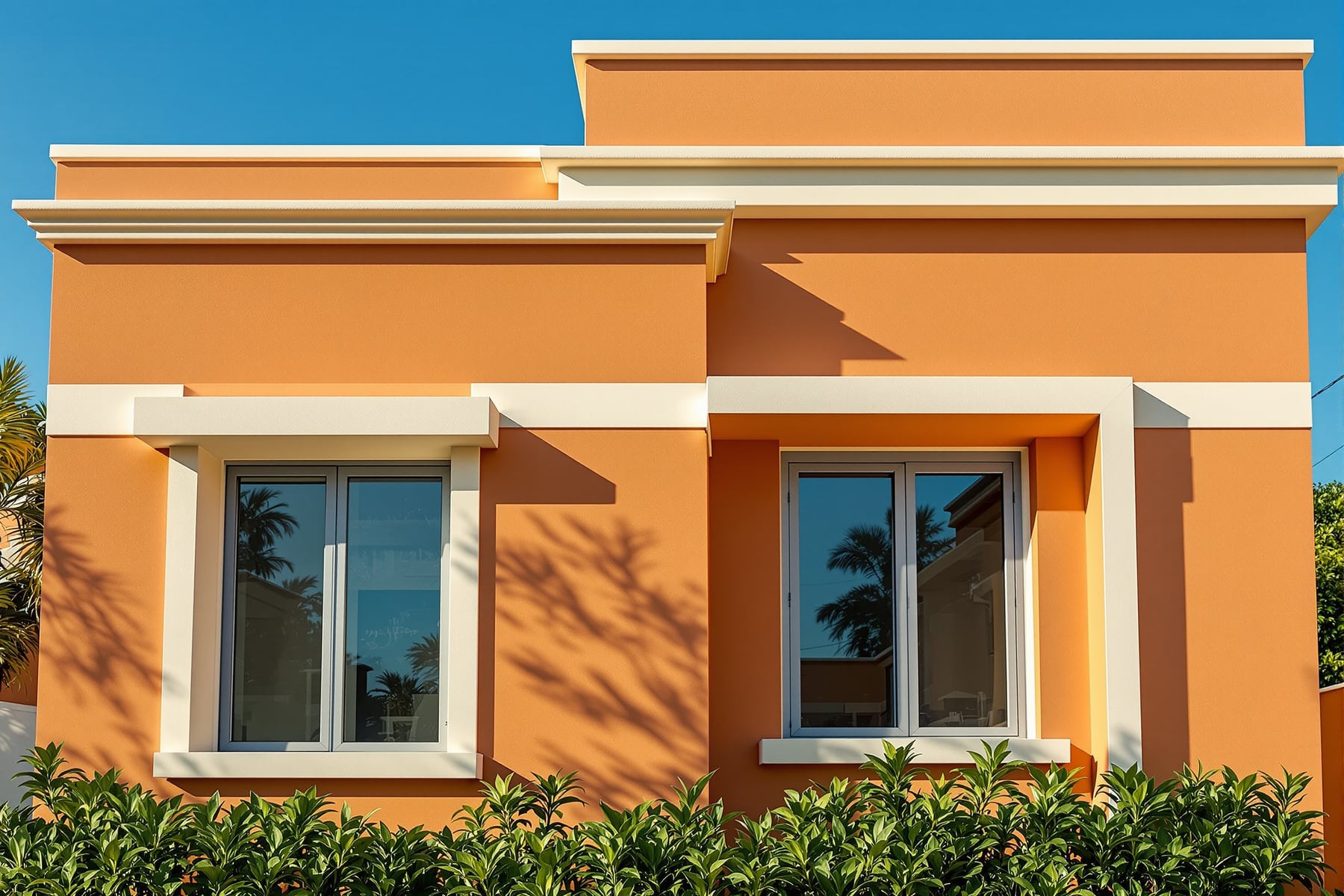
Exterior Wall Paint: The Complete Guide for Indian Homes
The coat that fights the sun and the monsoon — the weatherproofing system beneath the colour, why your climate zone decides the paint, the five exterior types, how these paints fail, and the order of work that makes a warranty mean something.
An exterior wall lives a harder life than any surface inside your home. It takes the full weight of the Indian sun, the battering of the monsoon, coastal salt, algae in the shade and heat that swings forty degrees between May afternoon and January dawn. Interior paint would not survive a single season out there. So an exterior coat is not really "paint the same colour, but outside" — it is a weatherproofing system whose job is to keep water out, shrug off ultraviolet light, resist fungus, and still look good, with colour almost a by-product of all that engineering.
This is the complete guide to exterior wall paint for Indian homes — the outdoor companion to the interior paint guide and a deep dive under the master wall-finishes guide. We will open up the exterior coating system layer by layer, show why your climate zone — not the shade card — is the first decision, sort the five kinds of exterior paint, diagnose how these coatings fail (and how to prevent every failure), and lay out the correct order of work, including the one thing that undoes even the best paint: painting at the wrong time of year.
The exterior paint system
Like an interior wall, an exterior wall is a stack of layers — but every layer is working harder, and one of them is doing a job interior paint never has to: keeping the weather out.
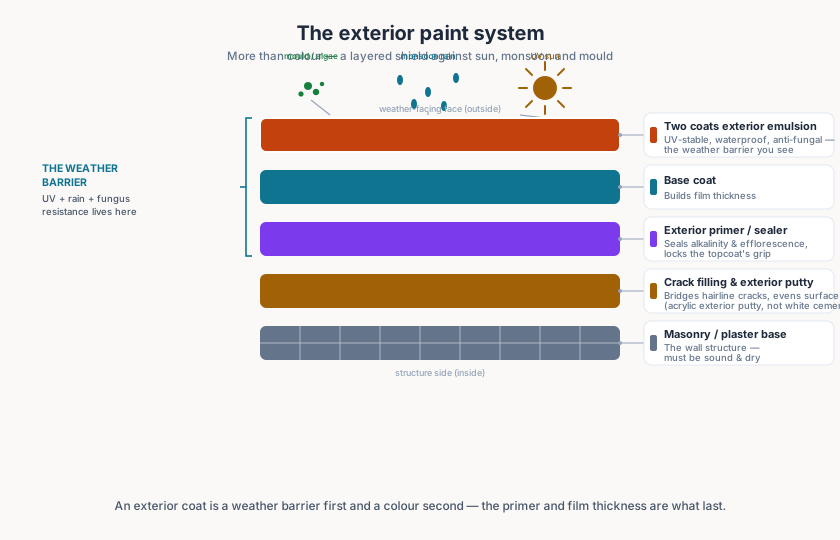
From the wall outward: the masonry and plaster must be sound and, above all, dry — moisture trapped behind the coat is the root of most exterior failures. Over that goes crack-filling and exterior putty (an acrylic exterior putty, never the white-cement interior kind), which bridges hairline cracks and evens the surface. Then an exterior primer/sealer neutralises the wall's alkalinity, blocks efflorescence, and gives the topcoat its grip. Finally a base coat plus two coats of exterior emulsion build the film thickness that actually does the weatherproofing — the UV resistance, the water repellency and the anti-fungal protection all live in that film.
The outer three layers are the weather barrier, and it is worth saying plainly: an exterior job is only as good as its primer and its film thickness. Homeowners fixate on the colour, but the coating's survival is decided by how well the wall was sealed and how much paint actually went on. Thin the paint too far or skip the primer, and the prettiest shade will chalk and streak within a couple of monsoons.
Your climate decides everything
The single biggest mistake in exterior painting is choosing the paint before considering the climate. A coating that thrives in dry Delhi can rot with algae on a shaded Mangalore wall; one built for the coast may be overkill inland. India is not one climate but several, and each demands a different property from the paint.
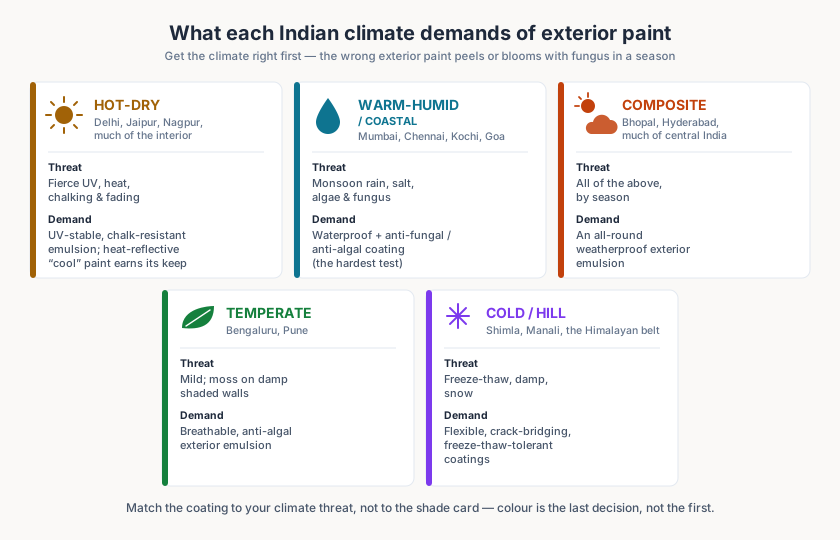
- Hot-dry (Delhi, Jaipur, Nagpur, much of the interior) — the enemy is fierce UV and heat, which fade colour and chalk the binder. Demand a UV-stable, chalk-resistant emulsion; on roofs and west walls, heat-reflective "cool" paints genuinely cut indoor temperatures.
- Warm-humid / coastal (Mumbai, Chennai, Kochi, Goa) — the hardest test of all: monsoon rain, salt-laden air and relentless algae and fungus. Demand a waterproof + anti-fungal/anti-algal coating; nothing less survives.
- Composite (Bhopal, Hyderabad, much of central India) — every threat in turn by season. Demand an all-round weatherproof exterior emulsion.
- Temperate (Bengaluru, Pune) — gentler, but damp shaded walls grow moss. Demand a breathable, anti-algal exterior emulsion.
- Cold / hill (Shimla, Manali, the Himalayan belt) — freeze-thaw cycles crack rigid films, and damp lingers. Demand flexible, crack-bridging, freeze-thaw-tolerant coatings.
Fix the climate threat first, and half the exterior paints on the shelf disqualify themselves before you ever open a shade card.
The five kinds of exterior paint
Exterior paint, like interior, is a ladder from budget to premium — and out here, price tracks warranty closely, because the manufacturers know exactly how long each formulation survives the weather.
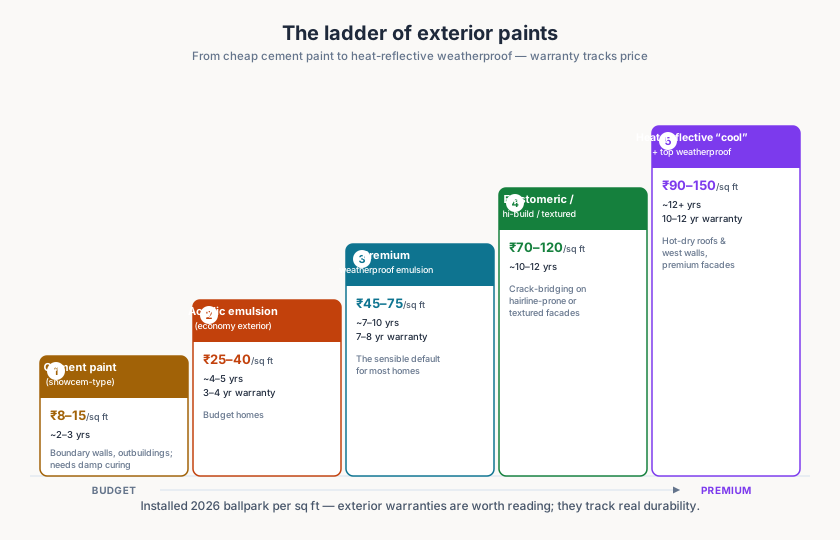
- Cement paint (₹8–15/sq ft) — the budget floor; a powder mixed with water, needs damp curing, lasts 2–3 years. Fine for boundary walls and outbuildings, not a serious home facade.
- Acrylic exterior emulsion, economy (₹25–40) — water-based, weather-resistant, 4–5 years with a 3–4 year warranty. The budget-home default.
- Premium weatherproof emulsion (₹45–75) — the sensible choice for most homes: 7–10 years, 7–8 year warranty, genuine water and fungus resistance.
- Elastomeric / textured / high-build (₹70–120) — a thick, stretchy film that bridges hairline cracks; ideal for crack-prone or textured facades, 10–12 years.
- Heat-reflective "cool" + top-tier weatherproof (₹90–150) — the premium rung: reflects solar heat, 12-plus years, 10–12 year warranty. Earns its price on hot-dry roofs, west walls and premium facades.
The warranty is not marketing — read it. A 10-year warranty coating genuinely outlasts a 4-year one by more than the price gap, which is why the cheapest exterior paint is almost always the most expensive over a decade.
How exterior paint fails — and why
When an exterior job goes wrong, it is rarely a mystery. Nearly every failure traces to one of three roots — moisture, UV, or skipped prep — and each has a name, a cause and a preventable fix.
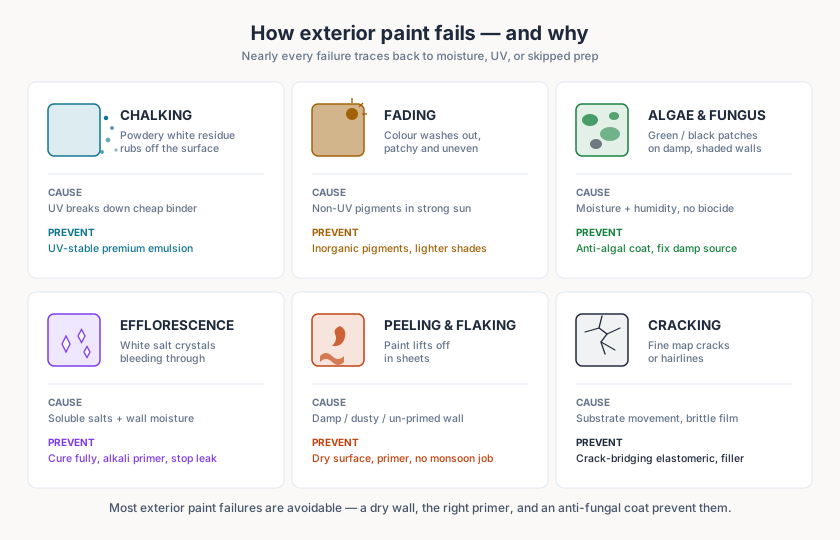
- Chalking — a powdery residue that rubs off on your hand; UV has broken down a cheap binder. Prevent with a UV-stable premium emulsion.
- Fading — colour washing out unevenly; non-UV-resistant pigments under strong sun. Prevent with fade-resistant pigments and lighter shades.
- Algae and fungus — green and black patches on damp, shaded walls; moisture and humidity with no biocide in the paint. Prevent with an anti-algal/anti-fungal coating and by fixing the damp source.
- Efflorescence — white salt crystals blooming through the paint; soluble salts carried by moisture in the wall. Prevent by curing fully, using an alkali-resistant primer, and stopping the leak.
- Peeling and flaking — paint lifting in sheets; almost always painting over a damp, dusty or un-primed wall. Prevent with a dry surface, proper primer, and never painting in the monsoon.
- Cracking — fine map-cracks in the film; substrate movement under a thin, brittle coat. Prevent with a crack-bridging elastomeric coat and proper filling.
Notice the pattern: the fixes are cheap and the failures are expensive. A dry wall, the right primer and an anti-fungal coat prevent almost all of it — see our guides to waterproofing and waterproofing chemicals where damp is the real culprit behind the paint.
Doing it right: process and the weather window
Exterior painting has one rule interior work does not: timing. Paint a wall in or just before the monsoon and it will fail no matter how good the product. Beyond that, the sequence is prep-heavy, because everything the weather will attack, it attacks through a shortcut in the prep.
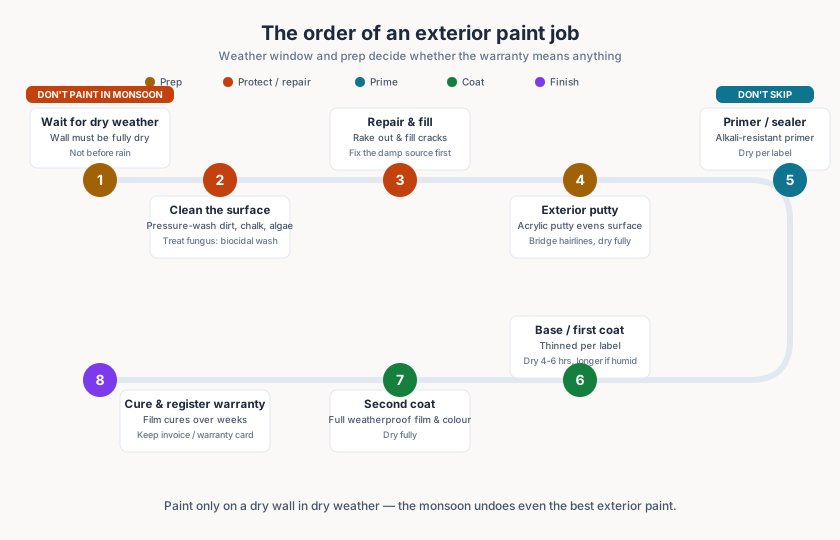
1. Wait for dry weather — never paint in or right before the monsoon; the wall must be fully dry through its thickness.
2. Clean the surface — pressure-wash off dirt, chalk and algae, and treat any fungus with a biocidal wash.
3. Repair and fill — rake out and fill cracks, and fix the damp source before you paint over it, not after.
4. Exterior putty — an acrylic putty to even the surface and bridge hairlines; let it dry fully.
5. Primer / sealer — an alkali-resistant exterior primer; never skip it.
6. First coat — thinned per the label; dry 4–6 hours, longer in humidity.
7. Second coat — the full weatherproof film and final colour; dry fully.
8. Cure and register the warranty — the film cures over weeks; keep the invoice and warranty card, which most premium coatings require.
The two non-negotiables — don't paint in the monsoon and don't skip the primer — are exactly the two corners contractors cut under time pressure, and exactly the two that void a warranty and guarantee a repaint.
Cost, warranty and colour
Budget the whole system, not the tin. An exterior repaint is scaffolding or ladders, washing, crack repair, putty, primer, two coats and labour — and because exterior work is slower and often at height, labour is a big line. That is why spending up a tier on the paint is usually the cheapest part of the whole exercise and the one with the biggest payoff in years-until-repaint; skimping on prep or coats is the false economy.
On colour, exterior shades behave differently from interior ones: strong Indian sun bleaches deep colours faster, so mid and lighter tones hold their look longer, and heat-reflective light shades keep the house cooler. Test large swatches on the actual facade and view them at midday, when the light is harshest. When you want to know the litres and the number for your own walls, the paint calculator works it out; for the finishes that go beside paint on a facade — stone, texture, cladding — step back to the master wall-finishes guide, and for compound and boundary walls there is a guide of their own.
Get the climate, the system and the weather window right, and an exterior coat does its quiet job for a decade — keeping the monsoon out, the heat down, and the house looking cared-for through every season India throws at it.
Interactive · Wall paint quantity + cost
7.1 L paint · ₹14,558 all-in
Estimated all-in cost
₹0
427 sq ft painted · 1×4L + 3×1L + 1×0.5L to buy
Cost breakdown
Export this guide
Related Guides — Deep-dive reading
Plaster, Render and Texture-Paint Facades in India: The Honest Guide to the Country's Default Wall Finish
A building-physics guide to cement and lime render, exterior emulsion and weatherproof paints, and textured coatings — how these everyday facades are built, why they crack, streak and grow algae, and what actually keeps them looking good in the Indian monsoon.
Building FacadesInterior Wall Paint: The Complete Guide for Indian Homes
Everything under the colour — the layers beneath the paint, the five types to choose from, why sheen matters more than you think, how much you actually need, and the order of work that separates a job that lasts from one that peels.
Wall FinishesBathroom Waterproofing Failure in India: Causes, Diagnosis & Fixes (2026)
Why bathroom waterproofing fails in Indian homes — poor surface prep, thin coats, missed junctions, no membrane turn-up, damage during tiling — how to read the symptoms, and whether a surface fix or a full redo is the right remedy.
BathroomsRelated Tools — Try Free
Door Paint Calculator
Estimate paint and primer litres and cost to paint your doors by size, number of doors, coats and paint type.
Door CalculatorCross-Ventilation Analyzer
Estimate airflow and air changes per hour (ACH) from room size, window areas, layout, and local wind — with NBC 2016 Part 8 compliance check.
Ventilation CalculatorPainting Prep & Quality Checklist
Painting audit — 10 categories, 65+ checkpoints across surface prep, putty, primer, emulsion coats, enamel, external, ceilings, defects, final QC.
Painting QC