
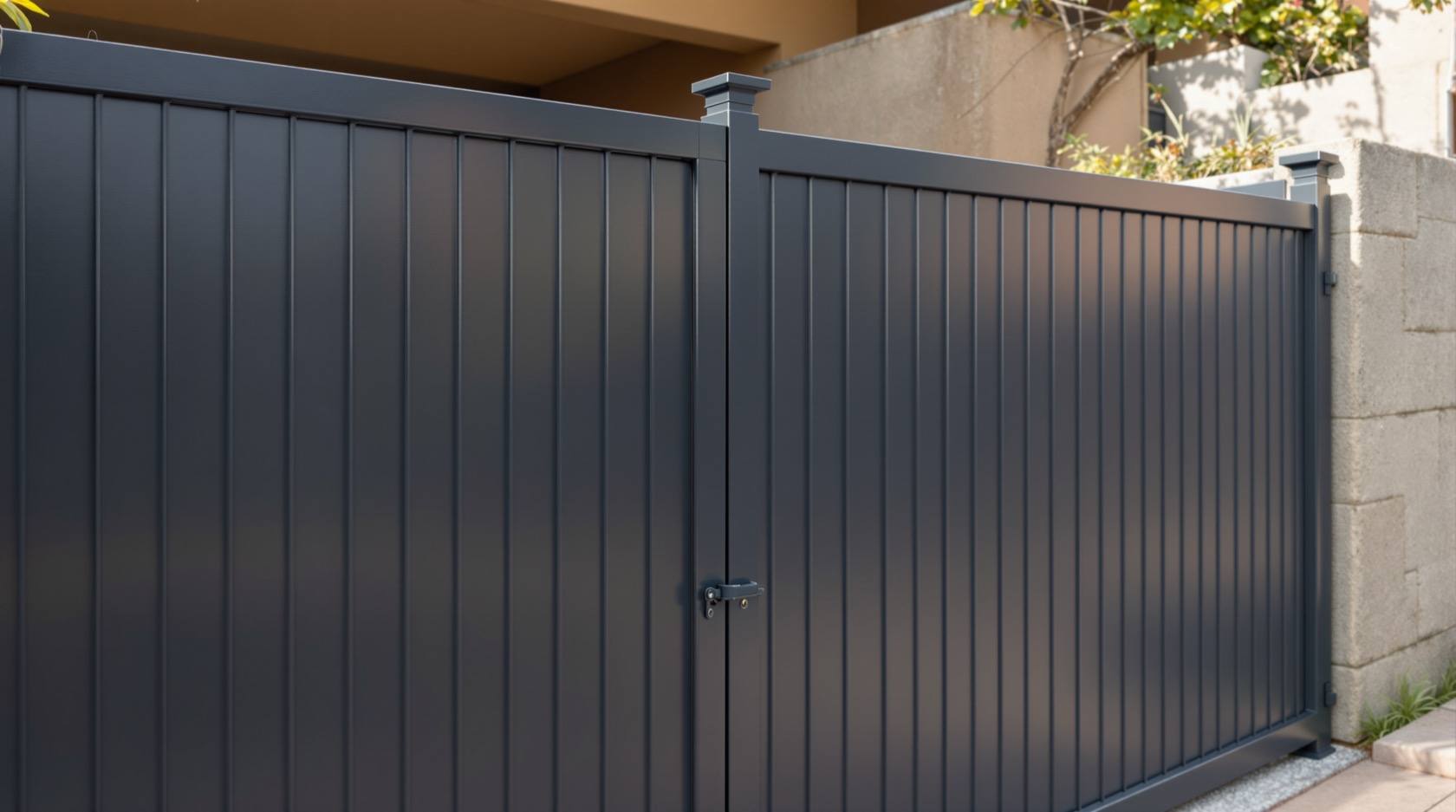
Gate Finishes and Rust Prevention in India: Paint, Powder Coat and Galvanising (2026)
A plain, India-grounded guide to keeping a steel gate looking good and not rusting — the protection system in layers (surface prep, primer, topcoat), site enamel and PU paint vs factory powder coating vs hot-dip galvanising compared on durability, cost and best-fit, where gates rust first, coastal and monsoon care, and the maintenance cycle that makes any finish last.
A steel gate does not usually fail because the steel gives way — it fails because it rusts. Rust is the number-one killer of gates in India: it creeps up from the base where water sits, blooms at the welds and joints, and works out from the inside of hollow tubes that were never sealed or drained. A gate that rusts looks tired within a monsoon or two and can be structurally eaten through in a few years. The good news is that rust is almost entirely preventable, and the way you prevent it is not one coat of paint but a system — surface preparation, a primer, and a topcoat (or a galvanised zinc layer), each doing a different job.
This is the finishes-and-rust guide for the Compound Walls and Gates hub. It pairs with the gate design guide and the gate materials guide — the material you pick (mild steel, wrought iron, aluminium or stainless) decides how much rust protection you even need. Here the job is narrower: how to finish a steel gate so it looks good and does not rust, and how to keep it that way. For touching up an old wall or gate, see compound wall repair and maintenance; for the paints themselves, exterior wall paint.
Scope & how to read this. This guide is about finish and rust protection — type, material, size and security of the gate itself live in their own guides, and gate automation and security (motors, locks, access control) are covered in the Perimeter Security library, not here. Every cost figure is a relative band, not a price — get local quotes. Product names (red-oxide primer, zinc-rich primer, polyester powder, PU enamel) are used generically; follow the paint and galvaniser's own data sheet for coats, thickness and recoat times, and let a competent fabricator specify the system for a heavy or coastal gate. Standards such as IS 2062 (steel) and hot-dip galvanising practice are named generally, not as quoted clauses.
Why a gate rusts, and why a "system" beats a coat of paint
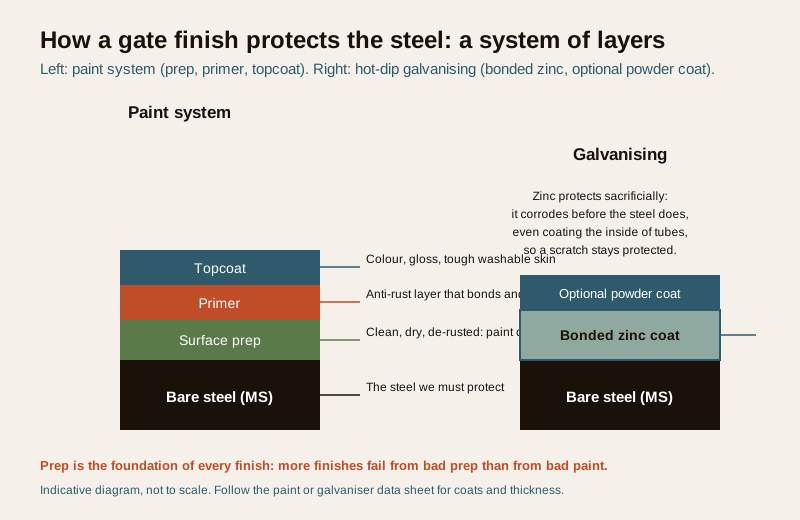
Rust is iron returning to iron-oxide in the presence of water and oxygen — and salt, humidity and pollution all speed it up. Bare mild steel left in Indian weather will show orange within weeks. A single coat of paint slows this down but does not stop it, because paint is porous, it gets chipped, and the moment water reaches steel through a scratch, rust starts underneath and lifts the paint off from below. That is why professionals think in layers, each with one job:
- Surface preparation is the foundation of every finish. Paint or powder can only grip clean, dry, de-rusted, degreased steel. Mill scale, old rust, oil and dust must come off (by wire-brushing, grinding, or blast-cleaning) — skip this and the best topcoat in the world peels within a year. More finishes fail from bad prep than from bad paint.
- Primer is the anti-corrosion layer that bonds to the prepared steel and actively fights rust — a red-oxide primer as the everyday choice, or a zinc-rich primer where the zinc gives sacrificial protection. The primer, not the topcoat, is what actually protects the steel.
- Topcoat (enamel, PU, or a baked powder coat) gives colour, gloss, UV resistance and a tough, washable skin over the primer. It is the part you see; it is not, on its own, the part that stops rust.
Galvanising works on a different and stronger principle: a zinc coating metallurgically bonded to the steel that protects sacrificially — the zinc corrodes in preference to the steel, so even a scratch stays protected as long as zinc is nearby. That is why a hot-dip galvanised gate is the gold standard against rust, and why it can then be powder-coated on top for colour (a "duplex" system) for the longest life of all.
The three topcoat systems compared
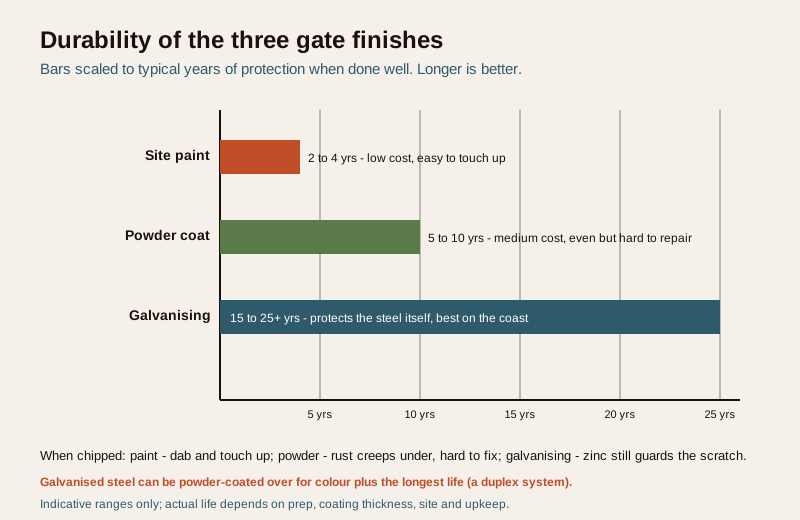
Once the steel is prepped and primed, you choose how it is finished. Three systems dominate Indian gates, and they trade off durability, cost and how easy they are to repair. Read cost as a relative band, and confirm everything with your fabricator and a cost estimate.
| Finish system | How it protects | Durability (typical, well done) | Relative cost | Best for |
|---|---|---|---|---|
| Site enamel / PU paint (brush or spray) | Primer + air-dry topcoat applied at site; barrier over the steel | 2 to 4 years before a full repaint; longer with PU and good prep | Low | Budget gates, wrought-iron with detail, anything you want to touch up or recolour easily yourself |
| Factory powder coating (electrostatic, oven-baked) | Primer/pre-treatment + baked polyester powder; a tough, even, uniform skin | 5 to 10 years; even and hard-wearing, but the base steel still rusts if unprotected | Medium | New fabricated MS gates wanting a clean, durable, factory-even colour finish |
| Hot-dip galvanising (zinc bath), optionally powder-coated over | Zinc coating protects the steel sacrificially, from the inside of tubes outward | 15 to 25+ years of rust protection; decades on the zinc alone | Medium to high | Coastal, industrial, farm and harsh sites; any gate you want to last with least upkeep |
A few honest caveats behind that table:
- Powder coating is durable but unforgiving to repair. It is baked on in a factory, so you cannot really re-do it on site — and if it chips down to bare steel, rust starts under the coating and is hard to touch up invisibly. Its evenness and hardness are its strengths; its weakness is that a chip is a real problem, not a dab-of-paint problem.
- Site paint is the opposite: shorter life, but cheap, easy to redo, and trivial to touch up the moment you see a chip — which, done diligently, can keep a gate healthy for a very long time.
- Galvanising protects the steel itself, not just the surface, and it protects the hidden inside of hollow sections that paint can never reach. That is its real superpower and why it wins on the coast. A galvanised gate can be powder-coated over for colour, giving both the zinc's protection and a chosen finish.
Where gates rust first — design out the water traps
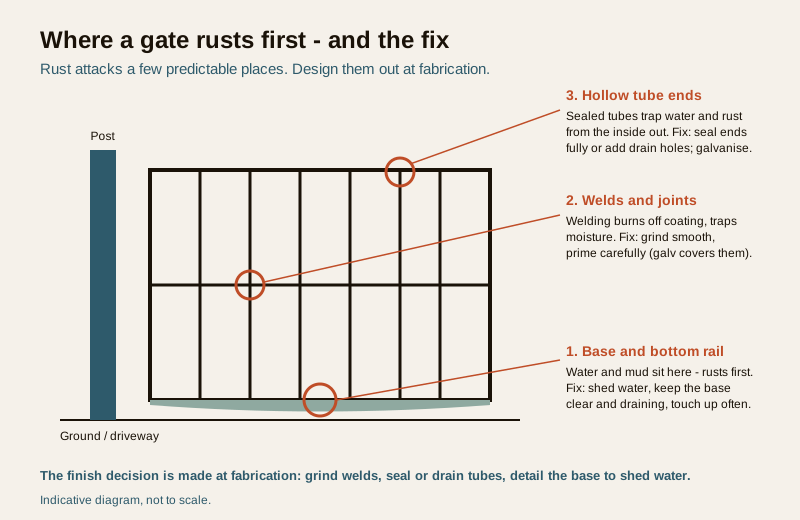
Rust does not attack a gate evenly. It starts in a few predictable places, and knowing them lets you (and your fabricator) design them out before the gate is even finished:
- The base of the gate rusts first, because water and mud sit against it, splashes hit it, and the bottom rail sees the most wetting. Keep the gate clear of standing water, avoid a channel that traps mud, and pay extra attention to finishing and touching up the bottom rail and the base of every post.
- Welds and joints rust early because welding burns off the coating, leaves a rough heat-affected surface, and can trap moisture in a crevice. A good fabricator grinds welds smooth and primes them carefully; on a galvanised gate the zinc covers them properly.
- Hollow sections (tubes and box) rust from the inside out. A sealed tube can trap condensation and monsoon water with nowhere to drain, and it corrodes invisibly from within until it is too late. The fix is to seal the ends fully so water cannot get in, or provide small drain holes at the low points so any water runs out — and, best of all, to galvanise, because the hot-dip zinc coats the inside of the tube as well.
This is why the finish decision is really made at the fabrication stage. Ask your fabricator to grind welds, seal or drain hollow sections, and detail the base to shed water — the cleverest paint scheme cannot save a gate that was built to trap water.
Coastal, monsoon and material-specific care
Where you live changes how hard you must work at rust. Salt air near the sea is brutal on steel — it accelerates corrosion dramatically — so coastal and high-humidity sites should lean towards hot-dip galvanising (ideally galvanised-then-powder-coated), demand thorough surface prep, and inspect and touch up far more often. Inland, a well-prepped painted or powder-coated gate can do fine with ordinary care, but the monsoon is the annual stress test everywhere: go into it with chips already touched up, and inspect again when it ends.
The material of the gate sets the baseline, which is why this pairs with the gate materials guide:
- Mild steel (MS) is the common gate material and the one that must be protected — prep, prime and finish it, and keep up with touch-ups. Left bare, it rusts fastest of all.
- Wrought iron (decorative gates) rusts like any ferrous metal and, with all its scrollwork and crevices, has a lot of surface to protect. It usually gets a site paint system precisely because paint can follow the detail and be touched up; keep on top of the chips.
- Aluminium and stainless steel do not rust the way steel does — aluminium forms a protective oxide and stainless resists corrosion by composition, so they need no rust protection system (a stainless or aluminium gate is finished for looks, not for rust). If low-maintenance and coastal durability matter more than cost, that trade-off is set out in the gate materials guide. Galvanised steel sits in between — steel strength with zinc protection.
The maintenance cycle that makes any finish last
No finish is permanent; the finishes that last are the ones that get a little attention on a schedule. The discipline is simple and cheap, and it is the single biggest thing you can do to keep a gate healthy. Use this as your specify-and-maintain checklist.
| Task | How often | What you are looking for / doing | Why it matters |
|---|---|---|---|
| Wash the gate down | Every few months; more on the coast | Rinse off salt, dust and grime with plain water | Salt and dirt hold moisture against the finish and speed rust |
| Inspect for chips, scratches and rust spots | Twice a year + before and after monsoon | Base, bottom rail, welds, hinges, any bare metal or orange bloom | Rust caught as a spot is a dab of paint; caught late it is a new gate |
| Touch up chips early | The moment you see them | De-rust the spot, spot-prime, spot-paint | A chip left open lets rust spread under the finish |
| Repaint / recoat | When the finish dulls or fails broadly (paint ~2 to 4 yrs) | Prep back to sound surface, re-prime, re-topcoat | A tired finish stops protecting; a full recoat resets the clock |
| Keep the base clear and draining | Ongoing | Remove mud and standing water at the base and hinges; clear drain holes | The base rusts first because water sits there |
| Re-oil / service hinges and moving parts | Every few months | Light oil on hinges and rollers; wipe and re-protect bare wear points | Wear points shed their finish and rust; also keeps the gate swinging true |
The pattern is the same for a gate as for a wall: inspect, catch it small, touch it up early. For the wider version of this discipline on the boundary itself, see compound wall repair and maintenance.
How it connects
- Sits under the Compound Walls and Gates hub and pairs with the gate design guide and the gate materials guide — the material sets how much rust protection you need.
- For keeping the whole boundary in shape, see compound wall repair and maintenance; for the coatings themselves, exterior wall paint and wall finishes.
- Gate automation, locks and access control are not covered here — they live in the Perimeter Security library and guides like gate security.
- Steel itself, and why grade matters under a finish, is in the TMT steel guide.
- Put an indicative number on a new gate-and-wall job with the compound wall cost calculator.
Key takeaways
- Rust is the number-one gate failure — and it is almost entirely preventable, not by one coat of paint but by a system: surface prep, primer, topcoat (or a galvanised zinc layer).
- Surface preparation is the foundation — clean, dry, de-rusted, degreased steel — and more finishes fail from bad prep than from bad paint.
- Site paint is cheap and easy to touch up but shorter-lived; powder coating is durable and even but hard to repair once chipped; hot-dip galvanising protects the steel itself (and the inside of tubes) and is the gold standard, best on the coast and can be powder-coated over.
- Gates rust first at the base, the welds, and inside hollow sections — design out the water traps: shed water at the base, grind and prime welds, and seal or drain hollow tubes.
- Aluminium and stainless need no rust protection; MS and wrought iron must be protected and maintained. Coastal sites lean galvanised and inspect far more often.
- The finishes that last get inspected and touched up early — catch a chip as a dab of paint, not a rusted-through rail. All figures here are indicative; follow the paint or galvaniser's data sheet and get local quotes.
References
- IS 2062, Bureau of Indian Standards — hot-rolled medium and high-tensile structural steel (gate frame steel; named generally).
- Hot-dip galvanising practice, Bureau of Indian Standards — zinc coatings on iron and steel articles (galvanising quality and coating; named generally, not as a quoted clause).
- Paint and coating manufacturers' technical data sheets — surface-preparation grade, primer/topcoat coats, film thickness and recoat times for red-oxide and zinc-rich primers, enamel, PU and powder coatings (product-specific; follow the actual sheet).
- National Building Code of India, NBC (SP 7:2026), Bureau of Indian Standards — general building and durability provisions.
- Local fabricator, galvaniser and powder-coater quotations and practice — current rates, bath sizes, oven sizes and finish options for your specific gate and site.
- Local municipal bye-laws — gate, boundary and setback requirements where relevant (city-specific; these govern approval).
All finishes, durability ranges and cost bands here are indicative planning aids only; follow the paint or galvaniser's own technical data sheet for the exact system, and have a competent fabricator specify and finish a heavy, coastal or industrial gate. Gate automation and security are covered in the Security hub, and a large or heavy gate and its posts should be engineered and fabricated by a competent professional.
Export this guide
Related Guides — Deep-dive reading
Gate Materials in India: MS, Wrought Iron, Steel, Aluminium and Wood (2026)
A plain, India-grounded guide to choosing what your compound gate is made of — mild steel, wrought iron, stainless steel, aluminium and wood or WPC compared on cost band, strength and security, weight, corrosion resistance, look and maintenance, so you pick the material that fits your budget, your coast and your fabricator.
Compound WallsCompound Gate Design in India: Types, Materials and Sizing (2026)
The start-here guide to the gate as the moving part of your boundary wall — how it opens (swing, sliding, cantilever, folding, telescopic), what it is made of (MS, wrought iron, stainless, aluminium, wood), how wide it needs to be for your vehicle, how it is finished against rust, and the posts and footing that carry it. Decisions in order, with automation and security cross-linked, not rebuilt.
Compound WallsThe Homeowner's Guide to Compound Walls and Gates in India (2026)
A plain-language, start-to-finish walkthrough of building a boundary wall and gate in India — plan and permit first, then material and height, foundation and structure, building and supervision, the gate, finishes, lighting and greenery, budget and long-term upkeep — with a stage-by-stage roadmap, a full planning checklist and answers to the questions every homeowner asks.
Compound WallsRelated Tools — Try Free
Door Paint Calculator
Estimate paint and primer litres and cost to paint your doors by size, number of doors, coats and paint type.
Door CalculatorPainting Prep & Quality Checklist
Painting audit — 10 categories, 65+ checkpoints across surface prep, putty, primer, emulsion coats, enamel, external, ceilings, defects, final QC.
Painting QCWindow Maintenance Cost Calculator
Estimate annual window upkeep by frame material — yearly, per-window and 5-year cost.
Window Calculator