
Wall Texture Paint: The Complete Guide for Indian Homes
The most affordable way to real surface texture — what texture paint is, the pattern catalogue from sand to trowel, how it's applied, where it works, and how it compares with wallpaper and plaster.
Texture paint is where an ordinary wall gets character on a budget. Instead of a flat coat of colour, it builds a raised, tactile pattern — a fine sand grain, a sweeping trowel mark, a soft stone-like relief — that catches light, throws gentle shadow, and hides an imperfect wall in the process. It is the most affordable route to genuine surface texture, far cheaper than plaster or panelling, and it comes in a whole catalogue of patterns from the barely-there to the boldly sculptural. For a feature wall, a facade or a wall that has seen better days, it is often the smartest-value move on the board.
This is the complete guide to wall texture paint for Indian homes — a deep dive under the interior paint guide and the master wall-finishes guide. We will explain what texture paint is, lay out the pattern catalogue, walk through how it is applied, map where it works (and where its crevices are a liability), and compare it honestly with wallpaper and the artisan plasters.
What texture paint is
Texture paint is not just "thicker paint" — it is a compound built into relief and then coloured, and knowing that explains both its flaw-hiding and its limits.
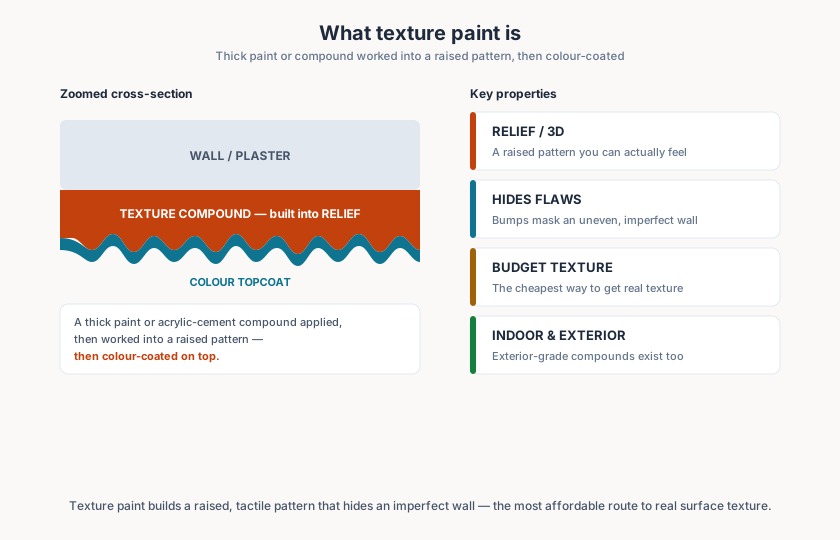
Texture paint is a thick paint or acrylic-cement compound applied to a wall and then worked into a raised pattern, over which a colour coat goes (or the compound itself is tinted). That relief gives it its defining traits: it is genuinely three-dimensional (a pattern you can feel), it hides flaws (the bumps mask an uneven or patchy wall), it is the cheapest way to real texture, and it comes in indoor and exterior grades — the exterior versions are tough and hide hairline cracks on facades.
The pattern catalogue
The single biggest decision with texture paint is not colour but pattern — and there is a surprisingly large menu, from whisper-subtle to sculptural.
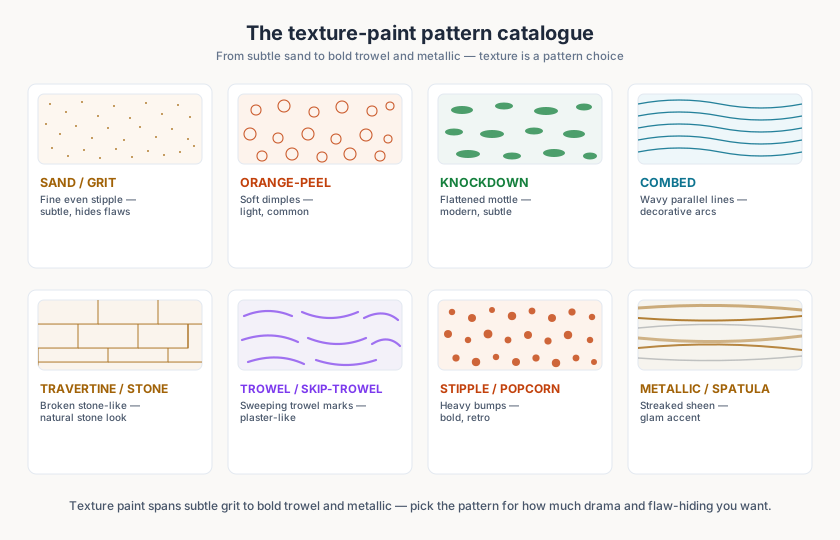
The common patterns run from subtle to bold: sand/grit (a fine even stipple that quietly hides flaws), orange-peel (soft dimples), knockdown (a flattened, modern mottle), combed (decorative wavy lines and arcs), travertine/stone (a natural stone-like broken texture), trowel/skip-trowel (sweeping plaster-like marks), stipple/popcorn (heavy bold bumps), and metallic/spatula (streaked, glamorous sheen). Pick the pattern for how much drama — and how much flaw-hiding — you want; the same colour reads completely differently across them.
How texture paint is applied
Texture paint is one of the more DIY-friendly decorative finishes, but its pattern is created in a narrow window while the compound is wet, so planning matters.
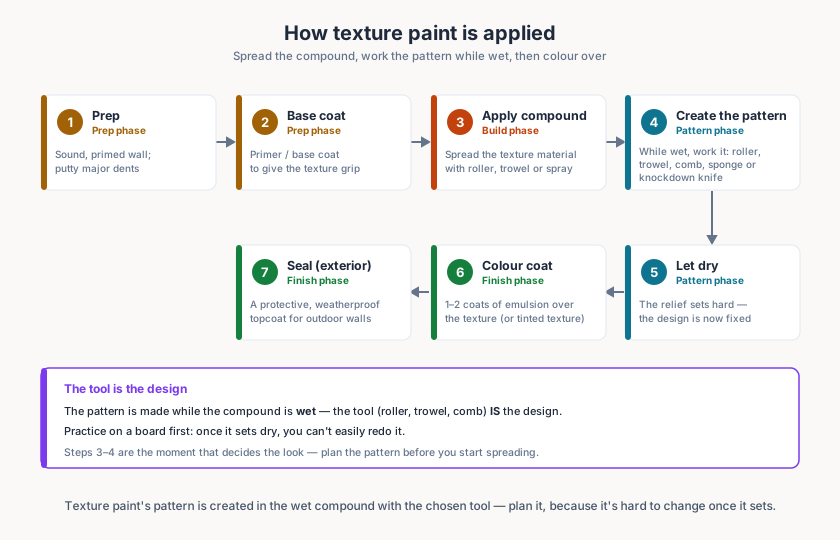
The sequence: prep a sound, primed wall (putty major dents); apply a base coat for grip; spread the compound with a roller, trowel or spray; then, while it is wet, create the pattern with a textured roller, trowel, comb, sponge or knockdown knife; let it dry hard; add a colour coat or two of emulsion over the texture; and, outdoors, a weatherproof seal. The crucial point: the pattern is made in the wet compound, and the tool is the design — practise on a board first, because it is hard to change once it sets.
Where texture paint works
Texture paint's relief is a gift on the right wall and a nuisance on the wrong one — and the deciding factor is how the wall is used and cleaned.
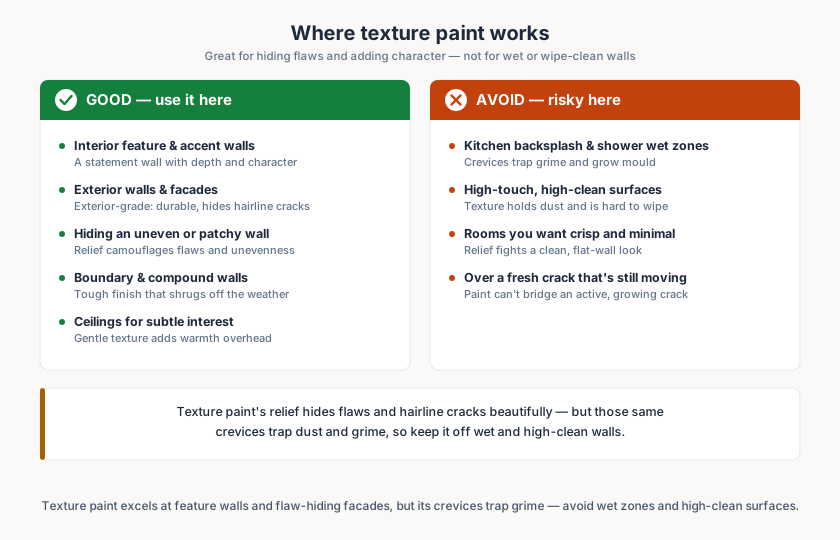
It is excellent on interior feature and accent walls, on exterior walls and facades (exterior-grade, hiding hairline cracks), on any uneven or patchy wall it can disguise, on boundary and compound walls, and on ceilings for subtle interest. It is risky in kitchen backsplashes and shower wet zones (the crevices trap grime and can harbour mould), on high-touch, high-clean surfaces (texture holds dust and resists wiping), in rooms where you want crisp minimal walls, and over a fresh crack that is still moving. The trade-off in one line: the relief that hides flaws also traps grime — so keep it off wet and wipe-clean walls.
Texture paint versus the alternatives
When you want a textured or decorative wall, texture paint is the budget option among several — and it helps to see where it sits.
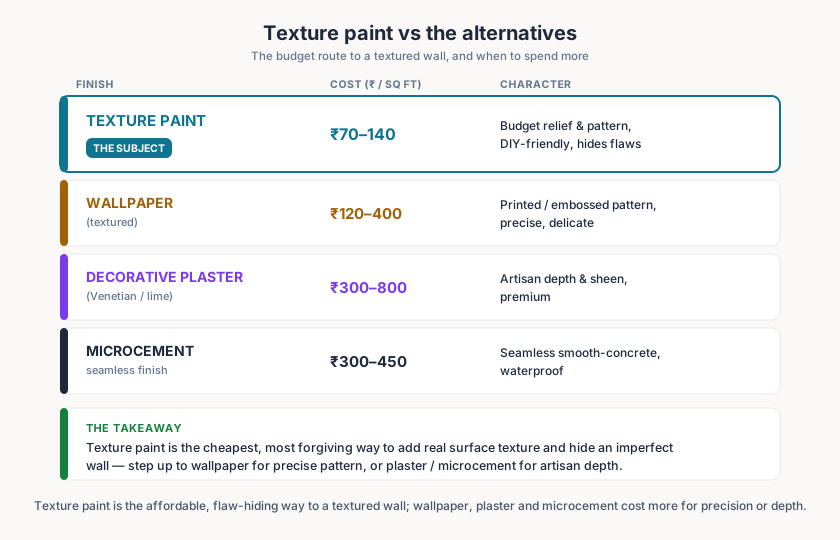
At roughly ₹70–140/sq ft, texture paint is the cheapest and most forgiving way to add real surface texture and hide an imperfect wall. Step up to textured wallpaper (₹120–400) for precise, repeatable pattern; to decorative plaster like Venetian or lime (₹300–800) for artisan depth and sheen; or to microcement (₹300–450) for a seamless, waterproof, smooth-concrete surface. Texture paint wins on price and flaw-hiding; the others win on precision or depth.
Texture paint is the value champion of decorative walls — real, tactile texture and effortless flaw-hiding for a fraction of the cost of plaster or panelling. Choose the right pattern, keep it off the wet and wipe-clean walls, and it turns a plain or tired surface into a feature. For richer texture with more depth or precision, compare it against wallpaper, decorative plaster and microcement.
Export this guide
Related Guides — Deep-dive reading
Wallpaper vs Texture Paint: Which Should You Choose?
Printed precision against hand-made relief — a head-to-head on pattern, texture, cost and flaw-hiding, the pattern-versus-texture difference, where each wins, and a decision flow.
Wall FinishesPlaster, Render and Texture-Paint Facades in India: The Honest Guide to the Country's Default Wall Finish
A building-physics guide to cement and lime render, exterior emulsion and weatherproof paints, and textured coatings — how these everyday facades are built, why they crack, streak and grow algae, and what actually keeps them looking good in the Indian monsoon.
Building FacadesLiving Room Wall Finishes: The Complete Guide for Indian Homes
The room's walls, zone by zone — one hero wall and calm supporting walls, the finish menu and the mood each gives, choosing a feature wall, colour and light, and three budget combinations.
Wall FinishesRelated Tools — Try Free
Cross-Ventilation Analyzer
Estimate airflow and air changes per hour (ACH) from room size, window areas, layout, and local wind — with NBC 2016 Part 8 compliance check.
Ventilation CalculatorFalse Ceiling Cost Estimator
Live ₹/sqft across 8 ceiling types — POP, gypsum, designer, metal, PVC, wooden — with cove and spot lighting for 20 Indian cities.
Cost CalculatorHome Colour Studio
Colour every room — living, bedroom, dining, kitchen, bathroom — surface by surface in any HEX/RGB/CMYK colour, or from 80+ curated Indian shades.
Colour Studio