
Compound Wall Lighting in India: Wall Lights, Bollards and Solar (2026)
A plain, India-grounded planning guide to lighting your compound wall and gate — entrance and pillar-top lights so guests find the door, wall-wash and grazing to show off texture, path and bollard lights, step lighting, and no-wiring solar fixtures — with warm-vs-cool colour, glare courtesy to neighbours, IP ratings for rain, and honest hand-offs to a licensed electrician and the Security hub.
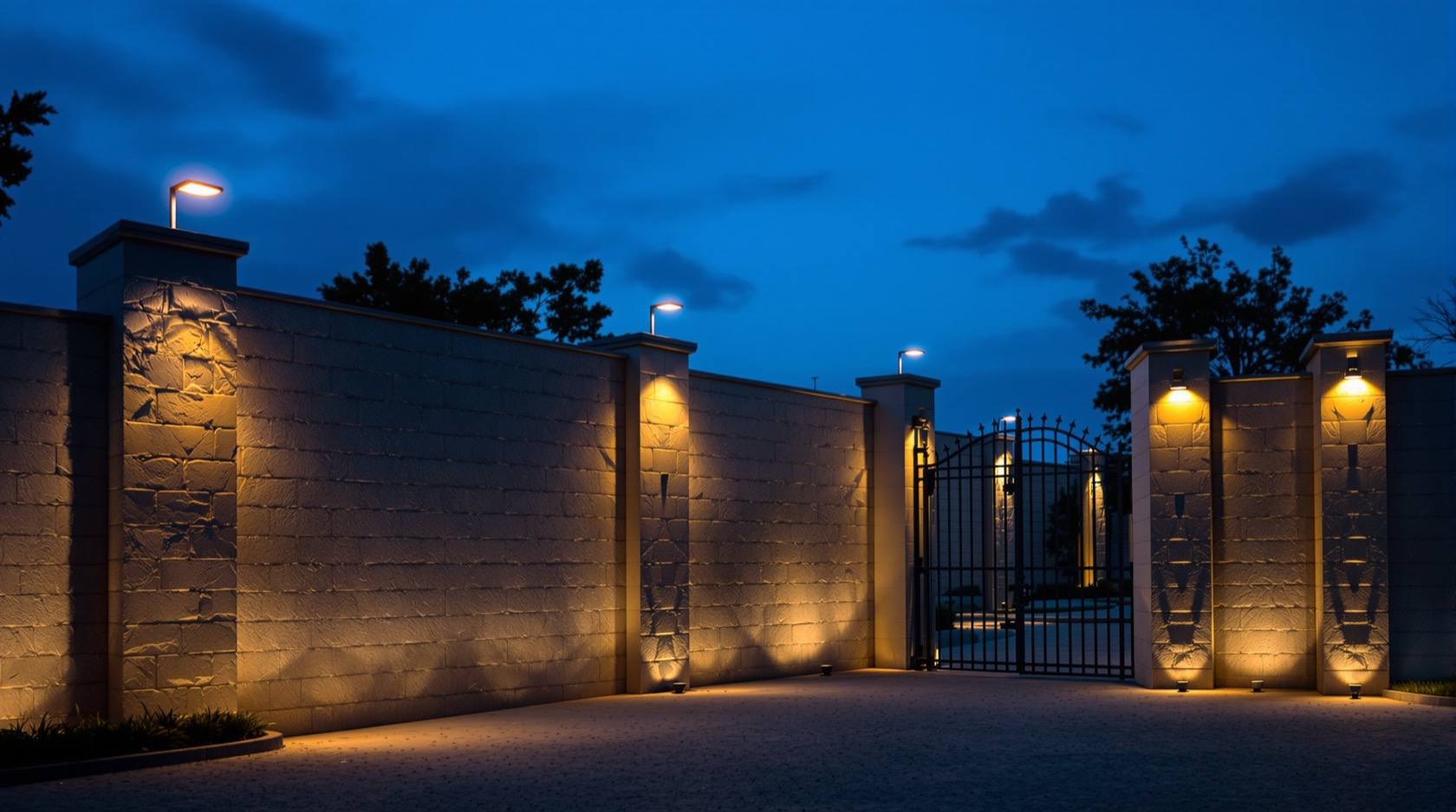
Good compound wall lighting does three quiet jobs at once: it helps a guest or a delivery find your gate in the dark, it shows off the finish and texture you paid for, and it makes the boundary feel cared-for rather than blank and forbidding. It is one of the cheapest upgrades a wall can get, and one of the most-often botched — a single glaring floodlight bolted over the gate does none of the three, and annoys the neighbours besides. The better approach is layers: a little light in the right places, warm in colour, aimed down and in, never blasted out at the road.
This is the lighting guide for the Compound Walls and Gates hub. It builds on the compound wall design guide and the compound gate design guide, and it pairs naturally with wall finishes and landscaping the boundary — because you light a texture and a planting scheme, not a bare grey wall. What this guide is not is a security-lighting manual: motion floods, perimeter coverage and deterrence lighting are a different discipline, designed in the compound wall security guide and the perimeter security guide. Here the job is the decorative and wayfinding layer — and the honest hand-off on any mains wiring.
Scope & how to read this. This is a planning guide, not a wiring diagram, a code or a quote. Fixture types, colour and placement here are typical and indicative to help you plan — confirm the electrical design against the relevant IS wiring codes and NBC (SP 7:2026), and get local quotes. Any mains wiring is a licensed electrician's job: outdoor circuits need weatherproof fittings, correct IP rating, and RCD (earth-leakage) protection — this is a safety-critical, professional-led task, not a DIY one. Solar fixtures that need no wiring are the genuinely DIY-friendly option. And the security angle — motion floods, deterrence, perimeter coverage — is designed in the Security library, not rebuilt here.
Think in layers, not in floodlights
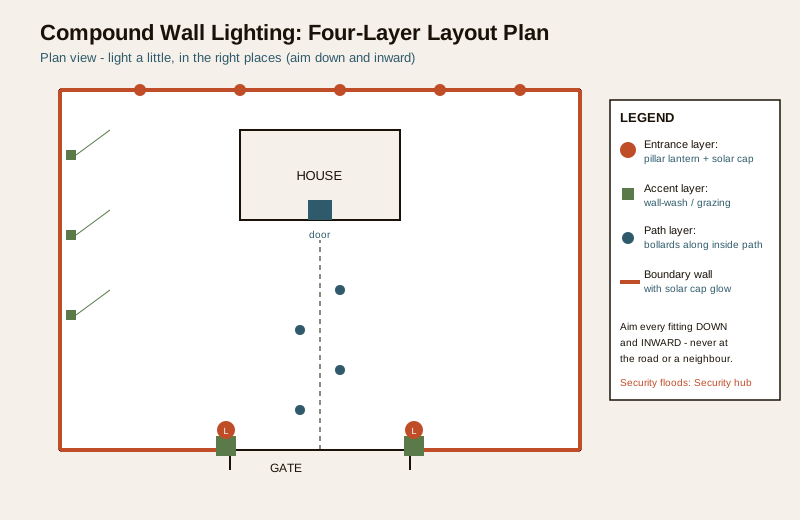
The single biggest upgrade you can make to compound wall lighting is to stop thinking about "a light" and start thinking about layers, each doing one job. A good boundary uses three or four gentle layers instead of one harsh one, and the whole thing draws less power and looks far better.
- Entrance / gate layer — the welcome and the wayfinding. Pillar-top lanterns and gate wall lights that say "the entry is here" from down the road.
- Accent layer — the show-off. Wall-wash or grazing that reveals the texture of your wall finish or cladding, plus uplights on a feature tree or planting.
- Path / task layer — the safe-footing job. Low bollards and step lights along the inside path from gate to door, so nobody trips.
- Ambient / boundary layer — the gentle glow. Small solar lamps capping the wall that mark the boundary and add life without lighting anything in particular.
The trick is restraint: not every layer everywhere. A modest home might run just an entrance layer plus a few path lights; a larger plot with good cladding and a garden earns the accent layer too. Aim every fixture down and inward, keep it warm, and you have already avoided the two commonest mistakes.
| Lighting job | Fixture type | Where it goes | Notes |
|---|---|---|---|
| Find the gate / welcome | Pillar-top lantern or post-top | On top of each gate pillar / gate post | The landmark; pick a style that matches the gate design; one per pillar reads best |
| Light the entry threshold | Gate wall light (up/down sconce) | On the wall beside the gate, ~1.8-2 m up | Frames the door; down-facing or up/down beam avoids glare in a guest's eyes |
| Show off wall texture | Wall-wash or grazing fixture | At the base (grazing) or set back (wash), aimed up the wall | Grazing rakes across stone/brick to reveal texture; wash gives an even glow on plaster or cladding |
| Safe footing along the path | Bollard / path light | Low, along the INSIDE path from gate to door | 0.6-1 m tall, pools light on the ground; space evenly, not too many |
| Light a step or plinth | Step / plinth / recessed marker | In the riser or under a nosing / plinth edge | Small, low-glare; marks a level change so nobody trips |
| Highlight a tree / planting | Ground-set uplight (spike or recessed) | At the base of a feature tree or shrub, aimed up | Pairs with boundary landscaping; very effective, very cheap drama |
| No-wiring boundary glow | Solar wall / bollard / cap light | On top of the wall, gate posts, or along the inside | Dusk-to-dawn, no cable, DIY-friendly; India's strong sun suits it well |
| Deterrence / security | Motion flood, perimeter beam | Designed in the Security hub, not here | See compound wall security — a separate, security-led design |
The entrance and accent layers
Gate and pillar lighting — the welcome
The gate is where lighting earns its keep first, because a visitor's eye goes straight to it. Two moves cover most homes. Pillar-top lanterns sit one on each gate pillar or post and act as a matched pair of landmarks — pick a lantern whose style and metal finish echo the gate itself and the wall finish, because a mismatched fitting looks bolted-on. Gate wall lights — sconces mounted on the wall beside the gate at roughly shoulder-to-head height — light the threshold and the door number. Prefer down-facing or up/down beams so the light lands on the ground and the wall, not in a guest's eyes. Keep the two coordinated: one lantern style, one sconce style, one colour temperature, and the entrance reads as designed rather than accumulated.
Wall-wash and grazing — showing off the finish
This is the accent layer, and it is where a good wall finish finally gets to perform after dark. Two techniques, easily confused:
- Wall-wash places the fixture set back from the wall and throws an even, soft glow up the whole face. It flatters flat surfaces — plaster, paint, smooth cladding panels — and hides minor unevenness. It is the "just make it glow" option.
- Grazing places the fixture very close to the base and rakes the light steeply up the surface, so every bump throws a shadow. It is the "reveal the texture" option — spectacular on random-rubble stone, exposed brick, fluted concrete or a stone-clad wall, and pointless on smooth plaster.
Match the technique to the finish: graze texture, wash flatness. Either way, conceal the fixture (recessed or low and tucked at the base) so people see the lit wall, not the lamp, and use a narrow, warm beam. A ground-set uplight at the base of a feature tree or a tall shrub belongs to this same layer and delivers the most drama per rupee — pair it with your boundary planting.
The path, step and solar layers
Path and bollard lights — safe footing
From the gate to the front door, someone has to walk in the dark, and this layer keeps them safe without floodlighting the garden. Bollard lights — short posts 0.6 to 1 m tall that pool light downward onto the path — are the workhorse; low path lights and recessed in-ground markers do the same job lower down. Run them along the inside of the boundary, spaced evenly so the pools of light overlap into a gentle trail, and resist the urge to over-light: a runway of a hundred bright bollards looks like a car park, not a home. The goal is to see your footing, not to read a book.
Step and plinth lighting
Wherever the ground changes level — a step at the gate, a plinth, a ramp edge — a small, low-glare step light recessed into the riser or tucked under a nosing marks the change so nobody trips. This is quiet, functional light: you should notice the step, not the fixture. The same logic lights a plinth edge or the underside of a coping for a soft floating line along the wall.
Solar wall and bollard lights — the easy, no-wiring option
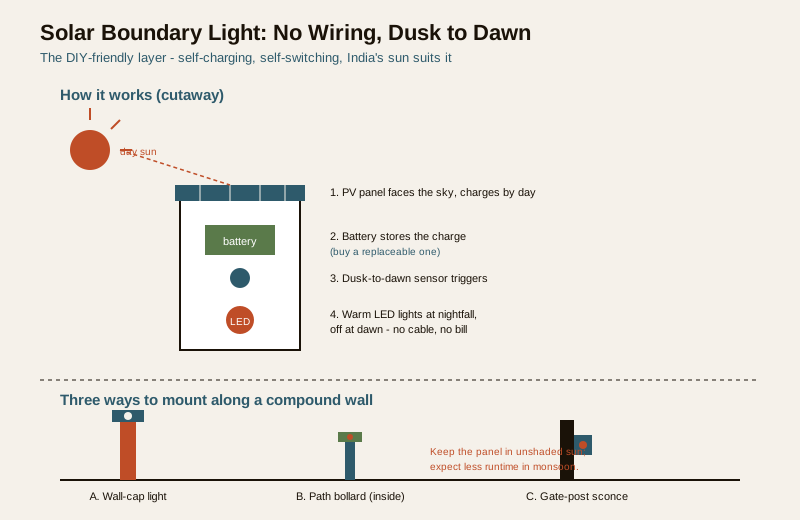
For an Indian boundary, solar is the standout easy win. A solar wall light, cap light or bollard has its own small panel and battery, charges through the day on India's generous sun, and switches itself on dusk-to-dawn with no cable, no trench, no electrician and no running cost. That makes it the DIY-friendly layer: you can cap a long boundary wall with solar markers, put solar bollards along the inside path, or mount solar sconces beside a gate that has no power run to it, all in an afternoon.
Solar has honest limits worth planning around. Output is modest — solar is for gentle marking and wayfinding, not for washing a whole wall or for security floods. Runtime depends on the sun the panel actually gets, so mount the panel where it is not shaded by the wall itself, a tree or the neighbour's building, and expect shorter runtime in the monsoon and winter. Battery quality decides lifespan, so buy a fitting with a replaceable battery and a decent panel rather than the cheapest pack. Used within its strengths — low, warm, dusk-to-dawn boundary and path light — solar is the most trouble-free layer you can add.
Colour, glare and weatherproofing
Three choices decide whether your lighting looks warm and considerate or cheap and hostile, and none of them costs extra to get right.
Warm vs cool colour
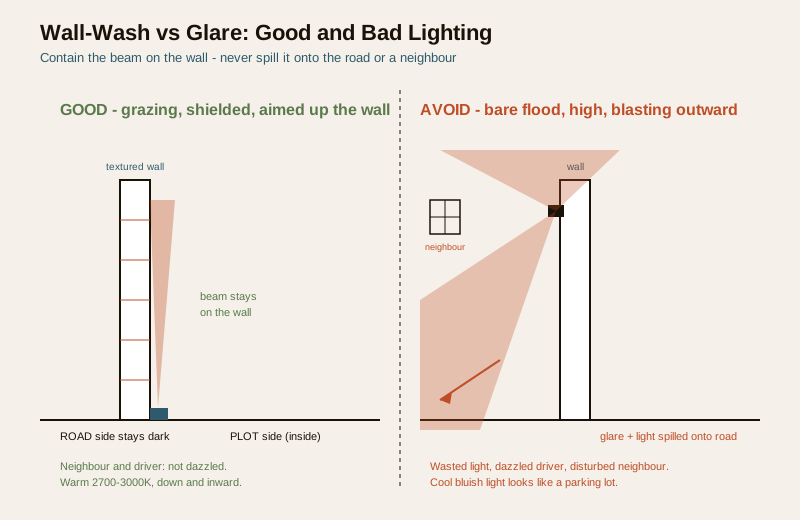
Colour temperature is measured in kelvin, and for a home boundary warm wins. A warm white around 2700-3000K makes brick, stone, wood and plaster look inviting and human; a cool bluish white (4000K and up) makes the same wall look like a petrol pump or a parking lot. Cool light has its place in pure security floods (covered in the Security hub), but for the decorative and welcome layers, keep it warm and consistent — mixing warm and cool fittings on one wall is the tell-tale sign of unplanned lighting. Pick one temperature and buy every fixture to it.
Glare and light-trespass — the good-neighbour rules
The kindest, most professional-looking lighting is the light you do not see spilling where it should not. Two courtesies matter:
- Aim down and in. Light the wall, the path and the garden — never the road, the sky or the neighbour's window. A fixture that throws light past your boundary is wasting it and irritating someone. Shielded or down-facing fittings keep the beam where you want it.
- Keep it gentle. Bright, bare, unshielded lamps cause glare that actually makes it harder to see, dazzles drivers on the road and disturbs sleeping neighbours. Lower, warmer, shielded and fewer beats brighter every time. This is basic dark-sky courtesy, and on a shared street or in an RWA it is also good manners that keeps the peace.
IP rating and weatherproofing for the rain
Every outdoor fixture faces sun, dust and the monsoon, so it must be rated for it. The IP (Ingress Protection) rating tells you how sealed a fitting is — the second digit is the water rating. As a rule of thumb, use at least IP65 for anything on the wall or exposed to rain, and IP67 or higher for in-ground fittings that can sit in a puddle. An under-rated fitting fails fast in an Indian monsoon. Corrosion-resistant bodies matter too, especially on the coast where salt air attacks metal. And the wiring behind it all is where the honesty in this guide lives:
Wiring is a licensed electrician's job. Any mains-powered outdoor lighting needs weatherproof glands and junction boxes, correctly rated cable, proper earthing and an RCD / earth-leakage breaker on the circuit — water and electricity are a lethal combination done wrong. Have a licensed electrician design and install every mains circuit to the IS wiring codes and NBC (SP 7:2026). If you want to do it yourself, stay on the solar layer, which carries no mains risk.
| Wall lighting plan — checklist | What to decide / confirm |
|---|---|
| Which layers do you actually need? | Entrance always; add accent if you have a finish worth showing; path if the walk is dark; solar for easy boundary glow |
| Colour temperature chosen and consistent? | Pick one warm white (2700-3000K); buy every decorative fitting to it; keep cool light to security floods only |
| Fixtures aimed down and inward? | No beam crosses the boundary into the road or a neighbour's window; shielded / down-facing fittings |
| Glare controlled? | Lamps concealed or shielded; lower and warmer and fewer, not brighter; dark-sky courtesy on shared streets / RWA |
| IP rating right for each position? | At least IP65 on the wall, IP67+ in-ground; corrosion-resistant bodies, more so near the coast |
| Mains wiring by a licensed electrician? | Weatherproof fittings, correct cable, earthing and RCD; to IS wiring codes and NBC (SP 7:2026) |
| Solar where wiring is hard? | No power run to the gate or far corners? Use solar wall / bollard / cap lights, dusk-to-dawn, DIY |
| Security lighting handled separately? | Motion floods and perimeter coverage designed in the Security hub, not mixed into the decorative plan |
| Budgeted with the finish and wall? | Fold fixture and wiring cost into the wall estimate; use the cost calculator for the overall band |
Planning and budgeting the lighting
Lighting is cheap next to the wall itself, but it is easy to over-buy, so plan it with the same restraint as the fixtures. Decide the layers first (most homes need two or three, not four), then choose one warm colour temperature, then pick fittings at the right IP rating for each position. Fold the fixture and wiring cost into your overall wall budget rather than treating it as an afterthought — the compound wall cost calculator puts an indicative band on the whole boundary so you can see where lighting sits against masonry, finish and gate, and the deeper cost guide explains what moves the number. Treat every figure as a planning aid, not a quote: the real cost comes from local rates for fittings, cable and an electrician's labour.
How it connects
- Sits under the Compound Walls and Gates hub and builds on the compound wall design guide and the compound gate design guide.
- You light a finish and a planting scheme, so pair this with compound wall finishes, wall cladding panels and boundary landscaping.
- The security-lighting angle — motion floods, deterrence, perimeter coverage — is a separate design in the Security library: see compound wall security and the perimeter security guide. Do not mix it into the decorative plan.
- Any mains wiring is a licensed electrician's job — weatherproof, earthed, RCD-protected, to code.
- Budget it with the compound wall cost calculator and the cost guide.
Key takeaways
- Light in layers — entrance, accent, path and a solar/ambient glow — not with one glaring floodlight; restraint beats brightness.
- Entrance lighting (pillar-top lanterns, gate wall lights) helps guests find the door; accent (wall-wash and grazing) shows off your finish; path and step lights keep footing safe.
- Solar wall, cap and bollard lights are the easy, no-wiring, dusk-to-dawn option and suit India's sun — great for boundaries; just mind shading, monsoon runtime and battery quality.
- Keep colour warm (2700-3000K) and consistent, aim every fitting down and inward, and shield glare — good-neighbour, dark-sky courtesy to the road and next door.
- Use the right IP rating (IP65+ on the wall, IP67+ in-ground) for the monsoon, and corrosion-resistant bodies near the coast.
- Mains wiring is a licensed electrician's job (weatherproof, earthed, RCD); the security-lighting design belongs to the Security hub, not here.
References
- IS wiring and electrical-installation codes, Bureau of Indian Standards — code of practice for electrical wiring and outdoor installations (named generally; a licensed electrician designs to these).
- National Building Code of India, NBC (SP 7:2026), Bureau of Indian Standards — general building services, electrical and lighting provisions.
- Ingress Protection (IP) rating convention, IEC 60529 (named generally) — the sealing rating for outdoor fixtures against dust and water.
- Local municipal bye-laws and RWA rules — outdoor lighting, glare and light-trespass courtesies on shared streets and in gated communities (city-specific).
- Local electrician, lighting supplier and solar-fixture quotations — current fitting, cable, labour and battery costs for your specific site.
All fixture types, colour temperatures, IP ratings and placements here are indicative planning aids only; confirm the electrical design against the relevant IS wiring codes and NBC (SP 7:2026) and your local bye-laws, have a licensed electrician design and install all mains wiring, and treat every cost as indicative, not a quote.
Export this guide
Related Guides — Deep-dive reading
Security Lighting Cost in India (2026): What Fixtures, Sensors and Wiring Really Add Up To
A homeowner's honest, indicative-band guide to what security lighting costs in India — the floodlights, wall-packs, bollards and motion lights, plus the sensors, the hidden wiring and the running electricity — with capex-versus-opex thinking, the mains-versus-solar-versus-motion trade-off, and why over-lighting wastes money and annoys the neighbours.
SecurityHow to Choose Security Lighting in India (2026): The Right Light, Not More Light
A homeowner's guide to selecting outdoor security lighting that actually deters and lets cameras work — picking the right fixture type, the right brightness and colour, the right control (motion, dusk-to-dawn or timer) and the right placement, without over-lighting, glaring your camera or annoying your neighbours.
SecurityLighting Safety & IP Ratings: Choose the Right Fixture for the Spot (2026)
The homeowner's safety-literacy guide to lighting — how to read the two-digit IP rating, pick the correctly-rated fixture for bathrooms, gardens and wet zones, and know exactly where selecting a light ends and a licensed electrician's wiring begins.
LightingRelated Tools — Try Free
Cross-Ventilation Analyzer
Estimate airflow and air changes per hour (ACH) from room size, window areas, layout, and local wind — with NBC 2016 Part 8 compliance check.
Ventilation CalculatorCircadian Light Meter
Patient-centric circadian lighting visualizer for Indian healthcare design — time-of-day × intensity → CCT, melanopic lux (EML / mEDI), melatonin suppression, and an alertness curve. Calibrated against WELL v2 L03 Circadian Lighting Design, CIE S 026:2018, Brainard 2001, and Lucas et al. 2014.
Circadian ToolElectrical Safety & Load Audit
Home electrical audit — 10 categories, 65+ checkpoints across earthing, RCCB, MCB, wiring, switchboards, appliance circuits, DG/inverter backup.
Safety Audit