
Decorative Wall Finishes: The Complete Guide for Indian Homes
The artisan tier — microcement, Venetian plaster, lime wash, tadelakt and more. The whole family of hand-troweled finishes, the look each one gives, where they work (including wet rooms), what they cost in skill and money, and how they're built up by hand.
There is a tier of wall finish above paint, wallpaper and cladding where the surface stops being a coating and becomes craft. These are the decorative finishes — microcement, Venetian plaster, lime wash, tadelakt, polished stucco — hand-troweled by skilled applicators, layer on thin layer, until the wall has a depth, a movement and a tactility that manufactured products can only imitate. A Venetian plaster wall catches light like polished stone; a lime-washed one glows with soft cloudy age; a microcement one wraps a whole bathroom seamlessly with not a single grout line. This is where walls become the quiet luxury of a home.
This is the complete guide to decorative wall finishes for Indian homes — the deep dive under the master wall-finishes guide into the artisan tier. We will map the whole family and what each is, sort them by the look they give from matte to mirror, show honestly where they work (including the wet rooms only some of them can handle), climb the ladder of cost and skill, and open up how these finishes are actually built by hand — because with decorative finishes, the applicator matters as much as the material.
The decorative-finish family
Unlike a tin of paint, these finishes are a family of related crafts, each with its own history, character and signature look. Knowing them by name is the first step to specifying the right one — and to briefing an applicator who knows what you mean.

- Microcement — a thin, seamless cement-based coat; contemporary, jointless, and waterproof once sealed. The modern favourite (and a sibling of microcement flooring).
- Venetian plaster — polished lime plaster burnished to a marble-like depth and sheen; the classic luxury finish.
- Lime wash — a breathable mineral wash with a soft, cloudy, chalky matte; old-world and forgiving.
- Tadelakt — a burnished, waterproof Moroccan lime plaster, seamless enough for showers and hammams.
- Texture paint — thick paint troweled or rolled into relief; the budget entry into texture.
- Polished / stucco plaster — smooth troweled lime or cement stucco with a refined flat sheen.
- Metallic / pearl — mica- or metal-flecked coatings that shift and shimmer with the light.
- Concrete / fair-face effect — a bare-concrete look for raw, industrial minimalism.
The common thread: these are troweled, layered, hand-worked finishes — the look comes from the applicator's skill as much as the material in the bucket.
From matte to mirror: the look each gives
The fastest way to choose among decorative finishes is not by material but by mood — how much sheen and drama you want the wall to carry. They arrange neatly along a single scale.
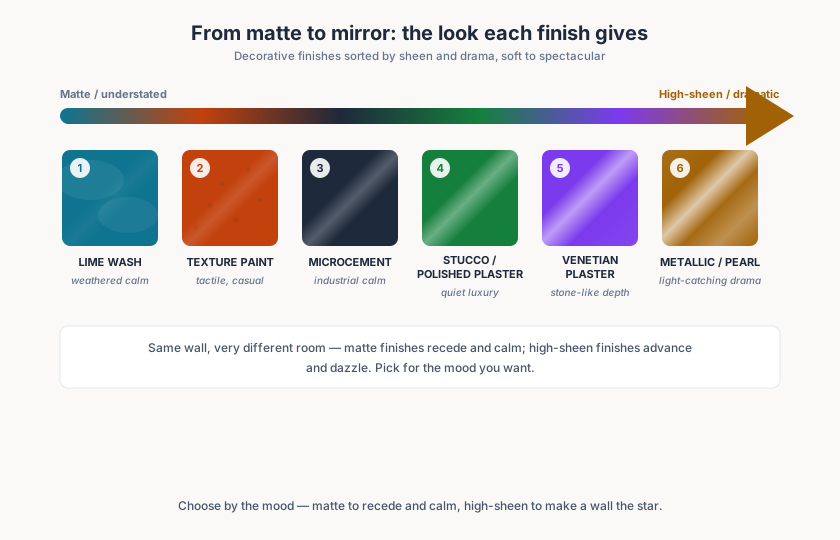
At the soft, matte end, lime wash gives a weathered calm and texture paint a casual, tactile relief — finishes that recede and quiet a room. In the middle, microcement reads as smooth industrial calm and polished stucco as a quiet, refined luxury. At the high-sheen, dramatic end, Venetian plaster delivers a glossy, stone-like depth and metallic finishes catch and throw light. The same wall, in the same room, becomes a completely different space depending on where on this scale you land: matte finishes recede and calm; high-sheen finishes advance and dazzle. Decide the mood first, and the shortlist of finishes falls out of it.
Where they work — including wet rooms
Here is the decorative tier's best-kept secret: several of these finishes are the only seamless way to finish a wet wall, tanking a bathroom in a continuous skin with no grout lines to mould. But not all of them tolerate water, so the zone map matters.
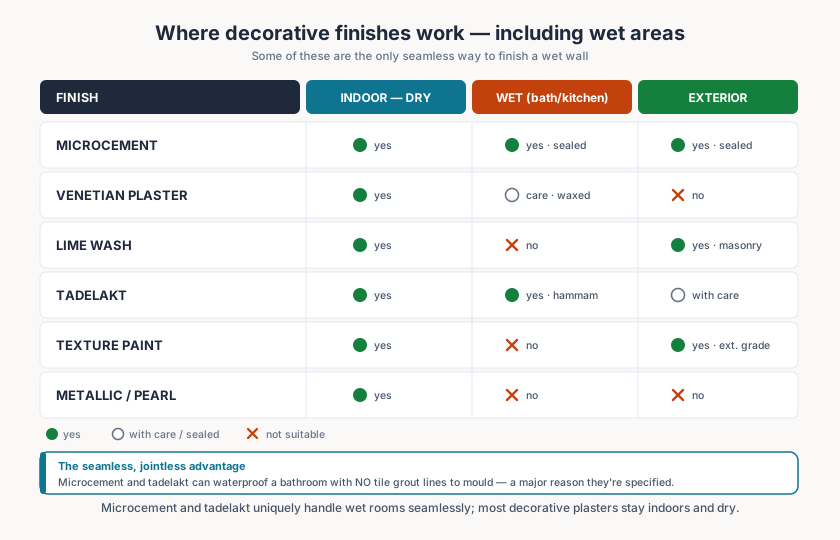
Microcement is the all-rounder — indoors, in sealed wet rooms, and even outdoors when sealed. Tadelakt was born for wet rooms and has waterproofed hammams for centuries. Lime wash loves breathable masonry and does beautifully outdoors, but not in a shower. Venetian plaster is an indoor luxury that tolerates a bathroom only when waxed and kept off direct spray. Texture paint comes in exterior grades; metallic and pearl stay firmly indoors and dry.
The headline is the seamless, jointless advantage: microcement and tadelakt can waterproof a bathroom with no tile grout lines to mould or scrub — a major reason architects specify them over tile. If a seamless wet room is your goal, this tier is where the answer lives; where it is not, most decorative plasters stay happily indoors and dry.
What they cost — in skill as much as money
Decorative finishes break the usual cost logic. With paint you are mostly buying material; here you are mostly buying labour — the trained hands that trowel, layer and burnish. That changes how you budget and, crucially, how you choose an applicator.
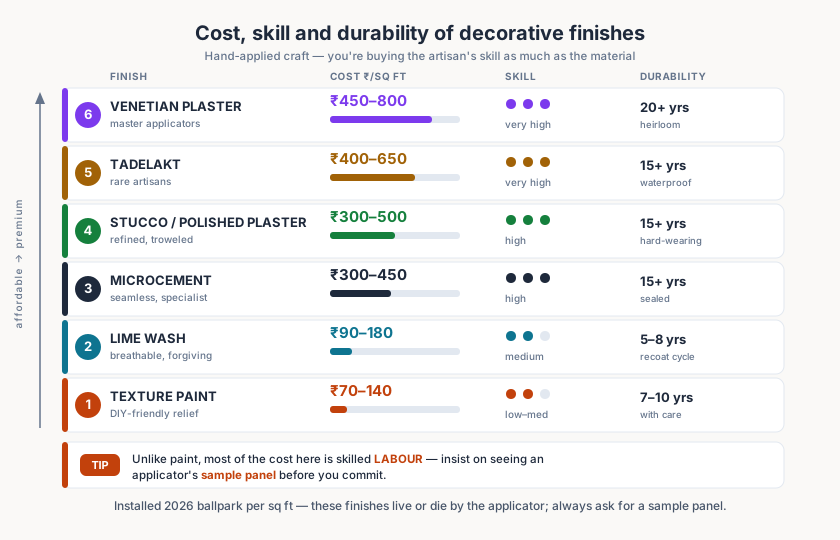
As a 2026 installed ballpark: texture paint runs ₹70–140/sq ft at low-to-medium skill; lime wash ₹90–180; microcement ₹300–450 and demands a genuine specialist; polished stucco ₹300–500; tadelakt ₹400–650 with rare artisans; and Venetian plaster ₹450–800, the province of master applicators. Notice that the price climbs with skill, not just material — and that most of the money is skilled labour. The single most important rule follows directly: insist on seeing an applicator's sample panel — ideally a finished wall they have done — before you commit. The same product in unskilled hands looks utterly different, and a decorative finish gone wrong is expensive to strip and redo.
How a seamless finish is built
Understanding how these finishes go on demystifies both the price and the result — and helps you judge whether an applicator is doing it properly.
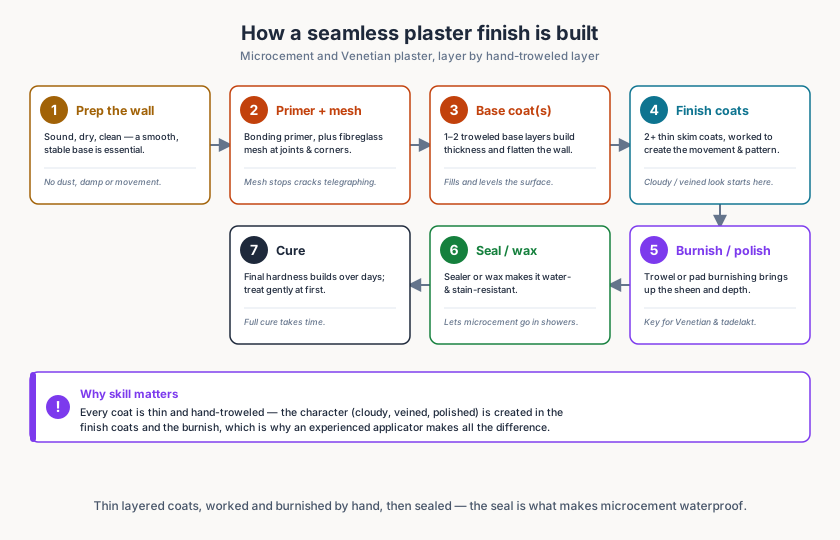
The sequence runs: prep a sound, dry wall; apply a bonding primer and a fibreglass mesh at joints and corners to stop cracks telegraphing through; trowel one or two base coats to build thickness and flatten; then the finish coats — two or more thin skim layers, worked with the trowel to create the cloudiness, veining or movement that defines the look; burnish or polish to bring up the sheen (especially for Venetian and tadelakt); seal or wax to make it water- and stain-resistant (this seal is exactly what lets microcement live in a shower); and finally cure to full hardness over days.
Every coat is thin and hand-worked, and the character is created in those finish coats and the burnish — which is why two applicators using the identical material produce completely different walls, and why skill is the thing you are really paying for.
Decorative finishes are the most rewarding and the most demanding corner of the wall-finish world: get the finish, the zone and above all the applicator right, and you get a wall that no paint or panel can equal. When the budget or the wall calls for something simpler, step back to the master wall-finishes guide and weigh these artisan finishes against paint, wallpaper, cladding and texture on facades with clear eyes.
Interactive · Decorative finish area + cost
₹31,500 – ₹47,250 installed
Estimated installed cost
₹0
range ₹31,500 – ₹47,250 · 105 sq ft
Export this guide
Related Guides — Deep-dive reading
Venetian Plaster Walls: The Complete Guide for Indian Homes
The luxury lime-and-marble finish burnished to a stone-like glow — what Venetian plaster is, the matte-to-mirror look, how it's applied, where it belongs, and the cost, skill and care it demands.
Wall FinishesMicrocement Walls: The Complete Guide for Indian Homes
The thin, seamless cement skin that goes over almost anything — what microcement is, where it works including wet rooms, how it's applied by hand, the look and colours, and how it compares with tile.
Wall FinishesUltimate Guide to Wall Finishes for Indian Homes
Paint, wallpaper, panels, stone, plaster, microcement and more — the whole family of wall finishes, a five-question way to choose, and the real cost, climate and maintenance trade-offs.
Wall FinishesRelated Tools — Try Free
Interior Budget Allocation Map
How ₹5L / ₹10L / ₹20L budgets should be distributed across rooms with visual charts and tier breakdown.
Reference GuideDoor Paint Calculator
Estimate paint and primer litres and cost to paint your doors by size, number of doors, coats and paint type.
Door CalculatorFlooring Cost Calculator
Estimate the all-in cost of a floor — material, laying, wastage, skirting and GST — by area and material.
Flooring Calculator