
Battery Room Fire Safety in India (2026): Lead-Acid Hydrogen Venting and Lithium-Ion Thermal Runaway
How the dedicated battery bank behind an apartment, office, data centre, hospital or solar-storage install should be compartmented, ventilated, detected and isolated, and why the two chemistries need two different controls.
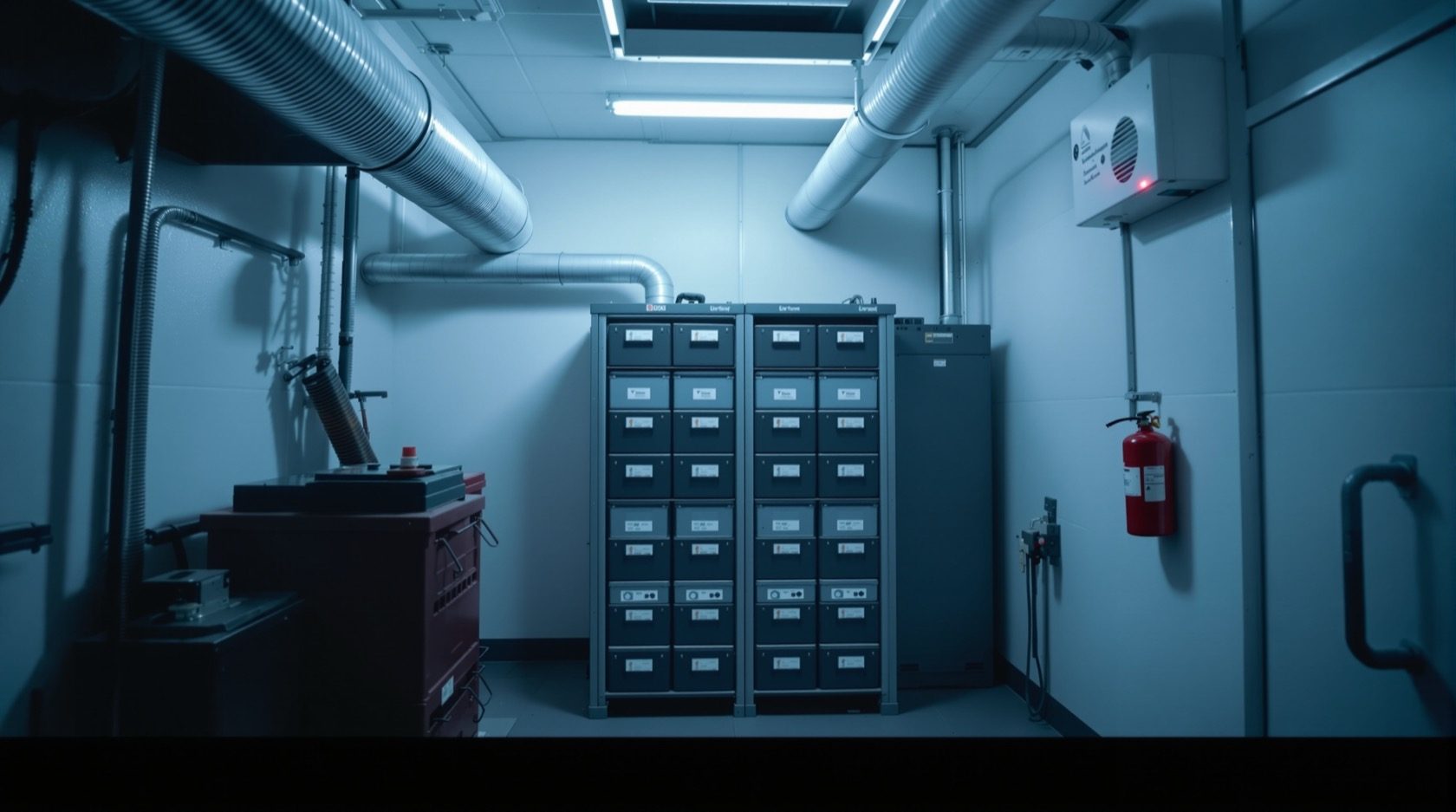
Every large building that needs power when the grid drops now hides a battery bank somewhere: the UPS room behind an office floor, the telecom shelter on a rooftop, the DG-plus-inverter setup behind an apartment complex, the storage wall of a rooftop-solar install, the critical-load room in a data centre or hospital. These are not the little inverter box in a flat. They are dedicated battery room installations, and they carry two very different fire hazards depending on what chemistry sits inside. Getting the room wrong is not a maintenance annoyance; it is how a slow-charging bank becomes an explosion or an intense, self-reigniting fire. This guide is the professional's map of what a compliant battery room looks like in India, why the two common chemistries demand two different controls, and exactly where the work must go to a licensed electrical and fire professional.
This is a chapter of Studio Matrx's fire-safety library and sits under the complete guide to fire safety in India, which sets out how requirements scale with occupancy and building type. It is a close sibling of the electrical fire-safety guide, the rooftop-solar fire-safety guide and the EV-charging fire-safety guide — because a battery bank is where those three worlds meet. For the residential-scale version of the same question, see the home battery backup guide.
Scope and safety — read this first. This guide helps you plan, specify, maintain and hold vendors accountable for a battery room. It does not tell you how to design, size, wire or install one. A battery bank is a high-energy DC installation: its room, its ventilation, its detection, its suppression, its DC isolation and its earthing MUST be designed and installed by licensed electrical engineers and fire-safety consultants, executed by registered contractors and OEM-certified installers, and — where the building's occupancy requires it — cleared by the State Fire Services as part of the Fire NOC. Electrical work is governed by the CEA (Measures relating to Safety and Electric Supply) Regulations and must be done by a licensed electrician. This is educational guidance, not legal advice or a substitute for a licensed professional. And the overriding rule: if a battery is smoking, swelling, hissing or on fire, do not fight it — isolate if you safely can, evacuate, and call the fire brigade on 101 or 112.
Why a battery room is its own fire problem
A charged battery bank stores a large amount of energy in a small space, and it does two dangerous things that a normal electrical panel does not. First, depending on chemistry, it can release a flammable gas simply by being charged. Second, it can fail internally and release that stored energy as heat all at once. Neither hazard is visible until it is too late, which is why the room — not the battery alone — is the unit of safety. A good battery room contains the hazard, ventilates it, detects it early, isolates the energy and keeps it away from the people trying to escape.
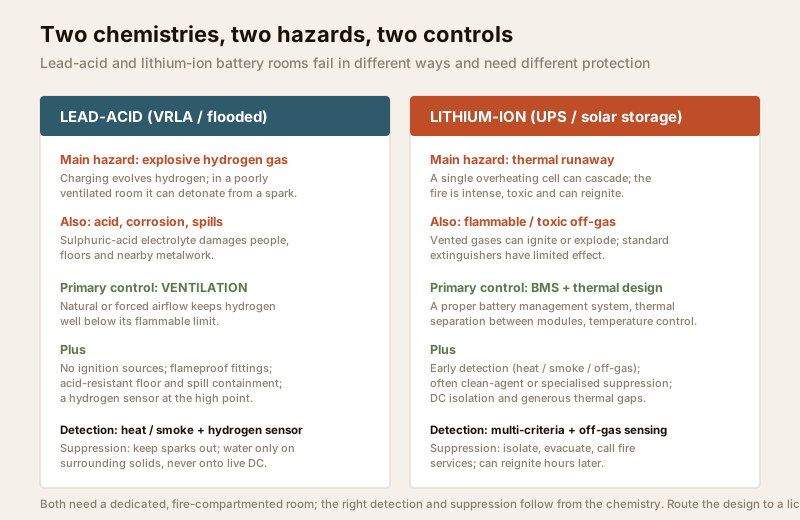
The two chemistries you will meet in India are lead-acid and lithium-ion, and they fail in opposite ways.
Lead-acid: the hydrogen you cannot see
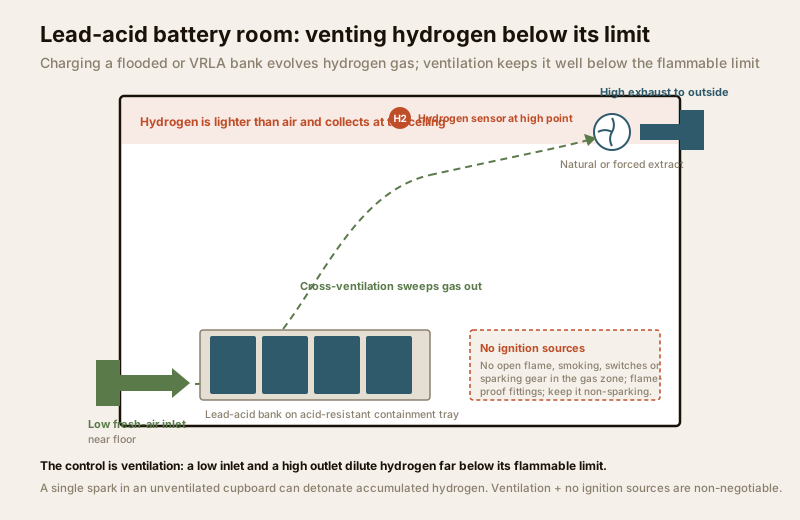
Flooded and valve-regulated (VRLA) lead-acid batteries — still the workhorse of UPS rooms, telecom sites and inverter banks across India — evolve hydrogen gas while charging. Hydrogen is colourless, odourless, lighter than air, and explosive across a wide range of concentrations. In a properly ventilated room it dilutes harmlessly to well below its flammable limit. In a closed cupboard, a sealed shaft or an unventilated basement corner, it accumulates at the ceiling, and a single spark — a light switch, a relay, a static discharge, a dropped spanner — can detonate it. This is the classic Indian failure mode: an inverter battery bank shut inside a wooden or ply cupboard, or a UPS bank in a store room with no cross-ventilation, quietly building a hydrogen pocket overhead.
The primary control for lead-acid is therefore not suppression — it is ventilation. Air must enter low and leave high, so that fresh air sweeps across the bank and carries hydrogen out before it can collect. This is done naturally (low and high louvres to outside) or mechanically (an extract fan sized to the bank's gassing rate), and the ventilation openings must discharge to a safe outside location, never into another occupied space. Alongside ventilation come the supporting controls: no ignition sources in the gas zone (no smoking, no open flame, flameproof or appropriately rated fittings, non-sparking switchgear sited outside the room where possible), an acid-resistant floor with spill containment because the electrolyte is sulphuric acid, and a hydrogen sensor at the high point of the room to alarm before the atmosphere becomes dangerous.
The ventilation is the safety system
It is worth stating plainly for facility managers: for a lead-acid bank, the ventilation is not a comfort feature, it is the fire-protection system. If the extract fan is dead, the louvres are painted over, or someone has stuffed the room with cartons and blocked the airflow, the room is unsafe the moment charging resumes — regardless of how good everything else looks. Ventilation continuity, fan operation and the hydrogen sensor's health belong on the AMC checklist, and the room must never be repurposed as storage.
Lithium-ion: thermal runaway, not gas
Lithium-ion is increasingly common for solar storage and modern UPS because it is compact, light and cycles well. Its hazard is different and, once started, more violent. A lithium-ion cell that is overcharged, physically damaged, internally shorted or overheated can enter thermal runaway: it heats itself, vents flammable and toxic gas, and can propagate cell-to-cell into an intense fire that is hard to extinguish and can reignite hours later. Water and ordinary extinguishers have limited effect on a fully developed pack fire.
Because you cannot ventilate your way out of thermal runaway, the controls shift upstream to prevention and containment:
- A proper battery management system (BMS) that monitors cell voltage and temperature and shuts the pack down before an abnormal cell can cascade. A quality BMS from a reputable OEM is the single most important safety element — the cheap, BMS-light packs behind so many low-cost storage installs are exactly the ones that fail.
- Thermal separation — physical gaps and, in larger installs, barriers between modules so that one failing cell does not ignite its neighbours.
- Temperature control of the room, because lithium-ion hates heat, and an Indian rooftop or unventilated shaft in summer is a hostile environment.
- Early, multi-criteria detection — heat, smoke and, in serious installs, off-gas sensing that can catch a venting cell before flames appear.
- Appropriate suppression — often a clean-agent (gaseous) system or a specialised battery-fire suppression solution designed for the install, not a token dry-powder cylinder on the wall.
- DC isolation so the pack can be electrically separated during a fault or firefighting.
The Indian failure mode here is the mirror image of the lead-acid one: lithium storage crammed into a tight enclosure with no thermal gap, no temperature control and a bargain-basement BMS, often retrofitted alongside a solar system by an unqualified installer. For the wider solar picture, see the rooftop-solar fire-safety guide; lithium e-scooter and e-rickshaw batteries charged indoors are a related and rising hazard covered in the EV-charging fire-safety guide.
The two chemistries at a glance
| Aspect | Lead-acid (VRLA / flooded) | Lithium-ion (UPS / solar storage) |
|---|---|---|
| Primary hazard | Explosive hydrogen while charging; acid | Thermal runaway; flammable, toxic off-gas |
| How it fails | Gas accumulates, ignites from a spark | A cell overheats and cascades cell-to-cell |
| Primary control | Ventilation (low in, high out) | BMS + thermal separation + temperature control |
| Key detection | Hydrogen sensor at high point + heat/smoke | Heat/smoke + off-gas sensing, multi-criteria |
| Suppression stance | Keep ignition out; no water onto live DC | Often clean-agent/specialised; can reignite |
| Containment | Acid-resistant floor, spill bund | Thermal gaps/barriers between modules |
| Worst Indian habit | Bank sealed in an unventilated cupboard | Packs crammed with no gap, weak BMS |
What a compliant battery room actually needs
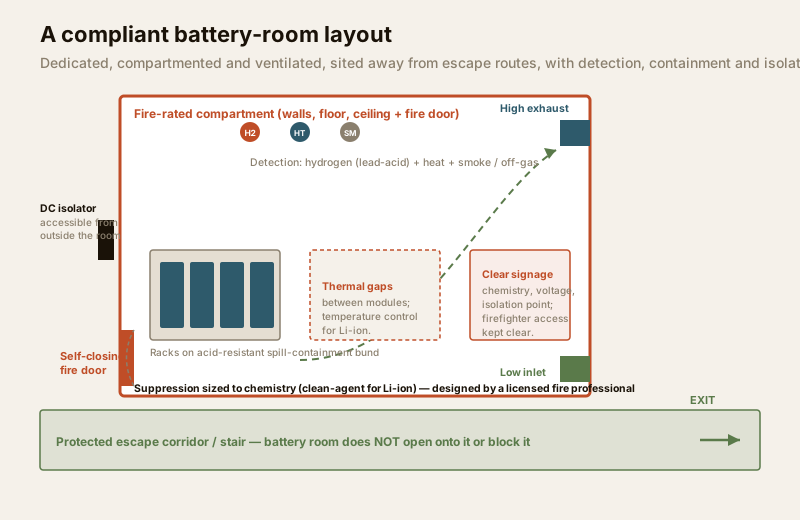
Whatever the chemistry, a dedicated battery room shares a common anatomy. These are specification points to hold a designer and installer to — not a build sheet.
- A dedicated, fire-compartmented room. Fire-rated walls, floor and ceiling and a self-closing fire door, so a battery fire is contained and does not spread into the building. On the passive side, the doors that make compartmentation real are covered in the fire-rated doors guide; such a door must never be wedged, propped or locked shut against firefighters.
- Sited away from escape routes. The room must not open directly onto, or discharge smoke into, a protected staircase, refuge area or the main escape corridor, and its access must not block a fire-tender path.
- Chemistry-appropriate ventilation. Mandatory and continuous for lead-acid (to vent hydrogen); temperature control and adequate airflow for lithium-ion.
- Correct detection. Heat and smoke detection tied into the building's alarm system per IS 2189 : 2026, plus a hydrogen sensor for lead-acid and, ideally, off-gas detection for lithium-ion.
- Appropriate suppression. Sized to the chemistry and the risk — frequently a clean-agent system for lithium-ion — and specified by a fire consultant, not bought off a shelf.
- DC isolation. A clearly labelled DC isolator, accessible from outside the room, so the bank can be de-energised during a fault or firefighting.
- Spill containment for lead-acid. An acid-resistant floor and a bund to catch electrolyte.
- Clear labelling and firefighter access. Signage stating the chemistry, voltage and isolation point at the door, and a clear approach so the fire services can act fast and safely.
The standards that frame the room
The framework is statutory, and the specifics belong to the professional. Design and compartmentation of the room, escape and access provisions and the Fire NOC trigger come from the National Building Code (via SP 7 : 2026, Part 4 Fire and Life Safety) — the older SP 7 : 2016 edition is withdrawn but still widely quoted. Fire detection and alarm follow IS 2189 : 2026, and portable extinguishers, where provided, follow IS 2190 : 2024 and IS 15683 : 2018. The electrical installation is governed by the CEA (Measures relating to Safety and Electric Supply) Regulations and, for fire-safety details of the electrical installation, IS 1646 : 2015. For the battery and UPS product and installation requirements themselves, use the applicable BIS battery / UPS standard — verify the current edition and number via the BIS catalogue, rather than relying on any specific number here. Do not let a vendor quote you a standard you have not verified; getting a code wrong on a life-safety installation is a serious error.
For the building-wide electrical picture that a battery room plugs into, see the electrical hub and the electrical fire-safety guide. For how this fits the broader building-security and emergency picture, the emergency-preparedness guide and the commercial-building security guide put the battery room alongside the other systems a facility team must manage.
The deadly mistakes to design out
These recur in Indian battery-fire incidents. Naming them is how a facility manager holds a vendor to account.
- An inverter or UPS bank in an unventilated cupboard or shaft. For lead-acid this is a hydrogen bomb waiting for a spark. Ventilation is not optional.
- No hydrogen venting or a dead extract fan. A ventilation system that has failed, been switched off, or been blocked by stored goods leaves the room unsafe the instant charging resumes.
- Lithium storage crammed with no thermal gap. Packs pressed together with no separation, no temperature control and a weak BMS turn one bad cell into a room fire.
- A battery room used as a store. Cartons, cleaning chemicals and spare furniture add fuel, block ventilation and obstruct firefighter access. Keep it dedicated.
- No DC isolation or unclear labelling. Firefighters cannot safely act on a live, unlabelled DC bank. The isolator must be reachable and the room must announce its chemistry and voltage.
- A locked or blocked fire door, or a room opening onto the escape route. This turns a contained hazard into a building-wide, escape-blocking one.
When the law and your insurer require a professional and a Fire NOC. Whether a battery room triggers a Fire NOC, and what detection, suppression, compartmentation and ventilation it must have, depends on the building's occupancy, height and floor area under the National Building Code (via SP 7 : 2026, Part 4), your State Fire Services Act and Rules and the local Model Building Bye-Laws, with the electrical installation under the CEA Regulations. These systems must be designed, installed, certified and maintained by licensed fire-safety consultants, licensed electrical engineers and registered contractors, and cleared by the State Fire Services — never improvised in-house. Your property insurer will also expect a compliant, professionally certified installation; an uncertified battery room can void a claim. Confirm the Fire NOC covers the battery installation, keep the AMC and test records, and route every design and installation task to qualified professionals.
Key takeaways
- A dedicated battery bank is its own fire problem — it stores a lot of energy and, depending on chemistry, either releases a flammable gas while charging or can fail internally as an intense fire. The room, not the battery, is the unit of safety.
- Lead-acid evolves explosive hydrogen; the control is ventilation. Air in low, out high, discharging safely outside, with no ignition sources, spill containment and a hydrogen sensor at the high point. An unventilated cupboard is the classic Indian death trap.
- Lithium-ion risks thermal runaway; the controls are a quality BMS, thermal separation, temperature control, early detection and clean-agent suppression. You cannot ventilate your way out of runaway — prevent and contain it.
- Every battery room needs a fire compartment, chemistry-correct ventilation and detection, appropriate suppression, DC isolation, spill containment for lead-acid, and clear labelling and firefighter access — sited away from escape routes.
- All design and installation goes to licensed electrical and fire professionals, cleared by the State Fire Services as part of the Fire NOC — verify the applicable BIS battery/UPS standard's current edition, and keep the room dedicated, never a store.
References
- National Building Code of India, SP 7 : 2026 (the NBC), Part 4 "Fire and Life Safety" — the compartmentation, ventilation, escape and Fire NOC framework for building services rooms; the older SP 7 : 2016 edition is withdrawn but still widely quoted. Verify the current edition via the BIS catalogue: https://www.services.bis.gov.in/
- IS 2189 : 2026 (automatic fire detection and alarm systems) and IS 1646 : 2015 (fire safety of buildings — electrical installations, code of practice), Bureau of Indian Standards — the detection and electrical-fire framework a battery room ties into. Verify current editions, and the applicable BIS battery / UPS product and installation standard, via the BIS catalogue: https://www.services.bis.gov.in/
- The CEA (Measures relating to Safety and Electric Supply) Regulations — the statutory safety regime for the electrical/DC installation, requiring licensed electrical persons for the work.
- The relevant State Fire Services Act and Rules and the Model Building Bye-Laws (MoHUA), plus your local municipal/development-authority fire rules — these set when a Fire NOC and specific fire systems are legally required for the building's occupancy and height.
This is an educational overview, not legal advice, and not a substitute for a licensed fire-safety consultant or licensed electrical engineer. The design, ventilation, detection, suppression, isolation and installation of any battery room are qualified professional tasks — engage licensed professionals, registered contractors and the State Fire Services, and verify any standard's current status via the BIS catalogue before relying on it.
Export this guide
Related Guides — Deep-dive reading
Solar System Fire Safety in India (2026): Rooftop PV, DC Arcs and Firefighter Access
Rooftop solar stays live in daylight even with the grid off. This guide explains the real PV fire risks, the protections that matter, and how to keep firefighters and your escape route safe.
SecurityEV Charging Fire Safety in India (2026): Stop Li-ion Thermal Runaway at Home
Why e-scooter, e-rickshaw and EV charging is a fast-rising Indian fire cause, and the safe way to charge: dedicated circuit, genuine charger, never on the escape route, and never unattended overnight.
SecurityBathroom Fire Safety India: NBC 2016 Part 4, Fire-Rated Materials & Electrical Ignition
The bathroom is rarely thought of as a fire risk, yet it hides several: a leaky geyser element, an over-run exhaust-fan motor, cheap flammable PVC panels overhead, and aerosol cans stored beside a heat source. This is an honest, practical reference to fire and life safety in the Indian bathroom — the NBC 2016 Part 4 context that actually applies to homes, the real ignition sources, self-extinguishing false-ceiling and PVC materials, earth-leakage protection as fire prevention, escape considerations, and the carbon-monoxide danger of gas geysers.
BathroomsRelated Tools — Try Free
Cross-Ventilation Analyzer
Estimate airflow and air changes per hour (ACH) from room size, window areas, layout, and local wind — with NBC 2016 Part 8 compliance check.
Ventilation CalculatorApartment Interior Planning Checklist
51-item checklist across structural, ceiling, lighting, furniture, storage, electrical, kitchen, bathroom.
ChecklistElectrical Safety & Load Audit
Home electrical audit — 10 categories, 65+ checkpoints across earthing, RCCB, MCB, wiring, switchboards, appliance circuits, DG/inverter backup.
Safety Audit