
Wooden vs Aluminium Windows (India): Warmth and Tradition vs Strength and Low Upkeep
A direct duel between timber and aluminium, side-by-side on cost, warmth, thermal, spans, lifespan, maintenance and climate fit, with choose-if verdicts.
This is the oldest argument in Indian fenestration, dressed in modern clothes. Wood is the frame our grandparents knew: warm, carved, repainted every few monsoons, ageing into character. Aluminium is the frame of the new apartment and the contemporary villa: slim, strong, ignored for decades. Both are excellent. They simply solve different problems, and the right answer depends far more on your maintenance appetite, your climate and your aesthetic than on which is objectively "better".
This guide is the head-to-head. For the full single-material deep dives, read Wooden Windows in India and Aluminium Windows in India. For the bigger field of five materials, start at the pillar: Window Frame Materials Compared.
Wood asks for your time and rewards you with soul. Aluminium asks for your money once and then leaves you alone.
The master side-by-side
| Criterion | Wood (timber) | Aluminium |
|---|---|---|
| Cost (frame, indicative) | ₹500–1,500/sqft+ (premium teak much higher) | ₹350–3,000/sqft (powder-coat ₹450–950; thermally-broken higher) |
| Look and warmth | Warmest, classic, heritage and luxury; can be carved/stained | Slim, sharp, modern; minimal sightlines, maximum glass |
| Thermal behaviour | Naturally low conductivity (insulates well) | Bare metal CONDUCTS heat/cold; needs a thermal break plus DGU |
| Strength and spans | Good, but heavy sections limit very large openings | Very strong; the largest spans of any frame, slimmest profile |
| Lifespan | Decades if maintained (teak can outlast generations) | 30–50 years |
| Maintenance | High: seal/polish/repaint every 2–4 years | Low: occasional wipe; re-coat only after decades |
| Corrosion / rot | Does not rust, but rots, swells, warps; termite risk | Does not rot or swell; pits in coastal salt unless coated |
| Sustainability | Renewable if responsibly sourced; biodegradable | Highly recyclable; energy-intensive to smelt new |
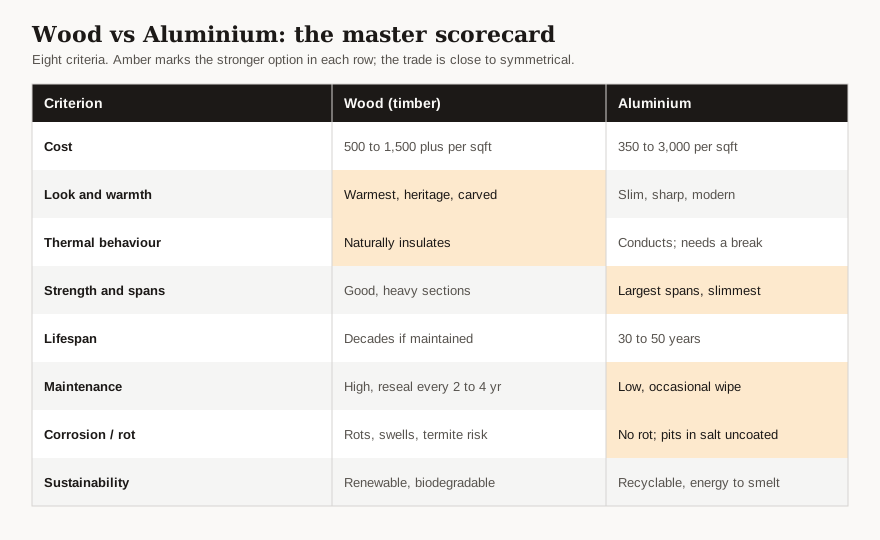
Notice the trade is symmetrical. Wood wins on warmth, natural insulation and the irreplaceable feel of real timber. Aluminium wins on strength, slim modern looks, large spans and the freedom of near-zero upkeep. Neither dominates.
The real divide: maintenance over time
The sticker price misleads. Wood and aluminium can both start around the same figure for a mid-spec window, but they diverge sharply once you count the next twenty years. A timber frame in a wet Indian climate needs sealing, polishing or repainting every two to four years; neglect it through one bad monsoon and you invite swelling, warping and rot. Industry rule of thumb: a maintained wooden window costs roughly 2.5 to 4 times an equivalent low-maintenance frame over a decade once labour and materials for repainting are counted.
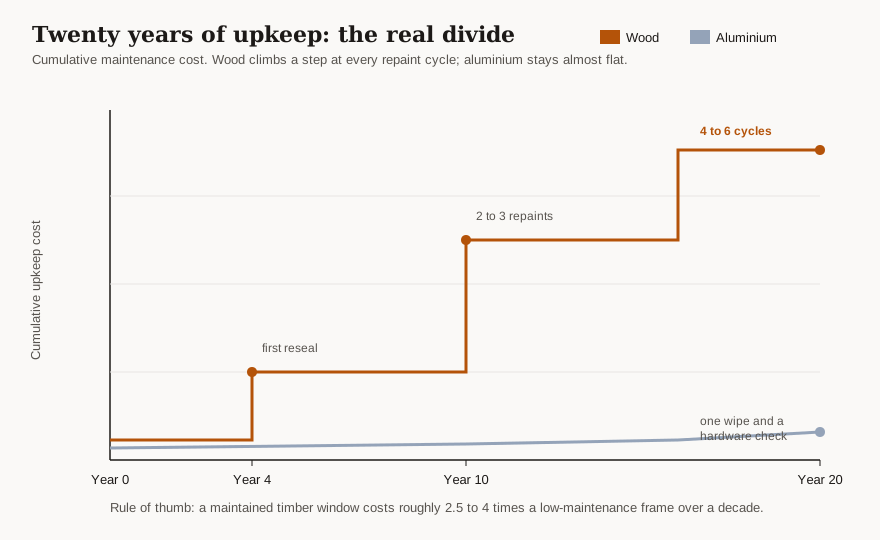
| Year | Wood (cumulative upkeep) | Aluminium (cumulative upkeep) |
|---|---|---|
| Year 0 (install) | Base cost | Base cost |
| Year 4 | First reseal/repaint | Negligible |
| Year 10 | 2–3 repaint cycles | A wipe and a hardware check |
| Year 20 | 4–6 repaint cycles, possible repair | Optional re-coat once |
If you genuinely enjoy maintaining a beautiful object, this is not a cost; it is a ritual. If you will forget about your windows the day they are installed, aluminium is being honest with you.
Thermal and strength: the technical duel
On insulation, wood has a quiet natural advantage: timber conducts heat poorly, so a wood frame is thermally kind without any engineering. Bare aluminium does the opposite, it conducts heat and cold straight through, which in a hot Indian summer means a hot frame and condensation risk in air-conditioned rooms. The fix is a thermal break (a polyamide strip splitting the inner and outer metal) plus a Double Glazed Unit. A thermally-broken aluminium window paired with low-SHGC DGU performs well; a cheap single-glazed aluminium window is a heat bridge.
On strength and spans, aluminium is the clear winner. Its strength-to-weight ratio gives the slimmest sightlines and the largest single panes of any material, ideal for a wall of glass framing a view. Wood can span generously too, but the sections grow heavy and the cost climbs.
For how the glass itself drives compliance, both materials must respect Eco-Niwas Samhita 2018, which ties minimum VLT to your window-to-wall ratio and pushes the wall envelope toward RETV at or below 15 W/m sq. Aluminium windows also have their own product standard, IS 1948:2024, covering materials, construction, performance and durability. See the glazing logic in our window types pillar: material picks the frame, type picks the shape and operation, and the two choices are independent.
Choose WOOD if...
- You want heritage or luxury warmth that no metal can imitate, carved frames, rich grain, a colonial bungalow or a temple-town home.
- You accept the maintenance as part of owning something beautiful, and will reseal every few years.
- You are in a dry or temperate climate (much of inland north and the Deccan) where timber suffers less.
- You invest in premium teak, which carries natural oils that resist water and humidity far better than cheaper species like meranti or deodar.
Choose ALUMINIUM if...
- You want low upkeep, install and forget for decades.
- You love the slim, modern look and want the largest spans and most glass.
- You need windows that will not swell, warp or rot through monsoon after monsoon.
- You are building contemporary and want clean lines on a budget that scales up to architectural systems.
By budget
| Budget band | Wood verdict | Aluminium verdict |
|---|---|---|
| Tight (under ~₹500/sqft) | Hard, only cheap species, which fail fast | Plain powder-coated aluminium fits, but consider uPVC instead |
| Mid (₹500–950/sqft) | Decent deodar/sal, accept the repaint bill | Strong powder-coated aluminium, good value |
| Premium (₹950/sqft+) | Teak, the real reason to choose wood | Thermally-broken system aluminium, large spans |
If thermal performance on a budget is the priority and look is secondary, neither may be ideal, weigh the uPVC vs aluminium duel, the other head-to-head, where uPVC's sealed insulation often wins the value argument.
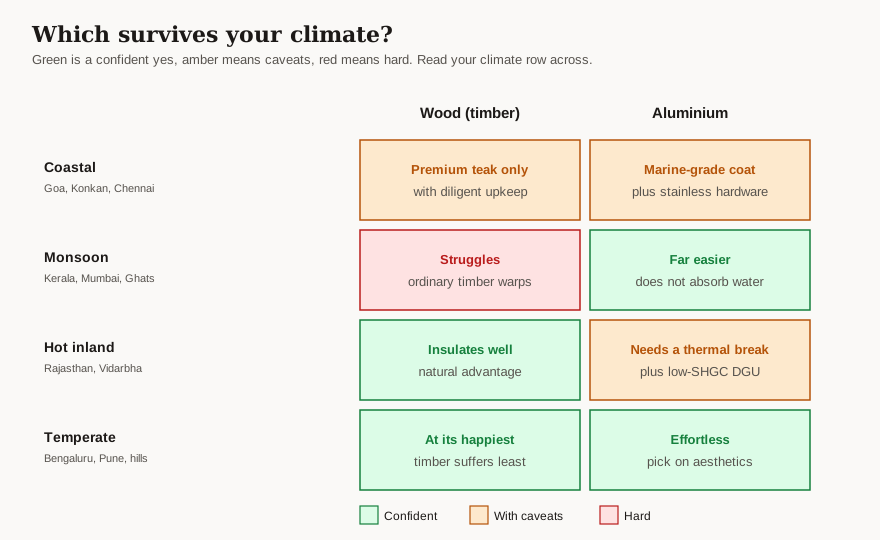
By climate
- Coastal (Goa, Konkan, Chennai): salt and humidity punish both. Untreated wood swells and rots; bare aluminium pits. Choose premium teak with diligent upkeep, or marine-grade powder-coated/anodised aluminium with stainless hardware.
- Monsoon-heavy (Kerala, Mumbai, the Western Ghats): wood struggles unless it is premium teak and religiously maintained, ordinary timber swells and warps. Aluminium is far lower-maintenance here because it does not absorb water. See our dedicated guide on the best window material for monsoon.
- Hot/extreme-heat inland (Rajasthan, Vidarbha): wood's natural insulation helps; aluminium needs a thermal break plus low-SHGC DGU and external shading to avoid becoming a heat bridge.
- Dry/temperate (Bengaluru, Pune, hill stations): wood is at its happiest here; aluminium is effortless. Pick on aesthetics.
The bottom line
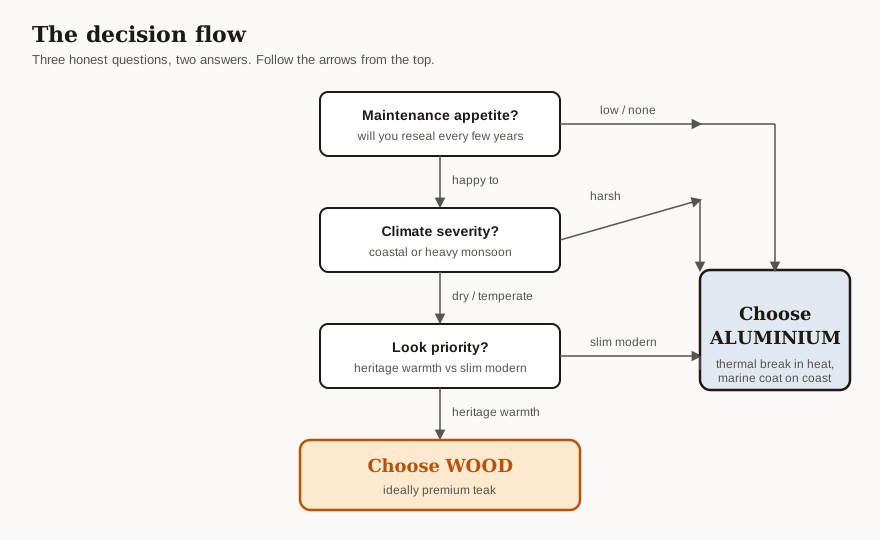
Choose wood when the look and the feel matter most, your climate is forgiving, and you will treat upkeep as a pleasure rather than a chore, ideally in premium teak. Choose aluminium when you want slim modern lines, the biggest spans, and the freedom to never think about your windows again, specifying a thermal break in hot zones and marine-grade coating on the coast. Both will serve a home for decades. The honest question is not "which is stronger?" but "how much of myself do I want to give my windows?".
References
- Wood vs uPVC vs aluminium frames (PlyPrice): https://www.plyprice.com/blog/window-frame-material-comparison
- Types of wood for windows in India (GreenFortune): https://thegreenfortune.com/types-of-wood-for-windows/
- Aluminium windows for coastal homes (Eternia): https://www.eterniawindows.com/articles/aluminium-windows-for-coastal-homes/
- IS 1948 (aluminium doors/windows/ventilators, BIS): https://law.resource.org/pub/in/bis/S03/is.1948.1961.pdf
- Eco-Niwas Samhita 2018 (BEE/ECBC): https://ecbc.in/econiwas.html
Export this guide
Related Guides — Deep-dive reading
Aluminium Windows Guide (India): Slim, Strong, and the Thermal-Break Question
Why aluminium gives you the most glass and least frame, why bare metal conducts heat, and how a polyamide thermal break plus DGU fixes it.
Windows & GlazingWooden Windows Guide (India): Teak, Sal, Deodar and the Maintenance Truth
The warmest, most classic frame in India — and the honest cost of keeping timber alive through the monsoon.
Windows & GlazingBest Window Material for Hot Climates (India): Keeping 45-Degree Heat Out
For Delhi, Rajasthan, Vidarbha and Telangana homes: thermally-broken aluminium or heat-stabilised uPVC, paired with a low-SHGC Low-E DGU and external shading.
Windows & GlazingRelated Tools — Try Free
Window Maintenance Cost Calculator
Estimate annual window upkeep by frame material — yearly, per-window and 5-year cost.
Window CalculatorMaterial Decision Framework (M-Score)
Score 30+ Indian construction materials across cost, durability, climate fit, maintenance, and sustainability.
MaterialsWindow Cost Calculator
Estimate window price plus installation by type, frame material, size, glass and quantity.
Window Calculator