
Wooden Windows Guide (India): Teak, Sal, Deodar and the Maintenance Truth
The warmest, most classic frame in India — and the honest cost of keeping timber alive through the monsoon.
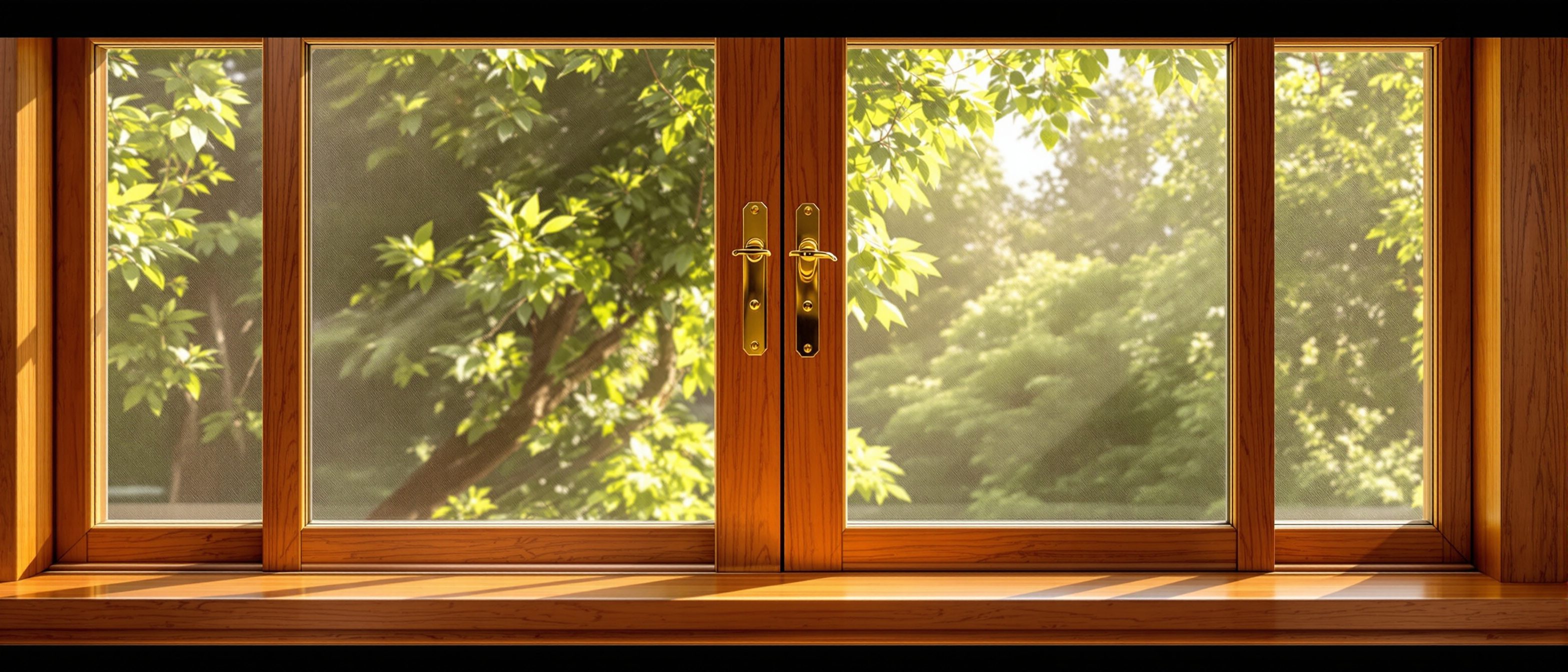
There is a particular warmth a timber window gives a room that no plastic or metal can fake. The grain, the depth of a polished teak frame, the way morning light sits on it — wood is the traditional Indian frame, and for heritage homes, luxury interiors and any space where the look matters most, it is still the most beautiful choice you can make.
It is also the most demanding. Wood does not rust the way steel does, but it is alive to weather in a way metal is not: rain swells it, sun fades and cracks it, and termites treat an untreated frame as lunch. The honest truth about wooden windows in India is that their decades-long lifespan comes with a standing maintenance bill — sealing, polishing or repainting roughly every two to four years. This guide is about choosing the right species, budgeting for that upkeep, and deciding whether the romance is worth the work in a monsoon climate.
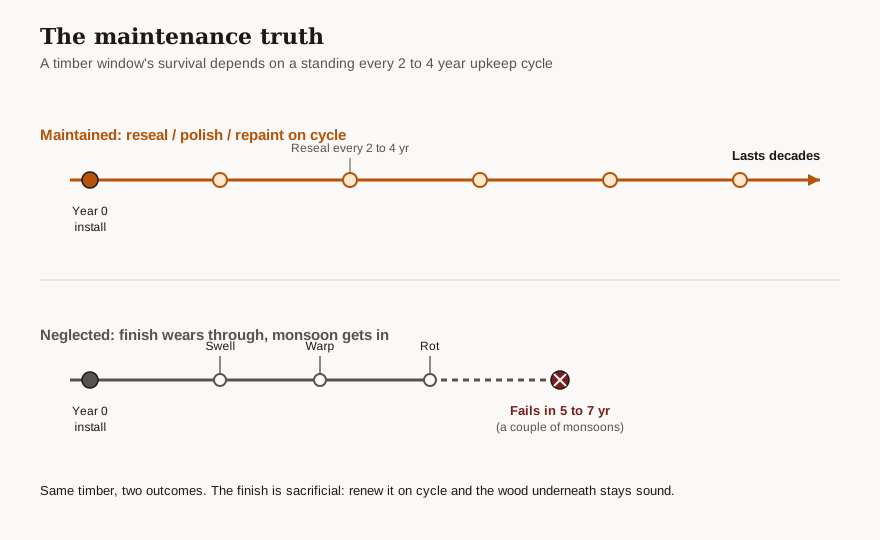
Wood is the only window material where the frame's survival depends as much on your discipline as on the timber. Maintained, teak outlasts generations. Neglected through two monsoons, even good wood swells, warps and rots.
What a wooden window actually is
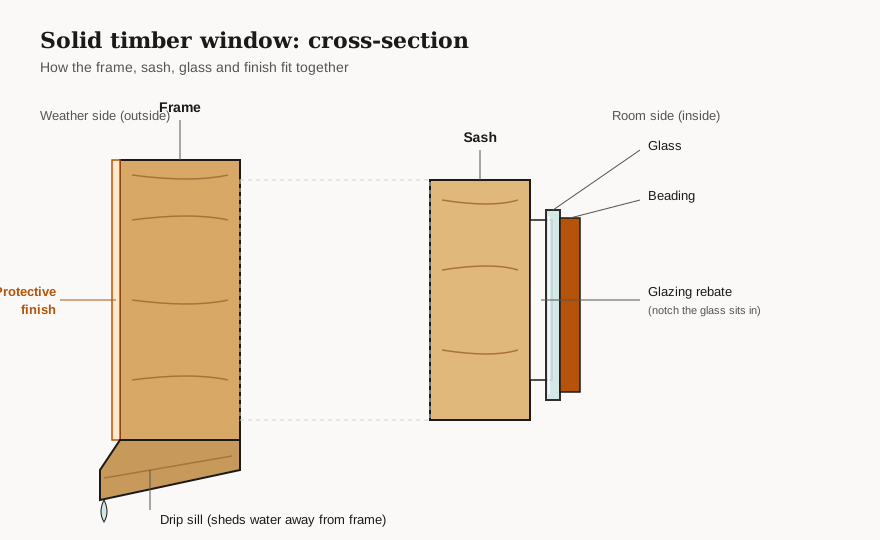
A timber window is a frame and sash machined from solid (or sometimes engineered/laminated) hardwood or softwood, jointed at the corners — traditionally mortise-and-tenon, now often dowelled or finger-jointed — and finished with a protective coating. The glass sits in a rebate held by timber beading or putty. Unlike uPVC's hollow multi-chamber profile or aluminium's extrusion, the timber section is structural in itself: thickness equals strength, which is why wooden frames look chunkier than slim aluminium.
The frame's enemy is moisture movement. Wood absorbs and releases water with humidity, expanding and contracting across the grain. That is why a window that shut perfectly in May jams in July — the timber has swollen. Good detailing (seasoned timber at the right moisture content, sealed end-grain, drip sills, weep paths) and a sound finish are what hold this movement in check.
The India species table
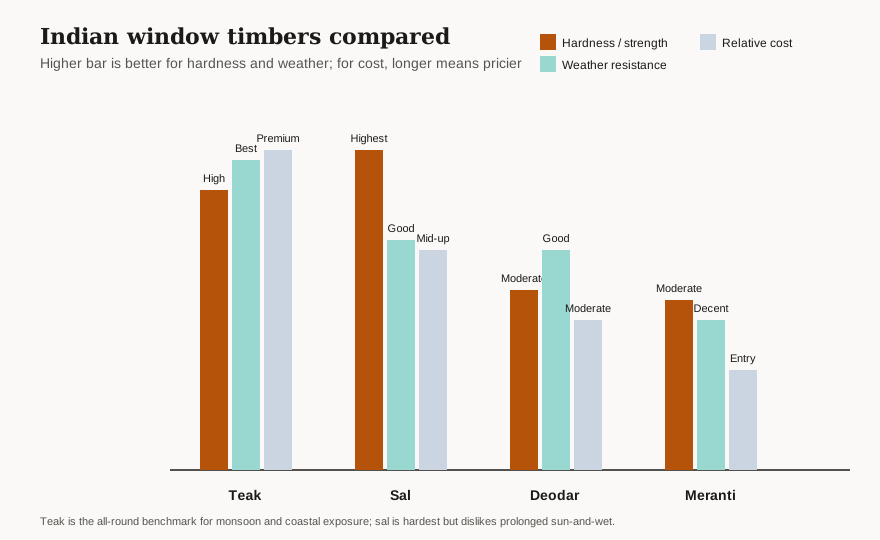
Not all wood is equal, and in India the species you pick decides both the price and how forgiving the window will be. Teak is the benchmark; everything else trades durability for cost.
| Species | Hardness / strength | Weather resistance | Indicative price | Best for |
|---|---|---|---|---|
| Teak (sagwan) | High, very stable | Best — natural oils resist water, humidity, termites | Premium (top band and above) | Heritage, luxury, coastal, monsoon |
| Sal | Roughly 50 percent harder than teak | Strong, water and pest resistant, but degrades in prolonged sun and wet | Mid to upper | Strength-first frames, sheltered openings |
| Deodar (Himalayan cedar) | Moderate, lighter | Good, naturally aromatic and pest-resistant | Moderate | Budget-premium, hill and temperate homes |
| Meranti / mahogany | Moderate | Decent with good finishing | Lower (entry timber) | Cost-conscious solid-wood windows |
A few notes that matter when a carpenter or fabricator quotes you. Teak is premium because its natural oils make it genuinely water-resistant and humidity-tolerant — it is the one species that handles monsoon and coastal exposure well, which is why it commands the highest price. Sal is dramatically harder and stronger than teak (around 50 percent harder) and resists water and pests, but it does not love prolonged sun-and-wet cycling, so it suits more sheltered openings. Deodar is the sensible middle — moderate price, good durability, naturally aromatic and pest-resistant, a classic in northern and hill homes. Meranti and mahogany are the affordable solid-wood options: decent once well sealed, but they need that finishing discipline more than teak does.
How wood behaves: thermal, acoustic, and the corrosion question
Wood is a natural insulator — it does not conduct heat and cold the way bare aluminium does, so a timber frame has no thermal-bridging problem to solve and feels comfortable to the touch in both heat and cold. Acoustically it is solid and dense, and paired with the right glass it makes a quiet window.
On corrosion, the good news and the catch are the same fact: wood does not rust. There is no metal to react with salt, so a properly maintained timber window can do well even near the coast — provided the finish is intact. The catch is that wood has its own decay path that metal does not: rot, swelling, warping, fading and termite attack. These are not failures of the material so much as failures of maintenance. A sealed, polished or painted frame keeps water and UV off the timber; once that barrier wears through, the monsoon gets in.
Finishes and glazing
You finish a timber window one of two ways. A clear or tinted sealer / polish / varnish shows the grain and suits teak and other figured timbers — the premium look most people want wood for. Paint (enamel or PU) hides the grain but gives a thicker, tougher weather barrier and lets you use cheaper timber. Either way the finish is sacrificial: it is the layer that takes the weathering so the wood does not, and it is what you renew on the maintenance cycle.
For glazing, timber takes the full range. Pair it with a Double Glazed Unit (DGU) for serious thermal and acoustic gain, Low-E glass to cut solar heat in Indian summers, laminated glass for the best acoustic and UV-cut performance (laminated also slows the fading of interior finishes), and toughened glass for any large or low pane as a safety measure. Because timber sections are deep, they accommodate DGU thickness comfortably.
Cost, lifespan, and the maintenance truth
Wooden window frames run from about ₹500 to ₹1,500 per square foot and up, with premium teak sitting well above that band. Add roughly ₹200 per square foot for installation, and 18 percent GST. But the sticker price is only the first conversation. Over ten years, once you count repainting and upkeep, timber typically costs 2.5 to 4 times the equivalent uPVC window — the maintenance is the expense, not the timber.
| Cost element | Indicative figure |
|---|---|
| Frame (solid timber) | ₹500–1,500/sqft and up (premium teak higher) |
| Installation / fixing | about ₹200/sqft |
| GST | +18 percent |
| Recurring upkeep | Reseal / polish / repaint every 2–4 years |
| 10-year total vs uPVC | roughly 2.5–4x once upkeep is counted |
Lifespan is the upside, and it is real: a well-maintained timber window lasts decades, and good teak can outlast a generation of owners. But that word maintained is load-bearing. Skip the reseal through a couple of monsoons and you can watch a frame swell, jam, fade and start to rot inside five to seven years. The maintenance cycle below is not optional housekeeping — it is the deal you sign when you choose wood.
Indicative prices vary by city, species, section size and glazing — always confirm against itemised quotes from fabricators and carpenters.
Climate fit: be honest about the monsoon
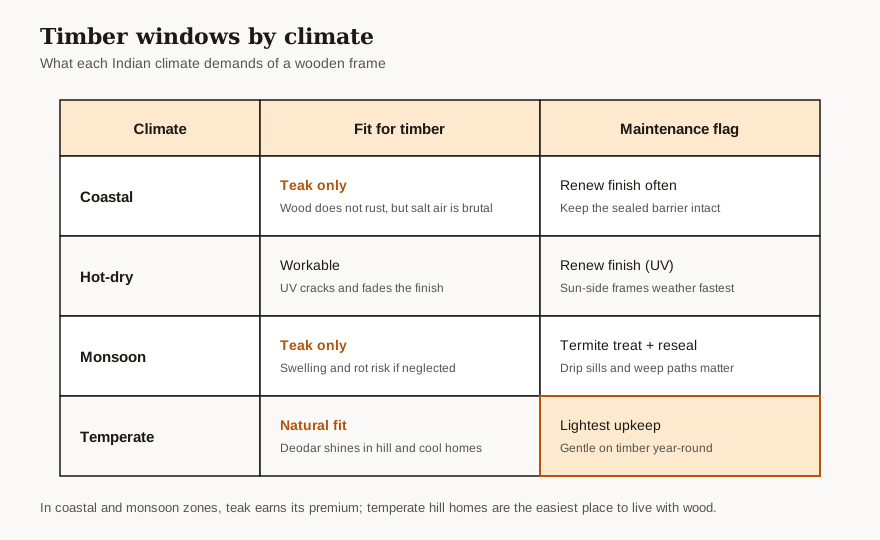
This is where wood needs candour. In a heavy-rain, high-humidity climate, untreated or under-maintained timber is the wrong call — it swells, warps and can rot, and uPVC or coated aluminium will simply give you less grief. If you want wood in monsoon or coastal India, the rules are firm: use teak (its oils are what make this viable), keep the finish renewed on schedule, and detail the opening properly with drip sills, drainage and good gaskets. Treat the timber against termites at the outset and re-treat as part of upkeep. In a temperate hill climate like much of deodar country, the burden is lighter and wood is a natural fit.
Pros and cons
| Strengths | Weaknesses |
|---|---|
| Warmest, most classic premium look | High maintenance — reseal/polish/repaint every 2–4 years |
| The traditional Indian frame; heritage character | Vulnerable to rain (swell, warp, rot) and sun (fade, crack) |
| Natural insulator — no thermal bridging | Termite risk on untreated timber |
| Does not rust; no metal-salt reaction | Highest 10-year cost once upkeep is counted |
| Decades of life if maintained; teak outlasts generations | Quality and lifespan depend heavily on species and finishing discipline |
| Takes DGU, Low-E, laminated glazing comfortably | Premium teak is expensive up front |
Choose wood if
- The look matters most — heritage restoration, luxury interiors, a period home where uPVC or aluminium would feel wrong.
- You are genuinely willing to accept and schedule the maintenance every two to four years.
- You can specify teak (or sal/deodar to suit) and detail the opening for your climate.
Avoid wood if
- You want a fit-and-forget window — choose uPVC or coated aluminium instead.
- Your climate is harsh monsoon or coastal and you will not commit to the upkeep.
- Budget over a decade is the priority, not appearance.
How this fits the bigger picture
Frame material is one half of the window decision; window type (shape and operation) is the other. A timber casement, a timber French window opening to a balcony, or a slim wooden picture window each behave differently — see the window-types pillar, Types of Home Windows in India, and pair your material choice there. For the full side-by-side of every frame material — uPVC, aluminium, wood, steel and composite — start at the pillar, Window Frame Materials Compared.
If you are torn between timber and metal specifically, the direct head-to-head lives in Wooden vs Aluminium Windows — that guide settles the look-versus-low-maintenance argument; this one goes deeper on species and upkeep. And do not confuse this with Timber and Natural Facades: that guide is about timber cladding on the building facade, whereas this one is strictly about window frames.
References
- Types of wood for windows in India (GreenFortune): https://thegreenfortune.com/types-of-wood-for-windows/
- Wood vs uPVC vs aluminium frames (PlyPrice): https://www.plyprice.com/blog/window-frame-material-comparison
- uPVC windows price per sq ft 2026 (Building and Interiors): https://buildingandinteriors.com/upvc-windows-price-per-sq-ft-india-2026-cost-guide/
- IS 1948 (aluminium doors, windows and ventilators, BIS): https://law.resource.org/pub/in/bis/S03/is.1948.1961.pdf
- Eco-Niwas Samhita 2018 (BEE/ECBC): https://ecbc.in/econiwas.html
Export this guide
Related Guides — Deep-dive reading
Window Frame Materials in India (2026): uPVC vs Aluminium vs Wood vs Steel vs Composite
The buyer's decision guide for choosing a window frame material by budget, climate, thermal priority, look, maintenance and lifespan.
Windows & GlazingWooden vs Aluminium Windows (India): Warmth and Tradition vs Strength and Low Upkeep
A direct duel between timber and aluminium, side-by-side on cost, warmth, thermal, spans, lifespan, maintenance and climate fit, with choose-if verdicts.
Windows & GlazingWindow Material Durability Comparison (India): Which Frame Lasts Longest?
Lifespan, maintenance and 20-year total cost of ownership across uPVC, aluminium, wood, steel and composite frames.
Windows & GlazingRelated Tools — Try Free
Window Material Comparison Tool
Compare uPVC, aluminium, wood, steel and composite windows on cost, life, upkeep and insulation.
CompareWindow Maintenance Cost Calculator
Estimate annual window upkeep by frame material — yearly, per-window and 5-year cost.
Window CalculatorGlass Selection Tool
Single vs double (DGU) vs triple glazing and the right glass type for your climate, priority and sun.
Window Tool